This article contains AI generated content.
Lumbar Disc Herniation - 6 Genes And 5 Biomarkers To Track
Introduction
If you are reading this, there is a good chance you have felt that specific, unmistakable moment: a bend, a lift, a sneeze, and then a line of pain running from your lower back down into your leg. Maybe an MRI put a name to it — a herniated or "slipped" disc pressing on a nerve root. And maybe, after the initial shock, you were left with advice that felt oddly thin: rest, take anti-inflammatories, do some stretches, and wait. For many people that is enough. But if you are the kind of person who wants to understand why this happened to you, and whether your own biology is quietly working against you, generic advice can feel like being handed a map with no roads on it.
Here is something most clinic visits skip over: lumbar disc problems are not simply the result of bad luck or bad lifting. Twin studies have shown that heredity explains a large share of who develops disc degeneration and herniation, often more than occupation or physical loading. That means part of your disc's story was written before you ever picked up a heavy box. Understanding that part does not make you a victim of your genes — it makes you better equipped to work with them.
The problem with broad advice is that it treats every back the same. But a disc that is fragile because of a collagen variant needs a different long-term strategy than a disc that is degenerating because of chronic inflammation or poor metabolic health. When you know which levers actually apply to you, the same effort produces far more results.
This article takes the deeper route. First, we look at the specific genes and epigenetic factors linked to disc herniation, and for each one, what you can realistically do about it — with and without supplements. Then, as a bonus, we cover the handful of blood markers worth tracking to catch trouble early and measure progress. We finish with a research-driven book that quietly challenges a lot of standard back advice, and a short review of complementary approaches that actually have human evidence behind them. None of this is a cure promise. It is better information — and better information is what lets you make better decisions.
Summary
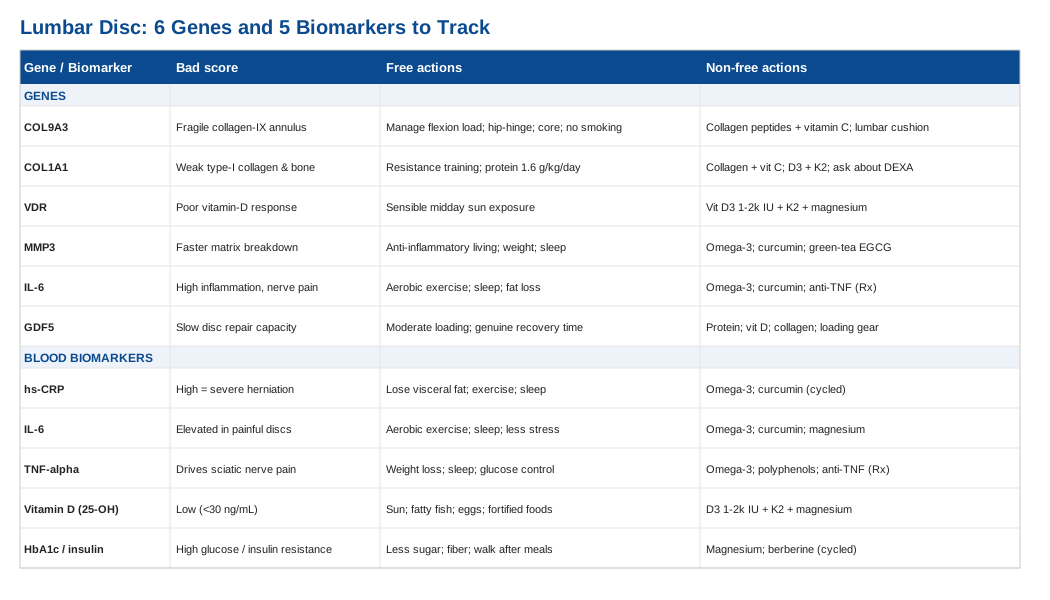
Your intervertebral disc is a piece of living engineering: a tough outer ring (the annulus fibrosus) built from collagen, wrapped around a gel-like core (the nucleus pulposus). When that engineering fails, genetics is often part of the reason. In the sections below you will learn which six genes show up again and again in disc herniation research — including the collagen genes that determine how strong your annulus is, the vitamin D receptor that governs disc and bone health, and the inflammation and matrix-breakdown genes that decide how badly a herniation hurts and how fast a disc degrades.
For each gene, you will get two practical playbooks: what to do without supplements (movement, load management, habits that don't cost a euro), and what to add with supplements or equipment — always with honest notes on dosing frequency, cycling, and side effects. You will also discover the five blood biomarkers that can reveal hidden inflammation and metabolic pressure on your spine, how much they cost to measure, and how to move them in the right direction.
Beyond genes and labs, you'll find a summary of a spine researcher's book that overturns some popular back-pain beliefs, plus a clear-eyed look at which complementary therapies — yoga, spinal manipulation, mindfulness, laser — actually hold up in human trials. If you have ever wanted a real plan instead of a shrug, keep reading.
What Your Genes And Epigenetics Reveal About Disc Herniation
The intervertebral disc is mostly connective tissue, and connective tissue is built, maintained, and broken down according to instructions in your DNA. When researchers compared identical and non-identical twins in the long-running Twin Spine Study, they found that inheritance — not decades of different physical jobs — was the dominant influence on disc degeneration. You can read the summary of that landmark work here: The Twin Spine Study (PubMed).
Genetics researchers such as Ali Torkamani have argued that the real value of knowing your variants is not fatalism but precision: a "bad" gene simply tells you which system in your body needs the most support. Below are six of the most consistently studied genes in disc herniation and degeneration, with a realistic plan for each. Think of these as the systems you can reinforce, not sentences you must serve.
COL9A3 (and COL9A2): The Collagen IX Genes
Type IX collagen acts like molecular glue, bridging the larger collagen fibers that give your annulus fibrosus its tensile strength. Variants such as the Trp2 (COL9A2) and Trp3 (COL9A3) tryptophan alleles have been linked to earlier and more severe disc degeneration in several populations, though results vary by ancestry. A systematic review of the collagen IX evidence is available here: Collagen IX gene polymorphisms and lumbar disc degeneration (PMC), and a study tying COL9A3 to degeneration alongside IL-1 is here: COL9A3 and IL-1β polymorphisms (PubMed). If you carry one of these variants, your annulus may simply be less forgiving of repeated strain.
If the gene is bad, the plan without supplements
The single most protective habit is managing spinal flexion load. Discs are most hydrated — and most vulnerable to flexion injury — in the first hour after waking, so avoid deep forward bends, sit-ups, and heavy lifting early in the morning. Build endurance in the muscles that brace the spine rather than chasing flexibility: aim for daily "spine-sparing" core work (the McGill Big 3 described later) five to six days per week. Learn to hip-hinge so you bend at the hips, not the lumbar spine, when lifting. Finally, if you smoke, stopping is non-negotiable — smoking impairs the nutrient supply to the disc, which has no direct blood flow of its own.
If the gene is bad, the plan with supplements or equipment
Because these variants affect collagen quality, the supportive stack targets collagen synthesis. Collagen peptides (typically 10–15 g once daily, taken consistently for months rather than cycled) combined with vitamin C (about 500 mg, since vitamin C is a required cofactor for collagen cross-linking) is the most evidence-aligned pairing, ideally taken around resistance or loading exercise. Side effects are minimal, though very high vitamin C doses can cause loose stools and, rarely, contribute to kidney stones in susceptible people. Useful equipment includes a lumbar support cushion for long sitting and, for lifters, a rigid belt used only for genuinely heavy sets — not as an everyday crutch. None of this rebuilds a herniated disc, but it supports the raw materials your genes make imperfectly.
COL1A1: The Type I Collagen Gene
Type I collagen provides the bulk of the tensile strength in the outer annulus, and it is also the main structural protein in bone. The Sp1 (rs1800012) polymorphism has been associated with disc degeneration and with lower connective-tissue and bone quality in some cohorts: COL1A1 Sp1 polymorphism and disc degeneration (PubMed), with a broader meta-analysis here: COL1A1 rs1800012 and musculoskeletal disease (PMC). Because this gene straddles both disc and bone, carriers benefit from a strategy that protects both.
If the gene is bad, the plan without supplements
Progressive resistance training is the anchor. Loading signals both tendon/ligament and bone to remodel and strengthen, partially offsetting weaker baseline collagen. Two to three strength sessions per week, emphasizing hip hinges, carries, and controlled compound lifts, is a realistic target. Prioritize protein intake from food (roughly 1.6 g per kg of body weight daily) so your body has the amino acids to build collagen and muscle. As with COL9A3, avoiding smoking and heavy alcohol matters, since both degrade collagen and bone.
If the gene is bad, the plan with supplements or equipment
Supportive supplements mirror the collagen strategy: collagen peptides plus vitamin C, and adequate vitamin D3 and vitamin K2 to protect the bone side of the equation (dosing under the VDR section below). If you are over 50 or have a family history of osteoporosis, ask your clinician about a baseline bone-density (DEXA) scan — an inexpensive piece of information that changes how aggressively you should protect your spine. Adjustable standing desks and quality footwear reduce cumulative static load. Side effects here are mainly the vitamin D/calcium considerations noted below; collagen and K2 are well tolerated.
VDR: The Vitamin D Receptor Gene
The vitamin D receptor controls how your cells respond to vitamin D, which influences both bone metabolism and the health of disc cells. VDR variants (FokI, TaqI, ApaI) have been associated with disc degeneration in an updated meta-analysis of 23 studies: VDR polymorphisms and disc degeneration meta-analysis (PubMed). Intriguingly, an epigenetic study found the VDR gene can also be hypermethylated (switched down) in degenerated discs, meaning even a normal gene can behave like a weak one: Downregulation and hypermethylation of VDR in lumbar disc degeneration (PubMed).
If the gene is bad, the plan without supplements
The free intervention is sensible sun exposure: 10–20 minutes of midday sunlight on arms and legs several times per week (adjusted for skin tone and latitude) helps maintain vitamin D status. Because VDR efficiency may be reduced, keeping your actual vitamin D level in a healthy range matters more for you than for the average person, so the measurement (see the vitamin D biomarker section) becomes the guide.
If the gene is bad, the plan with supplements or equipment
Vitamin D3 is the workhorse — a common maintenance dose is 1,000–2,000 IU daily, adjusted to keep blood 25-OH vitamin D in the roughly 30–50 ng/mL range, ideally paired with vitamin K2 (about 100 mcg) to direct calcium into bone and with magnesium, a required cofactor for vitamin D activation. Do not "mega-dose" blindly: sustained high intake can cause hypercalcemia (nausea, kidney strain, calcification), which is why cycling to your lab values — re-testing every three to four months when adjusting — is smarter than a fixed high dose. People on certain heart or kidney medications should confirm dosing with a clinician first.
MMP3: The Matrix-Degrading Enzyme Gene
Matrix metalloproteinase-3 is a scissors-like enzyme that chews up the proteoglycans and collagen inside the disc. Some MMP3 variants (such as rs591058) ramp up this activity and have been tied to higher herniation risk, especially when combined with occupational loading: MMP-3 rs591058 and lumbar disc herniation (PubMed). If your MMP3 profile is unfavorable, your discs may break down faster under the same inflammatory pressure.
If the gene is bad, the plan without supplements
MMP-3 activity is driven upward by inflammation, so the free plan is anti-inflammatory living: reach and hold a healthy body weight, keep blood sugar stable (fewer refined carbohydrates, more fiber and protein), sleep seven to nine hours, and move regularly — inactivity and excess visceral fat both raise the inflammatory tone that activates these enzymes. Smoking, again, is a strong MMP activator.
If the gene is bad, the plan with supplements or equipment
Several natural compounds appear to dampen MMP expression. Omega-3 fatty acids (roughly 2 g combined EPA/DHA daily) and curcumin (500–1,000 mg of a well-absorbed form, taken with food) are the most studied; green tea catechins (EGCG) have shown MMP-lowering effects in disc-cell research. A reasonable approach is continuous omega-3 with curcumin used in 8–12 week blocks, then reassessing. Side effects: high-dose omega-3 and curcumin can thin the blood and irritate the stomach, so pause them before surgery and use caution if you take anticoagulants.
IL-6: The Inflammation Gene That Drives Nerve Pain
Interleukin-6 is a master inflammatory signal, and a herniated disc pours it out — which is a big reason a herniation can hurt so much even when the physical compression is modest. Elevated IL-6 (and IL-1β) has been measured directly in herniated discs of patients with sciatica: Elevated IL-1β and IL-6 in herniated discs with sciatic pain (PMC). Certain IL-6 promoter variants are also linked to higher disc-disease risk: IL-6 and IL-10 gene polymorphisms in lumbar disc disease (PubMed) and to sciatica specifically: IL6 variants and disc disease with sciatica (PubMed).
If the gene is bad, the plan without supplements
Lifestyle levers that lower IL-6 are well established: regular aerobic exercise (which raises IL-6 briefly during exercise but lowers resting levels over time), consistent quality sleep, stress reduction, and losing excess fat mass. Even a daily 30-minute walk measurably reduces systemic inflammation over weeks. During an acute flare, gentle movement usually beats strict bed rest, which tends to prolong pain.
If the gene is bad, the plan with supplements or equipment
The anti-inflammatory stack overlaps with MMP3: omega-3 (2 g EPA/DHA daily) and curcumin in cycled blocks. In more severe, treatment-resistant sciatica, physicians have trialed TNF-α–blocking drugs such as etanercept, with mixed but sometimes promising results — this is a prescription-only medical decision, not a supplement: Etanercept for sciatica randomized trial (PubMed). The takeaway for most readers is that lowering the inflammatory signal — by habit or, when appropriate, by medication — can reduce pain independent of the mechanical herniation itself.
GDF5: The Disc Growth And Repair Gene
Growth differentiation factor 5 helps build and repair disc and cartilage tissue. The rs143383 variant, which lowers GDF5 expression, has been associated with lumbar disc degeneration (most clearly in women) and with osteoarthritis: GDF5 rs143383 and lumbar disc degeneration (PMC). Because GDF5 is about repair capacity, a less-active variant means your discs may recover more slowly — making how you load and rest them especially important.
If the gene is bad, the plan without supplements
The disc responds to the right kind of mechanical signal. Consistent, moderate loading — walking, swimming, controlled strength work — stimulates the nutrient exchange and remodeling that keep disc cells alive, while both prolonged bed rest and repetitive overload are harmful. Aim for daily movement and avoid the extremes of total inactivity or crushing loads. Give tissue genuine recovery time between hard sessions, since your repair signaling may be slower.
If the gene is bad, the plan with supplements or equipment
There is no proven supplement that directly upregulates GDF5 in humans, so honesty matters here: this is an area of early research. The sensible supportive approach is to give your repair machinery its raw materials — adequate protein, vitamin D to target range, and the collagen/vitamin C pairing described earlier — while using loading itself as the primary "repair signal." Equipment that helps you stay consistently active despite pain (an under-desk pedal, a supportive walking shoe, resistance bands for graded loading) does more for a slow-repair genotype than any pill currently can.
The Epigenetic Layer: Genes Are Not Destiny
Your DNA sequence is fixed, but whether each gene is switched on or off is not. This is epigenetics, and it is exactly why the habits above matter. Genome-wide analyses show clear differences in DNA methylation between healthy and degenerated discs, meaning the disc's decline is partly a matter of gene regulation, not just inherited sequence: Genome-wide DNA methylation and disc degeneration (PubMed), with a full review of the mechanisms here: Epigenetic regulation in disc degeneration (PubMed). The VDR hypermethylation finding above is a concrete example: lifestyle inputs — exercise, nutrition, avoiding smoking — influence methylation patterns, which is the biological reason a person with "bad" genes can still do well, and a person with good genes can still degenerate through poor habits.
Five Blood Biomarkers Worth Tracking
Genes tell you your starting hand; biomarkers tell you how the game is actually going right now. Because much of the pain and progression in disc herniation is inflammatory and metabolic, a small panel of blood tests can flag hidden problems and let you measure whether your plan is working. Clinicians who focus on prevention, such as Peter Attia, Thomas Dayspring, and Allan Sniderman, have popularized the idea of tracking trends over time rather than reacting to a single reading — the same logic applies to your spine.
1. High-Sensitivity C-Reactive Protein (hs-CRP)
hs-CRP is a general marker of systemic inflammation, and in disc herniation it tends to rise with more severe, extruded herniations and can help predict how well you respond to treatment: Serum hs-CRP and disc herniation type (PubMed). How to measure it: a simple, widely available blood test costing roughly €5–20 (often bundled in routine panels). If the score is bad, the plan without supplements: the biggest movers are losing visceral fat, exercising regularly, sleeping well, treating gum disease, and quitting smoking. If the score is bad, the plan with supplements or equipment: omega-3 (2 g EPA/DHA daily) and curcumin (500–1,000 mg with food, cycled in 8–12 week blocks) reliably lower hs-CRP; watch for blood-thinning and GI effects and pause before surgery.
2. Interleukin-6 (IL-6)
IL-6 is a more specific inflammatory cytokine that is elevated in painful herniated discs, as noted in the gene section: IL-6 elevation in symptomatic herniations (PMC). How to measure it: IL-6 is a more advanced (and more expensive) test, roughly €30–70, and is less commonly offered — reserve it for when hs-CRP leaves questions unanswered. If the score is bad, the plan without supplements: the same anti-inflammatory habits — aerobic exercise, sleep, stress reduction, fat loss — lower resting IL-6. If the score is bad, the plan with supplements or equipment: omega-3 and curcumin again lead; magnesium and adequate vitamin D also support a calmer inflammatory tone. Cycle curcumin and monitor for stomach upset.
3. Tumor Necrosis Factor-Alpha (TNF-α)
TNF-α is a key driver of nerve-root irritation in sciatica, which is why blocking it has been formally trialed: Etanercept (anti–TNF-α) for sciatica (PubMed). How to measure it: a specialized cytokine test, typically €40–80, not part of standard panels. If the score is bad, the plan without supplements: weight loss, exercise, and improving sleep and blood sugar all reduce TNF-α; chronic stress and poor sleep push it up. If the score is bad, the plan with supplements or equipment: omega-3 and polyphenols (curcumin, EGCG) modestly lower it; anti–TNF medication exists but is a physician-only option for severe, refractory cases, not a self-directed step.
4. 25-Hydroxy Vitamin D
Given the VDR link to disc health, knowing your actual vitamin D level closes the loop between genotype and action. Low vitamin D is common and is associated with more musculoskeletal pain. How to measure it: the standard 25-OH vitamin D blood test, roughly €15–35, widely available. If the score is bad, the plan without supplements: regular sensible sun exposure and vitamin-D-rich foods (fatty fish, eggs, fortified products). If the score is bad, the plan with supplements or equipment: vitamin D3 at 1,000–2,000 IU daily (higher only under supervision), paired with K2 and magnesium, re-testing every three to four months to avoid overshooting into hypercalcemia. Target the roughly 30–50 ng/mL range rather than "as high as possible."
5. HbA1c And Fasting Insulin (Metabolic Health)
This is the marker people forget. Poor glucose control and insulin resistance promote inflammation and are linked to faster disc degeneration, so a metabolic check is really a spine check. How to measure it: HbA1c costs about €10–25 and fasting insulin about €15–30; together they reveal metabolic pressure long before diabetes appears. If the score is bad, the plan without supplements: reduce refined carbohydrates and added sugar, add fiber and protein, walk after meals, build muscle through resistance training, and prioritize sleep. If the score is bad, the plan with supplements or equipment: magnesium, and berberine (a well-studied glucose-lowering compound, commonly 500 mg two to three times daily with meals, cycled rather than taken indefinitely) can help — but berberine can cause digestive upset and interacts with several medications, so clear it with a clinician. A home glucose monitor or a short trial of a continuous glucose monitor turns this marker into daily feedback.
The Back Book That Rewrites The Rules
If you read one thing beyond this article, make it Back Mechanic by Dr. Stuart McGill, one of the most cited spine biomechanists in the world. His work quietly challenges a lot of standard advice — the reflex to rest, the rush to surgery, the endless generic stretching — and replaces it with a mechanically precise, self-directed approach. Here are the ten ideas that tend to change how people think about their discs.
1. Find Your Specific Pain Trigger
McGill's central insight is that "back pain" is not one thing. The first job is to identify the exact movement, posture, or load that provokes your pain — flexion, extension, rotation, or compression — because the entire plan flows from that diagnosis. Generic programs fail because they skip this step.
2. Stop Feeding The Pain
Recovery starts by removing the specific triggering motions, not by adding exercises. For a flexion-intolerant disc (the common pattern in herniation), that means eliminating repeated bending and slouched sitting first. You cannot heal a wound you keep reopening.
3. Spine Hygiene Over Endless Stretching
Many people with disc pain instinctively stretch into flexion for temporary relief, which can worsen the underlying problem. McGill argues for "spine hygiene" — moving well throughout the day — rather than aggressive stretching that repeatedly loads a vulnerable disc.
4. The McGill Big 3
His core program is three exercises that build endurance without loading the spine into dangerous ranges: the curl-up, the side plank, and the bird-dog. Done most days, they create a muscular "corset" that protects the disc.
5. Endurance Beats Raw Strength
Research suggests that muscular endurance around the spine protects against back pain better than maximal strength. The Big 3 are built around this principle, using short, repeated holds rather than heavy grinding reps.
6. Brace, Don't Bend
McGill teaches abdominal bracing and the hip hinge so that everyday tasks — picking up a child, tying shoes — happen at the hips while the spine stays neutral and stable. This single motor skill prevents countless re-injuries.
7. Respect The Morning Disc
Because discs absorb water overnight and are fuller and stiffer in the morning, the risk of flexion injury is highest right after waking. Avoiding early-morning bending is a small change with an outsized protective effect.
8. Walking Is Medicine
Brisk, arm-swinging walking is one of his most recommended interventions: it promotes disc nutrition, reduces stiffness, and calms pain, without the loading risks of running or heavy lifting during recovery.
9. Build A Slow, Deliberate Progression
Rather than pushing through pain, McGill advocates graded, patient progression — winning back capacity in small increments. This challenges the "no pain, no gain" mindset that repeatedly sabotages back recovery.
10. Surgery Is A Last Resort For Most
Perhaps his most provocative point: many disc herniations resorb and improve on their own with time and the right mechanics, so surgery should be reserved for genuine red flags (progressive weakness, loss of bladder/bowel control) rather than pain alone. This reframes the whole timeline of hope.
Complementary Approaches With Real Evidence
Alongside the strategies above, several non-drug therapies have genuine human evidence for back and radicular pain. None replaces medical care for a true neurological emergency, and much of the strongest data is for general low back pain rather than herniation specifically — where that is the case, it is noted.
Yoga
Yoga combines gentle loading, mobility, breathing, and stress reduction — a natural fit for a condition that is part mechanical and part inflammatory. Because it can build the spinal endurance McGill emphasizes while lowering the stress that raises inflammatory markers, it addresses several of this article's levers at once.
A Cochrane-level body of evidence and multiple meta-analyses show that yoga produces small-to-moderate reductions in pain and disability in chronic low back pain, comparable to other exercise approaches: Yoga vs non-exercise/physical therapy for chronic low back pain, meta-analysis (PMC). The evidence is for chronic non-specific back pain rather than acute herniation specifically.
Apply it cautiously: choose gentle, back-focused or therapeutic yoga, and avoid deep forward folds and aggressive twists if your pain is flexion-provoked, which most herniations are. A knowledgeable instructor who can modify poses is worth more than an intense class.
Spinal Manipulation
Spinal manipulation and mobilization aim to restore movement and reduce pain in stiff, guarded segments. It is one of the few complementary therapies studied specifically in lumbar disc herniation with radiculopathy, not just generic back pain.
A randomized clinical trial found that adding manipulation or mobilization to nerve-gliding (neurodynamic) exercise improved outcomes in disc herniation with radiculopathy: Manipulation/mobilization plus neurodynamics for disc herniation with radiculopathy (PMC). Overall the evidence is moderate and mixed, with generally good safety in appropriately selected patients.
Use it carefully: manipulation should be avoided or heavily modified when there are significant neurological deficits, and it should be performed by a qualified clinician who has reviewed your imaging. If a session sharply worsens leg symptoms, stop.
Mindfulness Meditation / MBSR
Mindfulness-Based Stress Reduction trains you to observe pain without amplifying it, which matters because stress and catastrophizing measurably worsen back pain and raise inflammatory signaling. It works on the nervous-system side of the equation rather than the disc itself.
A systematic review and meta-analysis found MBSR improves pain and function in low back pain, and a large randomized trial showed benefits comparable to cognitive behavioral therapy that persisted at one year: MBSR for low back pain, systematic review and meta-analysis (PubMed). Effects are modest but durable.
To apply it, commit to a structured 8-week MBSR course or a consistent daily practice of 10–20 minutes. It pairs especially well with the anti-inflammatory habits that also lower hs-CRP and IL-6, making it a low-risk complement rather than a standalone fix.
Low-Level Laser Therapy / Photobiomodulation
Low-level laser therapy applies specific wavelengths of light to tissue, theoretically reducing inflammation and supporting cell energy — relevant given how inflammatory disc pain can be. It is painless and non-invasive.
The evidence, however, is genuinely mixed: meta-analyses report some short-term pain benefit in non-specific chronic low back pain but with heterogeneous, imperfect studies: LLLT for non-specific chronic low back pain, meta-analysis (PubMed). There is little herniation-specific data, so expectations should be modest.
Treat it as an optional adjunct rather than a core strategy. If you try it, do so through a clinician using validated parameters, give it a defined trial period of several weeks, and judge it by whether your own pain and function actually improve.
Conclusion
A lumbar disc herniation is rarely just an accident — it is the meeting point of the collagen you inherited, the inflammatory and metabolic environment you live in, and the mechanical habits you repeat every day. The genes in this article (the collagen genes COL9A3 and COL1A1, the vitamin D receptor VDR, and the inflammation-and-repair genes MMP3, IL-6, and GDF5) tell you which systems to reinforce. The five biomarkers — hs-CRP, IL-6, TNF-α, vitamin D, and HbA1c with insulin — tell you whether your efforts are working. And the mechanical wisdom in McGill's work, plus the evidence-backed complementary therapies, give you tools to act on both.
The most important takeaway is this: genes load the gun, but epigenetics, movement, inflammation, and metabolic health pull the trigger — and all of those are things you can influence. That is where the grounded hope lives.
Your next smart step does not have to be dramatic. Start tracking what actually provokes your pain, ask your doctor for a simple inflammatory and metabolic blood panel, quit the one habit you already know is hurting you, and add the McGill Big 3 to most days. Then, with real information in hand, have a proper conversation with a qualified clinician about the path that fits your biology — not the generic map. Better information leads to better decisions, and better decisions are how backs get better.
This article is for education and is not a substitute for personalized medical advice. Seek urgent care for progressive leg weakness, numbness in the groin area, or any loss of bladder or bowel control.
Musculoskeletal: Bone Conditions Spine Conditions
Neurological: Nerve Conditions
Autoimmune: Inflammatory Conditions