This article contains AI generated content.
Lumbar Spondylosis: 5 Genes And 6 Biomarkers To Track
Introduction
If you have been told you have lumbar spondylosis, you have probably already heard the standard script: lose some weight, strengthen your core, take an anti-inflammatory if it flares up, and try not to sit too much. None of that is wrong, but it is not built for you specifically. It is built for an average person with an average spine, and your spine got here through a very particular combination of mechanical load, inflammation, metabolic health, and inherited tissue quality that generic advice cannot see.
That is the real problem with most back pain guidance. It treats a facet joint and disc that have degenerated faster than expected the same way it treats a spine that is simply aging on schedule. It does not ask why your cartilage, bone, and disc matrix are behaving the way they are, so it cannot tell you which lever, of the dozens available, is actually worth pulling first for you.
A more useful approach starts by looking at the signals your body is already producing: blood markers of inflammation, bone turnover, and metabolic health that shift months or years before symptoms or imaging change, alongside the genetic tendencies that quietly shape how your spinal tissue responds to load and repair over decades. Neither is a diagnosis on its own, but together they narrow down which parts of your biology deserve attention.
None of this promises to reverse degeneration that has already occurred, and it should not replace a qualified clinician's assessment of your specific case. But better information, tracked consistently, tends to produce better decisions. This article walks through the biomarkers most worth measuring, the genetic tendencies research has linked to lumbar disc and joint degeneration, a widely respected clinical framework for managing the mechanical side of the condition, and a set of complementary approaches with real supporting evidence. Each piece adds a bit more resolution to the picture.
Summary
Lumbar spondylosis is rarely explained by age alone. Six blood markers, from inflammatory signals like hs-CRP and IL-6 to metabolic and bone-turnover indicators, can reveal whether your spine's environment is actively working against it right now, long before an MRI would show anything new. Underneath those numbers sit inherited tendencies, in genes like VDR, ASPN, COL9A2, MMP3, and IL6, that help explain why two people with identical desk jobs end up with very different spines. Beyond the lab work, a biomechanics-first framework popularized by a leading spine researcher challenges a lot of standard advice about stretching and posture, and a short list of complementary approaches, from yoga to spinal manipulation, has real trial evidence behind it for chronic low back pain. The rest of this article walks through all of it, starting with the numbers you can actually track.
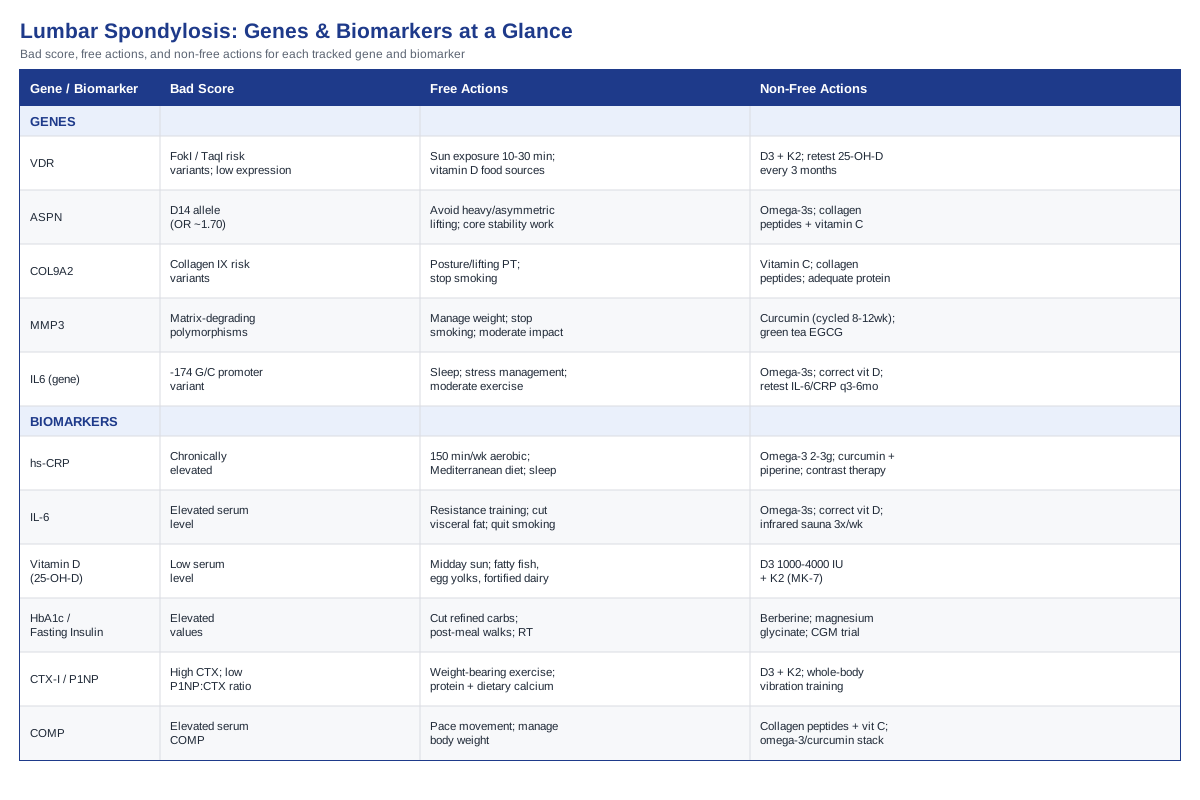
6 Biomarkers Worth Tracking When You Have Lumbar Spondylosis
Imaging tells you what has already happened to your spine. Blood work can tell you what is currently happening in the background, which is the part you actually have some influence over. The six markers below cover inflammation, bone remodeling, metabolic health, and cartilage turnover, the four biological systems most consistently linked to disc and facet joint degeneration in the research. Each one is not diagnostic on its own, but tracked over time, together they build a much clearer picture than a single MRI snapshot.
High-Sensitivity C-Reactive Protein (hs-CRP)
Hs-CRP is the most accessible marker of systemic, low-grade inflammation, and a systematic review in The Spine Journal found moderate evidence linking elevated CRP and IL-6 to greater severity of nonspecific low back pain. A chronically elevated hs-CRP suggests your body is running a low level of inflammation that may be adding fuel to an already degenerating disc or facet joint, whether the source is visceral fat, poor sleep, smoking, or an unrelated joint irritation.
How to measure it: a standard venous blood draw specifically requesting the "high-sensitivity" CRP assay, not a routine CRP. It costs roughly $10 to $25 out of pocket and is frequently already bundled into cardiovascular risk panels, so many people can get it added to bloodwork they are already having done.
If the score is high, the plan without supplements: aim for at least 150 minutes per week of moderate aerobic activity (brisk walking, cycling, swimming), which has been shown to lower CRP over 8 to 12 weeks of consistent practice. Shift toward a Mediterranean-style eating pattern, cut back on refined sugar and processed meat, and prioritize 7 to 9 hours of sleep. Retest in 8 to 12 weeks rather than daily or weekly, since hs-CRP fluctuates with any acute illness or injury.
If the score is high, the plan with supplements or equipment: omega-3 fish oil at 2 to 3 grams of combined EPA/DHA daily, and curcumin with piperine at 500 to 1000 mg daily, taken with food. Contrast therapy (sauna followed by cold exposure) 2 to 3 times weekly can be a useful adjunct if accessible. Cycle supplements in 8 to 12 week blocks with retesting rather than taking them indefinitely without checking whether they are working. Side effects: fish oil has a mild blood-thinning effect and should be used cautiously alongside anticoagulants; curcumin can cause GI upset and also has mild antiplatelet activity at higher doses.
Interleukin-6 (IL-6)
IL-6 is a more disc-specific inflammatory signal than CRP. A study in Arthritis Research & Therapy found that patients with spinal stenosis or degenerative disc disease had significantly higher serum IL-6 than those with a straightforward disc herniation or no disc disease at all, suggesting it tracks with the chronic, degenerative pattern specifically rather than pain in general.
How to measure it: this is a specialty send-out lab test, typically ELISA-based, costing $50 to $90. It is not part of routine primary care panels, so you will usually need to specifically request it through a functional medicine practitioner or a direct-to-consumer lab service.
If the score is high, the plan without supplements: resistance training 2 to 3 times per week has been shown to lower systemic IL-6 over months of consistent training, more reliably than aerobic work alone. Reducing visceral fat, quitting smoking, and actively managing chronic stress (which raises IL-6 through cortisol dysregulation) all move this marker in the right direction.
If the score is high, the plan with supplements or equipment: the same omega-3 protocol as above, correcting a low vitamin D level (see below), and infrared sauna sessions 3 times weekly for 15 to 20 minutes. Retest every 3 to 6 months rather than more frequently. Side effects: sauna use should be avoided by anyone with uncontrolled cardiovascular conditions, and adequate hydration is essential.
Vitamin D (25-OH-D)
Low circulating vitamin D and certain vitamin D receptor gene variants have both been linked to more severe lumbar disc degeneration in a study of 454 patients published in Scientific Reports, which also found lower VDR expression in affected patients. Beyond bone health, vitamin D status affects paraspinal muscle strength, which matters directly for spinal load-sharing.
How to measure it: a standard serum 25-hydroxyvitamin D test, $40 to $80 out of pocket or $20 to $40 when bundled into a consumer wellness panel. It is one of the most widely available and inexpensive markers on this list.
If the score is low, the plan without supplements: 10 to 30 minutes of midday sun exposure on bare skin, adjusted for skin tone and latitude, plus dietary sources like fatty fish, egg yolks, and fortified dairy.
If the score is low, the plan with supplements or equipment: vitamin D3 at 1000 to 4000 IU daily depending on how deficient the baseline is, paired with vitamin K2 (MK-7) at around 100 mcg to support proper calcium handling. Retest in 8 to 12 weeks, then move to a maintenance dose once you reach a commonly targeted range of roughly 30 to 50 ng/mL, rechecking every 6 months. Side effects: sustained high-dose supplementation (above 4000 IU daily) without monitoring carries a real risk of hypercalcemia, so dose against actual lab values rather than guessing.
HbA1c and Fasting Insulin
Because the intervertebral disc is avascular and depends on diffusion for nutrient exchange, anything that impairs microvascular and metabolic function can starve it over time. A cross-sectional study using medical checkup data found metabolic syndrome components, including impaired glucose regulation, significantly associated with lumbar disc degeneration.
How to measure it: HbA1c costs roughly $10 to $20, fasting insulin $20 to $40, and both are routine labs often bundled into a metabolic panel for $30 to $70 combined.
If the scores are elevated, the plan without supplements: reduce refined carbohydrates and added sugar, take a 10 to 15 minute walk after meals, add resistance training, and consider a modest time-restricted eating window (roughly 10 to 12 hours) if it fits your life and is not medically contraindicated.
If the scores are elevated, the plan with supplements or equipment: berberine at 500 mg two to three times daily has shown glycemic effects comparable to some pharmaceutical approaches in trials, and magnesium glycinate at 200 to 400 mg daily supports insulin sensitivity. A continuous glucose monitor worn for a 2 to 4 week diagnostic block ($50 to $100 per month) can identify your personal glycemic triggers without needing to wear it indefinitely. Side effects: berberine can cause GI upset and should not be combined with diabetes medications without physician supervision, since it can compound the glucose-lowering effect. Retest HbA1c every 3 months while actively intervening.
Bone Turnover Markers: CTX-I and P1NP
Lumbar spondylosis is not just a disc problem; it involves osteophyte formation and facet and endplate changes, which are bone processes. A 2025 study in the Journal of Orthopaedic Surgery and Research found that bone turnover markers, particularly elevated CTX and a lower P1NP-to-CTX ratio, predicted vertebral endplate injury during lumbar spine surgery independent of bone mineral density.
How to measure it: a fasting, morning blood draw is essential since these markers vary by time of day. A combined CTX/P1NP panel runs $80 to $150 and is typically ordered through endocrinology or a specialized bone health lab rather than routine primary care.
If the ratio is unfavorable, the plan without supplements: weight-bearing and resistance exercise stimulates bone formation through mechanical loading, alongside adequate dietary protein and calcium, and avoiding excess alcohol and smoking, both of which impair bone remodeling.
If the ratio is unfavorable, the plan with supplements or equipment: the vitamin D3 and K2 protocol above, dietary calcium prioritized over supplemental calcium where possible, and whole-body vibration training or resistance equipment 2 to 3 times weekly for mechanical loading stimulus. Side effects: high-dose calcium supplements (rather than dietary calcium) have been associated with vascular calcification concerns in some research, which is why food sources are generally preferred. Because bone remodels slowly, retest only every 6 to 12 months; more frequent testing will mostly capture noise.
Cartilage Oligomeric Matrix Protein (COMP)
COMP is a structural glycoprotein released as cartilage and disc matrix break down. A 2021 study in BioMed Research International identified serum COMP, alongside CTX-II, as a candidate marker for tracking intervertebral disc degeneration, potentially flagging matrix breakdown before it is visible on imaging.
How to measure it: this is primarily a research-use assay rather than a standard commercial lab test. Where available through specialty or research labs, it costs $100 to $250, and access is limited, MRI remains the practical clinical standard for structural assessment.
If the score is elevated, the plan without supplements: there is no COMP-specific behavior; the relevant plan is the same load-management and anti-inflammatory approach described for the other markers above, pacing movement, avoiding repetitive high spinal loading, and managing body weight to reduce mechanical stress on cartilage and disc tissue.
If the score is elevated, the plan with supplements or equipment: collagen peptides at 10 to 15 grams daily, taken alongside vitamin C (a required cofactor for collagen synthesis), are the most commonly cited supplement approach for supporting cartilage matrix, alongside the omega-3 and curcumin stack described earlier. Side effects: collagen peptides are generally well tolerated with occasional mild GI effects. Because COMP testing is not standardized for routine monitoring, treat any single reading cautiously and weight symptom tracking and imaging more heavily than this number alone.
What Your Genes May Already Be Telling You
Genomics researchers like Ali Torkamani, who has spent years studying how polygenic risk scores predict disease susceptibility, and Gary Brecka, known for popularizing accessible genetic and biomarker testing, both make the same basic point: your genes do not decide your outcome, but they do shift the odds and point to which systems deserve more attention. For lumbar spondylosis, a handful of genes involved in vitamin D signaling, cartilage structure, and inflammation show up repeatedly in the human research. None of them are destiny, and the evidence for most is still at the level of association studies rather than definitive causal proof, but they are useful context for interpreting the biomarkers above.
VDR – The Vitamin D Receptor Gene
Certain VDR polymorphisms (FokI and TaqI variants) are associated with increased risk and severity of lumbar disc degeneration, and carriers in the Scientific Reports study cited above also had lower circulating VDR levels, meaning the same blood vitamin D level may do less biological work for you than for someone without the variant.
If this gene runs unfavorably, the plan without supplements leans on the same sun exposure and dietary strategy described earlier, since the goal is simply to push more substrate through a less efficient receptor system. The plan with supplements or equipment is the same D3 and K2 protocol above, but with closer monitoring: retest 25-OH-D every 3 months initially rather than every 6, since a variant receptor may mean you need to run levels toward the higher end of normal to get the same downstream effect. Side effects and cautions are identical to the general vitamin D guidance: avoid unmonitored high-dose supplementation.
ASPN – Asporin and Cartilage Turnover
The D14 allele of the asporin gene has been linked to a meaningfully higher risk of lumbar disc degeneration in Asian populations, with a meta-analysis in the American Journal of Human Genetics reporting a summary odds ratio of 1.70. Asporin expression also rises with disc degeneration severity, suggesting this gene amplifies an already-present degenerative process rather than causing it outright.
If this gene runs unfavorably, the plan without supplements centers on reducing repetitive high axial spinal loading, especially heavy or asymmetric lifting, prioritizing core stability work, and maintaining a healthy body weight to lower the mechanical demand on discs that may already be predisposed to faster matrix turnover. There is no supplement that directly counteracts asporin activity, so the plan with supplements or equipment is the same general anti-inflammatory and collagen-support stack (omega-3s, collagen peptides with vitamin C), run in 8 to 12 week cycles with reassessment, alongside periodic imaging if there is a strong family history of early disc degeneration.
COL9A2 – Collagen IX and Disc Structure
Type IX collagen is a structural component of the disc's annulus and cartilage endplate, and variants in COL9A2 have been associated with lumbar disc degeneration risk in multiple populations, including in a study of an Indian cohort published in the Journal of Molecular Neuroscience examining CILP, COL9A2, and MMP3 together.
If this gene runs unfavorably, the plan without supplements focuses on posture and lifting mechanics through structured physical therapy, and avoiding smoking, which measurably impairs collagen repair and disc nutrient supply. The plan with supplements or equipment adds vitamin C (500 to 1000 mg daily, a direct cofactor for collagen synthesis), collagen peptides, and simply ensuring adequate total dietary protein. There is no routine clinical test for this gene's downstream collagen protein, so progress here is best tracked through function and symptoms rather than repeat lab work, and side effects at these doses are minimal.
MMP3 – Matrix Metalloproteinase 3
MMP-3 is an enzyme that degrades matrix proteoglycans and collagen, and it is meaningfully upregulated during disc degeneration; several MMP3 polymorphisms have been studied for their association with disc degeneration and herniation risk, including in the same Journal of Molecular Neuroscience study referenced above.
If this gene runs unfavorably, the plan without supplements centers on reducing the inflammatory and mechanical triggers that upregulate matrix-degrading enzyme activity: managing body weight, avoiding smoking, and moderating (not eliminating) high-impact loading. The plan with supplements or equipment uses curcumin at 500 to 1000 mg daily, cycled in 8 to 12 week blocks with breaks in between, plus green tea catechins (EGCG) as an adjunct. Side effects: curcumin's mild blood-thinning effect and GI upset apply here too, and high-dose green tea extract should be avoided by anyone with underlying liver conditions.
IL6 – The Inflammatory Amplifier Gene
Promoter variants in the IL6 gene, such as the well-studied -174 G/C polymorphism, have been associated with higher baseline IL-6 production, and a review in The Spine Journal identifies IL6 alongside VDR, aggrecan, and type IX collagen as among the genes showing the most consistent evidence across disc degeneration studies.
If this gene runs unfavorably, the plan without supplements is the same lifestyle foundation that lowers IL-6 generally: consistent sleep, active stress management through meditation or breathing practice, and moderate (rather than excessive, since overtraining itself raises IL-6) regular exercise, plus smoking cessation. The plan with supplements or equipment mirrors the IL-6 biomarker guidance above: omega-3s, vitamin D correction, and periodic hs-CRP or IL-6 retesting every 3 to 6 months to confirm the strategy is actually offsetting the genetic tendency rather than assuming it.
Epigenetics: Why the Gene Is Not the Whole Story
None of these five genes act in isolation, and none of them guarantee an outcome by themselves, which is exactly where epigenetics becomes relevant. Epigenetic changes, chemical modifications that turn a gene's activity up or down without altering its underlying sequence, appear to matter as much as the gene variant itself. A 2025 study in the International Journal of Molecular Sciences found that the VDR gene's promoter region was significantly more methylated, effectively silenced, in disc tissue and blood from patients with lumbar disc degeneration compared to controls, meaning the receptor gene itself did not need to carry a risk variant to end up underperforming.
This matters practically because methylation patterns are influenced by many of the same modifiable factors already discussed here: chronic inflammation, smoking, poor metabolic health, and vitamin and mineral status (folate, B12, and choline in particular support the one-carbon metabolism pathway involved in DNA methylation). In other words, a favorable gene can still be silenced by an unfavorable lifestyle, and an unfavorable gene variant is not an automatic sentence. This is precisely the reasoning behind the Torkamani and Brecka approach to genetic testing: use the gene to know where to look, then use bloodwork and lifestyle changes to actually shift the biology, rather than treating a genetic report as a fixed verdict.
The Back Pain Book That Challenges What Most Doctors Tell You
Once you understand what your biomarkers and genes are pointing toward, the missing piece is what to actually do with your spine day to day, and this is where Back Mechanic, by Dr. Stuart McGill, professor emeritus of spine biomechanics at the University of Waterloo, is unusually useful. McGill spent over three decades running a university spine biomechanics lab, testing how the disc, facet joints, and surrounding musculature actually respond to different postures and loading patterns in living tissue, not just in theory, and his book distills that body of work into a self-assessment framework anyone can run at home. It directly contradicts a lot of standard advice, particularly around stretching and generic, one-size-fits-all exercise prescriptions handed out regardless of what actually triggers a given person's pain. A randomized trial comparing his stabilization approach to conventional physiotherapy, published in the Journal of Physical Therapy Science, found significant improvements in pain, functional disability, and active back range of motion over six weeks using his method, compared with a conventional physiotherapy program. Here are the ten ideas from the book most worth taking seriously if you are managing lumbar spondylosis.
Your Pain Has a Specific Trigger, Not Just a Diagnosis
McGill's central argument is that "lumbar spondylosis" or "disc degeneration" as a label tells you very little about what actually provokes your pain day to day, since two people with the same imaging report can have completely different pain triggers, one flexion-intolerant, the other extension-intolerant. He insists on identifying the exact movement, posture, or loading pattern that triggers symptoms for you specifically, rather than following a generic exercise sheet handed to everyone with the same diagnosis regardless of what their spine actually objects to.
Find Your Triggers Before You Try to Fix Anything
The book walks through a structured self-assessment, testing flexion, extension, rotation, and loaded positions one at a time, and noting which ones reproduce or worsen symptoms and which ones feel neutral or even relieving, to isolate which specific motions aggravate your spine. Only once that is known does it make sense to choose an exercise strategy, since the wrong generic program, prescribed without this step, can easily reinforce the exact pattern causing the pain in the first place.
The "Big 3" Build Stability Without Loading the Spine
McGill's signature routine, the curl-up, side plank, and bird-dog, is designed to train the deep core and spinal stabilizing muscles (transverse abdominis, obliques, multifidus) while minimizing compressive and shear load on the spine itself, unlike traditional sit-ups or heavy loaded flexion work. The goal is endurance and consistent activation of these stabilizers throughout the day, not maximum strength in a single session, since it is sustained, low-level bracing that protects a degenerating segment during ordinary daily movement.
Morning Flexion Deserves Extra Caution
Discs are more hydrated and swollen after a night lying down, which temporarily increases their vulnerability to flexion-based loading and raises internal disc pressure under a given amount of bend. McGill recommends avoiding toe touches, seated forward bends, unsupported tooth-brushing bends, and other deep flexion movements for the first hour or so after waking, once the disc has had time to lose some of that overnight swelling.
Stretching Your Back May Be Making Things Worse
This is the most direct challenge to conventional advice in the book: repeatedly flexing a spine that is already irritated by flexion-intolerant pain, in the name of "stretching it out," can reinforce the very motion pattern causing the problem, session after session. McGill argues stability and controlled loading, not stretching, is usually the better goal for a flexion-sensitive spine, and that a temporary sense of relief from stretching does not necessarily mean the tissue is actually recovering.
Walking Is an Underrated Rehabilitation Tool
Rather than jumping straight into a complex exercise program, McGill treats walking, done with good mechanics, a neutral spine, and relaxed arm swing, as a foundational low-risk way to build tolerance and reintroduce movement without provoking symptoms. He often has patients progress walking distance and pace gradually before adding any other loaded exercise.
"Spine Hygiene" Means Managing Load Throughout the Day
The book frames spine health less as something fixed in a single gym session and more as the sum of hundreds of small decisions all day: how you get out of bed, how you pick things up off the floor, how long you sit without moving, how you reach into the back seat of a car. Small, consistent adjustments to these habits, McGill argues, matter more cumulatively than an occasional intense workout, because the spine is loaded far more often outside the gym than in it.
Core Bracing, Not Crunching
McGill distinguishes between bracing the core (a static, protective contraction, roughly the tension you would use bracing for a light punch to the stomach, used during lifting or bending) and dynamically crunching or flexing the spine under load, arguing the former protects the spine while the latter, repeated often enough over years, can contribute to further degeneration of an already vulnerable segment.
Building Athleticism Comes After Being Pain-Free
McGill is explicit that pain reduction is only the first stage of rehabilitation, not the finish line. Once a person can move through daily life without triggering symptoms, he advocates progressively rebuilding strength, endurance, and general physical capacity, arguing that stopping at "pain-free" and stopping all further conditioning leaves people fragile, deconditioned, and prone to re-injury the next time life demands more of the spine than a gentle daily routine.
Sleep Position and Load Management Matter More Than People Assume
The book spends real attention on how sleep posture, mattress and pillow support, and the load placed on the spine while lying down and getting in and out of bed affect next-day symptoms, treating the roughly one third of your day spent in bed as an active, modifiable part of a spine care plan rather than an afterthought that just happens to you passively overnight.
A Book Is Not a Diagnosis
McGill repeatedly reminds readers that self-assessment has real limits, and that a proper clinical evaluation, including imaging and a neurological exam where warranted, is necessary to rule out serious pathology such as nerve compression or fracture before applying any of this framework. The value of the book is in the mechanical reasoning it teaches for day-to-day management, not in replacing a qualified clinician's exam or diagnosis.
Complementary Approaches Worth Considering
Beyond blood work, genetics, and mechanical self-management, several complementary approaches have real clinical trial evidence specifically for chronic low back pain, the symptomatic core of lumbar spondylosis. None of these reverse structural degeneration visible on imaging, and the evidence for a couple of them is more modest than enthusiasts suggest, but they are reasonable additions when used alongside, not instead of, a proper medical evaluation and any structural or mechanical plan you are already following.
Yoga
Yoga combines gentle strengthening, controlled stretching, and breath-focused attention, which makes it relevant for chronic low back pain both mechanically, through gradual, tolerable loading of spinal and hip musculature, and through its effect on pain-related stress and muscle guarding. For a condition like lumbar spondylosis, where fear of movement often becomes its own problem and leads to deconditioning, a structured practice that rebuilds confidence in moving the spine within a safe range has real practical value.
A Cochrane review pooling 12 randomized trials and over 1,000 participants found yoga produced small to moderate improvements in back-related function compared to non-exercise controls, with evidence for pain reduction as well, though the quality of evidence was rated low to moderate and the review found yoga performed similarly to other exercise types rather than clearly outperforming them.
Realistically, this means choosing a beginner or therapeutic-style class (not a vigorous vinyasa flow), telling the instructor about your diagnosis before the session starts, and avoiding deep forward folds or extreme spinal extension until you know your own trigger movements, ideally after going through the kind of self-assessment described in the McGill section above. Two sessions a week for at least six to eight weeks is roughly the dose used in most of the supporting trials.
Tai Chi
Tai chi's slow, controlled weight shifts and rotational movements build proprioception, trunk control, and balance without the compressive loading of higher-impact exercise, making it a reasonable option for someone managing a degenerating spine who still needs to stay active but wants to avoid jarring or high-impact movement.
An updated systematic review and meta-analysis in Physical Therapy, which pooled trials across osteoarthritis, back pain, and headache, found moderate-quality evidence that tai chi outperformed no treatment or usual care for pain in the short term, though the authors were careful to note the need for more high-quality trials specifically isolating back pain outcomes.
In practice, a twice-weekly beginner class, or a well-produced instructional video followed consistently at home, is enough to start, and because the loading is gentle and self-paced, it is one of the lower-risk options on this list for someone with facet joint or disc-related pain who is wary of aggravating symptoms.
Mindfulness Meditation and MBSR
Chronic pain, including from lumbar spondylosis, is shaped as much by the nervous system's ongoing interpretation of signals, and by catastrophizing and fear of movement, as by the underlying tissue damage itself, which is why a therapy targeting attention and stress reactivity can meaningfully change the lived experience of pain, even without altering the spine mechanically at all.
A randomized clinical trial published in JAMA, involving over 340 adults with chronic low back pain, found that an 8-week Mindfulness-Based Stress Reduction (MBSR) program produced improvements in back pain and functional limitations comparable to cognitive behavioral therapy, and both approaches clearly outperformed usual care, with benefits still present at 26 weeks of follow-up.
A structured 8-week MBSR course, taken in person or through a well-validated app-based program that follows the same curriculum, is the most evidence-aligned way to try this, and it pairs naturally with the movement-based approaches above rather than competing with them, since it targets the pain experience while they target the mechanics.
Spinal Manipulation
Manual manipulation of the spine is one of the more mechanically direct complementary options here, aiming to temporarily improve segmental joint mobility and reduce protective muscle guarding around affected levels, which may offer short-term symptom relief for the facet-related pain patterns common in spondylosis, even though it does not change the underlying degeneration.
A systematic review and meta-analysis in the BMJ, covering 47 randomized trials and over 9,000 participants, found spinal manipulative therapy produced effects on pain and function similar to other recommended therapies for chronic low back pain, with most adverse events reported as mild, transient, and musculoskeletal in nature rather than serious.
This is worth trying with a licensed chiropractor, osteopath, or manual therapist who is explicitly informed of your spondylosis diagnosis, imaging findings, and any nerve-related symptoms like radiating leg pain or numbness, since manipulation technique and force should be adapted accordingly, and it is generally used as a short-term adjunct alongside active exercise rather than a standalone long-term plan on its own.
Massage Therapy
Massage targets the secondary muscular guarding and tension that often develops around a chronically irritated spinal segment as the surrounding muscles brace to protect it, which can meaningfully affect day-to-day comfort and function even without changing the underlying joint or disc pathology itself.
The evidence here is more mixed than for the options above: a Cochrane review pooling multiple trials concluded there is only low-quality evidence, meaning low confidence, that massage is effective for low back pain, with benefits, where present, mostly limited to short-term pain relief rather than lasting functional improvement.
Given that, massage is best treated as a comfort-focused, low-risk adjunct for flare-ups rather than a primary strategy on its own, reasonable to use alongside the mechanical and lifestyle approaches described earlier but not as a substitute for them, and worth discontinuing if a few sessions produce no noticeable benefit.
Taken together, these five approaches are not competing options to choose between but tools that address different layers of the same problem: yoga and tai chi rebuild tolerance for movement, mindfulness training changes how the nervous system processes the pain signal itself, and manipulation or massage offer short-term relief that can make the other, more active work easier to sustain during a flare. None of them substitute for addressing the inflammatory, metabolic, and mechanical factors covered earlier in this article, but combined thoughtfully with those factors, they round out a genuinely practical, well-supported plan.
Conclusion
Lumbar spondylosis is not one uniform process, and the same generic advice will not serve every version of it equally well. The six biomarkers here, hs-CRP, IL-6, vitamin D, HbA1c and fasting insulin, bone turnover markers, and COMP, give you a way to see the inflammatory, metabolic, and structural forces acting on your spine well before the next scan would show anything new. The genetic tendencies underneath them, and a mechanically grounded framework for daily movement, round out a picture that is far more specific to you than "lose weight and strengthen your core" ever could be.
None of this replaces a proper clinical evaluation, and none of it promises to reverse damage that has already occurred. What it can do is help you and your doctor prioritize. A sensible next step is simple: get the biomarkers most relevant to your situation drawn in the next few weeks, track your specific pain triggers using a structured self-assessment, and bring both sets of information to your next appointment so the conversation can move from generic advice to a plan built around your actual biology.
Musculoskeletal: Bone Conditions Spine Conditions
Autoimmune: Inflammatory Conditions