This article contains AI generated content.
Mannosidosis: 2 Genes And 7 Biomarkers To Track
Introduction
If you are reading this, you have probably already heard the word mannosidosis in a room that felt too quiet, or you found MAN2B1 or MANBA sitting inside a genetic report and started searching before you finished reading the rest of the page. Maybe it is your child. Maybe it is you, decades into a milder, slower-moving form of the disease that no one explained properly the first time around. Either way, the questions are rarely abstract: what does this gene actually do, what will change over the next five years, and what, realistically, can be tracked and acted on.
Generic rare-disease pages tend to stop at definitions. They describe hearing loss, skeletal changes, and developmental delay in the abstract, then leave you to figure out what that means for the next appointment. That is not particularly useful when you are trying to decide how often to repeat a hearing test, whether an immunoglobulin level is worth worrying about, or what a rising oligosaccharide value on a lab report is actually telling you about disease control.
This article tries to go one level deeper. It treats mannosidosis as a condition with measurable, trackable biology rather than a fixed label, and it separates what is genetic fact from what is still being studied. It looks at the two genes involved, the handful of biomarkers that clinicians and researchers actually use to follow the disease, a book that reframes how families navigate rare-disease treatment development, and a short, honest look at which complementary approaches have any real, if limited, supporting evidence.
None of this reverses a lysosomal enzyme deficiency — that would be a false promise, and this article will not make it. But knowing which numbers matter, how often to check them, and what genuinely changes them (medical therapy, supportive equipment, and in some cases nothing yet available) puts you in a stronger position at every appointment. The sections below move from the seven biomarkers worth tracking, to the two genes behind them, to a book that changed how one family thought about rare-disease treatment, to the complementary approaches with any specific evidence behind them.
Summary
Mannosidosis comes in two forms, driven by two different genes on two different chromosomes, and each one produces a distinct pattern of lab values, imaging findings, and functional scores that clinicians use to track disease severity over time — long before any of it shows up as an obvious symptom. This article walks through the seven biomarkers worth asking your metabolic team about, from the enzyme assay that confirms the diagnosis to the antibody test that tells you whether a treatment is still working. It then explains what MAN2B1 and MANBA actually do at the molecular level, why one of them already has an approved enzyme replacement therapy and the other does not, and what "fixing" a gene like this realistically looks like in 2026. A detour through the true story behind the first enzyme replacement therapy for a lysosomal disease shows how families and scientists actually move these conditions from untreatable to manageable. And a final section looks honestly at which complementary therapies — music therapy, manual therapy, and biofeedback-based balance training — have any real evidence behind them for the symptoms mannosidosis actually causes, and which claims to be skeptical of.
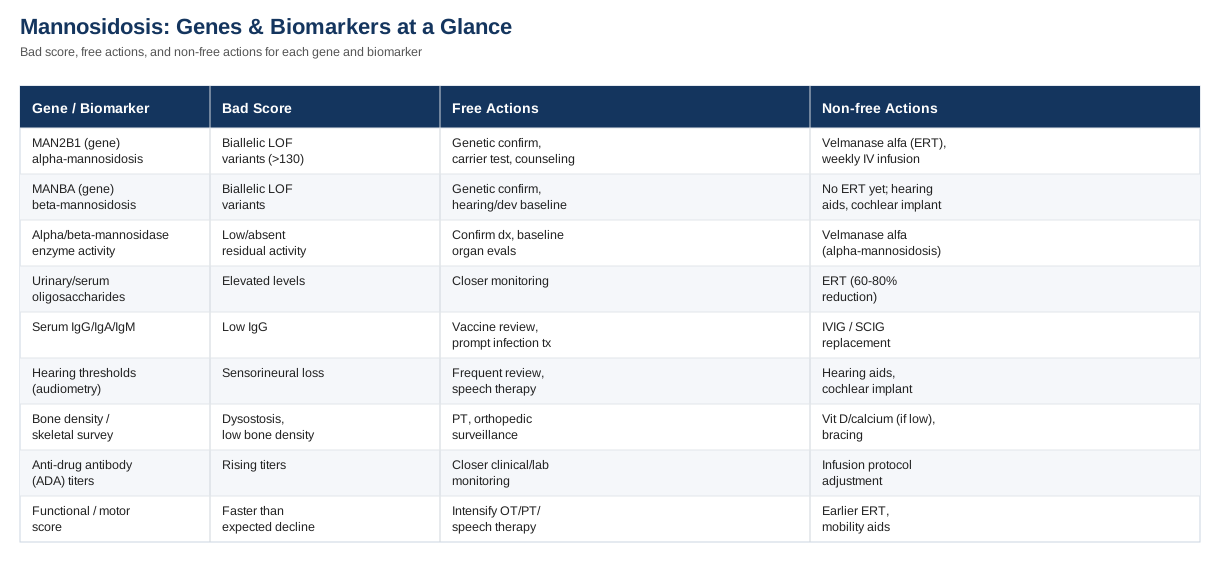
The Seven Biomarkers That Actually Tell You How Mannosidosis Is Behaving
Genetic test results tell you what caused the disease. They do not tell you how the disease is behaving this year, whether a treatment is working, or whether a new symptom needs urgent attention. That is the job of biomarkers — repeatable lab values, imaging findings, and functional scores that a metabolic specialist follows over time. Below are the seven that matter most in alpha-mannosidosis and beta-mannosidosis, roughly in the order they tend to come up in care.
A general note before the list: mannosidosis is not a condition where supplements or biohacking protocols change the underlying biology. The enzyme deficiency is structural — a broken or missing protein — and no nutrient, herb, or over-the-counter compound corrects that. What follows is deliberately split into "plan without supplements" (monitoring, supportive care, and equipment) and "plan with supplements or equipment," and in this condition the second category is dominated by prescription medical therapy and assistive devices rather than anything you would buy in a supplement aisle. Every intervention below should go through the metabolic or genetics team already managing the case.
1. Alpha-mannosidase (or beta-mannosidase) enzyme activity
This is the biomarker that confirms the diagnosis in the first place, and it is worth understanding even after the diagnosis is settled, because activity level correlates loosely with disease severity. Enzyme activity is measured in leukocytes (white blood cells) or cultured fibroblasts, and a residual activity near zero tends to track with the more severe phenotype, while some measurable residual activity is more common in milder, later-onset presentations, as described in the alpha-mannosidosis GeneReviews clinical summary.
How to measure it: a blood draw sent to a specialized biochemical genetics laboratory, typically arranged through a metabolic or genetics clinic rather than a standard hospital lab. Cost, when not covered by insurance or a national health system, generally runs in the low hundreds of dollars in the United States; in most countries with public healthcare, this test is bundled into the diagnostic workup and not billed separately.
If the result is low (as expected at diagnosis): the plan without supplements is confirmation of the diagnosis with a second sample or genetic testing, baseline organ-system evaluations (hearing, immune, skeletal, developmental), and referral to a center experienced with lysosomal storage diseases. There is no supplement or lifestyle change that raises enzyme activity. The plan with equipment, for alpha-mannosidosis specifically, is enzyme replacement therapy with velmanase alfa, a recombinant human alpha-mannosidase infused weekly at 1 mg/kg intravenously; it does not raise blood enzyme activity to normal, but it clears the accumulated substrate the missing enzyme would otherwise have broken down, as shown in the phase 3 randomized, placebo-controlled trial and its long-term extension follow-up. Infusions are lifelong, not cycled, and common side effects are infusion-associated reactions such as headache, fever, or urticaria, usually manageable with slower infusion rates or premedication.
2. Urinary and serum oligosaccharide levels
This is arguably the single most practical biomarker for day-to-day disease monitoring, because it moves in response to treatment and correlates with functional status. Excess mannose-rich oligosaccharides accumulate because the missing enzyme cannot break them down, and their level in blood or urine tracks disease burden and treatment response, a relationship documented in the alpha-mannosidosis natural history longitudinal study.
How to measure it: a urine sample (oligosaccharide screen) or a specialized serum assay, run at a biochemical genetics lab. Cost is typically in the range of 100 to 400 US dollars where billed directly, though most patients being followed at a metabolic center have this bundled into routine visits every six to twelve months.
If the level is high: the plan without supplements or equipment is simply closer monitoring and confirmation that no acute infection or other stressor is inflating the value, since oligosaccharide levels can fluctuate. There is genuinely nothing over-the-counter that lowers substrate accumulation in a lysosomal storage disease. The plan with equipment is, again, enzyme replacement therapy for alpha-mannosidosis, where trial data show mean serum oligosaccharide reductions of roughly 60 to 80 percent with sustained weekly treatment. For beta-mannosidosis, no enzyme replacement therapy is approved yet, so this biomarker is currently tracked mainly for prognostic and research purposes rather than treatment titration.
3. Serum immunoglobulin levels (IgG, IgA, IgM)
Recurrent infections are one of the earliest and most disruptive features of alpha-mannosidosis, and low immunoglobulin G is a big part of why. Tracking IgG gives a concrete, actionable number behind what would otherwise just be "another ear infection."
How to measure it: a standard serum immunoglobulin panel, available at any hospital or reference lab, costing roughly 30 to 100 US dollars when paid out of pocket, and usually checked every 6 to 12 months or whenever infection frequency changes.
If IgG is low: the plan without supplements or equipment includes updated vaccination review (with attention to whether live vaccines are appropriate), prompt treatment of infections rather than watchful waiting, and closer pediatric or infectious disease follow-up. The plan with equipment/medical therapy, for meaningful hypogammaglobulinemia with recurrent infections, is physician-directed immunoglobulin replacement (IVIG or subcutaneous immunoglobulin), typically infused every 3 to 4 weeks, alongside enzyme replacement therapy, which has itself been shown to raise IgG levels over time in treated patients, per the same long-term velmanase alfa data referenced above. Side effects of immunoglobulin replacement can include headache, low-grade fever, or rare aseptic meningitis-like reactions, which is why it is initiated and monitored by a specialist, not self-directed.
4. Hearing thresholds (audiometry)
Sensorineural hearing loss is often one of the very first signs of alpha-mannosidosis, frequently detected around two to three years of age, and it tends to be relatively stable rather than sharply progressive once it appears, based on outcome data from a long-term single-center outcome study. Because hearing directly affects language development and social functioning, it is one of the highest-value biomarkers to track consistently.
How to measure it: formal audiometry with a pediatric or general audiologist, typically 50 to 250 US dollars per visit where billed directly, repeated roughly once a year, or sooner if speech or behavior changes raise concern.
If hearing thresholds are worse than expected: the plan without supplements or equipment is simply more frequent audiological review and early referral to speech and language therapy, since delayed language support compounds the impact of hearing loss. The plan with equipment is hearing aids, fitted and reprogrammed as thresholds change, and in more significant sensorineural loss, cochlear implantation, which has been used successfully in alpha-mannosidosis patients. There are no supplements shown to preserve or restore hearing in this condition; the value of "equipment" here is literal — amplification devices, not pills.
5. Skeletal survey and bone density (DXA)
Dysostosis multiplex — a pattern of skeletal changes affecting the spine, long bones, and joints — along with reduced bone density, is common and can meaningfully affect mobility and pain over time, a burden confirmed in an international caregiver and patient survey on mobility, pain, and quality of life in alpha-mannosidosis.
How to measure it: a skeletal X-ray survey (roughly 200 to 600 US dollars if billed directly) at baseline, and periodic DXA bone density scans (roughly 100 to 300 US dollars), typically every one to two years, or more often if fractures or scoliosis progression are a concern.
If results show significant skeletal disease or low bone density: the plan without supplements or equipment centers on physical therapy for joint range of motion and posture, and orthopedic surveillance for scoliosis or hip changes, with surgery reserved for specific structural problems. The plan with supplements or equipment includes lab-guided vitamin D and calcium supplementation only if an actual deficiency is confirmed on bloodwork — blanket high-dose supplementation without a documented deficiency is not supported and carries a real risk of hypercalcemia if overdone — plus bracing, orthotics, or mobility aids as needed, and physical therapy typically delivered two to three sessions per week during active treatment phases before tapering to a maintenance schedule.
6. Anti-drug antibody (ADA) titers, for patients on enzyme replacement therapy
This one only applies once a patient is on velmanase alfa, but it matters enormously for anyone who is, because the body can develop antibodies against the infused enzyme that blunt its effectiveness. A study looking specifically at genotype, subcellular localization, and antidrug antibody status found that antibody development varies by underlying MAN2B1 genotype and can influence long-term treatment response.
How to measure it: a specialized immunoassay, generally run through the treating specialty center or the drug manufacturer's monitoring program rather than a local lab, so it is rarely an out-of-pocket cost separate from the treatment program itself.
If antibody titers are rising and oligosaccharide levels are correspondingly climbing despite continued treatment: the plan without supplements or equipment is closer clinical and lab monitoring to distinguish a transient antibody response from one that is genuinely blunting efficacy. The plan with equipment/medical management is adjustment of the infusion protocol under specialist guidance — this is not something to manage by changing supplement intake, since antibody formation against a therapeutic protein is an immunological process, not a nutritional one.
7. Functional and neurodevelopmental scores
Numbers on a lab report only matter insofar as they connect to how someone actually functions day to day. Standardized developmental and cognitive testing in children, adaptive behavior scales, and physical function measures such as the six-minute walk test and stair-climb test have all been used as outcome measures in alpha-mannosidosis research and are increasingly used clinically to track trajectory, as outlined in the natural history study referenced earlier.
How to measure it: a formal neuropsychological or developmental evaluation (roughly 1,500 to 3,000 US dollars if not covered by insurance or school-based services) every one to two years, alongside simpler, low-cost functional tests like the six-minute walk test that can be done in a standard clinic visit at little to no additional cost.
If functional scores are declining faster than expected: the plan without supplements or equipment is intensifying occupational therapy, physical therapy, and speech-language therapy, and revisiting the educational or vocational support plan. The plan with equipment/medical therapy is earlier or more consistent enzyme replacement therapy where indicated, since earlier treatment initiation is associated with better preservation of function in the long-term outcome data, plus mobility aids (walkers, orthotics, adapted seating) matched to the specific functional deficit rather than used generically.
Tracking these seven values consistently, ideally on the same schedule your metabolic specialist already uses, turns "the disease is doing something" into a specific, actionable conversation at every visit — which is really the whole point of biomarker tracking in a condition like this.
What the MAN2B1 and MANBA Genes Actually Explain
Mannosidosis is unlike the polygenic, lifestyle-modifiable variants that genomics commentators like Ali Torkamani or biohacking-focused figures like Gary Brecka typically discuss — MTHFR, APOE4, FTO, and the like, where a variant nudges a risk and lifestyle changes can meaningfully offset it. MAN2B1 and MANBA are different in kind: single genes, each recessive, each with a large, well-defined biological effect once both copies carry a disease-causing variant. Understanding the difference matters, because it changes what "fixing" the gene can realistically mean.
MAN2B1 — alpha-mannosidosis
MAN2B1, located on chromosome 19, encodes lysosomal alpha-mannosidase (LAMAN), the enzyme responsible for one of the final steps in breaking down mannose-containing sugar chains attached to proteins as old glycoproteins are recycled inside the cell. When both copies of MAN2B1 carry disease-causing variants — more than 130 have been catalogued — LAMAN activity is reduced or absent, and undigested oligosaccharides accumulate inside lysosomes throughout the body, producing the immune, skeletal, hearing, and neurological features described above. Severity correlates loosely with how much residual enzyme activity the specific variant combination allows, which is part of why the condition spans a spectrum from severe childhood-onset disease to milder, slower-progressing adult presentations, as detailed in the GeneReviews entry for alpha-mannosidosis.
If the gene is bad: the plan without supplements is genetic confirmation, carrier testing for parents and at-risk relatives, genetic counseling around recurrence risk (25 percent for future pregnancies when both parents are carriers), and enrollment in the baseline monitoring program described in the biomarkers section above. Nothing about diet, exercise, or supplementation changes what MAN2B1 does or does not produce — this is a structural protein deficiency, not a regulatory or epigenetic one.
If the plan needs supplements or equipment: alpha-mannosidosis is, notably, one of the few ultra-rare lysosomal storage diseases with an approved disease-modifying therapy. Velmanase alfa (brand name Lamzede) is a recombinant form of the missing enzyme, infused weekly and continued indefinitely; it reduces substrate accumulation and improves several functional endpoints, though it does not reverse skeletal or hearing damage that occurred before treatment started. Beyond the approved therapy, early-stage gene therapy research is underway: a preclinical study of choroid-plexus-targeted AAV gene therapy showed restoration of enzyme activity in the brain of an animal model, a promising but still investigational approach that has not yet reached human trials. A broader review of therapeutic strategies for alpha-mannosidosis frames enzyme replacement, substrate reduction approaches, and gene therapy as complementary rather than competing directions for future treatment.
MANBA — beta-mannosidosis
MANBA, on chromosome 4, encodes beta-mannosidase, the enzyme that performs the very last cleavage step in the same glycoprotein degradation pathway, right after alpha-mannosidase has done its part. When MANBA is disrupted, a different but related disaccharide accumulates, producing a presentation that overlaps with alpha-mannosidosis in some respects — hearing loss and developmental delay are common to both — but tends to be even more variable, ranging from mild hearing loss alone to significant neurodegeneration in infantile-onset cases. One particular MANBA variant has been identified as a recurrent, ethnic-specific cause of hereditary hearing loss and beta-mannosidosis in the Czech and Slovak Roma population, illustrating how founder variants can concentrate this ultra-rare disease in specific communities, as described in a study of the MANBA c.2158-2A>G variant.
If the gene is bad: the plan without supplements is, again, genetic confirmation and counseling, plus a baseline hearing and developmental assessment, since these are the two domains most consistently affected. Given how variable the phenotype is, serial monitoring over the first few years of life is what actually clarifies severity, rather than the genetic result alone.
If the plan needs supplements or equipment: unlike alpha-mannosidosis, beta-mannosidosis currently has no approved enzyme replacement therapy or other disease-modifying treatment. Management is entirely supportive — hearing aids or cochlear implants for hearing loss, early intervention and special education support for developmental delay, and symptomatic management of any neurological features that arise. This is worth stating plainly rather than glossing over: for this specific gene, the honest current answer to "what fixes it" is that no targeted medical therapy exists yet, and anyone offering a supplement-based fix for a structural enzyme deficiency of this kind should be treated with real skepticism.
Carrier testing, inheritance, and family planning
Both genes are inherited in an autosomal recessive pattern, meaning a person needs a disease-causing variant from each parent to be affected. Parents of an affected child are, by definition, carriers, and each future pregnancy carries a 25 percent chance of being affected, a 50 percent chance of being an unaffected carrier, and a 25 percent chance of inheriting neither variant. Once the specific familial variants are known, testing options expand considerably: targeted carrier testing for siblings and extended family, prenatal diagnosis via chorionic villus sampling or amniocentesis, and preimplantation genetic testing alongside IVF for families planning future pregnancies. A recently reported case of prenatal diagnosis of a MAN2B1 variant illustrates how this pathway is increasingly used in families with a known diagnosis, allowing earlier planning and, in some cases, earlier initiation of treatment after birth. None of this changes the gene itself, but it does change how much lead time a family has to prepare, arrange specialist care, and in alpha-mannosidosis, potentially start enzyme replacement therapy closer to birth rather than after years of undiagnosed decline.
Why "epigenetics" is not the right lens here
For polygenic traits — cardiovascular risk, mood regulation, weight tendency — epigenetic modifiers (methylation patterns, diet, exercise, sleep) genuinely change how strongly a risk variant is expressed, which is why influencers in that space talk about "turning genes on or off." Mannosidosis does not work that way. MAN2B1 and MANBA are high-penetrance, structural-protein genes: when both copies carry a loss-of-function variant, the enzyme is absent or nonfunctional regardless of diet, stress, sleep, or methylation status. There is no credible published evidence that any lifestyle or epigenetic intervention changes MAN2B1 or MANBA expression in a way that meaningfully restores enzyme function. Framing this condition as something to "optimize" through the same epigenetic levers used for common polygenic traits sets an expectation that the biology simply cannot meet, which is exactly why the biomarker section above focuses on monitoring and medical therapy rather than lifestyle modification of the gene itself.
The Book That Changes How You Think About Rare Disease Treatment
For families navigating a lysosomal storage disease diagnosis, one of the more useful things to read is not a mannosidosis-specific text but The Cure: How a Father Raised $100 Million — and Bucked the Medical Establishment — In a Quest to Save His Children, journalist Geeta Anand's account of John Crowley and the development of the first enzyme replacement therapy for Pompe disease, another lysosomal storage disorder in the same broad family as mannosidosis, sharing the same underlying biology of a missing enzyme, the same accumulation of undigested substrate, and, eventually, the same treatment strategy. It matters here not because Pompe disease and mannosidosis are the same condition, but because the treatment paradigm — recombinant enzyme, delivered by regular infusion, developed through exactly the kind of trial structure described above for velmanase alfa — is the same paradigm mannosidosis families are now living inside, decades after Crowley's family lived through its earliest, least certain version. Ten things worth taking from it:
1. A rare diagnosis is a starting point, not a verdict
When Crowley's children were diagnosed with Pompe disease in the 1990s, there was no treatment available anywhere in the world, and the prognosis given to the family was measured in months, not years. The book documents how that changed within a decade — a timeline worth remembering when a diagnosis feels like a dead end today, and a useful check against the assumption that "no treatment now" means "no treatment ever."2. Enzyme replacement therapy was, at the time, a genuinely novel idea
The concept of manufacturing a missing enzyme at industrial scale and infusing it into patients on a regular schedule was unproven for a disease this rare, and many researchers doubted it could be done economically for a patient population numbering in the hundreds. The same basic mechanism — recombinant enzyme, regular intravenous infusion — now underlies velmanase alfa for alpha-mannosidosis, proof that the model generalizes across lysosomal storage diseases.3. Clinical trial access is not just for the desperate — it is a legitimate pathway
Crowley's children were treated through a company he helped found specifically to get a trial running, an extreme version of a much more ordinary truth: enrolling in a clinical trial, when one exists and eligibility criteria are met, is a structured, monitored, and often closely supervised path to early access, not a last-resort gamble. Most families will never need to start a biotech company, but the underlying lesson about taking trial enrollment seriously as an option holds regardless of scale.4. Earlier treatment preserves more function than later treatment
The book is blunt about this: enzyme replacement does not reverse damage that has already happened to muscle, bone, or nerve tissue — it can only slow or halt further accumulation of the underlying substrate. The same holds for velmanase alfa in alpha-mannosidosis, where the biomarker data referenced earlier in this article show substrate reduction and functional stabilization after treatment starts, not reversal of hearing loss or skeletal changes that predate it. This is part of why earlier diagnosis, through newborn screening or prompt biomarker follow-up, carries real weight beyond just knowing sooner.5. A specialist care team matters as much as the drug itself
Much of the book's second half is spent assembling cardiology, pulmonology, and physical therapy expertise around the treatment, because the enzyme alone did not address every organ system already affected by years of disease. It is a direct reminder that a single infusion, however effective, does not replace coordinated multidisciplinary care across hearing, immunology, orthopedics, and developmental support.6. Regulatory and insurance battles are part of the disease course, not a side issue
Getting a therapy approved by regulators and then getting it covered by insurers turned out to be two separate, sequential fights, each with its own timeline and its own risk of delay. Families dealing with an orphan drug like velmanase alfa, priced and administered as a specialty infusion, often find this is still true today, which makes early conversations with a case manager or patient advocacy group worth having before a crisis forces the issue.7. Patient registries and natural history studies are how these diseases get taken seriously
Long before any trial can start, someone has to methodically document what the untreated disease actually looks like over years — how fast hearing declines, how immunoglobulin levels trend, how skeletal changes progress — exactly the kind of longitudinal data referenced throughout the biomarkers section of this article, and exactly what made the velmanase alfa trials possible to design and interpret in the first place.8. Hope and realism are not opposites
The book does not pretend the treatment cured Crowley's children, and it does not shy away from describing the setbacks, infusion complications, and slow, uneven progress along the way. It manages expectations honestly while still showing that meaningful, measurable improvement was possible — the same tone this article has deliberately tried to hold throughout, rather than leaning toward either false optimism or flat discouragement.9. Community accelerates everything
Advocacy organizations built the early patient registries, funded pilot research, and connected families to emerging trials long before any pharmaceutical company took serious commercial interest in an ultra-rare disease. For mannosidosis, the closest equivalent is the International Society for Mannosidosis and Related Diseases (ISMRD), which maintains family networks, a quarterly newsletter, and connections to the research groups running natural history studies and trials referenced in this article.10. The gap between "no treatment" and "an approved treatment" can close faster than expected
It took roughly a decade for Pompe disease to move from untreatable to having an approved, effective enzyme replacement therapy on the market. Alpha-mannosidosis made a comparable journey with velmanase alfa; beta-mannosidosis has not yet reached that point, but the underlying biology is structurally similar, the treatment paradigm is proven, and the precedent set by both Pompe disease and alpha-mannosidosis suggests it is not permanently out of reach — just not there yet.Complementary Approaches Worth Considering
It is worth being direct about this section: there are no complementary or alternative therapies with clinical trial evidence specific to mannosidosis itself — the disease is simply too rare, and too recently characterized, for that dedicated research to exist. What follows is evidence drawn from related conditions and shared symptoms (developmental disability, joint and mobility limitations, ataxia), applied cautiously and clearly labeled as extrapolated rather than disease-specific. None of the three approaches below are positioned as alternatives to enzyme replacement therapy, immunoglobulin support, hearing devices, or orthopedic care — they are additions that may help with specific, persistent symptoms alongside medical management, not substitutes for it.
Music therapy
Music therapy is a structured, therapist-led use of musical activity — singing, rhythm work, active listening, simple instrument play — to support communication, engagement, and behavior regulation, and it is relevant here because developmental delay, speech impairment, and behavioral or psychiatric features are core parts of both alpha- and beta-mannosidosis, not incidental to it. A classroom-based study of children with intellectual and developmental disabilities found measurable engagement and behavioral benefits from a structured music therapy model delivered in an educational setting, though this study was not conducted in mannosidosis patients specifically, and no trial in this exact population currently exists, so the evidence should be read as supportive rather than definitive.
In practice, this looks like a weekly 30- to 45-minute session with a credentialed music therapist, often folded into an existing early intervention or special education plan rather than pursued as a stand-alone treatment. Sessions are typically ongoing rather than time-limited, since the goal is sustained engagement and communication support rather than a course of treatment with a defined endpoint, and progress is usually tracked through the same developmental and behavioral assessments already used to follow the underlying condition.
This is one of the lowest-risk options on this list: music therapy carries essentially no physical risk, no known interaction with enzyme replacement therapy or immunoglobulin infusions, and no meaningful side effect profile beyond the ordinary fatigue of any therapy session. The main practical consideration is cost and the availability of a qualified therapist in your area, and whether it can be built into an existing school or early-intervention plan rather than billed as a separate service.
Massage and manual therapy
Manual therapy — passive stretching, soft tissue mobilization, and guided joint range-of-motion work — is relevant because joint stiffness, reduced mobility, and skeletal discomfort are common in mannosidosis and often persist despite enzyme replacement therapy, a burden directly documented in the mobility and pain findings from the international alpha-mannosidosis caregiver survey referenced earlier in this article, which found that limitations in mobility, self-care, and comfort remain a significant part of daily life even in treated patients.
There is no mannosidosis-specific randomized trial of massage or manual therapy, and this needs to be stated clearly rather than implied away. The rationale instead extrapolates from standard physical therapy practice in related skeletal dysplasia and lysosomal storage disease populations, where manual mobilization is used specifically to preserve hip, shoulder, and spinal range of motion as bone and connective tissue changes progress. That is a reasonable, low-risk extrapolation, but it is an extrapolation, not disease-specific proof.
A realistic protocol is two to three sessions per week during periods of active joint stiffness or after a period of reduced mobility (illness, post-surgical recovery), delivered by a physical therapist rather than a general massage therapist given the underlying skeletal fragility, tapering down to an as-needed maintenance schedule once range of motion stabilizes. The main caution is avoiding aggressive joint manipulation or high-force techniques in bones already affected by dysostosis multiplex or reduced bone density, which is exactly why this should be coordinated with, and never substituted for, ongoing orthopedic follow-up.
Biofeedback-based balance training
Ataxia, low muscle tone, and gait instability are recognized features of alpha-mannosidosis, and biofeedback-based balance training — using visual, auditory, or vibrotactile feedback to help a person consciously correct posture and weight shift in real time — has reasonable supporting evidence in other ataxic conditions. A broader review of rehabilitation approaches in cerebellar ataxia summarizes multiple randomized and controlled trials of posturographic and vibrotactile feedback training showing improvements in postural control, gait, and quality of life across various ataxic and vestibular conditions.
None of the trials in that review included mannosidosis patients specifically, so this, too, is an extrapolation from shared symptomatology — gait instability and coordination difficulty — rather than direct disease-specific evidence, and it is worth being upfront about that gap given how rare mannosidosis is and how unlikely a dedicated trial is to be funded any time soon.
A practical version is a structured program of two to three sessions per week with a physical therapist trained in vestibular or balance rehabilitation, typically delivered in a six- to eight-week block before formal reassessment of gait and fall risk, using simple visual feedback tools such as a balance board paired with a screen, or vibrotactile cueing devices where available. Side effects are essentially limited to fatigue and the need for close supervision to prevent falls during early sessions, particularly before the person and therapist have a clear sense of baseline stability.
Taken together, these three approaches share a common thread: each addresses a real, well-documented symptom of mannosidosis — communication delay, joint stiffness, gait instability — using evidence borrowed from adjacent, better-studied populations rather than from trials of mannosidosis patients themselves. That is a meaningfully different evidence standard than the biomarker-driven, disease-specific data behind enzyme replacement therapy, and it is worth holding both truths at once: these are reasonable, low-risk additions worth discussing with a care team, and none of them have been proven in this specific disease.
Conclusion
Mannosidosis is defined by a single gene going wrong, but it is managed through a handful of numbers that move over time — enzyme activity, oligosaccharide burden, immunoglobulin levels, hearing thresholds, bone density, antibody status if on treatment, and functional scores. None of these can be corrected with a supplement, and being skeptical of anyone who claims otherwise is reasonable and warranted. What does change outcomes is early diagnosis, consistent monitoring on a known schedule, appropriate use of the one approved enzyme replacement therapy that exists for alpha-mannosidosis, supportive equipment matched to the specific deficit, and a care team that treats the whole pattern rather than one symptom at a time.
The most useful next step is rarely dramatic: bring the seven biomarkers above to your next appointment, ask specifically when each was last checked and when it is due again, and if a therapy decision is on the table, ask what it is expected to change and what it will not. That single habit — tracking specific numbers instead of a general sense of "how things are going" — is the most concrete form of hope this article can honestly offer.
Musculoskeletal: Bone Conditions
Neurological: Movement Disorders
Mental Health: Neurodevelopmental Conditions