This article contains AI generated content.
May-Thurner Syndrome: 3 Genes and 7 Biomarkers to Track
Introduction
If you have been told you have May-Thurner syndrome, or you suspect it after a bout of unexplained left-leg swelling, you have probably already noticed something frustrating: most of the information available online treats it as a purely mechanical problem. The right common iliac artery presses against the left common iliac vein, blood flow slows, and sometimes a clot forms. True, but incomplete. What that explanation leaves out is why some people with this exact anatomical setup go their whole lives without a clot, while others develop a deep vein thrombosis in their twenties or thirties.
Generic advice, "wear compression stockings, stay active, drink water," is not wrong, but it is built for an average person who does not exist. It does not explain why your D-dimer keeps drifting upward after treatment, why your clot came back despite doing everything right, or why a relative had the same vein compression and never had a problem. The missing piece is usually underneath the anatomy: a handful of clotting-related genes and blood markers that shape how your body responds to that compression in the first place.
This article takes a more layered approach. Instead of repeating that May-Thurner syndrome is "compression plus clotting," it walks through the specific biomarkers that a vascular specialist or hematologist would actually use to judge your personal risk, how each one is measured, what a normal or abnormal result really means, and what can realistically be done about it, with or without supplements. It then goes further into the genetic side, because two well-studied clotting mutations show up disproportionately often in people diagnosed with this syndrome.
None of this replaces a workup with a vascular surgeon, interventional radiologist, or hematologist, and nothing here reverses an anatomical compression. But better information changes the questions you ask at your next appointment, and that tends to lead to better decisions. The sections ahead cover the blood markers worth tracking, the genes worth understanding, a set of ideas from longevity-focused medicine that reframe how clotting risk is usually discussed, and a short review of complementary approaches with actual evidence behind them for venous disease.
Summary
May-Thurner syndrome is often described as a plumbing problem, but the real story is about how your blood behaves inside that narrowed vein. Two people with an identical degree of compression can have very different outcomes depending on a small set of clotting proteins, inflammation markers, and inherited mutations. This article walks through the seven biomarkers worth asking your doctor about, from D-dimer and fibrinogen to the natural anticoagulant proteins your body relies on to keep blood moving smoothly. It then looks at the three genes, F5, F2, and MTHFR, that show up again and again in people with this syndrome, explains what each one actually changes, and lays out realistic ways to manage that risk, with and without supplements. Beyond the labs, you will find ten reframing ideas drawn from longevity medicine's approach to clotting and vascular risk, plus a review of complementary approaches, yoga, manual lymphatic drainage, qigong, and mindfulness, that have real human evidence behind them for venous conditions. The goal throughout is precision over reassurance: knowing which numbers matter, why they matter, and what is actually within your control.
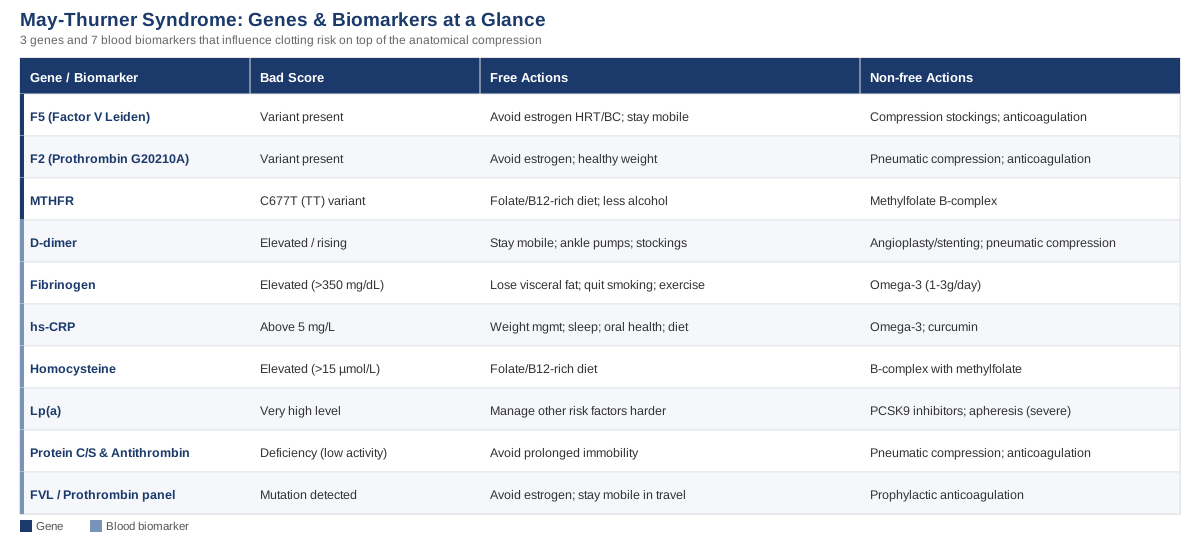
7 Biomarkers Worth Tracking After a May-Thurner Diagnosis
The anatomical compression at the heart of May-Thurner syndrome does not change from one week to the next, but the biology around it does. Inflammation, clotting-factor levels, and the balance between your body's pro-clotting and anti-clotting proteins can shift with weight, activity, hormones, and time since a clot. That is exactly why a vascular team looks past the imaging and into the blood. The following seven markers are the ones most commonly used to size up thrombotic risk in this specific context, ranked roughly by how directly they are used in day-to-day decision-making.
D-dimer
D-dimer is a fragment left behind when the body breaks down a fibrin clot. It does not tell you where a clot is or how it formed, only that clotting and clot-breakdown activity is happening somewhere in the body right now. In someone with known May-Thurner syndrome, a rising D-dimer after treatment, or one that never fully normalizes, is one of the more concrete signals that the compressed segment is still generating low-grade clot activity or that a prior clot has not fully resolved. It is also one of the standard tools used to judge how long anticoagulation should continue after a first deep vein thrombosis.
How to measure it
D-dimer is a simple blood draw, processed by almost any hospital or commercial lab, and typically costs between 20 and 50 US dollars out of pocket when not covered by insurance. It is usually ordered by a physician rather than purchased independently, both because a single number means little without clinical context and because it needs to be interpreted alongside the timing of any recent clot, surgery, or anticoagulant use.If the result is abnormal: the plan without supplements or equipment
An elevated D-dimer is not something you fix with lifestyle changes the way you might improve cholesterol. The realistic non-supplement plan is mechanical and behavioral: staying mobile rather than sitting or standing still for long stretches, wearing graduated compression stockings on the affected leg, doing regular ankle pumps and calf raises to assist venous return, and treating the underlying compression directly through the interventional options (angioplasty, stenting) that a vascular specialist may recommend. A 2021 population-based cohort study found that people with reduced calf muscle pump function had a meaningfully higher risk of venous thromboembolism, which is part of why calf-activating movement is taken seriously rather than treated as an afterthought reduced calf muscle pump function and VTE risk.If the result is abnormal: the plan with supplements or equipment
There is no supplement that safely lowers D-dimer when it is elevated for a real clotting reason, and trying to self-treat a persistently high D-dimer with over-the-counter products is not a reasonable substitute for medical evaluation. Where equipment genuinely helps, it is a properly fitted compression garment (measured by a professional, not guessed from a size chart) and, in select cases, a pneumatic compression device used at home for a set period each day. Fish oil is sometimes mentioned for general clot-related markers, but its effect on D-dimer specifically is weak and inconsistent, and it can add to bleeding risk if you are already on an anticoagulant, so this is a conversation to have with the prescribing physician before adding anything.Fibrinogen
Fibrinogen is the raw material your body converts into fibrin, the mesh that forms the structural core of a clot. It is also an acute-phase reactant, meaning it rises with inflammation, infection, smoking, and excess visceral fat, independent of any vein problem. In the context of venous compression, a chronically elevated fibrinogen adds fuel to an already slow-flowing system, which is part of why it is treated as a modifiable risk factor rather than background noise.
How to measure it
A standard fibrinogen assay costs roughly 20 to 50 US dollars and is included in many expanded coagulation panels. It is widely available and does not require special handling beyond a routine venous blood draw.If the result is abnormal: the plan without supplements or equipment
Fibrinogen responds reasonably well to the same interventions that lower general inflammation: reducing visceral fat, stopping smoking (smoking is one of the more reliable ways to raise fibrinogen), regular aerobic exercise, and treating any untreated infection or inflammatory condition in the background. These changes take weeks to months to show up in a repeat test, not days.If the result is abnormal: the plan with supplements or equipment
Omega-3 fatty acids (roughly 1 to 3 grams combined EPA/DHA daily) have some evidence for modestly lowering fibrinogen alongside triglycerides, and are generally well tolerated, though fishy aftertaste and mild gastrointestinal upset are common at higher doses. As with any agent that touches the clotting cascade, check with your physician before starting if you are on an anticoagulant or antiplatelet medication, since the combined effect on bleeding risk is what matters, not either drug alone. There is no equipment-based fix for fibrinogen; this is a metabolic and inflammatory marker, not a mechanical one.High-sensitivity C-reactive protein (hs-CRP)
hs-CRP is the more sensitive cousin of standard CRP, capable of detecting the low-grade inflammation that standard testing misses. Its relevance here is specific and worth taking seriously: a 2012 study following patients after deep vein thrombosis found that a CRP above 5 mg/L was one of the strongest independent predictors of going on to develop post-thrombotic syndrome, the chronic swelling, pain, and skin changes that can follow a DVT markers of coagulation, fibrinolysis and inflammation in relation to post-thrombotic syndrome. That finding shifted some of the thinking in this field toward inflammation, not just clot burden, as a driver of long-term outcomes.
How to measure it
hs-CRP is a routine blood test costing 15 to 40 US dollars, widely offered by direct-to-consumer lab services as well as through a physician's order. Because it is sensitive to any current infection or recent injury, it is best measured when you are not acutely sick.If the result is abnormal: the plan without supplements or equipment
Weight management, consistent aerobic activity, adequate sleep, and dental and gum health (chronic low-grade oral infection is an underrated contributor to persistent CRP elevation) are the highest-yield, no-cost levers. Reducing ultra-processed food intake and alcohol also moves this marker in a meaningful number of people within a few months.If the result is abnormal: the plan with supplements or equipment
Omega-3 fatty acids again show up here, with modest but real anti-inflammatory effects at 1 to 2 grams daily, typically taken with food to reduce reflux. Curcumin (with piperine or a phospholipid formulation for absorption) has some evidence for lowering inflammatory markers, but it can also mildly increase bleeding risk and interacts with certain anticoagulants, so it deserves the same caution as fish oil in anyone on blood thinners. There is no equipment intervention for hs-CRP specifically.Homocysteine
Homocysteine is an amino acid byproduct that the body normally recycles using folate, B12, and B6. When that recycling is inefficient, often due to the MTHFR gene variant discussed later in this article, homocysteine accumulates and has been linked to endothelial damage and a modestly higher clotting tendency. A widely cited 2005 meta-analysis of 27 studies found that each 5 micromol/L rise in homocysteine was associated with a 27 percent higher risk of venous thrombosis in prospective studies homocysteine, MTHFR and risk of venous thrombosis meta-analysis.
How to measure it
A fasting homocysteine test costs about 30 to 70 US dollars and is available through most commercial labs. Fasting improves accuracy since recent protein intake can transiently raise the result.If the result is abnormal: the plan without supplements or equipment
Increasing dietary intake of folate-rich foods (leafy greens, legumes, liver) and B12 sources (eggs, dairy, fish, meat) is the first step, particularly useful for anyone following a largely plant-based diet who may be under-consuming B12. This is a marker that genuinely responds to diet within a few months for most people.If the result is abnormal: the plan with supplements or equipment
A B-complex supplement providing folate (or methylfolate for those with reduced MTHFR enzyme activity), B12, and B6 is the standard, well-tolerated, low-risk approach, generally taken once daily. Side effects are uncommon at normal doses, though very high-dose B6 over long periods has rarely been linked to nerve symptoms, which is a reason to avoid megadosing beyond what a standard B-complex provides. Retesting after 8 to 12 weeks is reasonable to confirm the correction rather than assuming it worked.Lipoprotein(a), or Lp(a)
Lp(a) is best known as a cardiovascular risk marker championed by researchers like Thomas Dayspring and Allan Sniderman, but its connection to venous clotting is genuinely debated rather than settled. A 2017 systematic review and meta-analysis found an association between elevated Lp(a) and venous thromboembolism risk, largely at very high concentrations Lp(a) as a risk factor for venous thromboembolism: systematic review and meta-analysis, while a more recent 2025 review noted that clinical and genetic evidence remains inconsistent overall, and that the signal seems limited to the upper extreme of Lp(a) levels lipoprotein(a) and venous thromboembolism: association, causality, and medications. It is included here because it is a one-time, informative test that also flags cardiovascular risk well beyond the venous system, not because it is a settled predictor of clot recurrence in May-Thurner syndrome specifically.
How to measure it
Lp(a) is a simple blood test, typically 30 to 100 US dollars depending on the lab, and because it is roughly 80 to 90 percent genetically determined, most guidelines consider once-in-a-lifetime testing sufficient unless you start a therapy that specifically targets it.If the result is abnormal: the plan without supplements or equipment
Lp(a) is notoriously resistant to diet and exercise; unlike LDL cholesterol, lifestyle changes move it very little. The honest, non-supplement plan is to treat Lp(a) as a signal to be more aggressive about every other modifiable cardiovascular and clotting risk factor on this list, since Lp(a) tends to compound risk rather than act alone.If the result is abnormal: the plan with supplements or equipment
Niacin can lower Lp(a) modestly but has never been shown to improve clinical outcomes and commonly causes flushing, itching, and, at higher doses, liver enzyme elevation, which is why most lipid specialists no longer recommend it for this purpose alone. The more meaningful "equipment" options are medical rather than a supplement aisle purchase: PCSK9 inhibitors have a modest Lp(a)-lowering effect as a side benefit of their main LDL effect, and newer RNA-targeted therapies (such as antisense oligonucleotides and siRNA agents) designed specifically to lower Lp(a) are in late-stage clinical trials as of 2026 but are not yet broadly approved. For very high Lp(a) with a strong personal or family history of clotting or cardiovascular events, lipoprotein apheresis exists as a last-resort option in select specialized centers. All of these require a specialist, not a self-directed supplement plan.Protein C, Protein S, and antithrombin III
These three proteins are your body's natural brakes on clot formation. Protein C and Protein S work together to inactivate clotting factors, while antithrombin III directly neutralizes thrombin, the enzyme at the center of clot formation. A deficiency in any of the three, whether inherited or acquired, removes some of that braking power. Antithrombin deficiency in particular is considered the single highest-risk inherited thrombophilia, according to the StatPearls overview of hypercoagulable states hypercoagulability, StatPearls.
How to measure it
This is typically a bundled panel costing 150 to 400 US dollars depending on the lab and whether functional (activity) or antigen levels are measured; functional assays are generally preferred since they catch more subtle deficiencies. Timing matters more than with most markers on this list: testing during an acute clot, while on anticoagulants, or during pregnancy can produce misleadingly low results, so this is a test best scheduled with your physician's guidance on timing.If the result is abnormal: the plan without supplements or equipment
There is genuinely no lifestyle fix for a true protein C, protein S, or antithrombin deficiency, and it would be misleading to suggest otherwise. The realistic plan is medical: understanding whether the deficiency is inherited or acquired (liver disease, nephrotic syndrome, and certain medications can lower these proteins without any genetic cause), avoiding known triggers like prolonged immobility, and having a clear, physician-guided plan for high-risk periods such as surgery, long flights, or pregnancy.If the result is abnormal: the plan with supplements or equipment
No supplement restores protein C, protein S, or antithrombin activity. The "equipment" that matters here is intermittent pneumatic compression during high-risk immobility (long surgery, hospitalization) and, when prescribed, anticoagulation itself, which is the direct medical answer to a deficiency in the natural anticoagulant system. This is one of the clearer cases in this article where the honest answer is "see a hematologist," not "try this supplement."Inherited clotting-factor mutations: Factor V Leiden and prothrombin G20210A
These two mutations are usually tested together as a panel and are covered in more depth in the genetics section below, but they belong on a biomarker list because, practically speaking, they are ordered and interpreted the same way as the other blood-based tests here. A small case series specifically examining May-Thurner syndrome patients found that all three cases studied carried Factor V Leiden, prompting researchers to suggest the two conditions may cluster together more often than chance would predict, though this remains based on limited case data rather than large cohort studies.
How to measure it
Unlike the other markers here, this is a one-time genetic test (DNA-based, unaffected by acute clotting or anticoagulant use), costing roughly 150 to 250 US dollars. Because the result never changes, there is no reason to repeat it.If the result is abnormal: the plan without supplements or equipment
Carrying one of these mutations does not by itself mean you need lifelong anticoagulation; most guidelines reserve that for people who have already had a clot or who carry multiple risk factors at once. The practical, no-cost plan is awareness: avoiding estrogen-containing birth control and hormone replacement therapy where possible, discussing prophylactic anticoagulation before surgery or long-haul travel, and staying mobile during any period of prolonged sitting or bed rest.If the result is abnormal: the plan with supplements or equipment
There is no supplement that offsets an inherited clotting-factor mutation, and stacking blood-thinning supplements (high-dose fish oil, nattokinase, high-dose vitamin E, ginkgo) on top of a known mutation without medical supervision is more likely to create an unpredictable bleeding risk than to help. The genuinely useful "equipment" is graduated compression stockings during high-risk periods and, when your physician recommends it, short-term prophylactic anticoagulation around surgery, injury, or pregnancy.Taken together, these seven markers tell a more complete story than the anatomy alone: whether the compression is currently generating clot activity (D-dimer), whether inflammation is running high enough to worsen outcomes (hs-CRP, fibrinogen), and whether your underlying clotting machinery is tilted toward risk before you even factor in the vein compression (homocysteine, Lp(a), the natural anticoagulant proteins, and the inherited mutations). That last category deserves its own closer look, since two specific genes come up repeatedly in the May-Thurner literature.
The Genetic Layer: Factor V Leiden, Prothrombin, and MTHFR
Genetic testing for clotting risk has become far more accessible in recent years, partly through the popularization of consumer genomics by researchers like Ali Torkamani and educators like Gary Brecka, who have both pushed the idea that a handful of well-characterized gene variants deserve more attention in mainstream preventive care than they currently get. In the context of May-Thurner syndrome, three genes come up consistently in the clotting literature. None of them are unique to this syndrome, and none of them guarantee a clot will happen, but each shifts the odds in a measurable, well-studied way.
F5 (Factor V Leiden)
The F5 gene produces Factor V, a protein central to the clotting cascade. The Factor V Leiden variant makes this protein resistant to being switched off by activated Protein C, meaning clots that do form are harder for the body to naturally rein in. It is the most common inherited thrombophilia, present in an estimated 3 to 8 percent of people of European ancestry, and carriers face roughly a three- to eight-fold increase in the relative risk of a first clot, according to the current GeneReviews summary Factor V Leiden thrombophilia, GeneReviews. A small case series on May-Thurner syndrome patients found the mutation in all three cases examined, which is a signal worth discussing with your doctor if you have both diagnoses, though it is far from proof of a universal link given the tiny sample size.
What the gene affects
Carriers do not clot constantly; most heterozygous carriers never develop a thrombosis at all, since penetrance is low and depends heavily on additional triggers like surgery, immobility, pregnancy, and estrogen exposure. The real effect is context-dependent: it lowers the threshold at which other risk factors, including a compressed iliac vein, tip over into an actual clot.If the gene variant is present: the plan without supplements
The highest-value, zero-cost step is avoiding estrogen-containing contraceptives and hormone replacement therapy, since this combination multiplies risk far more than the mutation alone. Beyond that, treat every high-risk period, surgery, casting for a fracture, long-haul flights, pregnancy, as a moment to proactively discuss short-term preventive anticoagulation with your physician rather than waiting for symptoms.If the gene variant is present: the plan with supplements or equipment
Graduated compression stockings during travel or prolonged immobility are the most evidence-supported "equipment" step and carry essentially no downside. There is no supplement that meaningfully compensates for Factor V Leiden; anything marketed as a natural blood thinner (nattokinase, high-dose garlic extract, high-dose fish oil) should be treated with caution and only combined with prescribed anticoagulation under medical supervision, since the goal is predictable clotting control, not an additional uncontrolled variable.F2 (Prothrombin G20210A)
The F2 gene encodes prothrombin, the precursor to thrombin. The G20210A variant raises circulating prothrombin levels, giving the clotting cascade more raw material to work with. Studies estimate this mutation increases deep vein thrombosis risk substantially on its own, and recurrent VTE research has found an approximately five-fold increase in recurrence risk among carriers compared to non-carriers G20210A mutation and risk of recurrent venous thromboembolism.
What the gene affects
Like Factor V Leiden, this mutation alone is rarely the whole story. Its risk multiplies sharply when combined with another thrombophilia, oral contraceptive use, or a mechanical predisposition such as iliac vein compression, which is why panels typically test for it alongside Factor V Leiden rather than in isolation.If the gene variant is present: the plan without supplements
The same principles apply here: minimize modifiable amplifiers (estrogen exposure, prolonged immobility, dehydration during travel), maintain a healthy body weight since obesity independently raises VTE risk, and make sure any surgeon or anesthesiologist knows your carrier status before an elective procedure so appropriate prophylaxis is planned in advance.If the gene variant is present: the plan with supplements or equipment
Intermittent pneumatic compression devices during hospitalization or long surgery are a genuinely useful piece of equipment with solid clinical backing for high-risk carriers. As with Factor V Leiden, there is no supplement that offsets elevated prothrombin activity, and self-prescribing blood-thinning supplements without coordinating with a physician managing your anticoagulation (if any) risks unpredictable bleeding rather than added protection.MTHFR
The MTHFR gene encodes the enzyme responsible for converting dietary folate into its active, usable form, which is required to recycle homocysteine efficiently. The common C677T variant, especially in the homozygous (TT) form, reduces enzyme efficiency and is associated with a roughly 20 percent higher risk of venous thrombosis compared to the standard genotype, based on the same 2005 meta-analysis referenced above homocysteine, MTHFR and risk of venous thrombosis meta-analysis. Interestingly, that same analysis found the effect essentially disappeared in North American populations, likely because folic acid fortification of the food supply there keeps homocysteine lower regardless of genotype, which is a useful illustration of how much this particular gene's impact depends on diet.
What the gene affects
MTHFR itself does not directly cause clots; its downstream effect on homocysteine is the mechanism that matters, which means this is one of the more genuinely "fixable" genetic findings on this list, since the pathway it disrupts responds well to nutritional correction.If the gene variant is present: the plan without supplements
Increasing intake of naturally folate-rich foods (spinach, lentils, asparagus, liver) and B12 sources covers much of this ground for most people, especially in regions with fortified grain products. Reducing alcohol intake also helps, since alcohol interferes with folate metabolism.If the gene variant is present: the plan with supplements or equipment
A methylfolate-based B-complex (rather than standard folic acid, which some MTHFR carriers process less efficiently) taken once daily is the standard approach, generally well tolerated with minimal side effects at normal doses. There is no equipment component to managing this particular gene; the entire intervention lives in diet and, if needed, targeted supplementation, followed by a repeat homocysteine test after two to three months to confirm it actually worked rather than assuming it did.With both the biomarker panel and the genetic layer covered, it is worth stepping back to a broader framework. A growing body of longevity-focused medicine has started treating clotting and vascular risk as something to actively manage decades before symptoms appear, rather than something to react to after a diagnosis. One book in particular has become a reference point for that shift.
10 Ideas from Peter Attia's Outlive That Reframe Clotting and Vascular Risk
Peter Attia's book Outlive: The Science and Art of Longevity is not written about May-Thurner syndrome specifically, but its central argument, that vascular and metabolic disease should be caught and addressed years before a clinical event, maps directly onto how clotting risk is best managed. The following ten ideas are the ones most relevant to someone thinking about venous clotting risk rather than the book's full scope, which also covers cancer, neurodegeneration, and metabolic disease.
1. Medicine 3.0 means acting before the event, not after it
Attia's framing contrasts reactive medicine, which waits for a clot, a heart attack, or a diagnosis, with a preventive model that treats risk markers as actionable years in advance. Applied here, that means not waiting for a second DVT to take biomarkers like Lp(a), homocysteine, and inherited clotting mutations seriously.2. ApoB and Lp(a) deserve more attention than standard cholesterol panels
The book argues that standard LDL cholesterol testing misses meaningful risk that particle-based markers like ApoB and Lp(a) catch. This is directly relevant to venous risk, since elevated Lp(a) appears to compound thrombotic tendency at its upper extremes, not just cardiovascular risk.3. Test Lp(a) once, then stop guessing
Because Lp(a) is largely fixed by genetics and does not respond meaningfully to lifestyle change, Attia recommends testing it once and using the result to calibrate how aggressively every other risk factor should be managed, rather than re-testing repeatedly expecting it to shift.4. VO2 max is one of the most powerful longevity markers available
Cardiorespiratory fitness, measured as VO2 max, is presented as one of the single strongest predictors of long-term survival across large population studies. Better cardiovascular fitness also supports more efficient venous return through more effective muscle pump activity during exercise.5. Zone 2 training builds the aerobic base that supports circulation
Long, steady, moderate-intensity exercise (roughly the pace at which conversation becomes difficult but is not impossible) is framed as foundational rather than optional, improving mitochondrial efficiency and, indirectly, the muscular pump that helps move blood back up the legs.6. Strength and stability are underrated forms of insurance
Attia treats muscular strength and joint stability not as aesthetic goals but as functional insurance against the decline that leads to inactivity later in life, which matters here because prolonged inactivity is one of the more reliable triggers for venous clot formation.7. Marginal decade thinking changes what "prevention" means
The book asks readers to imagine their last decade of life and work backward, asking what physical capacity they will need to preserve. For someone managing a chronic vascular condition, this reframes daily movement and mobility habits as long-term investments rather than short-term inconveniences.8. Early, targeted intervention beats waiting for symptoms
A recurring theme is that by the time a condition becomes clinically obvious, meaningful damage has often already occurred. Applied to venous disease, this supports the case for early biomarker and genetic screening in anyone with a family history of clotting or an anatomical predisposition like iliac vein compression.9. Sleep is treated as a performance and repair amplifier, not a luxury
Poor sleep is linked in the book to worse metabolic and inflammatory markers, which loops back to hs-CRP and fibrinogen, two of the biomarkers discussed above that respond to sleep quality as much as to diet.10. Risk factors compound rather than add
Perhaps the most transferable idea in the book is that risk factors interact multiplicatively, not additively. A single elevated marker is manageable; a genetic clotting mutation combined with obesity, inactivity, elevated Lp(a), and hormone therapy is a very different risk profile, which is exactly the logic used earlier in this article to weigh the genetic mutations alongside the biomarker panel.These ideas are a useful mental model, but they are general longevity principles, not a condition-specific treatment plan. For something closer to the ground, a set of complementary approaches has actual clinical evidence in venous and lymphatic conditions similar to May-Thurner syndrome.
Complementary Approaches Worth Considering
None of the following replace anticoagulation, compression therapy, or interventional treatment of the vein compression itself. They are adjuncts with genuine, if sometimes limited, human evidence in venous and circulatory conditions, and each comes with practical caveats specific to a compressed iliac vein.
Yoga
Yoga combines gentle movement, sustained postures, and controlled breathing, all of which plausibly support venous return and reduce the vascular inflammation that appears to worsen outcomes in chronic venous disease. Given that hs-CRP and homocysteine both track with venous symptom severity, an intervention shown to lower both is directly relevant to anyone managing venous compression, not just general wellness.
A randomized controlled trial published in 2024 assigned 88 male industrial workers with chronic venous insufficiency to either a 12-week structured yoga program or standard lifestyle advice, finding significant reductions in plasma homocysteine and venous symptom severity in the yoga group, with no serious adverse events reported effect of yoga in industrial workers with chronic venous insufficiency: a randomized controlled trial.
In practice, this means a gentle, circulation-focused yoga routine, several sessions per week, emphasizing leg elevation postures, ankle and calf activation, and diaphragmatic breathing, rather than deep abdominal twists or inversions that increase intra-abdominal pressure, which may not be ideal directly over a compressed iliac segment. Anyone recovering from a recent clot or stent placement should get explicit clearance from their vascular team before starting, and should stop any pose that produces new leg pain or pressure.
Massage therapy (manual lymphatic drainage)
Manual lymphatic drainage is a light-touch massage technique originally developed for lymphedema that has since been studied in chronic venous disease more broadly, on the theory that gentle rhythmic pressure can support fluid and blood movement out of a congested limb.
A duplex ultrasound study found that manual lymphatic drainage increased venous blood flow in the lower extremity regardless of the specific technique used or whether chronic venous disease was present, suggesting a genuine mechanical effect rather than a purely subjective one manual lymphatic drainage in chronic venous disease: a duplex ultrasound study.
The important caution here is timing: this technique should be avoided entirely during an active, unresolved deep vein thrombosis, since manipulating a limb with a fresh clot carries a theoretical risk of dislodging it. Once a clot has been treated and cleared by your physician, sessions from a therapist trained specifically in lymphatic drainage technique (not general deep-tissue massage) once or twice a week are a reasonable, low-risk addition for residual swelling or post-thrombotic symptoms.
Qigong
Qigong pairs slow, deliberate movement with breath control and is gentle enough to be appropriate for people with reduced mobility or circulatory limitations, which makes it a reasonable candidate for supporting circulation without the intensity of conventional exercise.
The most directly relevant evidence comes from a pilot study in breast cancer survivors with upper limb lymphedema, where a single six-minute qigong session was followed by measurable improvements in vascular flow markers and reduced limb circumference, though the researchers noted these effects may be short-lived and called for longer-term study effects of qigong exercise on upper limb lymphedema and blood flow in survivors of breast cancer: a pilot study. This is upper-limb, lymphedema-focused evidence rather than a study of iliac vein compression directly, so it should be read as suggestive rather than definitive for this specific condition.
Realistically, this translates into a short, daily qigong practice, ten to twenty minutes, focused on gentle lower-body movement and diaphragmatic breathing, used as a low-intensity supplement to walking and calf-pump exercises rather than a replacement for them.
Mindfulness meditation
Living with a chronic vascular condition, ongoing monitoring, medication schedules, and the background uncertainty of clot recurrence, carries a real psychological load, and stress itself has links to inflammatory markers like CRP that matter for venous outcomes.
A widely cited review of mindfulness-based interventions found moderate effectiveness for anxiety and mood symptoms across a range of chronic physical illnesses, with the strongest effects seen in people with clinically significant anxiety or depression rather than the general population an update on mindfulness meditation as a self-help treatment for anxiety and depression. It is worth being direct here: this evidence is about chronic illness coping in general, not deep vein thrombosis or May-Thurner syndrome specifically, so its relevance is indirect.
A standard Mindfulness-Based Stress Reduction course, roughly eight weekly sessions, is the most studied format and a reasonable starting point, or a shorter daily practice of ten to fifteen minutes for those unable to commit to a full course. There is no known downside specific to venous disease, making this one of the lower-risk additions on this list, though it should be viewed as support for wellbeing rather than a direct treatment for clotting risk.
Conclusion
May-Thurner syndrome is not just a mechanical narrowing of a vein; it is a condition whose real-world impact depends heavily on the biomarkers and genes layered on top of that anatomy. D-dimer, fibrinogen, hs-CRP, homocysteine, Lp(a), the natural anticoagulant proteins, and the inherited Factor V Leiden and prothrombin mutations each tell a different part of the story, and together they explain why two people with the same compression can have very different outcomes. None of these markers or genes can be reversed through willpower or a single supplement, but almost all of them respond, at least partially, to specific, well-defined actions, some free, some medical, some as simple as a daily walk.
The next useful step is not more general research but a specific conversation: ask your physician which of these seven biomarkers have already been checked, whether a thrombophilia panel makes sense given your history or family history, and what a realistic monitoring schedule looks like given your particular case. Tracking the right numbers, and understanding what each one actually means, is a more productive use of your attention than searching for a single fix that does not exist.
Cardiovascular: Blood Vessel Conditions Vascular Conditions
Autoimmune: Inflammatory Conditions