This article contains AI generated content.
Medial Meniscal Extrusion: 7 Genes and 7 Biomarkers to Track
Introduction
If you've been told you have medial meniscal extrusion, you've probably already heard the standard script: lose some weight, strengthen your quadriceps, avoid deep squats and pivoting, maybe consider a brace. None of that is wrong. But it's also incomplete, because it treats everyone with a displaced meniscus as if they arrived at that point through the same mechanism, at the same rate, for the same reasons.
In practice, two people with an identical amount of extrusion on MRI can have very different underlying biology. One might have a collagen matrix that's structurally more prone to failure. Another might have systemic inflammation quietly accelerating cartilage breakdown regardless of how careful they are with their knee. A third might simply have weak quadriceps that failed to absorb load the way they should have for the last decade. Generic advice can't distinguish between these, so it ends up as a compromise that's mildly useful to everyone and precisely right for almost no one.
This article takes a narrower, more useful approach: looking at the actual biomarkers that reflect what's happening inside your joint right now, and the genetic variants that may explain why your cartilage, ligaments, and meniscus behave the way they do under load. Neither approach is a diagnosis, and neither replaces an orthopedic evaluation or an MRI. But both give you something generic advice doesn't: a way to see which mechanism is most active in your specific case, and a way to track whether what you're doing is actually working.
There's real, grounded reason for optimism here — not because any single test or gene will "solve" meniscal extrusion, but because the biomarkers involved are largely modifiable, and the genetic variants involved mostly describe a predisposition that can be worked around, not a fixed sentence. The rest of this article walks through the biomarkers worth tracking, the genetic variants worth understanding, a set of lessons from longevity research that reframe how to think about joint health long-term, and a handful of complementary approaches with genuine clinical support.
Summary
Medial meniscal extrusion isn't caused by one thing, and it doesn't respond to one fix. Underneath the MRI finding, there's usually a mix of mechanical load, systemic inflammation, cartilage matrix turnover, and — for a meaningful share of people — an inherited tendency toward weaker collagen or a joint environment that struggles to keep up with repair. This article walks through seven blood, urine, and functional biomarkers that reflect what's actually happening inside the joint (from quadriceps strength to cartilage breakdown markers like COMP and CTX-II), what a poor result on each one tends to mean, and specific, cycled plans — with and without supplements or equipment — to move each one in the right direction. It then looks at seven gene variants tied to collagen quality, vitamin D signaling, and cartilage matrix stability, and what current human research actually says about them (spoiler: several are more consequential than most people assume, others are overhyped). A section on lessons from Peter Attia's Outlive reframes joint health as a longevity issue rather than an orthopedic inconvenience, and a final section covers complementary approaches — tai chi, yoga, massage, photobiomodulation, and biofeedback — with real clinical trial support for knee osteoarthritis. None of it promises reversal. All of it gives you something to actually act on.
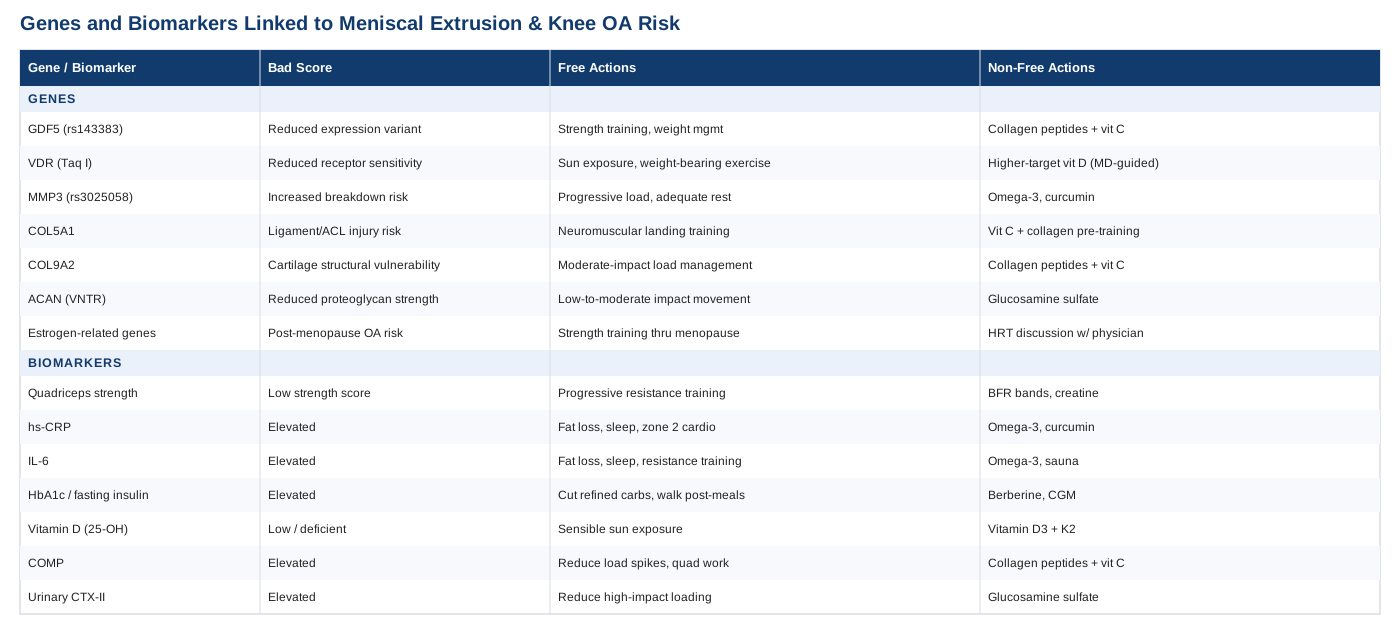
7 Biomarkers Worth Tracking for Medial Meniscal Extrusion
Medial meniscal extrusion — displacement of the meniscus beyond the edge of the tibial plateau, usually defined as more than 3mm on MRI — isn't a static structural defect. It's the visible endpoint of a slower process involving mechanical load, cartilage matrix turnover, and systemic inflammation. A landmark study following knee osteoarthritis patients with quantitative MRI found that meniscal tear and extrusion were among the strongest predictors of continued cartilage loss over time (Berthiaume et al., Annals of the Rheumatic Diseases), which is exactly why tracking the biology behind it matters more than just watching the extrusion measurement itself. The biomarkers below aren't a substitute for imaging, but together they build a picture of whether your joint is in an inflammatory, mechanically overloaded, or matrix-degrading state — and each one is something you can realistically influence.
Quadriceps Strength (Leg Extension / Isokinetic Testing)
Why It Matters
The quadriceps are the primary shock absorber for the medial compartment of the knee. When they're weak, more load transfers directly onto the meniscus and cartilage with every step, squat, and stair. A well-known cohort study found that greater quadriceps strength was associated with a lower risk of cartilage loss and symptom progression in knee osteoarthritis (Amin et al., Arthritis & Rheumatism), making it arguably the single most actionable "biomarker" on this list, even though it's functional rather than a blood value.How To Measure It
The gold standard is isokinetic dynamometry at a physical therapy or sports medicine clinic (roughly $75–200 per session). A cheaper proxy is a handheld dynamometer test, often available for $50–100 at PT clinics. The most accessible option is simply tracking your leg press or leg extension one-rep max (or a rep-max estimate) at a gym, comparing side-to-side, for free.If The Score Is Bad: The Plan Without Supplements
Progressive resistance training focused on the quadriceps — leg press, step-ups, wall sits, terminal knee extensions — done 2–3 times per week, with a slow, controlled eccentric phase (3–4 seconds lowering). Expect meaningful strength gains in 8–12 weeks. Side effects are limited to normal post-exercise soreness; progress load gradually to avoid aggravating the joint.If The Score Is Bad: The Plan With Supplements Or Equipment
Blood flow restriction (BFR) training bands allow strength gains using lighter loads, which is useful if the knee can't yet tolerate heavy weight — 2–3 sessions per week, cycled in 6-week blocks with a deload week. Creatine monohydrate (3–5g daily, no cycling required) modestly supports strength adaptation from resistance training; it's well-tolerated, with mild water retention being the most common side effect.High-Sensitivity CRP (hs-CRP)
Why It Matters
hs-CRP is a general marker of systemic inflammation, and low-grade inflammation is increasingly recognized as a driver of cartilage breakdown, not just a symptom of it. Elevated inflammatory markers have been linked to osteoarthritis progression in multiple cohort studies, making hs-CRP a reasonable low-cost proxy for whether your joint environment is being worked against systemically.How To Measure It
A standard blood draw, widely available through primary care or direct-to-consumer lab services, typically $15–30 out of pocket.If The Score Is Bad: The Plan Without Supplements
Reducing visceral fat (even modest weight loss lowers hs-CRP meaningfully), improving sleep consistency, and increasing zone 2 aerobic activity (150+ minutes/week) are the most reliably effective levers. Recheck at 8–12 weeks; there are no side effects to these lifestyle changes beyond normal training fatigue.If The Score Is Bad: The Plan With Supplements Or Equipment
Omega-3 fatty acids (2–3g EPA/DHA daily) have a modest, consistent anti-inflammatory effect; take with food to reduce GI upset, and expect it to take 8–12 weeks to show up in labs. Curcumin (500–1000mg daily with piperine or a phytosome formulation) has evidence for reducing inflammatory markers, cycled 8 weeks on / 2 weeks off; it can interact with blood thinners, so check with a physician if you're on anticoagulants.Interleukin-6 (IL-6)
Why It Matters
IL-6 is a more joint-specific inflammatory cytokine than CRP. The Chingford Study found IL-6 to be a significant predictor of radiographic knee osteoarthritis (Livshits et al., Arthritis & Rheumatism), suggesting it tracks cartilage-relevant inflammation more directly than generic markers.How To Measure It
Requires a send-out lab test, not a routine panel — typically $50–150 through specialty or research-oriented labs, sometimes bundled into longevity-focused blood panels.If The Score Is Bad: The Plan Without Supplements
Same core levers as CRP — fat loss, sleep, aerobic base-building — since IL-6 responds to the same systemic drivers. Resistance training also independently lowers resting IL-6 over time, an added reason to prioritize the quadriceps work above.If The Score Is Bad: The Plan With Supplements Or Equipment
Same omega-3 protocol as above. Regular sauna use (15–20 minutes, 3–4x/week) has some evidence for lowering inflammatory cytokines over time; avoid if you have uncontrolled cardiovascular disease, and stay hydrated to avoid dizziness.HbA1c and Fasting Insulin
Why It Matters
This is one of the more underappreciated links in joint health. A large longitudinal cohort study found that diabetes independently predicted more severe osteoarthritis, even after accounting for obesity (Schett et al., Diabetes Care), which suggests glucose and insulin dynamics affect cartilage biology directly, not just through body weight.How To Measure It
Standard blood panel, $10–20 for HbA1c, $20–40 for fasting insulin; both are frequently included in routine metabolic panels.If The Score Is Bad: The Plan Without Supplements
Reducing refined carbohydrate intake, walking after meals (even 10 minutes measurably blunts glucose spikes), and building muscle mass (a major glucose sink) are the most effective non-pharmacological levers. Recheck HbA1c at 90 days, since it reflects a 3-month average.If The Score Is Bad: The Plan With Supplements Or Equipment
Berberine (500mg, 2–3x daily with meals) has insulin-sensitizing effects comparable to some pharmaceuticals in trials; cycle 8–12 weeks on, then reassess, and avoid combining with other glucose-lowering medications without medical supervision due to hypoglycemia risk. A continuous glucose monitor (CGM, roughly $50–100/month) gives real-time feedback on which foods and activities move your glucose most, which is often more motivating than a quarterly lab number.25-Hydroxyvitamin D
Why It Matters
Vitamin D plays a role in bone and cartilage mineral homeostasis, and low levels are common in people with osteoarthritis. It's worth being precise about what the evidence actually shows, though: a well-designed randomized controlled trial found that vitamin D supplementation did not significantly reduce knee pain or slow cartilage volume loss in people with symptomatic osteoarthritis who were not deficient (McAlindon et al., JAMA). Correcting a true deficiency is still worthwhile for bone health, but it isn't a meniscus fix.How To Measure It
Standard blood test, $30–50, widely available.If The Score Is Bad: The Plan Without Supplements
Modest, sensible sun exposure (10–20 minutes several times a week, skin-tone and latitude dependent) can raise levels somewhat, though it's an unreliable primary strategy at higher latitudes or in winter.If The Score Is Bad: The Plan With Supplements Or Equipment
Vitamin D3 (2000–4000 IU daily, paired with K2 to support appropriate calcium utilization) is the standard correction for a documented deficiency; retest in 8–12 weeks rather than supplementing indefinitely at high doses, since excess vitamin D can cause hypercalcemia. Given the McAlindon trial above, treat this as a general health correction, not a meniscus-specific intervention.Serum Cartilage Oligomeric Matrix Protein (COMP)
Why It Matters
COMP is released into the bloodstream when cartilage matrix breaks down, making it one of the more direct biochemical windows into what's happening at the tissue level rather than just systemic inflammation. Research has characterized it as a candidate diagnostic and prognostic biomarker in knee osteoarthritis (Verma & Dalal, Journal of Orthopaedic Research).How To Measure It
This is an advanced option — it isn't part of routine commercial lab panels in most countries and typically requires a research lab, sports medicine specialty clinic, or academic center; cost varies widely and can run $100–250 when available. Treat it as a "if you have access" biomarker rather than a first-line one.If The Score Is Bad: The Plan Without Supplements
Since elevated COMP reflects active matrix breakdown, the priority is reducing joint load spikes: avoid high-impact pivoting activity temporarily, prioritize the quadriceps strengthening protocol above, and address body weight if relevant, since load reduction is the most direct way to slow further matrix turnover.If The Score Is Bad: The Plan With Supplements Or Equipment
Collagen peptides (10–15g daily, ideally with vitamin C to support synthesis) have some evidence for supporting cartilage matrix maintenance; take consistently for at least 12 weeks before reassessing, with essentially no side effects beyond rare mild GI upset.Urinary CTX-II
Why It Matters
CTX-II is a breakdown fragment of type II collagen, the main structural collagen in cartilage. A study tracking patients with quantitative MRI found that increased urinary CTX-II predicted cartilage loss over the following 21 months (Dam et al., Osteoarthritis and Cartilage), making it one of the more predictive — if underused — markers of where a joint is headed, not just where it is now.How To Measure It
Like COMP, this is a research-grade or specialty-lab test, not something ordered at a standard clinic visit; availability is inconsistent and cost, when accessible, is typically $100–200. Worth pursuing through an academic sports medicine center or a research-oriented longevity clinic if you want the most forward-looking marker on this list.If The Score Is Bad: The Plan Without Supplements
Same load-management logic as COMP: reduce repetitive high-impact loading, prioritize strength work over high-volume running or jumping temporarily, and allow adequate recovery between joint-loading sessions (48+ hours for anything high-intensity).If The Score Is Bad: The Plan With Supplements Or Equipment
Glucosamine sulfate (1500mg daily) has mixed but not negligible trial evidence for slowing structural progression in some osteoarthritis populations; give it a 3–6 month trial before judging effect, and be aware it's derived from shellfish, so it's contraindicated with shellfish allergy.Tracking these seven markers together — rather than fixating on any single number — gives a far more complete picture than the extrusion measurement alone. But biomarkers describe your current state; genetics describe your starting tendencies, which is a useful complementary lens.
What Your Genes May Be Telling You: 7 Variants Linked to Joint and Meniscus Health
Osteoarthritis has a real heritable component — a twin study estimated that genetic factors account for a substantial share of the variance in knee osteoarthritis risk in women (Spector et al., BMJ). Researchers like Ali Torkamani, whose work on genomic risk interpretation has pushed the field toward polygenic risk scoring rather than single-gene fatalism, and public figures like Gary Brecka, who have popularized consumer genetic testing as a starting point for lifestyle intervention, both make the same underlying point worth repeating here: a genetic variant is a tendency, not a verdict. None of the genes below directly "cause" meniscal extrusion — they influence collagen quality, matrix turnover, or joint signaling in ways that shift your baseline risk, almost all of which can be worked around with targeted habits.
GDF5 (rs143383)
What It May Affect
GDF5 (growth differentiation factor 5) is involved in cartilage and joint formation. A functional promoter variant, rs143383, reduces GDF5 expression and has been consistently associated with osteoarthritis susceptibility across multiple populations (Miyamoto et al., Nature Genetics). Carriers may have a somewhat lower baseline capacity for cartilage matrix maintenance.If The Variant Is Unfavorable: The Plan Without Supplements
Since this variant lowers a growth-signaling protein rather than causing active damage, the most useful compensation is simply reducing unnecessary mechanical stress on the joint over decades — consistent strength training, weight management, and avoiding prolonged high-impact overuse.If The Variant Is Unfavorable: The Plan With Supplements Or Equipment
There's no supplement that meaningfully restores GDF5 signaling. The most defensible approach is the general cartilage-support stack (collagen peptides plus vitamin C, as above), used consistently rather than intermittently, given the lower baseline matrix turnover this variant implies.VDR (Taq I Polymorphism)
What It May Affect
Vitamin D receptor variants affect how effectively your cells respond to vitamin D, independent of your serum level. An early study linked a Taq I VDR polymorphism to early-onset knee osteoarthritis (Keen et al., Arthritis & Rheumatism).If The Variant Is Unfavorable: The Plan Without Supplements
Regular moderate sun exposure and weight-bearing exercise (which independently supports bone and cartilage health regardless of vitamin D receptor efficiency) are reasonable baseline steps.If The Variant Is Unfavorable: The Plan With Supplements Or Equipment
If receptor sensitivity is reduced, some clinicians target a higher-normal serum vitamin D level (rather than just "sufficient") to compensate — discuss a target with a physician rather than self-dosing above 4000 IU/day long-term, and retest every 3 months initially to avoid overshooting into hypercalcemia territory.MMP3 (rs3025058)
What It May Affect
MMP-3 is an enzyme that breaks down collagen and other matrix proteins as part of normal tissue remodeling — but too much activity accelerates breakdown faster than repair. A functional promoter variant has been associated with increased musculoskeletal soft-tissue injury risk in independent cohorts (Gibbon et al., Journal of Sports Sciences).If The Variant Is Unfavorable: The Plan Without Supplements
Because this variant tilts the balance toward breakdown, deliberately managing tissue loading — progressive rather than sudden increases in training volume, and adequate rest between high-strain sessions — matters more than for the average person.If The Variant Is Unfavorable: The Plan With Supplements Or Equipment
The same anti-inflammatory approach used for elevated hs-CRP (omega-3s, curcumin) is relevant here too, since inflammatory signaling upregulates MMP activity; cycle curcumin 8 weeks on/2 off as noted earlier, and reassess joint symptoms rather than expecting a lab-measurable change.COL5A1
What It May Affect
COL5A1 affects the structure of type V collagen, which regulates the assembly of type I collagen fibrils in ligaments and connective tissue. Certain variants have been associated with increased risk of anterior cruciate ligament rupture, particularly in women (Posthumus et al., American Journal of Sports Medicine) — relevant here because ligament and capsular integrity directly affects how much a meniscus can extrude under load.If The Variant Is Unfavorable: The Plan Without Supplements
Neuromuscular training that emphasizes controlled landing mechanics and deceleration (common in ACL-prevention programs) is the most evidence-supported non-supplement approach, done 2x/week as part of a general strength routine.If The Variant Is Unfavorable: The Plan With Supplements Or Equipment
Vitamin C (500mg) and collagen peptides taken 30–60 minutes before connective-tissue-focused training has some mechanistic support for enhancing collagen synthesis during the loading window; this is a low-risk, low-cost addition rather than a proven fix.COL9A2
What It May Affect
COL9A2 encodes a component of type IX collagen, which cross-links with type II collagen in cartilage. Research has identified it as a shared predisposing factor for both hip osteoarthritis and lumbar disc degeneration (Näkki et al., The Journal of Rheumatology), consistent with a broader tendency toward cartilage structural vulnerability across joints.If The Variant Is Unfavorable: The Plan Without Supplements
Since this points to a systemic cartilage vulnerability rather than a knee-specific issue, whole-body joint load management (not just knee-focused rehab) is the more appropriate frame — moderate-impact conditioning over years rather than high-impact spikes.If The Variant Is Unfavorable: The Plan With Supplements Or Equipment
The same collagen-and-vitamin-C approach applies; there's no COL9A2-specific intervention, so consistency and load management do more work than any single supplement.ACAN (Aggrecan VNTR)
What It May Affect
Aggrecan is the main proteoglycan giving cartilage its compressive strength and water-retaining properties. A variable number tandem repeat polymorphism in ACAN has been linked to degenerative disc disease and osteoarthritis risk in systematic review data (Cong et al., Bone & Joint Research).If The Variant Is Unfavorable: The Plan Without Supplements
Cartilage relies heavily on cyclic compressive loading (not just avoidance of load) to stay hydrated and nourished, since it has no direct blood supply — regular low-to-moderate impact movement (walking, cycling) supports this better than either sedentary behavior or excessive high-impact loading.If The Variant Is Unfavorable: The Plan With Supplements Or Equipment
Glucosamine sulfate (as noted above) targets proteoglycan synthesis pathways specifically, making it a more mechanistically relevant choice for this variant than for the general population; trial for 3–6 months.Estrogen-Related Genes
What It May Affect
Common variants in estrogen-related genes have been associated with severe large-joint osteoarthritis (Ryder et al.), which is one reason knee osteoarthritis and meniscal degeneration are more common in women, particularly after menopause when estrogen's protective signaling on cartilage declines.If The Variant Is Unfavorable: The Plan Without Supplements
Prioritizing strength training through and after the menopausal transition specifically (rather than assuming pre-menopausal habits will suffice) is the most evidence-aligned non-pharmacological response to declining estrogen's effect on joint tissue.If The Variant Is Unfavorable: The Plan With Supplements Or Equipment
This is a conversation for a physician rather than a self-directed supplement plan — hormone replacement therapy decisions should weigh joint and bone benefits against a fuller individual risk profile, not be driven by a single gene variant.Genetics explain why two people can respond differently to the same load; biomarkers tell you what's happening right now regardless of why. Zooming out from both, it's worth looking at how longevity-focused medicine has started reframing joint health entirely — not as an isolated orthopedic problem, but as one piece of a much longer game.
The Longevity Playbook: 10 Lessons From Peter Attia's Outlive for Knee and Joint Health
Peter Attia's book Outlive: The Science and Art of Longevity isn't written about meniscal extrusion specifically, but its central argument — that most of medicine treats symptoms reactively while the real leverage is proactive, decades-ahead planning — maps directly onto how joint health is usually mismanaged. Below are ten of its most relevant, occasionally contrarian ideas, applied to knee and meniscus health specifically.
1. Muscle Is a Longevity Organ, Not a Vanity Metric
Attia treats skeletal muscle mass and strength as a primary determinant of late-life independence, not an aesthetic goal. For the knee specifically, this reframes quadriceps training from "rehab homework" to a decades-long insurance policy against cartilage load.2. VO2 Max Predicts Mortality More Than Almost Any Other Single Marker
A large cohort study found cardiorespiratory fitness to be one of the strongest predictors of long-term survival, with the lowest fitness quartile carrying dramatically elevated mortality risk (Mandsager et al., JAMA Network Open). Attia's point: aerobic capacity matters even for joint-focused goals, because it supports the metabolic health that keeps systemic inflammation (and cartilage-damaging cytokines like IL-6) in check.3. Train Backward From the "Centenarian Decathlon"
Attia's exercise recommends working backward from specific physical tasks you want to still perform in your 80s — getting off the floor, carrying groceries, hiking uneven terrain — and training the underlying strength and stability now. For meniscal extrusion, this means training single-leg stability and controlled deceleration, not just straight-line strength.4. Eccentric Strength Declines Faster Than Concentric Strength
The ability to control a movement while lengthening a muscle (like landing from a step) deteriorates faster with age than the ability to simply push or pull. This is directly relevant to meniscal loading, since most real-world knee injuries happen during deceleration, not during controlled lifting.5. Medicine 2.0 Waits for Symptoms; Medicine 3.0 Tracks Markers Before They Appear
Attia's core critique of conventional medicine is that it intervenes only after disease is symptomatic. Applied here: waiting for knee pain to check biomarkers is Medicine 2.0 thinking; tracking hs-CRP, HbA1c, and quadriceps strength before extrusion worsens is the proactive alternative this article is built around.6. Sarcopenia Starts Earlier Than Most People Think
Meaningful muscle loss can begin accelerating in the fourth decade of life, well before it becomes clinically obvious. Quadriceps strength specifically has been shown to reduce the risk of cartilage loss in knee osteoarthritis (Amin et al., Arthritis & Rheumatism), so the window to intervene is well before any knee symptoms appear.7. Zone 2 Training Is Underrated for Metabolic (and Joint) Health
Attia is a strong advocate for large volumes of low-intensity aerobic work (roughly 3–4 hours/week) to build mitochondrial density and metabolic flexibility. For joint health, this matters because it's a low-impact way to improve the HbA1c and inflammatory markers linked to osteoarthritis progression, without adding mechanical stress to a compromised knee.8. Exercise Is the Most Potent "Drug" Available, Including for Structural Tissue
No supplement or pharmaceutical in Attia's framework comes close to exercise's effect size across nearly every biomarker discussed in this article — strength, inflammation, glucose control, and even mood, which affects pain perception and adherence to rehab.9. Emotional Health and Sleep Directly Affect Physical Resilience
Attia devotes significant attention to sleep and mental health, not as an afterthought but as physiological levers — poor sleep worsens inflammatory markers and pain sensitivity, both directly relevant to how a meniscal injury is experienced and how well it recovers.10. The Goal Is a Longer "Marginal Decade," Not Just a Longer Life
Attia's ultimate metric isn't lifespan but the quality and capability of your final decade of life. A knee that can still support stairs, hikes, and getting up off the floor at 80 is a direct, tangible expression of that goal — which is really what tracking these biomarkers and genetic tendencies is in service of.These longevity-framed lessons work best alongside more targeted, condition-specific therapies — which is where a set of complementary approaches with real clinical trial support for knee osteoarthritis comes in.
Complementary Approaches That Support Knee and Meniscus Health
The following approaches aren't substitutes for strength training, weight management, or medical evaluation, but each has genuine human clinical evidence specific to knee osteoarthritis and joint pain, which is why they're included here rather than a longer list of plausible-sounding but poorly supported options.
Tai Chi
Tai chi combines slow, weight-shifting movement with balance training and mindful attention to body position, which makes it particularly relevant for a joint that needs both strength and proprioceptive control rather than just raw force. For someone managing meniscal extrusion, the low-impact nature means joint loading stays gentle while still training the neuromuscular control that protects against further displacement under everyday movement.A rigorous randomized trial compared tai chi directly against standard physical therapy in patients with knee osteoarthritis and found comparable improvements in pain, function, and quality of life, with tai chi additionally improving depression and physical component scores (Wang et al., Annals of Internal Medicine). This is one of the stronger complementary-medicine trials in the entire orthopedic literature, not a small pilot study.
Realistically, this means finding a tai chi instructor experienced with older adults or joint pain populations, starting with 2 sessions per week for at least 12 weeks (the trial duration), and expecting gradual rather than immediate improvement. It pairs well with, rather than replaces, the strength training discussed earlier in this article.
Yoga
Yoga combines static and dynamic stretching, isometric strength holds, and breath-focused relaxation, which can address both the mobility restrictions and the muscular guarding that often accompany a painful or unstable knee. Its relevance to meniscal extrusion is mostly indirect — through reduced pain and improved surrounding muscle function — rather than any direct structural effect on the meniscus itself.A 2024 systematic review and meta-analysis of randomized controlled trials found that yoga produced meaningful improvements in pain and physical function in knee osteoarthritis patients compared to control groups (Lu et al., PLoS One), though the authors note variability in study quality across the included trials.
In practice, this means choosing a gentle or therapeutic yoga class (not a high-intensity power yoga style), avoiding deep unsupported knee flexion poses until strength improves, and practicing 2–3 times per week. Evidence is genuinely encouraging here, but it's moderate rather than definitive, and results vary by trial quality.
Massage Therapy
Massage therapy addresses the muscular tension and guarding that commonly develop around a painful or unstable knee, and may improve local circulation and short-term pain, both relevant to comfort during rehab rather than to the structural extrusion itself.A randomized dose-finding trial in knee osteoarthritis patients found that whole-body Swedish massage produced significant improvements in pain and function compared to a control group, with a weekly frequency showing the most consistent benefit (Perlman et al., PLoS One).
Applied practically, this looks like a weekly 60-minute session for at least 8 weeks, focused on the quadriceps, hamstrings, and calf rather than direct deep pressure on the joint line itself, which can be uncomfortable if the joint is actively inflamed. It's a reasonable comfort-and-adherence tool, not a structural fix.
Photobiomodulation (Low-Level Laser Therapy)
Photobiomodulation uses specific wavelengths of red or near-infrared light believed to influence mitochondrial activity and local inflammation in treated tissue, making it plausible as a targeted, low-risk option for a specific painful joint rather than a systemic intervention.A 2019 meta-analysis of randomized, placebo-controlled trials found that low-level laser therapy produced statistically significant reductions in pain and disability in knee osteoarthritis when appropriate dosing parameters were used (Stausholm et al., BMJ Open), though the authors specifically flagged that many negative trials used underdosed protocols.
This means dosing parameters matter more than with most complementary therapies — working with a clinic using a device and protocol consistent with the doses shown effective in the trials (rather than a generic at-home device) is important, typically administered 2–3 times weekly for several weeks. It's a reasonable adjunct for pain control, not a way to reverse extrusion.
Biofeedback
EMG biofeedback provides real-time visual or auditory feedback on muscle activation, which is particularly useful for quadriceps activation deficits — a common and often subtle problem after meniscal injury where the muscle "forgets" how to fire properly even after pain resolves.A randomized controlled trial in patients recovering from ACL reconstruction found that EMG biofeedback significantly improved quadriceps activation and knee extension compared to standard rehabilitation alone (Christanell et al., Sports Medicine, Arthroscopy, Rehabilitation, Therapy & Technology), and while this trial was in post-surgical ACL patients rather than meniscal extrusion specifically, the activation-deficit mechanism is directly relevant.
Realistically, this requires access to a physical therapy clinic with EMG biofeedback equipment, used during the early phase of a strengthening program (typically 2–3 sessions per week for 4–6 weeks) until voluntary quadriceps activation normalizes, at which point standard resistance training can take over.
Conclusion
Medial meniscal extrusion is rarely just a mechanical accident. It usually reflects some combination of inherited collagen and matrix biology, systemic inflammation, metabolic health, and — very often — quadriceps strength that hasn't kept pace with the load being placed on the joint. Tracking the seven biomarkers in this article gives you a real-time read on which of those mechanisms is most active for you, while understanding the seven gene variants explains why your baseline tendencies might differ from someone else's with the same MRI finding. Neither replaces the other, and neither is a guarantee — but together they turn a vague diagnosis into a specific, trackable set of levers.
The next smart step isn't dramatic. It's picking two or three biomarkers from this list that you haven't checked recently, getting a baseline quadriceps strength assessment, and bringing both to a physician or physical therapist who can help interpret them alongside your imaging. Better information, tracked consistently over months rather than checked once, is what actually changes outcomes here — not any single test, gene, or supplement in isolation.
Musculoskeletal: Joint Conditions Sports Injuries