This article contains AI generated content.
Meralgia Paresthetica: 4 Genes and 6 Biomarkers to Track
Introduction
If you have meralgia paresthetica, you already know the specific strangeness of it. A patch on the outside of your thigh that burns, tingles, goes numb, or feels like sandpaper under your jeans. It flares when you stand too long, wear a belt, or sit a certain way, and then it quiets down just enough to make you doubt it is real. It is not dangerous in the way people fear, but it is genuinely wearing, and being told "it usually resolves on its own" does not help when it has been months.
Most general advice about this condition stops at three sentences: lose weight, wear looser clothes, and wait. That advice is not wrong. The lateral femoral cutaneous nerve gets pinched under or near the inguinal ligament, and pressure is the enemy. But "lose weight and wait" ignores why the nerve became vulnerable in the first place, and why some people recover in weeks while others drag on for years with the same body weight.
The more useful questions are quieter ones. Is there a metabolic reason your nerves are irritable? Is blood sugar quietly damaging small nerve fibers before you ever got diagnosed? Are you low on the exact nutrients your nerves need to rebuild their insulation? These are measurable things, not mysteries.
That is the approach here. This article treats meralgia paresthetica as a signal worth decoding rather than a nuisance to endure. First, we look at the six biomarkers most worth tracking, what each one reveals, how to measure it, and exactly what to do if it comes back poor. Then, as a bonus, we look at the genes that shape your risk and how to work around them. Better information genuinely does lead to better decisions, and for this condition the information is unusually within reach.
Summary
Meralgia paresthetica is usually described as a simple pinched nerve, but for many people it sits on top of a metabolic story that never got told. This article maps that story with numbers you can actually track.
The core of the piece is a set of six biomarkers that quietly decide how irritable and how repairable your lateral femoral cutaneous nerve is: your long-term blood sugar, your fasting insulin, your waistline and body composition, your inflammation level, your vitamin B12 status, and your vitamin D. For each one you will learn why it matters for this exact nerve, how to measure it and what it costs, and two concrete plans if the number is bad, one without supplements and one with them, including doses, cycling, and side effects.
After that, a shorter genetics section explains four genes worth knowing about, from obesity and diabetes risk to how well your body processes the B vitamins your nerves depend on, and how to compensate for each. You will also find a distilled summary of a longevity book that reframes this whole problem, and a candid look at hands-on and complementary approaches with honest notes on where the evidence is thin.
By the end you should know which single blood draw to ask for, which habit will move the needle fastest, and which promises to ignore.
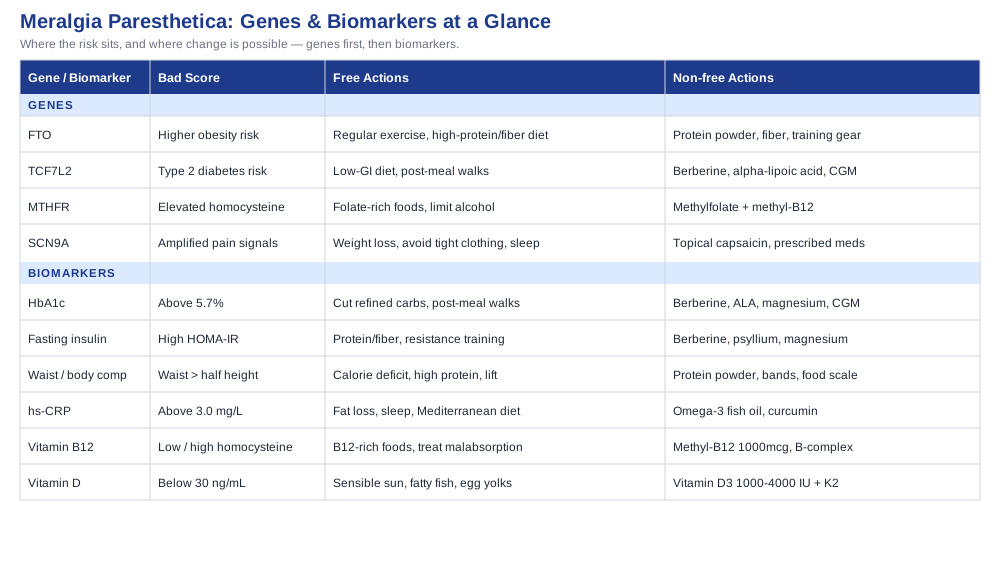
The Six Biomarkers Worth Tracking
Meralgia paresthetica is mechanical at the point of pain but often metabolic underneath. The nerve is compressed, yes, but whether it tolerates that compression or screams about it depends heavily on your internal chemistry. The condition is strongly linked to obesity, aging, and diabetes, and in people with diabetes the incidence is roughly seven times higher than in the general population, according to research on its relation to obesity, advanced age, and diabetes mellitus published on PubMed. That single fact reframes the whole condition: a lot of "stubborn" meralgia paresthetica is a nerve trying to heal in a hostile metabolic environment.
The good news is that the environment is measurable. Clinicians like Peter Attia, Thomas Dayspring, and Allan Sniderman have spent years arguing that the standard annual physical measures too little, too late. Below are the six markers that matter most for this nerve, ordered roughly from highest to lowest impact. For each you get why it matters, how to measure it, and two repair plans.
1. HbA1c (and Fasting Glucose)
HbA1c is your average blood sugar over the previous three months. It matters here because chronically elevated glucose damages the tiny blood vessels that feed peripheral nerves and makes those nerves more excitable and slower to repair. A nerve that is already pinched under the inguinal ligament copes far worse when it is also mildly starved of oxygen and marinating in sugar. Since diabetes multiplies meralgia paresthetica risk several-fold, this is the first number to know.
How to Measure It
A single blood draw, often bundled into any basic metabolic panel. In the US it typically costs roughly 10 to 50 dollars out of pocket, and direct-to-consumer labs price it at the low end. Aim to see it alongside fasting glucose. Most experts consider an HbA1c under about 5.4 percent genuinely reassuring, with the "prediabetes" grey zone starting around 5.7 percent. Retest every three months while you are actively changing things, since that is the window HbA1c reflects.
If the Score Is Bad, the Plan Without Supplements
The highest-leverage moves are unglamorous and free. Cut refined carbohydrates and sugary drinks first, since they spike glucose hardest. Walk for ten to fifteen minutes after your largest meals, which blunts the post-meal glucose surge measurably. Add two or three short resistance-training sessions per week, because muscle is your biggest glucose sink. Protect sleep, since even one poor night worsens insulin sensitivity the next day. These also drive the weight loss that directly relieves nerve pressure, so they work on both ends of the problem at once.
If the Score Is Bad, the Plan With Supplements or Equipment
Berberine is the best-studied glucose-lowering supplement, typically dosed at 500 mg two to three times daily just before meals. Cycle it in eight-to-twelve-week blocks with breaks rather than taking it indefinitely, and expect possible GI upset (cramping, loose stools) early on; it can interact with medications processed by the liver, so clear it with a pharmacist if you take other drugs. Alpha-lipoic acid at around 600 mg daily is notable because it has been studied specifically for diabetic nerve symptoms and may ease burning and tingling; it is generally well tolerated but can lower blood sugar, so watch for lightheadedness. Magnesium (200 to 400 mg of glycinate at night) supports insulin sensitivity and is low-risk aside from loose stools at higher doses. A cheap home glucose meter or a two-week continuous glucose monitor is the single most motivating "equipment" purchase, because seeing your own spikes changes behavior faster than any lecture.
2. Fasting Insulin and HOMA-IR
Fasting insulin is the early-warning marker HbA1c misses. Your pancreas can pump out rising amounts of insulin to keep glucose looking normal for years before HbA1c ever budges. High fasting insulin, and the derived HOMA-IR score, reveals that hidden insulin resistance, which is the metabolic engine behind both weight gain and small-fiber nerve trouble. For meralgia paresthetica specifically, insulin resistance tends to travel with the central weight and intra-abdominal pressure that physically load the nerve.
How to Measure It
A fasting insulin test costs roughly 20 to 60 dollars and is often left off standard panels, so you usually have to request it. Combined with fasting glucose, it lets you or your clinician calculate HOMA-IR. Many metabolically-minded physicians like to see fasting insulin in the low single digits (in microunits per milliliter) rather than merely "in range." Retest every three to six months.
If the Score Is Bad, the Plan Without Supplements
The levers overlap heavily with the glucose plan, which is why they are worth doing together. Prioritize protein and fiber at each meal to flatten glucose and insulin curves, keep added sugars low, and make resistance training non-negotiable, since building muscle is the most reliable way to lower fasting insulin over months. Time-restricted eating (a consistent eating window of roughly eight to ten hours) helps some people lower insulin, though it is a tool, not a requirement.
If the Score Is Bad, the Plan With Supplements or Equipment
The same berberine and magnesium protocols above apply directly to insulin resistance. Soluble fiber such as psyllium husk (5 to 10 g before meals) is a low-risk addition that slows carbohydrate absorption; introduce it gradually with plenty of water to avoid bloating. Beyond supplements, the most useful equipment is again a glucose monitor, since insulin resistance often shows up first as exaggerated post-meal glucose spikes you can then learn to avoid.
3. Waist Circumference and Body Composition
This is the biomarker with the most direct mechanical link to your pain. Excess abdominal fat raises intra-abdominal pressure and pulls on the tissues around the inguinal ligament, which is precisely where the lateral femoral cutaneous nerve is most often trapped. Reviews consistently report that people with meralgia paresthetica carry a higher average BMI than matched controls. Body composition matters more than the scale, because losing fat while keeping muscle both unloads the nerve and improves every other marker on this list.
How to Measure It
The cheapest useful biomarker in this entire article is a tape measure, which costs almost nothing. Measure waist circumference at the navel; for most people a waist under roughly half your height is a reasonable target. For a fuller picture, a DEXA body-composition scan (about 50 to 150 dollars) precisely separates fat from muscle and shows visceral fat specifically. Re-measure your waist every two to four weeks, since it responds faster than you expect.
If the Score Is Bad, the Plan Without Supplements
Aim for a modest, sustainable calorie deficit rather than a crash diet, since rapid loss costs you muscle. Keep protein high (roughly 1.6 g per kg of target body weight) to protect muscle while losing fat, lift weights two or three times weekly, and walk daily. Even a 5 to 10 percent reduction in body weight has been enough to substantially relieve symptoms for many people, and some recover fully on weight loss alone. Loosen belts and waistbands immediately; that costs nothing and can help within days.
If the Score Is Bad, the Plan With Supplements or Equipment
There is no magic fat-loss pill worth recommending, and that is worth stating plainly. What helps at the margins: a whey or plant protein powder to hit protein targets easily (one to two scoops daily, low risk aside from digestive tolerance), and caffeine before workouts to improve training output (skip if it disrupts your sleep). Useful equipment includes a food scale for a week or two to recalibrate portions, and resistance bands or adjustable dumbbells so strength training has no barriers. A standing desk or a cushioned seat can also reduce the sustained hip flexion that provokes symptoms during the workday.
4. hs-CRP (High-Sensitivity C-Reactive Protein)
hs-CRP is a sensitive marker of low-grade, body-wide inflammation. Chronic inflammation makes nerves more sensitive and less tolerant of mechanical stress, and it tends to rise with visceral fat and insulin resistance, so it ties this whole picture together. A persistently elevated hs-CRP suggests your nerve is being irritated not just by pressure but by an inflammatory background hum.
How to Measure It
A simple blood test, usually 15 to 40 dollars. Interpret it only when you are not fighting an acute cold or injury, since those temporarily spike it. Many clinicians consider a value under about 1.0 mg/L reassuring for chronic risk, with above 3.0 mg/L flagging meaningful inflammation. Retest every three to six months.
If the Score Is Bad, the Plan Without Supplements
Inflammation responds to the basics done consistently: fat loss (especially visceral fat), regular exercise, seven to nine hours of sleep, and a diet built around vegetables, legumes, olive oil, and fatty fish while minimizing ultra-processed foods and excess alcohol. Quitting smoking is one of the largest single levers if it applies to you.
If the Score Is Bad, the Plan With Supplements or Equipment
Omega-3 fish oil providing 2 to 3 g combined EPA and DHA daily is the best-supported anti-inflammatory supplement; take it with food, expect a possible fishy aftertaste, and note it mildly thins the blood, so mention it before any surgery or if you take anticoagulants. Curcumin (with piperine or a high-absorption formulation, around 500 mg once or twice daily) may lower CRP modestly; cycle it in eight-week blocks and be cautious if you take blood thinners or have gallbladder issues. These are adjuncts; they do not replace the weight and activity work.
5. Vitamin B12 (with Homocysteine or MMA)
B vitamins are the raw material your nerves use to build and maintain myelin, the insulation that lets them fire cleanly. Low B12 causes peripheral neuropathy in its own right, and if your nerve is already compressed, a deficiency stacks a chemical injury on top of a mechanical one. This marker deserves special attention if you take metformin for blood sugar, since metformin is a well-documented cause of B12 depletion over time, as reviewed on PMC. Homocysteine and methylmalonic acid (MMA) are companion markers that reveal a functional deficiency even when serum B12 looks borderline; higher homocysteine has been linked to worsening peripheral nerve function over time in research on PubMed.
How to Measure It
A serum B12 test is cheap, roughly 15 to 40 dollars. Because serum B12 can read "normal" while cells are still short, adding homocysteine or MMA (another 20 to 60 dollars each) gives a truer answer. Many neurologists prefer to see B12 comfortably in the upper part of the range rather than merely above the deficiency cutoff. Retest three months after starting supplementation.
If the Score Is Bad, the Plan Without Supplements
Prioritize B12-rich foods: shellfish, fish, eggs, dairy, and meat. If you eat little animal food, that dietary gap is likely the cause and is hard to close with food alone, which is where supplementation becomes reasonable. Also address the causes of poor absorption, such as heavy alcohol use or untreated gut conditions.
If the Score Is Bad, the Plan With Supplements or Equipment
Oral methylcobalamin or cyanocobalamin at 1,000 mcg daily is effective for most people, and oral therapy works about as well as injections for many, at lower cost and inconvenience. Side effects are rare because excess is excreted. If deficiency is severe or absorption is impaired, a clinician may use B12 injections instead. A sensible companion is a B-complex that includes folate and B6, since these vitamins work together in nerve metabolism; avoid chronic high-dose B6 (stay well under 100 mg/day long-term), because paradoxically excessive B6 can itself cause neuropathy. Recheck levels rather than supplementing indefinitely on autopilot.
6. Vitamin D (25-Hydroxyvitamin D)
Vitamin D sits at the intersection of nerve health, inflammation, and metabolic function, and deficiency is extremely common. Low vitamin D is associated with more neuropathic pain and worse insulin sensitivity, both of which are relevant to a compressed, irritable nerve. It rounds out this panel as an easy, correctable factor.
How to Measure It
A 25-hydroxyvitamin D blood test costs roughly 20 to 60 dollars. Many clinicians aim for a level in the region of 30 to 50 ng/mL. Because vitamin D moves slowly, retest every three to four months.
If the Score Is Bad, the Plan Without Supplements
Sensible sun exposure and vitamin-D-containing foods (fatty fish, egg yolks, fortified products) help, but in higher latitudes or with indoor lifestyles, diet and sun often cannot fully close a deficiency, especially in winter.
If the Score Is Bad, the Plan With Supplements or Equipment
Vitamin D3 at 1,000 to 4,000 IU daily corrects most deficiencies; take it with a fat-containing meal for absorption, and pair it with vitamin K2 to direct calcium appropriately. The main risk is over-supplementation: very high doses over long periods can raise calcium excessively, so do not megadose blindly, and let a retest guide your maintenance dose rather than guessing.
Taken together, these six numbers turn a vague "just lose weight" into a specific, trackable plan. But biomarkers describe your current state; genes describe the tendencies you were dealt. Understanding those tendencies helps you know which levers you will have to pull harder than average.
The Genetic Angle: Four Genes Worth Knowing
There is no "meralgia paresthetica gene," and anyone selling you one is overselling. The honest picture is that this condition is mostly mechanical and metabolic, and genetics acts indirectly, by shaping your weight, your blood sugar, your nerve chemistry, and how loudly your nervous system reports pain. Consumer genomics figures such as Ali Torkamani, who works on genome interpretation, and Gary Brecka, who popularizes gene-based lifestyle coaching, are useful starting points for the general idea that your DNA nudges these risks. The genes below are the most relevant, and crucially, all of them can be compensated for.
FTO: The Body-Weight Gene
FTO variants are the most robustly established genetic influence on obesity, and since abdominal weight physically compresses the lateral femoral cutaneous nerve, this gene reaches your thigh indirectly but reliably. If you carry higher-risk FTO variants, you tend to feel hungrier and store fat more readily. The plan without supplements: the encouraging finding is that physical activity substantially blunts the FTO effect, so consistent exercise matters even more for you than for others, alongside a high-protein, high-fiber diet that improves satiety. The plan with supplements or equipment: there is nothing that "fixes" FTO, but protein powder and soluble fiber to control appetite, plus the training equipment mentioned earlier, effectively neutralize much of its influence. Treat FTO as a reason to be more disciplined, not a verdict.
TCF7L2: The Type 2 Diabetes Gene
TCF7L2 is the strongest common genetic risk factor for type 2 diabetes, working largely by impairing insulin secretion. Because diabetes multiplies meralgia paresthetica risk, this gene matters here. The plan without supplements: a lower-glycemic diet, weight management, and regular exercise are especially protective for carriers, and post-meal walks are a targeted way to reduce the glucose spikes your pancreas struggles to cover. The plan with supplements or equipment: the berberine and alpha-lipoic acid protocols from the glucose section apply directly, and a continuous glucose monitor is arguably more valuable for a TCF7L2 carrier than almost anyone, because it turns an abstract genetic risk into visible, actionable feedback.
MTHFR: The Methylation Gene
Common MTHFR variants (such as C677T) reduce the efficiency of an enzyme that processes folate and helps keep homocysteine low. Since elevated homocysteine is linked to worse nerve function and interacts with B12 and folate status, this gene ties directly into the nerve-repair biomarkers above. The plan without supplements: emphasize naturally folate-rich foods (leafy greens, legumes) and keep B12 status solid through diet, while limiting alcohol, which drains these vitamins. The plan with supplements or equipment: if homocysteine is elevated, methylated forms, methylfolate (around 400 to 800 mcg daily) with methylcobalamin, are a reasonable, low-risk choice for carriers; recheck homocysteine after a few months rather than assuming, and do not megadose folate, since more is not better here.
SCN9A: The Pain-Volume Gene
SCN9A encodes a sodium channel (Nav1.7) that acts like a volume dial on pain signals. Variants can make some people intrinsically more or less sensitive to pain, which may partly explain why two people with a similarly pinched nerve report very different suffering. The plan without supplements: you cannot rewrite this gene, so the goal is to lower the input the nerve is reporting, meaning weight loss, avoiding provoking postures and tight clothing, and calming the nervous system with sleep and stress work. The plan with supplements or equipment: a topical capsaicin cream can locally desensitize overactive pain fibers (expect burning on first applications, and never use it near the eyes), and standard neuropathic-pain medications prescribed by a clinician target exactly these channels if self-care is not enough. Knowing you may be a "high-volume" responder is itself useful, because it reframes your experience as biology rather than exaggeration.
Genes and biomarkers describe the terrain. The next section steps back to the bigger philosophy that ties them together, through a book that argues the whole system should work this way by default.
The Longevity Playbook That Reframes This Whole Problem
If one book captures why tracking biomarkers beats waiting for symptoms, it is Outlive: The Science and Art of Longevity by Peter Attia. It is not about meralgia paresthetica, but its core argument, that we should measure and act on metabolic health years before disease appears, is exactly the mindset that turns a stubborn nerve problem into a solvable one. Here are ten of its most impactful ideas, each relevant to why your thigh hurts and how to change it.
1. Medicine 2.0 Waits Too Long
Attia argues that conventional medicine excels at emergencies but reacts far too late to slow-brewing metabolic disease. Meralgia paresthetica linked to rising blood sugar and weight is a small, early example of exactly this pattern, a warning shot fired before bigger problems.
2. Metabolic Health Is the Root System
He treats insulin resistance as an upstream driver of many seemingly unrelated conditions. Framed this way, your nerve symptom is not random; it is a branch of the same root that produces fatigue, weight gain, and future disease.
3. Measure Earlier and More Often
A central theme is testing markers like fasting insulin long before standard cutoffs are breached. This is precisely why the biomarker panel in this article includes insulin, not just glucose.
4. Exercise Is the Most Powerful Drug
Attia calls exercise the single most effective longevity intervention. For a compressed nerve, exercise attacks the problem from every angle at once: less fat, better glucose, lower inflammation, stronger tissue.
5. Strength and Muscle Are Protective
He emphasizes building muscle and strength, not just doing cardio. Muscle is your largest glucose sink and your armor against the metabolic decline that feeds neuropathy.
6. Stability Prevents Injury
A whole section is devoted to stability and movement quality. Improving hip and core stability can reduce the awkward, sustained postures that mechanically provoke lateral femoral cutaneous nerve symptoms.
7. Sleep Is Non-Negotiable
Attia treats sleep as foundational to metabolic and nervous-system health. Poor sleep worsens insulin sensitivity and lowers pain tolerance overnight, both of which matter for this condition.
8. Nutrition Should Be Personalized, Not Dogmatic
Rather than promoting one diet, he pushes for using data (like glucose response) to find what works for you. That is more sustainable, and more honest, than any one-size plan.
9. Emotional Health Belongs in the Plan
He is candid that stress and emotional health affect physical outcomes. Chronic pain and a calm nervous system are deeply linked, which is why relaxation approaches earn a place later in this article.
10. You Are the Manager of Your Own Health
The book's throughline is agency: you drive the process, gather the data, and make decisions with professionals rather than waiting to be rescued. That is the entire spirit of tracking genes and biomarkers for a condition most people are told to simply endure.
The playbook is about the inside. The final strategy looks at hands-on and complementary approaches, with an honest accounting of how strong the evidence actually is.
Complementary and Hands-On Approaches
Complementary approaches can genuinely help with the pain and stress of meralgia paresthetica, but honesty matters here: the condition-specific evidence for most of them is thin, built on small studies and case reports rather than large trials. Use these as adjuncts to the metabolic and mechanical work above, not replacements. Below are the four most reasonable options, with clear notes on where the evidence stands.
Low-Level Laser Therapy / Photobiomodulation
Low-level laser therapy uses specific wavelengths of light applied to the skin, aiming to reduce inflammation and calm irritated nerves. It is relevant to meralgia paresthetica because the target nerve is superficial, sitting just under the skin near the hip, which makes it physically reachable by light-based therapy in a way deeper nerves are not.
In terms of a specific protocol, published research uses courses of roughly ten sessions applied several times weekly over about two weeks, and there is active clinical-trial interest in photobiomodulation for this exact condition. That said, the direct evidence for meralgia paresthetica is still early, so this should be viewed as promising rather than proven.
To apply it realistically, treat it as a low-risk add-on delivered by a physiotherapy or pain clinic, and give it a defined trial of a few weeks while you track your symptoms. If there is no meaningful change, stop rather than continuing indefinitely, and keep prioritizing the weight and metabolic levers that address the underlying cause.
Yoga
Yoga is relevant here for two concrete reasons: it supports the gradual weight loss that unloads the nerve, and it improves hip mobility and posture, which can reduce the sustained hip flexion and tightness around the inguinal region that provoke symptoms. It also lowers stress, which modulates how loudly pain is felt.
The direct evidence is general rather than meralgia-specific. Yoga has reasonable human evidence for chronic pain and for improving metabolic markers, but there is no large trial in this exact condition, so the rationale is mechanistic and by analogy. That limitation is worth stating plainly.
Practically, favor gentle, hip-opening and core-stabilizing styles and avoid deep, forced hip flexion that reproduces your symptoms. Work with an instructor you can tell about the condition, move within a pain-respecting range, and treat it as a sustainable habit that improves the whole metabolic picture rather than a targeted cure.
Massage Therapy
Massage therapy, particularly soft-tissue and myofascial work around the hip flexors, lower abdomen, and the tissue near the inguinal ligament, may ease the muscular tension and adhesions that contribute to pressure on the nerve. It can also provide meaningful short-term relief and relaxation, which matters when pain has become wearing.
Here too, the evidence is indirect: massage has broad human support for musculoskeletal pain and tension, but robust meralgia-paresthetica-specific trials are lacking, so benefit is plausible rather than guaranteed. Approach it as symptom relief, not a structural fix.
To apply it cautiously, choose a therapist experienced with nerve-related pain, ask them to avoid aggressive direct pressure over the numb or burning patch itself (which can aggravate an already irritated nerve), and use it as periodic relief alongside the core plan rather than the centerpiece.
Mindfulness Meditation and MBSR
Mindfulness-based stress reduction (MBSR) trains a different relationship with pain rather than trying to eliminate the sensation directly. It is relevant because chronic nerve pain has a strong nervous-system-amplification component, and calming that amplification can reduce suffering even when the mechanical pinch persists, which is especially useful for people who may be intrinsically higher pain responders.
The evidence is strong for chronic pain broadly but not specific to this condition, so the honest framing is that it treats the experience of the pain, not the compression. It will not shrink your waistline or free the nerve, and it should not be sold as doing so.
In practice, a structured eight-week MBSR course or a consistent daily app-based practice of ten to twenty minutes is a realistic, no-risk addition. Pair it with the sleep and stress work already emphasized, and view it as making the condition more livable while the metabolic and mechanical changes do the deeper work.
Conclusion
Meralgia paresthetica is a pinched nerve, but for many people it is also a message about metabolic health that no one bothered to read. The most useful thing you can do is turn that vague message into numbers: your long-term blood sugar, your fasting insulin, your waistline, your inflammation, and your vitamin B12 and D levels. Those six markers explain why the same compressed nerve behaves so differently from one person to the next, and each one comes with a clear, affordable way to measure it and two concrete plans to fix it. Your genes tilt the odds, but exercise, targeted nutrition, and smart supplementation can compensate for every tendency described here.
The single most powerful lever remains reducing the pressure on the nerve through fat loss and looser habits, and almost everything else supports that goal. Complementary approaches can make the journey more bearable, but they work best as add-ons to the metabolic and mechanical fundamentals.
So take one smart step this week. Book a basic blood panel and add fasting insulin and B12 to it, measure your waist honestly, loosen anything tight around your hips today, and bring the results to a qualified clinician who is willing to look upstream rather than just tell you to wait. Better information really does lead to better decisions, and for this condition those decisions are unusually within your reach.
This article is for general education and is not medical advice. Talk with a qualified healthcare professional before changing your diet, starting supplements, or interpreting any lab results, especially if you are pregnant, managing diabetes, or taking prescription medication.