This article contains AI generated content.
Mononeuritis Multiplex: 4 Genes and 7 Biomarkers to Track
Introduction
If you or someone you care about has been told "mononeuritis multiplex," you've probably noticed that the explanation stops short of what you actually need. The name describes a pattern — several individual nerves, in unrelated parts of the body, failing one after another — but it isn't a diagnosis in itself. It's a signal that something else is damaging nerves from the outside: a vasculitis, an autoimmune disease, uncontrolled diabetes, an infection, or something rarer. That distinction matters enormously, and generic neuropathy advice rarely addresses it.
Most of what circulates online about nerve pain assumes a single, uniform cause and offers a single, uniform fix: take this vitamin, do this stretch, buy this supplement. That advice isn't wrong so much as it's aimed at the wrong altitude. Mononeuritis multiplex is a downstream effect. Improving it means identifying and tracking the upstream process — inflammation, autoimmunity, blood sugar, nutrient status — rather than treating the nerve symptoms as an isolated problem.
This article takes a more specific approach. Instead of another list of "neuropathy tips," it walks through the laboratory markers clinicians actually use to find and monitor the underlying drivers of mononeuritis multiplex, what each one can and can't tell you, and what realistically can be done — with or without supplements — when a result comes back abnormal. It also looks at the genetic variants that shape individual risk, a research-backed dietary framework for autoimmune nerve involvement, and a short set of complementary approaches with real supporting evidence.
None of this replaces a neurologist or rheumatologist, and nothing here claims to reverse nerve damage on its own. But better information changes the quality of the questions you can ask your care team, and that, in a condition this dependent on finding the right underlying cause, is where real progress starts.
Summary
Mononeuritis multiplex is rarely a problem with the nerves themselves — it's almost always a messenger carrying news about something upstream: an inflamed blood vessel, an antibody attacking the wrong target, a glucose system running too hot for too long, or a B-vitamin pathway quietly underperforming. The seven biomarkers below are the tools clinicians use to read that message, from ANCA and inflammatory markers to the more overlooked homocysteine-B12-folate axis that many people never get checked. Beyond the labs, a small set of gene variants — including one tied directly to a major vasculitis and another that shapes how the body handles folate — help explain why two people with similar symptoms can have very different root causes and very different paths forward. Stick around for the extras too: ten research-backed lessons from a physician who rebuilt her own nerve function after a progressive autoimmune diagnosis, and a short list of complementary approaches — from photobiomodulation to a specific anti-inflammatory eating protocol — that have real human evidence behind them for nerve and autoimmune symptoms.
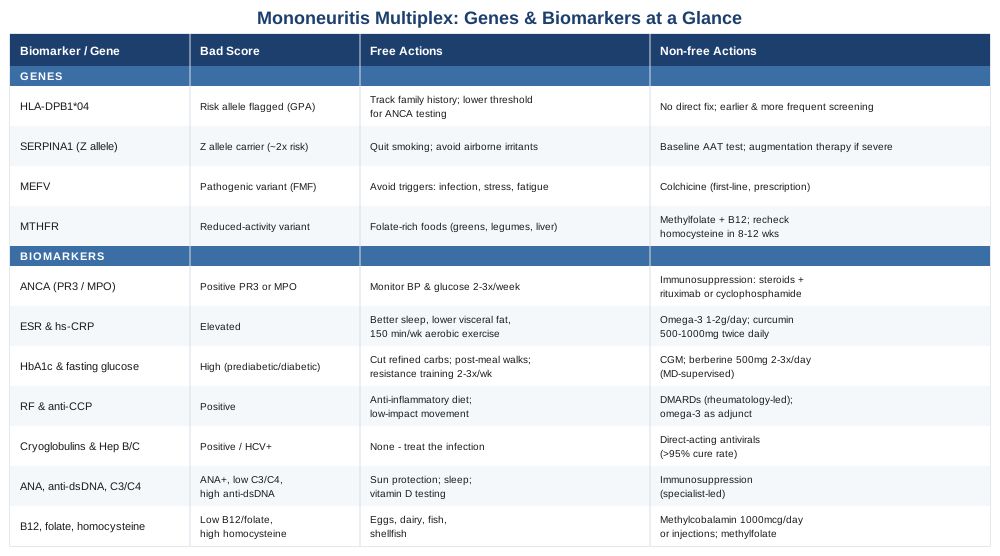
Autoimmune vasculitis and connective tissue disease are, by a wide margin, the most common identifiable drivers of mononeuritis multiplex in adults, followed by diabetes and, less often, infections such as hepatitis C. That's why laboratory tracking — rather than genetic testing — offers the clearest, most immediately useful picture for most readers, which is the approach this article leads with.
The Biomarkers That Actually Matter in Mononeuritis Multiplex
Nerve conduction studies and EMG confirm that mononeuritis multiplex is happening and where. Blood work is what tells you why — and "why" is what determines treatment, prognosis, and how urgently you need to act. A review of paraneoplastic and vasculitic presentations of mononeuritis multiplex describes exactly this pattern: the nerve findings are the entry point, but the diagnostic workup that follows is what actually changes management (NCBI case review of mononeuritis multiplex causes). The seven markers below are the ones most likely to appear on that workup, roughly ordered from the ones that most urgently need specialist follow-up to the ones that are simplest to improve on your own.
1. ANCA — PR3-ANCA and MPO-ANCA
Antineutrophil cytoplasmic antibodies are the single most important test to rule in or out when mononeuritis multiplex appears without an obvious cause like diabetes. PR3-ANCA (associated with granulomatosis with polyangiitis) and MPO-ANCA (associated with microscopic polyangiitis) mark small- and medium-vessel vasculitis, which damages nerves by choking off their blood supply — the vasa nervorum — rather than attacking the nerve directly. A documented case of ANCA-associated vasculitis diagnosed through exactly this route shows how a positive PR3-ANCA result can be the thread that ties together nerve symptoms and vascular damage elsewhere in the body (ANCA vasculitis presenting as mononeuritis multiplex).
How to measure it: a blood draw processed by immunofluorescence and confirmed with an ELISA for PR3 and MPO specificity. Cost typically runs $100 to $250 out of pocket, less with insurance, and results usually take 3 to 7 days.
If the result is positive: there is no supplement-only plan here, and pretending otherwise would be irresponsible. Active ANCA vasculitis affecting nerves is treated with immunosuppression — commonly corticosteroids alongside rituximab or cyclophosphamide — under a rheumatologist's supervision, because untreated vasculitic neuropathy can progress to permanent nerve loss. What you can influence alongside that treatment: infection risk (since immunosuppression raises it), bone density monitoring if on long-term steroids, and blood pressure and glucose, which steroids tend to push upward. None of this replaces the immunosuppressive regimen; it supports tolerating it.
The equipment-based option: a home blood pressure cuff and a glucose meter or continuous glucose monitor (CGM), used two to three times a week during active steroid treatment, catch the two most common steroid side effects early enough to adjust diet or medication before they become their own problem.
2. ESR and hs-CRP
Erythrocyte sedimentation rate and high-sensitivity C-reactive protein are non-specific, but that's precisely their value: they tell you whether systemic inflammation is currently active, which matters for tracking response to treatment over time even when they can't identify the specific cause on their own.
How to measure it: both are standard blood tests, usually run together, at roughly $20 to $50 combined without insurance. Turnaround is typically same-day to 48 hours.
Plan without supplements: the most consistently reproducible non-drug way to lower CRP is improving sleep regularity and reducing visceral fat, both of which independently correlate with lower inflammatory markers. Regular moderate aerobic activity — 150 minutes a week, in whatever form is tolerable given nerve symptoms — is the next most evidence-backed lever.
Plan with supplements or equipment: omega-3 fatty acids (EPA/DHA, 1 to 2 grams daily with food) modestly lower CRP in most people over 8 to 12 weeks; expect mild fish-oil aftertaste or loose stools at higher doses, and check with a physician before combining with blood thinners. Curcumin (500 to 1,000 mg twice daily with piperine or a phytosome formulation) has similar modest anti-inflammatory data but can upset the stomach and shouldn't be combined with anticoagulants. Cycle either for 8 to 12 weeks, then recheck CRP before deciding whether to continue — these are not markers you should chase indefinitely without re-testing.
3. HbA1c and fasting glucose
Diabetes is one of the most common causes of mononeuritis multiplex in adults over 50, usually through microvascular damage to the nerves' blood supply — the same mechanism as vasculitis, but driven by chronically elevated glucose rather than immune attack. This is also the marker with the most direct, well-established path to improvement.
How to measure it: HbA1c is a standard blood test reflecting roughly 3 months of average blood glucose, costing $15 to $40 out of pocket. Fasting glucose is cheaper still and often bundled into routine panels.
If the score is bad, the plan without supplements: reducing refined carbohydrate and added sugar intake, walking for 10 to 15 minutes after meals (which measurably blunts post-meal glucose spikes), and resistance training two to three times weekly to improve insulin sensitivity are the three highest-yield changes, in that order of evidence strength.
If the score is bad, the plan with supplements or equipment: a continuous glucose monitor (roughly $50 to $100 per month) turns abstract dietary advice into immediate feedback and is the single most useful piece of equipment for this marker. Berberine (500 mg two to three times daily with meals) has glucose-lowering evidence comparable to some oral medications in trials, but can cause GI upset and shouldn't be combined with diabetes medications without medical supervision due to hypoglycemia risk. Cycle it in 8- to 12-week blocks with physician oversight rather than using it indefinitely unmonitored.
4. Rheumatoid factor and anti-CCP antibodies
Rheumatoid arthritis-associated vasculitis is a recognized, if less common, cause of mononeuritis multiplex, typically appearing in longstanding, seropositive RA rather than as a first symptom. Anti-CCP is more specific to RA than rheumatoid factor alone, so the two are usually run together.
How to measure it: a blood draw, $50 to $150 combined depending on the lab, results in a few days.
If positive alongside nerve symptoms, this is another marker where the primary plan runs through a rheumatologist, since RA vasculitis is treated with disease-modifying antirheumatic drugs, not lifestyle changes. What you can do in parallel: an anti-inflammatory eating pattern (discussed in more depth in the autoimmune protocol section below) and consistent low-impact movement to preserve joint and nerve function without adding mechanical stress. Omega-3s at the same 1–2 g daily dosing noted above have specific trial support in RA for reducing joint inflammation and NSAID reliance, with the same GI and anticoagulant cautions.
5. Cryoglobulins and hepatitis B/C serology
Cryoglobulinemic vasculitis, most often triggered by chronic hepatitis C infection, is a well-documented cause of peripheral neuropathy that can present as mononeuritis multiplex. This is one of the more fixable underlying causes on this list, because treating the viral infection directly often resolves the vasculitis driving the nerve damage. Clinical reviews of HCV-associated cryoglobulinemic vasculitis describe neuropathy as one of the main reasons treatment is escalated (HCV-associated cryoglobulinemic vasculitis review).
How to measure it: cryoglobulins require a special blood draw kept warm en route to the lab (an easy step to get wrong, so use a lab experienced with the test), costing $100 to $200. Hepatitis B and C serology adds another $50 to $150.
If positive, the plan runs through direct-acting antiviral therapy for hepatitis C, which has cure rates above 95% in most patients and often resolves the associated vasculitis over months. There is no meaningful supplement substitute for antiviral treatment here — this is one of the clearest cases in this article where the "plan without supplements" and "plan with supplements" both defer to the same answer: treat the infection.
6. ANA, anti-dsDNA, and complement C3/C4
Lupus and other connective tissue diseases cause mononeuritis multiplex through immune-complex deposition in small vessels. A positive antinuclear antibody (ANA) with low complement (C3/C4) and elevated anti-dsDNA is a classic pattern of active lupus vasculitis.
How to measure it: ANA screening runs $50 to $100; a full panel with anti-dsDNA and complement adds $100 to $150 more.
If abnormal, the treatment is immunosuppressive and specialist-led, similar to ANCA vasculitis above. Supportive measures that don't interfere with treatment include strict sun protection (UV exposure can flare lupus), adequate sleep, and vitamin D testing, since deficiency is common in lupus patients and low levels correlate with disease activity in observational studies — though supplementing vitamin D has not been shown to reverse existing nerve damage, only to correct the deficiency itself.
7. Vitamin B12, folate, and homocysteine
This is the marker most likely to be overlooked, and the one where a genuine supplement-based plan can help independent of any autoimmune workup. B12 deficiency directly damages peripheral nerves and can either mimic mononeuritis multiplex or worsen nerve recovery in someone whose primary cause is vasculitic. A systematic review of B12 deficiency's neurological effects specifically lists peripheral neuropathy among its consequences (neurological effects of vitamin B12 deficiency).
How to measure it: serum B12, folate, and homocysteine together cost roughly $50 to $120. Elevated homocysteine with normal-range B12 can still indicate a functional deficiency, which is why checking all three together, rather than B12 alone, catches more cases.
If the score is bad, the plan without supplements: increasing dietary B12 through eggs, dairy, fish, and shellfish helps mild cases, but anyone with malabsorption (common after gastric surgery, with long-term metformin or proton pump inhibitor use, or with autoimmune gastritis) won't fix it through diet alone.
If the score is bad, the plan with supplements or equipment: sublingual or oral methylcobalamin, 1,000 mcg daily, corrects most mild-to-moderate deficiencies within 8 to 12 weeks; documented malabsorption or neurological symptoms usually call for B12 injections (typically weekly for a month, then monthly) prescribed by a physician. Folate, when also low, is best taken as methylfolate (400–800 mcg daily) rather than folic acid, particularly for anyone with reduced MTHFR enzyme activity (see below) — pairing folate with B12 is important, since correcting folate deficiency alone can mask a B12 deficiency and let nerve damage continue silently. Side effects at these doses are minimal; retest levels at 3 months rather than supplementing indefinitely without follow-up.
With the biomarker picture covering the acquired and metabolic drivers, it's worth turning to the genetic layer underneath it — not because genes are more important, but because they explain why some people develop these conditions in the first place and how they process the nutrients discussed above.
What Your Genes May Be Telling You
Genetic testing doesn't diagnose mononeuritis multiplex and shouldn't be mistaken for a substitute for the bloodwork above. What it does offer is context: an explanation for why one person develops vasculitis and another doesn't, and why identical B12 or folate levels can behave differently from one person to the next. Researchers like Ali Torkamani, whose work at Scripps Research focuses on translating genomic and polygenic risk data into actionable prevention, and Gary Brecka, known for popularizing methylation and B-vitamin pathway testing, both make a version of the same point: genetic risk is a starting probability, not a verdict, and most of these variants are meaningfully modifiable through the right combination of monitoring and targeted intervention.
HLA-DPB1*04 — granulomatosis with polyangiitis risk
A genome-wide association study of nearly 500 people with granulomatosis with polyangiitis (GPA), one of the ANCA-associated vasculitides most likely to cause mononeuritis multiplex, found HLA-DPB1*04 to be the strongest single genetic signal, alongside a variant near the SEMA6A gene (GWAS of GPA and HLA-DPB1). HLA genes shape how the immune system distinguishes self from foreign tissue, so this variant is thought to affect susceptibility to the autoimmune attack itself, not something downstream that can be nutritionally corrected.
If the gene is flagged, the plan without supplements: there is no dietary or supplement fix for an HLA risk variant, and that's an important thing to say plainly rather than dress up. What actually helps is earlier and more frequent screening — periodic ANCA and inflammatory marker checks if you have a family history of vasculitis or unexplained nerve or sinus symptoms — so that if disease does develop, it's caught before extensive nerve damage occurs.
The plan with supplements or equipment: none directly targets this variant. The most useful "equipment" here is simply a documented family history and a lower threshold for requesting the ANCA panel described above if unexplained neuropathy, sinus, or kidney symptoms appear.
SERPINA1 — alpha-1 antitrypsin Z allele
A study of ANCA-associated vasculitis patients found the Z allele of SERPINA1 (which also causes alpha-1 antitrypsin deficiency) significantly overrepresented, with carriers facing roughly double the risk compared to non-carriers (SERPINA1 Z allele and ANCA vasculitis). Alpha-1 antitrypsin normally restrains the enzymes that neutrophils release during inflammation; a deficient or dysfunctional form lets that inflammatory activity run less checked, plausibly worsening vessel and nerve injury once vasculitis starts.
If the gene is flagged, the plan without supplements: the clearest actionable step is smoking cessation, since smoking dramatically accelerates the tissue damage associated with alpha-1 antitrypsin deficiency and independently worsens vasculitis outcomes. Avoiding unnecessary exposure to airborne irritants and getting a baseline alpha-1 antitrypsin serum level (a simple, inexpensive blood test) is the practical next step if this variant is identified.
The plan with supplements or equipment: augmentation therapy (infused alpha-1 antitrypsin protein) exists for severe deficiency but is reserved for people with significant lung disease, not for vasculitis risk reduction alone, and requires specialist management. There's no supplement equivalent; this is a case where knowing the gene mainly changes vigilance and smoking-related decisions, not a purchasable fix.
MEFV — Familial Mediterranean Fever
Variants in the MEFV gene, best known for causing Familial Mediterranean Fever (FMF), are also associated with a higher rate of vasculitis, including polyarteritis nodosa-like presentations and Henoch-Schönlein purpura (MEFV and coexisting vasculitis). FMF causes recurrent, short episodes of systemic inflammation, and repeated inflammatory flares over years are thought to raise the odds of a secondary vasculitic process that can, in turn, involve peripheral nerves.
If the gene is flagged, the plan without supplements: for confirmed FMF, colchicine is the established first-line treatment and prevents both the fever episodes and the long-term complication of amyloidosis; this is a prescription intervention, not a lifestyle substitute. Reducing known flare triggers — infection, physical exhaustion, and psychological stress in some patients — is a reasonable adjunct.
The plan with supplements or equipment: no supplement has meaningful trial evidence for FMF-associated inflammation. Where colchicine causes GI side effects (its most common issue, generally dose-dependent), that's a conversation for dose adjustment with a physician, not a substitution.
MTHFR — folate and homocysteine handling
MTHFR variants reduce the efficiency of converting dietary folate into its active form, which can raise homocysteine and, in severe inherited deficiency, has been directly linked to peripheral neuropathy (peripheral neuropathy in MTHFR deficiency). It's worth being precise about strength of evidence here: the case reported in that study involved a rare, severe inherited MTHFR deficiency, not the common, milder MTHFR polymorphisms that genetic testing services usually report — so if a consumer genetics report flags a common MTHFR variant, it's a reason to check homocysteine and folate status, not a diagnosis of nerve risk on its own.
If the gene is flagged, the plan without supplements: eating folate-rich foods (leafy greens, legumes, liver) supports the pathway somewhat, though it doesn't fully bypass reduced enzyme efficiency in people with lower-functioning variants.
The plan with supplements or equipment: methylfolate (400–800 mcg daily) bypasses the enzymatic step MTHFR variants affect, and is generally preferred over folic acid for people with known reduced MTHFR activity. Pair it with B12 (see the biomarker section above) since the two pathways interact, and recheck homocysteine after 8 to 12 weeks. High-dose folate without adequate B12 can theoretically mask a B12 deficiency, which is the main caution to flag with a physician before starting.
Genetics explains predisposition; the next section looks at a dietary framework built specifically around calming the kind of autoimmune activity that drives several of the conditions above.
The Wahls Protocol: Ten Lessons for Nerve and Immune Health
Dr. Terry Wahls is a physician who was diagnosed with secondary progressive multiple sclerosis — a disease that, like several causes of mononeuritis multiplex, involves the immune system damaging nerve tissue — and used a nutrient-dense, functional-medicine framework to regain function she had lost to a wheelchair. Her approach, detailed in The Wahls Protocol and tested in a published pilot study, is worth summarizing here not because MS and mononeuritis multiplex are the same disease, but because both involve autoimmune or inflammatory nerve injury, and her framework is one of the few patient-driven approaches with a real, published feasibility trial behind it (Wahls multimodal intervention pilot study). That trial was small, uncontrolled, and measured feasibility and fatigue rather than nerve conduction directly — important context before drawing firm conclusions.
1. Mitochondria need specific nutrients, not just "healthy eating"
Wahls frames nerve and immune cell function as fundamentally a mitochondrial energy problem, arguing that vague dietary improvement isn't enough — specific micronutrients (B vitamins, sulfur-containing compounds, antioxidants) are needed in targeted amounts.
2. Nine cups of vegetables and fruit a day is the anchor, not a suggestion
Her protocol's most distinctive practical instruction is a defined daily target: three cups of leafy greens, three cups of sulfur-rich vegetables, and three cups of deeply colored fruits and vegetables, chosen for micronutrient density rather than calorie content.
3. Sulfur-rich vegetables support the body's detoxification pathways
Broccoli, cabbage, onions, and garlic are emphasized specifically for the sulfur compounds involved in glutathione production, the body's primary antioxidant system, which is relevant to any condition involving oxidative stress on nerve tissue.
4. Grain elimination is central, not incidental
The protocol removes grains and legumes entirely in its stricter forms, on the reasoning that certain proteins in these foods may provoke low-grade immune activation in susceptible people — a claim with more mechanistic plausibility than direct trial proof in mononeuritis multiplex specifically.
5. Organ meats fill nutrient gaps most diets miss
Liver and other organ meats are recommended for their B12, folate, and iron density — directly relevant given how often B12 and folate status came up in the biomarker section above.
6. Electrical stimulation and exercise support nerve signaling
Wahls incorporates neuromuscular electrical stimulation and a structured exercise plan, based on the premise that stimulating muscle and nerve pathways directly may help preserve function even amid ongoing nerve injury.
7. Stress reduction is treated as a biological intervention, not an afterthought
Meditation and stress management are built into the protocol as core components, consistent with the broader autoimmune literature connecting chronic stress to inflammatory flares.
8. Small, consistent changes outperformed dramatic short-term ones in her own case
Her personal account emphasizes that improvement built up over months of consistent adherence, not a rapid turnaround — a useful expectation-setting point for anyone starting a similar plan.
9. The published pilot study showed feasibility and reduced fatigue, not reversal of nerve damage
The 2014 trial found the intervention was feasible for patients to follow and reduced fatigue scores; it did not demonstrate nerve regeneration or slowed disease progression, and it lacked a control group, which limits how much can be concluded from it.
10. It's a framework to discuss with your care team, not a replacement for one
Wahls herself continued conventional MS care alongside her dietary changes; the protocol is presented as adjunctive, and that framing applies just as directly to mononeuritis multiplex, where the underlying vasculitis or autoimmune process usually needs its own specific treatment regardless of diet.
Diet and lifestyle frameworks like this one sit alongside a handful of other complementary approaches with genuine, if modest, human evidence — worth a closer look next.
Complementary Approaches Worth Considering
None of the following are treatments for the underlying vasculitis, autoimmune disease, or diabetes that typically causes mononeuritis multiplex. They're supportive approaches with real human evidence for the kind of nerve pain, inflammation, or autoimmune activity involved, meant to sit alongside — never replace — specialist-directed treatment.
The Autoimmune Protocol (Sarah Ballantyne)
The Autoimmune Protocol, developed by Sarah Ballantyne, is an elimination-and-reintroduction diet designed to reduce immune-triggering foods in autoimmune disease, which is directly relevant here since autoimmune vasculitis is the leading identifiable cause of mononeuritis multiplex. The premise is that removing common inflammatory triggers (grains, legumes, nightshades, dairy, eggs, processed additives) for a defined period, then reintroducing them one at a time, can help identify individual dietary contributors to disease activity.
The clearest human evidence comes from a study of the protocol in inflammatory bowel disease, where participants followed AIP for 11 weeks; symptom scores measured by validated IBD indices improved significantly, though the study lacked a control group and doesn't directly involve vasculitis or nerve outcomes (AIP diet trial in inflammatory bowel disease). Evidence specific to vasculitic neuropathy doesn't yet exist, so this should be read as evidence for autoimmune conditions broadly rather than mononeuritis multiplex specifically.
Realistically applying this means working with a dietitian familiar with the protocol, especially during active vasculitis treatment when nutritional needs and medication interactions (like steroid-related blood sugar changes) need coordination — and reintroducing foods slowly enough to actually identify individual triggers rather than treating the elimination phase as the end goal.
Tai Chi
Tai chi combines slow, controlled movement with balance training and breath awareness, and has been studied specifically in peripheral neuropathy populations for its effects on balance, gait, and fall risk — all relevant concerns once nerve damage from any cause affects the legs or feet.
A systematic review and meta-analysis of ten randomized controlled trials, covering 344 participants with peripheral neuropathy including diabetic neuropathy, found tai chi meaningfully improved postural control and balance outcomes compared to control conditions (meta-analysis of tai chi for peripheral neuropathy).
For mononeuritis multiplex specifically, this is most relevant once acute vasculitic inflammation is controlled and residual nerve weakness or numbness affects balance — a beginner class, twice weekly, is a reasonable starting cadence, ideally with a physical therapist's clearance first if foot sensation is significantly impaired, since balance training in someone with reduced proprioception carries some fall risk that needs supervision initially.
Photobiomodulation (Low-Level Laser Therapy)
Photobiomodulation uses low-level red or near-infrared light, theorized to support mitochondrial function in nerve tissue and modestly improve local blood flow, and has been studied specifically in diabetic peripheral neuropathy.
A systematic review of photobiomodulation therapy in diabetic peripheral neuropathy, covering eight studies, found improvements in neuropathic pain scores, nerve conduction velocity, and plantar pressure distribution (photobiomodulation for diabetic peripheral neuropathy). This evidence is specific to diabetic neuropathy rather than vasculitic mononeuritis multiplex, so it should be treated as suggestive rather than directly proven for the vasculitic form.
Home near-infrared devices are available for a few hundred dollars, typically used for 10 to 20 minutes per session, 3 to 5 times weekly on affected areas; in-office treatment from a physical therapist is the more evidence-matched option if available. Side effects are minimal — mild warmth at the treatment site — though it shouldn't be used over active vasculitic skin lesions or areas of impaired sensation without a clinician's input first.
Mindfulness-Based Stress Reduction
MBSR combines meditation, body awareness, and gentle movement, and is widely studied for chronic pain generally — but it's worth being honest that the evidence specific to neuropathic pain is mixed rather than uniformly positive.
A randomized controlled trial of MBSR in breast cancer survivors with chronic neuropathic pain, comparing it to a waitlist control, found no statistically significant benefit for pain outcomes (MBSR trial in chronic neuropathic pain). That's a meaningful null result worth taking seriously rather than glossing over — broader chronic pain literature shows more consistent modest benefit, but neuropathic pain specifically may respond less reliably.
Given that mixed picture, MBSR is reasonable to try for general stress and coping with a chronic diagnosis — an 8-week structured course, the standard format in most trials — but it shouldn't be relied on as a primary strategy for nerve pain itself, and expectations should be set accordingly.
Biofeedback
Biofeedback uses real-time sensor data (commonly gait or pressure sensors) to help patients consciously adjust movement patterns that are otherwise hard to control by feel alone — particularly useful once neuropathy has altered sensation in the feet.
A study using gait biofeedback in patients with diabetes and peripheral neuropathy found it reduced peak plantar pressure to safer levels without creating new high-pressure zones elsewhere on the foot (biofeedback for plantar pressure in diabetic neuropathy) — directly relevant to preventing the foot ulcers that reduced sensation makes more likely.
This is best accessed through a physical therapist with gait-analysis equipment rather than attempted with consumer devices, since the studied protocols use specific pressure-sensor feedback loops; sessions are typically weekly for several weeks, with no notable side effects beyond the time commitment.
Conclusion
Mononeuritis multiplex is a pattern, not a final answer, and the real work is identifying what's driving it: vasculitis, autoimmune disease, diabetes, infection, or a nutrient deficiency compounding one of the others. The seven biomarkers above — ANCA, inflammatory markers, HbA1c, rheumatoid factor and anti-CCP, cryoglobulins and hepatitis serology, ANA with complement, and the B12-folate-homocysteine axis — are the most direct way to find that answer, and the genetic variants covered here help explain why some people face higher baseline risk. Dietary frameworks and complementary approaches have a real, if supporting, role once the underlying cause is identified and being treated.
The most useful next step is usually the simplest one: if mononeuritis multiplex hasn't been fully worked up yet, ask your neurologist or rheumatologist specifically which of these seven markers have been checked, and which haven't. If a cause has already been identified, tracking the relevant markers over time — alongside, not instead of, prescribed treatment — is how you'll actually know whether the plan is working.
Cardiovascular: Vascular Conditions
Endocrine & Metabolic: Diabetes & Blood Sugar
Autoimmune: Inflammatory Conditions