This article contains AI generated content.
Mucoid Degeneration of the Patellar Tendon: 5 Genes and 7 Biomarkers to Track
If you've been told your knee pain is related to "mucoid degeneration" of the patellar tendon, you've probably already noticed the gap between the MRI report and the advice that follows it. The report describes something precise — a tendon whose collagen structure has been replaced, in patches, by a gel-like mucoid substance, usually alongside disorganized fibers and increased signal on imaging. The advice that follows is often generic: rest, physiotherapy, maybe an injection, come back in three months.
That gap is understandable. Mucoid degeneration sits at the biological end-stage of a slow tendinopathy process, and most clinical guidance is built for symptom management rather than for understanding why the tendon's matrix broke down in the first place. Two people with an identical MRI finding can have completely different underlying drivers — one with a metabolic profile that is quietly stiffening collagen throughout the body, another with a genetic predisposition to weaker cross-linking, another with both. Generic rehab protocols don't distinguish between these, because they're not designed to.
This article takes a narrower, more mechanistic approach. Instead of treating the tendon as an isolated structural problem, it treats it as a tissue that reflects what's happening in the rest of the body — glucose handling, lipid transport, inflammation, hormone status, and inherited collagen biology. Some of that is measurable in a standard blood panel. Some of it is written into genes that don't change but can be worked around.
None of this promises reversal of degeneration that has already occurred — mucoid change in tendon tissue is a slow process, and there's no clinical evidence that any supplement or protocol dissolves it directly. What the evidence does support is a real, actionable set of levers: biomarkers that flag whether the internal environment is working for or against tendon repair, and genetic patterns that explain why two people respond differently to the same rehab plan. Used together, they turn "watch and wait" into something more concrete to act on.
Summary
This article is built around two connected ideas. The first is that mucoid degeneration doesn't happen in a vacuum — it's associated, in the human research, with measurable blood markers like lipid particles, blood sugar, inflammation, vitamin D, uric acid, thyroid status, and growth factors that govern collagen turnover. Tracking these seven biomarkers gives a concrete, testable picture of whether your internal environment is helping or working against tendon repair, and each one comes with a realistic plan — with and without supplements — for shifting it. The second idea, covered as a shorter companion section, is that a handful of genes (COL5A1, TNC, MMP3, COL1A1, and GDF5) shape how resilient your tendon collagen is to begin with, and knowing your pattern changes how aggressively you should manage the modifiable side. Beyond that, you'll find a research-backed loading protocol popularized on the Huberman Lab podcast that is specific to tendon collagen synthesis, and a short review of complementary approaches — laser therapy, massage, biofeedback, and mindfulness — with the actual evidence behind each one, including where that evidence is thin. By the end, the goal isn't a miracle fix; it's a clear, evidence-anchored map of what to check, what to ask your doctor, and where the leverage actually is.
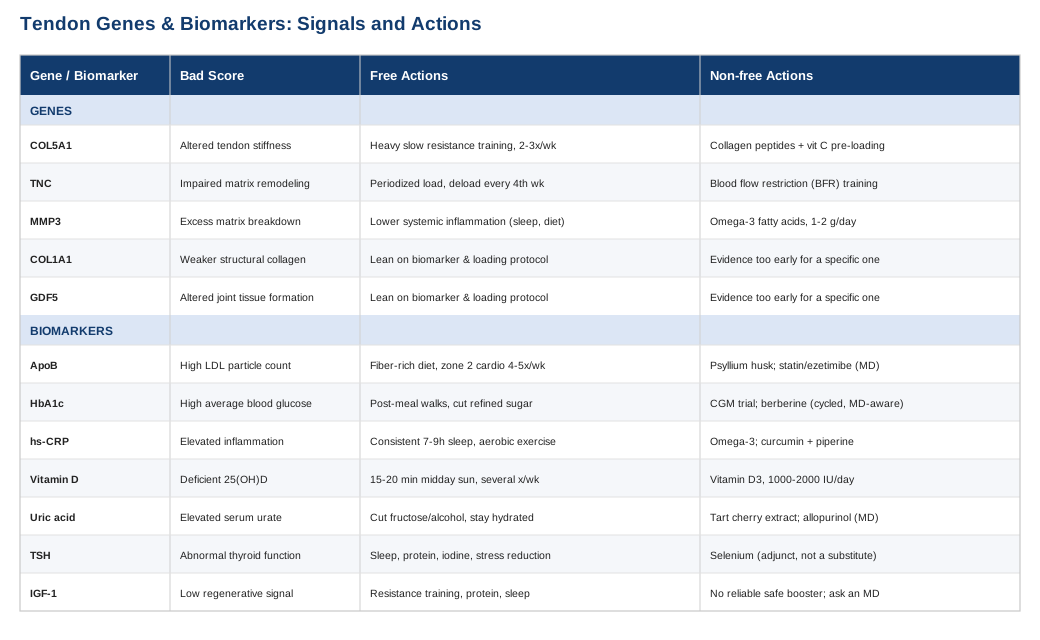
Seven Biomarkers That Reveal What's Happening Inside Your Tendon
Tendon tissue is metabolically quiet but not metabolically isolated. Collagen synthesis, cross-linking, and repair all depend on systemic inputs — glucose, lipids, inflammatory tone, hormones, and growth factors circulating in blood. When those inputs are chronically off, the tendon matrix is one of the tissues that shows it, often as disorganized collagen and the kind of ground-substance accumulation seen in mucoid degeneration. The seven biomarkers below aren't diagnostic for mucoid degeneration on their own — no blood test replaces the MRI — but they map the metabolic terrain the tendon is trying to repair itself in, and each is something you can realistically track and influence.
Apolipoprotein B (ApoB) and LDL particle burden
ApoB counts the actual number of atherogenic lipoprotein particles in the blood — LDL, VLDL, and their remnants — rather than just the cholesterol they carry. Lipidologists including Thomas Dayspring and Allan Sniderman have argued for years that ApoB is a more accurate risk marker than LDL-cholesterol alone, because two people with identical LDL-C can have very different particle counts. This matters for tendons specifically: in familial hypercholesterolemia, chronically elevated LDL particles infiltrate tendon tissue and thicken it, most visibly in the Achilles but also documented in the patellar tendon, producing xanthomatous, disorganized tissue that overlaps with the degenerative changes seen on imaging. A 2024 study on tendon xanthomas in familial hypercholesterolemia found that lipid particle burden, not just cholesterol level, tracked with tendon thickening, echoing the original observation from a 1978 study linking Achilles tendon thickness to hypercholesterolemia.
How to measure it
ApoB is a standard blood draw, often bundled with an advanced lipid panel. Cost ranges from roughly 15 to 40 US dollars out of pocket if ordered directly through a lab, or it may be covered if a physician orders it for cardiovascular risk assessment. It does not require fasting, unlike a traditional lipid panel.If the score is high: the plan without supplements
Replacing refined carbohydrates and saturated fat with fiber-rich, unsaturated-fat sources (olive oil, nuts, fatty fish) reliably lowers ApoB within 6 to 12 weeks. Adding 30 to 45 minutes of zone 2 cardio, four to five times weekly, has an independent lowering effect. Recheck ApoB every 3 months until stable, then every 6 to 12 months.If the score is high: the plan with supplements or equipment
Psyllium husk (5 to 10 grams daily with water) modestly lowers ApoB by binding bile acids; the main side effect is bloating if introduced too quickly. For more significant elevations, this is a conversation for a statin or ezetimibe with a physician rather than a supplement — plant sterols (2 grams daily) have a real but small effect and can interfere with fat-soluble vitamin absorption if used long term, so they're better cycled with periodic diet reviews than taken indefinitely without monitoring.HbA1c (glycated hemoglobin)
HbA1c reflects average blood glucose over roughly three months. Chronically elevated glucose drives the formation of advanced glycation end-products (AGEs), which cross-link collagen fibers abnormally and stiffen tendon tissue, reducing its capacity to remodel normally under load. A 2016 systematic review and meta-analysis found a consistent association between diabetes mellitus and tendinopathy across multiple tendon sites, and a broader review of tendon pathology in metabolic disorders describes glucose dysregulation as one of the clearest systemic contributors to degenerative tendon change.
How to measure it
A simple blood draw, typically 10 to 25 US dollars if self-ordered, or included in most annual physicals at no extra cost. No fasting required.If the score is high: the plan without supplements
Post-meal walks (10 minutes after the two largest meals of the day) measurably blunt glucose spikes and, sustained over months, lower HbA1c. Reducing liquid sugar and refined starch, and prioritizing protein and fiber earlier in meals, has a well-documented effect on glycemic control within 8 to 12 weeks.If the score is high: the plan with supplements or equipment
A continuous glucose monitor (worn for 2 to 4 week stretches, a few times a year rather than continuously) is the most practical equipment-based option for identifying which specific foods spike your glucose. Berberine (500 mg, two to three times daily with meals) has glucose-lowering effects comparable to some oral medications in trials, but can cause gastrointestinal upset and should not be combined with diabetes medication without medical supervision. Cycle it in 8 to 12 week blocks with monitoring rather than using it indefinitely without recheck.High-sensitivity C-reactive protein (hs-CRP)
hs-CRP is a marker of low-grade systemic inflammation. Tendinopathy was historically framed as a purely "degenerative, non-inflammatory" process, but more recent work has walked that back somewhat — there's a documented inflammatory component in symptomatic tendinopathy, and systemic inflammatory tone appears to influence how well tendon tissue repairs itself, a theme discussed in the same metabolic-disorders tendon review referenced above.
How to measure it
A standard blood test, roughly 10 to 30 US dollars out of pocket. Best drawn when you're not acutely sick, since any infection will transiently elevate it.If the score is high: the plan without supplements
Sleep consistency (7 to 9 hours, stable wake time) has one of the largest effects on hs-CRP of any single lifestyle lever. Reducing ultra-processed food intake and increasing weekly aerobic activity to at least 150 minutes both lower hs-CRP over 3 months of consistent practice.If the score is high: the plan with supplements or equipment
Omega-3 fatty acids (1 to 2 grams combined EPA/DHA daily, with food to reduce reflux) have a modest, reproducible anti-inflammatory effect on hs-CRP over 8 to 12 weeks. Curcumin with piperine (500 mg, once or twice daily) has some supporting trial data but a weaker effect size and can interact with blood thinners, so it's worth flagging to a physician if you're on anticoagulants.25-hydroxyvitamin D
Vitamin D receptors are present in tendon fibroblasts, and deficiency has been shown to directly impair tendon healing. A well-cited rat model study found that diet-induced vitamin D deficiency measurably weakened rotator cuff tendon-to-bone healing, and while that's an animal model rather than direct patellar tendon evidence, it's one of the more mechanistically direct links between this nutrient and tendon collagen repair capacity.
How to measure it
A 25-hydroxyvitamin D blood test costs roughly 20 to 50 US dollars if self-ordered, and is commonly included in routine panels for people with joint or bone complaints.If the score is low: the plan without supplements
15 to 20 minutes of midday sun exposure on bare arms and legs, several times a week (adjusted for skin tone and latitude), is the most reliable non-supplement route, though it's seasonally unreliable at higher latitudes in winter.If the score is low: the plan with supplements or equipment
Vitamin D3, 1,000 to 2,000 IU daily for most adults with mild-to-moderate deficiency, taken with a fat-containing meal for absorption. Recheck levels after 8 to 12 weeks rather than guessing at dose; doses above 4,000 IU daily sustained long-term should be physician-supervised, since excess vitamin D can raise calcium to unsafe levels. A light box isn't a substitute for vitamin D synthesis and shouldn't be used as one.Serum uric acid
Elevated uric acid isn't just a gout marker — monosodium urate crystals have been shown to directly affect tenocyte (tendon cell) biology. A 2014 study demonstrated that urate crystals interact with tenocytes in ways relevant to tendon pathology, adding a plausible mechanistic link between chronically elevated uric acid and degenerative tendon change, independent of a formal gout diagnosis.
How to measure it
A basic blood test, typically 10 to 20 US dollars, often already included in metabolic panels.If the score is high: the plan without supplements
Reducing fructose-sweetened beverages and alcohol (particularly beer) has one of the largest measurable effects on uric acid. Adequate hydration (aiming for pale yellow urine) supports renal urate clearance.If the score is high: the plan with supplements or equipment
Tart cherry extract (480 to 960 mg daily) has modest trial support for lowering uric acid and reducing gout flare frequency, with minimal side effects beyond occasional GI upset. For significant, persistent elevation, this becomes a medical conversation about allopurinol rather than a supplement decision — self-treating clinically significant hyperuricemia with supplements alone isn't appropriate.TSH and free T4 (thyroid function)
Thyroid hormone regulates collagen turnover rate throughout the body, and both hypo- and hyperthyroidism have been associated with tendinopathy in the metabolic-disorders literature, including the same Rheumatology review cited above, which specifically discusses thyroid dysfunction alongside diabetes and hyperlipidemia as systemic contributors to tendon pathology.
How to measure it
TSH alone costs roughly 20 to 40 US dollars; a full panel with free T4 and free T3 runs 50 to 100 US dollars. Worth testing once as a baseline even without obvious thyroid symptoms if tendon issues are unexplained.If the score is abnormal: the plan without supplements
Mild subclinical thyroid shifts sometimes normalize with sleep correction, adequate protein and iodine-containing food intake, and stress reduction — but this only applies to borderline cases, not clinical hypo- or hyperthyroidism, which requires medical management.If the score is abnormal: the plan with supplements or equipment
Selenium (100 to 200 mcg daily) has trial support for supporting thyroid autoimmune markers in some contexts, but is not a substitute for levothyroxine or antithyroid medication where clinically indicated. This is a biomarker where self-directed supplementation should stay conservative and secondary to physician-guided treatment.IGF-1 (insulin-like growth factor 1)
IGF-1 is one of the key growth factors driving collagen synthesis and tenocyte proliferation during tendon repair; classic tendon-healing research in animal models has shown it stimulates matrix production directly at the site of injury. Low circulating IGF-1 has been associated with reduced regenerative capacity across connective tissues, which is one reason it's tracked alongside more traditional biomarkers in tendon-focused workups, even though direct human trial data specific to patellar tendon mucoid degeneration doesn't yet exist.
How to measure it
A blood test, typically 40 to 90 US dollars, less commonly bundled into routine panels so usually ordered specifically.If the score is low: the plan without supplements
Resistance training (especially compound lower-body lifts, 2 to 3 times weekly) and adequate total protein intake (roughly 1.6 to 2.2 grams per kilogram of bodyweight daily) are the most reliable non-supplement levers for supporting healthy IGF-1 levels, alongside consistent sleep, since growth hormone (an IGF-1 driver) pulses primarily during deep sleep.If the score is low: the plan with supplements or equipment
There's no well-supported supplement that safely and reliably raises IGF-1 in healthy adults without other risks — some marketed "IGF-1 boosters" carry real safety concerns, especially with unsupervised use, and this is an area where equipment (progressive resistance training) is a far better-supported lever than any pill. If IGF-1 is significantly low despite good training and sleep, that's worth discussing with an endocrinologist rather than self-supplementing.Taken together, these seven markers sketch a metabolic profile: someone with elevated ApoB, HbA1c, hs-CRP, and uric acid, plus low vitamin D and IGF-1, is dealing with a systemic environment that makes tendon matrix repair genuinely harder, independent of training load. Correcting even two or three of these is a more targeted intervention than generic advice to "rest and stretch," and it's something a primary care visit can screen for in a single blood draw panel.
What Your Genes May Be Telling You About Tendon Resilience
Biomarkers describe the current internal environment; genetics describes the starting material the tendon was built with. Researchers including Ali Torkamani, whose work on genomic risk prediction has pushed personalized medicine toward actionable variant interpretation, and Gary Brecka, who has popularized practical "know your genes, then act on them" frameworks, have both argued the same basic point: a gene variant isn't a verdict, it's a parameter that changes how much lifestyle effort is needed to get the same result as someone without it. Tendon collagen genetics is a good example — the variants below don't cause mucoid degeneration by themselves, but human studies link them to weaker or less-organized collagen structure, which plausibly lowers the threshold at which repetitive load produces degenerative change.
COL5A1
COL5A1 encodes a component of type V collagen, which regulates the diameter and organization of the much more abundant type I collagen fibrils that make up tendon. Certain COL5A1 variants are associated with altered tendon stiffness and, in some studies, with differing risk of tendon and ligament injury. A 2007 review on the genetic component of tendon and ligament injuries lays out this association across multiple cohort studies.
If the gene is unfavorable: the plan without supplements
Because COL5A1 variants are linked to altered tendon stiffness rather than outright weakness, the most evidence-aligned compensation is progressive, controlled loading — heavy slow resistance training for the quadriceps and patellar tendon unit, 2 to 3 times weekly, allowing 48 hours between sessions targeting the same tendon. This builds tolerance gradually rather than relying on collagen structure alone to withstand load.If the gene is unfavorable: the plan with supplements or equipment
Collagen peptides (15 grams) combined with vitamin C (roughly 50 to 100 mg), taken about 60 minutes before loading exercise, are discussed further in the podcast-based protocol below and have direct human trial support for boosting collagen synthesis around the loading window. This is a timing-dependent strategy, not a daily supplement taken passively — it only appears to work when paired with loading shortly after.TNC (Tenascin-C)
Tenascin-C is an extracellular matrix glycoprotein upregulated during tendon remodeling and repair. Variants in TNC have been associated, in the same tendon genetics review, with altered risk of tendon injury, plausibly through differences in how well the matrix reorganizes itself after microdamage — a process directly relevant to whether damaged tissue heals cleanly or accumulates the disorganized, mucoid-appearing matrix seen on imaging.
If the gene is unfavorable: the plan without supplements
Since tenascin-C activity relates to remodeling after microdamage, the practical compensation is avoiding the classic "too much, too soon" pattern — periodizing training load with a deload week roughly every 4th week, rather than continuously increasing volume, gives remodeling processes time to catch up between loading bouts.If the gene is unfavorable: the plan with supplements or equipment
Blood flow restriction training (using cuffs at roughly 50 to 80% limb occlusion pressure, for lower-load rehab sets) has growing evidence for stimulating tendon adaptation with less mechanical stress than heavy loading alone — useful specifically for someone whose remodeling capacity may be genetically less robust. It should be introduced under guidance from a physiotherapist familiar with the equipment, cycling in phases of 4 to 6 weeks rather than continuously.MMP3
Matrix metalloproteinase 3 breaks down and remodels extracellular matrix components, including collagen and proteoglycans. A 2009 study found that specific MMP3 variants were associated with Achilles tendinopathy risk, and notably identified a possible interaction with COL5A1 — suggesting these two genes may compound each other's effects on tendon matrix turnover.
If the gene is unfavorable: the plan without supplements
Because MMP3 governs matrix breakdown and rebuilding, unmanaged systemic inflammation (see the hs-CRP biomarker above) likely compounds an unfavorable MMP3 profile by pushing matrix turnover further toward degradation. Prioritizing the inflammation-reducing lifestyle levers described earlier becomes more important, not less, for someone with this variant.If the gene is unfavorable: the plan with supplements or equipment
Omega-3 fatty acids (the same 1 to 2 gram daily dose described under hs-CRP) are a reasonable, low-risk addition given the inflammation-MMP3 connection. There is no supplement that directly and safely inhibits MMP3 activity in a way appropriate for self-use — some experimental MMP inhibitors exist in research settings, but they are not consumer supplements and shouldn't be sought out as such.COL1A1 and GDF5
COL1A1 encodes the primary structural chain of type I collagen itself, and GDF5 (growth differentiation factor 5) is involved in joint and connective tissue formation during development. Both have been explored in candidate-gene studies of musculoskeletal soft-tissue injury risk, though the human evidence specific to tendon collagen organization is earlier-stage and less consistent than for COL5A1, TNC, and MMP3 — worth knowing about, but not yet strong enough to anchor a specific protocol around.
If these genes are flagged: the practical approach
Given the earlier-stage evidence, the most defensible response to an unfavorable COL1A1 or GDF5 result is simply to weight the other, better-established levers more heavily — the biomarker section above and the loading protocol below — rather than searching for a gene-specific fix that the current research doesn't yet support.The genetic layer doesn't change what to do so much as how seriously to take it. Someone with unfavorable COL5A1, TNC, and MMP3 variants together isn't destined for tendon problems, but they likely have a narrower margin for error on training load progression and systemic inflammation than someone without those variants — which is exactly the kind of information that makes "listen to your body" a more precise instruction rather than a vague one.
The Podcast Episode Worth Building a Protocol Around
Among the research discussed on the Huberman Lab podcast, the episodes featuring Keith Baar — a physiologist whose lab studies tendon and ligament collagen synthesis directly — stand out as unusually actionable for exactly this condition, because Baar's own published human research measured collagen synthesis in response to a specific, testable protocol. Below are ten of the most load-bearing points from that body of work and its podcast discussion, each with the evidence behind it.
1. Tendon collagen synthesis responds to a narrow post-nutrient window
Baar's human study found that collagen synthesis markers rose measurably higher when vitamin C-enriched gelatin was consumed roughly 60 minutes before intermittent exercise, compared to consuming it at other times or not at all, as shown in the 2017 American Journal of Clinical Nutrition study.2. The dose that worked in the human trial was specific
The study used 15 grams of gelatin with 50 mg of vitamin C, not arbitrary amounts — collagen supplementation without the vitamin C cofactor, or without the loading exercise afterward, doesn't have the same evidence behind it.3. Exercise is not optional in this protocol — it's the trigger
Collagen synthesis increased specifically around the exercise bout, not from the supplement alone; the mechanical loading signal appears necessary to direct the amino acid building blocks toward tendon tissue rather than elsewhere.4. Tendon adapts on a much slower timeline than muscle
A recurring theme in Baar's work is that tendon has lower blood flow and slower collagen turnover than muscle, meaning visible strength gains in muscle can outpace tendon's actual ability to keep up — a mismatch that's a plausible contributor to overuse tendon injuries in athletes who progress load based on how strong they feel.5. This mismatch is a specific risk factor worth naming
Because muscle strengthens faster than tendon, someone recovering from tendon issues who bases their return-to-load decisions on muscular strength alone may be progressing faster than the tendon tissue can structurally support.6. High-frequency, low-magnitude loading may matter as much as heavy loading
Baar's research on tendon mechanobiology suggests that even relatively light, frequent mechanical loading provides a meaningful stimulus for tendon remodeling, which is relevant for people who can't yet tolerate heavy resistance training.7. Isometric holds have a specific, plausible rationale for tendinopathy
Sustained isometric contractions (holding a loaded position without movement) are discussed as a way to load tendon tissue with lower peak strain rates than dynamic movement, which may be more tolerable during a symptomatic phase.8. Vitamin C's role isn't incidental — it's a required enzymatic cofactor
Vitamin C is required for the hydroxylation steps that stabilize collagen's triple-helix structure; without adequate vitamin C, collagen synthesis stimulated by loading and amino acids is structurally incomplete, which is why the human study paired the two rather than testing gelatin alone.9. Consistency over months, not days, is what the evidence supports
The measured effect on collagen synthesis markers was acute (within hours of the protocol), but the practical implication discussed is cumulative — repeating this pattern around training sessions over months is the plausible route to meaningfully different tendon tissue, not a single dose.10. This directly challenges a common clinical default
Much of standard tendinopathy rehab focuses on exercise selection alone and rarely mentions nutrient timing around that exercise — Baar's research is notable precisely because it reframes tendon rehab as a nutrient-timing problem as much as a loading problem, which is a genuinely different frame than most physiotherapy guidance offers.Applying this realistically
A reasonable, conservative version of this protocol: 15 grams of unflavored gelatin or hydrolyzed collagen mixed with a vitamin C source (a small glass of citrus juice or 50 to 100 mg vitamin C powder), consumed 45 to 60 minutes before a prescribed patellar tendon loading session (isometric holds or physiotherapist-guided resistance work), on training days only — not daily regardless of activity. Side effects are minimal; some people experience mild digestive upset with gelatin on an empty stomach, which usually resolves by taking it with a small amount of food. This is a nutrient-timing strategy to discuss with a physiotherapist or sports physician managing the rehab plan, not a substitute for it.Complementary Approaches Worth Knowing About
Beyond biomarkers, genetics, and loading protocols, a handful of complementary approaches have real — if sometimes limited — human evidence relevant to tendinopathy and its downstream pain. None of these treat mucoid degeneration directly, and the evidence base for several is drawn from tendinopathy broadly rather than the patellar tendon or mucoid degeneration specifically, which is worth being upfront about.
Low-level laser therapy (photobiomodulation)
Photobiomodulation uses specific wavelengths of light to stimulate cellular activity in soft tissue, and it has been studied more directly for tendinopathy than most complementary options on this list, making it relevant for someone managing degenerative tendon pain who wants a non-invasive adjunct.
A systematic review with meta-analysis found that low-level laser therapy, applied at appropriate doses directly over the affected tendon, produced measurable reductions in tendinopathy pain compared to placebo across pooled trials — though the review also noted that dosing parameters varied widely between studies, which affected consistency of results.
Realistically, this means seeking a practitioner using published, tendon-specific dosing parameters rather than a generic setting, typically over a course of multiple sessions per week for several weeks; it's reasonable as an adjunct to a loading-based rehab program, not a replacement for one.
Massage therapy and soft-tissue mobilization
Manual pressure techniques applied across tendon fibers are commonly used in physiotherapy to address adhesions and improve local tissue mobility, and are a natural complement to a structured loading program for tendinopathy.
A Cochrane review of deep transverse friction massage for tendinitis found insufficient high-quality evidence to draw firm conclusions on its effectiveness, and notably its included trials focused on conditions like lateral epicondylitis rather than the patellar tendon specifically — an honest limitation worth naming rather than glossing over.
Given that mixed evidence, massage is best framed as a comfort-oriented adjunct rather than a primary treatment — reasonable to use once or twice weekly alongside, not instead of, progressive loading exercise, and worth discontinuing if it doesn't noticeably reduce stiffness or pain within a few sessions.
EMG biofeedback for quadriceps activation
Biofeedback uses real-time muscle activity readouts (via surface electrodes) to help someone learn to activate a muscle group more effectively during exercise — relevant here because quadriceps activation patterns directly affect load distribution through the patellar tendon.
A 2001 study found that EMG biofeedback-controlled exercise produced better outcomes than conventional exercise alone for patellofemoral pain syndrome — a related but distinct knee condition, which means the evidence supports the mechanism (better quadriceps activation via biofeedback) more directly than it supports mucoid degeneration outcomes specifically.
In practice, this looks like a handful of physiotherapy sessions using EMG sensors on the quadriceps during prescribed exercises, primarily useful early in rehab when activation patterns are being relearned, rather than an ongoing piece of equipment for home use.
Mindfulness meditation for chronic pain
Chronic tendinopathy pain often outlasts the tissue findings that originally explained it, and central pain processing plays a real role in how much someone suffers day-to-day, independent of tissue status — which is where mindfulness-based approaches have a plausible role.
The foundational Kabat-Zinn study on mindfulness meditation for chronic pain found meaningful reductions in pain-related symptoms with structured practice, though it studied chronic pain broadly rather than tendon pain specifically, so the extrapolation to mucoid degeneration is reasonable but not proven.
A realistic starting point is a structured 8-week MBSR (mindfulness-based stress reduction) course, or a well-reviewed guided app, practiced 10 to 20 minutes daily — useful as a pain-coping tool alongside physical rehab, not as a substitute for addressing the tendon's mechanical and metabolic drivers.
Bringing It Together
Mucoid degeneration of the patellar tendon is a slow, multifactorial process, and no single test or protocol reverses it on its own. What the evidence does support is real: a handful of biomarkers — ApoB, HbA1c, hs-CRP, vitamin D, uric acid, thyroid function, and IGF-1 — that plausibly shape how well the tendon can repair itself, each with a concrete, honest plan for improvement. A handful of genes — COL5A1, TNC, MMP3, and to a lesser extent COL1A1 and GDF5 — that explain part of why identical rehab plans produce different results in different people. A specific, human-tested nutrient-timing protocol around tendon loading. And a short list of complementary approaches that can reasonably support pain and function alongside, not instead of, the fundamentals.
None of this replaces a conversation with an orthopedist, sports physician, or physiotherapist who can see your actual imaging and movement patterns. What it can do is make that conversation sharper — arriving with a blood panel already run, a sense of which biomarkers are off, and specific questions instead of generic ones. A reasonable next step is simple: get the seven biomarkers checked, track how your tendon responds to a structured, progressively loaded rehab program over the next 8 to 12 weeks, and bring both sets of information to whoever is managing your care.
Endocrine & Metabolic: Diabetes & Blood Sugar Thyroid Conditions
Autoimmune: Inflammatory Conditions Connective Tissue Conditions