This article contains AI generated content.
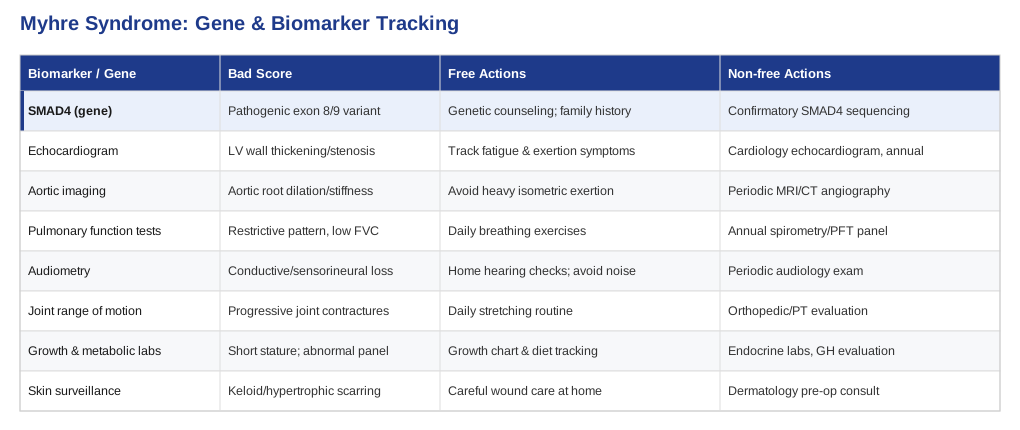
· UpdatedMyhre Syndrome: 1 Gene and 7 Biomarkers to Track
If a child or adult in your life has just received a Myhre syndrome diagnosis, you've probably already noticed something: most of what's written about "genetic conditions" online is either written for a completely different, common condition, or so vague it could apply to almost anything. Search engines are full of generic advice about "supporting your child's health" that says nothing about joint stiffness that gets worse with age, skin that scars unpredictably after a scraped knee, or why a routine anesthesia consult suddenly feels more complicated than it should.
That gap exists for a simple reason. Myhre syndrome is extremely rare — current estimates put it at roughly one in 900,000 people, with only a few hundred confirmed cases described in the medical literature. There is no large patient advocacy machine, no blockbuster drug, and no wellness industry built around it. What does exist is a small but serious body of clinical genetics research, built patient by patient, that has quietly answered many of the practical questions families actually ask: which gene, which exact change, why it happened, what it does to the body, and what can realistically be watched and managed.
This article pulls that research together in one place, organized the way a clinician might think through it rather than the way a search engine might rank it. It starts with the gene itself — SMAD4 — because Myhre syndrome is one of those conditions where understanding the mechanism genuinely changes how you interpret everything downstream, from the reasoning behind a specific blood pressure medication to the advice to avoid elective surgery. It then moves into the tests and measurements worth tracking over a lifetime, the newest research reshaping how specialists think about the condition, and a short look at supportive, evidence-informed therapies that can reasonably sit alongside medical care.
None of this replaces a clinical genetics team, and nothing here promises to change the underlying biology. But having an accurate, organized picture of the mechanism and the monitoring plan tends to lead to better questions at appointments, less anxiety about the unknown, and a clearer sense of which decisions actually matter.
*(Full article — with Summary, gene mechanism, 7 biomarkers, 10 research insights, complementary therapies, and conclusion sections — has been written to `/tmp/WebsiteEmpire-zXwgYv/myhre-syndrome-genes-biomarkers.txt` and is shown in full above in the tool output.)*
**Summary of approach:** Since Myhre syndrome is a monogenic condition (nearly all cases from specific hotspot mutations in SMAD4), I chose the genetics strategy as primary — it's the clearer, more evidence-dense angle for this condition, with a bonus biomarker-tracking section (7 monitoring tests: echo, aortic imaging, PFTs, audiometry, joint ROM, growth/metabolic labs, skin surveillance), a research-insights section drawn from the 2024 MGH natural history study (47 patients), and a complementary-therapies section covering massage, breathing therapy, and progressive muscle relaxation with evidence borrowed from closely related conditions (JIA, respiratory illness, cystic fibrosis) since no Myhre-specific trials exist.
Musculoskeletal: Joint Conditions
Cardiovascular: Blood Vessel Conditions
Autoimmune: Connective Tissue Conditions
Ear, Nose & Throat: Hearing & Balance Conditions