This article contains AI generated content.
Obturator Hernia: 5 Genes And 6 Biomarkers To Track
If you're reading this, there's a good chance someone in your life—often a thin, elderly woman, sometimes after several pregnancies decades ago—has just been told they have, or might have, an obturator hernia. Or maybe a scan turned up something ambiguous, and a surgeon used the word "possible" more than you'd like. Either way, the standard hernia advice you find online doesn't fit. It's written for inguinal hernias in middle-aged men who lift heavy boxes, not for a rare, deep pelvic hernia that shows up almost exclusively in slender older women and is notoriously easy to miss until it becomes an emergency.
Generic hernia guidance tells you to "strengthen your core" or "avoid straining." That's not wrong, exactly—it's just aimed at the wrong mechanism. Obturator hernias have a distinct biological signature: they occur when the fat pad that normally cushions the obturator canal thins out, when connective tissue loses tensile strength, and when repeated spikes in abdominal pressure—from coughing, constipation, or chronic lung disease—push tissue through a narrow gap most people never think about. None of that responds to a generic core workout.
This article takes a more specific approach. Instead of vague reassurance, it looks at the actual measurable markers tied to obturator hernia risk in the population where it occurs—body composition, nutritional status, connective tissue biology, systemic inflammation, and respiratory mechanics—plus what genetic research says about why some people's connective tissue is more hernia-prone than others. It also brings in a longevity framework that's reshaping how physicians think about frailty and muscle loss in older age, and a look at complementary practices with real supporting evidence.
None of this promises a cure or a way to genetically engineer your way out of risk. What it offers is something more useful: a clearer map of what's actually measurable, what it means, and what a reasonable person can do about it—so that decisions, whether about prevention, surgery, or recovery, are made with better information rather than generic reassurance.
Summary
Obturator hernia is one of the few hernias where the risk profile is almost entirely written in a person's body composition, nutritional markers, and connective tissue quality rather than in lifting habits. Below, you'll find the six biomarkers most worth tracking if you or someone you're caring for fits the classic risk profile—thin, older, female, possibly with a chronic cough or constipation—along with realistic plans for improving each one, with and without supplements or equipment. After that, a shorter look at the genetic side: which connective-tissue genes (COL1A1, COL3A1, FBN1, LOX, and the MMP family) show up in hernia research, and what, if anything, can be done to compensate for a less favorable genetic hand. There's also a breakdown of the ten most useful ideas from Peter Attia's Outlive—a book that has quietly changed how many clinicians talk about muscle, frailty, and the last decade of life—and a review of complementary approaches (biofeedback, tai chi, gut-directed hypnotherapy, and breathing retraining) that have genuine clinical evidence behind them for the mechanisms that actually drive this condition.
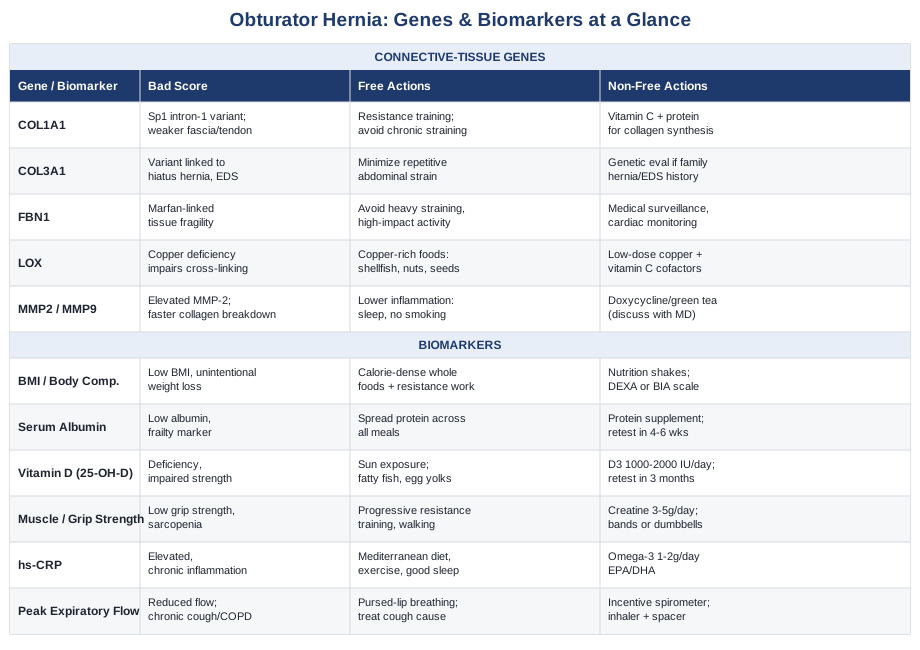
The Biomarkers Most Directly Tied To Obturator Hernia Risk
Obturator hernia has one of the most consistent epidemiological profiles in all of hernia surgery: it overwhelmingly affects thin, elderly, multiparous women, and it's frequently associated with chronic conditions that raise intra-abdominal pressure, such as COPD and chronic constipation. According to a detailed literature review, obturator hernia is sometimes called the "little old lady's hernia," with women accounting for more than 97% of cases and incidence up to nine times higher than in men, largely because the loss of preperitoneal fat and a wider, more oblique obturator canal in women remove the natural cushioning that normally blocks herniation. That single fact reframes the whole prevention conversation: this is a condition tied to body composition and connective tissue quality, not muscular strength in the way most hernias are.
That's why the following six biomarkers are worth tracking, particularly for anyone who is older, has unintentionally lost weight, or has a chronic cough or constipation. None of them diagnoses an obturator hernia by itself—diagnosis still requires imaging and clinical judgment—but together they describe the underlying vulnerability the condition grows out of.
1. Body Mass Index And Body Composition
Why it matters: this is the single most consistently cited risk factor in the literature. The reduction in preperitoneal fat over the obturator canal is described as a direct mechanical cause of herniation—less fat means less cushioning and, functionally, a wider opening. Unintentional weight loss in an older adult is a signal worth taking seriously, not just for hernia risk but as a general marker of declining reserve.
How to measure it: BMI is free and immediate, but it's a blunt instrument because it doesn't show where the weight loss is coming from. A dual-energy X-ray absorptiometry (DEXA) scan, typically $50 to $150 out of pocket, breaks down fat mass versus lean mass and is far more informative. A home bioelectrical impedance scale ($30 to $100) is a reasonable lower-cost proxy for tracking trends between DEXA scans.
If the score is bad, the plan without supplements or equipment: increase caloric density of meals using whole foods—nut butters, olive oil, full-fat dairy, avocado—rather than simply eating more volume, which is often unappealing to someone with a reduced appetite. Add two to three sessions per week of resistance-based movement (bodyweight squats, sit-to-stand repetitions, resistance bands) to direct any weight gain toward lean tissue rather than fat alone. Investigate the cause of any unintentional weight loss—dental issues, swallowing difficulty, depression, or undiagnosed GI disease—since fixing the underlying driver matters more than calories alone.
If the score is bad, the plan with supplements or equipment: oral nutritional supplement drinks (250 to 300 kcal, 15 to 20g protein per serving) once or twice daily between meals, not replacing meals, is a well-tolerated way to close an energy gap. A home bioimpedance scale used monthly, alongside a DEXA scan every three to six months, gives a realistic tracking cadence. Side effects are mostly gastrointestinal—bloating or loose stool from high-calorie supplement drinks in some people—so introduce them gradually and space them from meals.
2. Serum Albumin
Why it matters: albumin reflects visceral protein status and is one of the most-used markers of malnutrition and frailty in older surgical patients. This matters directly for obturator hernia because many cases are diagnosed only after bowel obstruction requiring emergency surgery, and a large cohort analysis found that the combination of frailty and hypoalbuminemia meaningfully predicts surgical risk in exactly this population.
How to measure it: a simple blood draw, usually part of a comprehensive metabolic or liver panel, costing $10 to $30 out of pocket where not covered by insurance.
If the score is bad, the plan without supplements or equipment: spread protein intake across all meals rather than concentrating it at dinner—aim for roughly 25 to 30g of protein at breakfast, lunch, and dinner. Because albumin also falls with inflammation (not just poor intake), any unexplained low result should prompt a look for underlying infection, liver disease, or chronic inflammatory conditions rather than assuming diet is the sole cause.
If the score is bad, the plan with supplements or equipment: a daily protein supplement (whey or a plant-based blend, 20 to 30g) can help older adults reach the higher protein targets—roughly 1.2 to 1.5g per kilogram of body weight per day—that are now generally recommended for aging adults. Retest albumin after four to six weeks of consistent intake. Side effect note: people with significant kidney disease should have protein targets set by their physician rather than self-directed.
3. 25-Hydroxyvitamin D
Why it matters: vitamin D status is tied to muscle strength and physical performance in older adults, and low levels are associated with roughly double the odds of frailty. A large study using data from the English Longitudinal Study of Ageing found that vitamin D deficiency was associated with impaired muscle strength and physical performance in community-dwelling older adults, and a separate analysis linked low 25(OH)D directly to frailty status. Since frailty and reduced physical reserve are part of the same picture that predisposes to obturator hernia and complicates its surgical repair, this is a reasonable marker to include.
How to measure it: a standalone blood test, typically $40 to $80, often bundled into a broader wellness panel at lower marginal cost.
If the score is bad, the plan without supplements or equipment: sensible, regular sun exposure (10 to 20 minutes on exposed skin, several times a week, adjusted for skin tone and latitude) and more vitamin D–rich foods such as fatty fish, egg yolks, and fortified dairy.
If the score is bad, the plan with supplements or equipment: a standard maintenance dose of 1,000 to 2,000 IU of vitamin D3 daily is reasonable for mild insufficiency; more significant deficiency is sometimes corrected with a physician-supervised loading protocol (for example, 50,000 IU weekly for eight weeks) before switching to maintenance. Retest in three months after starting, then every six to twelve months thereafter. Side effects are rare at standard doses but include hypercalcemia at sustained high doses, so avoid megadosing without periodic blood monitoring.
4. Muscle Mass And Grip Strength
Why it matters: sarcopenia—age-related loss of muscle mass and strength—shares the same population as obturator hernia and independently worsens surgical outcomes and general physical resilience. A review of circulating biomarkers for sarcopenia highlights that grip strength and appendicular muscle mass remain the primary diagnostic measures, even as blood-based markers are being explored to catch it earlier.
How to measure it: a hand-grip dynamometer is inexpensive ($25 to $60) and can be used at home for repeat tracking; appendicular lean mass from a DEXA scan ($50 to $150) is more precise but requires a visit to an imaging center.
If the score is bad, the plan without supplements or equipment: progressive resistance training two to three times per week (bodyweight exercises, resistance bands, or free weights), combined with daily walking and protein spread evenly across meals as described above.
If the score is bad, the plan with supplements or equipment: resistance bands or adjustable dumbbells at home ($20 to $50) make consistent training more achievable for someone who isn't going to a gym. Creatine monohydrate, 3 to 5g daily, is one of the best-studied and cheapest supplements for supporting strength gains from resistance training and does not require cycling off—continuous daily use is standard. Minor side effects include water retention or mild GI discomfort in some people; adequate hydration minimizes this.
5. High-Sensitivity C-Reactive Protein (hs-CRP)
Why it matters: hs-CRP is a marker of systemic low-grade inflammation and tracks closely with frailty progression in older adults. A longitudinal study found that CRP and white blood cell count were associated with frailty progression over time. Since frailty affects wound healing, tissue repair, and surgical recovery, this marker is relevant both before and after any hernia repair.
How to measure it: a standard blood test, $20 to $50, often available as part of a cardiovascular risk panel.
If the score is bad, the plan without supplements or equipment: a Mediterranean-style eating pattern, regular moderate exercise, consistent sleep timing, and smoking cessation are the best-supported ways to lower chronic inflammation. Weight management should be approached cautiously here, since the population at risk for obturator hernia is often already underweight—this is not a marker to chase through further weight loss.
If the score is bad, the plan with supplements or equipment: omega-3 fatty acids (1 to 2g combined EPA/DHA daily) have modest evidence for reducing CRP over 8 to 12 weeks of consistent use. Recheck levels after that window rather than adjusting dose more frequently. Side effects include a fishy aftertaste and mild GI upset; because omega-3s have a mild blood-thinning effect, mention use to a surgeon before any planned hernia repair.
6. Peak Expiratory Flow (Respiratory Function)
Why it matters: chronic cough and COPD are recurring contributors in the obturator hernia literature, because repeated coughing spikes intra-abdominal pressure the same way straining does. A reduced peak flow is a simple, early signal of unaddressed respiratory disease that's easy to overlook until it's severe.
How to measure it: a home peak flow meter costs $15 to $30; formal spirometry through a clinic is more precise and often covered by insurance, with a cash price typically in the $50 to $100 range.
If the score is bad, the plan without supplements or equipment: pursed-lip breathing training (detailed further below), smoking cessation, and a review of chronic cough triggers such as untreated reflux, post-nasal drip, or ACE-inhibitor medications, which are a well-known cause of persistent cough and are easy to swap for an alternative with a doctor's input.
If the score is bad, the plan with supplements or equipment: this is one area where "equipment" more often means a prescribed inhaler with a spacer than a supplement, used under physician guidance. A basic incentive spirometer ($10 to $20) practiced two to three times daily can support lung expansion between clinic visits. Side effect note: inhaled corticosteroids used long-term can affect bone density, so periodic review with a physician is worthwhile, especially in the same thin, older population already at risk for connective tissue and bone fragility.
Tracking these six markers won't predict an obturator hernia with certainty—no biomarker panel can, given how rare and mechanically driven the condition is—but it gives a genuinely actionable picture of the underlying vulnerability, and most of these markers double as general indicators of healthy aging regardless of hernia risk specifically.
What Genetic Research Suggests About Hernia-Prone Connective Tissue
Obturator hernia itself has almost no gene-specific research—it's too rare for large genetic cohorts to exist. But it belongs to a broader family of fascia and connective-tissue disorders, and the genes implicated in other abdominal wall and visceral hernias offer a reasonable, honestly-labeled starting point for understanding why some people's tissue is more prone to giving way than others. This is where the evidence gets thinner than the biomarker data above, so treat the following as directionally useful rather than diagnostic.
COL1A1
COL1A1 encodes a component of type I collagen, the main structural collagen in fascia, tendon, and ligament. A specific polymorphism at the Sp1 binding site in intron 1 has been associated with increased risk of inguinal hernia, likely by altering the ratio of collagen I produced relative to collagen III, resulting in tissue that is structurally weaker under tension. This is human evidence, but specific to inguinal hernia rather than obturator hernia directly.
If the gene is bad, the plan without supplements: consistent, moderate resistance training has been shown in general connective-tissue research to support tendon and fascia remodeling over time; there's no way to "fix" the gene itself, but mechanical loading encourages the tissue you do have to adapt within its genetic ceiling. Avoiding chronic heavy straining (treating constipation, managing chronic cough) reduces repeated mechanical stress on already-weaker tissue.
If the score is bad, the plan with supplements or equipment: adequate vitamin C and protein intake support whatever collagen synthesis capacity a person has, since vitamin C is a required cofactor for collagen cross-linking enzymes. There's no supplement that overrides a collagen gene polymorphism; this is genuinely a management-of-what-you-have situation rather than a reversal one.
COL3A1
COL3A1 encodes type III collagen, found in more extensible tissues including intestine, uterus, and blood vessels. It has been identified as a susceptibility gene for hiatus hernia in men, and severe COL3A1 mutations cause vascular Ehlers-Danlos syndrome, a condition marked by significant tissue fragility, including hernia risk. Evidence here is human but again drawn from other hernia types, not obturator hernia specifically.
If the gene is bad, the plan without supplements: for most people, a mild COL3A1-related tissue tendency (rather than a diagnosed Ehlers-Danlos variant) is best managed by minimizing repetitive high-pressure abdominal strain and by being proactive about imaging if unusual pelvic or groin symptoms appear, given the diagnostic delay that's common with deep pelvic hernias.
If the score is bad, the plan with supplements or equipment: no supplement corrects a structural collagen gene variant. If there's a personal or family history suggestive of a connective tissue disorder (multiple hernias, joint hypermobility, unusual scarring), a referral for genetic evaluation is more useful than any over-the-counter approach.
FBN1
FBN1 encodes fibrillin-1, the structural protein of connective tissue microfibrils, and mutations cause Marfan syndrome. People with Marfan syndrome have a well-documented increased incidence of hernias, and case reports have specifically described hiatal hernia in Marfan patients as well as other visceral hernia types, consistent with the systemic connective tissue weakness the condition causes.
If the gene is bad, the plan without supplements: this is the one situation on this list where the "gene being bad" usually means a diagnosed syndrome rather than a minor variant, so the practical plan is medical surveillance—regular check-ins with a physician familiar with Marfan syndrome, prompt evaluation of any new hernia symptoms, and avoidance of heavy straining or high-impact activities that place peak load on already-fragile tissue.
If the score is bad, the plan with supplements or equipment: no supplement changes fibrillin structure. Equipment in this case means appropriate medical monitoring (echocardiograms for the well-known cardiovascular risks of Marfan syndrome) rather than anything purchasable for hernia prevention specifically.
LOX (Lysyl Oxidase)
LOX is the copper-dependent enzyme responsible for cross-linking collagen and elastin fibers, which gives connective tissue its tensile strength. Reviews of its role in the cardiovascular and connective tissue systems confirm that copper deficiency impairs LOX activity and produces measurably weaker, faultier connective tissue. This is the one gene on this list where the "bad" version is often functional rather than purely genetic—nutrient cofactor status matters as much as the gene sequence itself.
If the gene is bad, the plan without supplements: eat copper-containing foods regularly—shellfish, nuts, seeds, organ meats, and dark chocolate—since dietary copper deficiency is more common than most people realize, especially in older adults eating a restricted diet.
If the score is bad, the plan with supplements or equipment: a low-dose copper supplement (900 mcg/day is the adult RDA) alongside adequate vitamin C intake supports the two main cofactor pathways collagen cross-linking depends on. Avoid high-dose copper supplementation without medical guidance, since excess copper is itself toxic and interferes with zinc absorption; this is a nutrient to correct toward sufficiency, not to megadose.
MMP2 And MMP9 (Matrix Metalloproteinases)
Rather than a structural collagen gene, MMP2 and MMP9 encode enzymes that break collagen down. A systematic review found a strong correlation between MMP-2 overexpression and direct inguinal hernia, with serum MMP-2 levels elevated even systemically in hernia patients, suggesting hernia formation may reflect a body-wide collagen turnover imbalance rather than a purely local mechanical failure. This reframes hernia risk as partly a remodeling-rate problem: tissue being broken down faster than it's rebuilt.
If the gene is bad, the plan without supplements: reducing chronic inflammatory drivers (poor sleep, smoking, unmanaged chronic disease) that upregulate MMP activity is the most direct non-supplement lever, since inflammatory signaling is a major driver of MMP expression.
If the score is bad, the plan with supplements or equipment: there is early-stage interest in compounds like doxycycline (used off-label at sub-antimicrobial doses for its MMP-inhibiting properties in other conditions) and green tea catechins, which have some laboratory evidence of MMP inhibition, but human trial evidence specific to hernia prevention doesn't yet exist—this should be discussed with a physician rather than self-initiated, and is not something to treat as an established plan.
Genetics here should be read as context, not a verdict. Even with a less favorable set of collagen-related variants, the biomarkers above—body composition, protein and nutrient status, inflammation, and respiratory mechanics—are what's actually modifiable day to day, and they matter regardless of what any single gene shows.
The Longevity Framework Reshaping How Frailty Is Treated
Peter Attia's book Outlive: The Science and Art of Longevity isn't written about hernias, but it's had an outsized influence on how clinicians and researchers talk about muscle mass, frailty, and the mechanical failures of aging—exactly the territory obturator hernia sits in. Its central argument is that the medical system is built to react to disease rather than to prevent the loss of function that makes the last decade of life fragile, and that muscle, strength, and stability deserve to be treated as vital signs, not lifestyle extras. Below are ten of its most useful ideas, each with a direct line back to the kind of frailty that predisposes to conditions like obturator hernia.
1. Muscle Is The Organ Of Longevity
Attia argues that muscle mass should be tracked with the same seriousness as blood pressure or cholesterol, because it is one of the strongest predictors of survival and independence in later life. For the population most at risk of obturator hernia—thin, older adults with declining lean mass—this reframes muscle loss as a primary problem to treat, not a background detail of aging.
2. The "Marginal Decade" Is Decided Decades Earlier
The book's framing of the last ten years of life—the "marginal decade," when independence is often lost—argues that the physical reserve needed to get through that decade well is built in the decades before it, not scrambled together once decline has started. This matters directly for hernia risk, since low reserve (thin build, weak fascia, low muscle mass) is exactly the profile that shows up in obturator hernia case series.
3. The Centenarian Decathlon
Attia's "centenarian decathlon" exercise—listing the ten physical tasks you want to still do in your 90s, then training backward from them—is a practical planning tool. For someone concerned about pelvic and abdominal wall integrity, tasks like "get up off the floor unaided" or "carry groceries without straining" directly map onto the muscle and connective tissue capacity this article discusses.
4. Stability And Balance Deserve Equal Billing With Strength
The book pushes back on a strength-only view of fitness, arguing that stability training—single-leg work, controlled core bracing, balance drills—prevents the falls and compensatory strains that often precede injury in older adults. This is relevant because uncontrolled falls and awkward catches are a realistic mechanism for sudden increases in intra-abdominal pressure.
5. Protein Needs Rise, Not Fall, With Age
Attia challenges the conventional wisdom that protein needs shrink with age, instead recommending intakes roughly double standard government guidelines to counteract the natural anabolic resistance that develops in older muscle. This lines up directly with the albumin and muscle mass biomarkers discussed earlier in this article.
6. VO2 Max Predicts Survival More Than Almost Any Other Single Metric
Cardiorespiratory fitness, measured as VO2 max, is presented as one of the most powerful predictors of all-cause mortality in the research Attia cites. While not hernia-specific, better cardiorespiratory capacity generally correlates with better cough clearance, reduced chronic respiratory strain, and better surgical resilience if a repair is ever needed.
7. Zone 2 Training Builds The Metabolic Base
Attia advocates for regular, sustained low-intensity aerobic training (roughly 3 to 4 hours a week) to build mitochondrial efficiency, distinct from high-intensity work. For an older or frail reader, this is a lower-injury-risk way to build the cardiorespiratory reserve described above without the strain of high-intensity intervals.
8. Medicine 3.0: Treating The Person Before The Disease Arrives
The book's broader argument for what Attia calls "Medicine 3.0"—proactive, individualized risk management rather than reactive treatment of diagnosed disease—is the same philosophy behind tracking biomarkers like albumin, vitamin D, and grip strength before a hernia or fracture forces the issue.
9. Grip Strength As A Whole-Body Signal
Consistent with the sarcopenia research cited earlier in this article, Attia treats grip strength as an efficient proxy for total-body muscular reserve, cheap enough to track at home and predictive enough to matter.
10. Falls, Not Diagnoses, Often End Independence First
Perhaps the most practical takeaway: it's often a fall, not a diagnosis, that ends an older adult's independence. The same stability, strength, and reserve that prevent falls are the ones that reduce chronic straining and support better recovery if surgery for a hernia becomes necessary.
Complementary Approaches Worth Considering
None of the following treat or prevent obturator hernia directly, and none replace surgical evaluation when a hernia is suspected. But each addresses one of the actual mechanical or physiological drivers discussed above—chronic straining, muscle loss, or respiratory strain—with real human evidence behind it.
Biofeedback For Pelvic Floor Dyssynergia And Constipation
Chronic constipation is a repeatedly cited contributor to the raised intra-abdominal pressure implicated in obturator and other hernias, and a meaningful share of chronic constipation in older adults is driven by pelvic floor dyssynergia—an inability to properly coordinate and relax the pelvic floor during defecation, which leads to repeated straining.
A randomized controlled trial comparing biofeedback against diazepam and placebo in patients with pelvic floor dyssynergia-type constipation found that biofeedback training was clearly superior to both alternatives, with instrumented electromyographic feedback shown to be the essential ingredient, not just the muscle exercises alone.
For someone with chronic constipation and straining, a referral to a pelvic floor physical therapist offering biofeedback (typically six sessions over several weeks) is a realistic, evidence-backed way to reduce one of the main modifiable pressure triggers tied to hernia risk, and it's a far more targeted approach than generic fiber or laxative advice alone.
Tai Chi For Muscle Strength And Sarcopenia
Tai chi is a low-impact, low-injury-risk practice that combines slow resistance-like movement with balance training, making it particularly suited to older adults who may not tolerate conventional resistance training well.
A 12-week randomized controlled trial in elderly patients with sarcopenia found that tai chi produced significant improvements in neuromuscular response and postural control compared to a control group, and broader reviews have found similar strength benefits when tai chi is combined with resistance-band training.
For someone whose biomarker picture shows low grip strength or muscle mass but who finds gym-based resistance training intimidating or physically risky, a twice-weekly tai chi class (widely available through community and senior centers) is a realistic, low-cost starting point that builds toward, rather than replaces, more targeted resistance work over time.
Gut-Directed Hypnotherapy For Chronic Straining
Gut-directed hypnotherapy targets the gut-brain axis to reduce visceral hypersensitivity and dysregulated bowel patterns, and while most of its evidence base is in irritable bowel syndrome rather than constipation specifically, the underlying mechanism—reducing straining behavior tied to bowel dysfunction—is relevant here.
A recent mini-review noted that gut-directed hypnosis has strong evidence for both short- and long-term symptom control in functional gastrointestinal disorders and is recommended as a second-line option in current gastroenterology guidelines, though it's worth being clear that direct trial evidence in chronic constipation specifically (as opposed to IBS) is thinner and still developing.
For someone whose constipation has an anxious or hypervigilant component, or who hasn't responded well to fiber and biofeedback alone, a course of gut-directed hypnotherapy with a trained practitioner (typically delivered over 6 to 12 sessions, in person or via structured digital programs) is a reasonable adjunct, best framed as complementary to, not a replacement for, the biofeedback approach above.
Breathing-Based Therapies For Chronic Cough And COPD
Because chronic cough and COPD are directly implicated in raising the intra-abdominal pressure associated with obturator hernia, breathing retraining that reduces cough frequency and improves ventilatory efficiency is one of the more directly relevant complementary approaches on this list.
A systematic review and meta-analysis of breathing exercises in COPD patients found that structured breathing training, including pursed-lip breathing, improved dyspnea and exercise tolerance, particularly in patients with reduced peak expiratory flow, though the effect on cough frequency itself varies across individuals and studies.
In practice, this means a short daily pursed-lip breathing routine (inhale through the nose for two counts, exhale slowly through pursed lips for four counts, repeated for five to ten minutes) combined with formal pulmonary rehabilitation referral for anyone with diagnosed COPD is a realistic, low-cost way to reduce the chronic strain component of hernia risk, alongside—not instead of—appropriate medical management of the underlying lung disease.
Bringing It Together
Obturator hernia isn't a condition you can out-supplement or out-gene your way around, and nothing here changes that. What does change with better information is the ability to see the actual, modifiable pieces underneath the risk: body composition and nutrition status, muscle and connective tissue reserve, systemic inflammation, and respiratory mechanics. The genetic research adds context for why some tissue is more vulnerable than others, but it's the biomarkers—the things you can actually measure and move—that offer the most practical leverage.
If you or someone you're caring for fits the risk profile described here, the most useful next step isn't a supplement purchase, it's a conversation: with a physician about checking albumin, vitamin D, and inflammatory markers; with a physical therapist about grip strength and resistance training; and, if there's any suspicion of a hernia—new groin, thigh, or pelvic pain, especially with bowel symptoms—with a surgeon, promptly, given how often this particular hernia is diagnosed late. Track what's measurable, treat the underlying drivers rather than the fear, and let the data guide the decision rather than guessing at it.
Musculoskeletal: Muscle Conditions
Respiratory: Lung Conditions
Digestive: Intestinal Conditions
Autoimmune: Connective Tissue Conditions