This article contains AI generated content.
Parosteal Lipoma: 5 Genes and 6 Biomarkers to Track
Introduction
Finding out you have a parosteal lipoma usually starts with a question that generic search results don't answer well: is this thing actually attached to my bone, is it going to keep growing, and does it mean something is happening elsewhere in my body. Most articles on lipomas treat every fatty lump the same way, as if a small, mobile bump under the skin on your arm is the same biological event as a firm mass sitting directly on the cortex of your femur or skull, sometimes with its own little rim of reactive bone underneath it. It isn't, and treating it that way is where a lot of generic advice falls short.
A parosteal (or periosteal) lipoma is rare — it accounts for roughly 0.3 percent of all lipomas — and it behaves according to its own molecular logic. It sits at the intersection of soft-tissue tumor biology and bone biology, which means the useful questions are different from the ones asked about an ordinary fatty lump: which chromosomal change is actually driving the growth, how do clinicians rule out something more serious that can look similar on imaging, and are there any legitimate, well-supported ways to reduce the odds of new lipomas forming or recurring after removal.
This article goes deeper than "lipomas are benign fat, don't worry about it." It walks through the actual cytogenetics behind parosteal lipoma and its relatives, what each genetic finding does and does not mean for you, and which laboratory or imaging numbers are worth tracking if you want a clearer, evidence-based picture of your risk and your options. None of this is about miracle reversal — a chromosomal rearrangement inside a benign tumor isn't something a supplement fixes — but understanding the mechanism changes how you interpret a diagnosis, how you talk to your surgeon or pathologist, and which modifiable factors are actually worth your attention.
There is real, grounded reason for optimism here. The genetics of lipomas are some of the best-characterized in all of soft-tissue pathology, and the biomarkers that matter most overlap heavily with markers you can already track for general metabolic health. Between the genetics covered in the main strategy, the biomarkers in the bonus section, and the practical additions after that, you should come away with a much sharper sense of what's actually going on and what's genuinely worth doing next.
Summary
Parosteal lipoma isn't randomly assigned bad luck — most cases trace back to a specific, well-documented rearrangement of chromosome 12, and understanding that rearrangement is what lets pathologists tell a harmless lipoma apart from something that needs urgent treatment. Below, you'll find the five genetic changes most relevant to parosteal lipoma and its close relatives: the common HMGA2 rearrangement that drives ordinary lipoma growth, the MDM2/CDK4 amplification that separates benign tumors from atypical lipomatous tumor and liposarcoma, the RB1 deletion seen in spindle cell lipoma, the PTEN mutation behind Cowden syndrome's multiple lipomas, and a mitochondrial DNA mutation linked to symmetric lipomatosis. For each one, you'll see what it actually changes, what can realistically be done about it, and where supplements or equipment have any evidence-backed role at all — which, for tumor-intrinsic genetics, is far more limited than most "fix your genes" content implies.
After the genetics, the article turns to six biomarkers worth tracking if lipomas keep appearing or if your case sits anywhere near the metabolic syndrome end of the spectrum, followed by ten practical ideas drawn from Peter Attia's Outlive on cancer surveillance and metabolic health, and a set of complementary approaches with genuine evidence for the anxiety, pain, and recovery side of dealing with a diagnosed mass.
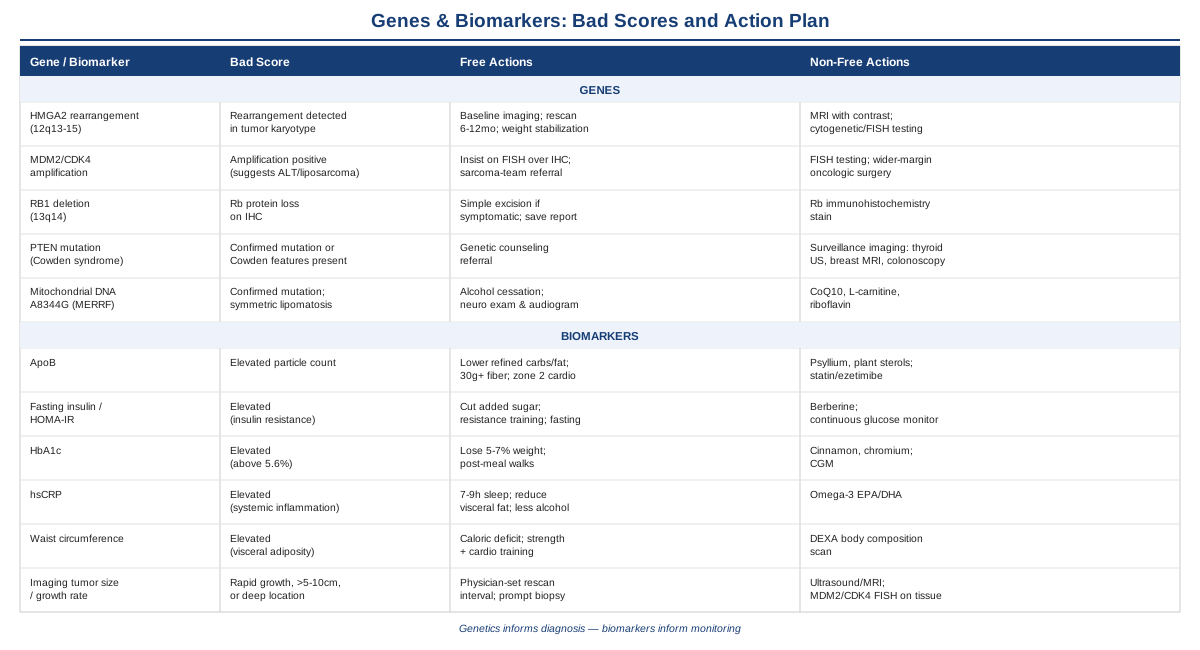
The Genetics Behind Parosteal Lipoma, Gene by Gene
Parosteal lipoma doesn't exist in genetic isolation — it's part of a family of lipomatous tumors that share overlapping chromosomal signatures. Pathologists rely on these signatures constantly, because the histology of a benign lipoma can look deceptively similar to more aggressive tumors under a microscope. Below are the five genetic findings that actually matter for this diagnosis, ordered roughly by how often they come up in real cases.
HMGA2 Rearrangement at 12q13-15
This is the single most common genetic finding in lipomas generally, and it shows up in parosteal and osteochondrolipoma cases too. Around 65 percent of lipomas with an abnormal karyotype carry a rearrangement involving chromosome bands 12q13 to 12q15, most often disrupting the HMGA2 gene, which normally acts as an architectural transcription factor that helps regulate how DNA is packaged and read during cell growth. In lipomas, HMGA2 gets fused to a variety of partner genes — LPP, SETBP1, and others — and the resulting truncated or fusion protein loses its normal regulatory braking function, which appears to drive the local overgrowth of fat cells. Case reports of parosteal lipoma and osteochondrolipoma specifically have documented the t(3;12) translocation joining HMGA2 to LPP, and the HMGA2-SETBP1 fusion has been identified directly in osteochondrolipoma tissue, reinforcing that these bone-adjacent tumors share the same molecular family as ordinary lipomas rather than being a separate disease process (HMGA2-SETBP1 fusion in lipoma and osteochondrolipoma, cytogenetic analysis of 272 lipomas, HMGA2-LPP fusion in a chondro-osseous lipoma).
What this means practically is that the rearrangement is somatic — it happens inside the tumor's own cells during its formation, not something you inherited or something circulating in your blood. It explains why the tumor grows and why it can include cartilage and bone-like tissue at its edges (osteochondrolipoma), but it isn't a personal genetic "score" you can improve.
If the gene is bad, the plan without supplements
There's no lifestyle intervention that reverses an HMGA2 rearrangement once it has occurred inside tumor cells, and any claim otherwise isn't supported by evidence. The realistic, non-supplement plan is monitoring and, when appropriate, removal: baseline imaging (ultrasound or MRI) to document size and depth, a repeat scan in 6 to 12 months if the lesion is small, asymptomatic, and radiologically typical, and surgical excision if it's painful, restricting movement, growing quickly, or larger than about 5 centimeters, since size and depth are two of the features that raise suspicion for something other than a simple lipoma. Weight stabilization is worth mentioning here not because it affects HMGA2 itself, but because population data show lipomas cluster with higher rates of obesity and metabolic syndrome components, so general metabolic health is a reasonable adjunct goal even though it won't touch the underlying chromosomal change (lipomas and metabolic syndrome prevalence).
If the score is bad, the plan with supplements or equipment
Honestly, there isn't a supplement protocol that meaningfully changes an HMGA2-driven lipoma, and you should be skeptical of anyone selling one. The only "equipment" with genuine value here is diagnostic: a properly ordered MRI with contrast when a lesion is deep, large, or atypical, and — if surgery is performed — sending the tissue for cytogenetic or FISH testing so the HMGA2 finding (or its absence) is documented for your records. That documentation matters if new lumps appear later, since a confirmed benign HMGA2 rearrangement in a prior lesion is reassuring context, not proof that a new lump is the same thing.
MDM2 and CDK4 Amplification
This is arguably the most clinically important genetic marker in this entire topic, not because it's common in parosteal lipoma itself, but because it's the marker used to rule out its dangerous look-alike: atypical lipomatous tumor, also called well-differentiated liposarcoma. Both MDM2 and CDK4 sit close together on chromosome 12q13-15 — the same neighborhood as HMGA2 — and in atypical lipomatous tumor, this region gets amplified, producing extra copies of both genes. MDM2 normally suppresses the p53 tumor-suppressor pathway, so amplifying it removes one of the cell's main brakes on abnormal growth. Studies directly comparing large, deep-seated lipomas to atypical lipomatous tumor confirm that MDM2/CDK4 amplification, tested either by immunohistochemistry or FISH, is a genuinely useful adjunct for making this distinction, although FISH is considerably more sensitive and specific than immunostaining alone, and a 2024 case-control study found immunostaining alone had a real overdiagnosis problem when used in isolation (MDM2/CDK4 expression differentiating liposarcoma from lipoma, overdiagnosis risk with immunostaining vs. FISH).
If the gene is bad, the plan without supplements
If MDM2/CDK4 amplification comes back positive, this is not a situation to manage with lifestyle changes — it changes the diagnosis itself from lipoma to atypical lipomatous tumor/well-differentiated liposarcoma, which requires oncologic surgical planning, typically wider margins and a referral to a sarcoma-experienced surgeon, plus staging imaging depending on size and location. The "plan without supplements" here is really a plan of correct referral: insist on FISH testing rather than immunostaining alone if your lesion has any red flags (size over 10 cm, deep intramuscular location, rapid growth, patient age over 50), because the sensitivity gap between the two methods is large enough to matter.
If the score is bad, the plan with supplements or equipment
There is no supplement angle for MDM2 amplification — it would be irresponsible to suggest one. The "equipment" that matters is access to FISH testing itself, which typically costs several hundred dollars and is usually billed as part of the pathology workup rather than something you order independently. If your local pathology lab only offers immunohistochemistry, it is reasonable to ask whether the sample can be sent to a center capable of FISH confirmation, particularly given how much the false-negative and false-positive rates diverge between the two methods.
RB1 Deletion at 13q14
Spindle cell lipoma and its pleomorphic variant are close relatives of parosteal lipoma that sometimes enter the same differential diagnosis, particularly when a lesion has an unusual spindle-cell component. Almost all of these tumors carry a deletion of chromosome 13q, frequently taking out the RB1 gene, which encodes the retinoblastoma protein, a central regulator of the cell cycle. Loss of RB1 removes a checkpoint that normally prevents cells from dividing when they shouldn't, and pathologists now use loss of Rb protein expression on immunohistochemistry as a practical tool to separate spindle cell/pleomorphic lipoma from other histologic mimics that retain normal Rb expression (13q14 deletion across spindle cell lipoma and related tumors, gene expression and SNP array analysis of 13q14-deleted lipomas).
If the gene is bad, the plan without supplements
As with HMGA2, this deletion is a tumor finding, not a germline trait, so the actionable plan is diagnostic clarity and monitoring rather than intervention. Since spindle cell lipoma behaves in a clinically benign way despite losing a tumor-suppressor gene, confirmed RB1-deleted lesions generally just need simple excision if symptomatic, without the more aggressive workup required for MDM2-amplified tumors. Keeping a copy of the pathology report that documents Rb loss (rather than just "spindle cell lipoma") is useful if you ever need a second opinion or the lesion recurs.
If the score is bad, the plan with supplements or equipment
No supplement or device changes an RB1 deletion. The one piece of "equipment" worth knowing about is Rb immunohistochemistry itself, a relatively inexpensive stain (typically under $100 as an add-on to standard pathology processing) that most academic and larger community pathology labs already offer, and which is genuinely useful if your report is ambiguous between spindle cell lipoma and a more concerning spindle-cell tumor.
PTEN Mutation and Cowden Syndrome
This is the one gene on this list that is genuinely inherited, and it's worth knowing about even though it's a less common explanation for any single lipoma. Germline mutations in PTEN, a tumor-suppressor gene that normally restrains a cell-growth pathway called PI3K/AKT/mTOR, cause PTEN hamartoma tumor syndrome, of which Cowden syndrome is the best-known form. People with Cowden syndrome develop multiple hamartomas, including lipomas — sometimes unusual ones like intramucosal colon lipomas — alongside a substantially elevated lifetime risk of breast, thyroid, endometrial, and kidney cancers. Only about 25 to 35 percent of clinically diagnosed cases actually have an identifiable PTEN mutation on testing, so the clinical picture (multiple lipomas plus other hamartomatous features plus a strong family cancer history) often matters more than the genetic test result alone (PTEN hamartoma tumor syndrome genomics and imaging review, PTEN hamartoma tumor syndrome, GeneReviews).
If the gene is bad, the plan without supplements
If a PTEN mutation is confirmed, or if you have multiple lipomas plus a personal or family pattern suggestive of Cowden syndrome (macrocephaly, oral papillomas, early thyroid nodules, a strong family history of breast or endometrial cancer), the appropriate next step is a referral to genetic counseling, not a supplement regimen. Confirmed carriers follow a structured surveillance protocol: annual dermatologic and thyroid ultrasound exams starting in the late teens, annual mammography and breast MRI starting around age 30 to 35, and periodic colonoscopy and endometrial monitoring — a schedule set by clinical genetics guidelines, not something to self-manage.
If the score is bad, the plan with supplements or equipment
There is no supplement that compensates for a PTEN mutation. mTOR-pathway-modulating drugs (like sirolimus) are being studied in PTEN hamartoma tumor syndrome and related overgrowth conditions, but this remains investigational and should only ever be pursued through a physician managing a confirmed diagnosis, not as a self-directed supplement strategy. The "equipment" that actually matters here is the surveillance imaging itself — thyroid ultrasound, breast MRI, colonoscopy — which is the one intervention with real evidence behind it for this specific gene.
Mitochondrial DNA Mutation A8344G (MERRF)
This is a less common but genuinely fascinating piece of the puzzle, relevant mainly to people who develop multiple, symmetric fatty masses rather than a single parosteal lipoma — a related condition called multiple symmetric lipomatosis, or Madelung disease. In roughly 16 percent of documented cases, this condition traces back to a point mutation at position 8344 in mitochondrial DNA (A8344G), the same mutation responsible for MERRF syndrome (myoclonic epilepsy with ragged-red fibers), with mitochondrial gene deletions accounting for a further chunk of cases. The mutation impairs mitochondrial protein synthesis in a way that appears to disrupt normal fat cell metabolism specifically in the neck, shoulders, and trunk, and the condition is strongly linked to heavy alcohol use in affected men, suggesting an interaction between the mitochondrial defect and toxic mitochondrial stress from alcohol (MERRF A8344G mutation in multiple symmetric lipomatosis, subcutaneous adipose tissue diseases including Madelung disease).
If the gene is bad, the plan without supplements
The single most evidence-backed non-supplement intervention here is complete alcohol cessation, since alcohol is the clearest modifiable trigger associated with progression of this specific condition. Beyond that, screening for other features of mitochondrial disease is worthwhile if this mutation is confirmed — peripheral neuropathy, hearing loss, and muscle weakness commonly co-occur, so a baseline neurological exam and audiogram are reasonable, along with periodic monitoring for the broader MERRF phenotype rather than assuming the fat deposits are an isolated cosmetic issue.
If the score is bad, the plan with supplements or equipment
For people with a confirmed mitochondrial mutation, standard mitochondrial-support regimens used in general mitochondrial disease management are reasonable to discuss with a treating physician, even though none of them are proven to shrink existing lipomatosis: coenzyme Q10 (typically 100 to 300 mg daily, taken with a fat-containing meal since it's fat-soluble), L-carnitine (500 to 1,000 mg once or twice daily), and riboflavin (vitamin B2, 100 mg daily), all of which support electron transport chain function generally. These are usually taken continuously rather than cycled, are inexpensive, and are considered low-risk, though high-dose CoQ10 can occasionally cause mild GI upset and L-carnitine has a rare tendency to produce a fishy body odor in supplement form. None of this addresses the lipomas directly, and framing it that way would be misleading — it supports general mitochondrial function in someone who already carries the mutation, which is a modest but honest goal.
Taken together, these five genes explain most of what pathologists actually look for when a lipomatous mass shows up near bone, and knowing which one applies to your case changes the conversation with your surgeon from "is this dangerous" to "here's specifically why it isn't, or why it needs a closer look." From here, it's worth turning to the blood and imaging numbers that are genuinely modifiable, since those are where a supplement or lifestyle plan actually has traction.
Six Biomarkers Worth Tracking
Unlike the tumor-intrinsic genetics above, the biomarkers below are ones you can actually move, and several of them are worth tracking regardless of whether you ever develop another lipoma, because they reflect the metabolic environment that population studies link to lipoma occurrence in the first place.
ApoB (Apolipoprotein B)
ApoB counts the actual number of atherogenic lipoprotein particles in your blood — LDL, VLDL, IDL, and Lp(a) each carry exactly one ApoB molecule — which makes it a more direct risk marker than LDL-cholesterol alone, a point championed by lipidologists like Thomas Dayspring and Allan Sniderman and now reflected in European cardiology guidelines (comparing LDL-C, non-HDL-C, and ApoB as risk markers).
How to measure it
A standard blood draw, no fasting required for most labs, costs roughly $20 to $50 out of pocket if not covered by insurance, and is increasingly included in advanced lipid panels alongside standard cholesterol testing.
If the score is bad, the plan without supplements
Shifting toward a diet lower in refined carbohydrates and saturated fat, increasing fiber intake (aim for 30+ grams daily from vegetables, legumes, and whole grains), and adding regular zone 2 aerobic exercise (150+ minutes weekly) are the best-supported non-pharmacologic levers, typically reassessed every 8 to 12 weeks.
If the score is bad, the plan with supplements or equipment
Psyllium husk (5-10g daily) and plant sterols (2g daily with meals) have modest, real evidence for lowering ApoB-containing particles; for larger elevations, this is a conversation for statins or ezetimibe with a physician rather than a supplement-only approach, since the risk reduction evidence for pharmacologic therapy is far stronger.
Fasting Insulin and HOMA-IR
Elevated fasting insulin, and the derived HOMA-IR score, are earlier and more sensitive markers of insulin resistance than fasting glucose, and insulin resistance is one of the metabolic syndrome components that studies find over-represented in people with lipomas (lipoma prevalence and metabolic syndrome components).
How to measure it
A fasting blood draw (8-12 hours fasted), roughly $15 to $40, with HOMA-IR calculated from the paired glucose and insulin values.
If the score is bad, the plan without supplements
Reducing added sugar and refined starch, resistance training two to three times weekly, and 12+ hours of overnight fasting are the most consistently effective non-supplement changes, rechecked every 3 months.
If the score is bad, the plan with supplements or equipment
Berberine (500 mg two to three times daily with meals) has trial evidence comparable to some pharmaceutical agents for improving insulin sensitivity, though it can cause GI upset and shouldn't be combined with certain diabetes medications without medical supervision; a continuous glucose monitor (roughly $50-90/month) is useful equipment for seeing real-time patterns rather than a single snapshot.
HbA1c
HbA1c reflects average blood glucose over roughly the prior three months and is the standard longer-window complement to fasting insulin, useful for confirming whether elevated insulin is still successfully keeping glucose in range or whether that compensation is starting to fail.
How to measure it
A simple blood draw, no fasting required, typically $10 to $25, often bundled into routine annual bloodwork.
If the score is bad, the plan without supplements
Weight loss of even 5-7% of body weight, consistent post-meal walks (10-15 minutes), and prioritizing protein and fiber earlier in meals all have solid trial evidence, reassessed every 3 months given the 3-month averaging window.
If the score is bad, the plan with supplements or equipment
Cinnamon extract and chromium picolinate have modest supporting data but inconsistent effect sizes; they're low-risk at standard doses but shouldn't replace the basics above. A CGM is again the most useful piece of equipment for identifying which specific foods are driving your number up.
hsCRP (High-Sensitivity C-Reactive Protein)
hsCRP is a general marker of low-grade systemic inflammation, which tracks with the adipose tissue inflammation seen in obesity and metabolic syndrome — the same metabolic backdrop lipomas cluster with.
How to measure it
A standard blood draw, roughly $15-35, ideally repeated when you're not acutely ill since infections transiently spike it.
If the score is bad, the plan without supplements
Improving sleep consistency (7-9 hours), reducing visceral fat through diet and exercise, and moderating alcohol are the most consistently supported non-supplement levers, rechecked every 2-3 months.
If the score is bad, the plan with supplements or equipment
Omega-3 fatty acids (1-2g EPA/DHA daily) have modest anti-inflammatory trial data and are generally well tolerated aside from mild GI effects or a fishy aftertaste; no equipment is required beyond the blood test itself.
Waist Circumference
A simple tape-measure metric, waist circumference correlates with visceral adiposity better than BMI does and is a cheap proxy for the metabolic risk cluster linked to lipoma prevalence.
How to measure it
A tape measure at the navel level, free, done monthly for meaningful trend data.
If the score is bad, the plan without supplements
Caloric deficit through diet, resistance and aerobic training, and stress management (since cortisol preferentially drives visceral fat storage) are the primary levers, tracked monthly.
If the score is bad, the plan with supplements or equipment
No supplement reliably reduces visceral fat independent of diet and exercise; a body composition scan (DEXA, roughly $50-150) is worthwhile equipment if you want a more precise visceral fat estimate than the tape measure alone.
Imaging-Based Tumor Size and Growth Rate
For the lipoma itself, the most directly relevant "biomarker" isn't in blood at all — it's the measured size and growth trajectory on ultrasound or MRI, since rapid growth, size over 5-10 cm, and deep intramuscular location are the features most associated with atypical lipomatous tumor rather than simple lipoma.
How to measure it
Ultrasound (roughly $150-400) is a reasonable first-line, low-cost option for superficial lesions; MRI with contrast ($500-3,000 depending on region and insurance) is preferred for deep or bone-adjacent masses and for pre-surgical planning.
If the score is bad, the plan without supplements
There's no lifestyle fix for a growing mass — the appropriate step is a repeat scan interval set by your physician (often 6 months for indeterminate lesions) and prompt biopsy or excision if growth is confirmed.
If the score is bad, the plan with supplements or equipment
The "equipment" here is simply making sure MDM2/CDK4 FISH testing (covered earlier) is performed on any excised tissue that showed concerning growth, since that result is what actually determines next steps.
With the genetics explaining the mechanism and these six markers covering what's actually trackable and modifiable, it's worth stepping back to a broader framework for thinking about tumor surveillance and metabolic health generally — which is where a well-known longevity book adds some useful structure.
Ten Ideas From Peter Attia's Outlive Worth Applying Here
Peter Attia's book Outlive: The Science and Art of Longevity isn't written about lipomas specifically, but its framework for thinking about cancer surveillance, metabolic health, and risk-based decision-making maps unusually well onto a situation like this one, where you're dealing with a benign but real growth and want to make sensible, non-panicked decisions about it.
1. Don't Wait for Symptoms to Investigate a New Mass
Attia argues repeatedly against the "wait and see if it gets worse" instinct that delays early detection in oncology generally. Applied here: a new lump near bone deserves imaging promptly rather than months of watching it, since early characterization is what separates a five-minute reassurance visit from a more complicated workup later.
2. Screening Intervals Should Match Risk, Not Anxiety
One of the book's central ideas is that screening frequency should be calibrated to actual risk factors, not to how worried you feel. A small, superficial, radiologically typical lipoma doesn't need scanning every month; a deep, enlarging, or atypical one needs a tighter interval regardless of how calm you feel about it.
3. Metabolic Health Is a Cancer-Adjacent Variable
Attia treats insulin resistance and visceral adiposity as upstream drivers relevant to multiple disease categories, not just diabetes. The lipoma-metabolic syndrome association covered above fits this framing directly — it's one more reason the biomarkers in the previous section matter beyond cardiovascular risk alone.
4. ApoB Over LDL-C, Full Stop
This is one of the book's most repeated, evidence-backed positions, echoing Sniderman's decades of work, and it's why ApoB is the first biomarker listed above rather than standard cholesterol.
5. VO2 Max Is an Underused Vital Sign
Attia cites cardiorespiratory fitness as one of the strongest predictors of all-cause mortality in the literature, and meta-analyses back this up substantially (cardiorespiratory fitness as a predictor of all-cause mortality). It's not a lipoma-specific marker, but it's a genuinely useful addition to any surveillance plan built around the biomarkers above.
6. Zone 2 Training Isn't Just for Athletes
The book's emphasis on sustained, low-intensity aerobic training (roughly 3-4 hours weekly) as a metabolic and mitochondrial intervention lines up directly with the mitochondrial-support goals discussed for the A8344G mutation earlier.
7. Strength and Muscle Mass Are Protective, Not Cosmetic
Attia frames resistance training as protection against the "marginal decade" of frailty, which also supports the insulin-sensitivity goals tied to fasting insulin and HbA1c above.
8. Sleep Is a Non-Negotiable Inflammatory Lever
Poor sleep is treated in the book as a direct driver of inflammation and metabolic dysfunction, tying back to the hsCRP discussion above.
9. Alcohol Deserves More Scrutiny Than It Gets
Attia is notably blunt about alcohol's costs relative to its benefits, a stance that has direct, specific relevance to multiple symmetric lipomatosis linked to the A8344G mitochondrial mutation, where alcohol is the clearest documented accelerant.
10. Decisions Should Be Made With Explicit Risk Tradeoffs, Not Fear
The book's overarching approach — write out the actual probabilities, the cost of action versus inaction, and decide deliberately — is arguably the single most transferable idea here, since it's exactly the mindset needed when deciding between watchful waiting and excision for an ambiguous mass.
These ideas are about the surrounding health context rather than the tumor mechanism itself, which is a useful reminder that a diagnosis like this doesn't exist in isolation from the rest of your metabolic picture. From here, it's worth addressing the part of this experience that biomarkers and genetics don't touch at all: the anxiety, pain, and recovery that come with having a mass investigated and potentially removed.
Complementary Approaches Worth Considering
None of the approaches below change tumor genetics or shrink a lipoma directly, and it would be misleading to suggest otherwise. Where they do have genuine, condition-relevant evidence is in managing the anxiety, pain, and recovery that surround diagnosis and surgical excision — which is a real and often under-addressed part of dealing with a mass like this.
Music-Based Interventions
Music-based interventions involve listening to pre-selected or preferred music before, during, or after a medical procedure, and they're relevant here because a meaningful share of parosteal lipoma cases end up going to surgery, whether for symptom relief, diagnostic clarity, or cosmetic reasons, and perioperative anxiety is a well-documented, measurable problem in that setting.
A randomized, prospective clinical trial examined structured music-based therapy delivered before, during, and after surgery and found measurable reductions in preoperative anxiety and postoperative pain and opioid use compared to usual care, building on an earlier Cochrane review that found consistent anxiety benefits from pre-recorded music in surgical patients (music-based therapy for perioperative anxiety and pain).
Practically, this means bringing headphones and a playlist of music you find calming (not necessarily "relaxation" music if that's not genuinely your preference) to any pre-surgical appointment or the day of excision, starting 20-30 minutes before the procedure if permitted by your surgical center, with no meaningful downside or cost involved.
Mindfulness Meditation / MBSR
Mindfulness-Based Stress Reduction is a structured 8-week program combining meditation, body awareness, and gentle movement, originally developed for chronic illness and pain, and it's relevant here for anyone dealing with ongoing discomfort from a mass pressing on soft tissue or nerve structures, or the drawn-out uncertainty of a "watch and rescan" period.
A randomized controlled trial comparing MBSR to cognitive behavioral therapy for chronic low back pain found both produced similar, meaningful improvements in pain-related function, catastrophizing, and self-efficacy compared to usual care, and a broader meta-analysis of mindfulness meditation for chronic pain found small-to-moderate but consistent benefits (MBSR versus CBT for chronic low back pain).
A realistic approach is an 8-week structured MBSR course, in-person or via a validated app, practiced 20-45 minutes daily; it's low-risk, though people with significant untreated trauma histories should approach body-scan components with a qualified instructor rather than unsupervised.
Guided Imagery
Guided imagery uses recorded or instructor-led visualization to reduce anticipatory anxiety before medical procedures, and it has one of the more directly applicable evidence bases here given how many parosteal lipoma cases involve a surgical decision point.
A randomized clinical trial on guided imagery relaxation therapy for preoperative anxiety, along with a multi-center RCT in laparoscopic surgery patients, found meaningful reductions in preoperative anxiety scores, and a trial in bariatric surgery patients found reductions in both anxiety scores and measured cortisol levels (guided imagery relaxation therapy for preoperative anxiety).
The practical version is a 10-15 minute recorded guided imagery session, ideally started a week before a scheduled procedure and repeated daily, continuing on the morning of surgery if your facility allows headphone use in pre-op.
Progressive Muscle Relaxation
Progressive muscle relaxation involves systematically tensing and releasing muscle groups to reduce overall physical tension and anxiety, and it has some of the most consistent surgical-recovery evidence of any modality on this list.
A randomized controlled trial in hip fracture surgery patients found the technique reduced postoperative pain and anxiety scores while improving sleep quality, and similar benefits have been shown in head and neck cancer surgery and open heart surgery populations (progressive muscle relaxation in surgical patients).
A reasonable protocol is a 15-20 minute session once or twice daily in the week leading up to and following any excision procedure, using a free recorded script; there are no meaningful side effects, though people with significant muscle injury near the surgical site should modify or skip the tensing phase for that specific area.
Biofeedback
Biofeedback trains people to consciously influence physiological signals like muscle tension, heart rate variability, or skin temperature using real-time monitoring equipment, and it's relevant for the chronic, low-grade discomfort some people experience from a mass pressing on adjacent soft tissue or nerve structures even before or instead of surgery.
A recent systematic review of biofeedback in chronic pain rehabilitation found consistent reductions in pain intensity and improvements in quality of life across a range of chronic pain conditions, attributing the effect to improved self-regulation of muscle tension and stress physiology (biofeedback in chronic pain rehabilitation).
In practice, this usually means working with a licensed biofeedback practitioner for 6-10 sessions, sometimes supplemented with an affordable home heart-rate-variability sensor ($100-200) for practice between sessions; it's low-risk and can be used alongside, not instead of, standard medical evaluation of the mass itself.
Conclusion
Parosteal lipoma is, in almost every documented case, a benign tumor with a well-characterized genetic signature — most often an HMGA2 rearrangement shared with ordinary lipomas — and the genetics matter mainly because they help distinguish it confidently from rarer, more serious look-alikes like atypical lipomatous tumor. None of the five genes covered here respond to a supplement protocol, and treating them as if they did would be dishonest; what actually changes outcomes is correct imaging, correct pathology testing (especially MDM2/CDK4 FISH when there's any doubt), and, where relevant, addressing the metabolic backdrop that population data link to lipoma occurrence more broadly.
The six biomarkers and the surrounding framework give you something more actionable: a way to track the metabolic health context around your diagnosis, and a structured, evidence-based approach to the anxiety and recovery that come with investigating or removing a mass. If you take one concrete step after reading this, make it a straightforward one — get baseline imaging if you haven't already, ask your pathologist directly whether MDM2/CDK4 testing was performed or is warranted, and pull your last set of labs to see where your ApoB, fasting insulin, and hsCRP actually stand. Bring the specific questions this article raised to your physician; a five-minute conversation grounded in the right numbers is worth more than months of general worry.