This article contains AI generated content.
Patellar Subchondral Edema Syndrome: 5 Genes and 7 Biomarkers to Track
If an MRI report used the words "subchondral bone marrow edema of the patella" and you were sent home with rest, ice, and a vague instruction to "let it calm down," you're not alone in feeling like the explanation stopped short. The image showed something real — a bright signal under the kneecap's cartilage, a sign that the bone itself is under stress — but the conversation rarely goes further than that. Why does it flare with stairs and kneeling? Why does it come back after it seemed to settle? Those questions usually go unanswered.
Generic advice exists because it applies to almost everyone, which also means it's calibrated for no one in particular. "Strengthen your quads" and "avoid deep knee flexion" are reasonable starting points, but they say nothing about why your bone marrow is reacting the way it is — whether the driver is mechanical overload, a low-grade inflammatory state, a bone-remodeling imbalance, a metabolic issue, or a genetic tendency that makes your bone and cartilage less resilient under the same load someone else tolerates fine.
This article goes one level deeper. Instead of treating the knee as an isolated hinge, it looks at the biology feeding into it — the blood markers that reflect inflammation, bone turnover, cartilage stress, and metabolic health, and the genetic variants that quietly shape how well your bone and connective tissue hold up over time. None of this is about miracle fixes; bone marrow lesions are a slow, biological process, and they respond to sustained, targeted inputs, not quick tricks.
The useful news is that most of these factors are measurable and, to a meaningful degree, modifiable. The sections ahead walk through the biomarkers worth tracking, the genes worth understanding, a set of practical ideas drawn from one of the more rigorous longevity books currently in circulation, and a short list of complementary approaches with real supporting evidence. Taken together, they won't diagnose you — but they should leave you with a much clearer map of where to look next, and better questions to bring to whoever is managing your care.
Summary
Patellar subchondral edema doesn't show up in isolation — it's usually the visible tip of a slower process involving bone turnover, cartilage stress, systemic inflammation, and how efficiently your body handles glucose and vitamin D. Below, you'll find the seven blood biomarkers that best capture that process, from familiar ones like hs-CRP and vitamin D to less common ones like COMP and bone-specific alkaline phosphatase, each with realistic testing costs and a two-track plan (lifestyle-only, and lifestyle-plus-supplements) for when the numbers aren't where you'd want them. After that comes a shorter, evidence-flagged look at five genes — including COL1A1 and VDR — that influence how resilient your bone and cartilage are to begin with, a distilled set of longevity lessons from Peter Attia's Outlive that apply directly to joint durability, and a short review of the complementary therapies — tai chi, photobiomodulation, mindfulness, massage, and biofeedback — that actually have clinical trial data behind them for knee pain. Read on to see which of these seven numbers and five genes are most likely to explain what's showing up on your MRI.
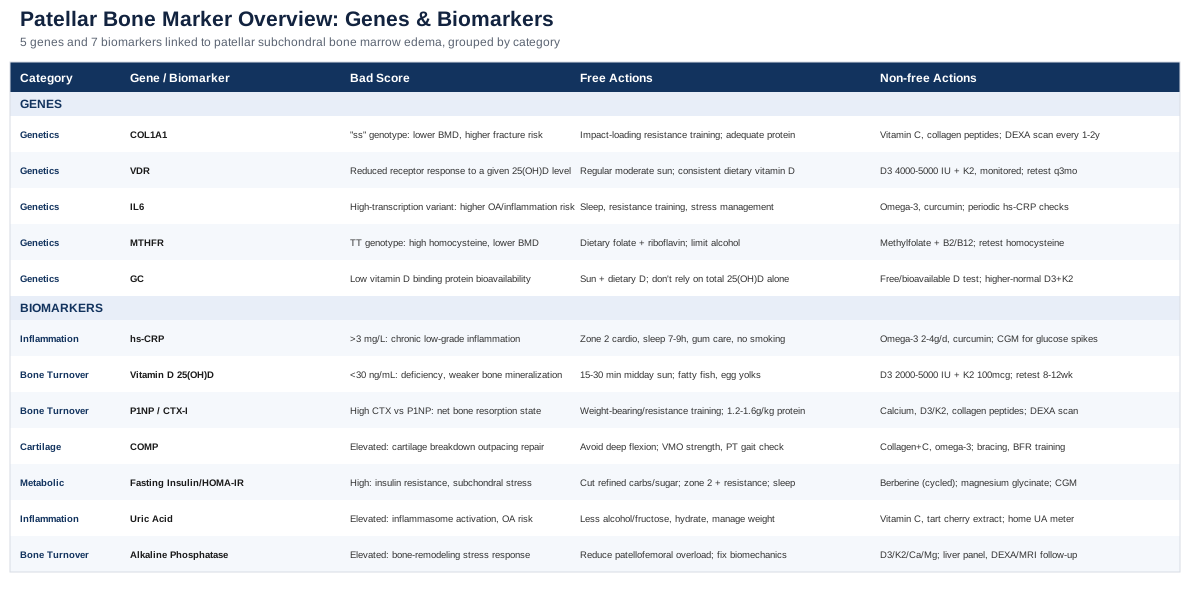
7 Biomarkers That Reveal What's Happening Under the Kneecap
Bone marrow edema in the patella is an MRI finding, not a lab result — no blood test will show it directly. But the biology that produces and sustains it leaves fingerprints in the blood: markers of systemic inflammation, the balance between bone formation and bone breakdown, cartilage matrix turnover, and metabolic factors that quietly worsen all three. Most of the research behind these markers comes from the broader knee osteoarthritis and bone-marrow-lesion literature rather than patella-specific studies, since the patella is rarely singled out in trials — but the underlying subchondral bone biology is shared across the joint, so the evidence transfers reasonably well.
Peter Attia and lipidologists like Thomas Dayspring and Allan Sniderman built their reputations on the idea that generic "normal range" lab reports miss the point — what matters is tracking a number over time, against your own baseline, and reacting to trends rather than isolated results. That mindset applies just as well here.
High-Sensitivity C-Reactive Protein (hs-CRP)
hs-CRP is a general marker of systemic, low-grade inflammation produced by the liver in response to circulating cytokines like IL-6. It doesn't tell you where the inflammation is coming from, but a chronically elevated hs-CRP correlates with knee osteoarthritis incidence and, in some cohorts, with symptomatic progression, which makes it a reasonable proxy for how much "background noise" your joint tissue is dealing with on top of local mechanical stress, as shown in a population-based study from the Yakumo cohort and a broader systematic review and meta-analysis of CRP in osteoarthritis.
How to measure it
A standard hs-CRP blood draw costs roughly $15 to $40 out of pocket, or is often bundled into routine metabolic panels covered by insurance. Fasting isn't required. Because CRP reacts to anything from a cold to a bad night's sleep, it's worth repeating a high result once before acting on it.If the score is bad, the plan without supplements
Reducing visceral fat is the single highest-leverage lever, since adipose tissue itself secretes inflammatory cytokines. Add 150 to 180 minutes per week of zone 2 cardio, prioritize sleep of 7 to 9 hours, address gum disease (periodontal inflammation reliably raises CRP), and stop smoking if applicable. Expect meaningful movement in hs-CRP over 8 to 12 weeks, not days.If the score is bad, the plan with supplements or equipment
Omega-3 (EPA/DHA) at 2 to 4 grams per day with food is the best-supported option; give it 12 weeks before retesting, and note the main side effects are GI upset and a mild blood-thinning effect worth discussing with a physician if you're on anticoagulants. Curcumin with piperine, 500 to 1000 mg twice daily, is a reasonable add-on with a low side-effect profile beyond occasional GI discomfort. A continuous glucose monitor (worn for 1 to 2 weeks at a time, a few times a year) is a useful piece of equipment for catching glycemic spikes that quietly drive inflammatory tone.25-Hydroxyvitamin D [3]D[/ITALIC]
Vitamin D status matters for bone mineralization and the calcium-handling machinery that keeps subchondral bone properly remodeled. Interestingly, the trial evidence is more humbling than the popular narrative suggests: a well-conducted randomized controlled trial found that vitamin D supplementation did not reduce existing bone marrow lesion volume over two years, and a meta-analysis of RCTs found modest benefits for pain and synovial volume but not for bone marrow lesions specifically. In other words, vitamin D is worth correcting because deficiency is a real risk factor for weaker bone, but it is not, by itself, a fix for edema that has already formed.
How to measure it
A 25(OH)D blood test costs $40 to $80 out of pocket and is widely available; it's the correct test (not 1,25-dihydroxyvitamin D, which reflects a different part of the pathway). Test once in winter and once in summer if you want to see your true seasonal range.If the score is bad, the plan without supplements
Midday sun exposure of 15 to 30 minutes on bare skin several times a week, combined with fatty fish, egg yolks, and fortified foods, can meaningfully shift levels in people who aren't severely deficient, though it's a slower and less reliable lever than supplementation in northern latitudes or during winter months.If the score is bad, the plan with supplements or equipment
Vitamin D3, typically 2000 to 5000 IU daily depending on baseline deficiency, taken with a fat-containing meal for absorption, paired with 100 mcg of vitamin K2 (MK-7) to support proper calcium routing to bone rather than soft tissue. Retest after 8 to 12 weeks and adjust the dose to land in a healthy-normal range rather than chasing the top of the reference range; oversupplementation risks hypercalcemia, so avoid megadosing without monitoring.Bone Turnover Markers: P1NP and CTX-I
P1NP reflects osteoblast activity (bone formation) and CTX-I reflects osteoclast activity (bone resorption). Looked at together, they describe whether your bone is in a net-building or net-breakdown state — directly relevant to a condition defined by disrupted subchondral bone remodeling. These are the reference markers recommended by the National Bone Health Alliance for standardized bone turnover assessment, and they're used clinically to monitor bone-active therapies.
How to measure it
Expect $60 to $120 per marker at most reference labs, or $150 to $250 for both together at specialty or research-oriented labs; this is not a marker most primary care doctors order routinely, so you may need to request it specifically or go through a direct-to-consumer lab. Morning fasting samples are recommended, since both markers have meaningful diurnal variation.If the score is bad, the plan without supplements
Weight-bearing and resistance exercise is the strongest non-pharmacological lever for shifting the formation/resorption balance in favor of building, along with adequate protein intake (1.2 to 1.6 g per kg body weight daily). Avoid chronic caloric restriction and excessive endurance training without adequate fueling, both of which push bone turnover toward net resorption.If the score is bad, the plan with supplements or equipment
Calcium from food sources first (1000 to 1200 mg/day), vitamin D3 and K2 as above, and collagen peptides (10 to 15 g daily, ideally with vitamin C, taken 30 to 60 minutes before loading exercise) to support the collagen matrix bone is built on. A DEXA scan (roughly $50 to $150, sometimes covered by insurance for at-risk groups) is useful equipment for tracking actual bone density changes over 1 to 2 year intervals, and a weighted vest or resistance bands provide a simple way to add mechanical loading at home.Cartilage Oligomeric Matrix Protein (COMP)
COMP is a structural cartilage protein released into blood when cartilage matrix is being broken down faster than it's rebuilt. It's one of the better-validated cartilage biomarkers in the research literature, shown to be elevated in knee osteoarthritis and useful for diagnosis and progression tracking in meta-analytic reviews, though it isn't specific to the patella and reflects whole-joint cartilage stress.
How to measure it
COMP is not a standard commercial lab test; it's primarily available through specialty or research laboratories, typically $100 to $300, and turnaround times are longer than routine bloodwork. Because access is limited, treat it as the "advanced" option on this list rather than a first-line test.If the score is bad, the plan without supplements
Reduce high-impact and deep-flexion loading (deep squats, kneeling, repeated stair descent under load) while building quadriceps and especially vastus medialis strength through controlled-range physical therapy, and address weight if it's contributing to patellofemoral joint force. Gait and patellar-tracking assessment by a physical therapist is often more useful here than any supplement.If the score is bad, the plan with supplements or equipment
Collagen peptides with vitamin C (as above) and omega-3s form the reasonable base; glucosamine and chondroitin have mixed trial evidence for cartilage-specific outcomes but a good safety profile if you choose to try them for 3 months as a trial. Patellar bracing or taping can reduce load during flare periods, and blood flow restriction training equipment allows strength gains with lower joint compression, which is useful for cartilage-sensitive rehab.Fasting Insulin and HOMA-IR
This is arguably the most underrated marker on this list. Metabolic syndrome and insulin resistance are increasingly recognized as direct contributors to subchondral bone pathology, not just indirect ones through body weight — a mechanistic review on metabolic syndrome and subchondral bone and a 32-year population follow-up study both tie metabolic dysfunction to knee osteoarthritis risk through pathways that inhibit AMPK activity and promote inflammatory activation inside the joint itself.
How to measure it
Fasting insulin costs $10 to $30; combine it with fasting glucose to calculate HOMA-IR (glucose × insulin / 405). This is one of the cheapest, most information-dense tests on the list and is worth running even if your fasting glucose looks "normal," since insulin often rises years before glucose does.If the score is bad, the plan without supplements
Reduce refined carbohydrates and added sugar, experiment with a modest eating window (10 to 12 hours), and combine zone 2 cardio with resistance training — the combination outperforms either alone for insulin sensitivity. Sleep debt and chronic stress both independently worsen insulin resistance, so they're not optional add-ons here.If the score is bad, the plan with supplements or equipment
Berberine, 500 mg two to three times daily with meals, cycled 8 to 12 weeks on and 2 to 4 weeks off, has trial evidence comparable to metformin for some glycemic markers; main side effects are GI upset, and it should be used cautiously alongside glucose-lowering medications due to additive effect. Magnesium glycinate (300 to 400 mg nightly) supports insulin signaling. A continuous glucose monitor is genuinely useful equipment here, showing which specific foods and meal patterns spike your glucose the most.Serum Uric Acid
Uric acid is best known for its role in gout, but it also acts as a danger signal that activates the NLRP3 inflammasome, and elevated levels are independently associated with knee osteoarthritis prevalence and with MRI-detected synovitis and soft-tissue changes, with a clear dose-response relationship shown in a large population study of hyperuricemia and knee osteoarthritis.
How to measure it
Uric acid is a $10 to $20 test, usually included in a standard metabolic panel. No fasting required.If the score is bad, the plan without supplements
Reduce alcohol, especially beer, cut back on sugary drinks and high-fructose foods (fructose metabolism directly raises uric acid production), moderate intake of purine-dense foods like organ meats and certain shellfish, stay well hydrated, and address excess weight if present.If the score is bad, the plan with supplements or equipment
Vitamin C, 500 mg daily, has modest uric-acid-lowering evidence. Tart cherry extract has some supporting data for reducing gout flare frequency and is reasonable to trial for 8 to 12 weeks. Avoid niacin (vitamin B3) in weight-loss or cholesterol-lowering doses, since it raises uric acid as a side effect. A home uric acid meter (similar in concept to a glucometer) is a low-cost piece of equipment for tracking trends between lab visits.Bone-Specific Alkaline Phosphatase (ALP)
ALP is produced by active osteoblasts and rises with bone formation activity; a large population study found a positive association between serum ALP and severe knee osteoarthritis, suggesting it tracks the bone-remodeling stress response happening under damaged cartilage. It's nonspecific — liver conditions also raise total ALP — so it's most useful alongside the bone-specific isoform or paired with liver enzymes to rule out other causes.
How to measure it
Total ALP costs $10 to $20 and is part of most standard panels; the bone-specific isoform (BAP) runs $50 to $100 at specialty labs and is more informative if total ALP is elevated and liver causes have been excluded.If the score is bad, the plan without supplements
If elevated ALP reflects a genuine bone-remodeling stress response, the priority is reducing mechanical overload — cutting back on activities that repeatedly load the patellofemoral joint, allowing adequate recovery between training sessions, and correcting biomechanical issues (poor tracking, weak hip stabilizers) that concentrate force under the kneecap.If the score is bad, the plan with supplements or equipment
The same vitamin D3/K2, calcium, and magnesium foundation described above supports healthy bone remodeling. Since ALP is nonspecific, the most valuable "equipment" here is diagnostic: a liver panel to rule out hepatic causes, and a DEXA or follow-up MRI to confirm the elevation reflects local bone activity rather than something unrelated.Once the biomarker picture is clear, it's worth asking why some people run into subchondral bone problems more easily than others under seemingly similar loads and diets — which is where genetics enters the picture.
The Genetic Side: 5 Genes That Shape Bone and Cartilage Resilience
Genetic variants don't cause patellar bone marrow edema on their own, but they can shift the baseline resilience of bone and cartilage tissue, meaning the same mechanical stress produces a bigger biological reaction in some people than others. Genetic epidemiologists like Ali Torkamani, who has spent years studying how common variants shape individual disease risk across large populations, and practitioners like Gary Brecka, known for popularizing genetically-informed biomarker protocols, both make essentially the same point: a single "high-risk" variant is a nudge, not a verdict, and it can usually be offset with a targeted, unglamorous set of lifestyle inputs. Evidence quality varies by gene below, and that's noted explicitly where it matters.
COL1A1 (Type I Collagen)
The COL1A1 Sp1-binding-site polymorphism (rs1800012) affects the ratio of collagen chains produced in bone and connective tissue. Carriers of the "s" allele, and especially "ss" homozygotes, show modestly lower bone mineral density and a disproportionately higher fracture risk relative to that BMD difference, suggesting an effect on bone quality beyond density alone, per a recent meta-analysis of 30 studies. Evidence here is solid and consistent across multiple population studies over two decades.
If the gene is bad, the plan without supplements
Progressive resistance training with an impact-loading component (controlled jumping or hopping drills, introduced gradually) stimulates osteogenic signaling largely independent of genotype, and remains the single best-evidenced lever for this variant. Adequate dietary protein supports the collagen synthesis this gene affects directly.If the score is bad, the plan with supplements or equipment
Vitamin C and collagen peptides (as described earlier) support the biochemical steps of collagen assembly. A DEXA scan every 1 to 2 years is worthwhile equipment for this genotype specifically, since it tracks whether your bone density trend is holding up despite the underlying variant.VDR (Vitamin D Receptor)
Common VDR variants (BsmI, ApaI, TaqI, FokI) affect how efficiently the vitamin D receptor responds to circulating calcitriol. Practically, this means two people can have identical blood 25(OH)D levels and still get different downstream effects on calcium absorption and bone remodeling, a relationship described across multiple population studies, though the association's strength is debated and not universally replicated.
If the gene is bad, the plan without supplements
Because receptor efficiency is reduced rather than absent, consistency matters more than intensity — regular, moderate sun exposure and dietary vitamin D sources spread across the week tend to outperform occasional large doses for this genotype.If the score is bad, the plan with supplements or equipment
A somewhat higher target range for supplemental D3 (commonly 4000 to 5000 IU daily under monitoring) paired with K2 is a reasonable compensation strategy, with blood retesting every 3 months initially to confirm you're landing in a healthy range rather than over- or under-shooting.IL6 (Interleukin-6 Promoter Variant)
The rs1800795 promoter variant affects how much IL-6 a person's cells produce under the same inflammatory trigger; the higher-transcription genotype has been linked to increased osteoarthritis risk through elevated baseline inflammatory tone, and IL-6 itself is a known driver of osteoclast activity and bone resorption. Evidence is moderate — consistent mechanistically, but effect sizes vary across populations.
If the gene is bad, the plan without supplements
This genotype rewards a genuinely anti-inflammatory lifestyle rather than any single intervention: consistent sleep, regular resistance training (which paradoxically lowers resting IL-6 over time despite raising it acutely), stress management, and maintaining a healthy body composition, since adipose tissue is itself a meaningful IL-6 source.If the score is bad, the plan with supplements or equipment
Omega-3s and curcumin, dosed as described in the hs-CRP section, are reasonable choices given the mechanistic overlap. Periodic hs-CRP testing doubles as an equipment-free way to monitor whether this genotype is translating into elevated real-world inflammation for you specifically.MTHFR (C677T Variant)
The C677T (rs1801133) variant reduces methylenetetrahydrofolate reductase enzyme activity, raising homocysteine levels in TT homozygotes, which has been linked to modestly lower bone mineral density and higher fracture incidence in meta-analytic data, with riboflavin intake shown to interact with and partially offset the effect.
If the gene is bad, the plan without supplements
Prioritize dietary folate (leafy greens, legumes) and riboflavin-rich foods (dairy, eggs, almonds, lean meats), and moderate alcohol intake, since alcohol further impairs folate metabolism.If the score is bad, the plan with supplements or equipment
Methylfolate rather than folic acid, paired with riboflavin (B2) and B12, is the standard compensation strategy for this genotype, since folic acid requires the very enzyme this variant impairs. Retest homocysteine every 3 to 6 months; avoid chronically high-dose B6 supplementation, which can cause peripheral neuropathy over long periods at high intakes.GC (Vitamin D Binding Protein)
Variants in the GC gene (notably rs4588 and rs7041) affect levels of vitamin D binding protein, the carrier that determines how much vitamin D circulates in bound versus bioavailable form; certain genotypes are associated with lower bone density independent of total 25(OH)D, meaning your total vitamin D number may look fine while your bioavailable status is actually low. Evidence is still developing and effect sizes are modest.
If the gene is bad, the plan without supplements
The same sun and dietary strategies apply, but don't rely solely on a "normal" total 25(OH)D result to conclude vitamin D status is optimized for you — this is a case where genotype adds real nuance.If the score is bad, the plan with supplements or equipment
Where available, a free or bioavailable vitamin D test (a specialty lab option) gives a more accurate read than total 25(OH)D alone for this genotype. Targeting the higher-normal range of D3 supplementation, with K2 co-administered, is a reasonable practical adjustment.Genes and biomarkers describe your biology; what you do day to day is what actually moves the needle, and that's where a closer look at the current longevity literature is genuinely useful.
What Peter Attia's Outlive Gets Right About Joint Longevity
Outlive: The Science and Art of Longevity by Peter Attia isn't written about knees specifically, but its core argument — that most people wait far too long to address slow-moving structural decline — applies directly to subchondral bone health. Below are ten of its most transferable ideas for someone dealing with recurring patellar bone marrow edema.
1. Medicine 3.0 means acting before the MRI lights up
Attia's central critique of conventional care ("Medicine 2.0") is that it waits for disease to become symptomatic before intervening. Bone marrow edema is a textbook example: by the time it's visible on MRI, the underlying remodeling imbalance has likely been building for months. The practical takeaway is to treat biomarker tracking as preventive maintenance, not a reaction to pain.2. VO2 max is the most powerful marker most people ignore
Attia repeatedly points to cardiorespiratory fitness as one of the strongest predictors of long-term outcomes, citing data showing all-cause mortality drops meaningfully with each incremental gain in fitness, a relationship confirmed across large cohorts, as summarized in a widely cited review on VO2max and longevity. For joints, better aerobic capacity means better tissue oxygenation and nutrient delivery to bone and cartilage during recovery, not just a cardiovascular benefit.3. Zone 2 training builds the metabolic machinery that heals tissue
Attia's emphasis on zone 2 (low-intensity, sustainable-pace) cardio is about improving mitochondrial efficiency, which affects how well tissue — including bone — clears metabolic byproducts and utilizes fuel during repair. It's a low-impact modality that's realistic even during a bone marrow edema flare.4. Strength is a longevity marker, not a vanity metric
Grip strength and overall muscle mass are consistently associated with lower all-cause mortality in older adults, independent of other risk factors, according to long-running cohort data on grip strength and mortality. For the knee specifically, quadriceps and hip strength directly determine how much force the patella has to absorb.5. Resistance training is one of the few real levers on bone density
A systematic review and meta-analysis found consistent, if modest, improvements in bone mineral density from resistance training in older adults, reinforcing Attia's repeated point that strength training is non-negotiable for skeletal health, not optional cardio-adjacent activity.6. The "Centenarian Decathlon" reframes rehab goals
Attia asks patients to define the physical tasks they want to still perform decades from now, then reverse-engineers training toward those specific capacities. Applied here: instead of vague goals like "less knee pain," define concrete tasks (kneeling to garden, descending stairs without hesitation) and build a rehab plan around exactly those movement patterns.7. Stability training prevents the injuries that start this whole cascade
Attia frames stability — single-leg balance, controlled eccentric strength, joint-position awareness — as the unglamorous foundation that prevents the acute overload injuries that often precede bone marrow lesions in the first place. This is arguably more relevant to patellar issues than raw strength alone.8. Sleep is a tissue-repair intervention, not a lifestyle nicety
Attia treats sleep as one of the four pillars of the book alongside exercise, nutrition, and emotional health, pointing to its role in growth hormone release and tissue recovery. Skimping on sleep during a bone marrow edema recovery period works directly against the remodeling process you're trying to support.9. Nutrition should serve a strategy, not an identity
Rather than endorsing a single diet, Attia argues nutrition should be evaluated by whether it supports your specific biomarkers and body composition goals — directly compatible with the biomarker-driven approach in this article, where you adjust intake (protein, anti-inflammatory fats, sugar) based on your actual numbers rather than a generic template.10. The "marginal decade" argument for acting now
Attia's closing argument is that the quality of your final decade of life is determined by decisions made 10 to 30 years earlier — joint function included. A recurring patellar bone marrow lesion in your 30s or 40s is a legitimate early signal worth acting on now, rather than something to defer until it becomes a mobility-limiting problem later.Alongside these lifestyle-driven strategies, several complementary therapies have direct clinical trial support for knee pain and are worth considering as add-ons rather than replacements.
Complementary Approaches Worth Considering
The therapies below aren't substitutes for addressing the biomarkers and mechanical factors above, but each has genuine human clinical evidence in knee osteoarthritis or related knee pain populations, which makes them reasonable, low-risk additions rather than speculative alternatives.
Tai Chi
Tai chi combines slow, controlled weight-shifting movements with balance training and mild-to-moderate quadriceps loading, making it relevant for patellar issues because it builds strength and proprioception without the impact loading of running or jumping. It's also one of the more mainstream mind-body practices, so adherence tends to be higher than with less familiar modalities.A randomized controlled trial of Yang-style tai chi (60-minute sessions, twice weekly for 12 weeks) in adults with symptomatic knee osteoarthritis found meaningful improvements in WOMAC pain scores, physical function, and quality of life compared to an attention-control group, as reported in this randomized trial.
Realistically, start with a beginner class or instructional video twice weekly, focusing on slow, controlled knee bend depth rather than range — the goal early on is quality of movement and gradual loading tolerance, not intensity.
Low-Level Laser Therapy (Photobiomodulation)
Photobiomodulation uses specific wavelengths of red or near-infrared light applied directly over the joint, theorized to stimulate mitochondrial activity and reduce local inflammatory signaling in superficial joint tissue. It's a passive, low-burden option that's reasonable for patellar pain given the joint's relatively superficial position.A systematic review and meta-analysis of placebo-controlled randomized trials found a significant reduction in pain and disability with low-level laser therapy in knee osteoarthritis, though the same review notes it isn't yet included in major clinical practice guidelines, so evidence should be considered promising but not definitive.
If trying this, look for a provider using clinically studied dosing parameters (typically several sessions per week for 2 to 4 weeks) rather than a single "one-and-done" treatment, and treat it as an adjunct to strength work rather than a standalone plan.
Mindfulness Meditation / MBSR
Chronic joint pain has a well-documented central sensitization component — the nervous system's pain-processing sensitivity increases over time independent of tissue damage — which is exactly what mindfulness-based interventions are designed to modulate.A pilot randomized controlled trial of an 8-week mindfulness-based stress reduction program in knee and hip osteoarthritis patients found no early difference in WOMAC pain scores but a significant reduction in pain (VAS) by 6 months, suggesting a delayed but real effect, according to this pilot RCT. Evidence here is genuinely mixed and effects appear to take months to show up.
A realistic approach is an 8-week structured MBSR course (widely available in-person or via app) with the expectation that benefits, if any, build gradually — this is not a fast-acting intervention and shouldn't be judged after two or three sessions.
Massage Therapy
Massage addresses the muscular guarding and soft-tissue tightness (particularly around the quadriceps, IT band, and hip flexors) that often accompanies chronic patellar pain and can worsen patellar tracking, indirectly increasing joint stress.A randomized controlled trial found that twice-weekly Swedish massage for four weeks, then weekly for another four weeks, produced significant improvements in WOMAC scores, pain, stiffness, and walking speed in knee osteoarthritis patients compared to a delayed-treatment control group, according to this randomized trial.
A reasonable starting protocol mirrors the study: twice weekly for the first month, then weekly maintenance, focusing on the quadriceps and surrounding musculature rather than the joint itself.
Biofeedback
EMG biofeedback trains better activation of the vastus medialis oblique, the quadriceps muscle most responsible for proper patellar tracking — directly relevant when patellar bone marrow edema is linked to poor tracking or muscular imbalance.A randomized clinical trial testing EMG biofeedback alongside standard strengthening exercise found no significant additive benefit over strengthening alone, though both groups improved meaningfully, per this randomized trial — suggesting biofeedback may be most useful for people who struggle to feel or isolate the right muscle during standard exercises, rather than as a universal add-on.
If access to biofeedback equipment is limited, this is one modality where a skilled physical therapist's manual cueing can often substitute for the device itself; consider biofeedback specifically if you've tried standard quad-strengthening physical therapy without noticing proper muscle activation.
Conclusion
Patellar subchondral edema isn't a mystery condition so much as an under-explained one. The biomarkers in this article — inflammatory, bone-turnover, cartilage, and metabolic — give you a way to see the biological process behind the MRI finding instead of just the finding itself, and the genetic variants explain part of why the same mechanical stress hits different people differently. None of these numbers or genes are destiny, and none of the interventions here are instant; the honest expectation is gradual improvement over months, tracked with repeat testing rather than guesswork.
The most useful next step is a concrete one: get the baseline panel drawn (hs-CRP, 25(OH)D, fasting insulin, and uric acid are the cheapest and most accessible four to start with), bring the results to a physician or sports medicine specialist who's willing to look at trends rather than single "normal/abnormal" flags, and build your rehab plan around the specific movement goals that matter to you. Better information doesn't replace professional care, but it makes the conversation with your care team a great deal more productive.
Musculoskeletal: Bone Conditions Joint Conditions Sports Injuries