This article contains AI generated content.
Patellar Tendon Peritendinitis: 4 Genes and 7 Biomarkers to Track
If your knee pain sits right at the bottom of the kneecap, flares after jumping or squatting, and never fully settles no matter how much you stretch or rest, you've probably already heard the standard advice: ice it, rest it, strengthen the quad, maybe try eccentric squats. That advice isn't wrong. It's just incomplete. It treats every case of patellar tendon peritendinitis as if it came from the same place, when in practice the reason one person's tendon keeps inflaming while another's recovers in six weeks often has less to do with technique and more to do with what's happening in their blood chemistry and their DNA.
Generic rehab protocols are built for the average case, and the average case doesn't exist. Two runners with identical training loads and identical squat form can have completely different outcomes because one of them is quietly insulin resistant, has borderline-low vitamin D, or carries a collagen gene variant that makes the tendon matrix less tolerant of repeated strain. None of that shows up on an X-ray or an ultrasound. It shows up in a blood panel, or in genetic data most people have already paid for and never looked at.
This article takes that more specific approach. Instead of repeating the same loading program you've likely already tried, it looks at the biological variables that influence whether your tendon repairs itself efficiently or stays stuck in a low-grade inflammatory loop — the paratenon irritation that defines peritendinitis, as distinct from the more degenerative tendinosis pattern often seen deeper in the tendon body.
None of this is about finding a single broken part to fix. It's about noticing which of several modifiable factors might be working against you, and doing something specific about each one. Better information doesn't guarantee a faster recovery, but it does mean fewer wasted months on a plan that was never going to work for your physiology. Below, you'll find the seven biomarkers worth tracking first, a shorter look at the genetic variants researchers most often associate with tendon injury risk, ten practical lessons from one of the field's most contrarian tendon researchers, and a review of complementary approaches with genuine supporting evidence.
Summary
Patellar tendon peritendinitis rarely has a single cause, and this article is built around that reality. The core of it walks through seven measurable biomarkers — from a simple uric acid test to an advanced IGF-1 panel — that shape how well your tendon handles repeated load and how efficiently it resolves inflammation in the paratenon. For each one, you'll find what it reveals, roughly what it costs to check, and two concrete improvement paths: one using only training and lifestyle changes, and one that adds supplements or equipment, complete with dosing frequency and known side effects.
Beyond the biomarkers, there's a closer look at four genes — COL5A1, MMP3, GDF5, and TNC — that recur across the genetics literature on tendon and ligament injury, with plain-language explanations of what a "bad" variant might mean and how to train around it regardless of what your DNA says. You'll also get ten specific, sometimes counterintuitive lessons from tendon researcher Keith Baar's work, including why complete rest may be the wrong instinct entirely, and a review of complementary therapies — from photobiomodulation to biofeedback — that actually have condition-relevant clinical evidence behind them, rather than just popularity. By the end, you should have a much clearer sense of which levers are worth pulling first.
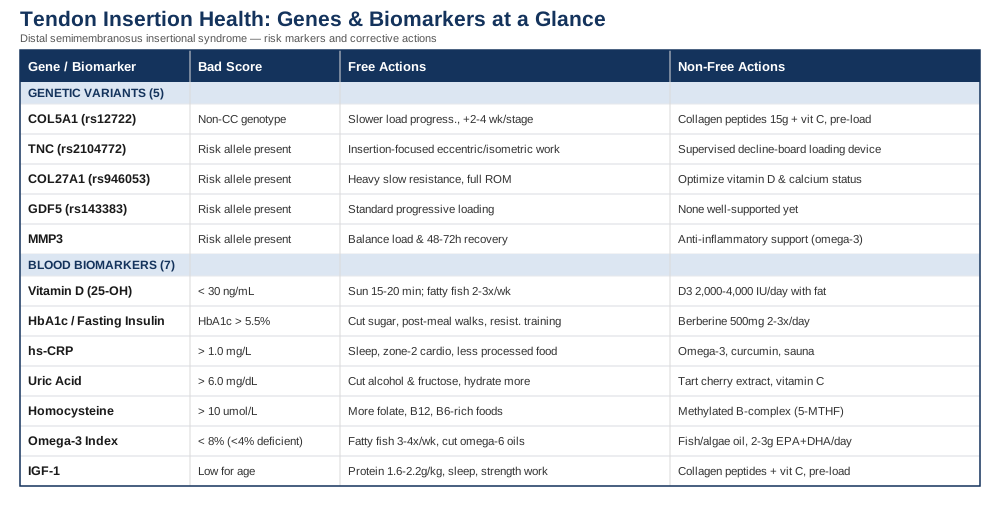
The 7 Biomarkers That Matter Most for Patellar Tendon Peritendinitis
Peritendinitis is, by definition, an inflammatory problem of the paratenon — the thin sheath surrounding the tendon — rather than pure structural degeneration inside the tendon fibers themselves. That distinction matters because several of the biomarkers below are directly tied to systemic inflammation and connective tissue metabolism, not just general fitness. Tracking them gives you a much more precise picture of why the tissue isn't settling down than a symptom diary alone ever could.
1. High-Sensitivity C-Reactive Protein (hs-CRP)
hs-CRP is the most direct blood marker of systemic low-grade inflammation, and it matters here because peritendinitis, unlike classic tendinosis, genuinely does involve an inflammatory component in the paratenon. A persistently elevated hs-CRP suggests your body is running a background inflammatory load that makes it harder for local tendon inflammation to fully resolve between training sessions.
How to measure it
A standard hs-CRP blood test costs roughly 15 to 30 dollars out of pocket in the US when ordered without insurance, or is typically covered as part of a basic metabolic workup. Results under 1.0 mg/L are considered low risk, 1.0 to 3.0 mg/L moderate, and above 3.0 mg/L elevated.If the score is bad, the plan without supplements
Prioritize sleep consistency (7 to 9 hours, fixed wake time), reduce ultra-processed food and added sugar intake, and address any underlying dental, gum, or gut inflammation, since these are common hidden contributors to elevated hs-CRP. Deload training volume for 2 to 3 weeks if hs-CRP is above 3.0 mg/L, since training on top of systemic inflammation tends to prolong local tendon flare-ups.If the score is bad, the plan with supplements or equipment
Omega-3 fatty acids (EPA/DHA, 2 to 3 grams daily with food) have the best-supported anti-inflammatory effect on hs-CRP and can be taken continuously, though they may mildly increase bleeding risk at high doses, so check with a physician if you're on blood thinners. Curcumin with piperine (500 to 1000 mg daily, cycled 8 weeks on, 2 weeks off) is a reasonable second-line option; it can cause mild GI upset and should be avoided in people with gallstones.2. Fasting Insulin and HbA1c (HOMA-IR)
Insulin resistance is an underappreciated driver of poor tendon healing. Chronic hyperglycemia promotes the accumulation of advanced glycation end-products in collagen, which stiffens the tendon matrix and impairs its capacity to remodel after microtrauma — a mechanism well documented in diabetic tendinopathy research, where people with type 2 diabetes show a markedly higher rate of tendon pain and rupture, as reviewed in an in vitro model of insulin-resistant tenocytes. You don't need to be diabetic for this mechanism to be working against you; borderline insulin resistance appears to matter too.
How to measure it
Fasting glucose and insulin together (to calculate HOMA-IR) run about 20 to 50 dollars; HbA1c alone runs 10 to 30 dollars and reflects average blood sugar over roughly three months. A HOMA-IR above 2.0, or HbA1c above 5.6 percent, warrants attention even without a diabetes diagnosis.If the score is bad, the plan without supplements
A 10-minute walk after meals measurably blunts the post-meal glucose spike, and resistance training (which you're likely already doing for rehab) independently improves insulin sensitivity over 8 to 12 weeks. Reducing refined carbohydrate intake and prioritizing protein and fiber at each meal is the single highest-leverage dietary change.If the score is bad, the plan with supplements or equipment
Berberine (500 mg, two to three times daily with meals, cycled 3 months on and 1 month off) has glucose-lowering effects comparable to metformin in several trials, but can cause GI discomfort and should not be combined with other glucose-lowering medication without medical supervision. A continuous glucose monitor (roughly 50 to 100 dollars per two-week sensor) is a useful, if optional, way to see which specific foods spike your glucose the most.3. Apolipoprotein B (ApoB) and Lipid Panel
This is a less obvious one, but the evidence is stronger than most people expect. Elevated cholesterol and lipid particles don't just affect arteries — they physically infiltrate tendon extracellular matrix, altering its mechanical properties. A large retrospective study found significantly higher cholesterol, triglyceride, and LDL levels in patients with Achilles tendon rupture compared to matched controls, and a broader review of hyperlipidemia in tendon injury describes how LDL accumulates within tendon tissue and is associated with altered biomechanics. Peter Attia, Thomas Dayspring, and Allan Sniderman have each argued that ApoB — which reflects the actual number of atherogenic lipid particles rather than just the cholesterol they carry — is a more accurate marker than standard LDL-C, and that same logic likely extends to how much lipid material is available to infiltrate tissues like tendon.
How to measure it
A standard lipid panel (total cholesterol, LDL-C, HDL-C, triglycerides) costs 20 to 50 dollars and is widely available. A dedicated ApoB test costs roughly 30 to 70 dollars and is the more informative affordable option; an advanced NMR lipoprotein particle panel runs 100 dollars or more and adds particle size and LDL particle number detail.If the score is bad, the plan without supplements
Replacing saturated fat with unsaturated fat sources (olive oil, nuts, fatty fish), increasing soluble fiber (oats, psyllium, legumes), and maintaining regular aerobic activity are the best-supported non-pharmacological levers for ApoB and LDL-C. Weight loss, if relevant, has an outsized effect on lipid particle number.If the score is bad, the plan with supplements or equipment
Psyllium husk (5 to 10 grams daily with water) modestly lowers LDL-C and ApoB and is safe for continuous use, though it can cause bloating if fiber is increased too quickly. If ApoB remains significantly elevated despite lifestyle changes, this is a conversation to have with a physician about statins or ezetimibe — genuinely effective options that fall outside a self-directed supplement plan, and worth pursuing given the tendon-specific data above.4. 25-Hydroxyvitamin D
Vitamin D receptors are present in tendon tissue, and deficiency is associated with impaired extracellular matrix remodeling. A recent scoping review of vitamin D's role in postoperative tendon healing found that deficiency was consistently linked to delayed healing and worse outcomes, though the authors are honest that most of this evidence comes from rotator cuff surgery, not patellar tendinopathy specifically — a reasonable extrapolation, not a proven mechanism in this exact tendon.
How to measure it
A 25-OH vitamin D blood test costs 40 to 80 dollars. Below 20 ng/mL is deficient, 20 to 30 ng/mL is insufficient, and 30 to 50 ng/mL is generally considered adequate for musculoskeletal health.If the score is bad, the plan without supplements
15 to 20 minutes of midday sun exposure on bare skin, several times a week, is often enough to normalize levels in lighter-skinned individuals, though this varies enormously by latitude, season, and skin tone.If the score is bad, the plan with supplements or equipment
Vitamin D3 (2000 to 4000 IU daily with a fat-containing meal for absorption) is the standard correction dose; retest after 8 to 12 weeks. Side effects are rare at this dose but very high intakes (over 10,000 IU daily for months) can cause hypercalcemia, so avoid mega-dosing without a retest plan.5. Serum Uric Acid
This is one of the more surprising entries. Even in people without gout, subclinical elevated uric acid appears to damage tendon tissue directly. A study of Achilles tendon rupture patients found significantly higher serum uric acid levels compared to healthy controls, with uric acid shown to reduce tendon stem cell viability and increase matrix-degrading enzymes in lab models. Monosodium urate crystals have also been documented depositing directly in the patellar tendon in people with asymptomatic hyperuricemia.
How to measure it
Serum uric acid is one of the cheapest tests available, typically 10 to 20 dollars. Levels above 6.8 mg/dL (the solubility threshold) are worth addressing even without gout symptoms.If the score is bad, the plan without supplements
Reduce alcohol (especially beer) and fructose-sweetened beverage intake, moderate red meat and organ meat consumption, and increase water intake and low-fat dairy, all of which have measurable uric-acid-lowering effects.If the score is bad, the plan with supplements or equipment
Tart cherry extract (480 to 600 mg daily, or as concentrated juice) has modest evidence for lowering uric acid and reducing inflammatory flares; it's generally well tolerated but can cause loose stools at higher doses. Persistently high levels above 8 mg/dL warrant a conversation with a physician about allopurinol, which is outside self-directed supplementation.6. Thyroid Panel (TSH and Free T4)
Thyroid hormone directly regulates collagen synthesis and extracellular matrix turnover in tendon tissue. Hypothyroidism is associated with tendinopathy across multiple sites, including the patellar tendon, and a documented case of spontaneous tendon rupture in a woman with untreated hypothyroidism illustrates just how far this can go when thyroid dysfunction is severe and unaddressed — an extreme case, but a useful reminder that this axis is worth checking, especially if fatigue, cold intolerance, or unexplained weight change accompany your tendon symptoms.
How to measure it
A basic TSH test costs 20 to 40 dollars; adding free T4 brings it to 30 to 100 dollars depending on the lab. TSH between 0.4 and 4.0 mIU/L is the standard reference range, though many functional-medicine practitioners consider optimal to be closer to 1.0 to 2.5 mIU/L.If the score is bad, the plan without supplements
Ensure adequate dietary iodine and selenium (Brazil nuts, seafood, eggs), manage chronic stress and sleep debt (both suppress thyroid conversion), and retest in 6 to 8 weeks before assuming a diagnosis.If the score is bad, the plan with supplements or equipment
If TSH is mildly elevated without overt hypothyroidism, selenium (200 mcg daily, generally safe short-term but not recommended indefinitely above this dose) may modestly support thyroid function. Frank hypothyroidism confirmed by lab work should be managed with a physician and levothyroxine, not self-treated.7. IGF-1
Insulin-like growth factor 1 is one of the primary signals that drives collagen synthesis in tendon tissue after mechanical loading, and it's directly relevant to how well your tendon responds to rehab exercise in the first place. Low IGF-1 may partly explain why some people's tendons seem to adapt slowly to a loading program that works well for others.
How to measure it
This is the most advanced and least affordable biomarker on this list, typically 75 to 150 dollars, and usually requires a physician order rather than a direct-to-consumer lab. Reference ranges are age- and sex-specific, so interpret results against your own lab's range rather than a universal number.If the score is bad, the plan without supplements
Resistance training itself is the strongest natural driver of IGF-1, along with adequate total protein intake (roughly 1.6 to 2.2 g/kg bodyweight daily) and sufficient sleep, since growth hormone pulses (which upregulate IGF-1) are concentrated in deep sleep.If the score is bad, the plan with supplements or equipment
A vitamin C-enriched gelatin or collagen peptide protocol, timed roughly one hour before tendon-loading exercise, is the best human-studied option for directly supporting the collagen synthesis pathway IGF-1 feeds into (detailed further below). This is safe for most people at 15 grams daily around training and doesn't require cycling, though those with kidney stones should moderate collagen's glycine and hydroxyproline load and check with a physician.Taken together, these seven markers cover inflammation, metabolic health, lipid burden, and the hormonal signals that drive tendon repair — which is a more complete picture than any single test could offer on its own. The genetic variants below add a longer-term layer to that picture: not what's happening in your blood right now, but what your tendon tissue may have been predisposed to handle less well from the start.
What Your Genes May Reveal About Patellar Tendon Peritendinitis Risk
Genetics in tendinopathy research is still an evolving field — researchers like Ali Torkamani, whose work has helped popularize consumer genomic risk interpretation, and Gary Brecka, known for translating raw genetic data into practical health decisions, have both pushed the idea that a "risk" variant is a starting point for a plan, not a verdict. The same applies here. None of the variants below guarantee injury, and none of them make injury unavoidable if you train sensibly.
COL5A1 (rs12722)
COL5A1 codes for a component of type V collagen, which regulates the diameter and organization of the larger type I collagen fibrils that give tendon its tensile strength. Variants here are among the most studied in sports genetics, though results are genuinely mixed: a large meta-analysis found that COL5A1 polymorphisms were associated with reduced risk of tendon-ligament injury in Caucasian populations overall, while other work on the same gene links certain genotypes to greater joint flexibility and, in some populations, higher injury susceptibility. The honest takeaway is that this gene clearly matters, but the direction of risk depends on population and tissue, so treat a "risk" genotype here as a flag to be more conservative with load progression, not a diagnosis.
If the gene is bad, the plan without supplements
Progress tendon loading volume more conservatively than standard protocols suggest — increases of no more than 10 percent per week rather than the more aggressive jumps sometimes used in return-to-sport plans — and prioritize isometric holds (30 to 45 seconds, 4 to 5 repetitions, most days of the week) before progressing to heavier eccentric or plyometric work.If the score is bad, the plan with supplements or equipment
A vitamin C-enriched gelatin or hydrolyzed collagen protocol (15 grams, roughly one hour before loading sessions, 3 to 5 days per week) is the most directly relevant option, since it supplies the raw amino acids for type I collagen synthesis this gene's product organizes. No cycling is required; it's food, not a drug, though very high intakes may cause mild GI discomfort in some people.MMP3 (rs679620)
MMP3 encodes an enzyme that breaks down and remodels extracellular matrix components, including collagen and proteoglycans. A meta-analysis of MMP3 gene polymorphisms and tendon-ligament injury found certain genotypes, including the GG genotype of rs679620, associated with meaningfully higher odds of Achilles tendinopathy, with the effect appearing to interact with COL5A1 status. If matrix remodeling runs faster or more aggressively than collagen can be laid back down, the tendon spends more time in a structurally weaker, injury-prone state after each loading bout.
If the gene is bad, the plan without supplements
Build in longer recovery windows between higher-intensity loading sessions (48 hours minimum rather than daily heavy loading), since this gives remodeling enzymes and new collagen synthesis time to reach equilibrium rather than staying in a net-breakdown state.If the score is bad, the plan with supplements or equipment
The same collagen-plus-vitamin-C timing protocol described above applies here, since it directly supports the synthesis side of the remodeling equation. Blood flow restriction training equipment (a pneumatic cuff, used at 40 to 60 percent limb occlusion pressure for lighter-load quad exercises, 2 to 3 sessions per week) can allow tendon-friendly loading at lower absolute weights, reducing peak mechanical stress while still driving an adaptive signal; avoid it if you have any history of blood clots without medical clearance.GDF5 (rs143383)
GDF5 is a growth factor essential for normal joint and connective tissue development, and the rs143383 variant sits in the gene's regulatory region, reducing its expression in carriers of the risk allele. A meta-analysis found this variant associated with several musculoskeletal degenerative conditions, including Achilles tendon pathology, likely because lower GDF5 expression means less signal available to support tendon and joint tissue maintenance over time.
If the gene is bad, the plan without supplements
Since GDF5 is tied to overall joint and connective tissue maintenance rather than acute tendon response, the most useful non-supplement lever is consistency: regular, moderate mechanical loading (3 to 4 sessions weekly) sustained over months, since this gene's effects appear to compound with inactivity rather than cause acute injury on their own.If the score is bad, the plan with supplements or equipment
There's no supplement that directly restores GDF5 expression, so the more relevant equipment-based option is a structured heavy slow resistance program using a leg press or squat rack (working up to 3 sets of 6 to 8 reps, 3 times weekly over 12 weeks), which has separately been shown to improve tendon structure over time regardless of genotype.TNC (Tenascin-C)
Tenascin-C is a matrix glycoprotein expressed at high levels in tendon during periods of mechanical stress and repair; it's thought to help organize the collagen matrix during remodeling. Variants in TNC alongside COL5A1 have been associated with Achilles tendinopathy risk in genetic association studies, though, as with several of these genes, results across different athletic populations haven't been fully consistent, so this should be read as an early but credible signal rather than settled science.
If the gene is bad, the plan without supplements
Because tenascin-C expression itself is upregulated by mechanical loading, a graded loading program (rather than complete rest during flare-ups) is the most direct non-supplement way to support whatever tenascin-C-driven remodeling capacity you have; this lines up with the broader "don't fully rest a tendon" theme covered next.If the score is bad, the plan with supplements or equipment
No supplement directly targets tenascin-C expression with good evidence, so the more useful addition here is objective tracking equipment — a simple resistance band or load cell to ensure you're progressively increasing tendon load in small, measurable increments (roughly 5 to 10 percent every 1 to 2 weeks) rather than guessing, since consistent mechanical stimulus is the actual trigger for this gene's product.That genetic layer helps explain why two people on the same rehab plan can have different outcomes, but it's worth being clear-eyed about its limits: much of this research is built on Achilles tendon cohorts rather than patellar tendon specifically, sample sizes are often modest, and effect sizes are small compared to training load and biomarker status. It's useful context, not a diagnosis. From here, it's worth looking at what one of the field's more contrarian researchers has to say about how tendons actually heal.
10 Science-Backed Lessons on Tendon Repair From Keith Baar's Research
Keith Baar runs the Functional Molecular Biology Lab at UC Davis and has spent years studying how tendon, ligament, and cartilage tissue actually adapts to load and nutrition — work that challenges a lot of standard sports medicine thinking. His research, including the widely cited vitamin C-enriched gelatin study, and a detailed February 2025 conversation on The Tim Ferriss Show (episode #797), lay out a genuinely different framework for thinking about tendon injuries like patellar peritendinitis. Here are the ten most useful ideas from that body of work.
1. Tendon heals on a completely different clock than muscle
Tendon has a fraction of the blood supply of muscle, and its cells (tenocytes) turn over far more slowly. Baar's core point is that treating a tendon injury with the same timeline expectations as a muscle strain sets people up for frustration and premature return to load.2. Complete rest may be the wrong instinct
Baar has been vocal that the classic RICE approach (rest, ice, compression, elevation) can work against tendon healing, because tendon tissue needs mechanical load to signal collagen synthesis in the first place. Total rest doesn't just fail to help; it can actively slow the repair process.3. Isometrics and eccentrics both matter, but not identically
Rather than picking one loading style as universally superior, Baar frames isometric holds as useful for pain modulation and early-stage loading, while eccentric and heavy slow resistance work builds the tendon's long-term capacity — a nuance often lost when people are simply told to "do eccentrics."4. Vitamin C and gelatin timing is not a minor detail
The core finding of his 2016 study was that consuming vitamin C-enriched gelatin roughly one hour before exercise nearly doubled markers of collagen synthesis compared to placebo, specifically because the amino acids were circulating at peak levels when the mechanical loading signal hit the tissue.5. The collagen synthesis window is real and specific
This isn't a "take it whenever" supplement. Baar's data point to a fairly narrow window, roughly 45 to 60 minutes pre-exercise, after which the amino acid spike has already passed by the time loading occurs.6. Emerging drug targets exist, but they're early
Baar discusses JAK inhibitors and other pharmacological approaches under investigation for tendon and connective tissue conditions; this is genuinely early-stage research, not something to act on outside of a clinical trial or specialist's guidance.7. IGF-1 may matter more directly than growth hormone
Baar draws a distinction between growth hormone, which is often discussed in fitness and longevity circles, and IGF-1, which is the more direct downstream signal actually driving tendon collagen synthesis — reinforcing why IGF-1 is worth tracking as a biomarker in its own right.8. Heavy slow resistance is a legitimate alternative to the classic eccentric protocol
Rather than treating the decline-squat eccentric protocol as the only evidence-based option, Baar's work supports heavy slow resistance training (controlled concentric and eccentric phases, heavier loads, fewer reps) as an equally valid, sometimes more tolerable, path to tendon adaptation.9. Pain is a more reliable guide than swelling
Baar argues that using pain levels during and after loading (rather than the presence of mild swelling) is a more practical day-to-day gauge of whether a session was appropriate, since some reactive swelling is a normal part of the remodeling process.10. Consistency beats intensity for tendon adaptation
Perhaps his most practical point: tendon tissue responds best to frequent, moderate, well-timed loading sustained over months, not occasional maximal efforts. This is the same theme that shows up across the genetic and biomarker sections above — steady, well-dosed mechanical stimulus is what actually changes tendon tissue over time.These ideas connect naturally to some lower-cost, complementary approaches that can support the same underlying goals: managing inflammation, improving load tolerance, and helping the nervous system regulate pain during the rehab process.
Complementary Approaches Worth Considering
The following approaches were selected because they have at least some condition-relevant or closely analogous human clinical evidence, rather than general wellness appeal. None of them replace structured tendon loading, but they can reasonably support it.
Photobiomodulation / Low-Level Laser Therapy
Photobiomodulation uses low-level red or near-infrared light to stimulate mitochondrial activity in cells, with a proposed effect of reducing local inflammation and modestly accelerating tissue repair. For a condition defined by paratenon inflammation, this mechanism is directly relevant, and it's one of the more specifically studied complementary options for tendinopathy generally.
A systematic review and meta-analysis of low-level red and near-infrared photobiomodulation for tendinopathy found a meaningful pooled improvement in pain compared to minimal intervention, though the authors note that overall evidence quality is still moderate rather than definitive.
In practice, this typically means working with a physical therapist or sports medicine clinic that has a clinical-grade laser device, applied directly over the inflamed area for several minutes, 2 to 3 times weekly for 4 to 6 weeks, alongside (not instead of) a loading program. Home-use devices exist but tend to be lower-powered than clinical units, so expectations should be adjusted accordingly.
Massage Therapy (Deep Transverse Friction)
Deep transverse friction massage is applied directly across the fibers of the tendon and surrounding tissue, with the theory that it locally increases blood flow, breaks up minor adhesions, and may modulate pain signaling in the area. It's one of the more traditional adjuncts used specifically for tendon and paratenon conditions.
Evidence here is genuinely mixed. A sham-controlled trial found benefit when deep transverse friction massage was combined with corticosteroid injection and manipulation for lateral epicondylalgia (tennis elbow, a tendon condition with a similar reactive-tendinopathy pattern), while other trials on friction massage for elbow tendinopathy alone found no clear additional benefit over standard care. This is worth trying as an adjunct, not relying on as a standalone fix.
Realistically, this means a few sessions weekly with a physical therapist trained in the technique, for a limited trial period of 3 to 4 weeks, tracking whether pain and function are actually improving before continuing. It should never be painful to the point of bruising, and it's not a substitute for progressive loading.
Biofeedback
Electromyographic (EMG) biofeedback gives real-time visual or auditory feedback on muscle activation, most commonly used here to help retrain the quadriceps, since poor or delayed quad activation patterns are thought to contribute to abnormal load distribution across the patellar tendon.
A randomized controlled trial of EMG biofeedback combined with patellar taping for quadriceps strengthening in patellofemoral pain (a closely related knee condition) found meaningful improvements in quadriceps strength and function compared to standard exercise alone, supporting its use as a rehab adjunct in this general region of the knee, even though the trial wasn't specifically in peritendinitis patients.
This typically requires a physical therapy clinic with EMG biofeedback equipment, used during quad-strengthening exercises 2 to 3 times weekly for 6 to 8 weeks. It's a training aid, not a treatment on its own, and its main value is helping you actually feel and correct muscle activation patterns that are hard to sense otherwise.
Mindfulness Meditation
Mindfulness meditation trains sustained, non-judgmental attention to present-moment sensations, and its relevance here is less about the tendon tissue itself and more about managing the frustration and pain-related anxiety that often accompanies a slow-healing, recurring injury like this one.
A large systematic review and meta-analysis of mindfulness meditation for chronic pain found a small but consistent reduction in pain across a range of chronic pain conditions, alongside more robust improvements in depression and quality of life. It's worth being direct that this evidence isn't tendon-specific, and the effect size for pain itself is modest.
A realistic starting point is a structured 8-week program (many are available as free apps or through local classes), practicing 10 to 20 minutes daily. This won't change tendon structure, but it may make the rehab process more tolerable, which in turn supports the consistency that actually does drive tendon adaptation.
Conclusion
Patellar tendon peritendinitis that won't resolve is rarely just a training problem. It's often a combination of systemic inflammation, metabolic health, lipid burden, and a genetic backdrop that makes the tendon matrix a bit less forgiving of the same loads that other people tolerate easily. None of the seven biomarkers or four genes covered here act alone, and none of them override the basic requirement that tendon tissue needs consistent, well-dosed mechanical load to adapt — a point Keith Baar's research makes especially clear.
The most useful next step isn't to overhaul everything at once. Pick two or three of the biomarkers above that seem most plausible given your symptoms and history, get them checked, and pair any correction plan with a structured, professionally guided loading program rather than replacing one with the other. If your knee pain has lasted more than a few months despite reasonable rehab effort, that's a good moment to bring this information to a sports medicine physician or physical therapist and build a plan around what your actual numbers show, not just what the standard protocol assumes.