This article contains AI generated content.
Patellofemoral Synovitis - 4 Genes And 7 Biomarkers To Track
Introduction
If you're dealing with patellofemoral synovitis, you've probably already heard the standard script: rest it, ice it, strengthen the quads, avoid stairs, maybe try an anti-inflammatory for a week or two. For a lot of people that script works well enough. For others, the ache behind or around the kneecap keeps returning, flares with no obvious trigger, or never quite resolves despite doing everything a physical therapist recommended. That gap between "textbook advice" and "what's actually happening in your knee" is where most of the frustration lives.
The reason generic advice underperforms for some people is that patellofemoral synovitis isn't one single problem. Inflammation of the synovial lining around the patellofemoral joint can be driven by mechanical factors like patellar tracking and loading, by systemic low-grade inflammation that shows up throughout the body, by metabolic issues like insulin resistance, or by inherited differences in how collagen, cartilage, and inflammatory signaling are built and regulated. Two people with an identical MRI report can have very different underlying drivers, and a rehab protocol built for "the average patellofemoral synovitis patient" will only ever partially fit either of them.
This article takes a more specific approach. Instead of repeating generic rehab talking points, it looks at the bloodwork that can reveal what's actually fueling the inflammation in your knee, and at the genetic variants that shape how your body handles collagen quality, cartilage turnover, and inflammatory tone in the first place. Neither of these replaces a proper orthopedic or physical therapy evaluation, but both can sharpen the questions you bring to that evaluation and help you understand why a given approach worked, or didn't.
None of this is about a miracle fix. It's about better information leading to better, more targeted decisions. The main section below walks through seven biomarkers worth tracking, what each one may reveal, and realistic ways to move a poor result in the right direction. A shorter section after that covers four genes tied to joint and cartilage biology, for readers curious about the inherited side of the equation. Further down, a well-known longevity book reframes how to think about joint durability over a lifetime, and a final section looks at complementary approaches with real, if sometimes modest, evidence behind them for knee pain and inflammation.
Summary
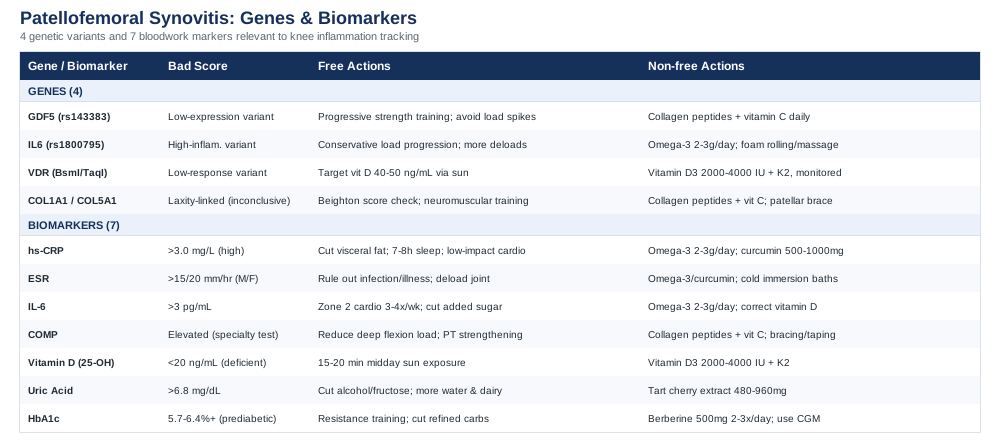
Patellofemoral synovitis often gets treated as a purely mechanical problem, but bloodwork frequently tells a more complete story. Markers like hs-CRP, IL-6, and COMP can distinguish a knee that's inflamed because of local overload from one that's inflamed because of body-wide metabolic or inflammatory issues, and vitamin D, uric acid, and HbA1c can point to modifiable contributors that never show up on an X-ray. Underneath the bloodwork, inherited variants in genes like GDF5, IL6, VDR, and the collagen genes COL1A1/COL5A1 help explain why some knees are simply more prone to cartilage breakdown, joint laxity, or an exaggerated inflammatory response than others. This article walks through both layers in detail, then adds a longevity-book perspective on building a joint that lasts and a rundown of complementary therapies with genuine clinical support for knee pain. Read on for the specific numbers to ask your doctor for, what counts as a good or bad result, and what to actually do about it.
The Key Biomarkers Behind Patellofemoral Synovitis
Patellofemoral-specific biomarker research is thin, most of the strongest human data comes from the broader knee osteoarthritis and knee synovitis literature, since the two conditions share the same joint tissue and much of the same inflammatory biology. That's a reasonable extrapolation, but it's worth being upfront about it rather than pretending the evidence is more specific than it is. The seven markers below are the ones with the clearest links to joint inflammation, cartilage turnover, or modifiable risk, and where affordable options exist, they're listed alongside the more advanced ones that specialists like Peter Attia and Thomas Dayspring tend to favor.
High-Sensitivity C-Reactive Protein (hs-CRP)
hs-CRP is the most accessible marker of systemic low-grade inflammation, and it has a direct link to knee joint disease specifically. In a well-known study of women with early knee osteoarthritis, those with modestly elevated CRP were significantly more likely to have disease progression over four years than those with normal levels, suggesting that low-grade inflammation is present early and is not just a bystander (Spector et al., Arthritis & Rheumatism, 1997). A knee that's inflamed locally often shows it systemically too.
How To Measure It
A standard hs-CRP blood test costs roughly $15 to $30 out of pocket in the US, or is often bundled into a basic metabolic panel through insurance. It's a fasting or non-fasting draw, no special prep needed. Values under 1.0 mg/L are considered low risk, 1.0 to 3.0 mg/L moderate, and above 3.0 mg/L high, though a single spike can also reflect a cold, minor injury, or the knee flare itself, so it's worth rechecking a high result a few weeks later.If The Score Is Bad, The Plan Without Supplements
The most consistent lever for lowering CRP without supplementation is reducing visceral fat and improving sleep, since adipose tissue is itself a source of inflammatory cytokines. Practically, that means a modest caloric deficit if body composition is a factor, 7 to 8 hours of sleep, and shifting from high-impact, high-frequency loading of the knee toward lower-impact conditioning (cycling, swimming, elliptical) for 4 to 8 weeks while the joint settles. Recheck CRP at 8 to 12 weeks rather than sooner, since inflammatory markers move slowly.If The Score Is Bad, The Plan With Supplements Or Equipment
Omega-3 fish oil (2 to 3 grams combined EPA/DHA daily, taken with food) has the best-supported anti-inflammatory effect on CRP among common supplements, with effects typically visible after 8 to 12 weeks. Curcumin with piperine (500 to 1000 mg daily) is a reasonable second option, cycling on for 8 weeks and off for 2 to 4. Side effects are generally mild, fish oil can thin blood slightly and cause reflux at higher doses, curcumin can upset stomach or interact with blood thinners, so anyone on anticoagulants should check with their prescriber first.Erythrocyte Sedimentation Rate (ESR)
ESR is an older, cruder inflammation marker than CRP, but it remains useful specifically because it's often ordered alongside clinical inflammation signs, like joint-line tenderness and effusion, when evaluating knee synovitis. A study looking directly at symptomatic knee osteoarthritis found meaningful associations between clinical signs of inflammation and MRI-confirmed synovitis, reinforcing that these blood markers correlate with what's actually happening inside the joint, not just general background noise (Wallace et al., Arthritis Care & Research, 2017).
How To Measure It
ESR is a cheap, widely available blood test (around $10 to $20) run in the same draw as most panels. Normal ranges vary by age and sex but are roughly under 15 mm/hr for men and under 20 mm/hr for women. It's non-specific, so an elevated ESR confirms inflammation is present somewhere but doesn't localize it on its own, which is why it's best interpreted alongside CRP and the physical exam.If The Score Is Bad, The Plan Without Supplements
Because ESR is nonspecific, the first step without supplements is ruling out other sources of inflammation (dental infection, autoimmune activity, recent illness) with your physician, then applying the same anti-inflammatory lifestyle levers as CRP: better sleep, lower processed carbohydrate intake, and deloading the joint from repetitive high-impact stress for several weeks.If The Score Is Bad, The Plan With Supplements Or Equipment
Because ESR and CRP track similar biology, the same omega-3 and curcumin approach applies, dosed identically. Adding a cold-water immersion or contrast bath protocol (10 to 12 minutes of cold exposure, 2 to 4 times weekly) around flare periods is a reasonable equipment-based adjunct with modest supporting data for acute joint inflammation, though it should be paused if it triggers stiffness rather than relief.Interleukin-6 (IL-6)
IL-6 is one of the central cytokines driving synovial inflammation, and it has direct predictive value for knee joint disease. In the Chingford Study, a 10-year prospective cohort, women in the highest IL-6 quartile had significantly higher odds of developing radiographic knee osteoarthritis than those in the lowest, independent of age and BMI (Livshits et al., Arthritis & Rheumatism, 2009). This makes IL-6 one of the more mechanistically direct markers on this list, rather than just a general inflammation proxy.
How To Measure It
IL-6 testing is less routine than CRP and typically costs $50 to $100, usually ordered through a specialty or research-oriented lab rather than a standard primary care panel. It requires a standard blood draw with no fasting needed. Levels above roughly 3 pg/mL are generally considered elevated, though reference ranges vary meaningfully between labs, so trend the same lab over time rather than comparing across providers.If The Score Is Bad, The Plan Without Supplements
Zone 2 aerobic exercise (3 to 4 sessions weekly, 30 to 45 minutes at a conversational pace) has some of the most consistent data for lowering circulating IL-6 over time, alongside weight management if excess adiposity is present. Reducing ultra-processed food and added sugar intake, both linked to elevated inflammatory cytokines, is a reasonable complementary step.If The Score Is Bad, The Plan With Supplements Or Equipment
Omega-3s again apply here at the same 2 to 3 g/day dose, since EPA/DHA has documented IL-6-lowering effects. Vitamin D correction (see below) also tends to modestly reduce IL-6 in people who were deficient. Neither should be expected to normalize IL-6 alone if the underlying driver is ongoing joint overload or excess body fat, so treat these as supportive rather than primary interventions.Cartilage Oligomeric Matrix Protein (COMP)
COMP is a structural cartilage protein released into blood and synovial fluid when cartilage matrix is being broken down, making it one of the more direct markers of what's physically happening to joint cartilage rather than just inflammation nearby. A 2024 study found COMP significantly elevated in both serum and synovial fluid of knee osteoarthritis patients compared to controls, with meaningful diagnostic accuracy for distinguishing disease from health (Udomsinprasert et al., Bone & Joint Research, 2024).
How To Measure It
COMP is not a routine test, it's typically only available through specialty labs or as part of research protocols, and costs can run $75 to $150. It's not yet part of standard clinical practice, so this is more of an "advanced tracking" option for someone who wants a closer look at cartilage turnover specifically, rather than something to request on a first visit.If The Score Is Bad, The Plan Without Supplements
Since elevated COMP reflects active cartilage breakdown, the priority without supplements is mechanical: reducing repetitive high-load knee flexion activities (deep squats, stairs, running on hard surfaces) temporarily, and working with a physical therapist on quad and hip strengthening to improve patellar tracking and reduce focal cartilage stress.If The Score Is Bad, The Plan With Supplements Or Equipment
Collagen peptides (10 to 15 g daily, ideally with vitamin C, which supports collagen synthesis) have modest supporting evidence for cartilage-related joint symptoms, taken continuously for 3 to 6 months before reassessing. Bracing or patellar taping during loading activities is a reasonable equipment option to reduce direct cartilage stress while other interventions take effect; side effects from collagen supplementation are minimal, mostly mild digestive upset at higher doses.25-Hydroxyvitamin D
Vitamin D status has one of the more direct links to knee joint outcomes of any nutrient. In the Framingham Study, participants with low vitamin D intake and low serum levels had roughly a threefold increased risk of osteoarthritis progression, including cartilage loss and osteophyte growth, compared to those with adequate levels (McAlindon et al., Annals of Internal Medicine, 1996). It's also one of the cheapest and easiest markers on this list to correct.
How To Measure It
A 25-hydroxyvitamin D blood test costs $20 to $50 and is widely available through any primary care provider or direct-to-consumer lab. Optimal range is generally considered 30 to 50 ng/mL, with levels below 20 ng/mL classified as deficient. Test once, then recheck 8 to 12 weeks after any intervention, since vitamin D storage and release is slow.If The Score Is Bad, The Plan Without Supplements
15 to 20 minutes of midday sun exposure on bare arms and legs, several times weekly, is the primary non-supplement route, though this is highly dependent on latitude, season, and skin tone, and is often insufficient alone for someone who is significantly deficient.If The Score Is Bad, The Plan With Supplements Or Equipment
Vitamin D3, 2000 to 4000 IU daily, is the standard correction dose for mild-to-moderate deficiency, taken with a fat-containing meal for absorption, continuously rather than cycled. Higher deficiencies may warrant a physician-guided loading dose. Pairing with vitamin K2 (100 mcg daily) is a common practice to support proper calcium utilization. Side effects are rare at these doses but very high, unsupervised dosing (over 10,000 IU daily long-term) can cause hypercalcemia, so retesting before increasing further matters.Uric Acid
Uric acid isn't just relevant to gout, it has a direct mechanistic link to joint inflammation more broadly. Research has shown that uric acid activates the NLRP3 inflammasome, and synovial fluid uric acid levels correlate strongly with IL-18 and IL-1β, key drivers of joint inflammation, independent of classic gout (Denoble et al., PNAS, 2011). For anyone with recurring, sometimes puzzling knee flares, this marker is worth checking even without classic gout symptoms.
How To Measure It
A serum uric acid test costs $10 to $25 and is part of many standard metabolic panels. Levels above 6.8 mg/dL are generally considered elevated (the solubility threshold for urate crystals), though inflammatory effects can occur at lower levels too, particularly if paired with other risk factors.If The Score Is Bad, The Plan Without Supplements
Reducing alcohol (especially beer), fructose-sweetened beverages, and organ meats, while increasing water intake and low-fat dairy, are the best-supported dietary levers for lowering uric acid without medication or supplements. Weight loss, if relevant, also meaningfully reduces uric acid production.If The Score Is Bad, The Plan With Supplements Or Equipment
Tart cherry extract (480 to 960 mg daily, or roughly 1 cup of tart cherry juice) has reasonable evidence for modestly lowering uric acid and reducing inflammatory flares, used continuously or during flare-prone periods. Side effects are minimal, mostly mild digestive effects at high doses. Persistently high uric acid despite lifestyle changes warrants a physician conversation about whether medication is appropriate, since supplements are not a substitute for treating confirmed gout.HbA1c And Fasting Insulin
Metabolic health has a stronger connection to joint inflammation than most people expect. A 20-year longitudinal cohort found that type 2 diabetes independently predicted development of severe osteoarthritis requiring joint replacement, even after adjusting for age and BMI, pointing to a genuine metabolic contribution to joint deterioration beyond just added weight (Schett et al., Diabetes Care, 2013).
How To Measure It
HbA1c costs $15 to $40 and requires no fasting; fasting insulin costs a similar amount but does require an 8 to 12 hour fast. Normal HbA1c is under 5.7%, with 5.7 to 6.4% considered prediabetic. Fasting insulin above roughly 8 to 10 μIU/mL, even with normal glucose, can indicate early insulin resistance and is often the earlier warning sign of the two.If The Score Is Bad, The Plan Without Supplements
Resistance training 2 to 3 times weekly and reducing refined carbohydrate intake are the most reliable non-supplement levers for improving insulin sensitivity, with measurable HbA1c changes typically visible after 3 months. Post-meal walks (10 to 15 minutes) are a simple, well-supported addition for blunting glucose spikes.If The Score Is Bad, The Plan With Supplements Or Equipment
Berberine (500 mg, two to three times daily with meals) has evidence roughly comparable to some first-line glucose-lowering medications for improving insulin sensitivity, typically cycled for 3 months on and 2 to 4 weeks off due to potential GI side effects and theoretical long-term tolerance concerns. A continuous glucose monitor (roughly $50 to $100 monthly) is a useful equipment option for identifying which specific foods spike glucose for you personally. Anyone on diabetes medication should coordinate with their physician before adding berberine, since the combined glucose-lowering effect can be additive.Taken together, these seven markers give a much clearer picture of whether a stubborn patellofemoral synovitis is being driven mainly by local mechanics, systemic inflammation, or metabolic dysfunction, which matters because the right intervention differs meaningfully depending on the answer. That said, bloodwork only tells part of the story. The next section looks at the inherited side of joint biology, which helps explain why some people run these same numbers and still seem more prone to synovial inflammation or cartilage wear than others.
What Genetics Adds To The Picture
Consumer genomics has made it far easier to look at the inherited side of joint health, and researchers like Ali Torkamani, whose work on polygenic risk scoring has pushed genetic risk prediction well beyond single-gene stories, along with popularizers like Gary Brecka, who has brought genetic panel testing into mainstream health optimization conversations, are a reasonable starting point for readers who want to go deeper. The caveat that applies to nearly all of this research is that most joint-related genetic studies are association studies, not proof of individual causation, and effect sizes are usually modest. Still, four genes have meaningful human data tying them to cartilage quality, joint stability, or inflammatory tone.
GDF5
GDF5 (growth differentiation factor 5) is one of the most consistently replicated osteoarthritis genes in human research. A functional variant in the gene's regulatory region (rs143383) reduces GDF5 expression and was significantly associated with hip and knee osteoarthritis susceptibility across multiple population studies (Miyamoto et al., Nature Genetics, 2007). GDF5 is involved in cartilage and joint formation, so reduced expression is thought to result in somewhat less resilient cartilage over a lifetime of loading.
If The Gene Is Bad, The Plan Without Supplements
Since this variant relates to cartilage resilience rather than active inflammation, the most useful non-supplement response is proactive: prioritizing progressive, well-programmed strength training around the knee (particularly closed-chain quad and hip work) from an earlier age, avoiding abrupt spikes in high-impact training volume, and maintaining a lean body composition to reduce cumulative joint load over decades.If The Score Is Bad, The Plan With Supplements Or Equipment
Collagen peptides (10 to 15 g daily) and adequate vitamin C intake to support collagen synthesis are reasonable long-term additions, taken continuously rather than cycled, since the goal here is cumulative cartilage support rather than treating an acute flare. There's no strong evidence that any supplement can fully offset a GDF5 variant, so this should be viewed as a modest tilt of the odds, not a fix.IL6 (rs1800795, -174 G/C)
This promoter variant in the IL6 gene affects how much interleukin-6 the body produces in response to inflammatory triggers. A study in a Chinese Han population found the variant significantly associated with knee osteoarthritis risk and with higher disease severity, tied to elevated IL-6 expression in carriers (study on IL-6, IL-8, and MMP-13 gene polymorphisms, 2019). In practice, this means some people mount a larger, more prolonged inflammatory response to the same knee irritation than others do.
If The Gene Is Bad, The Plan Without Supplements
If this variant is present (or simply suspected based on a pattern of exaggerated inflammatory response), the practical response is to be more conservative with training load progression than a generic program would suggest, build in more deload weeks, and treat early twinges of knee irritation as a signal to back off rather than push through, since the inflammatory response may run hotter and longer than expected.If The Score Is Bad, The Plan With Supplements Or Equipment
The same omega-3 protocol described under the IL-6 biomarker section (2 to 3 g EPA/DHA daily) is a sensible standing habit for someone with this variant, since it directly targets the pathway involved. A foam roller or percussive massage device used consistently after higher-load sessions is a low-risk equipment addition that some people find reduces post-exercise flare-ups, though the evidence here is more experiential than rigorously trial-tested.VDR (Vitamin D Receptor)
Variants in the VDR gene affect how effectively cells respond to vitamin D, independent of how much vitamin D is circulating in blood. A 2021 meta-analysis pooling nearly 3,000 osteoarthritis patients and over 4,000 controls found significant associations between certain VDR polymorphisms (BsmI and TaqI in particular) and osteoarthritis risk, most notably at the spine, with weaker but present signals elsewhere (Li et al., Rheumatology, 2021).
If The Gene Is Bad, The Plan Without Supplements
Since the issue here is receptor sensitivity rather than blood level alone, sun exposure habits matter but may be less effective in isolation for someone with an unfavorable VDR variant, keeping serum vitamin D on the higher end of the normal range (closer to 40 to 50 ng/mL rather than just above 30) is a reasonable adjusted target.If The Score Is Bad, The Plan With Supplements Or Equipment
The same vitamin D3 protocol (2000 to 4000 IU daily with a fat-containing meal, paired with K2) applies, but someone with a known VDR variant may reasonably aim for the upper part of the optimal serum range rather than the low end, always retested rather than assumed. This should be done under periodic blood monitoring rather than indefinitely escalating dose, since receptor variants don't justify exceeding safe upper serum limits.COL1A1 / COL5A1
These collagen genes are frequently studied in relation to joint laxity, patellar instability, and ligament injury risk, since collagen composition affects tissue elasticity around the patellofemoral joint. It's worth being transparent here that the most direct recent study, examining COL1A1 and COL5A1 polymorphisms in adolescents with recurrent patellar dislocation, found no statistically significant association between these variants and either joint laxity or dislocation risk, despite the dislocation group having measurably higher laxity scores by clinical exam (Małecki et al., Scientific Reports, 2023). This is a good example of where genetic research on a specific joint condition is still early and inconclusive, and it's worth treating any consumer report flagging these genes with appropriate caution rather than certainty.
If The Gene Is Bad, The Plan Without Supplements
Given the mixed evidence, the more reliable approach is functional rather than genetic: a clinical Beighton score assessment for joint hypermobility from a physical therapist is more actionable than a collagen gene readout, and if laxity is confirmed, targeted neuromuscular control training around the hip and knee (single-leg balance work, controlled eccentric loading) is well supported regardless of underlying genetics.If The Score Is Bad, The Plan With Supplements Or Equipment
Collagen peptides with vitamin C, as described earlier, remain a reasonable low-risk addition, but expectations should be modest given the inconclusive genetic evidence. A patellar stabilization brace during higher-risk activities (cutting, jumping, deep flexion under load) is a sensible equipment-based option for anyone with confirmed clinical laxity, independent of what a genetic test says.The Longevity Book That Reframes Joint Health
Peter Attia's Outlive: The Science and Art of Longevity isn't written specifically about patellofemoral synovitis, but its central argument, that most people wait far too long to invest in physical durability, and that biomarkers are only useful when tied to a concrete action plan, maps directly onto how to think about a knee that keeps flaring. The book pulls together a large body of exercise physiology and longevity literature, and a few of its arguments push back meaningfully against how joint pain and aging are conventionally handled in a standard clinical visit. Below are ten of its most useful ideas as they apply to knee health specifically.
Marginal Decade Thinking
Attia argues that the physical capacity you'll have in your last decade of life is determined by choices made 20 to 30 years earlier, not by damage control after symptoms appear. Applied to a patellofemoral joint, this reframes early knee irritation as an early warning to invest in strength and mechanics now, not a problem to simply medicate away.The Centenarian Decathlon
Rather than training generically, Attia recommends defining the specific physical tasks you want to be able to do late in life (carrying groceries up stairs, getting off the floor unassisted) and reverse-engineering training toward those capacities. For a patellofemoral synovitis sufferer, this means training the actual movement patterns that provoke symptoms (stairs, squatting, kneeling) in a controlled, progressive way rather than avoiding them indefinitely.Muscle Is Metabolic Armor
The book emphasizes that muscle mass and strength are protective against far more than falls, they're tied to insulin sensitivity and systemic inflammation, both of which appear on the biomarker list above. Building quad and glute strength isn't just a local knee fix, it plausibly improves the metabolic markers that also affect joint inflammation.Grip Strength As A Proxy For Whole-Body Durability
Attia cites large cohort data showing grip strength independently predicts all-cause and cardiovascular mortality, even after adjusting for adiposity, across more than 400,000 adults (Kim et al., American Journal of Clinical Nutrition, 2017). The broader point for joint health: overall strength and durability tend to move together, so neglecting strength training elsewhere in the body rarely helps an isolated knee issue.VO2 Max Is Underrated
The book leans heavily on data showing cardiorespiratory fitness predicts long-term mortality more strongly than almost any other single marker, with one 46-year follow-up finding meaningfully longer life expectancy at higher fitness levels (Clausen et al., Journal of the American College of Cardiology, 2018). Low-impact cardio options like cycling or swimming let someone with knee synovitis build this capacity without provoking the joint.Zone 2 Training For Metabolic Health
Attia advocates for several hours weekly of easy, conversational-pace aerobic work to improve mitochondrial and metabolic function, distinct from harder interval training. This directly supports the HbA1c and IL-6 improvements discussed earlier, while being gentle enough for an irritated patellofemoral joint.Stability Before Strength
A recurring theme is that movement quality and joint stability should be trained before loading heavily, since poor mechanics under load is where injuries and chronic irritation often originate. For patellofemoral synovitis, this supports prioritizing hip and ankle mobility and single-leg control work before progressing squat or lunge loads.Exercise As Medicine, Dosed Deliberately
The book treats exercise prescription with the same specificity as a drug, dose, frequency, and progression matter, not just "move more." Applied to a flaring knee, this means a deliberately programmed, gradually progressive loading plan rather than either total rest or uncontrolled return to full activity.Nutrition As A Lever For Inflammation, Not Just Weight
Attia frames dietary choices primarily around metabolic and inflammatory markers rather than weight alone, which lines up with using CRP, IL-6, and HbA1c as feedback tools rather than just tracking the scale.Objective Data Over Subjective Assumptions
Perhaps the most broadly applicable idea in the book is Attia's insistence on regularly measured biomarkers over assumptions about how "healthy" someone feels. This is the same logic behind tracking the seven markers in this article rather than relying on how the knee feels on a given day, since inflammation and cartilage stress can be building well before symptoms clearly announce it.Complementary Approaches Worth Considering
Alongside bloodwork, genetics, and structured training, several complementary modalities have real, condition-relevant human evidence for knee pain and inflammation, though none should replace a proper diagnosis or standard rehab. The five below have the most direct support for knee-related outcomes specifically.
Tai Chi
Tai chi combines slow, controlled weight-shifting movements with balance and breath control, and it's relevant to patellofemoral synovitis because it loads the knee through a full range of motion at low speed and impact, which can help rebuild tolerance without the mechanical stress of running or jumping. A well-designed randomized trial directly compared tai chi to standard physical therapy for knee osteoarthritis and found comparable improvements in pain and function between the two, with tai chi additionally improving depression and quality-of-life scores (Wang et al., Annals of Internal Medicine, 2016). A realistic approach is a beginner tai chi class twice weekly for 8 to 12 weeks, stopping any movement that produces sharp (rather than mild, expected) discomfort, and treating it as a complement to, not a replacement for, targeted strengthening.Yoga
Yoga's relevance here comes from its combination of controlled knee flexion, hip mobility work, and isometric holds, all of which can be adapted to patellofemoral-friendly ranges. A pilot study using modified Iyengar yoga postures for eight weeks in people with knee osteoarthritis found meaningful reductions in pain and stiffness, though the evidence base remains limited to small trials rather than large, definitive ones (Kolasinski et al., Journal of Alternative and Complementary Medicine, 2005). In practice, this means seeking an instructor willing to modify deep-knee-flexion poses (like full lotus or deep lunges) and starting with a once- or twice-weekly class, since evidence for optimal frequency is still preliminary.Low-Level Laser Therapy
Low-level laser therapy (photobiomodulation) applies specific light wavelengths to tissue with the aim of reducing local inflammation and modulating pain signaling, which is directly relevant to a synovitis-driven knee. A systematic review and meta-analysis of randomized trials found low-level laser therapy produced significant improvements in pain and disability for knee osteoarthritis patients compared to placebo (Huang et al., Osteoarthritis and Cartilage, 2015). This typically requires a clinical device administered by a physical therapist or sports medicine provider, usually in a series of 2 to 3 sessions weekly for several weeks, and while side effects are minimal, results vary meaningfully by device parameters and are not something to replicate reliably with a cheap consumer laser.Massage Therapy
Massage therapy is relevant here for its effects on local circulation, muscle tension around the joint, and pain perception, all of which can influence how a synovitis-affected knee feels day to day, even if it doesn't directly reduce synovial inflammation. A randomized controlled trial found that structured massage therapy produced significant improvements in pain and function for knee osteoarthritis compared to usual care (Perlman et al., Archives of Internal Medicine, 2006). A practical starting point is weekly sessions for 8 weeks focused on the quadriceps, IT band, and surrounding musculature rather than the joint itself, used as a symptom-management complement alongside strengthening work.Mindfulness Meditation
Mindfulness is relevant less for reducing joint inflammation directly and more for its documented role in how pain is perceived and coped with, which matters for a condition that can flare unpredictably and affect mood over time. Evidence here is more preliminary than for the other modalities on this list, one study found dispositional mindfulness associated with better psychological health and moderated pain severity in people with knee osteoarthritis, though this was an observational association rather than a controlled trial of a mindfulness program (Lee et al., 2017). A reasonable, low-risk way to apply this is a structured 8-week mindfulness-based stress reduction course, or a daily 10-minute guided practice, treated as support for pain coping and stress-related inflammation rather than a direct treatment for the joint itself.Conclusion
Patellofemoral synovitis rarely has a single cause, which is exactly why a generic rehab handout so often falls short. The seven biomarkers covered here, hs-CRP, ESR, IL-6, COMP, vitamin D, uric acid, and HbA1c, give a genuinely useful window into whether local mechanics, systemic inflammation, or metabolic health is the bigger driver in your case, and each comes with a realistic, graduated plan for improving it. The four genes add a layer of explanation for why some knees are simply more prone to inflammation or cartilage stress than others, while making clear that this evidence is still early and, in at least one case, genuinely inconclusive. None of this replaces a hands-on evaluation from a physical therapist or orthopedic specialist, but it does give you sharper, more specific questions to bring to that conversation.
The next practical step is straightforward: get the core panel, hs-CRP, vitamin D, uric acid, and HbA1c, drawn if you haven't recently, track your symptoms alongside them over the next 8 to 12 weeks, and bring both to whoever is managing your knee care so the plan can be built around what's actually driving the inflammation, not just where it hurts.