This article contains AI generated content.
Periarticular Lipoma: 5 Genes and 6 Biomarkers to Track
Finding a soft, movable lump near a knee, elbow, wrist, or shoulder tends to trigger a very specific kind of worry. You press on it, it doesn't hurt much, and then you go looking for answers. Most of the time the answer you get — from a quick search or even from a clinician glancing at it — is some version of "it's probably just a lipoma, nothing to worry about." That answer is usually medically correct. It is also, for a lot of people, deeply unsatisfying.
Generic reassurance doesn't explain why a benign fatty growth decided to form exactly where a joint capsule, tendon, or bursa lives. It doesn't tell you whether this is a one-off event or the first of several, whether it says anything about your metabolic health, or whether there's anything you can actually do besides "watch it or cut it out." Periarticular lipomas sit in an odd space: common enough to be dismissed quickly, unusual enough in their location that people want more than a shrug.
A more useful approach starts from two different angles. One looks inside the cells: which genes and molecular switches are known to drive fat-cell overgrowth, and which of those are things you inherited versus things that happened locally in the tissue. The other looks at your bloodwork: which circulating markers reflect the metabolic and inflammatory environment that either favors or discourages this kind of fatty tissue growth. Neither angle promises to make an existing lipoma disappear. Both give you something more solid to act on than "don't worry about it."
That's the structure of what follows: the genetic and epigenetic evidence first, in real depth, because it turns out to be unusually well characterized for a condition this common; then a tighter look at the bloodwork worth tracking; a summary of ideas from a longevity-focused book that reframes how proactive this kind of monitoring should be; and finally a short, honest look at complementary approaches for the joint discomfort that sometimes comes along with these growths. None of it is a cure. All of it should leave you better equipped to ask your doctor sharper questions.
Summary
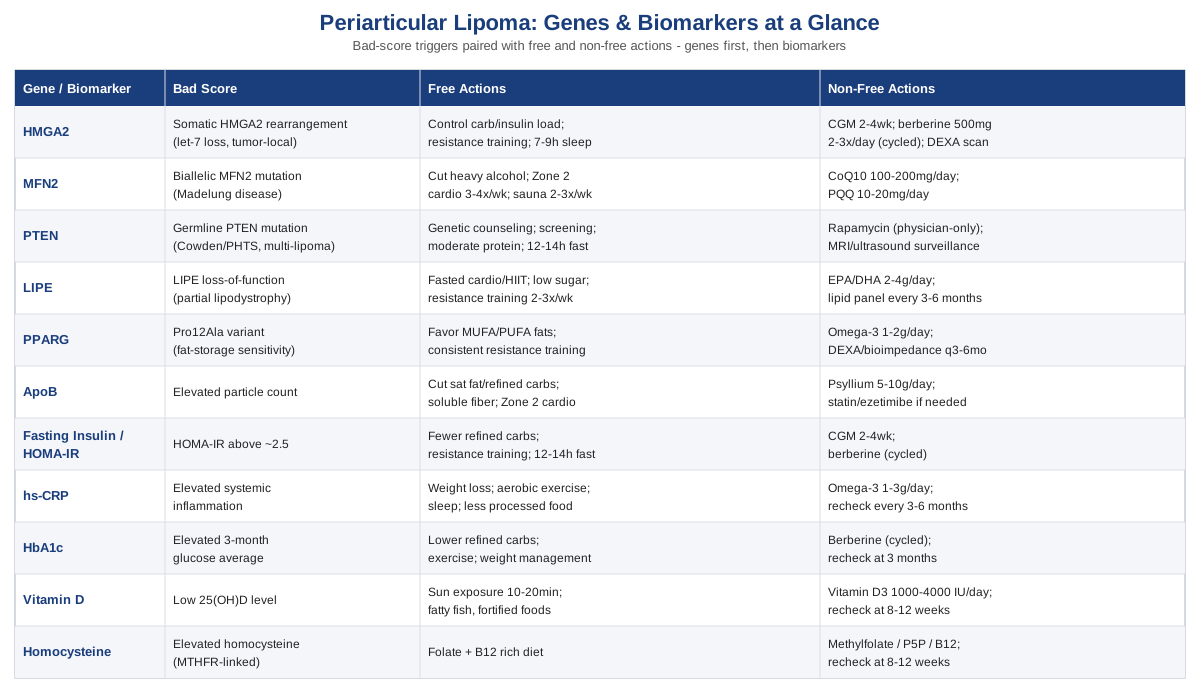
Here's the short version before the long one. Most solitary periarticular lipomas are driven by a chromosomal rearrangement in the HMGA2 gene that happens locally, inside the tumor's own cells — it is usually not something you inherited and not something a supplement will undo. But four other genes, MFN2, PTEN, LIPE, and PPARG, point to something more actionable: mitochondrial function, tumor-suppressor surveillance, fat-breakdown enzymes, and fat-storage sensitivity that genuinely respond to how you eat, train, sleep, and drink. Whether any of that matters for you personally shows up in bloodwork long before it shows up as a lump — which is where six biomarkers come in, from apolipoprotein B to homocysteine, each one a window into the metabolic terrain that either keeps fat tissue calm or keeps nudging it to grow.
Below, each gene gets a plain-language explanation of what it does, how strong the human evidence actually is, and two concrete plans — one using only behavior change, one adding supplements or equipment — with real frequencies, cycling notes, and side effects instead of vague suggestions. The biomarker section does the same for bloodwork. Then there's a rundown of the ten most useful ideas from a book that has quietly changed how a lot of proactive physicians think about catching problems years before they show up as diagnoses, and a short, evidence-checked look at what complementary therapies can and can't realistically do for a lump near a joint. If you've ever wanted the "it's probably nothing" conversation to go one level deeper, this is that level.
The Genes and Epigenetic Switches Behind Periarticular Lipomas
Before going gene by gene, it helps to separate two very different biological stories that both get called "genetics."
Somatic vs. Inherited: Two Different Stories in One Lump
Most solitary lipomas, including the ones that happen to sit near a joint, arise from a somatic mutation — a genetic change that occurs in a single fat-precursor cell during your lifetime and then gets copied as that cell divides to form the tumor. It is not in your sperm or eggs, your children won't inherit it from this event, and it didn't come from a parent. A smaller but medically important group of cases involves genuine inherited susceptibility — germline mutations that raise the odds of forming multiple lipomas or lipomatous syndromes throughout life. The comprehensive NCBI Bookshelf review of adipose tissue disorders lays out this distinction clearly across the different lipomatosis syndromes, and it matters practically: a somatic HMGA2 rearrangement inside one lump is not something diet or supplements can reverse, while the metabolic pathways behind the inherited genes genuinely do respond to lifestyle change. Subcutaneous Adipose Tissue Diseases (NCBI Bookshelf, Endotext)
HMGA2: The Gene Most Often Found Inside the Lipoma Itself
HMGA2 is a small architectural protein that helps organize chromatin and switch on genes involved in cell proliferation, and it is by a wide margin the most consistently altered gene in lipomas. Chromosomal rearrangements affecting the 12q13-15 region — often a translocation with another chromosome — separate HMGA2 from its own 3' regulatory region. That region is normally the docking site for a family of microRNAs called let-7, which keep HMGA2 production in check. Break that docking site, and HMGA2 is overexpressed, pushing fat-precursor cells to proliferate. A case report describing loss of let-7 expression alongside HMGA2 overexpression in a diffuse lipomatosis illustrates the mechanism directly in human tissue. Loss of let-7 and HMGA2 overexpression in diffuse lipomatosis (PubMed) The broader let-7/HMGA2 regulatory relationship was established in foundational molecular biology work showing let-7 directly represses the HMGA2 oncogene. The tumor suppressor microRNA let-7 represses HMGA2 (PMC)
The honest caveat: this rearrangement is almost always somatic and localized to the tumor. You cannot "fix" the DNA inside an existing lipoma through lifestyle change, and no supplement restores a deleted microRNA-binding site. What you can influence is the hormonal and growth-factor environment — chiefly insulin and IGF-1 signaling — that provides fuel for any fat-precursor cell primed to over-proliferate, which is the honest, non-overpromising rationale for the plans below.
If the gene is bad, the plan without supplements
Lower the frequency and size of high-glycemic-load meals so fasting and post-meal insulin stay in a moderate range; build meals around protein and fiber first. Add two to three resistance-training sessions per week, since muscle is the largest disposal site for glucose and directly improves insulin sensitivity. Protect sleep at seven to nine hours, since even a few nights of short sleep measurably worsens insulin sensitivity the next day. None of this needs cycling — it's a standing daily pattern, not a course of treatment — and the only real "side effect" risk is over-restricting calories aggressively, which raises cortisol and can backfire on the metabolic goal you're chasing.
If the gene is bad, the plan with supplements or equipment
A continuous glucose monitor worn for two to four weeks is a diagnostic tool, not a permanent fixture — it shows you which specific meals spike you, then comes off. Berberine, 500 mg two to three times daily before meals, has reasonable human evidence for improving insulin sensitivity; cycle it eight to twelve weeks on and roughly four weeks off, since long-term continuous use data is thinner, and watch for GI upset and interactions with diabetes medications (it can lower blood glucose further). A DEXA scan every six to twelve months tracks visceral and subcutaneous fat trends more honestly than a bathroom scale, at a typical cost of $50–150 per scan depending on region.
MFN2: Mitochondrial Fusion and Multiple Symmetric Lipomatosis
MFN2 (mitofusin-2) sits on the outer mitochondrial membrane and helps mitochondria fuse into networks, a process central to healthy energy metabolism. Homozygous or compound heterozygous MFN2 mutations cause multiple symmetric lipomatosis (Madelung disease), where unencapsulated fat masses accumulate around the neck, shoulders, and trunk, sometimes with peripheral neuropathy. A recent review of the condition's pathogenesis describes how biallelic MFN2 mutations drive mitochondrial dysfunction, upper-body adipose hyperplasia, and suppressed leptin signaling in affected patients. Pathogenesis of multiple symmetrical lipomatosis (PMC) This is a genuinely inherited condition, and it is strongly associated with chronic heavy alcohol use, which independently damages mitochondrial function and seems to unmask the genetic vulnerability.
For a single periarticular lipoma without the symmetric, multifocal pattern of Madelung disease, MFN2 is far less likely to be the driver — but if lipomas are appearing in multiple, symmetric locations, this is the gene worth asking a physician about by name.
If the gene is bad, the plan without supplements
Alcohol reduction is the single highest-leverage intervention here, given how tightly MSL tracks with heavy drinking; this isn't about moderate social drinking, it's about chronic heavy intake. Add three to four sessions per week of zone 2 aerobic training (roughly 45 minutes at a pace where you could still hold a conversation), which is one of the most reliable ways to stimulate mitochondrial biogenesis. Sauna use two to three times weekly, 15–20 minutes per session, has emerging evidence for supporting mitochondrial and cardiovascular adaptations through mild heat-stress hormesis.
If the gene is bad, the plan with supplements or equipment
CoQ10, 100–200 mg daily taken with a fat-containing meal for absorption, is a reasonable mitochondrial-support supplement; reassess need every three months rather than taking indefinitely without review, and note it can reduce the effectiveness of warfarin, so anyone on blood thinners should check with their physician first. PQQ, 10–20 mg daily, is sometimes paired with CoQ10 in mitochondrial-support protocols, though human trial evidence is thinner than for CoQ10 itself. A sauna (infrared or traditional) is the main "equipment" investment here, used consistently rather than sporadically.
PTEN: The Gene That Turns a Cosmetic Question Into a Medical One
PTEN is a tumor-suppressor gene that dampens the PI3K/AKT/mTOR growth-signaling pathway. Germline loss-of-function mutations cause PTEN hamartoma tumor syndrome, an umbrella that includes Cowden syndrome and Bannayan-Riley-Ruvalcaba syndrome, both of which can present with multiple lipomas alongside macrocephaly, skin findings, and gastrointestinal polyps. The GeneReviews entry for PTEN hamartoma tumor syndrome is the authoritative clinical reference. PTEN Hamartoma Tumor Syndrome (GeneReviews, NCBI) A more recent clinical overview details just how commonly lipomas appear in PTEN mutation carriers, alongside markedly elevated lifetime risks for breast, thyroid, and renal cancer. PTEN Hamartoma Tumor Syndrome: A Clinical Overview (PMC)
This is the one gene on this list where the honest answer is not a biohacking stack — it's a referral. If a lipoma near a joint is one of several lipomas, especially alongside a large head circumference, distinctive facial or skin findings, or a family history of early breast, thyroid, or kidney cancer, that combination is a reason to ask about genetic counseling and PTEN testing, not a reason to optimize supplements at home.
If the gene is bad, the plan without supplements
Genetic counseling and PTEN-specific surveillance (breast, thyroid, renal, and endometrial screening per GeneReviews recommendations) is the actual intervention, and it should come from a clinician who manages PHTS, not from self-directed research. On the lifestyle side, moderate protein intake without chronic overfeeding and a consistent overnight fasting window of 12–14 hours both reduce constant mTOR pathway activation, which is biologically plausible given PTEN's role upstream of that pathway, though this is a supportive measure, not a treatment.
If the gene is bad, the plan with supplements or equipment
There isn't a responsible self-administered supplement protocol for this one. Rapamycin (an mTOR inhibitor) has been studied in PTEN-related overgrowth conditions in research settings, but it is a prescription drug with real immunosuppressive and metabolic side effects that requires physician oversight and monitoring — it is not something to source or dose independently. The "equipment" that matters here is imaging (MRI/ultrasound surveillance per your specialist's schedule), not a home device.
LIPE: The Enzyme That Breaks Fat Down, Not Just Builds It Up
LIPE encodes hormone-sensitive lipase, the enzyme responsible for breaking down stored triglycerides inside fat cells for release as usable energy. Loss-of-function LIPE mutations cause a form of familial partial lipodystrophy marked by an unusual pattern: loss of fat from the lower body alongside lipomatous fat accumulation elsewhere, plus insulin resistance, high triglycerides, and progressive myopathy. Exome sequencing studies in affected families identified the causal nonsense mutations directly. Novel LIPE nonsense mutation in familial partial lipodystrophy (PubMed)
Because HSL isn't the only lipolysis enzyme in the body — adipose triglyceride lipase (ATGL) works alongside it and is activated differently — impaired HSL function doesn't shut down fat breakdown entirely, which is the biological basis for the plan below.
If the gene is bad, the plan without supplements
Fasted-state cardio or short HIIT sessions two to three times per week lean on catecholamine-driven, ATGL-mediated lipolysis, a pathway that doesn't depend on HSL the same way. Minimize high-sugar and high-refined-carbohydrate intake, since this population runs a real risk of hypertriglyceridemia. Resistance training two to three times weekly also matters more than usual here, given the myopathy risk described in the LIPE literature.
If the gene is bad, the plan with supplements or equipment
High-dose EPA/DHA (omega-3), in the 2–4 g/day range, has solid evidence for lowering triglycerides and is a reasonable first-line addition; expect mild GI upset or a fishy aftertaste, and at the higher end of this dose range there is a modest signal for increased atrial fibrillation risk in some cardiovascular trials, so recheck a lipid panel every three to six months and involve a physician if triglycerides stay elevated, since a prescription fibrate may be appropriate. A home lipid or triglyceride tracking option isn't really practical — this is a lab-draw biomarker, covered in the next section.
PPARG: The Fat-Storage Thermostat
PPARG (specifically the PPARγ2 isoform) is the master transcriptional regulator of adipocyte differentiation — it's the gene that decides whether a precursor cell becomes a mature fat cell. The common Pro12Ala variant slightly reduces receptor activity. Carriers of the Ala allele tend to run a somewhat higher BMI and fat mass but, in several studies, better insulin sensitivity than Pro/Pro homozygotes — a genuinely mixed picture rather than a simple "good gene, bad gene" story. PPARγ Pro12Ala and fat distribution (PubMed) A detailed human adipose tissue study further shows this variant shapes adipogenesis and how fat cells handle glucose and lipid turnover, without necessarily changing the basic rate of new fat cell formation. PPARG Pro12Ala in human adipose tissue (PMC)
The practical relevance here is less about lipoma formation directly and more about the broader fat-storage environment — PPARG also happens to be the pharmacological target of thiazolidinedione diabetes drugs, underscoring how central it is to fat-cell biology.
If the gene is bad, the plan without supplements
Shift dietary fat quality toward monounsaturated and polyunsaturated sources (olive oil, fatty fish, nuts, avocado) and away from saturated fat, since PPARG variant carriers appear more sensitive to dietary fat composition in how they store it. Keep resistance training consistent — Pro/Pro homozygotes tend to show a larger fat-loss response to training programs, which means Ala carriers may need to lean relatively more on diet quality to see the same effect.
If the gene is bad, the plan with supplements or equipment
Omega-3 (EPA/DHA), 1–2 g/day with food, functions as a natural PPARG ligand and is a reasonable, low-risk addition; side effects are minimal at this dose beyond occasional GI upset. A DEXA or bioimpedance scan every three to six months tracks fat mass trend rather than total body weight, which is the more meaningful number for someone with this variant.
The gene-by-gene picture makes one thing clear: outside of PTEN, none of this is about chasing a single villain. It's about a handful of overlapping pathways — insulin signaling, mitochondrial efficiency, lipolysis capacity, and fat-storage sensitivity — that are far easier to monitor through bloodwork than through genetic testing alone. That's exactly where the next set of markers comes in.
Bloodwork Worth Tracking Alongside the Genetics
If the genes above describe the machinery, biomarkers describe how that machinery is actually running right now. These six are the ones with the clearest evidence base and the most practical value, drawing on the framework clinicians like Peter Attia, Thomas Dayspring, and Allan Sniderman have popularized for metabolic and cardiovascular risk — a framework that overlaps heavily with the biology behind fat-cell growth and insulin signaling discussed above.
Apolipoprotein B (ApoB)
ApoB counts the actual number of atherogenic lipoprotein particles in your blood, which is a more accurate risk signal than LDL cholesterol alone, especially when the two disagree. Allan Sniderman's discordance research shows that when ApoB and LDL-C or non-HDL-C give conflicting risk signals, ApoB is the better predictor of outcomes. Discordance among apoB, non-HDL-C, and triglycerides (PubMed) A large cohort study also found that ApoB/LDL-C discordance in young adulthood predicted coronary artery calcification decades later. ApoB/LDL-C discordance predicts coronary calcification, CARDIA study (PubMed)
How to measure it
A standard blood draw, often addable to a routine lipid panel; typical cost is $20–50 out of pocket where not covered by insurance, or bundled into direct-to-consumer panels for $50–100.
If the score is bad, the plan without supplements
Reduce saturated fat and refined carbohydrate intake, increase soluble fiber (oats, legumes, psyllium), and add zone 2 aerobic exercise several times weekly — all consistently lower ApoB-containing particle counts.
If the score is bad, the plan with supplements or equipment
Psyllium husk (5–10 g/day with water) has decent trial evidence for modestly lowering LDL/ApoB; side effects are mostly gas or bloating if introduced too quickly. For significantly elevated ApoB despite lifestyle change, this becomes a conversation for statins or ezetimibe with a physician rather than a supplement decision — there's no realistic over-the-counter substitute at that point.
Fasting Insulin and HOMA-IR
Fasting insulin, and the HOMA-IR score calculated from it alongside fasting glucose, is one of the earliest detectable signs of insulin resistance — often abnormal years before HbA1c or fasting glucose drift out of range. A HOMA-IR above roughly 2.5 is a commonly used threshold for insulin resistance in adults, though cutoffs vary by population and age. HOMA-IR threshold validation study (PMC)
How to measure it
Fasting blood draw for insulin and glucose; roughly $20–40 for insulin specifically, often bundled with a metabolic panel.
If the score is bad, the plan without supplements
Reduce meal frequency and refined-carbohydrate load, add resistance training two to three times weekly, and consider a 12–14 hour overnight fasting window — all directly improve insulin sensitivity within weeks.
If the score is bad, the plan with supplements or equipment
A continuous glucose monitor for two to four weeks (roughly $150–250 for a monitoring cycle) shows real-time patterns most useful for adjusting meal composition. Berberine, dosed and cycled as described in the HMGA2 section above, is the most evidence-backed over-the-counter option; the same GI and medication-interaction cautions apply.
High-Sensitivity C-Reactive Protein (hs-CRP)
hs-CRP is a general marker of systemic inflammation, and Paul Ridker's landmark work established it as an independent predictor of cardiovascular events even in people with normal cholesterol. hs-CRP for global cardiovascular risk assessment (PubMed) Chronic low-grade inflammation is also part of the tissue environment that influences fat-cell behavior more broadly, which is why it's worth tracking here even though it's not lipoma-specific.
How to measure it
Simple blood draw, typically $15–30, widely available as part of cardiovascular risk panels.
If the score is bad, the plan without supplements
Weight loss if excess adiposity is present, regular aerobic exercise, adequate sleep, and reducing ultra-processed food intake are the best-supported ways to lower hs-CRP.
If the score is bad, the plan with supplements or equipment
Omega-3 (EPA/DHA) at 1–3 g/day has modest anti-inflammatory evidence; cycle isn't strictly necessary, but recheck hs-CRP every three to six months to confirm it's actually moving. Avoid stacking multiple anti-inflammatory supplements at once, since it becomes hard to tell what's working and some (high-dose curcumin, for instance) can affect liver enzymes or interact with blood thinners.
HbA1c
HbA1c reflects average blood glucose over roughly the prior three months and is the standard longer-window complement to fasting insulin — useful precisely because it catches sustained glucose elevation that a single fasting draw might miss on a good day.
How to measure it
Standard blood draw, typically $15–40, included in most annual physicals.
If the score is bad, the plan without supplements
Same core levers as insulin resistance: reduced refined-carbohydrate load, consistent resistance and aerobic exercise, and weight management if relevant — HbA1c responds over a three-month cycle, so reassessment sooner than that isn't meaningful.
If the score is bad, the plan with supplements or equipment
Berberine again has the best evidence here among over-the-counter options, using the same cycling pattern described earlier. A CGM is more useful for insulin/glucose pattern-finding than for tracking HbA1c directly, since HbA1c is inherently a lagging average.
Vitamin D
Vitamin D receptors are present throughout adipose tissue, and deficiency is linked to increased adipose tissue inflammation and altered fat-cell signaling. Vitamin D in adipose tissue biology (PubMed) Separately, obesity-associated vitamin D deficiency has been linked to adipose tissue DNA hypomethylation — an epigenetic signal that connects this marker back to the gene-regulation themes from the first half of this article. Vitamin D deficiency and adipose tissue DNA hypomethylation (PMC)
How to measure it
25-hydroxyvitamin D blood test, typically $30–60, often included in comprehensive panels.
If the score is bad, the plan without supplements
Sensible, regular sun exposure (10–20 minutes several times weekly, skin-tone and latitude dependent) and dietary sources like fatty fish and fortified foods.
If the score is bad, the plan with supplements or equipment
Vitamin D3, commonly 1,000–4,000 IU/day depending on baseline deficiency severity and physician guidance, taken with a fat-containing meal for absorption. Recheck levels after eight to twelve weeks rather than guessing; at very high doses (well above typical supplementation), toxicity with hypercalcemia is a real though uncommon risk, which is the main reason not to self-dose aggressively without a follow-up test.
Homocysteine
Homocysteine is an amino acid byproduct that rises when methylation metabolism — often influenced by MTHFR gene variants — isn't running efficiently, and elevated levels are an established, independent cardiovascular risk factor. Homocysteine in the cardiovascular setting (PMC) It's included here specifically because it's the biomarker most directly tied back to the epigenetic, methylation-dependent gene regulation discussed in the HMGA2/let-7 section — a genuinely useful bridge between the two strategies in this article.
How to measure it
Blood draw, typically $30–70, not always included in standard panels so it may need to be requested specifically.
If the score is bad, the plan without supplements
Increase dietary folate (leafy greens, legumes) and B12 (animal proteins, fortified foods), since these are the substrates methylation metabolism runs on.
If the score is bad, the plan with supplements or equipment
A randomized controlled trial found that methylfolate, pyridoxal-5'-phosphate (active B6), and methylcobalamin (active B12) supplementation lowered homocysteine effectively in people with MTHFR and related polymorphisms. Active B-vitamin supplementation and homocysteine in MTHFR carriers (PMC) Typical dosing follows product-specific guidance; recheck homocysteine after eight to twelve weeks. Side effects are minimal at these doses, though very high-dose B6 over long periods has been linked to peripheral neuropathy, so staying within standard supplement ranges matters.
Genes and bloodwork both point toward the same underlying idea — metabolic health as a slow-moving, trackable process rather than a mystery. That idea is the entire premise of one influential book worth understanding in more depth.
The Longevity Book Reframing How This Kind of Tracking Should Work
Peter Attia's Outlive: The Science and Art of Longevity isn't about lipomas specifically, but it makes the single best case in mainstream health writing for exactly the kind of proactive, biomarker-driven thinking this article is built around — and it directly challenges how most primary care currently operates. Here are the ten ideas from it most worth knowing.
1. Medicine 2.0 Waits, Medicine 3.0 Anticipates
Conventional medicine largely treats disease after it's diagnosed. Attia argues for shifting the decision point years earlier, using risk markers and family history rather than waiting for a diagnosis to force action.
2. The Four Horsemen Explain Most Deaths
Cardiovascular disease, cancer, neurodegenerative disease, and type 2 diabetes/metabolic dysfunction account for the overwhelming majority of deaths in developed countries, and they share overlapping metabolic root causes — which is exactly why a marker like ApoB or fasting insulin matters even outside its "named" disease category.
3. Train for the Marginal Decade
The goal isn't just lifespan, it's functional capacity in your last decade of life — strength, balance, and aerobic capacity high enough to still do the physical things that matter to you.
4. VO2 Max Is an Underrated Vital Sign
Cardiorespiratory fitness is one of the strongest predictors of all-cause mortality identified in the literature, with each incremental improvement in fitness associated with a measurably lower death risk. VO2max as a predictor of longevity (PubMed)
5. Zone 2 Training Builds the Metabolic Engine
Slow, sustained aerobic work at a conversational pace improves mitochondrial efficiency — directly relevant to the MFN2 discussion above, since healthier mitochondrial function is the shared mechanism.
6. ApoB Is the Number That Actually Matters
Attia is one of the most prominent voices pushing ApoB over standard LDL-C as the cardiovascular risk marker worth testing, echoing Sniderman's discordance research cited earlier in this article.
7. Rapamycin Is Promising but Not Ready for Self-Experimentation
The mTOR-inhibiting drug shows longevity signals in animal models and is being studied in humans, but Attia is notably cautious about it outside of medical supervision — a caution that lines up directly with the PTEN section above.
8. Emotional Health Is a Fifth "Domain"
Alongside physical, cognitive, and metabolic health, Attia treats emotional well-being as a load-bearing pillar of longevity, not an afterthought.
9. Stability Training Prevents the Injuries That Derail Everything Else
Joint stability and mobility work reduce fall and injury risk — relevant context for anyone dealing with a periarticular growth that already complicates movement near a joint.
10. Family History Should Move Your Timeline, Not Just Your Worry
If a close relative had early cardiovascular disease, cancer, or dementia, Attia's argument is that your own screening and biomarker tracking should start meaningfully earlier than generic guidelines suggest — the same logic that applies to PTEN-related lipoma syndromes running in a family.
That proactive mindset — track early, act on trends, don't wait for a diagnosis to force your hand — applies just as well to the physical discomfort a periarticular lipoma can sometimes cause, which is where a few complementary approaches can realistically help.
Complementary Approaches Worth Considering for Joint Comfort
None of the following shrink a lipoma. What they can realistically do is support comfort and mobility around a joint affected by one, and the evidence for each varies quite a bit — worth being upfront about before trying any of them.
Massage Therapy
Manual soft-tissue work can temporarily improve local circulation and ease myofascial tension around a joint capsule, which is relevant when a periarticular lipoma contributes to a feeling of tightness or restricted glide near the joint. There is no controlled human trial showing massage reduces lipoma size — the plausible benefit is symptomatic comfort and mobility, not tumor reduction, and that distinction matters so expectations stay realistic.
A reasonable protocol is a gentle myofascial release session, 15–20 minutes, once or twice weekly, focused on the surrounding musculature rather than deep direct pressure over the lump itself. Applied realistically: see a licensed therapist, tell them exactly where the lipoma sits and that it's already been medically evaluated, avoid aggressive pressure directly over it (risk of local irritation near a joint capsule or bursa), and stop if pain or swelling increases rather than pushing through.
Low-Level Laser Therapy / Photobiomodulation
Low-level laser therapy (LLLT) uses low-power light to affect adipocyte cell membranes and has been studied mainly for circumferential body-contouring effects on ordinary subcutaneous fat depots — not on encapsulated lipomas as tumors, which is an important distinction to keep in mind here.
A comprehensive review of LLLT for fat-layer reduction describes protocols using red-light diode treatment several times weekly over a period of weeks, with measurable circumferential reductions in waist, hip, and thigh fat. Low-level laser therapy for fat layer reduction, comprehensive review (PMC) None of that literature involved diagnosed lipomas specifically, so treat any extrapolation to a periarticular lipoma as speculative at best.
Applied realistically: only through a licensed provider using an FDA-cleared device, with the expectation of a modest, general contouring effect elsewhere on the body rather than any targeted lipoma shrinkage; typical protocols run two to three sessions weekly for two to six weeks, with mild, transient warmth or redness as the main reported side effect.
Chinese Herbal Medicine
Traditional Chinese medicine frames lipomas as masses of "phlegm-dampness" or qi stagnation, and herbal formulas such as Er Chen Tang have long been used with the specific intent of resolving them — making TCM one of the few traditions that directly targets lipoma regression as a goal, at least in theory.
In practice, the evidence base is limited to case reports and small, uncontrolled case series from China, with no randomized controlled trials isolating herbal treatment from other factors and no standardized outcome measures across reports — a real limitation worth stating plainly rather than glossing over.
Applied realistically: only as a monitored, complementary approach alongside conventional follow-up, ideally with a licensed TCM practitioner coordinating with the diagnosing physician, and only after confirming the lump is a typical, benign lipoma. Any lump that grows quickly, exceeds about 5 cm, feels firm or fixed rather than soft and mobile, or sits deep to the fascia should prompt imaging or biopsy regardless of any herbal approach being tried.
Yoga
Gentle yoga emphasizing joint mobility and controlled range of motion can help maintain function when a periarticular lipoma sits close enough to a joint to mildly restrict movement, or during recovery after surgical removal — again, a mobility and comfort benefit, not a treatment for the mass itself.
The strongest relevant evidence comes from knee osteoarthritis research rather than lipoma studies directly: a systematic review and meta-analysis of eight randomized controlled trials found yoga produced meaningful improvements in pain, stiffness, and physical function in that joint condition. Yoga for knee osteoarthritis, systematic review and meta-analysis (PubMed) Extrapolating that to periarticular joint comfort more broadly is reasonable but not the same as condition-specific proof.
Applied realistically: gentle, joint-friendly styles (restorative or hatha rather than deep-stretch flow) two to three times weekly, avoiding poses that load direct pressure onto the area where the lipoma sits, and working with an instructor who knows about the lump so movements can be adapted around it rather than through it.
Bringing It Together
A periarticular lipoma is, in almost every case, exactly as benign as it sounds — but "benign" doesn't have to mean "uninformative." The genetics point mostly to a local, somatic event inside the lump itself, with a smaller set of genuinely inheritable pathways (mitochondrial function, tumor-suppressor signaling, lipolysis capacity, fat-storage sensitivity) that respond to real, sustained lifestyle change. The bloodwork gives you a way to actually watch those pathways move over time, in numbers, rather than guessing. And the complementary approaches, used honestly, support comfort and mobility without pretending to be something they're not.
The concrete next step isn't complicated: get any new or changing lump properly evaluated first, then pull a baseline panel covering ApoB, fasting insulin, hs-CRP, HbA1c, vitamin D, and homocysteine if you don't already have recent numbers, and bring both the lump and the results to a conversation with a physician who can weigh whether any of the inherited patterns above — particularly the PTEN pattern, if there's a broader family or personal history to match it — deserve a closer look. That's a much more useful use of ten minutes than another search for reassurance.
Musculoskeletal: Joint Conditions