This article contains AI generated content.
Periosteal Ganglion Cyst: 4 Genes and 7 Biomarkers to Track
Introduction
A periosteal ganglion cyst is usually found by accident. There's an ache in a shin, a wrist, or along a long bone, imaging gets ordered for something else, and a small mucin-filled sac turns up sitting on or just under the periosteum. The report gives you a name for what's there. It rarely explains why it appeared, whether it will happen again, or whether anything about your own physiology made you more likely to grow one in the first place.
Generic advice — rest it, monitor it, consider aspiration if it's painful — isn't wrong, but it treats every case as interchangeable. It doesn't distinguish between a 30-year-old runner with a tibial cyst and repetitive loading, and a 60-year-old with early joint degeneration and elevated inflammatory markers. The pathology slide might look similar under a microscope; the biology producing it is not the same, and neither is what's worth doing about it.
This article works one layer deeper than the standard orthopedic talking points. It looks at the blood-based biomarkers that plausibly reflect the inflammatory and connective-tissue environment a periosteal ganglion cyst grows in, at the early genetic research on the collagen and hyaluronan pathways involved in mucoid degeneration, and at complementary approaches that have actual human trial data behind them — not just tradition.
None of this rewrites a benign cyst into something a supplement cures, and none of it substitutes for a surgeon's or radiologist's judgment. But better information changes decisions: which labs are worth asking a doctor for, which daily habits are worth adjusting, and which claims deserve skepticism. We'll start with the biomarkers, move to what genetics can and can't tell you, borrow ten ideas from a widely read longevity book, and close with complementary approaches worth considering alongside — never instead of — standard care.
Summary
Periosteal ganglion cysts don't have one confirmed cause — most case literature points to mechanical stress and myxoid (mucoid) degeneration of periosteal connective tissue rather than a single genetic switch. But the tissue involved is measurable. Below are seven blood-based biomarkers, from a ten-dollar uric acid test to specialty cartilage-turnover panels, that plausibly track the inflammatory and connective-tissue conditions around a cyst, along with concrete plans — with and without supplements — for improving each one. After that: four genes showing up in early research on collagen integrity, vitamin D signaling, and hyaluronan production, ten evidence-based ideas borrowed from Peter Attia's Outlive on building more resilient connective tissue, and five complementary approaches with real clinical trial support. None of it cures a cyst. All of it tells you exactly what's worth measuring, asking about, and adjusting before settling for "just keep an eye on it."
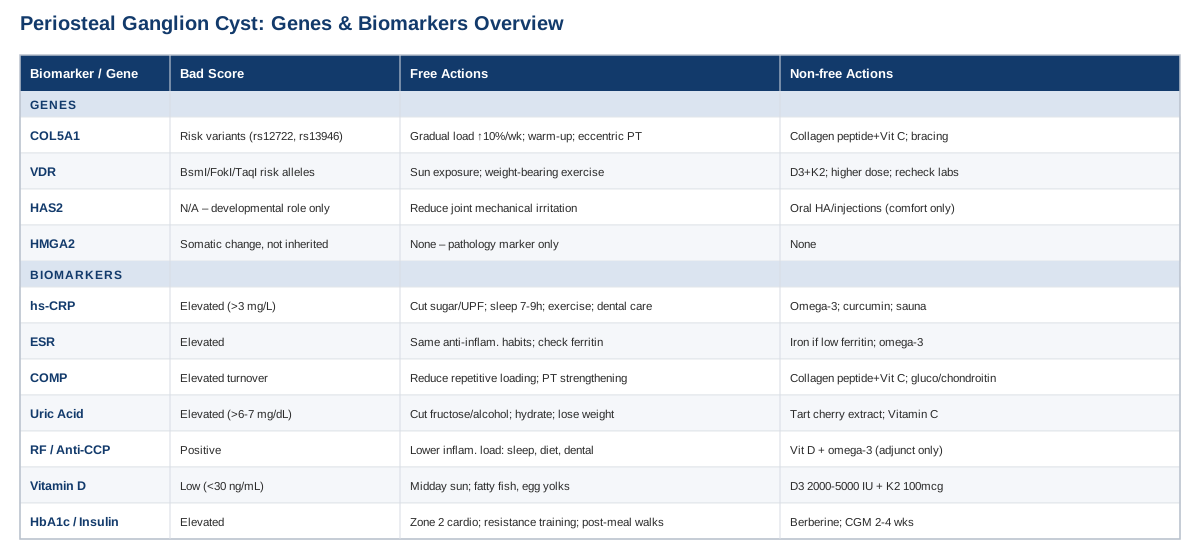
7 Biomarkers Worth Tracking If You Have a Periosteal Ganglion Cyst
There's no single blood test that diagnoses or predicts a periosteal ganglion cyst. What does exist is a cluster of markers that plausibly reflect the environment in which mucoid degeneration, connective tissue stress, and low-grade inflammation happen — the same processes that show up repeatedly in the case-report literature on periosteal and intraosseous ganglions, where myxomatous degeneration of the periosteum and mucoid degeneration of adjacent connective tissue are the two leading explanations. Tracking these seven values won't tell you why your cyst formed, but it will tell you whether your broader connective tissue environment is working against you.
High-Sensitivity CRP (hs-CRP)
Why It Matters
Hs-CRP is the most widely used marker of low-grade systemic inflammation. Elevated levels have been linked to chronic musculoskeletal pain, including chronic low back pain and acute sciatic pain, and to increased fracture risk in large population studies. A body running a background inflammatory load is plausibly a body where connective tissue repairs itself less cleanly — relevant to any process built on degeneration rather than injury alone.How to Measure It
A standard venous blood draw, often bundled with a lipid panel. Cost is roughly 15 to 30 dollars out of pocket where not covered by insurance, with results in one to two days.If the Score Is Bad: The Plan Without Supplements
Cut ultra-processed food and added sugar, prioritize 7 to 9 hours of sleep, and get 150 minutes a week of combined resistance and zone 2 cardio work. Treat gum disease if present — chronic periodontal inflammation is a well-documented contributor to systemic CRP. Stop smoking if applicable.If the Score Is Bad: The Plan With Supplements or Equipment
Omega-3 (EPA/DHA), 2 to 3 grams daily, taken continuously rather than cycled; mild side effects include fish-burp aftertaste and a theoretical bleeding risk with anticoagulants. Curcumin with piperine, 500 to 1000 mg daily, cycled 8 to 12 weeks on and 4 weeks off; can cause GI upset and should be avoided with gallstones or blood thinners. Sauna sessions, 4 times weekly for 15 to 20 minutes, support a modest anti-inflammatory response through heat-shock protein activation; the main risk is dehydration, so hydrate accordingly.Erythrocyte Sedimentation Rate (ESR)
Why It Matters
ESR is a cheaper, older inflammatory marker that complements hs-CRP, particularly useful for gauging chronicity rather than acute spikes. It has appeared alongside hs-CRP in research on inflammatory changes near degenerating spinal structures.How to Measure It
Roughly 10 to 20 dollars, typically drawn in the same visit as hs-CRP.If the Score Is Bad: The Plan Without Supplements
Same anti-inflammatory lifestyle changes as above. Also worth checking ferritin, since anemia independently raises ESR and can mask or exaggerate the inflammatory picture.If the Score Is Bad: The Plan With Supplements or Equipment
Iron repletion only if ferritin is genuinely low and under a clinician's guidance, cycled per lab recheck rather than indefinitely; constipation is the most common side effect. Omega-3 as described above.Cartilage Oligomeric Matrix Protein (COMP)
Why It Matters
COMP is a marker of cartilage and connective tissue turnover detectable in blood and synovial fluid, and has been studied as a diagnostic and prognostic indicator in joint disease. It's not specific to ganglion cysts, but elevated turnover markers plausibly reflect the same connective tissue remodeling activity underlying myxoid degeneration.How to Measure It
This is a specialty test, not part of routine panels — usually ordered by a rheumatologist or sports medicine physician, costing roughly 80 to 150 dollars with a one- to two-week turnaround at a reference lab.If the Score Is Bad: The Plan Without Supplements
Reduce repetitive mechanical loading at the affected site through activity modification and ergonomic adjustment, and work with a physical therapist on strengthening the stabilizing structures around the joint or bone involved.If the Score Is Bad: The Plan With Supplements or Equipment
Collagen peptides, 10 to 15 grams daily taken 30 to 60 minutes before loading activity alongside vitamin C (which supports collagen cross-linking), used continuously; side effects are minimal, mostly mild GI upset. Glucosamine and chondroitin, roughly 1500 mg and 1200 mg daily respectively, trialed for 3 months before reassessing — evidence here is mixed, and glucosamine should be avoided with shellfish allergy.Serum Uric Acid
Why It Matters
Uric acid matters for two reasons. First, gouty tophi can mimic ganglion cysts and other soft-tissue lesions on imaging, and clinicians explicitly list ganglion cysts among the differentials for tophi — worth ruling out if a lesion behaves atypically. Second, chronically elevated uric acid is itself a driver of low-grade inflammation and metabolic stress on connective tissue.How to Measure It
A basic metabolic panel add-on, roughly 10 to 15 dollars.If the Score Is Bad: The Plan Without Supplements
Reduce fructose and alcohol, particularly beer, increase water intake, and address excess weight if present.If the Score Is Bad: The Plan With Supplements or Equipment
Tart cherry extract, standard commercial dosing, taken continuously, with modest evidence for uric acid reduction and minimal side effects. Vitamin C, 500 mg daily, has modest independent evidence for lowering uric acid; well tolerated at this dose.Rheumatoid Factor and Anti-CCP Antibodies
Why It Matters
These two tests distinguish a benign ganglion cyst from a rheumatoid nodule or early inflammatory arthropathy, which can look and feel similar. Anti-CCP is considerably more specific, up to 97 percent compared to rheumatoid factor, which can be positive in healthy people and unrelated conditions.How to Measure It
A combined panel runs roughly 40 to 80 dollars, usually a one-time test unless clinical suspicion changes.If the Score Is Bad: The Plan Without Supplements
These are not lifestyle-modifiable in the way inflammatory markers are, but reducing overall inflammatory load — sleep, diet, dental health — may help keep any underlying autoimmune tendency quieter.If the Score Is Bad: The Plan With Supplements or Equipment
Vitamin D optimization and omega-3, as detailed elsewhere in this article, are the two most defensible general supports; neither substitutes for rheumatology follow-up if antibodies are positive.25-Hydroxyvitamin D
Why It Matters
Vitamin D supports mineralization of the collagen matrix in bone and has documented roles in connective tissue health more broadly, including modulation of immune signaling relevant to periosteal tissue.How to Measure It
A standard blood test, roughly 35 to 50 dollars, widely available.If the Score Is Bad: The Plan Without Supplements
15 to 20 minutes of midday sun exposure several times a week, adjusted for skin tone, plus dietary sources like fatty fish and egg yolks.If the Score Is Bad: The Plan With Supplements or Equipment
Vitamin D3, 2000 to 5000 IU daily, paired with vitamin K2 at roughly 100 mcg to help direct calcium toward bone rather than soft tissue. Recheck levels at 3 months and taper the dose down once you reach the 40 to 60 ng/mL range. Main risk is hypercalcemia at high, unmonitored doses over long periods.HbA1c and Fasting Insulin
Why It Matters
Chronic hyperglycemia drives the formation of advanced glycation end products that stiffen and cross-link collagen, impairing normal connective tissue turnover and repair. This is a plausible, if indirect, contributor to degenerative changes in periosteum and adjacent tissue over time.How to Measure It
HbA1c runs roughly 15 to 25 dollars; fasting insulin, 20 to 40 dollars. Both are standard lab draws.If the Score Is Bad: The Plan Without Supplements
150 to 180 minutes weekly of zone 2 cardio, resistance training 2 to 3 times a week, reduced refined carbohydrate load, and short walks after meals to blunt glucose spikes.If the Score Is Bad: The Plan With Supplements or Equipment
Berberine, 500 mg two to three times daily before meals, cycled 3 months on and 1 month off; GI side effects are common, and it interacts with several medications through CYP enzymes, so check with a physician first. A continuous glucose monitor worn for 2 to 4 weeks periodically can identify which specific foods and habits spike your own glucose, which is often more useful than any single supplement.With the biomarker picture in place, it's worth stepping back to what genetics can and can't add — the evidence here is thinner, but not empty.
What Early Genetic Research Suggests About Cyst-Prone Connective Tissue
No gene has been shown to directly cause a periosteal ganglion cyst. The dedicated case literature on periosteal and intraosseous ganglions consistently points to mechanical stress and myxoid degeneration rather than inheritance, and a search of that literature turns up no specific genetic studies on the condition itself. That's an honest gap, and it's worth stating plainly rather than papering over with speculation.
What does exist is research on the genes that shape the connective tissue processes involved — collagen fiber integrity, vitamin D signaling in ligament tissue, and hyaluronan production, the very molecule that fills a ganglion cyst's gelatinous core. Researchers like Ali Torkamani, whose work on the personal and clinical utility of polygenic risk scores has shaped how genomic data gets used in preventive medicine, and practitioners like Gary Brecka, who popularized consumer-facing functional genomic testing, are reasonable starting points if you want to explore your own data. Neither has published anything specific to periosteal ganglion cysts — treat any genetic panel here as exploratory context, not a diagnosis.
COL5A1
COL5A1 encodes collagen type V, which regulates how type I and type V collagen fibers assemble in tendons, ligaments, and periosteal connective tissue. Certain variants, particularly rs12722 and rs13946, have been associated with altered tendon and ligament injury risk in a meta-analysis across Caucasian cohorts, though results have been mixed between studies and populations. This is cohort-level evidence about soft tissue injury broadly, not periosteal ganglion cysts specifically.
If the gene variant leans toward higher injury risk, the plan without supplements centers on gradual, progressive mechanical loading rather than sudden spikes in training volume — a common rule of thumb is capping week-over-week increases at around 10 percent — along with a proper warm-up and eccentric-loading physical therapy work to build tissue resilience over time.
The plan with supplements or equipment adds the same collagen peptide and vitamin C protocol described above, taken before loading activity, plus considering supportive bracing or compression during repetitive high-strain tasks. Both are low-risk and can be used continuously.
VDR (Vitamin D Receptor Gene)
Polymorphisms in VDR, including BsmI, FokI, and TaqI variants, affect how efficiently vitamin D signaling supports collagen synthesis in ligament and connective tissue. One study found SNPs in COL1A1, COL9A3, and VDR jointly associated with the severity of lumbar disc degeneration — again, adjacent evidence, not periosteal-specific, and the effect sizes reported are modest.
If this gene runs unfavorably, the plan without supplements is the same sun exposure and weight-bearing activity described in the vitamin D biomarker section, since VDR variants affect how vitamin D signal gets used, not whether sunlight or diet still helps.
The plan with supplements or equipment follows the same D3-plus-K2 protocol, but carriers of less efficient VDR variants may need a higher maintenance dose to achieve the same downstream effect — something to discuss with a clinician rather than self-titrate. Recheck labs quarterly in year one, then every six months, watching for hypercalcemia.
HAS2 (Hyaluronan Synthase 2)
HAS2 is the primary enzyme producing hyaluronan, the mucopolysaccharide that fills a ganglion cyst's characteristic gelatinous fluid. Animal studies show that HAS2 deficiency in developing limb tissue impairs joint formation — strong mechanistic evidence for its role in joint and connective tissue architecture, but this is developmental biology in animal models, not evidence about acquired cyst risk in adult humans.
There's no meaningful way to suppress HAS2 activity through lifestyle, and no reason you'd want to — hyaluronan is essential for joint lubrication. The only practical lever without supplements is reducing the mechanical irritation and repetitive joint stress that upregulates local hyaluronan production in overloaded joints, through activity modification and ergonomic changes.
With supplements or equipment, oral hyaluronic acid or intra-articular injections are sometimes used for general joint comfort, but there's no evidence they change HAS2-driven cyst risk one way or the other — this is worth trying only for joint comfort itself, cycled over 8 to 12 weeks, with mild GI or injection-site reactions as the main downside.
HMGA2 — A Tissue Marker, Not an Inherited Risk
HMGA2 deserves a different kind of mention. Chromosomal rearrangements involving HMGA2 have been found in myxoid soft-tissue lesions such as aggressive angiomyxoma. This is a somatic change acquired within the lesion's own cells, not something inherited in your germline DNA, and it matters mainly to a pathologist trying to distinguish a benign ganglion from a rare myxoid neoplasm on biopsy. There is no "fix" for it, no supplement plan, and no personal risk score to track — it's included here only so the distinction between an inherited variant and a tissue-level finding stays clear.
Genetics gives context, not a treatment plan. The next section takes a different angle — what a widely read longevity book gets right about the kind of tissue resilience this whole topic depends on.
Ten Ideas From Peter Attia's Outlive Worth Applying to Joint and Connective Tissue Health
Outlive: The Science and Art of Longevity isn't written about ganglion cysts, or even primarily about joints. But its central argument — that most of what erodes quality of life late in life is preventable years in advance through measurable, trackable habits — applies directly to connective tissue durability. Here are ten ideas from the book worth borrowing.
1. Medicine 3.0 Means Acting Before the Diagnosis
Attia's framing of "Medicine 3.0" is about intervening on risk factors well before a disease or lesion becomes clinically obvious. Applied here, that means tracking the biomarkers above proactively rather than waiting for the next MRI to explain a new ache.2. The Centenarian Decathlon Forces Backward Planning
Attia's exercise of listing ten physical tasks you want to still be able to do at 100 — carrying groceries, getting off the floor, hiking — works backward to what your joints and connective tissue need to tolerate today. If a periosteal cyst formed near a joint you rely on for one of those tasks, that's a concrete reason to protect it now.3. VO2 Max Predicts More Than Most Lab Panels
A meta-analysis of cardiorespiratory fitness found it to be one of the strongest predictors of all-cause mortality across healthy men and women. Better aerobic capacity likely supports better tissue oxygenation and repair capacity generally, connective tissue included.4. Grip Strength Is a Whole-Body Signal
Research shows grip strength independently predicts cause-specific mortality in middle-aged and older adults. Strength training that maintains grip and overall muscular support reduces the abnormal mechanical loading patterns that are proposed contributors to ganglion cyst formation.5. Zone 2 Training Builds a Metabolic Base for Repair
Attia emphasizes low-intensity, steady-state cardio 3 to 4 times weekly to improve mitochondrial efficiency. A more efficient metabolic base plausibly supports better tissue recovery capacity, tying back to the HbA1c and insulin markers discussed earlier.6. Stability Training Gets Undervalued
Alongside strength and aerobic capacity, Attia treats stability as a distinct, trainable pillar. Poor joint stability increases localized mechanical strain — exactly the kind of repetitive stress implicated in mucoid degeneration of periosteal tissue.7. Protein Intake Needs to Rise With Age
Attia recommends higher protein intake than most guidelines suggest, arguing it supports the muscle and collagen synthesis machinery that declines with age. This complements the collagen peptide and vitamin C strategy discussed in the biomarker section.8. The "Marginal Decade" Is Won or Lost Early
Attia's concept of protecting your final decade of life — the years where most people lose independence — argues for addressing small, modifiable risks now rather than waiting for symptoms. A cyst found today is a reasonable prompt to start.9. Sleep Is Treated as Physical Repair Time, Not a Luxury
Attia devotes considerable attention to sleep as the window in which tissue repair and inflammatory regulation happen. Poor sleep raises hs-CRP, the very marker flagged first in this article's biomarker list.10. Lab Work Should Be Proactive, Not Reactive
Attia's own clinical practice is built around tracking biomarkers before symptoms appear, rather than only after an imaging report flags something. That's precisely the approach this article recommends applying to periosteal and connective tissue health.Lifestyle and lab work only go so far on their own — a few complementary approaches have real trial data behind them and are worth considering alongside standard orthopedic care.
Complementary Approaches Worth Considering
None of the following treat a periosteal ganglion cyst directly, and none replace aspiration, surgery, or a physician's monitoring if a cyst is growing, painful, or affecting function. What they can plausibly help with is the surrounding pain, mechanical stress, and inflammatory tone associated with the condition.
Low-Level Laser Therapy (Photobiomodulation)
Photobiomodulation uses specific wavelengths of red and near-infrared light, already used as an adjunct for tendinopathy and soft tissue healing. It's relevant here because periosteal ganglion cysts often sit alongside tendons and ligaments experiencing similar mechanical stress, and reducing local inflammation and pain in that surrounding tissue is a realistic, modest goal.
A physiotherapy case report describes laser therapy used alongside rehabilitation for a wrist scapholunate ligament instability with an associated dorsal ganglion cyst, with laser contributing to tissue healing and reduced inflammation as part of a broader rehab plan. A separate meta-analysis of randomized trials in tendinopathy found benefit for pain and function, though this evidence is condition-adjacent rather than ganglion-specific.
Applied realistically, this means using it as an adjunct administered by a licensed physical therapist, typically 2 to 3 sessions weekly for 4 to 6 weeks, aimed at pain and stiffness around the cyst site rather than the cyst itself, and reassessed alongside standard care rather than in place of it.
Massage Therapy
Manual soft tissue work can relieve the compensatory muscle guarding and tension that often build up around a painful periosteal or juxta-articular lesion, even though it does nothing to the cyst's fluid or capsule directly.
A large evidence map and systematic review of massage for pain, covering 26 randomized trials and over 2,500 participants, found short-term pain reduction for shoulder pain and knee osteoarthritis, but not consistently for back or neck pain — a useful reminder that benefit is site- and condition-dependent, not universal.
Realistically, this looks like 30 to 45 minute sessions once weekly for 4 to 6 weeks, targeting the compensating muscle groups rather than applying direct deep pressure over the cyst itself, and stopping if localized swelling increases.
Tai Chi
Tai chi's slow, controlled movement patterns build proprioception and joint stability — directly relevant given that poor joint stability and repetitive mechanical stress are proposed contributors to the kind of mucoid degeneration behind ganglion formation.
A 52-week randomized trial found tai chi produced outcomes comparable to standard physical therapy for knee osteoarthritis, one of the better-controlled comparisons available for a mind-body movement practice against conventional care.
Applied here, a twice-weekly class or app-guided practice sustained for at least 12 weeks is a reasonable trial period, with low injury risk, while avoiding postures that load the specific cyst site aggressively early on.
Qigong
Similar to tai chi but with a distinct set of guided breathing and movement sequences, external qigong has been studied specifically for joint symptoms rather than general fitness.
A randomized trial of external qigong therapy in 112 adults with knee osteoarthritis compared 5 to 6 sessions over 3 weeks against a sham treatment, with benefits reported for joint symptoms.
A practical approach is starting with a short structured course — the 5 to 6 session format used in the trial — under a certified instructor, tracking a symptom diary before deciding whether to continue longer term.
Mindfulness Meditation (MBSR)
Mindfulness-based stress reduction doesn't change cyst structure, but it modulates central pain processing and stress-related inflammatory tone, including the hs-CRP levels flagged earlier as relevant to connective tissue health.
A randomized controlled trial of 109 patients found MBSR produced measurable improvement on vitality and quality-of-life measures compared to a wait-list control, with a moderate effect size.
Realistically, this means a structured 8-week MBSR course with 20 to 30 minutes of daily practice, with the honest expectation of better pain coping and lower perceived stress — not cyst resolution.
Conclusion
A periosteal ganglion cyst is, in almost every documented case, a mechanical and degenerative process rather than an inherited condition — the genetics here are suggestive at best, while the biomarkers give you something more concrete to act on now. Inflammatory tone, connective tissue turnover, mineral status, and glycemic control are all measurable, all at least partly modifiable, and all plausibly relevant to the tissue environment a cyst formed in. None of that replaces monitoring by a physician, and none of it promises the cyst won't come back.
What it does offer is a clearer next step than "watch and wait." Get the seven biomarkers checked, ask your doctor which ones are worth repeating, and pick one or two lifestyle levers from this article to work on for the next three months before retesting. That's a more useful starting point than guessing.
Musculoskeletal: Tendon & Ligament Conditions Sports Injuries
Endocrine & Metabolic: Diabetes & Blood Sugar
Autoimmune: Inflammatory Conditions