This article contains AI generated content.
Periosteal Osteosarcoma: 4 Genes And 7 Biomarkers To Track
If you or someone close to you has just heard the words "periosteal osteosarcoma," you have probably already noticed something: most of what shows up in a search is either written for pathologists or written in such general terms about "bone cancer" that it doesn't actually answer the questions you have at 11pm. How aggressive is this specific subtype, really. What do the blood tests mean when they come back elevated. Whether a genetic mutation found on a pathology report is something inherited, something to worry about for siblings or children, or simply a feature of the tumor tissue itself.
Generic cancer content struggles here because periosteal osteosarcoma is genuinely uncommon — it is a distinct, intermediate-grade surface tumor, different from both the more familiar high-grade osteosarcoma and from its low-grade cousin, parosteal osteosarcoma. Advice written for "osteosarcoma" broadly often blurs these distinctions, and advice written for general wellness audiences tends to treat every lab value as something a supplement or a diet change can fix. Neither approach is very useful when you're trying to understand a specific, less-studied bone tumor.
This article takes a more precise approach. It walks through the biomarkers that oncologists and pathologists actually use to monitor this disease and its treatment, the handful of genes that show up repeatedly in the research literature, what a well-known book on the history of cancer genetics gets right about how these mutations were discovered, and which supportive, evidence-backed practices can realistically help someone going through diagnosis and treatment. None of this replaces care from an orthopedic oncologist — nothing here should be read that way — but understanding the biology behind the numbers on a lab report tends to make people better, calmer partners in their own care.
Better information doesn't guarantee a better outcome, but it consistently leads to better questions, better-timed decisions, and less time spent afraid of numbers that turn out not to mean what people assumed. The sections below are organized so you can go deep on the biomarkers that matter, understand the genetic backdrop without wading through molecular pathology jargon, and see what legitimate supportive care looks like alongside standard treatment.
Summary
Periosteal osteosarcoma sits in an unusual spot: rare enough that dedicated research is limited, but well-studied enough — through its links to classic osteosarcoma genetics — that a real picture exists. Below, you'll find the seven biomarkers clinicians track before, during, and after treatment, from routine blood work like alkaline phosphatase and LDH to specialized tissue tests like Ki-67 and MDM2/CDK4 status that most patients never get explained to them in plain language. You'll also see the four genes most consistently tied to osteosarcoma biology — including one, RB1, whose discovery essentially created the modern understanding of tumor suppressor genes — and why a mutation in a tumor is a very different thing from a mutation you inherit.
Further down, there's a walk-through of what The Emperor of All Maladies gets right about the genetics driving cancers like this one, and a section on which supportive therapies — mindfulness, yoga, music therapy, guided imagery, progressive muscle relaxation — have actual clinical evidence behind them for people going through bone cancer treatment, as opposed to which ones are just wellness marketing. The goal throughout is precision: what each marker and gene can and can't tell you, and what a realistic, non-magical plan looks like when a result comes back abnormal.
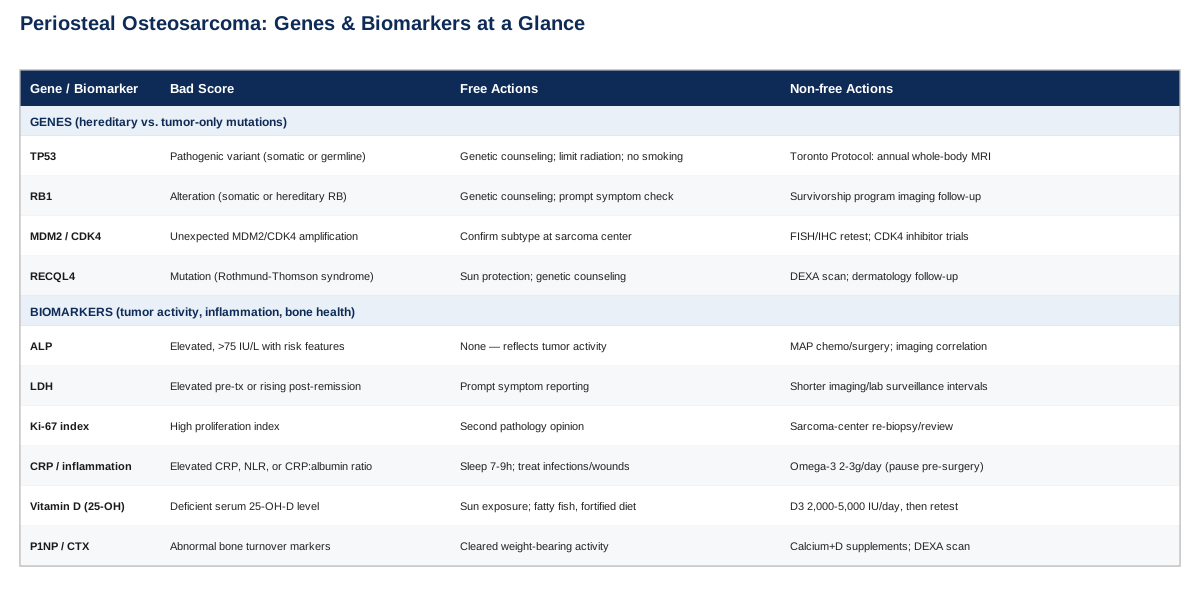
The Biomarkers Worth Tracking in Periosteal Osteosarcoma
Unlike chronic metabolic conditions, periosteal osteosarcoma doesn't have biomarkers that patients can simply "improve" through diet and supplements the way one might lower LDL cholesterol. Most of the markers below are disease-activity indicators — they move because the tumor is present, growing, responding to treatment, or gone, not because of a home protocol. That distinction matters, and it's addressed honestly in every section below rather than papered over with vague wellness language. A smaller subset — vitamin D, inflammatory markers, and bone turnover markers — do respond to genuine lifestyle and supplement interventions, and those are flagged clearly.
Serum Alkaline Phosphatase (ALP)
ALP is produced by osteoblasts, the bone-forming cells that osteosarcoma arises from, which is why it has been used as a tumor-activity marker for decades. Elevated pre-treatment ALP is consistently associated with a higher tumor burden and, in several cohort studies, with a greater risk of metastasis and worse survival outcomes, particularly when levels exceed roughly 75 IU/L in combination with other risk features (Kunt et al., serum ALP and LDH in osteosarcoma).
How to measure it
ALP is part of a standard comprehensive metabolic panel or a basic liver/bone panel, typically costing between $10 and $40 out of pocket in the US when not bundled into a larger oncology panel, and it is usually drawn every 4 to 6 weeks during active treatment.If the score is bad, the plan without supplements
An elevated ALP in the context of a known osteosarcoma is not something to self-manage. It reflects tumor cell activity, so the actual "plan" is timely, guideline-based oncologic treatment — neoadjuvant chemotherapy, surgical resection, and adjuvant chemotherapy per protocols such as MAP (methotrexate, doxorubicin, cisplatin) — followed by repeat testing to confirm the value is trending down. Frequency: recheck at each chemotherapy cycle and post-surgically as part of routine surveillance.If the score is bad, the plan with supplements or equipment
No supplement lowers a cancer-driven ALP elevation, and claiming otherwise would be misleading. The legitimate "equipment" side of this is imaging correlation — X-ray, MRI, or chest CT performed alongside lab draws so a clinician can see whether a falling or rising ALP tracks with actual tumor response. If ALP remains persistently elevated after treatment for reasons unrelated to the tumor (such as healing bone after limb-salvage surgery), a bone-specific ALP isoenzyme test can help separate normal healing from disease activity, at an added cost of roughly $50 to $100.Lactate Dehydrogenase (LDH)
LDH is a nonspecific marker of cell turnover, but in osteosarcoma it has repeatedly shown prognostic value: patients with elevated pre-treatment LDH have worse survival than those with normal levels, and rising LDH after apparent remission is one of the earliest lab signs of relapse in some patients (serum LDH and ALP values in osteosarcoma).
How to measure it
LDH is a simple blood draw, usually $10 to $30, often included automatically in metabolic panels ordered during oncology follow-up. It is typically checked on the same schedule as ALP.If the score is bad, the plan without supplements
As with ALP, an elevated LDH in an active osteosarcoma case is managed through oncologic treatment, not lifestyle change. The realistic non-supplement plan is closer surveillance: shorter intervals between imaging and labs, and prompt discussion with the treating oncologist rather than waiting for a scheduled visit if LDH rises unexpectedly.If the score is bad, the plan with supplements or equipment
There is no supplement protocol that meaningfully lowers cancer-related LDH elevation, and it would be irresponsible to suggest one. Where equipment genuinely helps is in distinguishing a tumor-driven rise from other causes of elevated LDH (muscle breakdown after surgery, hemolysis, intense physical therapy) — a repeat draw after a short rest period, alongside imaging, usually clarifies which is which.Ki-67 Proliferation Index
Ki-67 is a nuclear protein expressed only in actively dividing cells, and pathologists stain tumor tissue for it to estimate how fast a tumor is proliferating. In osteosarcoma the evidence is genuinely mixed: a meta-analysis of roughly 500 cases found Ki-67 expression correlated with stage and distant metastasis, while at least one smaller series found no independent link to survival (Ki-67 expression and osteosarcoma prognosis, meta-analysis). This is a case where it's worth saying plainly: the science here is still early and not fully consistent, so a single Ki-67 result should be interpreted alongside grade, stage, and imaging rather than in isolation.
How to measure it
Ki-67 requires tumor tissue, obtained at biopsy, stained with immunohistochemistry. There's no separate "test cost" to the patient since it's part of the pathology workup on biopsy or resection tissue, which itself typically runs from several hundred to a few thousand dollars depending on the health system.If the score is bad, the plan without supplements
A high Ki-67 index generally prompts more intensive chemotherapy protocols and closer imaging surveillance, decided by the treating oncology team — not something a patient adjusts independently. The realistic action is confirming the pathology reading with a sarcoma-specialized pathologist if the initial biopsy was read at a general hospital, since interpretation can vary between centers.If the score is bad, the plan with supplements or equipment
No supplement changes a tumor's proliferation rate. The only meaningful "equipment" angle is ensuring biopsy and re-biopsy (if a recurrence is suspected) are done at a center with sarcoma pathology expertise, since Ki-67 interpretation is technique- and reader-dependent.MDM2 and CDK4 Status
This one is more about accurate diagnosis than risk tracking, but it matters specifically for periosteal osteosarcoma. Low-grade central and parosteal osteosarcomas usually show MDM2 and CDK4 amplification, which pathologists use as a diagnostic marker. Periosteal osteosarcoma is different: in the largest dedicated series to date (27 cases), 26 were negative for MDM2 protein by immunohistochemistry, none showed MDM2 gene amplification, and all were CDK4-negative (MDM2 and CDK4 expression in periosteal osteosarcoma; CDK4 co-amplification patterns in osteosarcoma). In plain terms: if MDM2/CDK4 testing comes back positive on a surface osteosarcoma, it argues against a periosteal diagnosis and toward parosteal or low-grade central osteosarcoma instead, which changes prognosis and treatment intensity.
How to measure it
Testing is done via immunohistochemistry (roughly $100–$300 as an add-on) or FISH for gene amplification (roughly $300–$800), performed on biopsy tissue at diagnosis.If the score is bad, the plan without supplements
There's no "bad" score here in the tumor-marker sense — this is a classification tool. If results are ambiguous or don't match the clinical picture, the plan is a second pathology opinion at a sarcoma referral center before finalizing a treatment plan, since subtype misclassification can lead to under- or over-treatment.If the score is bad, the plan with supplements or equipment
Not applicable in the supplement sense. Where this connects to "equipment" is emerging targeted therapy: CDK4 inhibitors are being studied in MDM2/CDK4-amplified sarcomas, but since periosteal osteosarcoma typically lacks this amplification, these agents are not expected to be relevant for this specific subtype — worth knowing so it isn't pursued on the wrong biological premise.C-Reactive Protein and Inflammation-Based Scores
CRP, and combined scores like the CRP-to-albumin ratio and the neutrophil-to-lymphocyte ratio, have shown independent prognostic value in osteosarcoma cohorts, with higher inflammatory scores associated with worse overall survival (prognostic value of inflammation-based scores in osteosarcoma). This is one of the few markers here where genuine lifestyle influence exists, alongside its role as a disease marker — Peter Attia and others in the longevity-medicine space have long argued for tracking hs-CRP as a general marker of systemic inflammation, not specific to cancer but relevant to overall recovery capacity during treatment.
How to measure it
A standard CRP costs $15–$30; high-sensitivity CRP (hs-CRP) runs $20–$50. Both are simple blood draws, typically checked alongside routine oncology labs.If the score is bad, the plan without supplements
Since much of the elevation in an active cancer case is tumor- and treatment-related, the primary lever is still oncologic treatment progress. Beyond that, addressing dental infections, wound issues after surgery, and adequate sleep (7–9 hours) can meaningfully lower non-cancer-related inflammatory contributions, checked by re-testing CRP after any acute infection has resolved rather than during it.If the score is bad, the plan with supplements or equipment
Omega-3 fatty acids (roughly 2–3g EPA/DHA daily) have modest, consistent evidence for lowering CRP in general populations; discuss with the oncology team first, since fish oil has a mild blood-thinning effect relevant around surgery dates. Cycling: continuous use is standard, but stop 1–2 weeks before any planned surgery. Side effects: fishy aftertaste, mild GI upset, and increased bleeding risk at high doses. This supports general recovery; it is not a cancer treatment.Vitamin D (25-Hydroxyvitamin D)
Vitamin D deficiency is extremely common and directly affects bone mineralization and calcium handling — relevant background for anyone undergoing bone surgery, chemotherapy (some regimens affect bone density), or prolonged reduced mobility after a limb-salvage procedure (Vitamin D and bone health, mechanisms review).
How to measure it
A 25-OH vitamin D blood test costs $40–$80 and is one of the more affordable, widely available tests discussed here. Recheck every 3 months while correcting a deficiency, then annually once stable.If the score is bad, the plan without supplements
Sensible, regular sun exposure (10–20 minutes, several times weekly, skin-type dependent) and dietary sources (fatty fish, fortified dairy, egg yolks) can help but are usually insufficient alone to correct a true deficiency, especially for someone recovering indoors after surgery.If the score is bad, the plan with supplements or equipment
Typical correction dosing is 2,000–5,000 IU vitamin D3 daily for 8–12 weeks, then a maintenance dose of 1,000–2,000 IU daily, adjusted to retesting — high-dose infrequent bolus dosing (e.g., 50,000 IU weekly) is sometimes used under physician supervision but has shown mixed and occasionally worse bone density outcomes in trials at very high chronic doses, so it isn't the default choice. Side effects at excessive doses include hypercalcemia, nausea, and kidney stone risk; this is why retesting rather than indefinite high dosing matters. No special equipment is required, though a home UV lamp is sometimes used in climates with minimal winter sun, with the same caution around overuse as sun exposure itself.Bone Turnover Markers (P1NP and CTX)
P1NP (a marker of bone formation) and CTX (a marker of bone resorption) are the reference bone turnover markers used in osteoporosis care (clinical use of bone turnover markers). It's worth being upfront that dedicated research on P1NP/CTX specifically in periosteal osteosarcoma is limited — these are borrowed from bone-health medicine generally, not validated tumor markers for this cancer. Their relevance here is practical: limb-salvage surgery, chemotherapy, and extended immobility all affect bone remodeling, and tracking these markers can help flag someone heading toward low bone density during or after treatment.
How to measure it
Each marker costs roughly $50–$150; both are usually ordered together. They are most useful as a baseline before treatment and again 6–12 months after surgery or chemotherapy completion.If the score is bad, the plan without supplements
Weight-bearing activity, adapted to whatever the surgical reconstruction allows (physical therapists guide this closely after limb-salvage procedures), is the most evidence-based non-supplement lever for bone remodeling. This should only proceed with explicit clearance from the orthopedic surgical team given hardware and healing constraints.If the score is bad, the plan with supplements or equipment
Calcium (1,000–1,200mg/day from diet plus supplements if needed) and vitamin D adequacy (see above) are the standard, low-risk supports. A DEXA scan (bone density imaging, $75–$250 without insurance) at baseline and then every 1–2 years afterward is the relevant "equipment" here, since it directly measures whether bone density concerns are actually developing rather than inferring it from blood markers alone.Understanding these markers is one half of the picture. The other half is genetic — not because a supplement can rewrite a gene, but because knowing which mutations are involved clarifies what's inherited versus what exists only in the tumor, and what surveillance actually looks like for each.
The Genes Behind Periosteal Osteosarcoma
Osteosarcoma genetics, including in surface variants like the periosteal subtype, is dominated by a small number of genes that control cell division and DNA repair. It's worth being direct about something the wellness internet often blurs: these are not genes you can "optimize" with lifestyle changes the way you might influence a gene involved in inflammation or lipid metabolism. A pathogenic TP53 or RB1 variant doesn't respond to diet, exercise, or supplementation — the honest plan is genetic counseling, surveillance, and risk-reducing behavior, not compensation. Below, each gene is described along with what a realistic, non-supplement and non-magical plan actually looks like.
TP53
TP53 is the most frequently altered gene in osteosarcoma, with loss-of-function alterations — through allelic loss, rearrangements, or point mutations — found in up to three-quarters of cases (osteosarcoma genetics and epigenetics review). Most TP53 alterations are somatic, meaning they exist only in the tumor. A smaller but important subset are germline — inherited as part of Li-Fraumeni syndrome, found in roughly 3% of children diagnosed with osteosarcoma, which carries a substantially elevated lifetime risk of multiple cancer types (osteosarcoma in a patient with Li-Fraumeni syndrome).
If the gene is bad, the plan without supplements
If germline testing confirms Li-Fraumeni syndrome, the plan is genetic counseling for the patient and cascade testing offered to first-degree relatives, minimizing unnecessary ionizing radiation (including limiting diagnostic CT scans where alternatives like MRI exist, since TP53-mutant cells are especially vulnerable to radiation-induced secondary cancers), and standard cancer-risk-reducing habits — no smoking, sun protection, and moderate alcohol intake.If the gene is bad, the plan with supplements or equipment
No supplement alters TP53 function. The legitimate equipment-based plan is the "Toronto Protocol," a validated surveillance regimen of annual whole-body MRI, brain MRI, breast MRI or mammography, and abdominal ultrasound for confirmed carriers, which has been shown to detect cancers earlier and improve survival compared with no structured surveillance (medical guidelines for Li-Fraumeni syndrome, 2019). Frequency is annual, lifelong. Separately, metformin is being studied as an investigational chemoprevention agent in Li-Fraumeni carriers in an active randomized trial — genuinely early-stage and not yet standard of care, so it belongs in a conversation with a genetics or oncology team, not a self-directed regimen (metformin chemoprevention trial protocol in Li-Fraumeni syndrome).RB1
RB1 loss disrupts the Rb-E2F pathway that normally restrains cell division. In osteosarcoma, RB1 alterations are associated with a 1.62-fold increase in mortality, higher metastasis rates, and a weaker histological response to chemotherapy (prognostic implications of RB1 alterations in osteosarcoma, meta-analysis). As with TP53, most RB1 alterations found in an osteosarcoma tumor are somatic. The germline version — hereditary retinoblastoma — is distinct and important: survivors of hereditary retinoblastoma, especially those treated with radiotherapy in childhood, carry a meaningfully elevated lifetime risk of osteosarcoma.
If the gene is bad, the plan without supplements
For someone with a history of hereditary retinoblastoma, the practical plan is genetic counseling, avoiding radiotherapy where an equally effective alternative exists, and taking new, persistent bone pain or swelling seriously rather than attributing it reflexively to growth or activity — this population is specifically counseled to seek prompt imaging for unexplained musculoskeletal symptoms.If the gene is bad, the plan with supplements or equipment
There is no supplement that compensates for RB1 loss. The equipment-based plan is ongoing clinical follow-up through the survivorship program typically established for hereditary retinoblastoma survivors, with imaging reserved for symptomatic areas rather than blanket routine scanning, since there isn't a validated whole-body screening protocol for RB1 carriers analogous to the TP53 one.MDM2 and CDK4
MDM2 and CDK4 sit on chromosome 12 and are commonly co-amplified in low-grade central and parosteal osteosarcomas, functioning to suppress p53 activity and drive the cell cycle forward even when they shouldn't (CDK4 co-amplification with TP53 or MDM2 in osteosarcoma). The genuinely useful fact for anyone reading about periosteal osteosarcoma specifically is that this subtype behaves differently: dedicated testing found essentially no MDM2/CDK4 amplification in periosteal osteosarcoma, unlike its low-grade cousins (MDM2 and CDK4 expression in periosteal osteosarcoma).
If the gene is bad, the plan without supplements
This is a diagnostic and classification feature more than a risk factor to manage. The relevant "plan" is making sure the pathology diagnosis and subtype are confirmed at a sarcoma-experienced center, since a periosteal diagnosis with unexpected MDM2/CDK4 positivity should prompt a second look at whether the subtype classification is correct.If the gene is bad, the plan with supplements or equipment
Not a supplement scenario. CDK4-inhibiting drugs exist and are being explored in MDM2/CDK4-amplified sarcomas, but since periosteal osteosarcoma typically doesn't carry this amplification, these agents are not the expected treatment path for this specific subtype — useful to know so time isn't spent chasing a therapy that doesn't match the tumor's biology.RECQL4
RECQL4 encodes a DNA helicase involved in DNA repair and replication. Mutations cause a subset of Rothmund-Thomson syndrome (specifically Type 2), which carries a marked predisposition to osteosarcoma along with skin, skeletal, and eye features (Rothmund-Thomson syndrome and cancer outcome, genetic variability review). This is a hereditary risk gene, relevant mainly to a small population of patients with a recognizable underlying syndrome rather than to osteosarcoma cases in general.
If the gene is bad, the plan without supplements
For confirmed RECQL4-related Rothmund-Thomson syndrome, the plan is dermatology follow-up (photosensitivity is a hallmark feature, so rigorous sun protection — clothing and shade, not just sunscreen — is a real, evidence-aligned recommendation here), skeletal surveillance given the associated low bone mass phenotype, and genetic counseling for family planning given the autosomal recessive inheritance pattern.If the gene is bad, the plan with supplements or equipment
No supplement corrects a RECQL4 helicase defect. Calcium and vitamin D adequacy are reasonable supportive measures given the bone fragility associated with this condition, and periodic DEXA scanning is a sensible equipment-based addition to routine care, though this should be coordinated through a genetics or metabolic bone specialist rather than self-directed.The genetics above are largely drawn from decades of research on osteosarcoma broadly, since dedicated periosteal-specific genomic studies remain scarce — a limitation worth restating rather than glossing over. For a deeper, historical sense of how genes like RB1 came to define modern cancer biology, one book stands out.
What The Emperor of All Maladies Reveals About These Genes
Siddhartha Mukherjee's The Emperor of All Maladies: A Biography of Cancer won the Pulitzer Prize largely because it did something unusual: it told the story of cancer research as a story of ideas fighting each other, including the very ideas — like the existence of tumor suppressor genes — that eventually explained diseases such as osteosarcoma at the molecular level. It isn't a book about bone cancer specifically, but its account of how RB1 and TP53 were discovered is directly relevant to understanding what a "bad gene" report actually means. Below are ten of its most useful, still-relevant points.
1. Cancer was treated as one disease for far too long
For most of the 20th century, oncology largely treated cancer as a single, generalizable disease attacked with a shared toolkit of surgery, radiation, and blunt chemotherapy. The genomic era — including the discovery of osteosarcoma-relevant genes like RB1 and TP53 — reframed cancer as hundreds of distinct genetic diseases that happen to share some behaviors, which is precisely why subtype-level detail (periosteal versus parosteal versus high-grade osteosarcoma) matters clinically.2. Alfred Knudson's two-hit hypothesis changed everything
In 1971, statistician-physician Alfred Knudson analyzed retinoblastoma cases and proposed that cancer in this disease required two separate mutational "hits" to the same gene — one inherited, one acquired, in hereditary cases; two acquired hits in sporadic cases. This single insight, built purely from epidemiological math before anyone could sequence a gene, predicted the existence of tumor suppressor genes years before one was ever found (direct experimental evidence for Knudson's two-hit theory).3. RB1 was the proof
The RB1 gene, cloned in 1986, was the first tumor suppressor gene ever identified, confirming Knudson's hypothesis directly. Its story matters here because RB1's role doesn't stop at the eye — the same gene, when lost, is one of the recurring drivers behind osteosarcoma, which is part of why survivors of hereditary retinoblastoma carry elevated osteosarcoma risk decades later.4. A tumor suppressor gene works like a brake, not an accelerator
Mukherjee's book is careful to distinguish oncogenes (genes that, when activated, accelerate cancer) from tumor suppressor genes (genes that, when disabled, remove a brake on cell division). TP53 and RB1 are brakes. Understanding this distinction clarifies why "turning off" a mutated tumor suppressor gene isn't the goal — the gene is already off; the goal is detecting what grows in its absence.5. TP53 earned its "guardian of the genome" reputation for a reason
The book traces how TP53 emerged as the single most commonly altered gene across human cancers, functioning as a central quality-control checkpoint that halts damaged cells before they divide further. Its centrality to osteosarcoma is a direct extension of this broader biological role, not a coincidence specific to bone.6. Family cancer syndromes forced medicine to think generationally
Long before genetic testing was routine, sharp clinical observation of families with unusually clustered, early-onset cancers (the pattern later named Li-Fraumeni syndrome) forced researchers to accept that some cancer risk is inherited wholesale, not just acquired through environment or chance. This observational tradition is exactly why genetic counseling and family testing remain central to managing TP53-related osteosarcoma risk today.7. Early detection research often outpaces treatment innovation
Much of the book's later material shows that gains in cancer survival have frequently come more from earlier, better detection than from dramatically new drugs. The Toronto Protocol's survival benefit in Li-Fraumeni syndrome — found decades after the book's underlying science was described — is a direct, real-world continuation of this theme.8. Chemotherapy's history is one of trial, error, and hard-won precision
Mukherjee doesn't romanticize chemotherapy; he documents its brutal early era honestly, alongside its genuine, hard-earned wins. Multi-agent regimens like the MAP protocol used in osteosarcoma today descend directly from this decades-long process of painful iteration, not a single breakthrough moment.9. Genetic knowledge doesn't remove uncertainty, it relocates it
A recurring, humbling theme is that knowing a mutation exists rarely tells you exactly what will happen next — Ki-67's inconsistent prognostic performance in osteosarcoma research is a modern, concrete example of exactly this kind of residual uncertainty even with modern molecular tools.10. The "war on cancer" metaphor undersells how slow and cumulative real progress is
The book's central argument is that meaningful progress against cancer has come from decades of incremental, occasionally contradicted, patiently rebuilt science — not a single decisive victory. For a rare tumor like periosteal osteosarcoma, where dedicated studies are still few, this is a genuinely useful frame: current understanding is real, but still being actively filled in.These historical and genetic foundations explain the biology. What they don't cover is how someone actually gets through diagnosis, surgery, and chemotherapy day to day — which is where evidence-based supportive care comes in.
Supportive Therapies That Can Help Alongside Treatment
None of the approaches below treat the tumor itself, and none should be presented that way. What they have real, condition-relevant evidence for is reducing the anxiety, fatigue, pain, and nausea that come with diagnosis, surgery, and chemotherapy — which matters a great deal for quality of life and, in some cases, for treatment tolerance.
Mindfulness Meditation and MBSR
Mindfulness-Based Stress Reduction (MBSR) is a structured, typically 8-week program combining meditation, body awareness, and gentle movement, originally developed for chronic pain and later widely studied in oncology. For someone navigating an osteosarcoma diagnosis — often abrupt, often involving a young patient and a frightened family — the anxiety and fear-of-recurrence components are exactly what MBSR targets most directly.
A systematic review and meta-analysis of cancer patients found MBSR produced significant reductions in anxiety, depression, and loneliness compared with standard care, and a larger meta-analysis spanning 45 randomized trials and over 7,000 adults with cancer found consistently large reductions in psychological distress across diverse cancer types (MBSR for loneliness, anxiety, and depression in cancer patients).
Realistically, this looks like an 8-week structured program (in person or via a reputable app-based course), practiced 20–30 minutes daily, ideally started around diagnosis or before major surgery rather than only during the hardest stretch of chemotherapy. It's low-risk and appropriate at any point in treatment, including for adolescent patients with age-adapted formats, though it works best as a genuine daily practice rather than an occasional session.
Yoga
Yoga combines gentle movement, breathing, and attention training, and it has one of the largest supportive-care evidence bases of any complementary approach in oncology, primarily for cancer-related fatigue — a symptom that hits especially hard during and after multi-agent chemotherapy regimens like those used for osteosarcoma.
A systematic review and meta-analysis found yoga produced meaningful reductions in cancer-related fatigue among patients undergoing chemotherapy and radiation, and a network meta-analysis comparing exercise types found yoga among the interventions with the clearest fatigue benefit (yoga for cancer-related fatigue, systematic review and meta-analysis).
For someone recovering from limb-salvage surgery or amputation, standard yoga sequences need real modification — this is a case where working with an oncology-informed yoga instructor or physical therapist matters more than following a generic online class. Two to three sessions weekly, 20–45 minutes, adapted to whatever mobility restrictions apply post-surgery, is a realistic starting cadence; evidence suggests adherence (not intensity) is what determines benefit.
Music Therapy
Music therapy, delivered by a trained music therapist rather than passive background listening, has one of the more robust Cochrane evidence bases in supportive oncology care, covering anxiety, pain, and mood.
A meta-analysis of music therapy interventions found significant reductions in anxiety among cancer patients, and the Cochrane review underlying much of this work — spanning 81 studies and over 5,500 participants — found benefits for anxiety, pain, and fatigue with no reported adverse effects (music therapy and anxiety reduction in cancer patients, meta-analysis).
This is especially practical during infusion appointments and hospital stays around surgery — many pediatric and adolescent oncology units already have music therapists on staff, and asking whether one is available is a reasonable, no-downside question to bring to the care team. Sessions are typically therapist-led, 30–45 minutes, and can be repeated as often as appointments allow with no meaningful side effects.
Progressive Muscle Relaxation
Progressive muscle relaxation (PMR) involves systematically tensing and releasing muscle groups through the body, and it has specific, well-documented evidence for chemotherapy-related symptoms — directly relevant given standard osteosarcoma chemotherapy protocols.
A systematic review and meta-analysis of randomized trials in breast cancer patients found PMR reduced chemotherapy-related anxiety, depression, and treatment side effects, and a separate randomized trial found patients receiving PMR were significantly less anxious, depressed, and hostile than controls during chemotherapy (progressive muscle relaxation and guided imagery in cancer, systematic review).
A realistic protocol is 15–20 minutes before or during chemotherapy infusions, guided initially by a trained facilitator or a recorded script, then practiced independently once familiar. It can be repeated daily with no known adverse effects, making it one of the lowest-friction additions to a treatment routine.
Guided Imagery
Guided imagery uses structured mental visualization, often paired with PMR, to redirect attention away from anxiety and physical distress during difficult procedures or infusions.
A randomized controlled trial in breast and prostate cancer patients undergoing chemotherapy found guided imagery combined with PMR significantly reduced anxiety compared with usual care (RCT of PMR and guided imagery for anxiety in cancer patients undergoing chemotherapy).
In practice, this means a 10–15 minute recorded or therapist-guided session timed to precede procedures known to be stressful — port placement, biopsy, the start of an infusion cycle — rather than a vague, unstructured attempt at "relaxing." Many cancer centers already provide recorded guided imagery sessions specifically for this purpose; asking the care team for one is often simpler than sourcing it independently.
Conclusion
Periosteal osteosarcoma is uncommon enough that no single test or gene tells the whole story, but the picture that does exist is coherent: a handful of biomarkers — ALP, LDH, Ki-67, MDM2/CDK4 status, inflammatory markers, vitamin D, and bone turnover markers — track tumor activity and treatment response, while a smaller set of genes, chiefly TP53, RB1, MDM2/CDK4, and RECQL4, explain both the tumor's biology and, in a minority of cases, an inherited risk worth discussing with a genetic counselor. None of these numbers are something to fix with a supplement regimen, and any source suggesting otherwise about an actual cancer diagnosis deserves real skepticism.
What does help is treating this information as a tool for better conversations: knowing which lab values are worth asking about at each visit, understanding what a genetic test result does and doesn't mean for family members, and layering in supportive practices — mindfulness, yoga, music therapy, guided relaxation — that have real evidence behind them for the anxiety and fatigue that come with treatment. If you're navigating this diagnosis now, a good next step is asking your oncology team directly which of these markers they're tracking for your specific case, whether genetic counseling has been discussed, and which supportive resources — including music or psycho-oncology support — are already available at your treatment center before looking for them elsewhere.