This article contains AI generated content.
Peripatellar Fat Pad Fibrosis: 4 Genes And 7 Biomarkers To Track
Introduction
If you're reading this, you probably know the specific ache already: a dull, sometimes sharp pain just below or around the kneecap that flares after kneeling, squatting, sitting with a bent knee for too long, or climbing stairs. Maybe an MRI report mentioned "Hoffa's fat pad" with words like edema, synovitis, or fibrosis, and a clinician moved on without explaining what any of that actually means for your day-to-day function.
Generic advice for this kind of knee pain tends to stop at "lose some weight," "strengthen your quads," and "ice it after activity." None of that is wrong, but none of it explains why your fat pad became inflamed and fibrotic in the first place, or why it isn't resolving the way a typical soft-tissue injury would. Two people with the same MRI finding can have very different underlying biology — one driven mostly by local mechanical overload, another by systemic metabolic inflammation that happens to show up first in the knee.
This article takes the more specific route: looking at measurable biomarkers that reflect what's actually happening in and around the fat pad, plus what emerging genetic and mechanistic research suggests about why some tissue fibroses more readily than others. That distinction matters because it changes what you actually do next — whether the priority is offloading the joint, correcting a metabolic driver, or addressing a molecular pathway that keeps depositing scar-like tissue.
None of this promises a cure, and fibrosis is not something that reverses overnight. But better information changes decisions. This piece walks through seven biomarkers worth tracking, what current genetics research adds (and where it's still early), a set of practical lessons from a widely read longevity book that apply directly to joint health, and complementary approaches with actual clinical trial support. Each section is meant to narrow the gap between "generic advice" and a plan suited to your own biology.
Summary
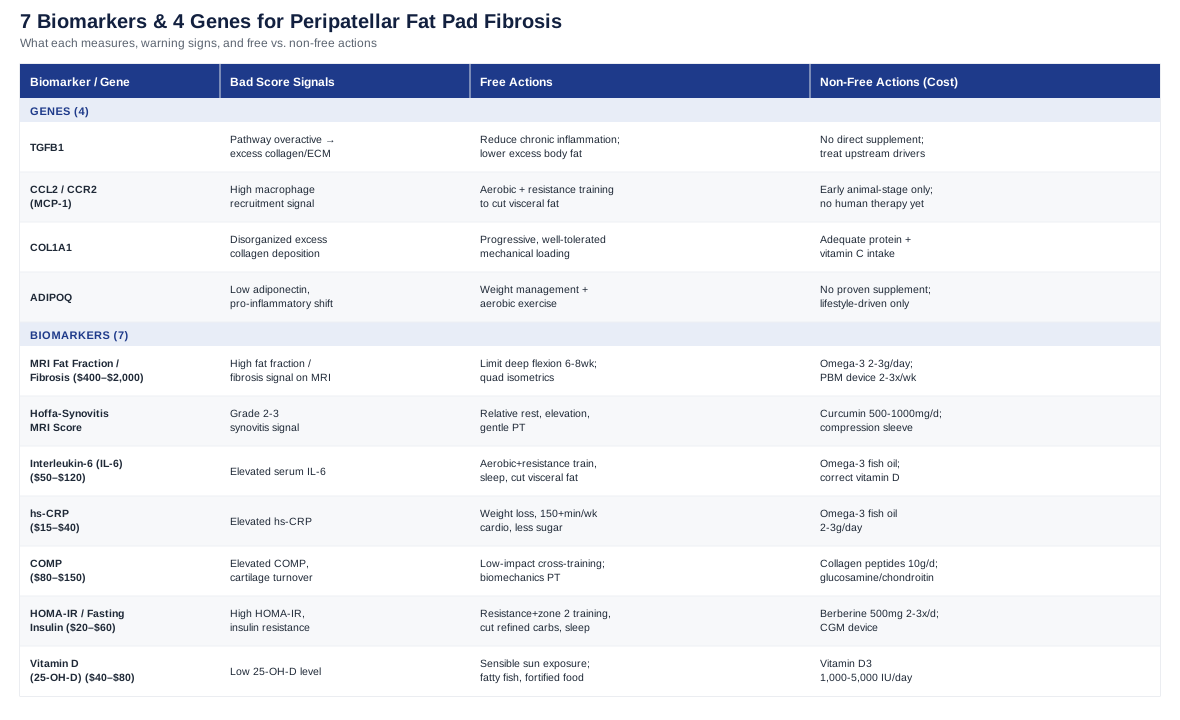
Peripatellar (infrapatellar/Hoffa's) fat pad fibrosis rarely has one single cause — it usually sits at the intersection of local mechanical stress, systemic inflammation, and metabolic health. Below, you'll find the seven biomarkers most worth tracking, starting with direct MRI-based measures of the fat pad itself and moving through blood markers that reveal whether inflammation or insulin resistance is quietly feeding the problem. For each one, there's a concrete plan for what to do if the number is off, both with and without supplements or equipment, including realistic dosing, cycling, and side effects. Beyond the biomarkers, you'll see what genetics research says about genes like TGFB1 and CCL2 that may predispose fat pad tissue to fibrose — and why that evidence is still early. There's also a practical breakdown of ten lessons from Peter Attia's Outlive that map surprisingly well onto joint longevity, and a look at which complementary therapies — massage, photobiomodulation, tai chi, mindfulness — actually have trial data behind them for knee pain like this. If you've been told to just "rest it and lose weight," this is the more precise version of that advice.
7 Biomarkers Worth Tracking For Peripatellar Fat Pad Fibrosis
The infrapatellar (Hoffa's) fat pad isn't inert padding — it's a metabolically active, richly innervated tissue that secretes inflammatory signals, responds to mechanical load, and can become fibrotic through the same pathways seen in fibrosis elsewhere in the body, including macrophage infiltration, adipokine shifts, and chronic low-grade synovitis. That's why tracking a mix of imaging-based and blood-based biomarkers gives a far more actionable picture than pain scores alone. The seven below move from the most fat-pad-specific measures to broader systemic markers that influence how well that tissue heals.
1. MRI Fat Fraction And Fibrosis Imaging Of The Fat Pad
This is the most direct biomarker available for this specific condition. Newer MRI sequences that quantify proton density fat fraction (PDFF) and T2 mapping have been validated against actual tissue pathology, meaning they can distinguish healthy fat pad tissue from fibrotic tissue with real precision rather than relying on a radiologist's subjective read of "signal changes." A pathology-controlled study quantifying infrapatellar fat pad fibrosis using MRI-derived proton density fat fraction found this approach correlates meaningfully with the actual degree of fibrosis present in the tissue, which makes it useful both for diagnosis and for tracking whether things are getting better or worse over time.
How To Measure It
A knee MRI with fat-quantification sequences, read ideally by a musculoskeletal radiologist. Cost typically runs from about $400 to $2,000 out of pocket depending on the facility (freestanding imaging centers are usually cheaper than hospital-based ones), though insurance often covers it once conservative treatment has failed or a specialist requests it.If The Score Is Bad: The Plan Without Supplements Or Equipment
Reduce direct mechanical irritation first — limit prolonged deep knee flexion under load (kneeling, deep squats) for 6 to 8 weeks, and start a guided quadriceps strengthening program beginning with isometrics and progressing to closed-chain exercises as tolerated. Weight management, if relevant, reduces the compressive load the fat pad absorbs with every step.If The Score Is Bad: The Plan With Supplements Or Equipment
Omega-3 fish oil at 2 to 3 grams combined EPA/DHA daily can be taken continuously, though it can cause mild GI upset or fishy aftertaste and should be discussed with a physician if you're on blood thinners. A photobiomodulation (low-level laser) device used 2 to 3 times weekly for 4 to 6 weeks is a reasonable equipment-based option (see the complementary approaches section below). Avoid leaning on daily NSAIDs as a long-term fix — they mask symptoms without addressing fibrosis and carry real GI, renal, and cardiovascular risk with chronic use.2. Hoffa-Synovitis MRI Score
Before fibrosis sets in, most fat pads go through a period of active inflammation and swelling — visible on MRI as increased signal within the fat pad, graded on a 0 to 3 scale. Data from the FNIH Osteoarthritis Biomarkers Consortium found that changes in Hoffa-synovitis over time were independently associated with radiographic and pain progression, meaning this score isn't just a snapshot — it tracks trajectory.
How To Measure It
Read from the same knee MRI used for fat fraction (no added cost if both are ordered together), though it's worth explicitly asking your radiologist to report Hoffa-synovitis grading, since many standard reports skip it.If The Score Is Bad: The Plan Without Supplements Or Equipment
Relative rest during active flares, elevation and gentle calf-pump movement to support fluid drainage, and physical therapy focused on restoring pain-free range of motion rather than aggressive strengthening while inflammation is high.If The Score Is Bad: The Plan With Supplements Or Equipment
Curcumin extract standardized for bioavailability (often paired with piperine), 500 to 1,000 mg daily, cycled for 8 to 12 weeks before reassessing — mild GI upset is possible, and it can interact with anticoagulants or antiplatelet medication. A compression sleeve worn during activity can help manage local swelling mechanically.3. Interleukin-6 (IL-6)
What makes IL-6 particularly relevant here is that the infrapatellar fat pad itself is a documented source of it. Research has identified the fat pad as an important local source of interleukin-6 and its soluble receptor in knee osteoarthritis, meaning elevated IL-6 isn't just a generic inflammation marker here — it may reflect what the fat pad tissue itself is actively producing.
How To Measure It
Serum IL-6 isn't part of routine primary care panels; it's typically ordered through a specialty, research-oriented, or functional medicine lab, costing roughly $50 to $120. Reference ranges are less standardized than more common labs, so trend matters more than a single value.If The Score Is Bad: The Plan Without Supplements Or Equipment
Regular exercise — both aerobic and resistance training — has been shown in older adults to meaningfully lower circulating IL-6 and CRP. Prioritizing sleep and reducing visceral fat both feed into lower baseline IL-6.If The Score Is Bad: The Plan With Supplements Or Equipment
Omega-3 fish oil at the same dosing as above, and correcting vitamin D if deficient (see below). Avoid stacking several anti-inflammatory supplements at once without monitoring liver and kidney function every three months or so, since cumulative effects aren't well studied.4. High-Sensitivity C-Reactive Protein (hs-CRP)
hs-CRP is the most widely validated general inflammation marker, and elevated levels have been linked to greater knee cartilage volume loss and a worse pain trajectory, though its specificity is limited since it rises with many conditions and is strongly influenced by body mass index. Still, it's a useful checkpoint for whether systemic inflammation is part of what's keeping your fat pad irritated.
How To Measure It
A standard hs-CRP blood test, $15 to $40, widely available and usually covered by insurance as part of routine cardiovascular screening.If The Score Is Bad: The Plan Without Supplements Or Equipment
Weight loss if overweight (fat mass is the single biggest driver of hs-CRP in most people), 150+ minutes of aerobic activity weekly, reducing added sugar and ultra-processed food intake, and addressing chronic gum disease, which is an underrated contributor to elevated CRP.If The Score Is Bad: The Plan With Supplements Or Equipment
Omega-3 fish oil as above. If insulin resistance is also present, that's a conversation for a physician rather than a supplement decision. Retest hs-CRP every three months to track direction of change rather than fixating on one reading.5. Cartilage Oligomeric Matrix Protein (COMP)
COMP reflects cartilage matrix turnover and tends to rise as knee osteoarthritis becomes more advanced. A recent analysis found serum COMP levels were significantly elevated in knee OA patients and correlated with radiological severity. For fat pad fibrosis specifically, COMP is useful less as a direct fat pad marker and more as a check on whether cartilage degeneration is happening alongside it — which changes how aggressively you should manage joint loading.
How To Measure It
A specialty lab test, less commercially available than routine labs, roughly $80 to $150, usually ordered through a sports medicine physician or rheumatologist. COMP rises transiently after heavy exercise, so testing in a rested state matters.If The Score Is Bad: The Plan Without Supplements Or Equipment
Shift toward low-impact cross-training (cycling, swimming, elliptical) to reduce repetitive high-impact loading, paired with physical therapy addressing movement alignment and biomechanics that may be overloading the joint.If The Score Is Bad: The Plan With Supplements Or Equipment
Collagen peptides at roughly 10 grams daily, either continuously or cycled three months on and one month off, generally well tolerated with occasional mild GI effects. Glucosamine and chondroitin (roughly 1,500 mg and 1,200 mg daily) have mixed evidence for structural change but are reasonable to trial for 3 months while tracking symptoms, since biomarker-level response isn't well validated.6. HOMA-IR And Fasting Insulin
Insulin resistance connects fat pad fibrosis to broader metabolic health rather than treating it as a purely local mechanical problem. Research has found strong associations between HOMA-IR and osteoarthritis, with a notable pattern where the association is stronger in men than women — a reminder that this biomarker's relevance can differ by sex.
How To Measure It
A fasting glucose and fasting insulin blood draw, used to calculate HOMA-IR, costing roughly $20 to $60 combined and widely available through primary care.If The Score Is Bad: The Plan Without Supplements Or Equipment
Resistance training 2 to 3 times weekly, zone 2 aerobic exercise, reducing refined carbohydrate and added sugar intake, and prioritizing 7 to 9 hours of sleep — all of which independently improve insulin sensitivity.If The Score Is Bad: The Plan With Supplements Or Equipment
Berberine at 500 mg two to three times daily, cycled 8 to 12 weeks on and 4 weeks off, commonly causes GI upset and should not be combined with other glucose-lowering medications without medical supervision. A continuous glucose monitor (roughly $50 to $100 per month) can help identify which specific foods spike your glucose most, allowing a more individualized approach than generic dietary advice.7. Vitamin D (25-Hydroxyvitamin D)
Vitamin D is one of the cheapest and safest biomarkers to correct if it's actually low. A systematic review of vitamin D and knee osteoarthritis found deficiency associated with worse pain, disability, and function, though supplementation trials aimed at reversing structural cartilage changes have been mixed — so treat this as a modifiable contributor to symptoms and tissue repair capacity rather than a fix for fibrosis on its own.
How To Measure It
A standard 25-OH-D blood test, $40 to $80, widely available and often covered by insurance when clinically indicated.If The Score Is Bad: The Plan Without Supplements Or Equipment
Sensible midday sun exposure (roughly 10 to 30 minutes, several times weekly, depending on skin tone and latitude) and dietary sources like fatty fish and fortified foods.If The Score Is Bad: The Plan With Supplements Or Equipment
Vitamin D3 at 1,000 to 2,000 IU daily for mild deficiency, or higher supervised doses (up to 5,000 IU daily) for significant deficiency, taken with a fat-containing meal for absorption. Recheck levels after 8 to 12 weeks and let retesting — not an arbitrary calendar date — determine when to adjust the dose. High-dose supplementation without monitoring carries a small risk of hypercalcemia.What Genetics Research Adds
Compared to the biomarker picture above, human genetic research specific to peripatellar fat pad fibrosis is still thin. Most of what's known comes from mechanistic and animal-model studies of the fibrotic pathways involved, rather than confirmed gene-variant association studies in humans with this exact condition. That's worth stating plainly rather than overselling — but the pathways identified are the same ones implicated in fibrosis across many tissues, so they're still useful to understand.
TGFB1 (Transforming Growth Factor Beta 1)
TGF-β1 is the master signaling molecule that tells cells to lay down collagen and other extracellular matrix. In fat pad tissue, research on diet-induced obesity models found that pro-fibrotic remodeling of the infrapatellar fat pad preceded knee osteoarthritis, with TGF-β signaling implicated as a driver. If this pathway runs hot in your tissue, the practical compensation isn't gene-editing — it's reducing the upstream triggers (chronic inflammation, excess adiposity) that keep switching TGF-β signaling on, since the pathway itself responds to those inputs rather than acting independently of them.
CCL2 / CCR2 (MCP-1 Signaling)
CCL2, also known as MCP-1, recruits macrophages into tissue, and those macrophages are a major source of the fibrotic signals that remodel the fat pad. In a rat model of arthritis, a CCL2/MCP-1 antagonist meaningfully reduced fat pad fibrosis — promising, but still an early-stage animal finding, not a human treatment. Visceral fat is a major source of circulating CCL2, so the most realistic lever right now is reducing visceral adiposity through the aerobic and resistance training approaches already covered under HOMA-IR and hs-CRP above.
COL1A1 (Type I Collagen)
COL1A1 encodes a structural component of the collagen that gets over-deposited during fibrosis. Variants in collagen genes are well studied in other fibrotic and connective tissue conditions, but specific human data tying COL1A1 variants to fat pad fibrosis doesn't yet exist. The practical compensation draws from tendon and connective tissue research more broadly: progressive, well-tolerated mechanical loading tends to organize collagen deposition more favorably than either complete rest or aggressive overload, alongside adequate dietary protein and vitamin C, both cofactors for normal collagen synthesis.
ADIPOQ (Adiponectin)
Since the fat pad is, functionally, a specialized piece of adipose tissue, its own hormone output matters. Adiponectin is an anti-inflammatory adipokine, and reviews of infrapatellar fat pad biology describe how shifts in adipokine secretion accompany the tissue's transition toward a more inflammatory phenotype. Lower adiponectin signaling is associated with less favorable fat pad behavior. Weight management and aerobic exercise both reliably raise circulating adiponectin, making this one of the more actionable items on this list even without knowing your personal genetic variant.
Genetics research in this specific area will likely mature over the next several years as fat-pad-focused imaging biomarkers (like the fat fraction measure above) give researchers a precise outcome to correlate against genetic data. For now, the honest takeaway is that lifestyle levers already influence every one of these pathways, regardless of your underlying genetic tendency.
10 Lessons From Peter Attia's Outlive That Apply To Joint And Fat Pad Health
Peter Attia's book Outlive isn't written about knee fat pads specifically, but its core argument — that most people wait too long to address the physical capacity that determines quality of life in later decades — maps directly onto how peripatellar fat pad problems tend to get ignored until they're chronic. Below are ten ideas from the book, and from the research it draws on, reframed for this specific joint problem.
1. Think In Terms Of "The Marginal Decade"
Attia's framing is that the last decade of life is where physical capacity determines independence, and that decade is built by what you do now, not later. Applied here: a fat pad problem addressed early with proper loading and inflammation control is far easier to manage than one left to fibrose for years while "just living with it."2. Reverse-Engineer From The Function You Want To Keep
Attia describes designing training backward from tasks he wants to still perform in his 80s and 90s — carrying groceries, getting off the floor, hiking. For a knee with fat pad involvement, that means identifying which specific movements matter most to you (kneeling to garden, squatting to lift a grandchild, taking stairs without hesitation) and training toward those specifically, rather than vague "general fitness."3. Muscle Is A Retirement Account, Not A Vanity Metric
Quadriceps strength directly offloads stress on the patellofemoral joint and fat pad. Research on quadriceps strengthening found it increased patellofemoral joint contact area, which reduces localized mechanical stress and improves pain and function. Attia's emphasis on preserving muscle mass isn't just about metabolism — it's mechanically protective for exactly this kind of joint tissue.4. Zone 2 Training Supports The Metabolic Machinery Behind Healing
Attia is well known for emphasizing zone 2 (low-intensity, sustainable) aerobic training for mitochondrial health. That same type of training is part of what drives the measurable reductions in CRP and IL-6 discussed earlier — the systemic inflammatory markers most relevant to fat pad irritation.5. VO2 Max Reflects More Than Cardiovascular Fitness
Attia treats VO2 max as one of the single strongest predictors of longevity. For joint rehab specifically, higher aerobic capacity also means a greater ability to tolerate a structured rehabilitation program without the whole-body fatigue that derails consistency — which matters more than it sounds for a slow-healing tissue like fibrotic fat pad.6. Treat Exercise As A Prescription, Not A Mood-Dependent Activity
One of Attia's more challenging points is that exercise dosing should be planned and progressive, the same way a medication would be, rather than done inconsistently based on motivation. For fat pad rehab, inconsistent loading — long breaks followed by aggressive activity — is a common reason flares keep recurring.7. Nutritional Biomarkers Beat Nutritional Dogma
Attia is skeptical of blanket diet rules and instead pushes for individualized lab tracking — ApoB, fasting insulin, hs-CRP — to guide nutrition decisions. That's exactly the philosophy behind the HOMA-IR and hs-CRP sections above: test, don't assume.8. Sleep Is A Direct Lever On Inflammation
Poor sleep raises inflammatory cytokines, including IL-6, one of the fat pad's own signaling molecules. Attia treats sleep as a non-negotiable pillar alongside exercise and nutrition, and for a chronically inflamed joint tissue, it's one of the few levers that costs nothing and has almost no downside.9. Stability Training Prevents The Injuries That Undo Everything Else
Attia dedicates real attention to stability and fall prevention, arguing that a single bad fall can undo years of fitness work. For a knee already dealing with fat pad fibrosis, poor stability and proprioception increase the odds of a twisting injury that sets rehab back months — making balance and proprioceptive work a legitimate part of a knee-specific plan, not an afterthought.10. Emotional Regulation Affects How Pain Is Experienced
Attia is candid about how anxiety and catastrophizing shaped his own relationship to physical setbacks. Chronic anterior knee pain is well documented to be worsened by fear-avoidance behavior — the more someone avoids movement out of fear, the more deconditioned and sensitized the area becomes. Addressing the psychological loop around pain isn't a soft add-on; it changes actual movement behavior and rehab adherence.Complementary Approaches Backed By Real Trials
Beyond biomarkers and mechanistic pathways, a handful of complementary modalities have real clinical trial evidence in knee osteoarthritis populations that overlap closely with fat pad-related pain. None of these replace addressing the biomarkers above, and evidence quality varies — but they're reasonable to layer in.
Massage Therapy
Massage therapy applies manual pressure and manipulation to the soft tissue around the knee, which may reduce local muscle guarding, improve circulation, and modestly lower pain perception around an irritated fat pad. For a tissue that's mechanically sensitive and often surrounded by compensatory muscle tightness, this is a plausible, low-risk adjunct rather than a primary treatment.A randomized dose-finding trial found that a 60-minute weekly massage protocol produced clinically meaningful improvement in knee osteoarthritis symptoms that persisted at least 8 weeks beyond the end of treatment, with 60-minute biweekly sessions showing similar benefit to weekly ones.
Realistically, this means budgeting for one 60-minute session weekly for 8 weeks as an initial trial, focusing the therapist's attention on the quadriceps, IT band, and peripatellar soft tissue rather than a generic full-body massage, then reassessing whether pain and stiffness have meaningfully improved before deciding whether to continue.
Low-Level Laser Therapy (Photobiomodulation)
Photobiomodulation uses specific wavelengths of light to stimulate cellular activity in soft tissue, with proposed anti-inflammatory and pain-modulating effects at the local tissue level — relevant for a fat pad problem where local inflammation is a driver of symptoms.A placebo-controlled randomized trial found that combining low-level laser therapy with strength training produced better short- and long-term pain and function outcomes in knee osteoarthritis than strength training alone.
The realistic approach is to pair a home-use or clinic-based LLLT device (2 to 3 sessions weekly for 4 to 6 weeks) with an existing quadriceps strengthening program rather than using it as a stand-alone treatment, since the evidence supports it as an adjunct, not a replacement for loading-based rehab.
Tai Chi
Tai chi combines slow, controlled movement, weight shifting, and body awareness — all of which train the kind of proprioception and quadriceps control that directly affects load distribution across the knee and fat pad.A well-known randomized controlled trial found that twice-weekly Tai Chi over 12 weeks produced significantly greater improvement in pain, physical function, and quality of life compared to an attention-control group in people with knee osteoarthritis, with no serious adverse events reported.
For someone managing fat pad fibrosis, this suggests a 12-week trial of twice-weekly group or instructor-led Tai Chi is a reasonable, low-injury-risk way to build the neuromuscular control that reduces repetitive joint stress, particularly for those who find traditional gym-based strengthening intimidating or hard to sustain.
Mindfulness Meditation / MBSR
Mindfulness-based stress reduction targets the attentional and emotional processing of pain rather than the tissue itself, which connects to the fear-avoidance and pain-sensitization dynamics discussed earlier — but the evidence specific to knee osteoarthritis is genuinely mixed, and that should be said plainly.A pilot randomized controlled trial in people with symptomatic knee or hip osteoarthritis found no significant benefit on WOMAC pain or function scores, though there was a trend toward delayed, longer-term pain relief at 6 months.
Given the mixed results, MBSR is best positioned as a low-risk, low-cost add-on for someone already dealing with pain-related anxiety or sleep disruption, rather than an expected driver of measurable improvement in fat pad symptoms on its own — an 8-week structured program is a reasonable trial length before deciding whether it's worth continuing.
Conclusion
Peripatellar fat pad fibrosis rarely has a single cause, which is exactly why single-note advice like "just lose weight and strengthen your quads" so often falls short. The more useful approach tracks what's actually happening in the tissue — through imaging biomarkers like fat fraction and Hoffa-synovitis scoring — alongside the systemic drivers of inflammation and metabolic health, like IL-6, hs-CRP, and HOMA-IR, that influence how well that tissue can settle down and repair. Genetics research adds context for why some tissue fibroses more readily than others, even if it isn't yet precise enough to guide individual decisions. Layered lifestyle work, informed by a book like Outlive, and a few well-supported complementary therapies round out a plan that's realistic rather than miraculous.
The next useful step isn't overhauling everything at once. It's picking two or three of the biomarkers above that you haven't checked recently, getting them measured, and bringing the results — alongside your MRI findings, if you have them — to a physician or physical therapist who can help translate the numbers into a loading and recovery plan built around your actual biology, not a generic script.
Musculoskeletal: Tendon & Ligament Conditions
Autoimmune: Inflammatory Conditions