This article contains AI generated content.
Periprosthetic Joint Infection: 6 Genes and 7 Biomarkers to Track
If you or someone close to you has had a hip or knee replaced, the phrase "periprosthetic joint infection" probably didn't mean much until a surgeon said it out loud. Then it became the only thing that mattered. General advice about "watching for redness" or "taking your antibiotics" is technically correct and almost useless once you're trying to figure out whether a stiff, warm joint six weeks after surgery is normal healing or something that needs to be drained tonight.
The problem with generic guidance is that periprosthetic joint infection, or PJI, doesn't behave like a simple wound infection. It can hide behind a biofilm on the implant surface, produce almost no symptoms for months, and still require major surgery to clear. A single blood test rarely settles the question. Surgeons who manage this condition well don't rely on one number — they build a picture from several markers, weigh them against the clinical picture, and revisit that picture over time.
This article takes that same layered approach and puts it in plain language. Instead of "watch for fever," you'll get the specific lab values orthopedic infection specialists actually use, what they cost, what a bad result really means, and what — realistically — can and cannot be done about it. You'll also see what the genetics research says about who is more biologically prone to this kind of infection, and where the evidence is still too thin to act on.
None of this replaces a conversation with an orthopedic surgeon or an infectious disease specialist, and no supplement or habit substitutes for antibiotics or reoperation when an infection is active. But knowing which numbers matter, how they're measured, and what genuinely influences them gives you a much better footing for that conversation — and a clearer sense of what's worth doing between now and your next follow-up appointment.
Summary
Periprosthetic joint infection is diagnosed with a combination of blood and joint-fluid tests, not a single number, and the article below walks through the seven markers — from cheap, first-line blood tests to specialized joint-fluid assays — that make up that combination, including what each one actually measures, what it costs, and what genuinely moves the needle when a result comes back abnormal. It also covers what the newer genetics research says about why some people seem more biologically prone to implant infection than others (spoiler: the evidence is real but still early), pulls out ten ideas from Peter Attia's Outlive that reframe how surgical and infection risk should be thought about before you ever get to the operating table, and closes with the complementary approaches — guided imagery, music, mindfulness, tai chi — that have actual clinical trial data behind them in joint replacement recovery, not just general wellness appeal. Read on for the specifics on each marker and each gene, including exactly what "bad" looks like and what to do about it.
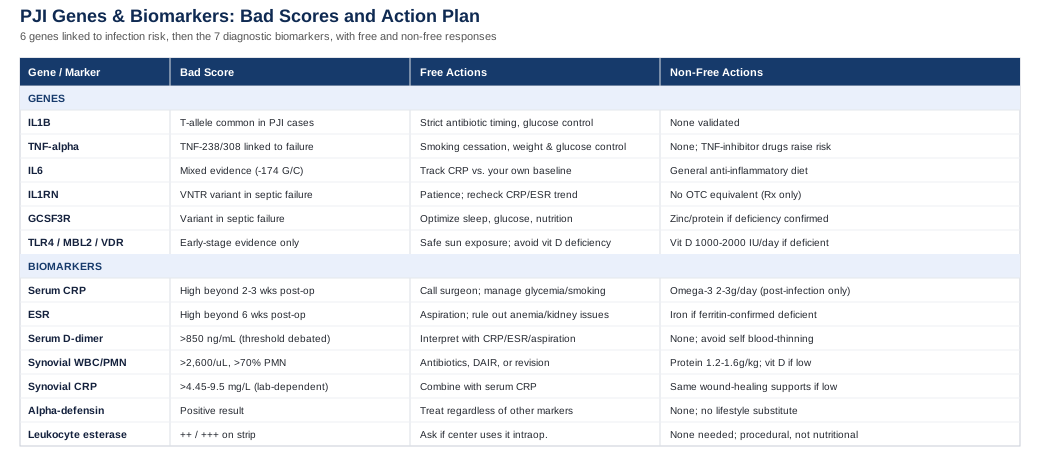
7 Biomarkers to Track for Periprosthetic Joint Infection
Periprosthetic joint infection is unusual among infections in that it's diagnosed by combining evidence rather than by any single decisive test. The current framework used by most orthopedic infection specialists traces back to the International Consensus Meeting (ICM) criteria, most recently updated in 2018, which score major and minor criteria across blood and joint fluid to reach a probability of infection rather than a yes/no answer from one lab value. A validation study of that scoring system in a large patient cohort found it reached roughly 95% sensitivity and specificity when applied correctly — far better than relying on any single marker (Study on the 2018 definition of periprosthetic joint infection, PMC).
That's the mindset to bring to the seven markers below: none of them is meant to stand alone. Some are cheap, fast, and done on blood; others require a joint aspiration and specialized lab processing. Together, they let a clinician distinguish an infected implant from a loose one, a flare of inflammatory arthritis, or normal post-surgical healing.
Serum C-reactive protein (CRP)
CRP is the workhorse first-line test for suspected PJI. It's a liver-produced protein that rises within 24 to 48 hours of any significant inflammatory trigger, including infection, so it's sensitive but not specific — a high CRP tells you something is inflamed, not that it's infected.
How to measure it: a standard venous blood draw, processed at essentially any lab. Cost is low, typically $10 to $30 out of pocket in the US without insurance, and it's included in most standard post-operative panels, so many patients already have baseline values on file.
If the score is bad, the plan without supplements: an elevated CRP after the expected post-surgical window (CRP should be trending down by two to three weeks after surgery) warrants a call to the surgical team, not a wait-and-see approach. The actual fix for an infection-driven CRP is medical: joint aspiration to confirm infection, followed by targeted antibiotics and, in most true PJI cases, surgical debridement or revision. Addressing modifiable drivers of background inflammation — poor glycemic control, active smoking, untreated dental infections, obesity-related inflammation — can help CRP normalize faster once the infection itself is treated, but none of these fixes an active infection on their own.
If the score is bad, the plan with supplements or equipment: there's no supplement that safely lowers CRP in the setting of a real infection, and trying to suppress it chemically would only mask the signal your surgeon needs. Once infection has been ruled out or treated and CRP is elevated for other reasons (general post-surgical inflammation, obesity, poor sleep), omega-3 fatty acids (roughly 2 to 3 g/day of combined EPA/DHA) have modest evident-based anti-inflammatory effects and are reasonable to cycle for 8 to 12 weeks with physician awareness; side effects are mostly mild (fishy aftertaste, occasional GI upset, and a theoretical bleeding-risk interaction if you're also on blood thinners, which is common shortly after joint replacement).
Erythrocyte sedimentation rate (ESR)
ESR measures how quickly red blood cells settle in a test tube, which indirectly reflects blood protein changes driven by inflammation. It rises more slowly than CRP and stays elevated longer, so it's most useful in combination with CRP rather than alone, and especially useful for chronic, low-grade infections where CRP alone can look deceptively normal.
How to measure it: also a simple blood draw, similarly low cost ($10 to $25), often ordered alongside CRP as a pair since the ICM criteria weigh both.
If the score is bad, the plan without supplements: the same logic applies as CRP — an elevated ESR that hasn't normalized within the expected post-op timeline (generally by six weeks) should prompt joint aspiration rather than home management. Chronic ESR elevation unrelated to acute infection can sometimes reflect anemia, kidney function changes, or unmanaged inflammatory arthritis, all of which are worth ruling out with your physician since they can confound the picture.
If the score is bad, the plan with supplements or equipment: outside of active infection, addressing iron-deficiency anemia (if present, and only if confirmed by ferritin and full iron panel — supplementing iron without a documented deficiency is not advisable) can bring ESR back toward baseline. Iron repletion, when indicated, is typically dosed once daily or every other day (research increasingly favors alternate-day dosing to improve absorption and reduce GI side effects like constipation and nausea) for 8 to 12 weeks with a recheck of ferritin before continuing.
Serum D-dimer
D-dimer is a newer entrant to the PJI workup. It's a fibrin degradation product best known for ruling out blood clots, but it also rises with the ongoing fibrinolysis that accompanies chronic infection, and unlike CRP and ESR, it can be useful for judging when it's safe to reimplant a new joint after an infected one has been removed. The original study proposing its use suggested a threshold around 850 ng/mL, with reported sensitivity near 89% and specificity near 93% (Diagnostic accuracy of D-dimer in periprosthetic joint infection, meta-analysis on PMC). It's worth noting that later meta-analyses pooling multiple studies found more modest accuracy, with sensitivity closer to 75% and specificity closer to 69% — a useful reminder that early single-center results are often more impressive than what holds up across broader populations.
How to measure it: a blood draw processed by a coagulation lab; cost is moderate, often $30 to $75, and less universally available than CRP or ESR, so some hospital labs may need to send it out.
If the score is bad, the plan without supplements: an elevated D-dimer in the context of suspected PJI should be interpreted by the surgical team alongside CRP, ESR, and joint aspiration findings — it is not an independent decision point on its own, especially since D-dimer also rises after any recent surgery, blood clot, or even normal post-operative healing for weeks. There is no legitimate self-directed way to "fix" an elevated D-dimer tied to infection; it resolves as the infection is treated.
If the score is bad, the plan with supplements or equipment: because D-dimer overlaps so heavily with clotting risk, this is an area where attempting to self-treat with supplements (some fish oil or turmeric protocols are marketed as "blood thinning") is actively unwise post-arthroplasty, when clotting risk and bleeding risk both need careful, individualized management. This marker is best left entirely to your medical team's interpretation rather than something to manage at home.
Synovial fluid white blood cell (WBC) count and neutrophil percentage
Pulled directly from the joint via aspiration, synovial WBC count and its neutrophil (PMN) percentage are among the most discriminating tests available, because they measure the joint's own immune response rather than a systemic proxy. A recent systematic review and meta-analysis settled on optimal cut-offs around 2,600 cells/µL and 70% PMN for chronic infections, with a "rule-out" threshold near 1,500 cells/µL and 65% PMN below which infection becomes unlikely (Differential synovial fluid white blood cell count for chronic PJI diagnosis, systematic review and meta-analysis). Thresholds run higher for acute infections and can differ between hip and knee joints, which is part of why interpretation is best left to someone who does this routinely.
How to measure it: requires a joint aspiration performed by an orthopedic surgeon or interventional radiologist, generally in a clinic or outpatient procedure room, with the fluid sent for cell count and culture. Cost ranges widely, often $150 to $500 for the procedure plus lab analysis, and it is the test most directly tied to an actual clinical decision (aspirate vs. don't, treat vs. don't).
If the score is bad, the plan without supplements: an elevated synovial WBC/PMN result essentially confirms infection is likely and moves the patient into active treatment planning — IV or oral antibiotics tailored to culture results, and in most true PJI cases, surgical washout (debridement, antibiotics, and implant retention, known as DAIR) or a staged revision. This is not a marker you manage through lifestyle change; it's a diagnostic trigger.
If the score is bad, the plan with supplements or equipment: none apply directly to the joint fluid result itself. What can meaningfully support the surgical and antibiotic plan working as intended is optimizing the nutritional and metabolic state that affects wound and bone healing — adequate protein intake (roughly 1.2 to 1.6 g/kg/day, higher than many people default to post-surgery), vitamin D repletion if a blood test shows deficiency (typically 1,000 to 2,000 IU/day, reassessed after 8 to 12 weeks via a 25-OH vitamin D blood test rather than dosed indefinitely), and tight glucose control if diabetic, since hyperglycemia is one of the best-documented modifiable risk factors for both developing and failing to clear PJI.
Synovial fluid C-reactive protein
Measuring CRP directly in joint fluid rather than blood turns out to be more specific to what's happening in the joint itself. A 2024 study established a clinical decision limit around 4.45 mg/L, with sensitivity of 86.1% and specificity of 87.1% (Synovial fluid CRP clinical decision limit study, PubMed), while earlier work from the Mayo Clinic group found a higher threshold near 9.5 mg/L performed well with 85% sensitivity and 95% specificity (Synovial CRP molecular marker study, PubMed). The gap between these thresholds across studies is a useful reminder that lab-specific reference ranges matter more than a single number memorized from an article.
How to measure it: obtained from the same joint aspiration used for the WBC count, so there's little additional procedural cost beyond the extra lab assay, typically another $50 to $150.
If the score is bad, the plan without supplements: same as synovial WBC — this result feeds directly into the infection diagnosis and treatment decision, not a self-management plan. Where it does add practical value is in combination with serum CRP: studies show combining the two raises diagnostic accuracy above either alone, which is why surgeons increasingly order both together rather than choosing one.
If the score is bad, the plan with supplements or equipment: as with the other synovial markers, no supplement changes this result meaningfully while infection is present. Once the infection is cleared and reimplantation is being considered, the same general wound-healing supports apply (protein adequacy, vitamin D and zinc status corrected if deficient, blood glucose in target range) — cycled only as long as a deficiency is documented, then reassessed rather than continued indefinitely.
Synovial alpha-defensin
Alpha-defensins are antimicrobial peptides released by neutrophils in direct response to pathogens, which makes this test more biologically specific to true infection than count-based markers. It became part of the 2018 ICM major criteria and multiple meta-analyses have found both sensitivity and specificity consistently above 90% for chronic PJI, making it one of the more accurate single tests available, particularly useful when a patient is already on antibiotics, which can suppress culture growth and confuse other markers (Reliability of synovial alpha-defensin and leukocyte esterase, systematic review and meta-analysis, PMC).
How to measure it: available as a lab-based ELISA or a faster qualitative lateral-flow test that can be run intraoperatively. It's the most expensive marker on this list, often $300 to $800 depending on the lab and whether it's the quantitative or lateral-flow version, and not universally available at smaller hospitals, which is why it's typically reserved for ambiguous cases rather than run routinely on everyone.
If the score is bad, the plan without supplements: a positive alpha-defensin result is treated as strong evidence of infection and moves treatment forward regardless of what other markers show, particularly in cases where prior antibiotic use may have suppressed culture results. There is no lifestyle substitute for this — a positive result triggers the surgical and antimicrobial pathway.
If the score is bad, the plan with supplements or equipment: nothing modifies this test result directly, and there is no legitimate reason to try. Some newer research has questioned whether alpha-defensin adds meaningful value over the cheaper leukocyte esterase strip test in every case (Shohat et al., 2021), which is a good example of why it's worth asking your surgeon which combination of tests they're actually relying on rather than assuming more expensive automatically means more useful.
Leukocyte esterase strip test
This is the simplest and cheapest test on this list, borrowed from urine dipstick technology and applied to synovial fluid. A drop of aspirated joint fluid is placed on a reagent strip and read against a color chart within two to three minutes. Multiple studies report sensitivity in the range of 80 to 92% and specificity above 95%, and unlike alpha-defensin, it remains reliable even in patients who've already started antibiotics (Diagnosis of periprosthetic joint infection: utility of a simple yet unappreciated enzyme, PubMed).
How to measure it: performed chairside or intraoperatively using the same aspirated sample as the other synovial tests, at minimal added cost — often just a few dollars per strip, making it one of the best value diagnostic tools available when lab turnaround time matters, such as during surgery.
If the score is bad, the plan without supplements: a strongly positive strip (graded ++ or +++ on the standard color chart) is treated similarly to a positive alpha-defensin or elevated WBC count — it supports moving forward with antimicrobial and likely surgical treatment. Its main practical value is speed: results are available in minutes rather than days, which matters when a surgeon is deciding intraoperatively whether to proceed with implant retention or a full revision.
If the score is bad, the plan with supplements or equipment: again, no supplement changes this reading, and none should be attempted. The genuinely useful action here is procedural, not nutritional: asking whether your surgical center uses the strip test as part of intraoperative decision-making, since its speed and low cost make it a reasonable low-barrier addition even at smaller hospitals that may not have alpha-defensin readily available.
What Genetics And Epigenetics Research Suggests About Infection Risk
Biomarkers tell you what's happening in the joint right now. Genetics research asks a different question: why do two patients with similar surgeries, similar hygiene, and similar antibiotic prophylaxis end up with different infection outcomes? Researchers like Ali Torkamani, whose work at Scripps has focused on how common genetic variants shape individual disease risk beyond what family history alone predicts, have helped popularize the idea that immune-response genetics deserves as much attention as the more commonly discussed metabolic and cardiovascular gene panels. For PJI specifically, the evidence base is real but considerably thinner than for the biomarkers above — worth knowing about, not yet something to act on clinically.
IL1B (interleukin-1 beta)
IL-1 beta is one of the first cytokines released when immune cells detect bacteria, kicking off the broader inflammatory cascade needed to fight infection. A Czech case-control study of 303 total joint arthroplasty patients found that carriers of the less common IL1B-511*T allele were overrepresented among those who developed PJI (69%) compared to those who didn't (51%), suggesting this variant may blunt or delay the early inflammatory response needed to contain bacterial contamination at the time of surgery (Variation in the IL1B, TNF and IL6 genes and PJI susceptibility, PMC).
If the gene is unfavorable, the plan without supplements: there is no way to change your IL1B genotype, and no clinically validated way to compensate for it through lifestyle alone. What is worth doing is treating perioperative infection prevention more seriously than average — strict adherence to prophylactic antibiotic timing, meticulous glucose control in the days around surgery, and not skipping post-operative wound checks, since a blunted early cytokine response means your body may have less margin for error if bacterial contamination does occur.
If the score is bad, the plan with supplements or equipment: no supplement reliably normalizes IL-1 beta signaling in humans, and attempting to manipulate this pathway (some anti-inflammatory supplements marketed for "cytokine balance") is not supported by evidence for infection prevention and could theoretically blunt a response you actually want intact around the time of surgery. This is a case where the honest answer is that supplementation isn't the lever — surgical and perioperative discipline is.
TNF-alpha (tumor necrosis factor)
TNF-alpha is a central pro-inflammatory signal involved in recruiting immune cells to a site of infection. The same Czech cohort found TNF-238 and TNF-308 variants occurred more frequently among patients who went on to have septic implant failure, though associations across studies have been inconsistent, with some cohorts finding no significant link at all.
If the gene is unfavorable, the plan without supplements: as with IL1B, there's no direct genetic fix. The practical translation is the same — heightened attention to modifiable perioperative risk factors (smoking cessation before elective surgery, weight optimization where relevant, glycemic control) since these are the levers that actually move outcomes regardless of underlying TNF genotype.
If the score is bad, the plan with supplements or equipment: people on biologic TNF-inhibitor medications for autoimmune conditions (a separate issue from TNF gene variants) are already known to carry higher infection risk after joint replacement, which is a good reminder that if you're on immunosuppressive therapy for another condition, that fact matters more for your PJI risk conversation with your surgeon than your TNF genotype does. No over-the-counter supplement meaningfully or safely modulates TNF-alpha signaling in a way that's been shown to reduce infection risk.
IL6 (interleukin-6)
IL-6 amplifies the inflammatory cascade and is also the biological reason serum CRP rises during infection (CRP production is directly triggered by IL-6 signaling in the liver). Evidence on IL6 promoter variants (such as -174 G/C) and PJI risk has been mixed — the same Czech study found no significant independent association, while other smaller studies have reported one, which is a fair summary of where candidate-gene research on this variant currently sits: suggestive, not settled.
If the gene is unfavorable, the plan without supplements: given the inconsistent evidence, this isn't a variant to act on directly. The more useful takeaway is indirect: since IL-6 genetics influence how reliably your CRP reflects true inflammation, some people run persistently higher or lower baseline CRP for genetic reasons unrelated to infection — which is exactly why serial trending of your own CRP against your own baseline matters more than comparing against a generic population reference range.
If the score is bad, the plan with supplements or equipment: no supplement protocol has been validated to alter IL6 genetic risk for infection. General anti-inflammatory nutrition (adequate omega-3 intake, limiting ultra-processed food, maintaining healthy body composition) supports lower baseline inflammatory tone generally, which is reasonable as an ongoing habit rather than a targeted fix, with no specific cycling needed since it's a dietary pattern rather than a supplement protocol.
IL1RN (interleukin-1 receptor antagonist) VNTR variants
IL1RN encodes a natural "brake" on IL-1 signaling — it competes with IL-1 beta for the same receptor without activating it, dialing down inflammation once it's served its purpose. A study on genetic polymorphisms and functional biomarker levels in PJI patients found the IL1RN variable number tandem repeat (VNTR) polymorphism occurred more frequently among those with septic implant failure, alongside TNF-238 and IL6-174 (Proinflammatory biomarkers and functional genetic polymorphisms in PJI, PubMed).
If the gene is unfavorable, the plan without supplements: a variant that reduces the brake on inflammation could theoretically mean a harder time resolving the inflammatory response even after bacteria are cleared, prolonging recovery and biomarker normalization. Practically, this argues for patience and continued monitoring (rechecking CRP/ESR at intervals rather than assuming a single normal value means the process is fully resolved) rather than any specific intervention.
If the score is bad, the plan with supplements or equipment: there's no supplement equivalent of an IL-1 receptor antagonist available over the counter (the pharmaceutical version, anakinra, is a prescription biologic used for specific inflammatory conditions, not infection prevention). This is a clear example of a gene where the honest answer is "nothing to take," not an invitation to improvise.
GCSF3R (granulocyte colony-stimulating factor receptor)
This gene governs how neutrophils — the immune cells most responsible for directly fighting bacterial infection — are produced and mobilized in response to infection signals. It appeared alongside TNF and IL6 variants in the same polymorphism study as being more common among patients with septic implant failure, suggesting a possible link between neutrophil mobilization efficiency and the ability to contain early bacterial contamination.
If the gene is unfavorable, the plan without supplements: neutrophil production and mobilization can be influenced by overall health status — chronic poor sleep, uncontrolled diabetes, and malnutrition all impair neutrophil function independent of genotype, so optimizing those factors is the realistic non-genetic lever available, particularly in the weeks around elective surgery when neutrophil readiness matters most.
If the score is bad, the plan with supplements or equipment: pharmaceutical G-CSF (filgrastim) is sometimes used clinically in severe neutropenia, but this is a prescription intervention for a diagnosed deficiency, not something to pursue based on a genetic variant alone. No supplement meaningfully boosts neutrophil counts or function in someone with normal counts; adequate zinc and protein status support normal immune cell production if a deficiency is documented via blood work, cycled only until levels normalize.
Innate immune recognition genes: TLR4, MBL2, and VDR
A broader narrative review of single nucleotide polymorphisms in bone and joint infection looked beyond the cytokine genes above to innate immune "sensor" genes — toll-like receptor 4 (TLR4), which helps immune cells recognize bacterial components, mannose-binding lectin (MBL2), part of the complement system's early pathogen-tagging response, and the vitamin D receptor (VDR), which influences how effectively vitamin D can support antimicrobial peptide production (Single nucleotide polymorphisms in osteomyelitis and PJI: narrative review, PMC). The review is explicit that this area remains early-stage, with small and sometimes conflicting studies rather than large validated cohorts — genuinely promising direction, not yet actionable clinical guidance.
If the gene is unfavorable, the plan without supplements: VDR variants are the one part of this group with a plausible, low-risk non-supplement lever: getting reasonable, safe sun exposure and ensuring baseline vitamin D isn't deficient, since VDR variants can affect how efficiently available vitamin D gets used regardless of blood level. For TLR4 and MBL2, there's no established behavioral compensation — these are early-research findings to be aware of, not variants to plan around yet.
If the score is bad, the plan with supplements or equipment: if a blood test confirms vitamin D deficiency (25-OH vitamin D below roughly 20 ng/mL), supplementation of 1,000 to 2,000 IU/day, rechecked after 8 to 12 weeks, is reasonable and low-risk (rare side effects at these doses, though very high-dose vitamin D can cause hypercalcemia, which is why blood-level-guided dosing rather than indefinite high-dose supplementation matters). There's no validated supplement approach for TLR4 or MBL2 variants specifically — that's an honest gap in the current evidence, not an oversight.
Outlive by Peter Attia: 10 Ideas That Change How You Think About Surgical Risk
Peter Attia's book Outlive: The Science and Art of Longevity doesn't address periprosthetic joint infection directly — it's a longevity and preventive medicine book, not an orthopedic one. But several of its central arguments map unusually well onto what actually predicts who does well after joint replacement surgery and who runs into trouble, including infection. Here are the ten ideas from the book most relevant to thinking clearly about that risk.
1. Medicine 3.0 means acting before the crisis, not after
Attia's framing of "Medicine 2.0" (treat disease once it appears) versus "Medicine 3.0" (identify and address risk years earlier) applies directly to joint replacement: the patients who do best going into surgery are usually the ones who addressed modifiable risk factors — weight, blood sugar, muscle mass — well before the surgery date, not the week before.
2. The "Four Horsemen" include metabolic dysfunction, and it matters here
Attia identifies atherosclerotic disease, cancer, neurodegenerative disease, and type 2 diabetes/metabolic dysfunction as the dominant drivers of poor late-life outcomes. Of these, metabolic dysfunction — specifically poor glycemic control — is one of the most robustly documented modifiable risk factors for both developing PJI and for treatment failing to clear it.
3. Healthspan, not just lifespan, is the real target
The book's emphasis on preserving function rather than just avoiding death reframes joint replacement itself: for many patients, the goal isn't just "survive the surgery" but "return to a functional, active life," which changes how seriously prehabilitation and post-op rehab should be taken rather than just clearing the infection risk checklist.
4. VO2 max is one of the strongest predictors of resilience to physiologic stress
Attia repeatedly cites cardiorespiratory fitness (VO2 max) as one of the single best predictors of all-cause mortality and resilience to major physiologic stressors — surgery being a significant one. Patients entering joint replacement with better baseline cardiorespiratory fitness generally tolerate the surgical and immune stress of the procedure better.
5. Strength training is not optional as you age
The book argues strongly for resistance training as a non-negotiable pillar of healthy aging. For joint replacement candidates specifically, quadriceps and hip strength before surgery is a well-established predictor of post-operative functional recovery — a stronger patient going in tends to mobilize faster and more safely afterward.
6. Stability training prevents the falls that cause revision surgery
Attia devotes real attention to balance and stability as an underrated pillar, since falls are a leading cause of injury and death in older adults. In the joint replacement context, a fall causing a periprosthetic fracture is one of the more common reasons for reoperation — and every reoperation is a fresh opportunity for infection to take hold.
7. Glucose control deserves more attention than most people give it
Attia advocates for tighter glycemic targets than conventional guidelines often suggest, including for people without diagnosed diabetes. This aligns closely with orthopedic infection literature, where perioperative hyperglycemia (even in non-diabetic patients) is repeatedly identified as one of the clearest modifiable risk factors for surgical site and periprosthetic infection.
8. Sleep is an underrated immune lever
The book treats sleep as a foundational pillar alongside exercise and nutrition, citing its effects on metabolic health and immune function. Poor sleep in the perioperative period plausibly compounds both glycemic control problems and immune readiness — two factors directly tied to infection risk.
9. Define your "centenarian decathlon" before you need to
Attia's exercise for identifying the specific physical tasks you want to still perform decades from now (carrying groceries, getting off the floor unassisted) is a useful prehab framing tool: knowing exactly what functional outcome you're rehabbing toward after joint replacement gives physical therapy a clearer, more motivating target than generic "get better" goals.
10. Question one-size-fits-all guidance and get the actual data
Perhaps the book's most transferable idea is its insistence on individualized risk assessment over population-level dogma — track your own numbers, understand your own risk factors, and make decisions accordingly. That's precisely the philosophy behind tracking the seven biomarkers above against your own trend line rather than a single generic reference range.
Complementary Approaches That Support Recovery
None of the following treat or prevent infection directly, and none replace antibiotics or surgery when infection is confirmed. What they have real trial evidence for is supporting the surrounding process — pain, anxiety, stress physiology, and post-operative function — all of which influence how well a patient tolerates treatment and recovers once an infection episode is behind them.
Guided Imagery
Guided imagery involves mentally rehearsing a calm, specific scene or a positive recovery process, typically through a recorded audio track, and it has a direct and reasonably specific evidence base in joint replacement surgery rather than general wellness. It's relevant here because pain and stress reactivity around surgery influence cortisol and inflammatory signaling, and because better-controlled post-operative pain generally means better mobilization, which itself lowers complication risk.
A randomized, placebo-controlled pilot study of guided imagery in total knee replacement patients found that those in the guided imagery group had significantly lower WOMAC pain scores at three weeks post-surgery compared to their own baseline, while the control group did not show the same improvement (Guided Imagery for Total Knee Replacement, randomized placebo-controlled pilot study, PubMed).
Realistically, this means downloading or requesting a guided imagery audio track from your surgical or physical therapy team and using it for 15 to 20 minutes daily starting a week or two before surgery and continuing for the first several weeks of recovery — a low-cost, no-risk addition, though it should be framed to patients honestly as a pain and stress-management adjunct, not an infection-prevention tool.
Music Therapy
Music therapy — structured listening, sometimes patient-selected, before, during, or after a procedure — is one of the better-studied non-pharmacological interventions in orthopedic surgery specifically, not just surgery in general. Its relevance here is similar to guided imagery: lower perioperative anxiety and pain are associated with smoother recovery trajectories, less opioid use, and potentially less physiologic stress load during the vulnerable early healing window.
A systematic review and meta-analysis of 13 studies and 778 orthopedic surgery patients found music therapy significantly reduced both pain and anxiety compared to standard care, with an additional meta-analysis finding perioperative music interventions in orthopedic surgery under regional anesthesia reduced anxiety, pain, and sedative or opioid use while improving patient satisfaction (Effect of Music Therapy on Pain, Anxiety, and Opioid Use in Orthopedic Surgery, systematic review and meta-analysis, PMC).
In practice, this is as simple as listening to self-selected, calming music for 20 to 30 minutes before and after surgery and during early recovery sessions — most studies used patient-chosen music rather than a prescribed playlist, and there's essentially no downside or side effect to consider.
Mindfulness Meditation / MBSR
Mindfulness-based stress reduction is relevant here through a more indirect but well-documented mechanism: psychological stress measurably slows wound healing. The foundational study in this area, though not orthopedic-specific, found that chronic caregiving stress delayed wound healing by roughly 24% compared to matched controls (48.7 days versus 39.3 days to heal a standardized wound), establishing a clear physiological link between stress hormones, immune function, and healing speed (Slowing of wound healing by psychological stress, Kiecolt-Glaser et al., PubMed).
The direct translation to PJI risk hasn't been specifically trialed, so this should be described honestly as biologically plausible rather than condition-specific proven — but the underlying stress-immune-healing pathway is well replicated, and MBSR is one of the best-studied ways to reliably lower perceived stress and cortisol reactivity.
Realistically, an 8-week structured MBSR course (the standard format, roughly 2.5 hours weekly plus daily home practice) started before elective surgery is a reasonable, evidence-grounded addition for anyone dealing with high baseline stress or anxiety about the procedure — free or low-cost versions are widely available, and there are no meaningful side effects beyond the time commitment.
Tai Chi
Tai chi is the most directly relevant complementary modality on this list because its evidence base is specifically in post-joint-replacement rehabilitation, not general wellness. It combines slow, controlled movement with balance training, both of which matter for a population where falls are a genuine and serious complication risk.
A single-blind randomized controlled trial of tai chi chuan exercises in primary total knee arthroplasty patients found significantly better WOMAC physical function scores, 6-minute walk test distance, and SF-36 quality of life scores after a 12-week program compared to standard care, without additional adverse events (Tai chi chuan exercises improve functional outcomes after TKA, randomized controlled trial, PubMed).
For someone recovering from joint replacement, this means starting a supervised, gentle tai chi or combined strength-and-balance program once cleared by a surgeon or physical therapist (typically 6 or more weeks post-op depending on individual healing), two to three sessions a week for at least 12 weeks — this directly targets the fall-risk pathway that, if left unaddressed, is one of the more common routes to reoperation and, with it, renewed infection risk.
Conclusion
Periprosthetic joint infection is diagnosed by triangulation, not by a single scary lab value — serum CRP, ESR, and D-dimer give a fast first read, synovial WBC count, synovial CRP, alpha-defensin, and leukocyte esterase confirm what's happening inside the joint itself, and no single one of them should be read in isolation from the others or from your own baseline trend. The genetics research adds useful context for why identical surgeries can produce different outcomes in different people, but it isn't yet at the point of changing individual treatment decisions — it's a "watch this space" more than a "act on this now."
What is actionable, starting today, is straightforward: know your own baseline CRP and ESR rather than a generic reference range, ask your surgical team plainly which combination of synovial tests they use and why, take modifiable risk factors like glucose control and smoking seriously well before an elective surgery date rather than after a complication, and consider the low-risk, evidence-backed complementary supports — tai chi for fall prevention, guided imagery or music for pain and stress, mindfulness if baseline anxiety is high — as genuine additions to, not substitutes for, medical care. The next smart step is simple: bring this list of markers to your next appointment and ask your surgeon or infectious disease specialist which ones apply to your specific situation, and why.