This article contains AI generated content.
Piriformis Syndrome - 3 Genes And 6 Biomarkers To Track
Introduction
If you have landed here, there is a good chance you already know the specific misery of piriformis syndrome: a deep, aching or burning pain buried in the buttock, sometimes shooting down the back of the leg, worse after sitting on a hard chair, driving, or climbing stairs. You may have been told it is "just sciatica," handed a stretch sheet, and sent on your way. And yet the pain keeps circling back.
Most generic advice treats piriformis syndrome as a purely mechanical problem — tight muscle, pinched nerve, stretch it out. That framing is not wrong, but it is incomplete. It ignores why your piriformis stays tight, why your nerve stays irritated, and why your recovery stalls when the same protocol works fine for someone else. Two people with identical MRIs can have completely different pain experiences, and the difference often lives in the biological terrain: inflammation, muscle chemistry, nerve health, and the genetic settings that shape all three.
This article takes a deeper, more useful approach. Instead of one more list of stretches, it looks at the measurable, changeable factors that quietly influence how tense your muscles are, how loudly your nerves complain, and how quickly your tissue repairs itself. These are things you can actually test, track, and improve.
Better information leads to better decisions. Below, you will find three complementary strategies: a detailed set of biomarkers you can track to understand your inflammatory and muscular terrain, a shorter look at the genes that may tilt the odds against you and how to compensate for them, and a set of evidence-informed complementary approaches with real human data. None of this is a miracle cure. All of it is designed to help you find the specific levers that matter for your body.
Summary
Piriformis syndrome is usually managed as a mechanical issue, but the reason it persists is often biochemical. This article maps out the practical, testable side of the condition.
First, you will discover the 6 biomarkers worth tracking — including a hidden inflammation marker most doctors skip, the vitamin that quietly governs muscle pain, the mineral that decides whether your piriformis relaxes or stays locked, and a nerve-health marker tied to a common gene. For each one, you will learn how to measure it, roughly what it costs, and exactly what to do if your number is bad, with and without supplements.
Then you will see the 3 genes that can make some people more pain-sensitive, more inflamed, or slower to recover — and how to compensate for each, even without fancy tools.
After that, there is a surprising summary of a leading spine scientist's approach that challenges standard back-pain advice, plus five complementary therapies with genuine human evidence for sciatic and buttock pain. Read on to find which lever is yours.
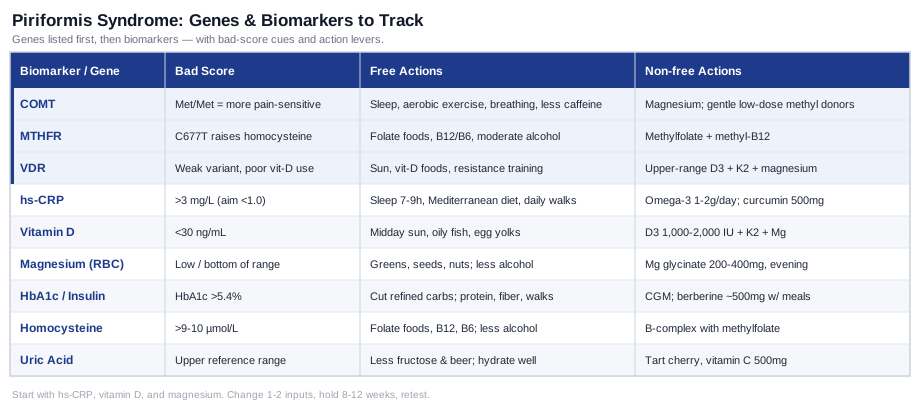
The 6 Biomarkers Worth Tracking For Piriformis Pain
Piriformis syndrome is not caused by a single blood marker. But the way your body handles inflammation, muscle contraction, nerve repair, and metabolic stress absolutely influences how bad it gets and how long it lasts. The biomarkers below are the ones with the clearest link to muscle tension, nerve irritation, and recovery capacity. Think of them not as a diagnosis, but as a dashboard: each one tells you where a hidden lever might be.
A quick, sensible framing borrowed from clinicians like Peter Attia and lipidologists such as Thomas Dayspring: you do not manage what you do not measure, and single readings mean less than trends. Test, change one or two things, retest, and watch the direction.
1. High-Sensitivity C-Reactive Protein (hs-CRP)
Why it matters: hs-CRP is a sensitive marker of low-grade, body-wide inflammation. When it runs high, nerves become more chemically irritable and muscles are more prone to protective tightening. Chronic sciatic-type pain has repeatedly been associated with elevated inflammatory markers, and a persistently inflamed body tends to heal soft tissue more slowly. It is the single most useful "hidden" marker for someone whose piriformis pain will not settle.
How to measure it: A simple blood draw, ordered as hs-CRP (not standard CRP). It is widely available and inexpensive — roughly 10 to 30 USD/EUR through most labs, and often included in basic panels. Ideal is under 1.0 mg/L; 1–3 mg/L is moderate; above 3 mg/L is high (retest, since acute infections spike it temporarily).
If the score is bad, the plan without supplements: Prioritize the levers with the biggest anti-inflammatory payoff. Improve sleep to 7–9 hours (poor sleep alone raises CRP). Reduce ultra-processed food, added sugar, and refined seed-oil-heavy fried food; lean toward a Mediterranean-style pattern rich in olive oil, vegetables, and oily fish. Add regular low-intensity movement (walking, swimming) most days — sedentary time drives inflammation. Address visceral fat, since abdominal fat is a CRP factory. Frequency: daily habits, retest in 8–12 weeks. Side effects: none, other than the effort.
If the score is bad, the plan with supplements or equipment: Omega-3 (EPA/DHA) at roughly 1–2 g combined per day is the best-supported option for lowering inflammatory tone; take with food. Curcumin (with piperine or in a bioavailable form) around 500 mg once or twice daily may help some people. Cycling: reassess omega-3 and curcumin every 3 months rather than taking indefinitely without review. Side effects: high-dose fish oil can thin blood slightly and cause reflux; curcumin can upset the stomach and may interact with blood thinners — clear it with your doctor if you take anticoagulants.
2. Vitamin D (25-Hydroxyvitamin D)
Why it matters: Vitamin D influences muscle strength, muscle-cell function, and pain processing. Low vitamin D is strongly associated with chronic musculoskeletal pain and with weaker, more fatigable muscle — exactly the kind of environment where a compensating muscle like the piriformis overworks and locks up. Correcting a deficiency will not "cure" the syndrome, but it removes a common obstacle to recovery.
How to measure it: Blood test for 25-OH vitamin D, about 20–45 USD/EUR, often bundled in wellness panels. Many labs call "normal" anything above 20 ng/mL, but most integrative clinicians target roughly 30–50 ng/mL (75–125 nmol/L).
If the score is bad, the plan without supplements: Get sensible midday sun exposure on arms and legs several times a week (skin type and latitude change how much you need). Eat more vitamin-D-containing foods: oily fish (salmon, sardines, mackerel), egg yolks, and fortified products. Frequency: sun several times weekly; retest after a season. Side effects: avoid burning — sunburn is a net negative.
If the score is bad, the plan with supplements or equipment: Vitamin D3 is the practical fix. A common maintenance range is 1,000–2,000 IU daily, with higher short-term correction doses (e.g., 4,000 IU) used under guidance for genuine deficiency. Pair with vitamin K2 and adequate magnesium, which vitamin D metabolism depends on. Frequency/cycling: daily, then retest in 3 months and adjust — this is a marker you titrate to a target, not a "more is better" nutrient. Side effects: excessive long-term dosing can raise calcium; do not megadose blindly without testing.
3. Magnesium (RBC Magnesium)
Why it matters: Magnesium is the mineral that lets muscles relax after contracting. Low magnesium is linked to cramping, twitching, heightened muscle excitability, and poorer sleep — all of which feed a chronically over-toned piriformis. For a condition defined by a muscle that will not let go, magnesium status is unusually relevant.
How to measure it: Standard serum magnesium is cheap but insensitive (the body defends serum levels aggressively). RBC magnesium (red blood cell magnesium) gives a better picture of tissue status and costs roughly 30–60 USD/EUR. Aim for the upper half of the reference range.
If the score is bad, the plan without supplements: Emphasize magnesium-rich foods daily: leafy greens, pumpkin seeds, almonds, cashews, black beans, and dark chocolate. Reduce heavy alcohol intake, which depletes magnesium. Manage chronic stress, which increases magnesium loss. Frequency: daily dietary focus; retest in 8–12 weeks.
If the score is bad, the plan with supplements or equipment: Magnesium glycinate or citrate around 200–400 mg elemental in the evening supports muscle relaxation and sleep. Topical Epsom-salt baths are a pleasant adjunct (evidence is softer, but low risk). Cycling: daily is generally fine; reassess after 3 months. Side effects: citrate and oxide forms can cause loose stools — glycinate is gentler; people with kidney disease must check with a doctor before supplementing.
4. HbA1c And Fasting Insulin (Metabolic Health)
Why it matters: Chronically high blood sugar and insulin resistance damage small nerves and blood vessels, lower the pain threshold, and slow tissue healing. A metabolically stressed body is a body where sciatic-type irritation lingers. Tracking HbA1c (three-month average blood sugar) and fasting insulin catches this well before a diabetes diagnosis.
How to measure it: HbA1c costs about 15–35 USD/EUR; fasting insulin is similar. Many clinicians who follow Peter Attia's prevention-first thinking value fasting insulin as an early-warning marker. General targets: HbA1c under 5.4%, fasting insulin comfortably in single digits (µIU/mL).
If the score is bad, the plan without supplements: The highest-leverage moves are dietary and muscular: reduce refined carbohydrate and sugar-sweetened drinks, build meals around protein and fiber, and — critically — add resistance training and post-meal walks, because contracting muscle pulls glucose out of the blood without needing much insulin. Sleep and stress management matter here too. Frequency: daily habits; retest HbA1c in 3 months.
If the score is bad, the plan with supplements or equipment: A continuous glucose monitor (CGM) is genuinely useful equipment here — it shows which of your meals spike you, turning guesswork into feedback. Berberine (around 500 mg two to three times daily with meals) has data for improving glycemic control. Cycling: berberine is often cycled (e.g., several weeks on, a break) and should not be combined casually with diabetes medication. Side effects: berberine can cause GI upset and interacts with several drugs — medical supervision is wise.
5. Homocysteine (Nerve And Methylation Health)
Why it matters: Elevated homocysteine signals that your B-vitamin-dependent methylation pathways are strained. High homocysteine is associated with nerve irritation, vascular stress, and poorer nerve health — relevant when a nerve is already being mechanically nudged by a tight muscle. It also ties directly to the MTHFR gene discussed later.
How to measure it: A blood test costing roughly 25–50 USD/EUR. A common target is under 9–10 µmol/L; many labs flag only above ~15, which is arguably too lenient.
If the score is bad, the plan without supplements: Increase folate-rich foods (leafy greens, legumes, avocado), B12 sources (fish, eggs, meat, or fortified foods for plant-based eaters), and B6 (poultry, fish, bananas). Reduce excess alcohol and address low stomach acid or gut issues that impair B12 absorption. Frequency: daily dietary focus; retest in 3 months.
If the score is bad, the plan with supplements or equipment: A B-complex containing methylfolate (rather than plain folic acid), methyl-B12, and B6 is the standard fix, especially for those with MTHFR variants. Frequency/cycling: daily until homocysteine normalizes, then reassess. Side effects: very high B6 over long periods can cause nerve tingling (ironically), so keep B6 modest; some people feel over-stimulated on high-dose methyl donors and do better with lower doses.
6. Uric Acid
Why it matters: Uric acid is an under-appreciated marker of metabolic and inflammatory stress. High levels are linked to systemic inflammation, higher blood pressure, and — in some people — joint and soft-tissue irritation. It is cheap, informative, and easy to move, which makes it a worthwhile addition to your dashboard.
How to measure it: A standard blood test, about 10–25 USD/EUR, frequently included in basic panels. General targets sit in the mid-to-lower reference range rather than the upper edge.
If the score is bad, the plan without supplements: Cut back on fructose-heavy drinks and alcohol (especially beer), moderate very high purine intake if it is excessive, and — importantly — stay well hydrated, since water helps clear uric acid. Weight loss, if relevant, lowers it substantially. Frequency: daily hydration and dietary changes; retest in 8–12 weeks.
If the score is bad, the plan with supplements or equipment: Tart cherry extract and vitamin C (around 500 mg daily) have modest uric-acid-lowering data and are low risk for most people. Cycling: reassess after 3 months. Side effects: generally mild; anyone with a history of kidney stones or gout should manage uric acid with their doctor rather than self-treating, and true gout needs medical care.
How To Use This Dashboard
You do not need to chase all six at once. Start with hs-CRP, vitamin D, and magnesium, since they are cheap and the most directly tied to muscle and nerve behavior. Change one or two inputs, hold them for 8–12 weeks, and retest. The point is not perfect numbers — it is finding the one or two markers that, once corrected, let your rehab finally "take." With that terrain understood, it is worth looking at the genetic settings that can bias these markers in the first place.
The 3 Genes That May Tilt The Odds
Genetics does not "cause" piriformis syndrome — this is a mechanical and biochemical condition, not an inherited one. But your genes shape how much pain you feel, how inflamed you run, and how efficiently you process the B vitamins that protect your nerves. Researchers such as Ali Torkamani have shown how common gene variants nudge individual biology, and human-genetics advocates like Gary Brecka have popularized the idea of compensating for "bad" variants through lifestyle. The evidence for pain-related genes is real but still early, so treat the plans below as reasonable compensation, not certainty.
COMT — Pain Sensitivity And Stress Chemistry
The COMT gene helps break down catecholamines like dopamine, adrenaline, and noradrenaline. Certain variants (often the "Met/Met" type) are associated in human studies with higher pain sensitivity and a greater tendency toward musculoskeletal pain — meaning the same nerve irritation may simply hurt more. This is one of the better-studied human pain genes, though effects are modest and context-dependent.
If the gene is bad, the plan without supplements: Because slow COMT variants clear stress chemicals more slowly, nervous-system regulation matters most. Prioritize consistent sleep, daily aerobic movement (which improves pain modulation), and stress-lowering practices such as slow breathing and mindfulness. Reduce excess caffeine, which can pile onto an already busy catecholamine system. Frequency: daily; these are lifestyle constants, not cycles.
If the score is bad, the plan with supplements or equipment: Magnesium (see biomarker 3) supports COMT function and calms muscle excitability. Some people with slow COMT do better with lower, gentler doses of methyl donors, since aggressive methylation supplementation can feel over-stimulating. Cycling/side effects: introduce one thing at a time, start low, and stop anything that increases anxiety or jitteriness.
MTHFR — Methylation And Homocysteine
Common MTHFR variants (such as C677T) reduce the enzyme's efficiency, which can raise homocysteine — the nerve-relevant marker discussed above. The clinical importance of MTHFR is often overstated online, but the link to homocysteine is well established, and homocysteine is worth keeping in a healthy range for nerve and vascular health.
If the gene is bad, the plan without supplements: Load your diet with natural folate (leafy greens, legumes, avocado) and reliable B12 and B6 sources, and moderate alcohol, which competes with B-vitamin metabolism. For many people, food-first is enough to keep homocysteine in range. Frequency: daily; recheck homocysteine to confirm it is working.
If the score is bad, the plan with supplements or equipment: Use methylfolate and methyl-B12 rather than plain folic acid, since reduced-function variants use the active forms more readily. Cycling: daily until homocysteine normalizes, then maintain a lower dose. Side effects: some people feel wired on high methylfolate; if so, drop the dose. Keep B6 modest to avoid tingling from over-supplementation.
VDR — Vitamin D Receptor And Muscle Function
The VDR gene codes for the vitamin D receptor. Certain variants are associated with how effectively your tissues use vitamin D, which links directly to muscle strength and pain regulation (see biomarker 2). The human evidence tying specific VDR variants to musculoskeletal pain is still emerging, so the practical takeaway is simple: if you carry a less efficient variant, you may need to aim for the higher end of a healthy vitamin D level to get the same muscle benefit.
If the gene is bad, the plan without supplements: Maximize the non-pill inputs — regular sensible sun exposure, vitamin-D-rich foods, and resistance training, which independently improves muscle function regardless of receptor efficiency. Frequency: sun several times weekly, strength work 2–3 times weekly.
If the score is bad, the plan with supplements or equipment: Supplement vitamin D3 to reach the upper part of the target range (guided by testing), and ensure co-factors magnesium and K2 are covered so the vitamin can act. Cycling: titrate to blood level, retest every 3 months. Side effects: as with biomarker 2, avoid indefinite megadosing without testing calcium and vitamin D levels.
A Sensible Way To Think About Your Genes
Genes set a tendency, not a destiny. If you already track the six biomarkers above, you will often catch and correct the downstream effects of these variants without ever needing a genetic test. Testing (through consumer or clinical services) is optional and mainly useful for tailoring dose and target. With biology and genetics covered, the next strategy zooms out to how you actually move and load your spine — where a leading researcher has quietly overturned a lot of standard advice.
The Spine Science That Challenges Standard Back-Pain Advice
If one body of work deserves a place in every piriformis and sciatica sufferer's education, it is that of Professor Stuart McGill, the spine biomechanist behind Back Mechanic and decades of peer-reviewed research. His approach challenges a lot of conventional clinical thinking — the reflex to rest, to stretch aggressively, to image everything, and to treat every back and buttock pain the same way. Here are the ten most impactful ideas, each one directly useful when a tight piriformis and an irritated sciatic nerve are involved.
1. Find Your Specific Pain Trigger First
McGill insists that generic protocols fail because they skip diagnosis. Before any exercise, identify the exact movements, postures, and loads that provoke your pain. For many piriformis sufferers, that trigger is prolonged sitting or specific rotations — knowing it precisely is half the solution.
2. Remove The Cause Before Adding Treatment
His first move is subtraction, not addition. If sitting slumped for hours reignites your buttock pain, no amount of stretching outruns the daily re-injury. Removing the repeated aggravation is what finally lets tissue calm down.
3. Aggressive Stretching Can Backfire
This is his most doctrine-challenging point. Constantly stretching an already irritated, over-toned muscle or nerve can sensitize it further. Chasing that "good hurt" stretch on the piriformis can, for some people, keep the sciatic nerve inflamed rather than soothe it.
4. Build Stability Instead Of Chasing Flexibility
McGill argues that most aching spines and hips need stability and endurance, not more range of motion. A stable core and hips reduce the compensatory overwork that drives the piriformis to clamp down in the first place.
5. The "Big Three" Core Exercises
His signature routine — the modified curl-up, the side plank, and the bird-dog — builds spinal endurance without loading the spine into painful flexion. They are gentle, scalable, and the practical backbone of his rehab.
6. Walk Often, Sit Less
Frequent, brisk walking is one of his most recommended tools. It decompresses the spine, pumps nutrients through discs and soft tissue, and directly counters the prolonged sitting that provokes piriformis pain.
7. Master The Hip Hinge
Learning to bend from the hips while keeping a neutral spine protects both the low back and the deep hip muscles. Poor bending mechanics quietly overload the piriformis and its neighbors day after day.
8. Pain Is A Signal To Adjust, Not To Freeze
McGill rejects both extremes — total rest and pushing through. The skill is to keep moving within pain-free ranges, nudging the boundary outward gradually as tissue tolerance improves.
9. Not Everyone Should Do The Same Exercise
Some spines and hips hate flexion; others hate extension. Matching the exercise to your personal pain profile is why cookie-cutter sheets fail and individualized assessment succeeds.
10. Consistency And Patience Beat Intensity
Recovery is built through daily, unglamorous, well-executed movement over weeks and months. This mindset shift — from quick fix to steady practice — is often the difference between recurring flare-ups and lasting relief.
The through-line is empowering: much of your recovery is under your control once you stop doing the wrong things and start loading your body intelligently. That control extends to the hands-on and mind-body therapies covered next.
Complementary Approaches With Real Human Evidence
Plenty of "alternative" options are marketed for buttock and sciatic pain; most lack good data. The five below were chosen because they have meaningful human evidence for sciatic-type or musculoskeletal pain and map sensibly onto the mechanisms of piriformis syndrome. None replaces a proper assessment, but each can be a useful part of a plan.
Yoga
Yoga combines gentle loading, hip mobility, breathing, and stress regulation — a good match for a condition driven by tight hips, sensitized nerves, and a stressed nervous system. Because it builds controlled mobility rather than forcing end-range stretch, it can address stiffness without the backfire McGill warns about.
Multiple randomized trials and systematic reviews have found that structured yoga programs reduce chronic low-back pain and improve function compared with usual care, with effects broadly comparable to conventional physical therapy. Reviews summarized by Cochrane and studies indexed on PubMed (National Institutes of Health) support small-to-moderate benefits for chronic back pain, the closest well-studied cousin of piriformis-related pain.
Apply it cautiously: choose a gentle, hip-focused or therapeutic yoga class, tell the instructor about your sciatic symptoms, and skip or modify deep seated forward folds and aggressive pigeon poses that overstretch an irritated piriformis. Evidence is strongest for chronic back pain generally rather than piriformis specifically, so treat it as a supportive practice, not a targeted fix.
Massage Therapy
Massage — including deep tissue and trigger-point work over the gluteal region — can reduce muscle tone, improve local circulation, and lower pain perception. For a syndrome defined by a chronically tight muscle sitting on a nerve, releasing that muscular tension is mechanistically sensible and often provides real short-term relief.
Systematic reviews of massage for low-back pain, several available through the National Institutes of Health's PubMed database, report short-term reductions in pain and improved function, though the quality of studies is mixed and effects tend to fade without ongoing self-care. Trigger-point work aimed at the gluteal and hip muscles is commonly used clinically for piriformis symptoms.
Use it as a "window opener": book targeted gluteal massage to reduce tension, then immediately use that more comfortable window to do your mobility and stability work so the relief lasts. Communicate clearly about pressure, and expect it to complement — not replace — active rehab.
Spinal Manipulation / Chiropractic Manipulation
Manual therapy of the lumbar spine and pelvis aims to improve joint mobility and reduce pain, and it is one of the more commonly sought treatments for sciatic-type complaints. Because piriformis symptoms sometimes coexist with lumbar or sacroiliac dysfunction, addressing the whole region can help.
Clinical guidelines and systematic reviews (including evidence summarized on PubMed via the National Institutes of Health) find that spinal manipulation offers small-to-moderate short-term benefit for low-back pain and sciatica, broadly similar to other active treatments. It is generally considered safe when performed by a qualified practitioner, with serious adverse events being rare.
Approach it as one tool among several: choose a licensed, experienced provider, avoid programs that promise a "cure" or require endless visits, and prefer practitioners who also coach movement and exercise. If a few sessions produce no meaningful change, redirect your effort and money elsewhere.
Low-Level Laser Therapy / Photobiomodulation
Low-level laser therapy (LLLT), or photobiomodulation, uses specific light wavelengths to reduce inflammation and modulate pain at the tissue level. Given the inflammatory component highlighted in the biomarker section, a therapy aimed at local inflammation and nerve irritation has plausible relevance for piriformis pain.
Several randomized trials and meta-analyses, indexed on the National Institutes of Health's PubMed, report that LLLT can reduce pain in musculoskeletal conditions and some forms of nerve-related pain, though results vary considerably with dose, wavelength, and device. The evidence is promising but mixed, and quality control between clinics differs widely.
If you try it, seek a clinic using appropriate parameters and treating the correct region, and view it as an adjunct while you address the biomarker and movement fundamentals. Be skeptical of expensive multi-session packages sold on the promise of light alone, and stop if you see no benefit after a reasonable trial.
Progressive Muscle Relaxation
Progressive muscle relaxation (PMR) trains you to systematically tense and release muscle groups, teaching the nervous system to down-regulate chronic muscle guarding. For a muscle that will not relax and a nervous system running hot on pain, this is a directly relevant, zero-cost skill — and it dovetails with the COMT stress-chemistry point above.
PMR and related relaxation training have human evidence, summarized in reviews accessible through the National Institutes of Health, for reducing chronic pain intensity and improving coping, particularly when combined with active treatment. The effects come partly from lowered muscle tension and partly from reduced pain-amplifying stress and poor sleep.
Practice it daily, ideally in the evening to improve sleep and unwind the day's muscular tension, following a guided 10–15 minute routine. It pairs especially well with the magnesium and sleep strategies from the biomarker section. Evidence is stronger for chronic pain broadly than for piriformis specifically, so use it as a reliable supporting habit rather than a standalone cure.
Conclusion
Piriformis syndrome rarely resolves through one perfect stretch. It settles when you address the whole picture: the inflammatory and muscular terrain you can measure through a handful of biomarkers, the genetic tendencies you can quietly compensate for, the way you move and load your body every day, and the supportive therapies that calm a sensitized system. The reason generic advice underperforms is that it treats everyone's pain as identical, when your levers are specific to you.
The most useful next step is small and concrete. Check the three cheap, high-yield biomarkers first — hs-CRP, vitamin D, and magnesium — and note the daily posture or movement that most reliably provokes your pain. Change one input at a time, give it a few weeks, and pay attention to the trend. Bring your numbers and your pain triggers to a qualified professional who is willing to individualize rather than hand you the same sheet as everyone else.
Better information really does lead to better decisions. You now have a clearer map of what to measure, what to adjust, and where the evidence is genuinely strong versus merely promising. Use it to take the next smart, patient step — and to stop guessing about a problem you can finally start to understand.