This article contains AI generated content.
Pompe Disease Genes And Biomarkers: 3 Genes And 7 Biomarkers To Track
Introduction
If you or someone you love is living with Pompe disease, you already know that it does not behave like a simple diagnosis you can look up once and forget. It is a slow, quiet condition in the muscles, one that shows up as a stairway that feels steeper than it used to, a breath that gets shallower lying flat, or a lab result that a general doctor once waved away as "probably nothing." You are not imagining the gap between how you feel and what a five-minute appointment can capture.
Most general advice about Pompe disease stops at the headline: it is a rare inherited disorder, there is an enzyme replacement therapy, and you should see a specialist. All of that is true, and none of it tells you what to actually watch between appointments, or how to tell whether your current plan is working. Broad advice is not wrong, it is just too far away from your daily reality to be useful.
This article takes a closer, more practical view. Pompe disease is driven by a single gene, but the way it plays out in your body can be measured, followed over time, and influenced at the margins by how you train, eat, and breathe. When you can see the numbers, you stop guessing.
The hope here is grounded, not inflated. Nothing on this page cures a genetic condition, and no supplement rebuilds a broken enzyme. But better information leads to better decisions. Below you will find the biomarkers worth tracking and what each one may reveal, the genes that shape the disease and how their effects may be partly compensated, a podcast-style deep dive into muscle science that challenges old advice, and a short look at evidence-based complementary approaches. Each section is designed to give you one more honest lever to pull.
Summary
Pompe disease is caused by faults in a single gene, GAA, which leaves your cells unable to clear glycogen from their lysosomes. That one defect ripples outward into muscle weakness, breathing problems, and a scatter of lab abnormalities that are easy to misread. The good news is that this condition is unusually measurable, and the right measurements turn a vague sense of decline into a dashboard you can act on.
In the pages below, you will learn the seven biomarkers that specialists actually follow, including one urine test most patients have never heard of that tracks glycogen build-up better than the classic muscle enzyme everyone knows. You will find out why a breathing test done lying down can reveal danger that a normal spirometry misses, and what the antibody your own body makes against treatment can do to your results. For each marker, there is a plan with and without supplements or equipment, including honest notes on frequency, cycling, and side effects.
After the biomarkers, you will see the three genes that shape how mild or severe the disease becomes, a myth-busting muscle-science deep dive that overturns the old "rest and avoid exertion" advice, and the complementary approaches, led by respiratory muscle training, that have real human evidence behind them. Read on if you want to stop guessing and start tracking.
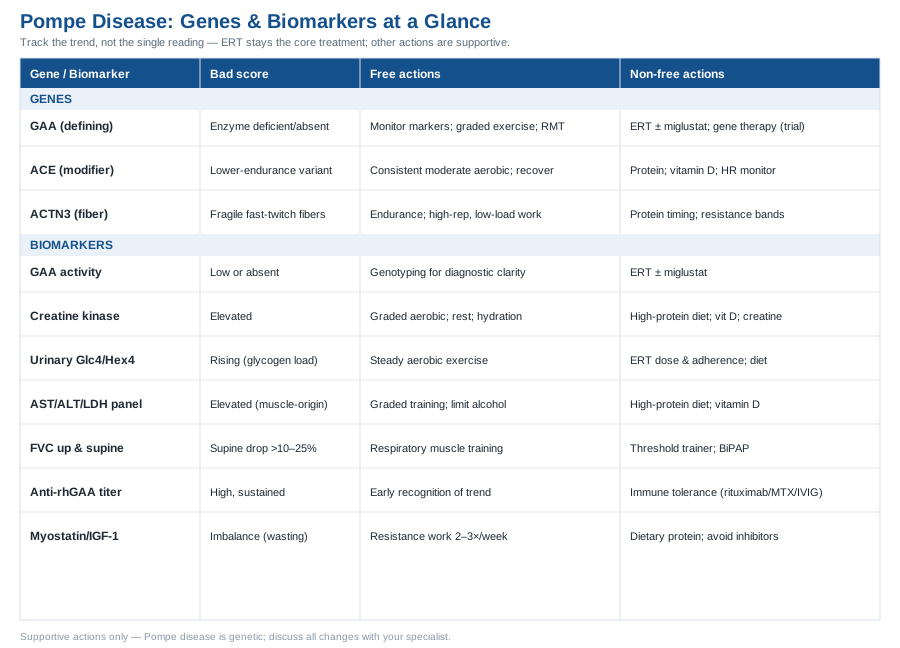
The 7 Biomarkers Worth Tracking In Pompe Disease
Pompe disease rewards people who measure. Because the underlying problem is a steady accumulation of glycogen in muscle, the disease often moves faster than symptoms reveal, and by the time you feel a change, tissue has already been lost. Tracking the right biomarkers on a schedule lets you and your specialist catch drift early and judge whether enzyme replacement therapy (ERT) and lifestyle work are actually holding the line. The philosophy is the same one Peter Attia champions for longevity in general: define your objective markers, measure them regularly, and treat trends as more meaningful than single readings.
A quick, important frame before the list. None of these biomarkers can be "fixed" by willpower or a supplement stack the way a cholesterol number sometimes can. Pompe disease is genetic, and the disease-modifying treatment is prescription ERT (alglucosidase alfa, avalglucosidase alfa, or cipaglucosidase alfa with miglustat), managed by a metabolic or neuromuscular specialist. The plans below are supportive, aimed at protecting muscle and helping your numbers trend in the right direction, never a replacement for medical treatment.
1. Acid Alpha-Glucosidase (GAA) Enzyme Activity
This is the biomarker that defines the disease. GAA is the enzyme your lysosomes use to break glycogen down into glucose, and in Pompe disease its activity is low or absent. Measuring it confirms the diagnosis and, just as importantly, separates true Pompe disease from harmless "pseudodeficiency" variants that lower the enzyme reading without causing disease, a distinction that trips up many newborn screening programs.
How to measure it
GAA activity is measured from a dried blood spot using tandem mass spectrometry or fluorometry, often the same technology used in newborn screening described in the review Lessons Learned from Pompe Disease Newborn Screening and Follow-up. A confirmatory leukocyte or fibroblast assay adds accuracy, as detailed in this leukocyte acid alpha-glucosidase assay study. Cost typically runs from roughly 100 to 300 US dollars and is usually covered when Pompe disease is suspected.
If the score is bad, the plan without supplements
There is no lifestyle route to raising your own GAA activity, and it would be dishonest to pretend otherwise. The genuinely useful "plan" here is diagnostic clarity: get GAA genotyping alongside the enzyme test so a low number is correctly interpreted, and make sure a pseudodeficiency allele is not being mistaken for disease.
If the score is bad, the plan with supplements or equipment
The only thing that meaningfully restores functional enzyme is prescription ERT, which delivers a recombinant version of GAA into your cells. Newer options pair the enzyme with the pharmacological chaperone miglustat to stabilize it. This is a medical decision, not a supplement; discuss timing, dose, and infusion frequency (typically every two weeks) with your specialist.
2. Creatine Kinase (CK)
CK is the classic muscle-damage marker, and it is almost always elevated in Pompe disease because leaking, glycogen-stuffed muscle fibers spill it into the blood. It is cheap, widely available, and useful as a rough gauge of ongoing muscle breakdown, though it is non-specific and can be pushed up by exercise, so it should be read as part of a pattern rather than in isolation.
How to measure it
A standard blood draw, run in almost any lab, costs roughly 10 to 40 US dollars. Because vigorous or unaccustomed exercise raises CK for days, standardize your conditions: draw it in the morning, well rested, before exercise, and hydrated.
If the score is bad, the plan without supplements
Avoid crash-course workouts and eccentric overload that trigger spikes. Instead, follow the graded aerobic and light-resistance approach shown to help Pompe patients in the exercise and high-protein crossover study: moderate treadmill or cycling work at a comfortable intensity, plus rest days. Sleep and hydration matter more than people expect. Frequency: submaximal aerobic activity most days, resistance work two to three times weekly with full recovery between sessions.
If the score is bad, the plan with supplements or equipment
A high-protein, lower-carbohydrate diet is the best-studied nutritional lever and may reduce muscle catabolism; the classic protocol added alanine and protein to spare muscle. Vitamin D correction (if you are deficient) supports muscle function; a common maintenance range is 1,000 to 2,000 IU daily, retested in three months. Creatine monohydrate (3 to 5 g daily) is used by some for strength but will raise CK modestly and should be discussed first with your specialist. Side effects to watch: mild GI upset with creatine, and possible over-supplementation with fat-soluble vitamin D. ERT remains the primary driver of CK improvement.
3. Urinary Glucose Tetrasaccharide (Glc4 / Hex4)
This is the biomarker most patients have never heard of, and arguably the most useful for tracking the disease itself. Glc4 (also written Hex4) is a breakdown fragment of accumulated glycogen that spills into the urine, so it acts as a window onto how much glycogen your body is failing to clear. Unlike CK, it correlates with skeletal muscle glycogen content and with clinical response to ERT, especially in infantile-onset disease.
How to measure it
A random or timed urine sample is analyzed by liquid chromatography-tandem mass spectrometry at specialized labs (such as Mayo or Greenwood Genetic Center). Expect roughly 150 to 300 US dollars per test. The evidence base includes this study on Glc4 as a Pompe biomarker and the original work showing Glc4 tracking response to enzyme replacement therapy.
If the score is bad, the plan without supplements
Because Glc4 reflects glycogen load, the non-supplement lever is consistent aerobic exercise, which shifts muscle toward using fat for fuel and reduces glycogen-related damage. Follow a steady, sustainable routine rather than sporadic hard efforts. Track the trend every three to six months rather than reacting to one number.
If the score is bad, the plan with supplements or equipment
The dominant factor is ERT dose and adherence; a rising Glc4 on treatment is a signal to review therapy with your specialist. Pairing ERT with the high-protein diet and exercise combination from the nutrition and exercise in Pompe disease review may support better glycogen handling. There is no over-the-counter supplement that lowers Glc4 directly; be skeptical of any product claiming to.
4. The Muscle-Origin Enzyme Panel (AST, ALT, LDH)
Here is a trap worth knowing: in Pompe disease, AST, ALT, and LDH are often elevated, and because these are "liver enzymes" on most panels, patients are sometimes misdiagnosed with liver disease and sent for unnecessary work-ups. In Pompe disease these enzymes usually come from muscle, not liver, and they tend to fall with effective treatment.
How to measure it
These are part of a routine comprehensive metabolic panel plus LDH, costing roughly 10 to 40 US dollars. To interpret them correctly, ask your clinician to check them against CK and, if there is doubt about the source, a GGT (which is typically normal when the elevation is muscular).
If the score is bad, the plan without supplements
The same muscle-protective habits apply: graded aerobic and resistance training, avoiding alcohol excess (which stresses the liver and muscle), and standardizing test conditions so an exercise spike is not misread. Recheck every three to six months alongside CK.
If the score is bad, the plan with supplements or equipment
A high-protein diet and correction of vitamin D deficiency support muscle integrity. In the crossover study, LDH fell significantly after combined exercise plus diet. Avoid statins and other muscle-stressing drugs where possible, and never add these on your own; coordinate with your physician, since drug-related muscle enzyme elevation can be confused with disease progression.
5. Forced Vital Capacity (FVC), Upright And Supine
In late-onset Pompe disease, the diaphragm is often the first casualty, and respiratory failure is the leading cause of illness and death. This makes lung function the single most important thing to monitor. The clever detail: measuring FVC both sitting up and lying down exposes diaphragm weakness that an upright test alone can hide, because a weak diaphragm cannot resist the abdominal contents pushing up when you are supine.
How to measure it
Spirometry is done in a clinic by a respiratory therapist, typically 40 to 100 US dollars per session, and should include both positions. A supine drop in FVC of more than about 10 to 25 percent is a red flag for diaphragm involvement, as discussed in this analysis of dynamic respiratory muscle function in late-onset Pompe disease. A home peak-flow meter or portable spirometer (30 to 150 US dollars) can help you track trends between visits.
If the score is bad, the plan without supplements
Respiratory muscle training (RMT) is the standout non-drug intervention. A systematic review and meta-analysis of RMT in Pompe disease found significant gains in maximal inspiratory and expiratory pressure. Breathing positioning, staying upright when short of breath, and treating any sleep-disordered breathing also help. Frequency in trial protocols was typically daily sessions across about 12 weeks, then maintenance.
If the score is bad, the plan with supplements or equipment
The key "equipment" is an inspiratory/expiratory threshold trainer (a pressure-threshold device costing roughly 30 to 90 US dollars), used under guidance following the structured protocol from the sham-controlled RMT trial in late-onset Pompe disease. Cycle intensity progressively rather than maxing out early, and back off during respiratory infections. Side effects are usually mild (fatigue, transient breathlessness); stop and seek advice if you feel chest pain or lightheadedness. Non-invasive ventilation (BiPAP) is prescribed when night-time breathing declines.
6. Anti-rhGAA Antibody Titer
If you are on ERT, your immune system may recognize the recombinant enzyme as foreign and make antibodies against it. High, sustained antibody titers can neutralize the treatment and blunt your response, a problem most severe in "CRIM-negative" infantile patients who make no native enzyme at all. Tracking this titer explains why some patients stop responding to a therapy that once worked.
How to measure it
This is a specialized send-out blood test (historically performed at reference labs such as Duke), with variable cost depending on insurance and lab. It is ordered by your specialist, usually at baseline and periodically after starting ERT, and interpreted alongside your Glc4 and clinical trajectory.
If the score is bad, the plan without supplements
There is no lifestyle fix for antibody titers. The useful action is early recognition: if your clinical and biomarker trends worsen while titers climb, this is the explanation to bring to your care team rather than assuming the disease is simply advancing.
If the score is bad, the plan with supplements or equipment
Management is medical: immune tolerance induction protocols (for example combinations of rituximab, methotrexate, and IVIG) can lower titers, and CRIM status guides how aggressively to intervene, especially in infants. These are specialist-only treatments with real immunosuppression risks, described in the context of current infantile-onset Pompe disease treatment.
7. Emerging Muscle-Signaling Markers (Myostatin And IGF-1)
This last one is on the horizon rather than in routine clinics, but it is worth knowing because it points to where monitoring is heading. Myostatin restrains muscle growth while insulin-like growth factor 1 (IGF-1) promotes it, and their balance may reflect whether your muscle is regenerating or wasting. Research suggests these could become therapeutic biomarkers for Pompe disease.
How to measure it
These are currently research or specialty assays, not standard care, and are not something to order for yourself. The relevant evidence is summarized in Myostatin and IGF-1 as potential therapeutic biomarkers for Pompe disease.
If the score is bad, the plan without supplements
The practical takeaway today is that resistance exercise naturally shifts this balance toward muscle building by suppressing myostatin signaling. Progressive, well-recovered strength work two to three times weekly is the evidence-aligned way to influence this axis without any product.
If the score is bad, the plan with supplements or equipment
Adequate dietary protein (spread across meals) supports IGF-1-mediated muscle maintenance. Avoid unregulated "myostatin inhibitor" supplements, which lack good human evidence and can carry unknown risks. Genuine myostatin-targeting drugs remain investigational and should only ever be accessed through clinical trials.
The 3 Genes Behind Pompe Disease And How Their Effects Play Out
Biomarkers tell you what is happening now; genes tell you why, and how the story may unfold. Pompe disease is unusual among common health topics because one gene explains almost everything, but a couple of modifier genes help explain why two people with the same core mutation can have very different journeys. As genomics researchers like Ali Torkamani have emphasized, knowing your variants turns a generic prognosis into a more personal map.
GAA: The Gene That Defines The Disease
The GAA gene encodes acid alpha-glucosidase, the lysosomal enzyme that breaks down glycogen. When both copies carry disease-causing variants, the enzyme is deficient or absent, glycogen piles up inside lysosomes, and muscle cells are progressively damaged. The specific variants matter enormously: the common "IVS1" splice-site variant often produces milder, adult-onset disease, while two severe (null) variants typically cause the aggressive infantile form with heart involvement. Not every low reading is disease, though. As shown in work on genetic heterozygosity and pseudodeficiency in Pompe newborn screening, pseudodeficiency alleles can lower enzyme activity harmlessly, which is why genotyping is essential.
If the gene is bad, the plan without supplements
You cannot edit or exercise your way to a working GAA gene, so the honest non-supplement plan is monitoring and muscle preservation: track the seven biomarkers above, protect your diaphragm with respiratory training, and keep muscle active with graded exercise so that whatever enzyme function you have (natural or from therapy) is working in the best possible tissue.
If the gene is bad, the plan with supplements or equipment
The compensating "equipment" here is medical: ERT replaces the missing enzyme, and next-generation approaches (chaperone-paired enzymes and, in trials, gene therapy that delivers a functional GAA gene) aim to restore the pathway more durably. A high-protein diet plus exercise, per the EPOC Consortium report on exercise, nutrition and ERT, supports the treated muscle. All of this is prescribed and supervised, not self-directed.
ACE: The Modifier That Shapes Muscle Performance
The ACE gene (angiotensin-converting enzyme) has a well-known insertion/deletion polymorphism linked to muscle performance and response to exercise in the general population. In muscle diseases, ACE genotype is studied as a modifier that may influence how much strength and endurance a person retains and how they respond to training. It does not cause Pompe disease, but it may nudge the trajectory.
If the gene is bad, the plan without supplements
Because ACE effects are expressed through exercise response, the lever is training design. If you carry a variant associated with lower endurance capacity, lean toward consistent, moderate aerobic work rather than sporadic intensity, and prioritize recovery. The point is to work with your physiology, following graded protocols shown to help Pompe patients.
If the gene is bad, the plan with supplements or equipment
Standard performance support applies: adequate protein, vitamin D correction if low, and possibly creatine for strength (discussed with your specialist, remembering it nudges CK up). A heart-rate monitor is useful "equipment" to keep aerobic sessions in a sustainable zone. There is no ACE-specific supplement worth chasing.
ACTN3: The "Muscle Fiber" Gene
The ACTN3 gene affects fast-twitch muscle fibers, and its common R577X variant (the so-called "speed gene") influences power versus endurance leanings. In a condition where every muscle fiber counts, ACTN3 status is an interesting modifier of how muscle copes with stress and training, though evidence in Pompe disease specifically remains early.
If the gene is bad, the plan without supplements
If your profile favors endurance over power, structure training accordingly: emphasize steady aerobic work and higher-repetition, lower-load resistance rather than heavy maximal lifts that risk muscle damage and CK spikes. Recovery-first programming protects fragile fibers.
If the gene is bad, the plan with supplements or equipment
Nutrition again leads: protein timing across the day and vitamin D adequacy. Resistance bands and light machines are gentler "equipment" than free-weight maxes for those with more vulnerable fast-twitch fibers. As with ACE, treat any ACTN3-specific supplement marketing with skepticism, because the human evidence in Pompe disease is not there yet.
The Muscle-Science Deep Dive That Overturns Old Advice
For decades, people with muscle diseases were told to rest and avoid exertion, on the theory that exercise would only accelerate damage. Modern muscle physiology, popularized in the long-form Huberman Lab podcast series with exercise scientist Dr. Andy Galpin, has flipped much of that thinking, and it maps onto Pompe disease better than the old doctrine did. The series is valuable precisely because it is built on a large body of studies rather than opinion. Here are ten of its most useful ideas, translated for a Pompe context.
1. Muscle Is An Organ You Can Train, Not Just Spend
Muscle responds to demand throughout life. The old "conserve it" framing treated muscle like a fixed bank balance; the science treats it as adaptable tissue. For Pompe disease, this reframes exercise from threat to therapy, an idea now supported by the nutrition and exercise review.
2. Strength And Endurance Are Different Systems
Galpin repeatedly distinguishes strength, hypertrophy, and endurance because they adapt through different pathways. Knowing this helps a Pompe patient prioritize: endurance and respiratory capacity often matter more day-to-day than maximal strength, so training time should reflect that.
3. Progressive Overload Must Be Gentle Here
The universal rule is that muscle adapts to gradually increasing demand. In a fragile system, "gradual" is the operative word: small, consistent increases beat aggressive jumps that spike CK and cause damage.
4. Recovery Is Where Adaptation Happens
Training is the stimulus; recovery is when the body actually rebuilds. Sleep, spacing sessions, and full rest days are non-negotiable, and they matter more in a condition where repair capacity is already stressed.
5. Protein Intake Drives Muscle Maintenance
Adequate protein, distributed across meals, supports muscle protein synthesis. This dovetails with the classic Pompe finding that a high-protein diet spares muscle, reinforced by the exercise-plus-diet crossover study.
6. Zone 2 Cardio Builds The Aerobic Base
Low-intensity, sustainable aerobic work improves the muscle's ability to use fat for fuel. In Pompe disease, shifting fuel use away from glycogen may reduce glycogen-related stress, which is exactly why steady treadmill or cycling work shows up in the best protocols.
7. The Diaphragm Is A Trainable Muscle Too
One of the most practical lessons: breathing muscles respond to targeted training just like limb muscles. The RMT meta-analysis confirms measurable gains in respiratory strength, turning an abstract idea into a daily device you can use.
8. Measurement Beats Guesswork
Galpin is relentless about testing rather than assuming. For Pompe disease, that means treating your biomarker dashboard and spirometry as feedback loops, adjusting training and treatment based on real data.
9. Consistency Outperforms Intensity
Small amounts done reliably beat heroic efforts done occasionally. For a chronic, progressive condition, the win is a routine you can sustain for years, not a program you abandon in a month.
10. The Body Adapts At Any Starting Point
Even deconditioned or weakened muscle can improve with the right stimulus. This is the grounded hope of the whole series: you are not locked into decline, and the evidence in adult Pompe patients from the EPOC Consortium backs it up.
Complementary Approaches With Real Evidence
Beyond medication and structured exercise, a few supportive approaches have human evidence worth taking seriously. The rule here is honesty: most complementary methods have not been studied in Pompe disease specifically, and only the first below has strong condition-specific data. The others are included for their role in breathing support and quality of life, with their limits stated plainly.
Breathing-Based Therapies (Respiratory Muscle Training)
Breathing-based therapy in Pompe disease means training the inspiratory and expiratory muscles directly, because diaphragm weakness is the condition's most dangerous feature. This is not a vague wellness practice but a targeted intervention aimed at the exact muscles that fail first, which makes it uniquely relevant here.
The specific protocol is pressure-threshold RMT: breathing against a calibrated resistance for structured daily sessions, progressively increased, typically over about 12 weeks. The supporting evidence is strong for this modality, including a systematic review and meta-analysis showing significant gains in maximal inspiratory and expiratory pressure, and a sham-controlled clinical trial protocol in late-onset patients.
To apply it realistically, get a pressure-threshold trainer (roughly 30 to 90 US dollars) and start under the guidance of a respiratory therapist so the resistance is set correctly. Progress slowly, pause during chest infections, and stop if you feel dizzy or have chest pain. Note that the same evidence shows respiratory gains did not translate into longer walking distance, so keep expectations focused on breathing.
Yoga (Breathing-Focused Practice)
Yoga may be relevant to Pompe disease mainly through its breath-control (pranayama) and gentle mobility components, which can complement formal respiratory training and help with the stiffness and fatigue that come from limited movement. It is a low-intensity way to stay active for people who find gyms intimidating.
The honest caveat is that there are no strong trials of yoga in Pompe disease specifically. The supporting evidence comes from broader work in chronic and neuromuscular conditions showing modest benefits for breathing efficiency, flexibility, and well-being, so this should be viewed as reasonable adjunct rather than proven therapy.
Applied cautiously, choose gentle, restorative styles, avoid poses that strain weak muscles or involve breath-holding under load, and treat the breathing practices as a supplement to (not a replacement for) prescribed RMT. A knowledgeable instructor informed about muscle weakness is important, and anything that provokes breathlessness should be modified.
Mindfulness Meditation / MBSR
Mindfulness-based stress reduction (MBSR) does not treat the muscle pathology, but it may help with the anxiety, sleep disruption, and low mood that commonly accompany a progressive rare disease. Managing stress also indirectly supports adherence to the exercise and treatment routines that do change outcomes.
Evidence in Pompe disease itself is essentially absent, so this is offered on the strength of well-established findings in chronic illness generally, where structured mindfulness programs improve quality of life and coping. That distinction matters and should be stated to anyone considering it.
In practice, an eight-week MBSR course or a reputable app-based program is a low-risk, low-cost addition. Use it to support breathing awareness and stress regulation, not as a substitute for medical care, and drop any practice that increases distress rather than easing it.
Conclusion
Pompe disease is genetic and cannot be reversed by habits or supplements, but it is one of the most trackable and, at the margins, most influenceable conditions in this space. A single gene, GAA, sets the stage; a couple of modifier genes shape the plot; and seven measurable biomarkers, led by the underrated urinary Glc4 test and lying-down lung function, let you see the story as it unfolds rather than after the damage is done. Prescription enzyme replacement therapy remains the core treatment, and the strongest supportive levers, graded exercise, a high-protein diet, and respiratory muscle training, now have real human evidence behind them.
The calm next step is not to overhaul everything at once. Pick one thing: schedule the biomarker panel you have been putting off, ask your specialist about measuring FVC in both positions, start a gentle respiratory-training routine, or simply begin logging your symptoms and lab trends so patterns become visible. Bring what you learn here to a qualified metabolic or neuromuscular clinician, and let better information turn into better decisions, one measured step at a time.