This article contains AI generated content.
Popliteal Lymphadenopathy: 7 Biomarkers and 4 Genes to Track
Finding a firm, swollen lump behind the knee is unsettling in a specific way. It's not a place people expect a lymph node to announce itself, and a quick search tends to produce either reassuring dismissals or worst-case scenarios, with very little in between. Neither extreme is useful when you're the one feeling for it every morning to see if it's changed size.
Generic advice about swollen lymph nodes usually treats location as an afterthought, when in fact location is one of the most informative details available. A node behind the knee drains the lower leg and foot, which narrows the realistic list of causes considerably compared to, say, a neck node. Most online guidance skips this and instead offers a flat "see a doctor if it doesn't go away in two weeks," which is true but not something you can act on today.
This article takes a more specific approach. Instead of generic reassurance, it walks through the laboratory markers that actually distinguish a reactive, self-limited node from something that deserves closer follow-up, what the genetic and immune-signaling research says about why some people's lymphatic systems react more than others, and which non-drug approaches have real human evidence behind them for supporting lymphatic and immune function.
None of this replaces a clinical exam or imaging, and nothing here promises a fix for an enlarged node on its own. But having a clearer map of what to measure, what the numbers mean, and what realistically moves them tends to turn a vague worry into a manageable plan. That's the goal of what follows, starting with a quick orientation before the detail.
Summary
A popliteal lymph node rarely enlarges without a reason nearby: a cut on the foot, a tick that fed on the lower leg, a scratch from a cat, a flare of joint inflammation, or, less often, a lymphoproliferative process that needs to be ruled out. Rather than guessing, this article walks through the seven lab markers that actually separate these possibilities, explains what a normal versus abnormal result tends to mean, and lays out realistic steps to take depending on what comes back, with and without supplements. It then looks at what genetics and epigenetics research says about why some people's lymph nodes and immune systems react more readily than others, summarizes ten ideas from a widely read longevity book that reframe how proactive versus reactive medicine treats findings like this one, and reviews the mind-body approaches with genuine clinical evidence for supporting lymphatic drainage and immune regulation. The aim is a practical, evidence-anchored plan you can actually use, not another generic "monitor and wait."
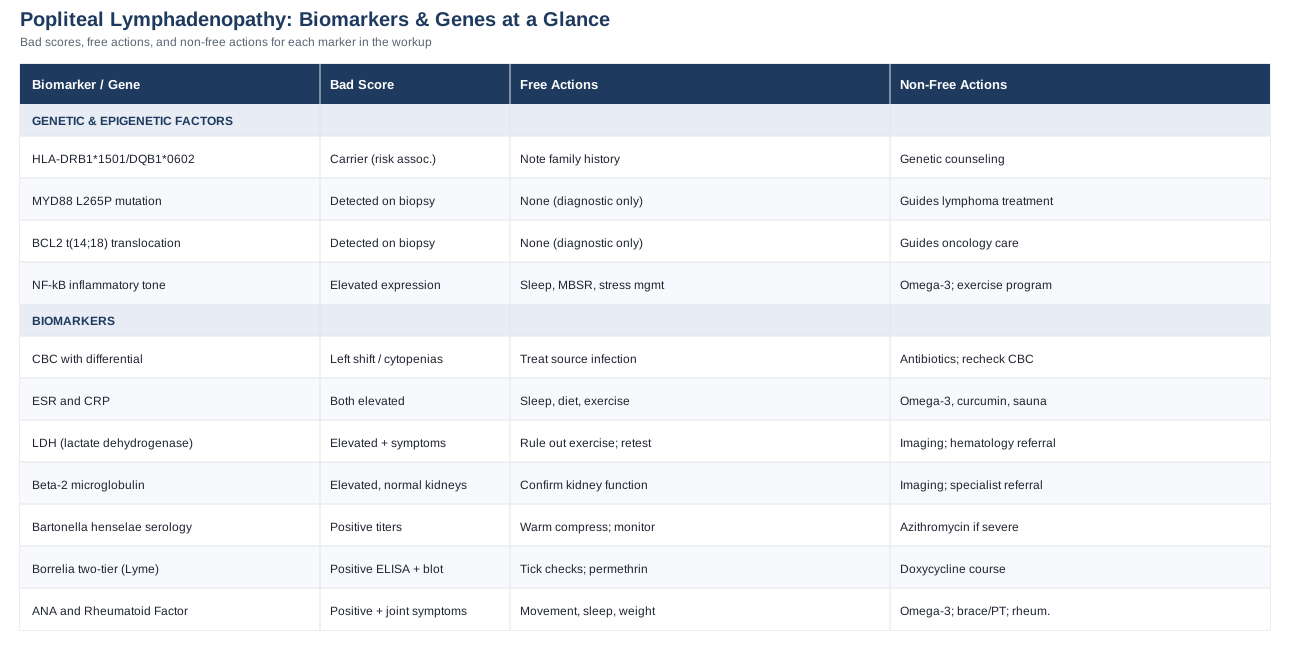
The 7 Biomarkers Worth Tracking When a Popliteal Lymph Node Won't Settle Down
Popliteal nodes are uncommon enough as an isolated finding that clinicians usually want confirmation it's actually a lymph node and not a Baker's cyst, a varicose vein cluster, or a small vascular malformation, all of which sit in the same crowded space behind the knee and can feel similar on palpation. Ultrasound is typically the first step for that reason, and it's worth asking for one before anything else if a lump is new. Once a true node is confirmed, blood work does most of the remaining work of narrowing the cause, because the popliteal fossa drains the calf, ankle, and foot, which means insect bites, tick exposure, cat scratches, athlete's foot, and minor cellulitis are all realistic upstream triggers, alongside inflammatory joint disease and, less commonly, lymphoproliferative disorders such as lymphoma or metastatic melanoma from a foot lesion, as summarized in general reviews of peripheral lymphadenopathy evaluation (peripheral lymphadenopathy diagnostic approach, NIH StatPearls on lymphadenopathy). The seven markers below are the ones that do the most diagnostic work, roughly in the order a clinician would typically order them.
Complete Blood Count with Differential
A CBC with manual differential is usually the first test drawn because it's cheap, fast, and surprisingly informative. A high white count with a left shift (more immature neutrophils) points toward an active bacterial infection somewhere downstream of the node, such as a cellulitis or infected wound on the foot or calf. Reactive lymphocytosis or atypical lymphocytes suggest a viral or Bartonella-type process. Unexplained cytopenias (low platelets, low hemoglobin, or low neutrophils alongside the swollen node) are one of the findings that pushes a workup from "watch and wait" toward "investigate further," since they can reflect bone marrow involvement in more serious lymphoproliferative conditions.
How to measure it: a standard venous blood draw at any lab or primary care office. In most countries with private lab access, a CBC with differential costs roughly 10 to 30 US dollars out of pocket, and it's covered by insurance or public health systems in most contexts when ordered by a physician.
If the result is abnormal, the plan without supplements centers on addressing the underlying trigger rather than the blood count itself: treating a source infection (a foot wound, ingrown toenail, athlete's foot, insect bite) with proper wound care and, if bacterial, a course of antibiotics prescribed after culture; and rechecking the CBC two to four weeks later to confirm the abnormality resolves alongside the node. There is no supplement or device that meaningfully corrects a CBC abnormality that is being driven by an active infection or a marrow process — that would just be treating a symptom while the underlying trigger sits untouched, which is why this marker is really a signpost telling you where to look, not a target to medicate directly. If a repeat CBC three to four weeks after the trigger is treated still shows abnormalities, that's the point to escalate to hematology rather than to try to "optimize" the number further at home.
ESR and CRP (Inflammatory Load)
Erythrocyte sedimentation rate and C-reactive protein are both non-specific inflammation markers, but pairing them adds useful information: CRP rises and falls quickly (over hours to days), while ESR moves more slowly and stays elevated longer, so a high ESR with a normalizing CRP can indicate a process that has been smoldering for weeks rather than days. Both are frequently elevated in reactive lymphadenopathy from infection, in inflammatory arthritis (which is relevant behind the knee given how often popliteal swelling gets confused with knee synovitis), and in lymphoma, though neither is specific enough to diagnose any of these alone.
How to measure it: both are simple, inexpensive blood draws, typically 10 to 25 US dollars each, often ordered together and available at any commercial lab.
If both are elevated and no obvious infection explains it, the plan without supplements starts with an anti-inflammatory foundation: consistent sleep (short sleep duration is one of the more reliably reproducible drivers of elevated CRP in observational studies), reducing ultra-processed food and added sugar intake, and, if body composition allows, gradual fat loss, since adipose tissue is a source of inflammatory cytokines that raise both ESR and CRP independent of any infection. Regular moderate aerobic exercise (150 minutes a week of brisk walking, cycling, or swimming) also modestly lowers CRP over 8 to 12 weeks in most people who start from a sedentary baseline.
If the score is bad, the plan with supplements or equipment adds a few options with modest evidence: omega-3 fatty acids (EPA/DHA, roughly 2 to 3 grams daily) have a small but consistent CRP-lowering effect in trials, typically taken with food to reduce gastrointestinal side effects and reviewed with a physician if on blood thinners; curcumin (500 to 1,000 mg daily with piperine for absorption) has more mixed but generally positive small-trial evidence for lowering CRP, and is usually cycled — for example, taken for 8 to 12 weeks, then reassessed — rather than used indefinitely, since long-term data is thin; and a sauna or hot bath routine (3 to 4 sessions weekly) has modest supporting evidence for lowering inflammatory markers over time, with the main caution being hydration and avoiding use if there's any cardiovascular contraindication. None of these replace addressing an active infection or inflammatory arthritis directly; they're adjuncts once a specific cause has been ruled in or out.
LDH (Lactate Dehydrogenase)
LDH is a marker of cell turnover and tissue breakdown, and it becomes clinically relevant here because it's part of the standard prognostic workup for lymphoma — an elevated LDH is one of the factors used in risk indices for diffuse large B-cell lymphoma and other aggressive lymphomas, reflecting a higher tumor burden or faster proliferation rate (LDH and beta-2 microglobulin as prognostic markers in lymphoproliferative disease). It's non-specific on its own — muscle strain, hemolysis, liver issues, and even recent vigorous exercise can raise it — which is exactly why it's interpreted alongside the CBC and beta-2 microglobulin rather than in isolation.
How to measure it: a standard blood draw, typically 10 to 20 US dollars, often bundled into a metabolic panel.
If LDH comes back elevated with an otherwise concerning clinical picture (a persistently enlarged node, systemic symptoms like night sweats or unintended weight loss, or abnormal CBC findings), the plan without supplements is straightforward: repeat the test after ruling out recent hard exercise, muscle injury, and hemolysis as confounders, and if it remains elevated, proceed to imaging and likely a hematology referral rather than trying to lower it directly at home. There genuinely isn't a legitimate supplement or lifestyle protocol for "fixing" an elevated LDH that's being driven by a lymphoproliferative process — treating the number itself would be meaningless and potentially delay a real diagnosis. If, on the other hand, the elevation turns out to be from recent exercise or minor muscle strain, it typically normalizes within a week without any intervention at all, which is worth confirming with a simple retest rather than assuming the worst from a single value.
Beta-2 Microglobulin
Beta-2 microglobulin is a small protein expressed on nearly all nucleated cells and shed into the blood in proportion to cell turnover and immune activation. It's used clinically as a prognostic marker in several lymphoproliferative conditions, including diffuse large B-cell lymphoma, chronic lymphocytic leukemia, and multiple myeloma, where higher levels generally track with greater disease burden (beta-2 microglobulin as a prognostic marker in diffuse large B-cell lymphoma). It can also be elevated by chronic inflammatory conditions and reduced kidney function (since the kidneys clear it), so a treating clinician typically checks kidney function alongside it before drawing conclusions.
How to measure it: a blood draw, usually 25 to 60 US dollars depending on the lab, not part of routine panels and typically ordered specifically when a lymphoproliferative cause is being considered.
If it's elevated, the plan without supplements again centers on identifying the driver rather than the number: confirming kidney function is normal (an elevated result with reduced kidney clearance means the marker itself is misleading), ruling out active chronic infection or autoimmune flare as alternative explanations, and if none of those explain it, proceeding to imaging and specialist referral. As with LDH, there is no credible supplement-based approach to lowering beta-2 microglobulin when it's elevated for pathological reasons — the honest, useful action is faster diagnosis, not self-directed marker optimization. Where it's mildly elevated due to a resolving infection, it typically falls back into range within 4 to 8 weeks and is worth rechecking on that timeline rather than repeatedly testing every week.
Bartonella henselae Serology (Cat Scratch Titers)
Cat scratch disease, caused by Bartonella henselae, classically causes regional lymphadenopathy near the site of a scratch or bite, most often in the arm, axilla, or neck, but it can occur at any site that drains a scratch, including the leg or foot, which makes it relevant to popliteal swelling in anyone who's recently handled a cat, especially a kitten (cat scratch disease clinical overview). It typically presents with a mildly tender node, sometimes low-grade fever, and a resolving scratch or papule at the inoculation site one to two weeks earlier, and it's often mistaken clinically for something more serious because the node can persist for weeks to a couple of months even in classic, self-limited cases.
How to measure it: IgG/IgM serology for Bartonella henselae, drawn by standard venipuncture, typically 40 to 90 US dollars depending on the lab and whether it's run as a single test or panel.
If titers come back positive, the plan without supplements is usually all that's needed, since cat scratch disease is self-limited in the large majority of immunocompetent people: warm compresses on the node for comfort, monitoring for resolution over 2 to 4 months, and avoiding needle aspiration unless the node becomes fluctuant and painful (in which case a clinician may drain it). Antibiotics (typically azithromycin) are reserved for more severe, prolonged, or systemic cases and are a prescription decision, not a self-directed one. There's no meaningful supplement-based acceleration of Bartonella clearance; the closest thing to a "plan with equipment" here is that a clinician might use ultrasound-guided aspiration for a node that becomes uncomfortably large or suppurative, which is a procedural step rather than a supplement protocol.
Borrelia burgdorferi Two-Tier Serology (Lyme Disease)
In regions where Lyme disease is endemic, a tick bite on the leg followed by regional lymphadenopathy — sometimes alongside the classic expanding erythema migrans rash, sometimes without it — is a reasonable differential to test for, particularly if there's any history of outdoor exposure in wooded or grassy areas. Lyme arthritis, when it occurs, most commonly affects the knee, which is anatomically adjacent to the popliteal nodes and part of why this gets considered in a leg-region workup (laboratory diagnosis of Lyme disease, advances and challenges).
How to measure it: standard two-tier testing, an ELISA screening test followed by a confirmatory Western blot if the ELISA is positive or equivocal, typically 50 to 150 US dollars combined. It's worth knowing that two-tier testing is notably insensitive in the first two to three weeks after a bite, so a negative result very early in the course doesn't fully rule it out, and testing is not usually indicated at all if a classic erythema migrans rash is present, since treatment can start on clinical grounds.
If serology is positive, the plan without supplements is a course of appropriate antibiotics (commonly doxycycline for a defined number of weeks), prescribed and monitored by a physician, since this is the one biomarker on this list where the "at home" plan is really about adherence to a proven treatment rather than lifestyle changes. There is no supplement regimen that substitutes for antibiotic treatment in confirmed Lyme disease, and delaying appropriate antibiotics in favor of alternative protocols risks progression to more difficult-to-treat joint, neurologic, or cardiac involvement. The plan with equipment here is limited to prevention going forward: permethrin-treated clothing and prompt tick checks after outdoor exposure meaningfully reduce reinfection risk, which is worth mentioning since Lyme disease can recur with a new tick bite.
ANA and Rheumatoid Factor (Autoimmune Panel)
Antinuclear antibodies and rheumatoid factor are screening tests for autoimmune and inflammatory joint disease, relevant here because inflammatory arthritis of the knee (including juvenile idiopathic arthritis in younger patients, or rheumatoid arthritis in adults) can produce a reactive popliteal node alongside joint swelling, and a Baker's cyst secondary to knee synovitis is a common look-alike for a true popliteal node on exam, which is part of why ultrasound confirmation matters before this panel is even ordered. A positive ANA alone is common in the general population and not diagnostic by itself; it's interpreted alongside symptoms, joint exam findings, and sometimes a more specific autoimmune panel.
How to measure it: blood draw, typically 30 to 80 US dollars for ANA and rheumatoid factor combined, more if a full extended autoimmune panel is added.
If positive alongside joint symptoms, the plan without supplements focuses on the joint disease itself rather than the node: referral to rheumatology, anti-inflammatory strategies such as regular low-impact movement to maintain joint range of motion, adequate sleep, and weight management to reduce mechanical joint load, all of which have general supporting evidence for inflammatory arthritis symptom control even though they don't replace disease-modifying treatment when it's indicated. If the score is bad, the plan with supplements or equipment might include omega-3 fatty acids (2 to 3 grams daily, the same dose noted above for CRP, with similarly modest but real anti-inflammatory joint benefit in rheumatoid arthritis trials) and, for symptomatic relief, a hinged knee brace or physical therapy program to offload the joint during flares. These are adjuncts to, not substitutes for, disease-modifying antirheumatic treatment when a rheumatologist determines it's warranted.
Taken together, these seven markers cover the realistic differential for an isolated popliteal node: infection (CBC, ESR/CRP, Bartonella and Lyme serology), inflammatory joint disease (ANA/RF), and lymphoproliferative disease (LDH, beta-2 microglobulin, CBC). Running them as a panel with a clinician, rather than one at a time over months, is usually the fastest path to a real answer.
What Genetics and Epigenetics Add to the Picture
It's worth being direct about a limitation here: there is no dedicated body of research on "popliteal lymphadenopathy genes," because an enlarged lymph node is a clinical sign, not a heritable condition in its own right. What genetics research does offer is insight into why some people's immune systems mount a larger, more persistent lymph node response to the same trigger, and why certain gene variants raise background risk for the lymphoproliferative diseases that occasionally sit behind persistent adenopathy. That context is useful for interpreting a persistent or recurrent node, even though none of it changes the acute workup above.
HLA Class II Alleles (DRB1*1501 and DQB1*0602)
Human leukocyte antigen (HLA) genes shape how the immune system presents antigens to T cells, and certain class II alleles are associated with altered risk for lymphoid malignancies, including Hodgkin lymphoma, as well as with broader autoimmune tendencies that can drive reactive lymphadenopathy (HLA susceptibility loci in lymphoid malignancies). This is population-level association data, not a deterministic test — carrying one of these alleles shifts baseline probability, it doesn't predict an individual outcome.
If the gene is unfavorable, the plan without supplements is really about vigilance rather than intervention: knowing a family history of lymphoma or autoimmune disease exists is a reason to mention it to a clinician evaluating a persistent node, and to be somewhat more proactive about imaging or biopsy if a node doesn't resolve in the expected timeframe, rather than defaulting to prolonged watchful waiting. If the score is bad, the plan with supplements or equipment is limited, because HLA type isn't modifiable and there's no legitimate product that changes it; the closest actionable equivalent is genetic counseling if there's a strong family history of lymphoid or autoimmune disease, which can clarify actual risk magnitude rather than leaving it as background anxiety.
MYD88 L265P Mutation
MYD88 L265P is a somatic (acquired, not inherited) gain-of-function mutation found in the large majority of Waldenström macroglobulinemia cases and a meaningful subset of diffuse large B-cell lymphomas, where it drives constitutive activation of an inflammatory signaling pathway that supports abnormal B-cell survival (MYD88 mutations in IgM-associated lymphoproliferative disease). This is not a gene you're born with in its mutated form and not something a consumer genetic test reports; it's relevant here because it's tested for in tissue when a lymph node biopsy is done for a lymphoma workup, and its presence helps guide treatment choice.
There is no "plan without supplements" or "plan with supplements" for a somatic mutation identified on biopsy — it isn't a modifiable risk factor, it's a diagnostic and treatment-selection tool used after a lymphoma diagnosis is already being made. The honest, useful takeaway is knowing this test exists and is standard practice, so that if a biopsy is recommended for a persistent popliteal node, testing for MYD88 status (when a B-cell lymphoproliferative process is suspected) is a normal part of a thorough workup rather than something to request separately.
BCL2 / t(14;18) Translocation
The t(14;18) translocation, which places the BCL2 gene under control of an immunoglobulin enhancer and leads to overexpression of an anti-apoptotic protein, is considered the initiating genetic event in the majority of follicular lymphomas (t(14;18) translocation breakpoint and clinical characteristics in follicular lymphoma). Like MYD88 L265P, this is an acquired mutation found in tumor tissue, not something inherited or detectable from a cheek swab, and it becomes relevant only if a lymph node biopsy is performed.
Again, there's no supplement or lifestyle protocol that addresses this mutation directly — the practical value of knowing about it is understanding that when a biopsy is recommended for a node that hasn't resolved appropriately, molecular testing like this is what allows a hematologist to distinguish follicular lymphoma from other reactive or malignant processes, and to select treatment accordingly. If a biopsy comes back showing this translocation, the plan is disease-specific oncology management, which is well outside the scope of any general health article.
Epigenetic Inflammatory Gene Expression (NF-κB Tone)
This is the one area in this section with real behavioral modifiability. Chronic psychological stress and poor sleep are associated with increased expression of pro-inflammatory genes regulated through the NF-κB transcription pathway, a pattern researchers sometimes call a "conserved transcriptional response to adversity." This shifts baseline immune reactivity upward, which plausibly contributes to larger or more persistent reactive lymphadenopathy from routine triggers, though this is inference from immune-signaling research rather than a study specifically on popliteal nodes.
If this pattern is a concern (for instance, in someone with chronically elevated CRP and a history of nodes that seem to over-react to minor triggers), the plan without supplements includes consistent sleep timing (7 to 9 hours, regular schedule), and structured stress-reduction practice — mindfulness-based stress reduction has been shown in a randomized controlled trial to reduce this exact pro-inflammatory gene expression signature in older adults over an 8-week course, even though it didn't significantly change circulating CRP or IL-6 in that same trial, an important and honest distinction between cellular-level and blood-level effects (MBSR and proinflammatory gene regulation in older adults). If the score is bad, the plan with supplements or equipment is modest: omega-3s at the same 2 to 3 gram daily dose noted earlier have some evidence for dampening NF-κB-driven inflammatory signaling, typically cycled in 8 to 12 week blocks with reassessment, and a consistent aerobic exercise routine (which independently reduces inflammatory gene expression in observational cohorts) rounds out a realistic, low-risk approach.
The genetics research here is genuinely interesting but modest in direct clinical payoff for a single swollen node — it mostly explains individual variation in immune reactivity and becomes actionable only if a biopsy is already underway. The next section looks at a broader framework for thinking about findings like this one, drawn from a book that's reshaped how a lot of people think about proactive versus reactive medicine.
The Longevity Book That Reframes How You Should Watch a Swollen Lymph Node
Peter Attia's Outlive: The Science and Art of Longevity isn't written about lymph nodes specifically, but its central argument — that most of medicine reacts to disease only after it's already declared itself, when a more proactive approach would catch problems years earlier — maps directly onto how to think about a persistent node rather than a single measurement. Below are ten of its most relevant ideas for someone in this exact situation.
Medicine 2.0 Waits for Symptoms; Medicine 3.0 Asks What's Happening Now
Attia's framing of "Medicine 2.0" describes a reactive model: something goes wrong, it produces symptoms, and only then does treatment begin. Applied here, that's the instinct to ignore a node until it becomes painful or obviously abnormal. "Medicine 3.0" argues for using available information — a change in size, a new node, a shift in accompanying symptoms — as an early signal worth investigating now, not a nuisance to dismiss until it becomes undeniable.
A Single Data Point Means Less Than a Trend
One of the book's recurring points is that isolated lab values are far less informative than values tracked over time. An ESR of 30 means very different things depending on whether it was 10 last month or 45. This directly supports rechecking the biomarkers above on a defined schedule rather than treating one result as the final word.
"Just Monitor It" Isn't a Strategy Without a Defined Endpoint
Attia is critical of vague monitoring advice that doesn't specify what would trigger action. Applied to a lymph node, that means setting an actual plan in advance — for example, "if it hasn't shrunk in four weeks, or if any new symptom appears, I'm getting imaging" — rather than an open-ended "keep an eye on it."
Risk-Stratified Vigilance, Not Blanket Anxiety
The book argues for calibrating concern to actual risk factors — age, family history, systemic symptoms — rather than either dismissing every finding or catastrophizing about every finding equally. A 25-year-old with a tender node after a cat scratch and no systemic symptoms warrants a very different level of concern than a 55-year-old with a painless, enlarging node and unexplained weight loss.
Chronic Inflammation ("Inflammaging") Is a Root Contributor to Many Findings
Attia discusses low-grade chronic inflammation as a driver behind several of the diseases he calls the "Four Horsemen." The same underlying inflammatory tone that raises cardiometabolic risk over decades is part of what keeps CRP and ESR elevated and can make lymph nodes more reactive to minor triggers, which is one reason the inflammatory-marker section above matters beyond this single node.
VO2 Max and Zone 2 Training as Markers of Systemic Resilience
A large portion of the book focuses on cardiorespiratory fitness as a marker of overall physiological reserve. While VO2 max isn't a lymph node marker, better aerobic base fitness correlates with lower baseline inflammatory markers in observational data, connecting back to the CRP and ESR discussion above.
Muscle Is a Metabolically Active Organ, Not Just Structure
Attia describes skeletal muscle as an endocrine organ that influences systemic inflammation and metabolic health. Maintaining muscle mass through resistance training is one of the more evidence-supported ways to keep baseline inflammatory tone lower over years, which is a reasonable long-term complement to anything specific being done about a current node.
Sleep Is Treated as a Pillar Equal to Diet and Exercise
The book repeatedly returns to sleep as foundational to immune regulation, not an optional extra. This lines up directly with the epigenetic inflammatory gene expression discussion above, where poor sleep is one of the more reproducible drivers of adverse inflammatory gene signatures.
Emotional Health Is Called the "Fifth Horseman"
Attia argues chronic stress and poor emotional health deserve equal billing with the more traditional disease categories he covers, given how strongly they interact with inflammatory and immune pathways. This is consistent with the MBSR research cited earlier showing a measurable effect on inflammatory gene expression from a structured stress-reduction program.
The Goal Is a Longer "Healthspan," Not Just Reassurance
Perhaps the book's most transferable idea is that the point of proactive health tracking isn't to generate reassurance in the moment, but to genuinely extend the years spent in good function. Applied here, that reframes the popliteal node question away from "how do I stop worrying about this" and toward "what does this finding, tracked properly, tell me about my actual health trajectory."
This proactive, trend-based mindset pairs naturally with approaches that support the body's regulatory systems more broadly, which is where the next section comes in.
Complementary Approaches Worth Considering
None of the approaches below treat an enlarged lymph node directly, and none replace a proper diagnostic workup. What they have reasonable human evidence for is supporting the two systems most relevant to lymph node health: lymphatic flow and inflammatory/immune regulation. They're worth considering as adjuncts once a cause has been identified or reasonably ruled out, not as a substitute for the biomarker workup above.
Massage Therapy (Manual Lymphatic Drainage)
Manual lymphatic drainage is a gentle, rhythmic massage technique designed to encourage lymph fluid movement toward functioning drainage pathways, and it's relevant here because impaired local lymphatic flow (from prior injury, infection, or scarring near a node) can contribute to a node staying swollen or fluid accumulating in the surrounding tissue longer than expected.
The strongest evidence for this technique comes from breast cancer-related lymphedema, where a systematic review and meta-analysis of randomized controlled trials found manual lymphatic drainage produced measurable reductions in limb volume and symptom burden in some patient subgroups, though the effect size varies by study and is more consistent in early-stage or mild cases than in established, moderate-to-severe lymphedema (manual lymphatic drainage for breast cancer-related lymphedema, systematic review and meta-analysis). It's worth being clear that this evidence base is about lymphedema of the arm after lymph node removal, not popliteal lymphadenopathy specifically, so the extrapolation to a swollen node behind the knee is reasonable but not directly proven.
Realistically, this means manual lymphatic drainage is a reasonable adjunct once serious causes have been ruled out and a node is lingering during recovery from a resolved infection or minor injury — typically done as short sessions (20 to 40 minutes) once or twice weekly for several weeks, either with a trained lymphatic drainage therapist or via a gentle self-massage technique demonstrated by one. It should be avoided over an area with active untreated infection, suspected malignancy, or acute deep vein thrombosis, all of which are reasons to get a diagnosis first.
Tai Chi
Tai chi is a slow, low-impact movement practice combining gentle exercise, breath regulation, and focused attention, and it has some of the more rigorous human trial evidence among mind-body practices for actually modulating immune function rather than just subjective wellbeing.
In a well-designed randomized controlled trial in older adults, 16 weeks of Tai Chi Chih significantly increased cell-mediated immunity to varicella zoster virus compared with a health education control group, with an effect comparable in magnitude to the immune boost from vaccination itself, and the two effects were additive (Tai Chi and augmented immune response to varicella zoster virus, randomized controlled trial). This demonstrates a genuine, measurable effect on cellular immune function, though it's specific to VZV-directed immunity in an older population and hasn't been studied directly in the context of reactive lymphadenopathy.
A realistic protocol is 2 to 3 sessions per week, 30 to 45 minutes each, sustained for at least 12 to 16 weeks before expecting a measurable immune effect, since the supporting trial ran on that timescale. It's low-risk for most people, with the main caution being modification for anyone with significant balance issues or knee problems, which is worth mentioning specifically given the anatomical focus of this article — some tai chi forms involve sustained knee flexion that should be adapted if the popliteal area is tender.
Mindfulness Meditation / MBSR
Mindfulness-Based Stress Reduction is an 8-week structured program combining meditation, body awareness, and gentle movement, and its relevance here connects back to the epigenetic inflammatory gene expression discussion earlier in this article.
A randomized controlled trial found that an 8-week MBSR course reduced expression of pro-inflammatory genes regulated by the NF-κB pathway in older adults, a change that would be predicted to lower disease risk over time, though the same trial found no significant change in circulating CRP or IL-6 levels, which is an important and honest limitation to state rather than overstate (MBSR and proinflammatory gene regulation, randomized controlled trial). In other words, the effect appears to be real at the cellular signaling level without yet being reliably detectable in a standard blood panel, which is a meaningfully different claim than saying MBSR lowers inflammation outright.
A standard course follows the manualized 8-week format with weekly 2.5-hour group sessions and daily home practice of 20 to 45 minutes, available through certified instructors or well-validated app-based programs. It carries essentially no physical risk and is a reasonable addition for anyone whose reactive lymphadenopathy seems to track with stress or poor sleep, though it should be framed honestly as a general immune-regulation practice rather than a targeted treatment for a specific node.
Conclusion
An enlarged popliteal lymph node is almost always explainable once the right questions get asked in the right order: confirm it's really a node with imaging, then use CBC, inflammatory markers, LDH, beta-2 microglobulin, and targeted infectious and autoimmune serologies to narrow the cause, rather than waiting out an open-ended observation period with no defined endpoint. Genetics and epigenetics research adds useful background — particularly around inflammatory gene expression that's genuinely modifiable through sleep and stress management — but doesn't replace that biomarker-driven workup, and neither does any complementary practice, however well-supported.
The most useful next step is a concrete one: get the node evaluated with imaging if it hasn't been already, ask specifically for the biomarker panel that matches your situation rather than a single generic blood test, and set a defined date — three to four weeks out is standard — to reassess rather than leaving it open-ended. If it's still there, growing, or accompanied by fever, night sweats, or unexplained weight loss at that point, that's the clear signal to move from monitoring to a specialist referral.