This article contains AI generated content.
Post Covid 19 Syndrome - 5 Genes And 6 Biomarkers To Track
Introduction
If you are reading this, there is a good chance the calendar says the infection is long over, but your body did not get the memo. The cough cleared, the test turned negative, and yet something stayed behind: a fatigue that sleep does not fix, a heart that races when you stand, a brain that stalls mid-sentence, a body that punishes you the day after you dare to feel normal. That gap between "you should be fine now" and "I am clearly not fine" is one of the loneliest places in modern medicine, and it is real.
Most of the advice you have already heard is not wrong so much as it is too small for the problem. "Rest, hydrate, and give it time" is reasonable for a cold. It is almost insulting for a condition that can persist for months or years and touch the immune system, blood clotting, hormones, metabolism, and the nervous system all at once. Generic advice treats post-COVID-19 syndrome as one thing. It is not. It is a cluster of overlapping problems, and yours has a specific signature.
This article takes a different, more useful angle. Instead of vague reassurance, it looks at the two things you can actually see and act on: the biomarkers that reveal what is happening inside you right now, and the genes that shape why your body may have reacted the way it did. Where the human evidence is strong, this article says so plainly. Where it is early or mixed, it says that too, because false certainty helps no one.
Here is the grounded hope: post-COVID-19 syndrome is not a moral failing or a mystery you simply have to endure. It is a set of measurable systems that can, in many cases, be nudged back toward balance. The plan below moves from the most practical lever (biomarkers you can measure and improve), to the deeper layer (your genes), to a ten-point synthesis of the newest science, and finally to gentle, evidence-checked complementary approaches. None of it promises a cure. All of it is meant to help you make better decisions with better information.
Summary
Post-COVID-19 syndrome is not random, and it is not "in your head." This article gives you a concrete map of what to measure and what to do about it. First, you will learn the six biomarkers that quietly explain many long-haul symptoms — including one inflammation marker most doctors skip, a clotting pair tied to the now-famous "microclot" theory, and a hormone that recent research from a major immunology lab found unexpectedly low in long COVID patients. For each one, you will see how to test it (with real cost ranges), what a bad result means, and two recovery plans: one with no supplements at all, and one with targeted supplements or equipment, including honest notes on frequency, cycling, and side effects.
Then the article goes underneath the symptoms to your DNA. You will meet the five genes most linked to who develops long COVID and why — including the single gene that a giant international study confirmed as the first genetic signal for the condition. Genes are not destiny, and you will see exactly which lifestyle and supplement strategies may compensate for each one.
After that, a ten-point summary distills the most surprising and doctrine-challenging ideas from the newest research and podcasts, followed by five complementary approaches that actually have human trials behind them for this specific condition. Read on — the details are where the leverage is.
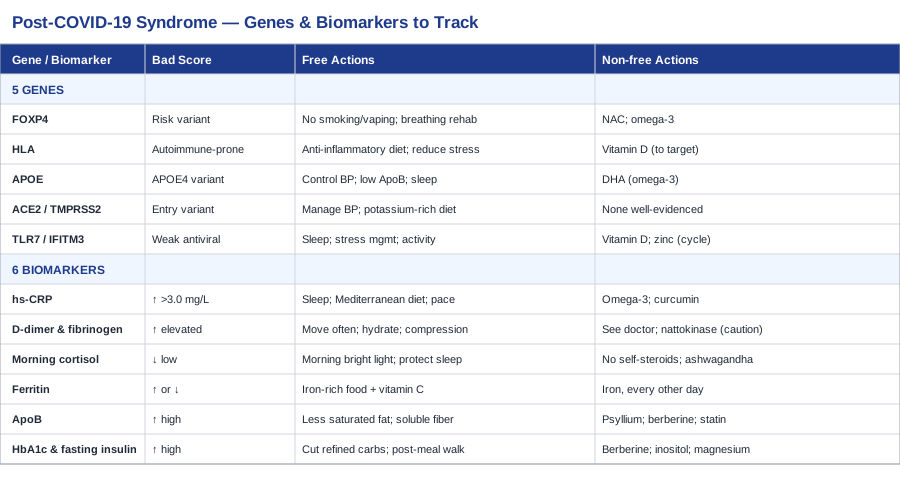
The Six Biomarkers That Reveal What Long COVID Is Doing to Your Body
Symptoms tell you that something is wrong. Biomarkers start to tell you what. The clinicians who work at the sharp end of longevity and cardiometabolic medicine — people like Peter Attia, Thomas Dayspring, and Allan Sniderman — share one core habit: they refuse to fly blind. They measure, they interpret, and they re-measure. Applied to post-COVID-19 syndrome, that same discipline turns a vague fog into a short list of things you can actually track and influence. Below are the six most useful markers, from the cheap and universal to the more advanced.
A quick word before the list: interpret these with a clinician, not instead of one. Any single number can mislead, and the plans below are options to discuss, not prescriptions.
1. High-Sensitivity C-Reactive Protein (hs-CRP): The Inflammation Dial
hs-CRP is a protein your liver makes when there is inflammation in the body. It is the single most accessible window into whether your immune system is still running hot months after infection. Many people with lingering fatigue, malaise, and post-exertional crashes carry a quietly elevated hs-CRP, and persistent low-grade inflammation is one of the leading candidate mechanisms for post-COVID-19 syndrome.
How to measure it
A simple blood draw, often bundled into routine panels. Ask specifically for the high-sensitivity version (hs-CRP), not standard CRP, because you want to detect the low-grade range. Cost is typically $10–$40. Optimal is usually under 1.0 mg/L; above 3.0 mg/L suggests meaningful inflammation (rule out an acute infection first, which spikes it temporarily).
If the score is bad, the plan without supplements
Prioritize the boring things that actually move CRP: consistent sleep (7–9 hours), a predominantly whole-food, Mediterranean-style diet, reducing alcohol, and gentle, carefully paced movement rather than exhaustive exercise (pushing through crashes can raise inflammation in this population). Address hidden inflammatory sources such as gum disease and poor sleep-disordered breathing. Frequency: these are daily habits; re-test CRP after 8–12 weeks to see the trend.
If the score is bad, the plan with supplements or equipment
The best-studied option is omega-3 fatty acids (EPA/DHA), roughly 1–2 g of combined EPA+DHA daily with food. Curcumin (with piperine or a high-absorption formulation) is a common second choice. Frequency: daily; give it 8–12 weeks before judging. Cycling is not required for omega-3, but it is reasonable to pause curcumin periodically. Side effects: fish oil can cause reflux or a fishy aftertaste and mildly thins the blood, which matters if you take anticoagulants; curcumin can cause GI upset and also has a blood-thinning effect. Clear both with your doctor if you are on blood thinners.
2. D-Dimer and Fibrinogen: The Clotting Pair
One of the most discussed theories in long COVID is that tiny, hard-to-break-down "microclots" impair oxygen delivery to tissues, which could explain fatigue, brain fog, and exercise intolerance. Proteomic work by Pretorius, Kell and colleagues found fibrin amyloid microclots loaded with inflammatory molecules in long COVID plasma, described in a study you can read via PubMed Central. D-dimer (a clot-breakdown fragment) and fibrinogen (a clotting protein) are the two accessible markers that hint at this process, though the microclot theory is still actively debated and not yet a settled clinical target.
How to measure it
Standard blood tests, roughly $20–$50 each. D-dimer is widely available; fibrinogen slightly less so but still routine. Elevated D-dimer months after infection, in the absence of an acute clot, is a flag worth investigating.
If the score is bad, the plan without supplements
Movement is the cheapest anticoagulant-adjacent habit: avoid long periods of immobility, do gentle ankle and calf activation, and stay well hydrated. Compression garments can help circulation, especially if you also have orthostatic symptoms. Frequency: break up sitting every 30–60 minutes. Crucially, a genuinely abnormal D-dimer should be evaluated by a physician to exclude a real clot before you do anything else.
If the score is bad, the plan with supplements or equipment
This is the area to be most cautious. Any decision about actual anticoagulation or antiplatelet therapy belongs to a doctor, not a supplement aisle. Some people explore nattokinase or omega-3 for their mild fibrinolytic and blood-thinning properties, but the human evidence in long COVID is limited and the bleeding risk is real, especially combined with other blood thinners, NSAIDs, or before surgery. If you try omega-3, the same 1–2 g/day guidance applies. Do not cycle or combine clot-affecting agents without medical oversight.
3. Morning Cortisol: The Hormone Nobody Checks
Here is one of the most striking findings in the field. In a major immune-profiling study published in Nature, the Klein, Iwasaki and colleagues team found that people with long COVID had significantly lower morning cortisol than those who had recovered — roughly half the level in some analyses — even after accounting for the time of sampling. You can read the study through PubMed. Low cortisol could plausibly contribute to profound fatigue and stress intolerance, though whether it is a cause or a downstream effect is still being worked out (see the balanced discussion in this PubMed review).
How to measure it
A morning (around 8 a.m.) serum cortisol draw is the standard, roughly $30–$60. A saliva or diurnal cortisol curve gives more detail on the daily rhythm. A genuinely low result should trigger a referral to endocrinology to rule out adrenal insufficiency, which is a distinct and treatable diagnosis.
If the score is bad, the plan without supplements
Support the body's own cortisol rhythm: get bright light exposure early in the day, protect deep sleep, and reduce chronic stressors where you can. If you also have orthostatic symptoms, adequate salt and fluid intake often helps. Do these daily; re-check with your clinician rather than chasing the number obsessively.
If the score is bad, the plan with supplements or equipment
Do not self-prescribe steroids. If cortisol is pathologically low, hormone replacement is a physician-managed decision, not a supplement experiment. For milder HPA-axis dysregulation, some people trial adaptogens such as ashwagandha, but the evidence is modest and it is not appropriate for everyone (avoid in thyroid disease or pregnancy without guidance). Morning light devices are a low-risk piece of equipment that support the cortisol awakening response. Frequency: light in the morning daily; if trialing an adaptogen, give it several weeks and consider cycling off periodically. Side effects for ashwagandha can include GI upset and, rarely, liver issues.
4. Ferritin and Iron Studies: The Two-Faced Marker
Ferritin is tricky because it wears two hats. It reflects your iron stores, but it also rises as an acute-phase reactant during inflammation. In post-COVID-19 syndrome, high ferritin often signals ongoing inflammation, while genuinely low ferritin can be a hidden, very fixable cause of fatigue, hair loss, and breathlessness — particularly in menstruating women.
How to measure it
Ferritin costs about $15–$40; a full iron panel (serum iron, transferrin/TIBC, transferrin saturation) adds a little more and helps distinguish "low iron" from "high inflammation." Interpreting ferritin alongside hs-CRP is the key trick, since inflammation can mask true iron deficiency.
If the score is bad, the plan without supplements
If ferritin is low, emphasize dietary iron: red meat, poultry, fish, legumes, and leafy greens, and pair plant iron with vitamin C to boost absorption. If ferritin is high from inflammation, the fix is the anti-inflammatory work described under hs-CRP, not iron restriction. Re-test after 8–12 weeks.
If the score is bad, the plan with supplements or equipment
For confirmed iron deficiency, oral iron (for example, ferrous bisglycinate, which is gentler) taken every other day is often better absorbed and better tolerated than daily dosing — a useful form of cycling. Take with vitamin C, away from coffee, tea, and calcium. Side effects: constipation, nausea, and dark stools are common. Never supplement iron "just in case," because iron overload is harmful; only correct a documented deficiency, and re-test after roughly 3 months.
5. ApoB: The Truest Read on Cardiovascular Risk
COVID-19 raises cardiovascular risk for a period after infection, which makes long-haulers a group that should not ignore their arteries. This is where the lipidology voices matter most: Allan Sniderman, Thomas Dayspring, and Peter Attia all argue that ApoB — a direct count of the atherogenic particles that drive plaque — is a more accurate risk marker than standard LDL cholesterol. Tracking it is one of the highest-leverage things you can do for your long-term health regardless of long COVID.
How to measure it
ApoB is a simple blood test, roughly $20–$40, and does not always require fasting. Many standard panels omit it, so you usually have to request it specifically. Lower is generally better for cardiovascular risk; the exact target depends on your overall risk profile.
If the score is bad, the plan without supplements
Reduce saturated fat, increase soluble fiber (oats, beans, legumes), lose excess visceral fat, and stay physically active within your energy envelope. These are daily habits, and ApoB responds meaningfully to diet in many people. Re-test after roughly 12 weeks.
If the score is bad, the plan with supplements or equipment
Soluble-fiber supplements such as psyllium (start low, titrate up, take with plenty of water) and plant sterols can nudge ApoB down. Berberine also modestly improves lipids. Frequency: psyllium daily; berberine is often dosed with meals and reasonable to cycle (for example, several weeks on, a break, then reassess). Side effects: fiber can cause bloating; berberine can cause GI upset and interacts with several medications. If ApoB is high and your cardiovascular risk is meaningful, discuss prescription therapy (statins, ezetimibe) with your doctor — the evidence base there is far stronger than for any supplement.
6. HbA1c and Fasting Insulin: The Metabolic Early-Warning System
COVID-19 has been linked to new-onset dysglycemia and worsened insulin sensitivity in some people, and poor metabolic health both amplifies inflammation and slows recovery. HbA1c reflects your average blood sugar over about three months, while fasting insulin can reveal insulin resistance before blood sugar ever looks abnormal — which is exactly the kind of early signal Attia emphasizes.
How to measure it
HbA1c costs about $15–$30; fasting insulin about $20–$50. Measuring both together (and calculating simple indices of insulin resistance) is more informative than either alone. A continuous glucose monitor is a more advanced, optional piece of equipment that shows how your body responds to specific meals.
If the score is bad, the plan without supplements
The fundamentals are potent here: reduce refined carbohydrates and ultra-processed food, prioritize protein and fiber, take a 10–15 minute walk after meals to blunt glucose spikes, protect sleep, and build gentle muscle-supporting activity within your limits. Re-test HbA1c after about 3 months (it cannot move faster than that by design).
If the score is bad, the plan with supplements or equipment
Berberine, myo-inositol, and magnesium each have some evidence for improving insulin sensitivity. A CGM (equipment) can guide personalized food choices. Frequency: magnesium and inositol daily; berberine with meals and reasonable to cycle. Side effects: berberine and magnesium can cause GI upset and diarrhea; berberine interacts with numerous drugs and should be avoided in pregnancy. As always, if you cross into diabetes range, that is a medical conversation, not a supplement fix.
What Your Genes May Be Telling You About Long COVID
Biomarkers show the weather; genes show the climate. They do not seal your fate — most are small nudges in probability — but knowing your tendencies helps you choose where to spend effort. Consumer and clinical genomics have made this layer newly accessible; researchers like Ali Torkamani at Scripps have advanced the science of polygenic risk, and popularizers such as Gary Brecka have pushed gene-informed lifestyle plans into the mainstream conversation. Use them as starting points, and read your own results with humility: a "risk" variant is a hint, not a diagnosis.
FOXP4: The First Confirmed Long COVID Gene
A very large international genome-wide association study identified FOXP4 as the first gene robustly linked to long COVID, independent of its known association with severe acute COVID — you can read it via PubMed Central. FOXP4 is involved in lung development and function, which points to the airways as a key battleground. If you carry the risk variant, the plan without supplements centers on protecting lung function: never smoke or vape, minimize air-pollution exposure, and commit to breathing rehabilitation (covered later). With supplements, some people add NAC (N-acetylcysteine, which supports mucus clearance and glutathione) and omega-3; NAC is generally well tolerated but can cause GI upset, and daily use is typical.
HLA Genes: How Your Immune System Recognizes the Enemy
The HLA family (for example, HLA-DRB1) governs how your immune system presents and recognizes viral fragments, and certain variants are associated with stronger autoimmune tendencies — relevant because autoantibodies are one candidate driver of long COVID. There is no way to change HLA, so the plan without supplements is about lowering the autoimmune load: an anti-inflammatory diet, stress reduction, and monitoring for autoimmune markers if symptoms suggest them. With supplements, maintaining a healthy vitamin D level (guided by a blood test rather than guesswork) is a low-risk, evidence-informed move for immune regulation; excess vitamin D is harmful, so dose to a target, not to the maximum.
APOE: Inflammation and the Brain-Vascular Axis
The APOE gene shapes lipid transport and inflammation, and the APOE4 variant has been associated with worse COVID outcomes and greater vulnerability in the brain and blood vessels. If you carry APOE4, the plan without supplements is aggressive cardiovascular and cognitive hygiene: control blood pressure, keep ApoB low (see above), exercise within tolerance, and protect sleep. With supplements, adequate DHA (from omega-3) supports brain and vascular health, though APOE4 carriers may process DHA differently, so pairing it with the lifestyle basics matters more than the pill. Daily dosing; the fish-oil cautions above apply.
ACE2 and TMPRSS2: The Viral Doorway
SARS-CoV-2 enters cells using the ACE2 receptor with help from TMPRSS2, and variation in these genes may influence infection severity and the renin-angiotensin balance that governs blood pressure and inflammation. You cannot edit the doorway, but the plan without supplements supports the same system: manage blood pressure, eat a potassium-rich, whole-food diet, and stay active. There is no well-evidenced supplement that safely modulates ACE2 for this purpose, so this is a case where honesty means saying lifestyle is the lever and skepticism is warranted toward products claiming to "block" or "boost" ACE2.
TLR7 and IFITM3: The First Line of Antiviral Defense
Genes in the innate antiviral pathway, such as TLR7 and IFITM3, affect how quickly and effectively your body detects and restricts viruses early on; rare TLR7 defects are linked to severe COVID. The plan without supplements protects innate immunity broadly: sleep, which is one of the strongest known modulators of antiviral defense, plus stress management and physical activity. With supplements, correcting a documented vitamin D or zinc deficiency supports immune function; zinc should be cycled rather than taken indefinitely at high doses, because chronic high zinc depletes copper — a small copper intake or periodic breaks helps balance it. Watch for GI upset with zinc on an empty stomach.
For an honest overview of how host genetics interacts with acute and long COVID, this narrative review on PubMed Central is a good, balanced read — and a reminder that this field is young and most effects are modest.
Ten Ideas From the New Science of Long COVID That Challenge Old Assumptions
Drawing together the recent wave of research and the science-communication conversations around it — including the immunology work from the Iwasaki lab and the mechanistic discussions popularized on shows like the Huberman Lab podcast — a set of genuinely paradigm-shifting ideas has emerged. These ten points are the ones most likely to change how you (and eventually your doctor) think about recovery.
1. Long COVID Is Not One Disease
The evidence increasingly points to several distinct subtypes — an immune/autoimmune type, a microclot/vascular type, a viral-persistence type, and a nervous-system-dysregulation type — that may need different treatments. This reframes "why doesn't one thing work for everyone?" as "we are treating several conditions with one name."
2. The Virus May Not Fully Leave
Viral persistence — fragments or reservoirs of SARS-CoV-2 lingering in tissues — is one of the leading hypotheses, and it is driving trials of antivirals in long COVID. If true, it upends the assumption that a negative test means the infection is over.
3. Old Viruses Can Wake Up
The Nature immune-profiling study found signs of Epstein-Barr virus reactivation in many long COVID patients. The idea that a new infection can reawaken a dormant one, compounding the damage, is a genuinely new lens on chronic post-viral illness.
4. The Stress Hormone Runs Low, Not High
Contrary to the intuition that a stressed, sick body would pump out cortisol, the data show it is often abnormally low. This challenges the reflex to treat exhaustion as simple burnout and points toward the HPA axis as a real target.
5. "Push Through It" Can Backfire
Post-exertional malaise means that graded, aggressive exercise — long the default rehab advice — can make a subset of patients worse. The emerging principle is pacing and staying within an "energy envelope," a direct challenge to conventional deconditioning models.
6. Tiny Clots May Starve Your Tissues
The microclot hypothesis reframes fatigue and brain fog as possible oxygen-delivery problems rather than purely psychological or muscular ones. It remains debated, but it has already reshaped the research agenda.
7. It Can Be Genetic
The confirmation of FOXP4 as a risk gene establishes that susceptibility is partly written in your DNA. That validates patients who "did everything right" and still got sick.
8. The Gut and Microbiome Are in the Loop
Altered gut bacteria and gut-based viral reservoirs are being tied to long COVID symptoms, suggesting the digestive system is a participant, not a bystander, in recovery.
9. Women Are Affected More Often
Long COVID skews female, likely through immune and hormonal differences. Recognizing this pushes back against historical patterns of dismissing women's post-viral symptoms.
10. Measurement Beats Reassurance
Perhaps the most practical takeaway: objective biomarkers are steadily replacing "your labs are normal, so you're fine." The future of care is data-driven and personalized — which is exactly the approach this article is built on.
Complementary Approaches With Real Human Evidence
Alongside biomarkers and genetics, several gentle, non-drug approaches have actual clinical trials behind them for post-COVID-19 syndrome. None is a cure, and the evidence quality varies, but each is low-risk when done sensibly. The unifying rule for this condition is start gentle and pace yourself.
Breathing-Based Therapies and Pulmonary Rehabilitation
Many long-haulers have disordered, shallow, upper-chest breathing and reduced respiratory function, and breathing retraining directly targets breathlessness, fatigue, and even the calming of an overactive stress response. Given FOXP4's link to lung function, this is a particularly logical place to invest.
A systematic review and meta-analysis of randomized controlled trials found that pulmonary rehabilitation — which combines breathing exercises with graded training — significantly improved physical capacity, respiratory function, quality of life, fatigue, and anxiety in long COVID; you can read it via PubMed Central. A separate home-based breathing-exercise RCT also showed measurable gains in respiratory function (PMC).
To apply it realistically, start with simple slow diaphragmatic (belly) breathing for a few minutes, twice daily, and progress gradually — ideally guided by a physiotherapist experienced in long COVID. If any breathing practice triggers a post-exertional crash, scale back. Consistency beats intensity here.
Tai Chi and Qigong
Tai chi and qigong are slow, low-intensity movement practices that pair gentle motion with breath and attention — a near-ideal profile for a condition where hard exercise can backfire. They may help fatigue, sleep, and mood without overtaxing the energy envelope.
A systematic review with meta-analysis specifically examined qigong, tai chi, and yoga for fatigue and related symptoms in chronic fatigue and post-COVID syndromes, reporting benefits for fatigue and mental health; it is available on PubMed Central. The evidence base is still modest and heterogeneous, so treat it as promising rather than definitive.
Practically, begin with short (10–15 minute) beginner sessions, ideally from a class or reputable video, and increase only as tolerated. The goal is to feel slightly better, not wiped out, the next day — the same pacing rule that governs all activity in long COVID.
Yoga
Gentle, restorative yoga combines breath control, light movement, and relaxation, targeting the autonomic dysregulation (racing heart, dizziness, poor stress tolerance) that troubles many long-haulers. It is adaptable to very low energy levels, including chair-based forms.
Beyond the combined meta-analysis above, dedicated randomized trials are underway; a multicentre RCT protocol comparing yoga with health education for persistent post-COVID fatigue is published on PubMed Central, reflecting that high-quality condition-specific evidence is still being built.
Choose restorative or gentle styles over vigorous "power" yoga, avoid hot yoga (heat can worsen symptoms), and skip poses that provoke dizziness if you have orthostatic issues. A teacher informed about long COVID is a real advantage.
Mindfulness Meditation / MBSR
Mindfulness-based approaches do not pretend the illness is imaginary; they help regulate the nervous system, ease the anxiety and low mood that often accompany a long illness, and may dampen stress-driven inflammation. That makes them a sensible complement to the biomarker work above.
A preliminary study of a mindfulness program in women with long COVID dysautonomia reported symptom benefits (PMC), and a mindfulness-based intervention improved depression and anxiety in a long COVID population (PMC). These are early and small, so keep expectations proportionate.
To apply it, start with 5–10 minutes a day using a guided app or an MBSR course, and treat it as nervous-system training rather than a cure. Its greatest value is often in improving how you cope while the other strategies work on the underlying biology.
Progressive Muscle Relaxation
Progressive muscle relaxation (PMR) is a simple, structured practice of tensing and releasing muscle groups to downshift the body out of a chronic "fight-or-flight" state — helpful for sleep, tension, and the physical side of anxiety in long COVID.
In a randomized controlled trial, combining pulmonary rehabilitation with PMR produced improvements in lung function, exercise capacity, and sleep quality in long COVID patients; the study is on PubMed Central. As an add-on, the evidence is encouraging, though PMR is usually studied alongside other therapies rather than alone.
Practically, follow a 10–15 minute guided PMR audio before bed, moving from your feet upward. It requires no equipment, has essentially no downside, and pairs naturally with the breathing work — a gentle, cumulative way to help your system remember how to rest.
Conclusion
Post-COVID-19 syndrome resists one-size-fits-all advice because it is not one thing — it is a set of measurable, partly heritable, and increasingly treatable problems. The practical path forward is to stop guessing and start seeing: track the six biomarkers that reveal your specific inflammation, clotting, hormone, iron, cardiovascular, and metabolic status; understand the five genes that may explain your vulnerability; and layer in gentle, evidence-checked practices like breathing rehabilitation, tai chi, yoga, mindfulness, and progressive muscle relaxation, all governed by careful pacing. None of this is a miracle, and honest science still has real gaps here — but better information genuinely does lead to better decisions.
Your next smart step is small and concrete. Pick one thing this week: ask your doctor for an hs-CRP and morning cortisol test, start a simple symptom-and-pacing journal, take a 10-minute walk after dinner, or begin two minutes of slow breathing a day. Bring your questions and any results to a qualified professional who takes your symptoms seriously. Recovery from long COVID is rarely a single breakthrough; it is a series of informed, patient adjustments — and you now have a clearer map of where to make them.
Infectious Neurological Cardiovascular Respiratory Mental Health Endocrine & Metabolic Autoimmune
Cardiovascular: Vascular Conditions
Respiratory: Lung Conditions
Endocrine & Metabolic: Diabetes & Blood Sugar Adrenal Conditions
Autoimmune: Inflammatory Conditions
Infectious: Viral Infections