This article contains AI generated content.
Post-Surgical Patellofemoral Pain: 4 Genes and 6 Biomarkers to Track
Introduction
If your knee still aches months after surgery — after the incision has healed, the swelling has gone down, and your surgeon has told you the repair "looks great" on imaging — you already know that recovery on paper and recovery in your body are two different things. Anterior knee pain that lingers after ACL reconstruction, patellar realignment, meniscus work, or a total knee procedure is common, and it's frustrating precisely because everyone around you keeps treating it as solved.
Generic advice doesn't help much at this stage. "Give it time," "strengthen your quads," or "ice and rest" are not wrong, but they're built for the average patient, not for your biology. Two people with identical surgical outcomes on paper can have completely different pain trajectories, and a meaningful part of that difference traces back to things a standard follow-up visit never measures — inflammatory load, vitamin and mineral status, glycemic control, and inherited variation in how connective tissue and pain signaling actually work.
This article takes a more granular approach. Instead of another list of stretches, it looks at the measurable biology behind stalled post-surgical recovery: which blood-based biomarkers are worth tracking, what your genes may be quietly contributing, and what a body of newer research — some of it genuinely challenging how doctors think about chronic pain — suggests you can actually do about it.
None of this promises a cure, and none of it replaces your surgeon or physical therapist. But better information tends to produce better decisions, and in a condition this personal, that's a realistic and worthwhile goal.
Summary
The biomarker section that follows walks through six lab values with real, condition-specific evidence behind them — hs-CRP, IL-6, vitamin D, HbA1c, the omega-3 index, and ferritin/iron status — explaining why each one matters after knee surgery, how to test it affordably, and what a realistic correction plan looks like, with and without supplements. After that, a shorter genetics section covers four genes — COL5A1, COL1A1, GDF5, and COMT — that influence collagen quality, cartilage resilience, and pain sensitivity, along with what current human research actually supports doing about each one. A separate section summarizes the ten most useful ideas from Pain Reprocessing Therapy research, a line of work that is quietly reshaping how clinicians think about pain that outlasts tissue damage. Finally, a evidence-based look at complementary approaches — EMG biofeedback, photobiomodulation, guided imagery, and mindfulness — rounds out the practical toolkit. Read on to see exactly where your numbers might be falling short, and what's realistically worth changing first.
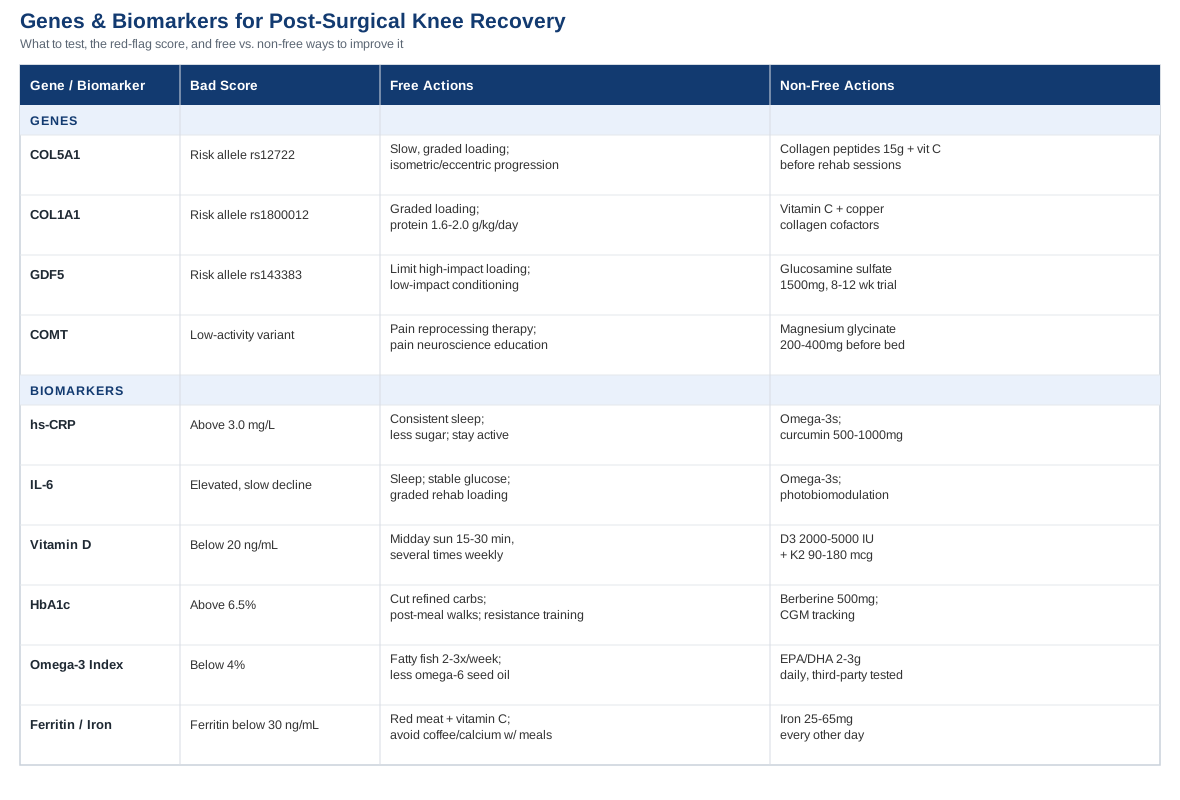
6 Biomarkers Worth Tracking After Knee Surgery
Anterior knee pain that persists after surgery is rarely explained by the surgical repair alone. A growing body of orthopedic research has looked directly at blood-based markers around ACL reconstruction, rotator cuff repair, and total knee arthroplasty, and found measurable associations between certain lab values and how well — and how fast — people recover. A systematic review of biomarkers in ACL reconstruction outcomes identified 17 markers with statistically significant links to patient-reported pain, function, and joint healing. The six below are the ones with the clearest human evidence and the most practical relevance to a knee that's still hurting after surgery.
hs-CRP (High-Sensitivity C-Reactive Protein)
Why It Matters
hs-CRP is your liver's response to circulating inflammatory signals. In a healthy post-surgical timeline, it spikes in the first week and then falls steadily. When it stays elevated weeks or months out from surgery, that's a signal the joint — or the body more broadly — is still running an active inflammatory process, which correlates with higher reported pain and slower functional recovery in knee biomarker research.
How to Measure It
A standard hs-CRP blood draw costs roughly 10 to 25 US dollars out of pocket, or is often bundled into a basic metabolic panel through your doctor or a direct-to-consumer lab service. Results in under 1.0 mg/L are considered low risk; above 3.0 mg/L generally warrants attention, and post-surgical patients are often higher than that for a legitimate reason — context (how many weeks post-op you are) matters as much as the number itself.
The Plan Without Supplements
Prioritize sleep consistency (7 to 9 hours, regular timing), since fragmented sleep is one of the more reliable drivers of elevated CRP. Reduce ultra-processed food and added sugar, both linked to low-grade systemic inflammation. Keep moving within pain-free range — total inactivity raises inflammatory markers just as overload does. Recheck hs-CRP every 6 to 8 weeks; it moves slowly, so weekly testing wastes money without adding information.
The Plan With Supplements or Equipment
Omega-3 fatty acids (covered in more detail below) are the best-supported supplement for lowering CRP in musculoskeletal contexts. Curcumin (500 to 1000 mg daily, taken with piperine or a phospholipid-bound form for absorption) has modest human evidence for lowering inflammatory markers in joint conditions; cycle it 8 to 12 weeks on, with a 2-week break, and avoid combining with blood thinners without medical clearance, since curcumin has mild antiplatelet effects. If hs-CRP stays persistently above 10 mg/L, that's outside the scope of a supplement plan and warrants a conversation with your surgical team about ruling out infection or other complications.
IL-6 (Interleukin-6)
Why It Matters
IL-6 is one of the two most-studied biomarkers in ACL reconstruction recovery, alongside CTX-II, according to both the systematic review referenced above and a related review of biomarkers in adolescents after ACL reconstruction. It's a more specific, joint-level inflammatory signal than CRP, and elevated or slowly-declining IL-6 has tracked with worse pain and gait outcomes in this research.
How to Measure It
This is a more advanced marker — not part of routine panels, typically ordered through a specialty or research-oriented lab, costing roughly 40 to 90 US dollars. It's the kind of test worth requesting if hs-CRP is ambiguous and pain is disproportionate to what your imaging shows, rather than something to check reflexively every visit.
The Plan Without Supplements
The same anti-inflammatory lifestyle foundations that lower CRP — sleep, blood sugar stability, graded activity — apply here, since IL-6 and CRP move together more often than not. Local, targeted rehab loading (as tolerated and guided by a physical therapist) has been shown in orthopedic recovery literature to modulate local inflammatory signaling better than either total rest or aggressive overload.
The Plan With Supplements or Equipment
Omega-3s again have the strongest evidence base here. Photobiomodulation (low-level laser therapy), discussed later in this article, has direct trial evidence in patellofemoral pain and may work partly through local inflammatory modulation — 2 to 3 sessions weekly for 4 to 6 weeks is a typical studied protocol. There's no well-established supplement that reliably lowers IL-6 in isolation; be skeptical of products marketed specifically for this, since the human evidence in post-surgical knees doesn't support a targeted IL-6 supplement claim.
Vitamin D (25-Hydroxyvitamin D)
Why It Matters
This is arguably the single most actionable marker on this list. A 2023 cohort study found vitamin D deficiency associated with higher rates of both primary ACL tears and reconstruction failure. A systematic review echoed this link between vitamin D status and post-reconstruction function, and a meta-analysis in total knee arthroplasty patients found deficiency associated with worse outcomes and longer hospital stays — with supplementation improving results. Mechanistically, vitamin D affects collagen remodeling, tendon-to-bone healing, and inflammation regulation, all directly relevant to a knee that isn't healing on schedule.
How to Measure It
A 25-OH vitamin D blood test costs 20 to 50 US dollars and is one of the most widely available lab tests anywhere. Optimal range for tissue healing is generally cited as 40 to 60 ng/mL (100–150 nmol/L); below 20 ng/mL is deficient, and above 30 ng/mL is the minimum most orthopedic research uses as a "sufficient" cutoff.
The Plan Without Supplements
15 to 30 minutes of midday sun exposure on bare skin, several times a week, is the primary non-supplement route, though this is unreliable in winter months or higher latitudes and essentially impossible to titrate precisely — which is why this is one of the few markers where supplementation is usually the more practical option.
The Plan With Supplements or Equipment
Vitamin D3, typically 2000 to 5000 IU daily, is the standard correction dose for deficiency, paired with vitamin K2 (90 to 180 mcg) to support proper calcium utilization. Retest at 8 to 12 weeks rather than sooner — vitamin D storage and blood levels shift slowly. Side effects are rare at these doses but include risk of hypercalcemia at very high, prolonged intakes (typically only a concern above 10,000 IU/day sustained for months), so retesting before continuing high doses long-term is worthwhile rather than optional.
HbA1c (Glycated Hemoglobin)
Why It Matters
Even in non-diabetic ranges, glycemic control affects collagen cross-linking and healing quality. A 2024 study found HbA1c levels above 6.6 percent associated with significantly higher complication rates after ACL reconstruction, and a separate study found elevated postoperative HbA1c correlated with higher retear rates after rotator cuff repair — a useful proxy for how glycemic status likely affects other tendon and ligament repairs, patellar tendon and quad tendon included.
How to Measure It
HbA1c is a standard, inexpensive blood test (10 to 30 US dollars, or included in most annual panels). Under 5.7 percent is considered normal, 5.7 to 6.4 percent is prediabetic range, and above 6.5 percent is diabetic range — but for surgical healing purposes, research increasingly suggests aiming for the lower half of the "normal" range rather than simply avoiding the diabetic cutoff.
The Plan Without Supplements
Reducing refined carbohydrate and added sugar intake, walking after meals (even 10 minutes measurably blunts post-meal glucose spikes), and resistance training 2 to 3 times weekly are the best-supported non-supplement levers for improving insulin sensitivity and lowering HbA1c over a 3-month cycle (the lifespan of a red blood cell, which is why retesting sooner than 8 to 12 weeks isn't informative).
The Plan With Supplements or Equipment
Berberine (500 mg, 2 to 3 times daily with meals) has meaningful human evidence for improving glycemic markers, comparable in some trials to metformin, though it can cause gastrointestinal upset and shouldn't be combined with other glucose-lowering medication without medical supervision. A continuous glucose monitor (roughly 50 to 100 US dollars for a 2-week sensor) is a useful, if optional, equipment-based way to see individual food responses in real time rather than waiting three months for an HbA1c recheck.
Omega-3 Index
Why It Matters
The omega-3 index measures the percentage of EPA and DHA in red blood cell membranes and is a better long-term marker of anti-inflammatory status than a single dietary recall. Research has found that a higher omega-3 index is associated with less reported pain following muscle-damaging exercise, and a separate study on omega-6 to omega-3 ratios found a clear association with knee pain, functioning, and distress in adults — directly relevant to a knee joint under post-surgical inflammatory load. Omega-3s convert into specialized pro-resolving mediators (resolvins, protectins) that actively help end inflammation rather than just suppress it.
How to Measure It
The omega-3 index is a specialty finger-prick or blood draw test, costing 40 to 75 US dollars through specialty labs (not yet part of routine panels). A result below 4 percent is considered high risk; 8 percent or higher is the target range associated with better cardiovascular and inflammatory outcomes.
The Plan Without Supplements
Fatty fish (salmon, mackerel, sardines, anchovies) 2 to 3 times weekly is the most direct food-based route to raising the index, alongside reducing omega-6-heavy seed oils (soybean, corn, sunflower) that compete with omega-3s metabolically and skew the ratio unfavorably.
The Plan With Supplements or Equipment
A combined EPA/DHA supplement, 2 to 3 grams daily, is the standard correction dose, ideally from a third-party tested fish or algae oil source. Retest the index after 3 to 4 months, since red blood cell turnover determines how quickly it shifts. Mild side effects can include a fishy aftertaste or loose stools at higher doses; those on blood thinners should confirm dosing with their physician, since omega-3s have mild antiplatelet effects at high intakes.
Ferritin and Iron Status
Why It Matters
Iron deficiency directly impairs muscle function and rehabilitation outcomes. A study in hospitalized patients found iron deficiency independently associated with fatigue and poor muscle strength, and — notably for anyone rebuilding quad strength after knee surgery — found that knee extension strength improved more in iron-deficient patients who received iron supplementation than in those who didn't. Since quadriceps weakness is one of the most consistent drivers of persistent patellofemoral pain after surgery, this marker deserves more attention than it typically gets.
How to Measure It
A full iron panel (ferritin, serum iron, TIBC, transferrin saturation) costs 25 to 60 US dollars. Ferritin below 30 ng/mL suggests depleted iron stores even if hemoglobin is technically normal, and levels below 50 ng/mL have been associated with subpar strength-training response in some athletic populations, particularly in women.
The Plan Without Supplements
Red meat, poultry, and iron-fortified foods paired with a source of vitamin C (which meaningfully improves non-heme iron absorption) are the food-based route. Avoid taking calcium supplements or drinking coffee/tea directly alongside iron-rich meals, since both blunt absorption.
The Plan With Supplements or Equipment
Iron supplementation (typically 25 to 65 mg elemental iron, every other day rather than daily — alternate-day dosing improves absorption efficiency according to recent iron metabolism research) is the standard correction, but only with a confirmed low ferritin result; iron supplementation without a documented deficiency risks overload, which is genuinely harmful over time. Common side effects include constipation and stomach upset, often reduced by taking it with food despite the slight absorption trade-off. Recheck ferritin at 8 to 12 weeks.
Taken together, these six markers offer a more complete picture than any single test — inflammatory load (hs-CRP, IL-6), micronutrient healing capacity (vitamin D, ferritin), metabolic environment (HbA1c), and long-term anti-inflammatory reserve (omega-3 index). None of them will single-handedly fix a stubborn knee, but a clear pattern across two or three of them often points to what's actually worth prioritizing next.
What Your Genes May Be Contributing
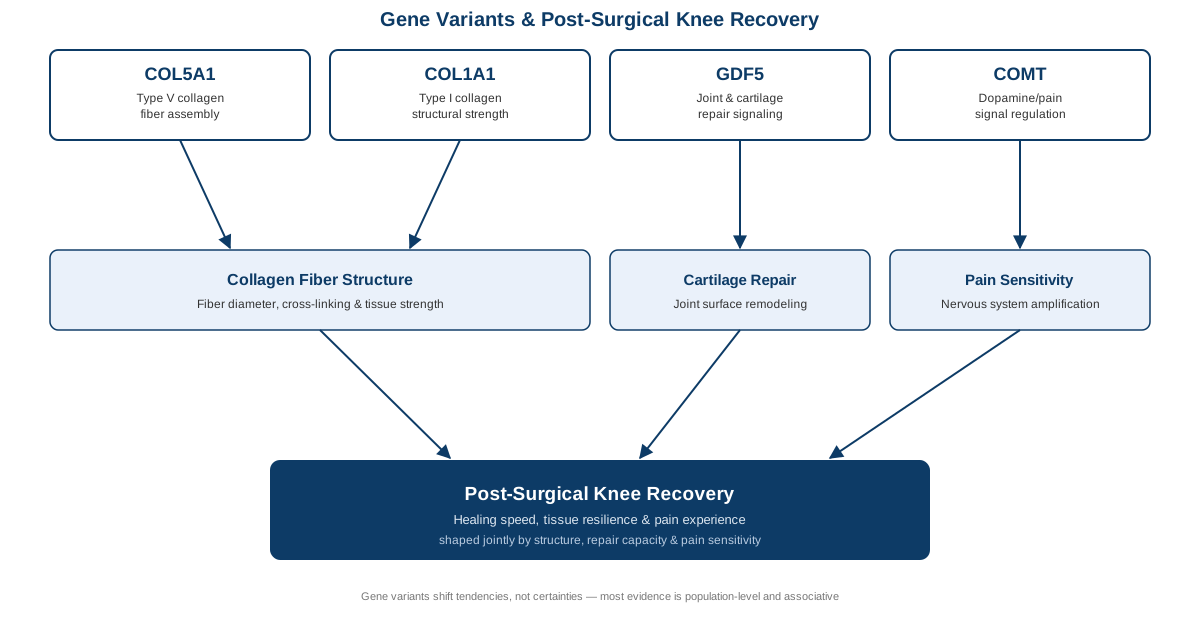
Biomarkers reflect your current state; genes reflect your underlying tendencies. Researchers like Ali Torkamani, whose work on genomic risk prediction has shaped how clinicians think about polygenic influence on injury and healing, and Gary Brecka, known for popularizing accessible genetic panels covering pain and connective tissue genes, have both pushed the idea that a small set of gene variants can meaningfully shape musculoskeletal outcomes — though it's worth being clear upfront that most of this evidence is associative, based on population studies, not proof that any single gene determines your individual outcome.
COL5A1
COL5A1 encodes part of type V collagen, which regulates the diameter and assembly of the larger, load-bearing collagen fibers in tendons and ligaments. A 2022 meta-analysis of 21 studies linked specific COL5A1 variants (notably rs12722) to increased risk of tendon and ligament injury, and an earlier study found the same gene region associated with ACL rupture risk specifically in female athletes. If you carry a higher-risk variant, your collagen fibers may be structurally thinner or less well organized, which can plausibly slow tendon-to-bone integration after reconstruction.
If the gene is unfavorable, the plan without supplements centers on load management: slower, more conservative return-to-loading timelines than generic post-op protocols suggest, since the biological ceiling for how fast your tissue remodels may genuinely be lower. Isometric and controlled eccentric loading, progressed gradually over months rather than weeks, is the most evidence-supported non-supplement approach for collagen-dependent tissue.
The plan with supplements centers on collagen synthesis support: 15 grams of hydrolyzed collagen peptides with 50mg of vitamin C, taken roughly 40 to 60 minutes before rehab loading sessions — a protocol with modest human evidence for enhancing collagen synthesis timed around exercise. Take this on training days only (typically 3 to 4 times weekly) rather than daily; there's no strong rationale for continuous dosing, and no significant side effects are reported at these doses beyond mild GI upset in some people.
COL1A1
COL1A1 governs type I collagen, the dominant structural collagen in tendons, ligaments, and bone. A meta-analysis found the rs1800012 polymorphism associated with increased risk of sports-related tendon and ligament injury. This variant is thought to subtly shift the ratio of collagen types produced, potentially yielding slightly less mechanically robust tissue.
Without supplements, the compensation strategy is largely the same as for COL5A1 — patient, graded mechanical loading — plus closer attention to protein intake overall, since collagen synthesis is protein-dependent; aim for 1.6 to 2.0 g of protein per kilogram of body weight daily during active rehab phases, an intake range with strong general evidence for supporting tissue repair.
With supplements, vitamin C (500 to 1000 mg daily) and copper (adequate intake, rarely needing supplementation beyond a standard multivitamin) both serve as cofactors in collagen cross-linking enzymes and are worth confirming aren't deficient, particularly vitamin C in anyone with a limited fruit and vegetable intake. There's no meaningful cycling requirement for either at these doses, and side effects are minimal — vitamin C above 2000 mg daily can cause GI upset, which is the practical ceiling.
GDF5
GDF5 (growth differentiation factor 5) is involved in joint, cartilage, and bone development and repair. The well-studied rs143383 variant, located in the gene's regulatory region, has been associated with knee osteoarthritis at genome-wide significance, and functional studies show the susceptibility allele reduces GDF5 transcriptional activity in cartilage-forming cells — meaning carriers may produce somewhat less of this repair-signaling protein under normal conditions. For anyone recovering from a patellofemoral procedure, that's directly relevant to how well cartilage surfaces remodel afterward.
Without supplements, the main compensation lever is minimizing unnecessary joint-surface loading during high-impact activity while cartilage is actively remodeling — meaning a slower return to running, jumping, and pivoting sports than a "textbook" recovery timeline, plus consistent low-impact conditioning (cycling, swimming, elliptical) to maintain fitness without repetitive impact stress.
With supplements, the evidence is thinner and more indirect: glucosamine sulfate (1500 mg daily) and collagen peptides have some supportive but mixed trial data in knee joint conditions broadly, not specifically in GDF5 carriers — worth framing as a reasonable low-risk trial (8 to 12 weeks, then reassess symptoms) rather than a guaranteed fix. Glucosamine is generally well tolerated; those with shellfish allergies should confirm the source, since some formulations are shellfish-derived.
COMT
COMT (catechol-O-methyltransferase) regulates the breakdown of dopamine and norepinephrine, which in turn affects pain processing sensitivity. A systematic review and meta-analysis found that low-activity COMT variants are consistently associated with increased sensitivity to acute post-surgical pain, and with elevated risk for certain chronic widespread pain conditions — though notably not a universal effect across every chronic pain type, which the review is careful to point out. In practice, this gene doesn't determine whether your knee heals structurally, but it may partly explain why the same surgical outcome feels more painful to you than to someone else.
Without supplements or equipment, this is where downstream nervous-system-focused approaches matter more than tissue-focused ones — which is exactly what the Pain Reprocessing Therapy research covered in the next section addresses directly, since a heightened pain-sensitivity tendency responds well to approaches that recalibrate how the brain interprets non-dangerous pain signals.
With supplements, magnesium glycinate (200 to 400 mg before bed) has modest general evidence for supporting healthy nervous system regulation and sleep quality, both of which influence pain sensitivity indirectly; this is a reasonable, low-risk daily addition rather than a targeted COMT "fix," since no supplement directly and reliably normalizes COMT enzyme activity in humans. Be skeptical of any product marketed as a direct COMT modulator — that claim outruns the current evidence.
The Mind-Brain Research Reshaping How Pain Gets Treated
One of the more genuinely important developments in pain science over the last several years has been the emergence of Pain Reprocessing Therapy (PRT), most accessibly described in Alan Gordon's book The Way Out and validated in a landmark 2022 randomized clinical trial published in JAMA Psychiatry. This work matters for post-surgical patellofemoral pain specifically because a meaningful share of pain that persists after a technically successful surgery isn't purely a tissue problem — it's partly a matter of how the nervous system has learned to interpret signals from that knee. Below are the ten most useful ideas from this body of research.
Pain Can Outlast Tissue Damage
The central premise of PRT is that once acute injury or surgical trauma has healed, the nervous system can continue generating pain as a learned, protective response — even without ongoing tissue damage. This isn't "the pain is fake"; it's that the brain's threat-detection system has become oversensitized, similar to an alarm that keeps triggering after the actual break-in is over.
Two-Thirds of Participants Became Mostly or Completely Pain-Free
In the JAMA Psychiatry trial, after a short course of PRT, about two-thirds of participants with mild-to-moderate chronic back pain reported being pain-free or nearly pain-free, a substantially larger effect than either placebo or usual care produced. While this trial focused on chronic back pain, not knee pain specifically, the underlying mechanism — reducing brain-generated pain amplification — is not joint-specific.
Reattributing Pain to the Brain, Not the Body, Predicts Recovery
A secondary analysis of the same trial found that the degree to which participants came to believe their pain was generated by brain processes rather than ongoing tissue damage was itself a strong predictor of how much their pain improved — suggesting the belief shift isn't just a side effect of recovery, it's a mechanism of it.
Fear of Movement Is a Major Amplifier
A core PRT technique involves gradually re-engaging in movements the patient has been avoiding out of fear, while deliberately observing that the movement doesn't cause damage. For post-surgical knees, this maps directly onto kinesiophobia — the fear of reinjuring a repaired joint — which is a well-documented driver of prolonged disability independent of actual tissue status.
Patients Describe a Genuine Shift in Self-Concept
A qualitative study of patient experiences in PRT found that many participants described no longer identifying as "a person with chronic pain" after treatment — a shift in self-narrative that clinicians increasingly view as clinically meaningful, not just a soft psychological detail.
Somatic Tracking Replaces Avoidance With Curious Attention
Rather than distracting from pain or fighting it, PRT teaches patients to observe pain sensations with a curious, non-threatening attention — noticing that the sensation shifts, moves, or fades when it isn't reinforced by fear. This is a specific, learnable skill distinct from general relaxation.
The Approach Directly Challenges the "Just Structural" Model
Perhaps the most disruptive idea in this research is that treating persistent pain as purely structural — chasing another scan, another injection, another surgery — can, for some patients, reinforce the very fear response that's prolonging the pain. This doesn't mean structural causes should be ignored (they clearly matter after surgery), but it does mean structural explanations shouldn't be assumed by default once healing timelines have reasonably passed.
A Newer Trial Extends This to a Broader "Mind-Brain" Framework
A more recent trial protocol builds on this work under the name "psychophysiologic symptom relief therapy," extending the same logic to a broader set of chronic pain conditions and testing it against an expanded set of comparison treatments — a sign this isn't a one-off finding but an active, maturing research direction.
Effects Appear Durable, Not Just Short-Term
Follow-up data from the original trial found that pain reductions largely held up at one year post-treatment, which matters because many pain interventions show good short-term results that fade — durability is a genuinely higher bar, and one this approach has cleared in initial testing.
It's a Complement to Surgery, Not a Substitute
None of this research argues against surgical intervention where structurally indicated — the participants in these studies generally had causes for their pain ruled out or already addressed. For a post-surgical knee, this approach is best understood as addressing the nervous-system layer of pain that structural treatment alone doesn't reach, not as a replacement for appropriate surgical or physical therapy care.
Realistic Access Points for This Approach
Look for a physical therapist or psychologist trained specifically in pain reprocessing or pain neuroscience education — not all providers use these terms, so asking directly about "pain reprocessing therapy" or "pain neuroscience education" is a reasonable way to find one. The Way Out is also a reasonable starting point for self-guided exposure to these concepts, though working with a trained clinician tends to produce more consistent results than a book alone.
Complementary Approaches Worth Considering
A handful of non-drug, non-surgical approaches have direct or closely related human evidence in patellofemoral pain and post-surgical knee recovery specifically. These aren't substitutes for structured rehab, but they're reasonable additions with real evidence behind them, not vague wellness trends.
EMG Biofeedback
EMG biofeedback uses surface electrodes to give patients real-time visual or audio feedback on quadriceps muscle activation — particularly the vastus medialis oblique (VMO), a muscle that's frequently underactive relative to the vastus lateralis in patellofemoral pain, contributing to poor patellar tracking. Because this muscular imbalance is one of the most consistently cited mechanical contributors to anterior knee pain, biofeedback offers a way to directly retrain the specific pattern rather than just strengthening the quad generally.
A 2022 randomized controlled trial in young adult athletes with patellofemoral pain syndrome found that EMG biofeedback-guided isometric training at multiple knee angles, combined with patellar taping, produced significantly better pain and functional hop-test scores over six weeks compared to sham treatment. A broader systematic review of biofeedback in patellofemoral pain found generally supportive, if still limited, evidence across multiple smaller trials.
Realistically, this requires access to a physical therapist with EMG biofeedback equipment — increasingly common in sports medicine and orthopedic rehab clinics — used during structured quad-strengthening sessions, typically 2 to 3 times weekly for 6 to 8 weeks. It's not something to self-administer without guidance, since correct electrode placement and exercise selection meaningfully affect results.
Photobiomodulation (Low-Level and High-Intensity Laser Therapy)
Photobiomodulation uses specific wavelengths of red or near-infrared light, applied directly over the joint, theorized to stimulate cellular energy production and modulate local inflammation and pain signaling. It's a plausible complementary approach for a joint with a persistent low-grade inflammatory component, which is common in post-surgical patellofemoral pain.
A single-blind randomized controlled trial found high-power laser therapy significantly reduced pain and improved function in patellofemoral pain syndrome patients, and a separate high-intensity laser therapy trial reported similar statistically significant improvements. Evidence in post-surgical knee swelling specifically (as opposed to patellofemoral pain generally) is newer and still limited, so this should be viewed as promising rather than definitive for the post-surgical population specifically.
This is typically delivered in a clinic setting, 2 to 3 sessions weekly for 4 to 6 weeks, using clinical-grade laser equipment — not the low-powered handheld devices sold for home use, which operate at different power levels than those used in trials. It's a reasonable adjunct to discuss with a physical therapist rather than a standalone treatment.
Guided Imagery
Guided imagery involves structured mental visualization — often audio-guided — of relaxation, healing, or specific movement patterns, and has a meaningfully large evidence base in orthopedic post-surgical pain specifically, more so than in many other complementary approaches on this list.
A randomized controlled trial in geriatric orthopedic patients found significantly reduced postoperative pain with guided imagery compared to standard care, and a separate 225-patient randomized trial in joint replacement patients found reduced pain and anxiety with a guided imagery and structured touch protocol. This is one of the more accessible, lowest-risk options on this list.
In practice, this means using a recorded guided imagery audio session (10 to 20 minutes), ideally starting in the immediate post-surgical period and continuing daily through the first several weeks of recovery — a low-cost, no-equipment addition with essentially no downside, best used alongside, not instead of, physical rehab.
Mindfulness Meditation / MBSR
Mindfulness-Based Stress Reduction (MBSR) is a structured 8-week meditation program aimed at changing one's relationship to pain and stress signals rather than eliminating the sensation itself — conceptually adjacent to the pain reprocessing work covered earlier, though it's an older and more extensively studied approach.
The evidence specifically in knee pain is genuinely mixed. A pilot randomized controlled trial in knee and hip osteoarthritis patients found no significant benefit on the primary pain and function measure at three months, though it did find a delayed but longer-term benefit on a separate pain scale — a result the authors themselves describe as preliminary. A separate study found mindfulness was associated with better treatment response to exercise-based interventions in knee osteoarthritis, suggesting it may work best as an amplifier of rehab rather than a standalone treatment.
Given this mixed evidence, a reasonable approach is a standard 8-week MBSR course (widely available in-person or via app-based programs) used specifically to support engagement with physical therapy exercises, rather than expected to independently reduce knee pain on its own.
Conclusion
Persistent pain after knee surgery is rarely one problem with one fix. It's usually some combination of an inflammatory environment that hasn't fully resolved, a micronutrient or metabolic status quietly working against healing, an inherited tendency in how your connective tissue or nervous system responds, and — often overlooked — a fear-driven movement pattern that a purely structural mindset misses entirely. The value of biomarkers and genetics here isn't certainty; it's a sharper set of questions to bring to your next appointment and a clearer sense of which levers are actually yours to pull.
The most useful next step is usually the simplest one: get the six biomarkers above tested, track your numbers over a couple of retesting cycles rather than a single snapshot, and bring the pattern — not just isolated results — to a physical therapist or physician who's willing to look at your recovery as more than a healed scar and a clean scan.
Musculoskeletal: Tendon & Ligament Conditions
Endocrine & Metabolic: Diabetes & Blood Sugar
Autoimmune: Inflammatory Conditions Connective Tissue Conditions