This article contains AI generated content.
Posterior Capsular Contracture of the Knee: 5 Genes and 7 Biomarkers to Track
If you've been told your knee "just doesn't want to straighten" or that the back of your joint feels permanently tight after surgery, an injury, or a long period of immobilization, you've probably already heard the standard advice: stretch more, do your physical therapy exercises, give it time. That advice isn't wrong, but it's often incomplete. It treats every stiff knee the same way, when the reasons a posterior capsule tightens and stays tight can be very different from one person to the next.
Some people develop capsular contracture because of mechanical scarring after trauma or surgery. Others seem to fibrose more aggressively than expected for the same injury, which points toward something happening at the tissue and signaling level rather than just at the level of "not stretching enough." Blood sugar control, systemic inflammation, vitamin D status, and inherited variants in collagen and fibrosis-related genes all appear to influence how readily a joint capsule thickens and loses flexibility. None of this shows up on an X-ray.
This article looks at the biology underneath the stiffness: the biomarkers that reflect how your body is currently handling inflammation, glycation, and fibrotic signaling, and the genetic variants that may predispose some people toward stiffer, less compliant connective tissue in the first place. Neither is a diagnosis, and neither replaces an orthopedic evaluation or physical therapy. But together they can help explain why one person's flexion contracture responds quickly to rehab while another's doesn't, and what might be adjusted in the meantime.
None of this is about finding a shortcut or a single number that fixes the joint. It's about narrowing down which of several plausible drivers — metabolic, inflammatory, or genetic — is most active in your case, so that time and effort go toward the levers that actually move. That's a more useful starting point than generic stretching advice, and it's the approach the rest of this article takes.
Summary
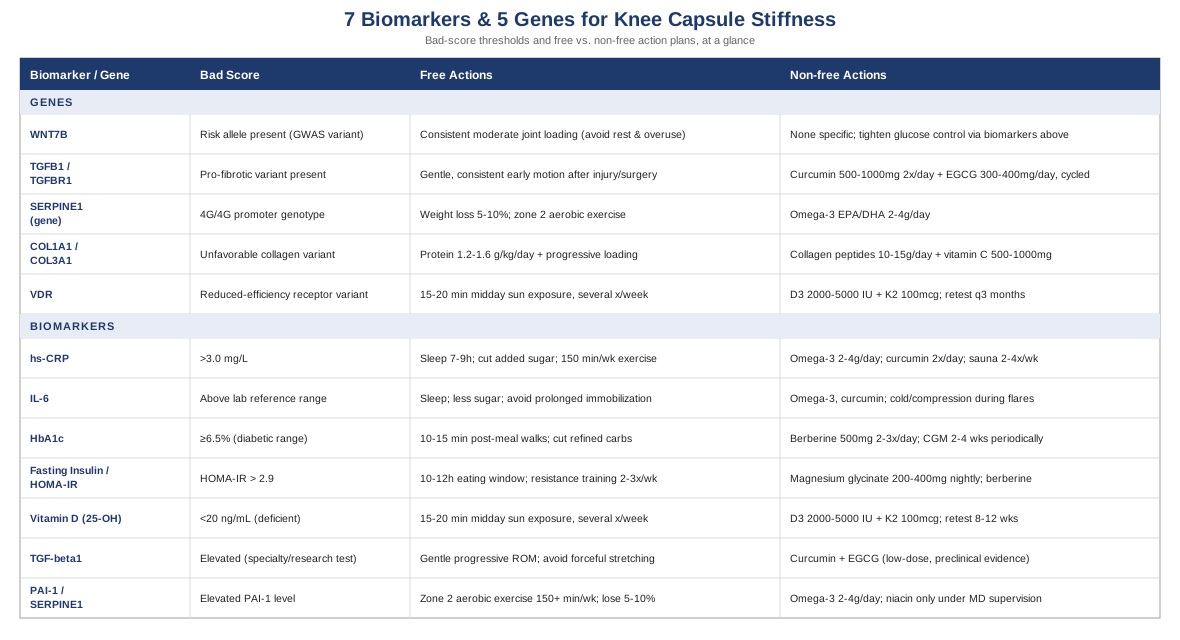
Posterior knee capsule tightening is not one condition with one cause — it's the visible result of a fibrotic process that can be driven by different combinations of inflammation, blood sugar dysregulation, vitamin D status, and inherited collagen or fibrosis-signaling genes. Below, you'll find the seven biomarkers worth tracking first, because they're measurable today, affordable in most cases, and directly tied to how aggressively fibrous tissue forms and hardens in and around a joint capsule. You'll also find the five genes most consistently implicated in capsule fibrosis research (borrowed largely from frozen shoulder and arthrofibrosis genetics, since knee-specific genetic studies are still limited), what each one may mean for your own tissue behavior, and realistic plans — with and without supplements — for working around an unfavorable result. A bonus section summarizes ten ideas from Peter Attia's Outlive that reframe joint stiffness as a healthspan issue rather than a one-off injury, and a final section covers hands-on and mind-body approaches with actual clinical evidence behind them for knee stiffness and osteoarthritis-adjacent conditions. Read on for the specifics of each biomarker and gene, including how to test them, what a bad result actually means, and what to do about it.
The Biomarkers That Actually Explain Capsule Stiffness
Surgeons who study arthrofibrosis after knee surgery have started identifying specific molecular signatures in scarred, contracted capsule tissue — not just "more scar," but specific overactive pathways involving fibrosis signaling proteins like TGF-beta, PAI-1 (also called SERPINE1), and collagen-remodeling enzymes such as LOX. A systematic review of biochemical markers in postsurgical knee arthrofibrosis confirmed that these fibrotic signaling molecules show up consistently across studies of stiff, scarred knees (Biochemical markers of postsurgical knee arthrofibrosis: a systematic review). Separately, researchers who directly sequenced posterior capsule tissue removed during revision knee replacement for arthrofibrosis identified TGFBR1 — the receptor for TGF-beta — as a leading candidate biomarker distinguishing fibrotic from non-fibrotic capsules (Identification of novel biomarkers for arthrofibrosis after total knee arthroplasty).
That tissue-level research is hard to access outside of a lab, but several of the same biological pathways can be approximated with blood tests you can order through a regular physician or, in some cases, directly through a consumer lab service. The seven below give a reasonably complete picture of the inflammatory, metabolic, and fibrotic pressure your body is putting on connective tissue in general — and by extension, on a capsule that's already prone to tightening.
hs-CRP (high-sensitivity C-reactive protein)
hs-CRP is the most widely used marker of low-grade systemic inflammation, and it's a favorite of longevity-focused physicians like Peter Attia precisely because it's cheap, standardized, and reflects the general inflammatory "weather" your tissues are sitting in. Chronic low-grade inflammation feeds fibroblast activity — the cells responsible for laying down the collagen that makes a capsule thick and inelastic — so a persistently elevated hs-CRP is a signal that your body is in a more pro-fibrotic state than it needs to be.
How to measure it: a standard blood draw, available through primary care or direct-to-consumer lab services such as Quest or LabCorp without a doctor's order in most US states. Cost is typically $10 to $30 out of pocket, or free with insurance as part of a standard panel. Levels under 1.0 mg/L are considered low risk, 1.0 to 3.0 mg/L moderate, and above 3.0 mg/L high — though for a joint recovering from surgery or injury, some transient elevation is expected and should be interpreted in that context, not in isolation.
If hs-CRP is elevated, the plan without supplements starts with the highest-leverage inflammatory levers: consistent sleep (aim for 7 to 9 hours, since even one night of restriction measurably raises CRP), reducing ultra-processed food and added sugar intake, and moving from sedentary to at least 150 minutes a week of moderate activity, which lowers CRP independent of weight loss. Dental and gum health also matters more than people expect, since periodontal inflammation is a surprisingly common hidden contributor to a stuck-high CRP.
If the score is bad, the plan with supplements or equipment: omega-3 fatty acids (EPA/DHA, 2 to 4 grams per day of combined EPA/DHA) have the best trial evidence for modestly lowering CRP, typically taken with meals to reduce GI upset, reassessed every 8 to 12 weeks. Curcumin with piperine (500 to 1,000 mg twice daily) has moderate evidence for reducing inflammatory markers but can interact with blood thinners and should be cycled off for a week every couple of months if used long-term. A sauna or hot-water immersion protocol (2 to 4 sessions per week, 15 to 20 minutes) has shown CRP reductions in several small trials, with the main caution being hydration and avoiding it if you have uncontrolled cardiovascular disease.
IL-6 (interleukin-6)
IL-6 sits upstream of CRP in the inflammatory cascade and is more directly tied to muscle and joint tissue signaling — it's released by joint synovium and surrounding muscle during periods of injury, disuse, or overload, and it directly promotes fibroblast proliferation. It's a more "advanced" marker in the sense that it's less standardized between labs and rarely ordered in routine primary care, but functional and sports medicine clinics increasingly include it in inflammatory panels for exactly this reason.
How to measure it: usually ordered through a specialty or functional medicine lab (examples include Boston Heart, Quest's specialty panels, or research-oriented labs), costing $50 to $120 and typically not covered by insurance unless tied to a specific diagnosis. Reference ranges vary by lab, which is the main downside — track your own trend rather than comparing to population averages.
If IL-6 is elevated, the plan without supplements overlaps heavily with the CRP plan (sleep, sugar reduction, regular movement), with one addition: minimizing prolonged joint immobilization where possible, since disuse itself is a known IL-6 trigger in joint tissue — this is part of why early, gentle, guided motion after knee surgery is now favored over strict immobilization in most protocols.
If the score is bad, the plan with supplements or equipment: the same omega-3 and curcumin approach used for CRP applies here, with similar dosing and cycling. Compression and cold therapy (10 to 15 minutes, once or twice daily during an acute flare, not chronically) can blunt local IL-6 release around a joint, though it should be scaled back once the acute phase passes since chronic cold exposure can blunt the healing response you actually want later in rehab.
HbA1c (glycated hemoglobin)
This is one of the strongest and best-documented links in the entire capsule-fibrosis story, even though most of the direct evidence comes from the shoulder rather than the knee. Diabetes and elevated HbA1c are consistently associated with adhesive capsulitis (frozen shoulder), with some studies reporting an odds ratio of roughly 1.8 for developing capsular contracture when HbA1c exceeds 7%, independent of how long someone has had diabetes (A Narrative Review of Adhesive Capsulitis with Diabetes). The proposed mechanism is advanced glycation end-products (AGEs) — sugar molecules that cross-link collagen fibers, making them stiffer and less able to remodel normally. There's no reason to think the knee capsule is exempt from this mechanism, since it's made of the same collagen types. One review has gone as far as suggesting frozen shoulder should prompt routine HbA1c screening as an early metabolic warning sign (Frozen Shoulder as a Metabolic Signal: Advocating Routine HbA1c Screening).
How to measure it: a standard blood draw, $15 to $40 out of pocket or covered by insurance, widely available through any primary care visit or direct lab service. Under 5.7% is normal, 5.7% to 6.4% is prediabetes, 6.5% and above is diabetic range.
If HbA1c is elevated, the plan without supplements centers on the two interventions with the most robust glucose-lowering evidence: a walk of 10 to 15 minutes after meals (shown to blunt post-meal glucose spikes meaningfully) and reducing refined carbohydrate load at the meal most likely to spike you, often dinner. Resistance training two to three times per week also meaningfully improves insulin sensitivity and, unlike most other interventions on this list, directly strengthens the muscles that offload stress from a stiff knee capsule.
If the score is bad, the plan with supplements or equipment: berberine (500 mg two to three times daily with meals) has trial evidence roughly comparable to metformin for glucose control, though it can cause GI upset and shouldn't be combined with other glucose-lowering medication without medical supervision. A continuous glucose monitor (roughly $50 to $90 per two-week sensor) is genuinely useful equipment here — not as a permanent fixture, but worn for two to four weeks at a time, a few times a year, to identify which specific foods and meal patterns are driving your personal glucose spikes.
Fasting insulin and HOMA-IR
Fasting insulin often rises years before HbA1c does, which makes it a genuinely earlier warning sign of the same glycation and inflammatory pathway described above. HOMA-IR (a calculation combining fasting glucose and fasting insulin) gives a more direct read on insulin resistance than either number alone, and it's a marker Attia and other metabolically-focused physicians tend to weight more heavily than HbA1c precisely because it catches problems earlier.
How to measure it: fasting insulin is a standard blood draw, $20 to $40, best drawn after a genuine 8 to 12 hour fast. HOMA-IR is simply calculated from fasting glucose and fasting insulin values, so no separate test is needed. A HOMA-IR under 1.0 is considered optimal, 1.0 to 1.9 acceptable, and above 2.9 indicates significant insulin resistance.
If HOMA-IR is bad, the plan without supplements is essentially the same as for HbA1c, with one addition worth emphasizing: time-restricted eating (an 10 to 12 hour eating window, not an extreme fast) has specific trial evidence for lowering fasting insulin independent of weight change, and is one of the more sustainable levers available.
If the score is bad, the plan with supplements or equipment: magnesium glycinate (200 to 400 mg nightly) supports insulin signaling in people who are deficient, which is common; berberine as described above is again a reasonable option. Cycling on supplements here matters less than with anti-inflammatories — these are generally fine for continuous use, though berberine is best paused for a week if you notice GI symptoms building.
25-hydroxyvitamin D
Vitamin D has a direct, mechanistic relationship to collagen and fibrosis: active vitamin D (1,25-dihydroxyvitamin D) has been shown to reduce collagen expression and other profibrotic factors in mesenchymal cells, essentially acting as a brake on excess collagen-laying activity (Vitamin D reduces the expression of collagen and key profibrotic factors). Low vitamin D status has also been separately linked to musculoskeletal pain, muscle weakness, and slower soft-tissue recovery, all of which compound a stiffening knee capsule.
How to measure it: a standard blood draw, $30 to $50, widely available and often included in annual physicals. A result below 20 ng/mL is deficient, 20 to 30 ng/mL insufficient, and most functional-medicine-oriented physicians target 40 to 60 ng/mL rather than the more conservative 30 ng/mL "sufficient" cutoff used in general population guidelines.
If vitamin D is low, the plan without supplements is limited but real: 15 to 20 minutes of midday sun exposure on bare skin several times a week, weather and skin tone permitting, can meaningfully raise levels over 2 to 3 months, though this is slow and unreliable in northern latitudes or winter months.
If the score is bad, the plan with supplements or equipment: vitamin D3 (2,000 to 5,000 IU daily, paired with vitamin K2 at 100 mcg to support proper calcium handling) is inexpensive and low-risk at these doses, retested after 8 to 12 weeks to confirm the dose is working rather than guessing indefinitely. Doses above 10,000 IU/day for extended periods carry a real risk of hypercalcemia and should only be used under physician supervision with periodic blood monitoring — this is one supplement where more is not simply better.
TGF-beta1 (transforming growth factor beta 1)
This is the single most consistently implicated molecule in capsule fibrosis specifically, showing up in both the postsurgical knee arthrofibrosis literature and in direct RNA sequencing of fibrotic posterior capsule tissue, where its receptor TGFBR1 was flagged as a leading biomarker candidate (Identification of novel biomarkers for arthrofibrosis after total knee arthroplasty). TGF-beta1 is the master switch that tells fibroblasts to differentiate into myofibroblasts — the contractile, collagen-dense cells that make a capsule genuinely tight rather than just thickened.
How to measure it: a specialty or research lab test, $80 to $150, not part of routine care and rarely ordered outside of research settings or advanced sports medicine and rheumatology practices. This is the least accessible marker on this list, and it's worth being honest that most readers won't order it directly — its main value here is explaining why the other, more accessible markers (CRP, IL-6, glucose markers) matter, since all of them feed into TGF-beta1 activity indirectly.
If TGF-beta1 is elevated (or presumed elevated based on the other markers and a fibrotic clinical picture), the plan without supplements is early, controlled, progressive range-of-motion work rather than aggressive stretching — overly forceful stretching of an actively fibrotic capsule can paradoxically trigger more TGF-beta1 release as a wound-healing response, which is part of why gentle, frequent, low-load motion tends to outperform occasional aggressive sessions.
If the score is bad (or clinically suspected), the plan with supplements or equipment: there is early, mostly preclinical evidence that curcumin and green tea catechins (EGCG) can downregulate TGF-beta signaling, but human trial evidence specific to joint capsule fibrosis doesn't yet exist — this should be considered a low-risk adjunct at standard doses (curcumin 500 to 1,000 mg twice daily, EGCG 300 to 400 mg daily with food to reduce liver stress at higher doses) rather than a primary strategy.
PAI-1 / SERPINE1
PAI-1 (plasminogen activator inhibitor-1, encoded by the SERPINE1 gene) blocks the breakdown of fibrin and extracellular matrix, meaning elevated PAI-1 doesn't just help form scar tissue — it actively prevents your body from clearing it away afterward. It appears repeatedly alongside TGF-beta and LOX in arthrofibrotic knee tissue studies as part of the same pro-fibrotic signaling cluster.
How to measure it: a specialty coagulation or cardiovascular risk panel, $60 to $130, occasionally included in advanced cardiometabolic panels ordered by preventive-medicine physicians (Attia and similarly-oriented clinics sometimes include it precisely because it also predicts cardiovascular clot risk).
If PAI-1 is elevated, the plan without supplements focuses on the same insulin-resistance levers described above, since PAI-1 is strongly upregulated by visceral fat and insulin resistance — weight loss in the range of 5 to 10% of body weight has been shown to meaningfully lower PAI-1 independent of other interventions.
If the score is bad, the plan with supplements or equipment: aerobic exercise (150+ minutes weekly of zone 2 intensity) has some of the best evidence for lowering PAI-1 specifically, more so than resistance training alone. Niacin at pharmacologic doses has shown PAI-1 reductions in trials but carries flushing and liver-enzyme risks at those doses and should only be used under medical supervision, not as a self-directed supplement.
What Your Genes May Be Telling You About Capsule Fibrosis
Genetic testing for joint fibrosis specifically is still an emerging field — there is no knee-capsule-specific genetic panel you can order today the way you can order a cardiovascular polygenic risk score. Most of what's known comes from research into frozen shoulder (adhesive capsulitis), which is biologically the closest analog to knee posterior capsule contracture, since both involve myofibroblast-driven thickening of a joint capsule. Researchers like Ali Torkamani, who has written extensively about the gap between polygenic risk and actionable prevention, and Gary Brecka, known for popularizing accessible genetic and biomarker testing, both make the same underlying point relevant here: a genetic variant is a probability shift, not a verdict, and it's most useful when paired with the biomarkers above rather than read in isolation.
WNT7B
A large genome-wide association study identified a common variant near WNT7B as the strongest single genetic signal for frozen shoulder, and separately found WNT7B to be one of the most differentially expressed genes in fibrotic shoulder capsule tissue compared to healthy tissue (A genome-wide association study identifies 5 loci associated with frozen shoulder). The same variant was also strongly linked to Dupuytren's contracture, another connective-tissue fibrotic condition, suggesting WNT7B affects a general fibrotic tendency across tissue types rather than one specific joint.
If the gene is unfavorable, the plan without supplements: since WNT signaling interacts heavily with mechanical loading, consistent, moderate joint loading (rather than either total rest or aggressive overuse) appears to be the most sensible non-supplement lever, mirroring how load-management protocols are already used in tendon and capsule rehab.
If the score is bad, the plan with supplements or equipment: there's no human trial evidence targeting WNT7B directly with any supplement, and no equipment specifically indicated. The most honest, defensible response to an unfavorable WNT7B-adjacent result is tighter attention to the modifiable biomarkers above (especially glucose control, since the same study found diabetes to be a causal risk factor independent of WNT7B), not a supplement protocol.
TGFB1 / TGFBR1
Variants affecting TGF-beta1 signaling and its receptor TGFBR1 show up both in the frozen shoulder GWAS pathway analysis (which found enrichment of TGF-beta-related genes among the associated loci) and directly in posterior knee capsule tissue sequencing. This is the genetic side of the TGF-beta1 biomarker discussed above — someone with a more active TGFB1/TGFBR1 variant may run a higher fibrotic "baseline," meaning their blood biomarker readings matter even more than average.
If the gene is unfavorable, the plan without supplements: early and consistent gentle motion after any knee injury or surgery, avoiding both prolonged immobilization and overly aggressive forced stretching, since both extremes can provoke TGF-beta-driven scarring in a genetically predisposed capsule.
If the score is bad, the plan with supplements or equipment: the curcumin and EGCG approach described under the TGF-beta1 biomarker section applies here as a low-risk adjunct, cycled with a week off every 6 to 8 weeks if used continuously, not because cycling is proven necessary but because there's no long-term human safety data at high doses to justify indefinite continuous use.
SERPINE1 (PAI-1 gene)
The SERPINE1 4G/5G promoter polymorphism is one of the more studied variants affecting baseline PAI-1 production, with the 4G allele generally associated with higher PAI-1 expression. This is directly relevant given how consistently PAI-1 shows up in arthrofibrotic knee tissue research.
If the gene is unfavorable, the plan without supplements: the same weight management and zone 2 aerobic exercise approach described under the PAI-1 biomarker section, since lifestyle factors can substantially offset genetic PAI-1 tendencies — this is one of the better-documented gene-by-lifestyle interactions in the cardiometabolic literature, even though it wasn't studied specifically in knee capsule tissue.
If the score is bad, the plan with supplements or equipment: omega-3 fatty acids have modest evidence for lowering PAI-1 in cardiometabolic studies, dosed as described earlier (2 to 4 grams EPA/DHA daily). No specific equipment is indicated beyond standard cardiovascular exercise equipment (bike, rower, or treadmill capable of sustaining zone 2 heart rate for 30+ minutes).
COL1A1 / COL3A1
Variants in the genes encoding type I and type III collagen — the two dominant collagen types in joint capsule tissue — affect collagen fiber quality, crosslinking, and how tissue responds to injury. These genes are the same ones implicated in Dupuytren's contracture and have been flagged in fibrotic gene panels used in knee arthrofibrosis research.
If the gene is unfavorable, the plan without supplements: prioritizing adequate protein intake (roughly 1.2 to 1.6 g/kg body weight daily) to ensure raw material for healthy collagen turnover, alongside progressive, tolerable loading of the joint, since collagen remodels in response to mechanical stress and undergoes very little useful remodeling in a completely unloaded joint.
If the score is bad, the plan with supplements or equipment: collagen peptides (10 to 15 g daily, ideally with a vitamin C source, since vitamin C is a required cofactor for collagen synthesis) have modest trial evidence for connective tissue support, generally well tolerated with no meaningful side effects at these doses. Vitamin C itself (500 to 1,000 mg daily) is the more evidence-backed piece of that combination.
VDR (vitamin D receptor gene)
Variants in the VDR gene affect how efficiently your cells respond to circulating vitamin D, independent of your actual blood vitamin D level. Someone with a less efficient VDR variant may need a higher blood level of 25-hydroxyvitamin D to get the same antifibrotic, collagen-regulating effect described earlier, which is a useful thing to know before assuming a "normal" vitamin D level is doing its job.
If the gene is unfavorable, the plan without supplements: the same sun exposure approach described under the vitamin D biomarker section, understanding it may simply be less efficient for you and shouldn't be relied on as a sole strategy.
If the score is bad, the plan with supplements or equipment: targeting the higher end of the functional range (40 to 60 ng/mL rather than the minimum "sufficient" 30 ng/mL) with vitamin D3 and K2 as described earlier, retested every 3 months initially rather than annually, since a less efficient receptor makes it more important to confirm the dose is actually translating into a higher blood level rather than assuming it.
Genetics and biomarkers tell two different parts of the same story — one is your starting tendency, the other is what your body is doing about it right now. The next section takes a step back and looks at a broader framework for thinking about joint longevity that ties both of these together.
Ten Ideas From Outlive That Reframe Joint Stiffness
Peter Attia's book Outlive: The Science and Art of Longevity isn't written about knee capsules specifically, but its central argument — that most of medicine treats problems reactively when the real leverage is in early, measurable, modifiable risk — maps directly onto how posterior capsular contracture is usually handled. Below are ten of the book's more useful ideas applied to this specific problem.
Medicine 3.0 means acting before the diagnosis, not after
Attia distinguishes "Medicine 2.0" (wait for a problem, then treat it) from "Medicine 3.0" (use data to intervene before the problem is severe). Applied here, that means tracking inflammatory and metabolic biomarkers before a knee ever gets stiff, not just after a contracture is already diagnosed.
The "marginal decade" depends on what you preserve now
Attia's core longevity argument is that the last decade of life is disproportionately shaped by functional capacity preserved decades earlier. A knee capsule that fibroses and loses range of motion in your 40s or 50s isn't just an inconvenience — it's a preview of mobility problems that compound later if left unaddressed.
Strength and stability are not optional, even for a "joint problem"
A recurring theme in the book is that muscular strength around a joint is protective in ways most people underestimate. Quadriceps and hamstring strength directly offload stress from a stiff posterior capsule, which is part of why biofeedback-assisted quadriceps training (discussed later in this article) has real evidence behind it.
Zone 2 training is a metabolic tool, not just a cardio tool
Attia treats zone 2 aerobic training as a way to improve mitochondrial efficiency and insulin sensitivity — directly relevant given how strongly insulin resistance ties into PAI-1 and glycation-driven collagen stiffening described earlier in this article.
VO2 max is one of the strongest predictors of all-cause mortality
While not directly about knee capsules, Attia highlights VO2 max as an unusually strong longevity biomarker. It's a useful reminder that overall cardiovascular fitness supports better tissue oxygenation and healing capacity everywhere in the body, including a recovering joint.
Rate of force development matters as much as raw strength
Attia emphasizes training not just how much force you can produce, but how quickly — relevant to knee rehab because stiff, fibrotic capsules often coexist with a loss of fast, coordinated muscle firing that further destabilizes the joint.
The "Centenarian Decathlon" concept: work backward from function you want to keep
Attia recommends identifying specific physical tasks you want to be able to do decades from now and training backward from them. For a stiff knee, this might mean identifying the specific range of motion needed for stairs, getting off the floor, or a favorite activity, and rehabbing toward that concrete target rather than a vague notion of "flexibility."
Chronic low-grade inflammation is a slow, silent driver
The book spends considerable time on inflammation as a background process that quietly worsens many chronic conditions — directly consistent with the hs-CRP and IL-6 discussion earlier, and a reason not to dismiss a "mildly elevated" inflammatory marker as unimportant.
Biomarker panels should be broad, not narrow
Attia is critical of relying on one or two numbers (like a single cholesterol value) and advocates for panels that capture multiple angles on the same underlying biology — the same logic behind tracking seven biomarkers here rather than just one.
Emotional and psychological health affect physical outcomes
Attia dedicates significant space to the idea that longevity isn't purely physical — stress and mental health measurably affect inflammation and recovery. Chronic stress elevates cortisol and downstream inflammatory signaling, which is one more reason stress management belongs in a joint recovery plan, not just a "nice to have."
These ideas point toward the same conclusion as the biomarker and gene sections above: joint stiffness responds better to a broad, data-informed approach than to a single fix. The final section covers hands-on and mind-body therapies with actual evidence behind them, for readers who want a practical complement to lab work and genetics.
Hands-On and Mind-Body Approaches With Real Evidence
Biomarkers and genetics explain the biology, but day-to-day management of a stiff knee capsule usually still involves some combination of movement-based and manual therapies. Not every popular option has evidence behind it for joint stiffness specifically — the four below do, with appropriate caveats about strength and consistency of that evidence.
Tai Chi
Tai chi combines slow, controlled multi-directional movement with sustained partial knee flexion, which makes it a reasonable low-impact way to load a stiff capsule through a fuller range of motion than most people use in daily life. It's also one of the better-studied movement therapies for knee joint conditions broadly, which gives it more credibility here than most alternative movement practices.
A randomized controlled trial of patients with symptomatic knee osteoarthritis assigned to 12 weeks of twice-weekly tai chi versus an attention-control condition found significant improvements in pain and function scores in the tai chi group (Tai Chi is effective in treating knee osteoarthritis: a randomized controlled trial). The evidence base is specific to osteoarthritis rather than posterior capsular contracture directly, so results should be read as suggestive rather than definitive for this exact condition.
A realistic application is two 45 to 60 minute sessions per week, ideally with an instructor initially to ensure the slow weight shifts don't push into pain, progressing gradually as tolerance improves. It should complement, not replace, any specific physical therapy protocol targeting the posterior capsule itself.
Massage Therapy
Manual therapy applied around a stiff joint can reduce local muscle guarding and improve short-term tissue pliability, which may make active range-of-motion work more productive afterward, even if massage alone doesn't resolve capsular fibrosis.
A randomized dose-finding trial in knee osteoarthritis found that 60-minute weekly Swedish massage sessions produced significant improvements in WOMAC pain, stiffness, and function scores compared to usual care, with some trials also showing improvement in measured range of motion, though results were less consistent for range of motion specifically across studies (Massage Therapy for Osteoarthritis of the Knee: A Randomized Dose-Finding Trial).
A practical approach is a 30 to 60 minute session weekly for 6 to 8 weeks, timed shortly before a physical therapy or home exercise session so the improved short-term pliability can be used productively, rather than as a standalone treatment.
Low-Level Laser Therapy (Photobiomodulation)
Photobiomodulation uses specific wavelengths of red or near-infrared light believed to influence mitochondrial activity and local inflammatory signaling in tissue. It's a reasonable adjunct here specifically because its evidence base is strongest for pain, with more modest and mixed results for stiffness and function — an important distinction to be upfront about.
A systematic review and meta-analysis of randomized, placebo-controlled trials found low-level laser therapy produced meaningful reductions in pain and disability in knee osteoarthritis, while a more recent network meta-analysis found it outperformed sham treatment for pain but not clearly for function or stiffness (Efficacy of low-level laser therapy on pain and disability in knee osteoarthritis).
Given the mixed stiffness-specific results, it's most realistically used as a pain-management adjunct alongside active rehab rather than a primary tool for reducing capsular tightness itself — typically 2 to 3 sessions per week for 4 to 8 weeks, using a device and protocol validated in the trials above rather than an arbitrary consumer device.
Biofeedback
Electromyographic (EMG) biofeedback gives real-time visual or audio feedback on muscle activation, most commonly used to help patients relearn strong, coordinated quadriceps contraction after knee surgery — directly relevant since weak quadriceps activation is both a consequence and a perpetuator of a stiff, guarded knee joint.
A randomized controlled trial of patients recovering from total knee arthroplasty found that adding EMG biofeedback to standard rehabilitation produced significantly better functional recovery outcomes at two months compared to standard rehabilitation alone (Effects of Electromyographic Biofeedback on Functional Recovery After Total Knee Arthroplasty), and separate trials in ACL reconstruction found similar benefits for regaining knee extension range specifically.
A realistic protocol involves working with a physical therapist who has surface EMG equipment, using it during active quadriceps and hamstring exercises 2 to 3 times per week during the early rehab phase, tapering off as normal muscle activation patterns return and become self-sustaining.
Bringing It Together
Posterior capsular contracture of the knee is rarely explained by one factor alone. The tissue-level research consistently points to a handful of overlapping drivers — inflammation, glycation from poor blood sugar control, vitamin D-related collagen regulation, and TGF-beta and PAI-1-driven fibrotic signaling — each of which can be measured with the biomarkers described above and each of which has a genetic tendency layered underneath it. Tracking hs-CRP, HbA1c, fasting insulin, vitamin D, IL-6, TGF-beta1, and PAI-1 gives a reasonably complete picture of where your own capsule stiffness is being driven from, and a genetic report covering WNT7B, TGFB1/TGFBR1, SERPINE1, COL1A1/COL3A1, and VDR can add useful context about your baseline tendency, even though the evidence for most of these genes comes from frozen shoulder and general fibrosis research rather than the knee specifically.
None of this replaces an orthopedic evaluation, a physical therapist's hands-on assessment, or imaging if your symptoms warrant it. What it does is give you a more precise starting point than "stretch more and wait" — a way to identify whether your particular stiffness is being driven more by a metabolic issue, an inflammatory one, or a structural tendency, so that the time you spend on rehab, lifestyle changes, or supplements is aimed at something that's actually measurable and likely to move.
The next practical step is straightforward: ask your physician for a basic panel covering hs-CRP, HbA1c, fasting insulin, and vitamin D at your next visit, track your knee's range of motion and stiffness over the following weeks alongside those numbers, and bring both to your physical therapist or orthopedic surgeon as part of the conversation about your recovery plan.
Endocrine & Metabolic: Diabetes & Blood Sugar
Autoimmune: Connective Tissue Conditions