This article contains AI generated content.
Posteromedial Capsular Sprain Genes and Biomarkers: 4 Genes and 7 Biomarkers to Track
If you're dealing with a posteromedial capsular sprain, you've probably already heard the standard advice: rest, brace, physical therapy, gradual return to activity. That advice isn't wrong, but it treats every knee as if it were built the same way and healing at the same rate. It isn't. Two people with an identical MRI report — a sprain of the posterior oblique ligament and the posteromedial capsule, without a full tear — can have completely different recovery timelines, and a meaningful part of that difference comes down to things a standard exam doesn't measure: how your connective tissue is built, how efficiently you clear inflammation, and whether your body currently has the raw materials to rebuild collagen.
Generic rehab protocols are written for the average patient, not for you. They don't account for the fact that your vitamin D might be at 18 ng/mL, that your fasting glucose has been quietly creeping toward prediabetic range, or that you carry a collagen gene variant that makes your posteromedial corner more lax to begin with. None of that shows up on an X-ray. All of it can influence how long your capsule takes to stabilize and how likely you are to re-injure the same corner of the knee.
This article goes past the generic advice and looks at the biology underneath it: the biomarkers you can actually test in blood, what they reveal about your capacity to repair ligament and capsule tissue, and the genetic variants that help explain why some knees are inherently more prone to posteromedial laxity. It also looks at what a well-known podcast has to say about pain and tissue healing, and where hands-on and mind-body therapies genuinely have evidence behind them for this kind of injury — and where they don't.
None of this is about finding a shortcut or a miracle fix. It's about narrowing the gap between "generic protocol" and "what my knee specifically needs right now." Better information, applied consistently, tends to produce better decisions — and better decisions, applied over months, are what actually rebuild a stable posteromedial corner.
Summary
A posteromedial capsular sprain — an injury to the posterior oblique ligament, semimembranosus expansions, and joint capsule on the inside-back corner of the knee — heals at a pace largely set by biology most people never check. Below, you'll find the seven blood biomarkers most worth tracking if you want a real read on your inflammatory load and your tissue's ability to rebuild collagen, each with realistic testing costs and a two-track fix (with and without supplements). You'll also find the four genetic variants most consistently linked to ligament and capsule laxity or injury risk, and what to do about each one whether or not you're willing to use supplements. Beyond genes and biomarkers, there's a breakdown of what a popular science podcast gets right (and wrong) about pain and healing timelines, plus a look at which hands-on and mind-body therapies — massage, biofeedback, tai chi, and photobiomodulation — actually have human evidence behind them for ligament and capsule-type injuries. The goal throughout is the same: give you a way to move from "my knee still doesn't feel right" to a specific, testable next step.
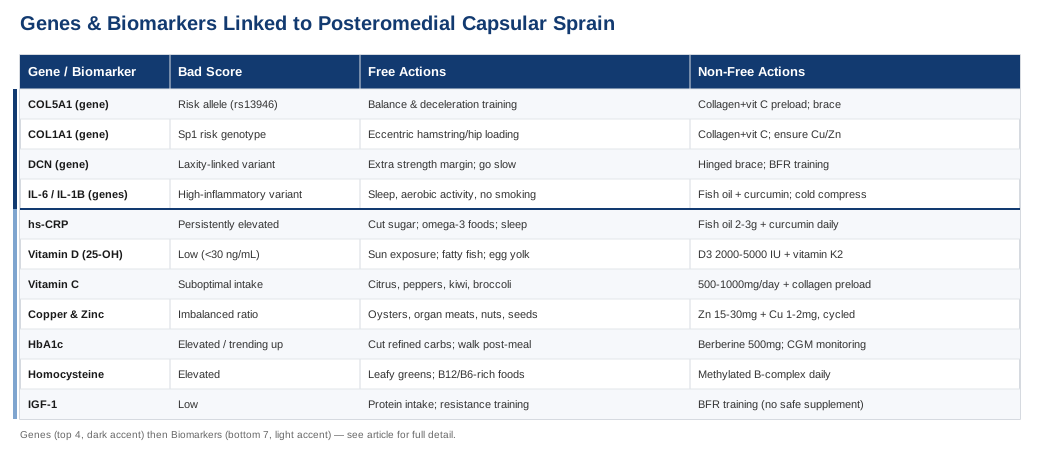
Biomarkers to Track for Posteromedial Capsular Sprain Recovery
A posteromedial capsular sprain heals through a fairly predictable biological sequence: an inflammatory phase that clears damaged tissue, a proliferative phase that lays down new (initially disorganized) collagen, and a remodeling phase that can run for months as that collagen matures and reorganizes along the lines of stress. Every biomarker below maps onto one of those phases. If a marker is off, it's not just a lab curiosity — it's a plausible reason your capsule is taking longer to stabilize than the textbook timeline suggests. This is also the strategy favored by longevity-focused physicians like Peter Attia, whose standard panel already includes several of these markers for reasons that overlap directly with soft-tissue repair capacity.
hs-CRP (high-sensitivity C-reactive protein)
hs-CRP is the most direct blood measure of how much systemic inflammation your body is carrying. Serum CRP rises sharply — often more than a hundred-fold — in response to tissue injury, driven largely by interleukin-6 signaling from damaged tissue and immune cells. A short spike right after your sprain is expected and appropriate. What you don't want is a persistently elevated hs-CRP weeks into recovery, since chronic background inflammation can blur the signal your body needs to properly transition from the inflammatory phase into organized collagen remodeling.
How to measure it
hs-CRP is a standard venous blood draw available through almost any lab or direct-to-consumer testing service, typically for 15 to 40 US dollars if paid out of pocket, and often bundled free into routine physicals. Because a cold, minor infection, or hard training session can transiently raise it, it's worth testing when you're not otherwise sick and repeating it rather than trusting a single reading.If the score is bad: the plan without supplements
Reduce ultra-processed food and added sugar, prioritize fatty fish or other omega-3 sources several times a week, get consistent sleep of seven to nine hours, and address any lingering low-grade infections (gum disease is an underrated chronic CRP driver). Add light aerobic movement as soon as your knee tolerates it — deconditioning itself raises baseline inflammation.If the score is bad: the plan with supplements or equipment
Fish oil supplying 2 to 3 grams combined EPA and DHA daily, and curcumin extract (500 to 1,000 mg daily with piperine or a phospholipid formulation for absorption) are the two most evidence-backed additions. Take both with food; fish oil at this dose can occasionally cause loose stools or, at higher doses, mild blood-thinning effects, so flag it if you're on anticoagulants or facing surgery. There's no need to cycle either — daily, ongoing use is standard — but retest hs-CRP every 8 to 12 weeks to confirm it's actually trending down rather than assuming it is.25-hydroxyvitamin D
Vitamin D status has one of the more consistent associations with ligament and tendon outcomes in the orthopedic literature. A scoping review of postoperative tendon healing found that vitamin D deficiency was consistently associated with poorer outcomes, including delayed healing and higher retear rates, and separate work has linked low vitamin D to a higher risk of ACL injury and to distal biceps injury. The Role of Vitamin D in Postoperative Tendon Healing and Association of Vitamin D Deficiency With Distal Biceps Injury both point in the same direction: low vitamin D correlates with weaker, slower-healing connective tissue, even though most of the direct evidence so far comes from tendon rather than capsule tissue specifically.How to measure it
A serum 25-OH vitamin D test costs roughly 30 to 60 US dollars out of pocket and is included in most comprehensive panels. Test once, then retest 8 to 12 weeks after starting any correction, since individual response to supplementation varies widely by body weight and baseline level.If the score is bad: the plan without supplements
Fifteen to twenty minutes of midday sun exposure on bare arms and legs several times a week (adjusted for skin tone and latitude — darker skin and higher latitudes need meaningfully more), plus regular intake of fatty fish, egg yolks, and fortified dairy. This is a slower fix than supplementation and less reliable in winter months.If the score is bad: the plan with supplements or equipment
Vitamin D3, typically 2,000 to 5,000 IU daily depending on how low your baseline is, paired with vitamin K2 (90 to 180 mcg as MK-7) to support proper calcium handling. This is a daily supplement, not something to cycle. Side effects are rare at these doses but megadosing above 10,000 IU/day without monitoring can push toward hypercalcemia over time, so retest before assuming more is better.Vitamin C (plasma ascorbate)
Vitamin C is a required cofactor for prolyl and lysyl hydroxylase, the enzymes that stabilize collagen's triple-helix structure — without adequate vitamin C, newly synthesized collagen is structurally weaker. A systematic review specifically looking at musculoskeletal injury recovery found that vitamin C supplementation showed potential to increase type I collagen synthesis and reduce oxidative stress markers after injury, based mostly on strong preclinical data with growing human interest. Efficacy of Vitamin C Supplementation on Collagen Synthesis and Oxidative Stress After Musculoskeletal Injuries is worth reading if you want the caveats along with the promise; this is a case where mechanism is very strong and direct human injury-outcome trials are still catching up.How to measure it
Plasma or leukocyte vitamin C isn't part of routine panels — it typically needs a specialty or functional-medicine lab, running 40 to 80 US dollars. Many people reasonably skip testing and simply assume marginal status, since frank vitamin C deficiency is rare but suboptimal status is common, especially with low fruit and vegetable intake or after smoking.If the score is bad: the plan without supplements
Citrus fruit, bell peppers, kiwi, and broccoli, eaten daily rather than occasionally, will cover typical needs. Cooking destroys a meaningful portion of vitamin C, so raw or lightly steamed preparations matter here.If the score is bad: the plan with supplements or equipment
500 to 1,000 mg of vitamin C daily, ideally split into two doses, is well tolerated. Some rehab protocols pair it with 15 grams of gelatin or hydrolyzed collagen taken 30 to 60 minutes before rehab exercises, on the theory that the amino acid substrate and the cofactor arriving together around a loading stimulus is more useful than either alone. Doses above 2 grams a day can cause diarrhea and GI cramping in some people; there's no need to cycle vitamin C on and off.Copper and zinc status
Copper is the essential cofactor for lysyl oxidase, the enzyme that cross-links collagen fibers into a mechanically strong matrix — without it, newly made collagen stays weak and poorly organized. Research on tendon cells has shown lysyl oxidase activity is required for ordered collagen fibril formation, and copper deficiency directly reduces cross-link formation. Lysyl Oxidase Activity Is Required for Ordered Collagen Fibrillogenesis by Tendon Cells lays out the mechanism clearly. Zinc matters here too, but indirectly: high-dose zinc supplementation without matching copper is one of the more common ways people accidentally induce a copper deficiency.How to measure it
Serum copper, ceruloplasmin, and serum zinc together typically run 40 to 90 US dollars. Because zinc and copper compete for absorption, it's more useful to test both together than either alone.If the score is bad: the plan without supplements
Oysters and shellfish for zinc; organ meats, nuts, seeds, and legumes for copper. Most omnivorous diets cover both without much thought; the risk is usually in restrictive diets or in people already taking zinc lozenges or high-dose zinc supplements for unrelated reasons.If the score is bad: the plan with supplements or equipment
If zinc is low, 15 to 30 mg daily for 8 to 12 weeks is standard, paired with 1 to 2 mg of copper to maintain a reasonable zinc-to-copper ratio (roughly 10:1 or lower). This is a combination worth cycling rather than taking indefinitely — reassess levels every 8 to 12 weeks and stop once you're back in range, since chronic unbalanced supplementation is the actual mechanism that causes problems. High-dose zinc alone can cause nausea and, over months, a copper-deficiency anemia; that's the main side effect to watch for.HbA1c and fasting glucose
Chronically elevated blood glucose accelerates the formation of advanced glycation end-products (AGEs), which form abnormal cross-links between collagen fibers independent of the normal, enzyme-controlled lysyl oxidase pathway. A detailed review of diabetes and tendon structure found that elevated glycation is a plausible driver of impaired tendon mechanics and delayed post-injury recovery, and separate work links elevated AGEs to reduced range of motion in shoulder tendon injuries. Effect of Diabetes on Tendon Structure and Function is a useful read if your fasting glucose or HbA1c has been drifting upward even within the "normal" range — the damage from glycation appears to be a spectrum, not a threshold that only appears at diabetic levels.How to measure it
HbA1c is inexpensive and widely available, usually 15 to 30 US dollars out of pocket, and is one of the cheapest, most informative tests on this list. Fasting glucose or a fasting insulin/HOMA-IR panel adds useful context if HbA1c is borderline.If the score is bad: the plan without supplements
Reduce refined carbohydrates and added sugar, add resistance training (muscle is the largest glucose sink in the body), take a 10 to 15 minute walk after larger meals, and prioritize sleep — even a few nights of poor sleep measurably worsens insulin sensitivity.If the score is bad: the plan with supplements or equipment
Berberine, 500 mg two to three times daily with meals, has glucose-lowering effects roughly comparable to some oral medications in trials; it's typically cycled 8 to 12 weeks on, with a break, rather than used indefinitely, and can cause GI upset — start with one dose a day and increase gradually. A continuous glucose monitor, worn for two to four weeks, is the most useful piece of equipment here: it shows you exactly which foods and habits are driving your glucose up in real time, which is far more actionable than a single annual HbA1c number.Homocysteine
Homocysteine is a byproduct of methionine metabolism that, when elevated, directly interferes with collagen cross-linking — it reacts with the same aldehyde groups that lysyl oxidase needs to form stable cross-links, effectively blocking normal collagen maturation. This mechanism is well documented in the rare genetic disease homocystinuria, where extreme homocysteine elevation causes a clear connective tissue defect, and more moderate elevations from B-vitamin insufficiency appear to have a milder version of the same effect. B Vitamins, Homocysteine and Bone Health covers the mechanism and its broader connective-tissue implications well, even though its focus is bone rather than ligament specifically.How to measure it
A standard blood draw, typically 30 to 70 US dollars, and included in Peter Attia's standard longevity panel specifically because it's a fast read on B12, folate, and B6 status, and can flag an MTHFR-related methylation variant worth knowing about.If the score is bad: the plan without supplements
Leafy greens and legumes for folate, eggs and animal protein for B12, and potatoes, bananas, and poultry for B6. This is usually sufficient unless you're vegan (B12 deficiency risk), have absorption issues, or carry a methylation gene variant.If the score is bad: the plan with supplements or equipment
A methylated B-complex — methylcobalamin B12 at 500 to 1,000 mcg, methylfolate at 400 to 800 mcg, and B6 at 25 to 50 mg daily — is the standard correction, taken daily rather than cycled. Avoid chronic B6 doses above 100 mg, which have been linked to peripheral neuropathy with long-term use. Retest homocysteine at 8 to 12 weeks; most people see meaningful improvement within that window if the cause was dietary rather than genetic.IGF-1 (insulin-like growth factor 1)
IGF-1 is one of the strongest known drivers of collagen synthesis and fibroblast activity in ligament and tendon tissue. Gene-delivery studies have shown that boosting local IGF-1 increases deposition of type I and type III collagen, elastin, and tenascin in damaged ligament tissue, and reviews of IGF-1 in tendon healing consistently describe it as a potent stimulus for matrix synthesis and cell proliferation. In Vitro and In Vivo Effects of IGF-1 Delivery Strategies on Tendon Healing summarizes this well, while flagging that most of the strongest evidence is still preclinical rather than from controlled human trials in ligament-specific injuries.How to measure it
Serum IGF-1 is not part of routine panels; it typically costs 60 to 120 US dollars and is more often ordered through endocrine or longevity-focused clinics. It's most useful as a general marker of anabolic status — low IGF-1 alongside poor sleep, low protein intake, or significant caloric restriction is a common and fixable combination.If the score is bad: the plan without supplements
Adequate protein intake (roughly 1.6 to 2.2 g per kg of body weight daily), consistent resistance training, and prioritizing deep sleep — a large share of daily growth hormone (and downstream IGF-1) release happens during slow-wave sleep. Chronic caloric restriction or under-eating relative to training load will suppress IGF-1 regardless of anything else you do.If the score is bad: the plan with supplements or equipment
There is no supplement that reliably and safely raises IGF-1 on its own, and unsupervised use of growth hormone or peptide products to chase this number is not something to pursue without direct medical supervision. What does help mechanically during rehab is blood flow restriction (BFR) training: light-load exercise (roughly 20 to 30 percent of your one-rep max) performed with a BFR cuff on the thigh, two to three sessions a week, which stimulates local anabolic signaling in the muscle and surrounding tissue without high mechanical stress on the healing capsule. BFR should be learned from a physical therapist familiar with the technique — done incorrectly, it can cause numbness, excessive bruising, or, rarely, more serious vascular issues.The seven markers above aren't meant to be tracked once and forgotten — inflammation, vitamin status, and glucose control shift with the seasons, with stress, and with how much you're actually moving. Retesting on the timelines noted above turns this from a one-time snapshot into an actual feedback loop for your recovery.
Genetics and Epigenetics: What the Research Suggests About Ligament and Capsule Injury Risk
While biomarkers tell you about your current physiological state, genetics helps explain why some knees are simply more predisposed to posteromedial laxity or slower ligament healing in the first place. Researchers like Ali Torkamani, whose work on polygenic risk scoring has helped popularize the idea that common genetic variants meaningfully shift baseline risk for injury and disease, and figures like Gary Brecka, who has pushed genetic testing into mainstream health and performance conversations, have both helped move this kind of information from academic journals into something individuals can actually act on. The evidence here is generally earlier-stage and more population-level than the biomarker data above, so treat it as useful context rather than a diagnosis.
COL5A1
COL5A1 codes for a chain of type V collagen, a minor but structurally important component of ligament and tendon tissue that regulates how thick and tightly packed the larger type I collagen fibers become. A systematic review of genetic determinants of ACL rupture and a focused meta-analysis on one specific variant, rs13946, both found that certain COL5A1 genotypes are associated with altered ligament injury risk, with effects that differ by ancestry and appear most consistent under recessive genetic models. Genetic Determinants of the Anterior Cruciate Ligament Rupture in Sport and COL5A1 rs13946 Polymorphism and Anterior Cruciate Ligament Injury are both worth reading, though it's important to note this evidence comes mostly from ACL cohorts rather than posteromedial corner injuries specifically — the biological logic extends reasonably well to any knee ligament, but direct data on the posteromedial corner is thin.If the gene is bad: the plan without supplements
Since a less favorable COL5A1 genotype is associated with looser, more compliant ligament tissue, the practical countermeasure is proprioceptive and neuromuscular training — balance work, single-leg stability drills, and controlled deceleration practice — done consistently, two to three times a week, well before returning to pivoting or cutting sports. Gradual, progressive loading rather than an abrupt jump back to full activity gives lax tissue more time to adapt.If the gene is bad: the plan with supplements or equipment
A collagen-loading protocol — 15 grams of hydrolyzed collagen or gelatin plus roughly 50 mg of vitamin C, taken 30 to 60 minutes before rehab or training sessions — is a reasonable, low-risk addition, since it supplies both substrate and cofactor around the exact window when mechanical loading is stimulating collagen synthesis. A hinged knee brace during early return to higher-risk activity is a sensible equipment-based compromise while confidence and strength rebuild. Side effects are minimal; mild GI upset from collagen powder is the main one. This can be maintained continuously through the return-to-sport phase rather than cycled.COL1A1
COL1A1 encodes the primary chain of type I collagen, the dominant structural protein in ligament and capsule tissue. A regulatory variant in its promoter region (the Sp1 polymorphism) has been studied specifically in skiers with ACL injuries, with certain genotypes appearing more frequently among the injured group. The +1245G/T Polymorphisms in the Collagen Type I Alpha 1 (COL1A1) Gene in Polish Skiers With Anterior Cruciate Ligament Injury is a smaller, population-specific study, so treat the finding as suggestive rather than definitive — but it fits the broader pattern that collagen-gene variation shapes ligament stiffness and injury susceptibility.If the gene is bad: the plan without supplements
Progressive isometric and eccentric loading of the muscles crossing the knee — particularly the hamstrings and hip external rotators, which help dynamically stabilize the posteromedial corner — can partially compensate for less mechanically robust passive ligament tissue. Consistency matters more than intensity here; two focused sessions a week sustained over months outperforms sporadic intense sessions.If the gene is bad: the plan with supplements or equipment
The same collagen-plus-vitamin-C approach described for COL5A1 applies here, since both genes converge on the same type I collagen matrix. Ensuring adequate copper and zinc status (see the biomarker section above) is particularly relevant for this gene specifically, since COL1A1's structural collagen still needs properly functioning lysyl oxidase to cross-link correctly regardless of genotype. No specific cycling is needed; treat this as an ongoing dietary and supplement pattern rather than a short course.DCN (decorin)
Decorin is a small proteoglycan that regulates how collagen fibrils assemble and organize into a mature, load-bearing structure. Research combining DCN variants with COL5A1 has found that specific allele combinations are associated with increased joint laxity, independent of injury status, suggesting this gene influences baseline tissue compliance rather than just injury risk after the fact. Collagen Gene Variants Previously Associated With Anterior Cruciate Ligament Injury Risk Are Also Associated With Joint Laxity is the key study here, and it's a useful one because joint laxity — not just injury history — is exactly the kind of baseline trait that would predispose someone to a posteromedial capsular sprain from a relatively modest valgus or rotational force.If the gene is bad: the plan without supplements
If your baseline joint laxity is genuinely higher, the honest compensation is building more strength margin into the muscles around the joint, since you have less passive ligamentous restraint to rely on. This means prioritizing quadriceps, hamstring, and hip strength work, and being more conservative than average about how quickly you reintroduce high-valgus-load activities like skiing or lateral cutting sports after any knee injury.If the gene is bad: the plan with supplements or equipment
There's no supplement that directly modifies decorin function in a meaningful, evidence-backed way. The more realistic tool here is equipment: a hinged or wraparound knee brace during high-risk activities, and, during active rehab, blood flow restriction training to build muscular strength around the joint without high mechanical stress on the still-healing capsule (two to three sessions weekly, as described in the biomarker section above). Side effects are limited to standard BFR precautions — proper cuff pressure and supervision matter.IL-6 and IL-1B (inflammatory interleukin genes)
Variants in genes encoding inflammatory interleukins influence how aggressively your immune system responds to tissue injury — a stronger inflammatory response isn't necessarily "worse" in the short term, but a genetically amplified or prolonged one can extend swelling and delay the transition into the remodeling phase. A systematic review and meta-analysis of interleukin gene polymorphisms found associations between specific variants and ACL injury risk, a finding consistent with the broader idea that baseline inflammatory tone affects connective tissue resilience. Polymorphism of Genes Encoding Inflammatory Interleukins and the Risk of Anterior Cruciate Ligament Injury covers this in detail, though as with the other genes, the direct evidence is from ACL cohorts rather than posteromedial-corner-specific studies.If the gene is bad: the plan without supplements
Consistent sleep, regular moderate aerobic activity, and avoiding smoking are the highest-leverage, no-cost ways to keep baseline inflammatory tone in check regardless of genotype. Since chronic psychological stress also elevates inflammatory cytokine signaling, basic stress management (even brief daily practices) is a legitimate part of this plan, not an afterthought.If the gene is bad: the plan with supplements or equipment
Omega-3 fish oil and curcumin, at the same doses described in the hs-CRP biomarker section, are the most sensible additions if you carry a higher-inflammatory-response variant, since they blunt inflammatory signaling without suppressing it outright. A cold compression device used in the acute phase (the first 48 to 72 hours) can help manage swelling without the deeper concerns associated with aggressive, prolonged icing discussed in the next section. These can be used as needed acutely; fish oil and curcumin don't require cycling for ongoing use, but check with a clinician before combining them with blood thinners.Genetics sets the starting conditions, but as the biomarker section makes clear, a lot of what genetics predisposes you toward is still modifiable through nutrition, training, and — as the next section covers — how you actually manage pain and inflammation in the days and weeks after injury.
What a Leading Health Podcast Gets Right About Pain and Tissue Healing
The Huberman Lab podcast has built a large audience partly by taking well-established pain and recovery science and making it directly actionable, and its episode on controlling pain and healing faster is a useful lens for a posteromedial capsular sprain specifically, since so much of the frustration with this injury is about pain that lingers longer than the tissue damage seems to justify. The following points pull from that episode's core arguments and the research it draws on.
Pain is a construct built by the brain, not a direct readout of tissue damage
The amount of pain you feel from a given injury is shaped heavily by attention, context, and prior expectation, not solely by how much tissue is actually damaged. This isn't a claim that the pain isn't real — it's a claim that pain intensity and tissue damage severity are only loosely correlated, which is exactly why two people with similar MRI findings can report very different pain levels.The first 48 to 72 hours of inflammation are protective, not just something to suppress
The early inflammatory response clears debris and initiates the signaling cascade that leads to new tissue formation. Suppressing it entirely and immediately isn't automatically the smart move, even though it's the instinctive one.Aggressive early NSAID use may trade short-term relief for slower structural healing
A detailed review of NSAID effects on tendon, bone, and enthesis healing found that timing matters considerably: NSAIDs taken in the first several days after injury were associated with reduced tissue strength in animal models, while the same drugs introduced later in the healing timeline sometimes had neutral or even positive effects. NSAID Therapy Effects on Healing of Bone, Tendon, and the Enthesis is the review to read on this; it's also honest about the fact that large clinical studies in humans haven't always found the same clear-cut harm, so this is a "use judiciously, not never" situation rather than an outright prohibition.Ice may blunt the same repair signal it's meant to calm
Cold exposure timed immediately after resistance training has been shown to blunt the molecular signaling pathways that drive tissue adaptation — a well-known study found that regular post-training cold water immersion cut quadriceps muscle growth roughly in half compared to active recovery over 12 weeks. Post-Exercise Cold Water Immersion Attenuates Acute Anabolic Signalling and Long-Term Adaptations in Muscle to Strength Training is specific to muscle hypertrophy rather than capsule healing, but the same anti-inflammatory mechanism is plausibly relevant to ligament tissue, which is one reason many rehab specialists now favor limited, well-timed cold use in the truly acute phase rather than routine icing for weeks afterward.Motor imagery can keep the neural map of your knee alive while you're immobilized
When a joint is braced or otherwise restricted, a large share of the strength loss you experience comes from reduced neural drive to the muscle, not just physical atrophy. Structured motor imagery — vividly imagining the movement without performing it — has been shown to meaningfully reduce this strength loss during immobilization. Strength Gains by Motor Imagery With Different Ratios of Physical to Mental Practice demonstrates the underlying effect, and it's a genuinely low-cost tool worth using during any brace-restricted phase of posteromedial recovery.Blood flow restriction training lets you load tissue while sparing the joint
Light-load training combined with a BFR cuff produces meaningful strength and hypertrophy gains without the joint stress of heavy loading, which is exactly the tradeoff needed in the early-to-mid phase of a capsular sprain, when the joint isn't ready for heavy mechanical stress but the surrounding muscle still needs a training stimulus.Slow, extended-exhale breathing can measurably lower how much pain you perceive
Breathing patterns that emphasize a longer exhale relative to inhale shift the autonomic nervous system toward parasympathetic dominance, which appears to reduce the brain's amplification of pain signals. This costs nothing, has no real side effects beyond mild lightheadedness if overdone, and is worth using specifically during flare-ups rather than only as a general relaxation practice.Sleep is where a large share of the actual repair work happens
Growth hormone release, and the downstream IGF-1 signaling that drives collagen synthesis, is concentrated in slow-wave sleep. Cutting sleep short during a recovery period isn't a neutral lifestyle choice — it directly limits the anabolic signaling your capsule needs to rebuild.Cold exposure timing matters more than cold exposure itself
The same tool — cold — can help or hurt recovery depending entirely on when it's applied relative to loading and to the phase of healing you're in. Used briefly and early for acute swelling control, it's reasonable; used routinely after every rehab session for weeks, it may work against the adaptation you're trying to build.Gradual reloading consistently outperforms prolonged rest for capsule and ligament tissue
Ligament and capsule tissue, like tendon, gets stronger through progressive mechanical loading during the remodeling phase — extended complete rest tends to leave the tissue disorganized and mechanically weaker than a well-paced return to loading does. The practical translation for a posteromedial capsular sprain is a graded program that reintroduces valgus and rotational stress in small, controlled increments rather than either resuming full activity too soon or staying in a brace far longer than necessary.These ten points aren't a replacement for a structured physical therapy plan, but they explain the biological "why" behind a lot of what a good rehab program is already doing — and they're a useful check against some outdated instincts, like reflexively icing every session or assuming more rest is always safer.
Complementary Approaches Worth Considering
A handful of hands-on and mind-body therapies have real, condition-relevant human evidence for knee ligament and soft-tissue injuries, even though none of them should replace structured rehab. The four below are the ones with the most direct relevance to a posteromedial capsular sprain specifically.
Massage therapy
Massage is relevant here because a healing capsule and ligament complex benefits from both improved local circulation and better proprioceptive input from the surrounding tissue, two things manual therapy directly targets. For a joint injury involving capsule and ligament tissue rather than muscle alone, the value is less about "loosening" tissue and more about recalibrating the sensory feedback that guides balance and joint position sense.A randomized controlled trial on percussion massage therapy after ACL reconstruction found that the intervention group showed superior outcomes in range of motion, proprioception, pain, functionality, and balance compared to standard care alone. Investigating the Effects of Percussion Massage Therapy on Pain, Functionality, Muscle Diameter, and Proprioception in Individuals With ACL Reconstruction is directly transferable in principle, since the posteromedial corner shares much of the same proprioceptive machinery as the rest of the knee. A separate meta-analysis on Tuina, a form of Chinese therapeutic massage, found benefit specifically for chronic ankle instability, reinforcing that manual therapy's value for ligamentous joints isn't limited to one technique or one joint.
In practice, this means working with a physical or manual therapist familiar with post-ligament-injury protocols, likely once or twice a week during the active rehab phase, combining percussion or manual massage of the surrounding musculature (quadriceps, hamstrings, calf) with light, non-aggressive work around — not directly forceful on — the healing posteromedial corner itself in the early weeks. Evidence quality is still moderate rather than definitive, and massage should be viewed as an adjunct to, not a substitute for, progressive loading and strength work.
Biofeedback
Biofeedback is relevant to a posteromedial capsular sprain because a meaningful part of recovery is retraining the neuromuscular patterns that protect the joint under load — real-time visual or electromyographic feedback gives you and your therapist an objective way to see and correct faulty movement patterns that would otherwise go unnoticed.A randomized controlled trial found that visual biofeedback-based balance exercises measurably improved static and dynamic balance after ACL reconstruction, and separate research on real-time biofeedback integrated into neuromuscular training found it reduced high-risk knee movement patterns (like excessive knee abduction) while showing early evidence of favorable changes in brain connectivity related to movement control. Visual Biofeedback Exercises for Improving Body Balance Control After Anterior Cruciate Ligament Reconstruction and The Influence of Electromyographic Biofeedback Therapy on Knee Extension Following Anterior Cruciate Ligament Reconstruction both support this directly.
Realistically, this looks like working with a physical therapist who has access to an EMG unit, a force plate, or even just a mirror and simple balance equipment, doing biofeedback-guided balance and movement-pattern drills two to three times a week during the mid-to-late rehab phase, once acute pain has settled enough to tolerate standing and single-leg work. This is one of the more directly evidence-supported additions on this list for knee ligament rehab broadly, though condition-specific trials on the posteromedial corner alone don't yet exist.
Tai chi
Tai chi's slow, controlled, weight-shifting movements place continuous demand on knee joint proprioception, which is exactly the sensory system a posteromedial capsular sprain disrupts. Because the injury damages mechanoreceptors embedded in the capsule and ligament tissue itself, rebuilding proprioceptive accuracy is as much a part of recovery as rebuilding tissue strength.A pilot randomized controlled trial in people with knee osteoarthritis found that 12 weeks of twice-weekly tai chi practice improved knee joint proprioception at a 30-degree test angle compared to an attention-control group, though the effect didn't clearly persist long-term or extend to larger joint angles. The Influence of Tai Chi Exercise on Proprioception in Patients With Knee Osteoarthritis is the most direct study available; it's in an osteoarthritis population rather than a post-sprain population, so the evidence is suggestive rather than conclusive for this specific injury, and a broader meta-analysis on proprioceptive interventions after knee ligament injury supports the general principle that targeted proprioceptive training measurably improves joint position sense recovery. A Meta-Analysis of Systemic Evaluation of Knee Ligament Injury or Intervention of Knee Proprioceptive Function Recovery rounds this out.
A realistic approach is a beginner tai chi class or instructional program, twice weekly for at least 8 to 12 weeks, started once your knee can bear weight comfortably and tolerate slow directional changes — which usually means the mid rehab phase rather than the first couple of weeks after injury. It's low-impact and low-risk, but it should sit alongside, not instead of, targeted strength work.
Low-level laser therapy (photobiomodulation)
Photobiomodulation is included here because it's one of the few passive modalities with dedicated randomized trial data in acute ligament sprains specifically, even though the results are genuinely mixed rather than uniformly positive.A large, well-designed randomized clinical trial in acute ankle sprains found that adding 904 nm laser therapy to standard brace-and-exercise treatment did not produce a statistically significant improvement in pain at the primary endpoint. Low-Level Laser Therapy in Ankle Sprains: A Randomized Clinical Trial is worth reading precisely because it's a negative-leaning result from a rigorous trial, and it's a useful counterweight to more enthusiastic marketing claims about red light devices; more recent, smaller trials in athletic populations have reported faster return-to-play with adjunct photobiomodulation, so the honest summary is "possibly helpful as an add-on, not reliably effective as a standalone treatment."
Given that mixed picture, the reasonable way to use this modality is as a low-risk adjunct — a clinical-grade device used a few times a week during active treatment, layered on top of, not instead of, bracing, exercise, and progressive loading — with realistic expectations that it may modestly help pain and swelling rather than meaningfully accelerate structural healing on its own.
These four approaches share a common thread: they support the neuromuscular and sensory side of recovery, not the structural side. None of them substitutes for progressive strength and loading, but layered thoughtfully onto a standard rehab plan, they address real gaps — proprioception, movement pattern quality, and pain modulation — that loading alone doesn't fully cover.
Conclusion
A posteromedial capsular sprain doesn't heal on a fixed timeline dictated purely by grade or imaging findings — it heals according to your inflammatory load, your collagen-building raw materials, your baseline connective tissue architecture, and how intelligently you manage the balance between protecting the joint and loading it enough to remodel properly. The seven biomarkers here (hs-CRP, vitamin D, vitamin C, copper and zinc, HbA1c, homocysteine, and IGF-1) give you a genuinely actionable read on that biology, each with a clear plan whether or not you want to use supplements. The four genetic variants covered add useful context on why your knee's baseline laxity and inflammatory response might differ from someone else's, even with an identical injury. And the practical tools from current pain science and evidence-backed complementary therapies fill in the part of recovery that neither genes nor a single blood draw can capture: how you actually move, sleep, breathe, and reload the joint week by week.
None of this replaces a proper clinical evaluation, and nothing here should be read as a way to skip physical therapy or a qualified assessment of the actual grade of your capsular injury. The useful next step is a concrete one: get the biomarker panel drawn, track your symptoms and rehab milestones against it, and bring both to whoever is guiding your recovery — a physical therapist, sports medicine physician, or orthopedic specialist — so your rehab plan reflects your actual biology, not just the average case.
Musculoskeletal: Joint Conditions Tendon & Ligament Conditions