This article contains AI generated content.
Proximal Tibial Epiphyseal Stress Injury: 5 Genes And 6 Biomarkers To Track
If your teenager (or you, if this started young and never fully resolved) has been dealing with deep, activity-linked pain just below the knee that doesn't behave like typical Osgood-Schlatter disease or a simple growth spurt, you've probably already heard the standard advice: rest, ice, modify training, wait for growth to finish. That advice isn't wrong. It's just incomplete, and incompleteness is exactly what makes a stress injury at the proximal tibial growth plate so frustrating to manage.
The truth is that two athletes with an identical training load, the same coach, and the same shoes can have very different outcomes. One develops a stress reaction at the proximal tibial epiphysis; the other doesn't. Generic advice can't explain that difference because it treats every growth plate as interchangeable. It isn't. Bone mineralization rate, collagen quality, hormonal status, iron stores, and inherited variation in how the skeleton responds to mechanical load all shape who is vulnerable and who isn't — and most of that never gets measured in a standard clinic visit.
This article takes the more specific route: it looks at the actual blood-based biomarkers and gene variants that current research connects to bone stress injury and growth plate loading tolerance, and it turns that research into a usable plan rather than a list of trivia. Some of this evidence is strong (vitamin D status and stress fracture risk, for instance, has been tested in large randomized trials). Some of it is early and should be treated as a lead, not a verdict. Both are labeled clearly as we go.
None of this replaces an orthopedic evaluation, imaging, or a properly periodized training plan — a stress reaction at an open growth plate is a medical issue, not just a data problem. But better information changes the conversation you can have with a clinician, and it changes what you choose to track between appointments. The sections below walk through the biomarker panel worth requesting first, the genetic variants worth understanding if biomarkers alone don't explain the picture, a science-heavy podcast breakdown that challenges some conventional bone-health assumptions, and a short set of complementary approaches with real, if modest, supporting evidence.
Summary
Here's the short version before the full detail: proximal tibial epiphyseal stress injury is rarely just "bad luck" or "too much running." It tends to cluster around a specific physiological signature — low vitamin D, disrupted calcium-PTH balance, a bone turnover pattern tilted toward resorption, low IGF-1, depleted iron stores, and (especially in adolescent girls and young female endurance athletes) suppressed sex hormones consistent with low energy availability. Underneath that signature, inherited variation in genes like VDR, COL1A1, ESR1, COL5A1, and IGF1 can quietly raise or lower how much mechanical stress a given growth plate can absorb before it reacts.
The article below walks through six specific blood markers worth asking your clinician to order, what each one actually reveals about growth plate resilience, how it's measured and roughly what it costs, and two concrete recovery tracks for each — one using only training, nutrition, and lifestyle changes, and one adding supplements or equipment where the evidence supports it. It then covers the five genes most consistently studied in bone stress injury research, a science-based podcast breakdown worth 20 minutes of your time, and a short set of complementary techniques — gait retraining, photobiomodulation, massage, and mindfulness-based pain coping — that have real human evidence behind them for exactly this kind of overuse injury.
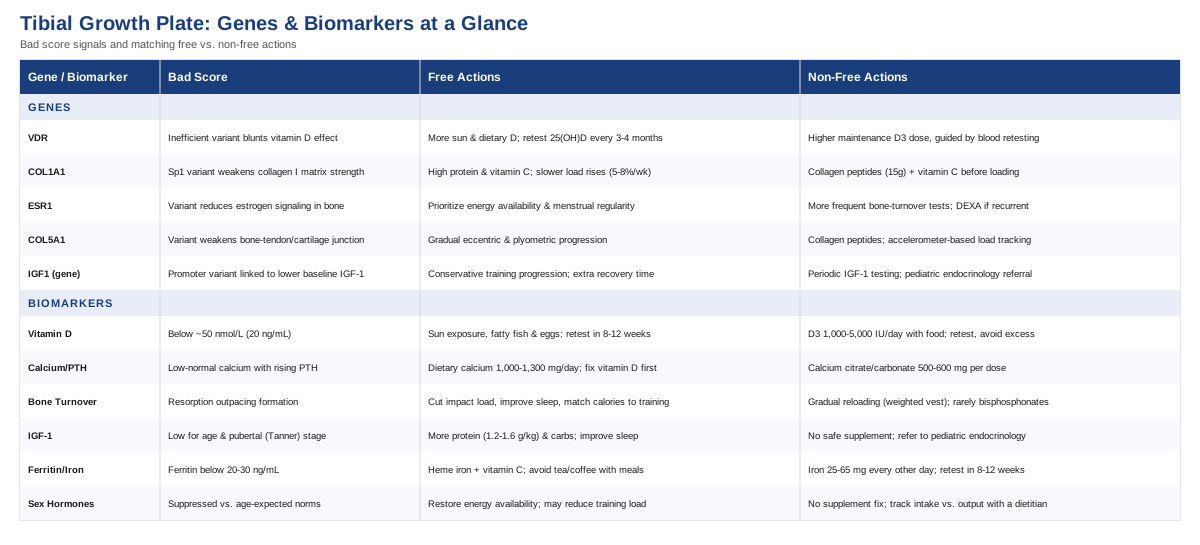
Six Biomarkers That Explain More Than an X-ray Can
An X-ray or MRI tells you whether a stress reaction is already present. It says almost nothing about why that particular growth plate reached its limit while a teammate's didn't. That's the gap blood biomarkers fill — they describe the metabolic and hormonal environment the bone was trying to remodel in when the injury happened, and they flag whether that environment is still working against recovery.
1. Serum 25-Hydroxyvitamin D (25(OH)D)
Vitamin D status is the single best-studied biomarker in the entire stress fracture literature, and the proximal tibia is one of the most common stress fracture sites studied. Low 25(OH)D impairs intestinal calcium absorption, which pushes the body toward pulling calcium from bone to maintain blood levels — exactly the wrong trade-off for a growth plate under repetitive load.
A large cohort study of Royal Marine recruits found that low baseline serum 25(OH)D was independently associated with a higher risk of developing a stress fracture during training, with the effect becoming clearer below roughly 50 nmol/L (20 ng/mL) (Davey et al., Osteoporosis International). In a randomized, double-blind, placebo-controlled trial of over 5,000 female Navy recruits, daily supplementation with 2,000 mg calcium and 800 IU vitamin D reduced stress fracture incidence by roughly 20% compared to placebo (Lappe et al., Journal of Bone and Mineral Research). This is a rare case in sports medicine of a nutrient intervention actually being tested against a hard clinical endpoint, not just a lab value.
How to Measure It
A standard 25(OH)D blood draw, available through almost any primary care provider, sports medicine clinic, or direct-to-consumer lab service. Cost typically runs $30–$90 out of pocket in the US if not covered by insurance; it is often bundled into a basic metabolic or "athlete" panel. Target range for bone health purposes is generally considered 30–50 ng/mL (75–125 nmol/L), rather than simply "in range" on a lab report, since many labs flag deficiency only below 20 ng/mL.
If the Score Is Bad: The Plan Without Supplements
Increase safe, regular sun exposure (roughly 10–20 minutes of midday skin exposure several times a week, adjusted for skin tone and latitude — much harder to rely on through autumn and winter at higher latitudes). Add vitamin D–rich foods consistently: fatty fish (salmon, mackerel, sardines), egg yolks, and fortified dairy or plant milks. Retest in 8–12 weeks; food and sun alone rarely correct a significant deficiency quickly, so this route suits mild, borderline-low cases rather than frank deficiency.
If the Score Is Bad: The Plan With Supplements or Equipment
Vitamin D3 (cholecalciferol) supplementation, typically 1,000–2,000 IU/day for maintenance or 5,000 IU/day for 8–12 weeks to correct deficiency, then retest and drop to a maintenance dose — this mirrors the dosing used in the recruit trials above. Taking it with a meal containing fat improves absorption since it's fat-soluble. Cycling isn't strictly necessary, but retesting every 3–6 months during active bone healing prevents overshooting into toxicity (rare, but possible above 10,000 IU/day sustained for months, with symptoms of hypercalcemia — nausea, weakness, kidney stones). A UVB light box is a reasonable equipment option for those in low-sunlight climates, though it's a distant second choice to oral supplementation for correcting a genuine deficiency.
2. Calcium and Parathyroid Hormone (PTH)
Calcium and PTH work as a pair, and looking at calcium alone without PTH context can be misleading — serum calcium is tightly regulated and often looks "normal" even when the skeleton is being actively raided to keep it that way. A rising PTH alongside low-normal calcium and low vitamin D is a signature of secondary hyperparathyroidism, where the body compensates for poor calcium absorption by increasing bone resorption — precisely the mechanism that weakens a growth plate under repetitive mechanical stress.
How to Measure It
Both are simple blood draws, often run together with a basic metabolic panel; intact PTH assay adds modestly to cost. Combined cost is typically $40–$100. This pairing is worth requesting specifically rather than assuming a vitamin D test alone tells the full story.
If the Score Is Bad: The Plan Without Supplements
Prioritize dietary calcium from dairy, canned fish with bones (sardines, salmon), leafy greens (though absorption from greens is lower due to oxalates), and fortified foods, aiming for roughly 1,000–1,300 mg/day depending on age. Correcting vitamin D status (above) usually normalizes PTH on its own within a couple of months, since the two are mechanistically linked — this is the single highest-leverage non-supplement move.
If the Score Is Bad: The Plan With Supplements or Equipment
Calcium citrate or calcium carbonate supplementation (500–600 mg per dose, since absorption drops at higher single doses) alongside vitamin D3, following the same protocol used in the Navy recruit trial (2,000 mg calcium/day split across meals). Side effects at higher intakes include constipation and, in rare cases with pre-existing kidney issues, increased stone risk — total calcium intake (food plus supplement) shouldn't exceed roughly 2,000–2,500 mg/day. Recheck PTH after 8–12 weeks of consistent vitamin D and calcium correction.
3. Bone Turnover Markers: P1NP and CTX
These two markers describe the two sides of the remodeling equation directly. P1NP (procollagen type 1 N-terminal propeptide) reflects bone formation; CTX (C-telopeptide of type 1 collagen) reflects bone resorption. A growth plate under chronic mechanical stress without adequate recovery tends to show a pattern where resorption outpaces formation — a mismatch that shows up in these markers well before it shows up on imaging.
This pairing is central to how sports medicine researchers now think about bone stress injury risk in the context of Relative Energy Deficiency in Sport (RED-S), where low energy availability suppresses formation markers while resorption stays elevated (IOC Consensus Statement on RED-S, 2018 Update). A longitudinal study of adolescent endurance athletes found bone turnover marker patterns tracked meaningfully with RED-S risk indicators over a 3-year period (PMC, 3-Year Longitudinal Study of Male Adolescent Endurance Athletes).
How to Measure It
Specialty blood tests, usually drawn in the morning after an overnight fast since both markers have diurnal variation. Not universally available at basic labs; typically ordered through a sports medicine or endocrinology clinic, or specialty lab services. Cost ranges $80–$200 combined, higher than routine labs but informative if a growth plate injury isn't resolving as expected.
If the Score Is Bad: The Plan Without Supplements
The dominant lever here is training load and recovery, not supplementation. Reduce high-impact volume temporarily, increase sleep (bone remodeling is heavily influenced by growth hormone pulses during deep sleep), and — critically in adolescents — ensure total caloric intake matches or exceeds training energy expenditure. This last point is frequently the actual root cause and gets missed because the athlete "eats normally" without accounting for training volume.
If the Score Is Bad: The Plan With Supplements or Equipment
Beyond correcting vitamin D and calcium as above, a structured, brief course of impact-loading exercise (once cleared by a clinician and once the acute stress reaction has calmed down) has been shown to stimulate formation markers — this is where a weighted vest or light plyometric progression can help, reintroduced gradually over 6–8 weeks rather than as a supplement per se. There's no medication-based fix appropriate at this level for an adolescent; anti-resorptive drugs (bisphosphonates) are reserved for severe, recurrent cases under specialist supervision and are not a self-directed option.
4. Insulin-Like Growth Factor 1 (IGF-1)
IGF-1 is the primary downstream mediator of growth hormone's effect on the epiphyseal growth plate itself — it drives chondrocyte proliferation in the cartilage that ultimately becomes new bone (Human Studies on the Biological Actions of IGF-1). Low circulating IGF-1 is strongly associated with poor nutritional status and low energy availability in adolescents, and it's one of the earliest hormonal markers to drop when caloric intake falls short of training demand — often before menstrual irregularities or visible weight loss appear.
How to Measure It
A standard serum IGF-1 assay, typically ordered through pediatric endocrinology or sports medicine. Cost ranges $50–$150. Because IGF-1 varies by age and pubertal (Tanner) stage, results need interpretation against age-specific reference ranges, not adult norms — this is a test that benefits from a clinician who works with adolescent athletes specifically.
If the Score Is Bad: The Plan Without Supplements
Increase total caloric intake, with particular attention to protein (1.2–1.6 g/kg/day) and adequate carbohydrate to avoid chronic energy deficit — this is the single most effective non-supplement intervention, since low IGF-1 in a young athlete is very often a downstream signal of underfueling rather than a standalone problem. Improve sleep duration and consistency, since growth hormone (and downstream IGF-1) pulses are concentrated in deep sleep.
If the Score Is Bad: The Plan With Supplements or Equipment
There is no responsible over-the-counter supplement that safely raises IGF-1 in a growing adolescent — this is one marker where the "supplement" answer is simply adequate food, not a pill or powder. Where low IGF-1 persists despite adequate intake, the appropriate next step is pediatric endocrinology referral, not self-supplementation. Framing it this way matters: some biomarkers are corrected by addition, and this one is corrected by removing a deficit.
5. Ferritin and Iron Studies
Iron status connects to bone health through more than one pathway — low ferritin is linked to disruption of the growth hormone/IGF-1 axis, and iron deficiency without anemia is common in adolescent athletes (especially menstruating girls) well before hemoglobin drops enough to be flagged as anemia. A recent NHANES-based analysis in children and adolescents found an inverse, threshold-like relationship between serum ferritin and bone turnover markers, most pronounced in males (Ferritin, Bone Turnover Markers and BMD, NHANES 1999-2002).
How to Measure It
A basic iron panel including ferritin, serum iron, TIBC, and transferrin saturation. Cost typically $30–$80. Ferritin below roughly 20–30 ng/mL is generally considered suboptimal for athletes, even if still technically "in range" on a general lab report (which often sets the lower cutoff much lower, around 12–15 ng/mL).
If the Score Is Bad: The Plan Without Supplements
Increase heme iron intake (red meat, poultry, fish) paired with vitamin C–rich foods to boost non-heme iron absorption if largely plant-based. Avoid taking iron-rich meals alongside coffee, tea, or calcium-heavy foods, which inhibit absorption. Cast iron cookware is a minor but real supplementary source over time.
If the Score Is Bad: The Plan With Supplements or Equipment
Oral iron supplementation (ferrous sulfate or a gentler bisglycinate form, typically 25–65 mg elemental iron), taken on an empty stomach when tolerated or with a small amount of vitamin C, every other day rather than daily — alternate-day dosing has been shown to improve absorption efficiency compared to daily dosing by reducing hepcidin-mediated blockade. Common side effects include constipation and nausea; retest ferritin after 8–12 weeks rather than supplementing indefinitely, since iron overload is a real risk with unsupervised long-term use. Iron supplementation should always be lab-guided in adolescents, not started empirically.
6. Sex Hormones and the RED-S Panel (Estradiol, Testosterone, LH)
For adolescent and young adult athletes — especially girls in sports with high training volume relative to body size, such as distance running, gymnastics, and dance — suppressed sex hormones are one of the clearest markers of low energy availability, and low energy availability is now recognized as one of the strongest modifiable risk factors for bone stress injury generally, including at the proximal tibia (Impact of REDs on Bone Health in Elite Athletes; Low Energy Availability and Bone Metabolism, Narrative Review). Low estradiol removes a protective signal against bone resorption; in boys, suppressed testosterone plays an analogous, if less-studied, role.
How to Measure It
Serum estradiol, testosterone, and LH, drawn as a panel — timing matters for menstruating athletes (typically drawn in the early follicular phase). Cost ranges $60–$150 depending on how many hormones are included. This is best interpreted alongside a menstrual history (or pubertal staging in younger athletes) rather than as a number in isolation.
If the Score Is Bad: The Plan Without Supplements
The primary fix is restoring energy availability — increasing intake, and in some cases temporarily reducing training volume, until menstrual cycles (or normal pubertal hormone trajectories in boys) return. This typically takes months, not weeks, and is best managed with a sports dietitian and physician rather than self-directed, since underlying disordered eating patterns sometimes need to be addressed directly.
If the Score Is Bad: The Plan With Supplements or Equipment
There is no supplement shortcut here, and hormonal contraceptives are not an appropriate fix for exercise-induced hormone suppression in an adolescent (they can mask the underlying problem by inducing artificial bleeding while the root energy deficit persists). The "equipment" that matters most in this category is actually a food scale and a training log, used together to close the gap between intake and expenditure — tracked for 2–4 weeks with a dietitian's guidance gives the clearest picture of where the deficit actually is.
The Genetic Side: What Research Suggests About Inherited Stress-Injury Risk
Biomarkers describe the current metabolic state. Genetics describe the baseline tendencies underneath it — why one athlete needs a wider margin of vitamin D, calcium, or recovery time than another to keep the same growth plate healthy under the same training load. Researchers like Ali Torkamani, whose work on genomic risk prediction has pushed personalized medicine toward polygenic risk scores rather than single "bad gene" narratives, and clinicians like Gary Brecka, who popularized actionable interpretation of common variants for a general audience, are useful entry points here — but it's worth being direct that most of the specific gene-injury associations below come from moderate-sized athlete cohorts, not the large-scale validation that vitamin D research already has.
VDR (Vitamin D Receptor)
Common variants in VDR (FokI, BsmI, TaqI polymorphisms) affect how efficiently the vitamin D receptor translates available vitamin D into calcium absorption and bone mineralization signaling. A less efficient variant means a given blood level of 25(OH)D does less mineralization "work" than it would in someone with a more favorable genotype. Combined VDR and COL1A1 unfavorable genotypes have been specifically linked to lower bone mass and higher fracture risk in some cohorts (COL1A1 Sp1 and Fok-I VDR Polymorphisms in Young Male Idiopathic Osteoporosis).
If the Gene Looks Unfavorable: The Plan Without Supplements
Prioritize sun exposure and dietary vitamin D sources more aggressively than someone without this variant would need to, and retest 25(OH)D more frequently (every 3-4 months rather than annually) since the same intake may produce a smaller functional effect.
If the Gene Looks Unfavorable: The Plan With Supplements or Equipment
A higher maintenance vitamin D3 dose may be reasonable (aiming for the upper-normal end of the 30–50 ng/mL range rather than the lower end), always guided by actual blood retesting rather than genotype alone — genotype tells you to watch the marker more closely, not to supplement blindly. Standard dosing and safety limits from the vitamin D biomarker section above still apply.
COL1A1 (Collagen Type I Alpha 1)
The Sp1 binding site polymorphism in COL1A1 affects the ratio of collagen I alpha chains produced, which in turn affects bone matrix strength independent of mineral content. A broad meta-analysis across physically active cohorts found associations between COL1A1 variants and fracture risk, though the overall effect size across all studies combined was inconsistent — a reminder that this gene is a contributing factor, not a determining one (Systematic Review and Meta-Analysis of Candidate Gene Association Studies With Fracture Risk).
If the Gene Looks Unfavorable: The Plan Without Supplements
Ensure adequate protein intake (collagen synthesis is protein-dependent) and vitamin C intake (a required cofactor for collagen crosslinking), and progress training load conservatively — smaller weekly volume increases (closer to 5–8% rather than the often-cited 10%) give collagen remodeling more time to keep pace with mechanical demand.
If the Gene Looks Unfavorable: The Plan With Supplements or Equipment
Collagen peptide supplementation (roughly 15g) taken 30-60 minutes before loading activity, paired with vitamin C, has emerging evidence for supporting connective tissue synthesis around loaded activity, though most of that evidence is in tendon/ligament tissue rather than growth plate cartilage specifically — treat it as a reasonable, low-risk adjunct rather than a proven fix. Side effects are minimal (occasional mild GI upset); no meaningful cycling is needed.
ESR1 (Estrogen Receptor Alpha)
ESR1 variants (PvuII, XbaI) affect estrogen signaling efficiency in bone tissue, which matters most in the context of the RED-S hormone picture described above — an athlete with a less favorable ESR1 variant may need higher circulating estradiol to achieve the same bone-protective effect as someone with a more favorable one, making energy availability an even higher priority.
If the Gene Looks Unfavorable: The Plan Without Supplements
Treat energy availability and menstrual regularity (in female athletes) as non-negotiable priorities rather than secondary concerns, since the hormonal buffer available to protect bone may be narrower than average.
If the Gene Looks Unfavorable: The Plan With Supplements or Equipment
No supplement directly compensates for ESR1 variation; the practical equipment here is closer monitoring — more frequent bone turnover marker testing and, where accessible, a DEXA or similar bone density assessment if stress injuries recur, to catch a declining trend before it becomes a second injury.
COL5A1 (Collagen Type V Alpha 1)
COL5A1 affects collagen fibril assembly at connective tissue interfaces, including the bone-tendon and bone-cartilage junctions under mechanical load during running and jumping. It has been studied primarily in tendon injury risk, but its role at load-bearing junctions makes it relevant to how well the tissue surrounding a growth plate tolerates repetitive stress (Candidate Gene Association Studies With Fracture Risk).
If the Gene Looks Unfavorable: The Plan Without Supplements
Build in structured eccentric loading and gradual plyometric progression during the return-to-training phase rather than a sudden jump back to full volume, giving the bone-tendon-cartilage interface more graded adaptation time.
If the Gene Looks Unfavorable: The Plan With Supplements or Equipment
The same collagen-peptide-plus-vitamin-C approach described under COL1A1 applies here as a reasonable adjunct. A simple, useful piece of equipment is a wearable accelerometer or running watch with impact-load tracking, letting training volume increases be based on measured mechanical load rather than distance or time alone.
IGF1 (Insulin-Like Growth Factor 1 Gene)
A promoter-region polymorphism in the IGF1 gene itself (distinct from the circulating IGF-1 biomarker discussed earlier) has been associated in some cohorts with lower baseline circulating IGF-1 levels, meaning some athletes may run structurally lower even with adequate nutrition — making it more important, not less, to get that biomarker checked directly rather than assuming diet alone explains a low reading.
If the Gene Looks Unfavorable: The Plan Without Supplements
Be more conservative than average with training progression and recovery time between high-impact blocks, since the underlying growth signal driving cartilage-to-bone conversion may run lower even with excellent fueling and sleep.
If the Gene Looks Unfavorable: The Plan With Supplements or Equipment
As with the biomarker itself, there's no appropriate supplement route for raising IGF1 gene expression in a minor — the correct response is closer monitoring (periodic IGF-1 blood testing) and, if levels stay persistently low despite good nutrition, a pediatric endocrinology referral rather than a self-directed intervention.
What a Recent Bone Health Deep-Dive Gets Right (and Where It Pushes Back on Convention)
Huberman Lab's episode on bone health and density, featuring orthopedic surgeon Vonda Wright, is worth the listen specifically because it challenges a habit common in endurance-sport culture: treating cardio volume as sufficient for skeletal health. For a proximal tibial growth plate under repetitive stress, that reframing matters directly. Here are the ten points from that broader bone-health research area most relevant to this condition.
1. Cardio Alone Doesn't Build Bone the Way People Assume
Steady-state running and cycling place repetitive load on bone without the higher peak forces that actually stimulate stronger bone formation. An athlete logging high mileage isn't automatically building a more resilient tibia — they may simply be accumulating fatigue load on the same structure without the compensating adaptation stimulus.
2. Peak Force, Not Total Volume, Drives Bone Adaptation
Short bursts of higher-force loading (jumping, resistance training, sprinting) signal bone-building osteoblast activity more effectively than long, moderate, repetitive loading. This is part of why distance-running-only training plans can leave the tibia under-adapted relative to the cumulative stress it absorbs.
3. Strength Training Deserves Equal Billing With Impact Training
Progressive resistance training, particularly axial loading (squats, deadlifts, step-ups), has a distinct and complementary bone-stimulating effect compared to impact loading alone, and is generally lower-risk to introduce during a return-to-training phase after a stress injury.
4. Recovery Windows Are Where the Adaptation Actually Happens
Bone remodeling from a training stimulus continues for days afterward, not just during the session. Back-to-back high-impact days without adequate spacing interrupt this remodeling window — a detail often lost in packed adolescent competition and practice schedules.
5. Hormonal Status Can Override Training Quality
Even a well-designed strength and impact program can't fully compensate for suppressed sex hormones from low energy availability — reinforcing why the biomarker panel above treats hormonal status as foundational rather than optional.
6. Growth Plates Are Not Just "Immature Bone"
The cartilage at an open growth plate has different mechanical properties than mature bone and a different, still-developing blood supply — which is part of why adolescent stress injuries at the epiphysis need a distinct management approach rather than simply a scaled-down adult stress fracture protocol.
7. Bone Density Testing Is Underused in Younger Athletes
DEXA scans are typically reserved for older adults or postmenopausal women in standard practice, but the same reasoning that justifies scanning a 60-year-old applies to a 15-year-old with a second bone stress injury — establishing a baseline early is more useful than waiting for a pattern to repeat.
8. Sleep Is a Bone-Building Input, Not Just a Recovery Nicety
Deep sleep drives the growth hormone pulses that support both IGF-1 production and bone remodeling — treating sleep duration as a training variable, not an afterthought, has real mechanistic backing.
9. Protein Intake Requirements Are Often Underestimated in Young Athletes
Adolescent athletes in heavy training often need meaningfully more protein than general pediatric nutrition guidelines suggest, both for collagen matrix synthesis and general recovery — a gap that frequently goes unaddressed in standard sports nutrition advice given to teenagers.
10. A Single Bone Stress Injury Should Prompt a Systemic Look, Not Just a Local One
The consistent theme across this research is that a growth plate stress injury is rarely explained by mechanics alone — it's a signal to check the metabolic and hormonal system behind it, which is exactly the shift this article is built around.
Complementary Approaches Worth Considering
None of these replace addressing the underlying biomarker and training-load picture, but each has genuine, condition-relevant human evidence and can reasonably sit alongside the core plan.
Gait Retraining With Biofeedback
Tibial stress injuries are strongly linked to the magnitude of tibial shock — the peak acceleration transmitted up the shin with each footstrike — making gait mechanics a direct, modifiable contributor rather than a vague lifestyle factor. Real-time biofeedback lets a runner see or hear their own impact signal and adjust stride mechanics accordingly, which is a much faster feedback loop than verbal coaching cues alone.
A proof-of-concept study using music-based auditory biofeedback during over-ground running showed runners could meaningfully reduce tibial shock within a single session, with the reduction persisting in most participants a week later (Music-Based Biofeedback to Reduce Tibial Shock in Over-Ground Running).
For a returning athlete, this looks like a handful of sessions with a sports physical therapist or running coach who has wearable tibial-mounted accelerometer feedback equipment, focused specifically on small stride-rate or footstrike adjustments rather than a full mechanics overhaul — done during the graded return-to-running phase, not before clearance to run at all.
Photobiomodulation (Low-Level Laser Therapy)
Photobiomodulation uses specific wavelengths of red or near-infrared light to influence cellular activity at the injury site, with proposed mechanisms including increased vascularization, reduced local inflammation, and stimulated bone matrix synthesis — mechanistically plausible for a healing growth plate stress reaction, though most direct fracture-healing evidence so far comes from adult long-bone fracture models rather than pediatric epiphyseal injuries specifically.
A narrative review of photobiomodulation in bone fracture healing summarizes both the preclinical mechanism and the modest but real human trial evidence for pain reduction and healing support (Progress in Photobiomodulation for Bone Fractures); evidence for clinically meaningful acceleration of healing time, rather than pain reduction alone, remains mixed and should be treated as supportive rather than definitive.
In practice, this means treatment sessions delivered by a physical therapist or sports medicine clinic using a clinical-grade device over the affected area, typically several times per week during the active healing phase, used as an adjunct to activity modification rather than a substitute for it — it is not a treatment to self-administer with an unregulated consumer device without clinician guidance.
Massage Therapy
Massage won't directly influence bone remodeling at the growth plate, but it has a legitimate, well-evidenced role in managing the surrounding muscular tension and soreness that builds up during a modified training period, and in supporting overall recovery capacity around a stress injury.
A systematic review and meta-analysis of post-exercise massage found consistent benefit for reducing delayed-onset muscle soreness and improving measures of muscle recovery, alongside reductions in serum creatine kinase, a marker of muscle damage (Massage Alleviates Delayed Onset Muscle Soreness After Strenuous Exercise).
Realistically, this means regular sessions (weekly, or every 1-2 weeks) focused on the surrounding quadriceps, hamstrings, and calf musculature rather than directly over the stress injury site itself, aimed at supporting comfortable movement during rehab rather than treating the bone injury directly.
Mindfulness-Based Pain Coping
A stress injury that sidelines a young athlete for weeks or months carries a real psychological load — frustration, anxiety about re-injury, and the discomfort of managing activity-related pain during a long, gradual return to sport. Mindfulness-based approaches address that layer directly rather than ignoring it as separate from physical recovery.
A randomized study of Mindfulness-Based Stress Reduction in injured athletes found improvements in pain tolerance and mental health measures compared to standard physiotherapy alone, using eight weekly 90-minute sessions (MBSR in Increasing Pain Tolerance in Injured Athletes); a separate pilot study specifically in adolescents with chronic pain found mindfulness meditation feasible and acceptable as a complementary approach in that age group.
For a teenage athlete managing a long stress-injury recovery, this looks like a brief, structured program (in person or via a validated app) alongside — not instead of — standard physical therapy, focused specifically on pain-coping skills and anxiety about return-to-sport rather than as a treatment for the injury itself.
Conclusion
A proximal tibial epiphyseal stress injury is rarely just about training load. It sits at the intersection of mechanical stress, hormonal status, mineral and collagen metabolism, and — underneath all of that — inherited variation in how efficiently a given body handles each of those inputs. The six biomarkers covered here (vitamin D, calcium/PTH, bone turnover markers, IGF-1, ferritin, and the sex hormone panel) give a concrete, testable picture of where the current physiological gap actually is, while the five genes offer context for why the same training load and the same diet might demand a wider safety margin for one athlete than another.
The most useful next step isn't more rest or more research — it's a specific blood panel discussion with a sports medicine physician or pediatric endocrinologist, built around the markers above, paired with a training log that honestly reflects both load and fueling. That combination turns a frustrating, recurring injury into a solvable one.
Women's Health Endocrine & Metabolic
Musculoskeletal: Bone Conditions