This article contains AI generated content.
Quadriceps Mechanism Overuse Syndrome: 6 Genes And 7 Biomarkers To Track
Introduction
Anterior knee pain that flares on stairs, deep squats, or the landing phase of a jump has a way of becoming a low-grade companion rather than an injury with a clear start and end date. You rest it, it improves, you return to training, and within a few weeks it is back — sometimes in the quadriceps tendon above the kneecap, sometimes in the patellar tendon below it, sometimes as a dull ache through the whole extensor mechanism. This pattern, often labeled quadriceps mechanism overuse syndrome, rarely responds the same way twice, which is exactly why it is so frustrating to manage with a one-size-fits-all plan.
Generic advice — rest, ice, strengthen the quads, stretch the hip flexors — is not wrong, but it treats every case as identical. It does not ask why your tendon tissue is failing to keep up with the load you are asking of it, while someone else doing the same training program stays pain-free. Tendon and muscle tissue quality is not just a function of training volume. It reflects collagen structure, systemic inflammation, hormonal status, blood sugar regulation, and inherited variation in how your body builds and repairs connective tissue.
This article takes a more specific approach. Instead of another generic rehab checklist, it looks at the measurable and heritable factors that plausibly explain why the quadriceps mechanism breaks down under repetitive load in some people and not others — and, importantly, what can realistically be done about each one. Some of these factors are lab values you can recheck every few months. Others are genetic tendencies you cannot change but can plan around.
None of this replaces a proper physical evaluation, and none of it promises a cure — tendinopathy is a slow-healing, mechanically driven condition, and biology is only part of the picture. But better information changes decisions: which labs are worth ordering, which supplements are worth trying, and which genetic red flags deserve a more conservative loading plan. The sections ahead cover a practical biomarker panel first, then the genetic research behind tendon resilience, a science podcast that challenges standard rehab thinking, and a short review of complementary approaches with real evidence behind them.
Summary
Before going deep into any single number, it helps to see the whole picture at once. Quadriceps mechanism overuse syndrome sits at the intersection of mechanical load, tissue biology, and recovery capacity — which means the most useful clues are not only found in a physical exam but also in a blood draw and, to a lesser extent, in your genes. Below, you will find seven bloodwork markers worth tracking (from vitamin D and inflammation to blood sugar and hormone status), six genes that influence how your tendons are built and repaired, a set of practical takeaways from a widely discussed tendon-science podcast that pushes back on rest-first rehab dogma, and a short review of complementary approaches with genuine supporting evidence. Read through the biomarkers first if you want a plan you can act on this month; read the genetics section if you want to understand your baseline tendency and how to train around it long term.
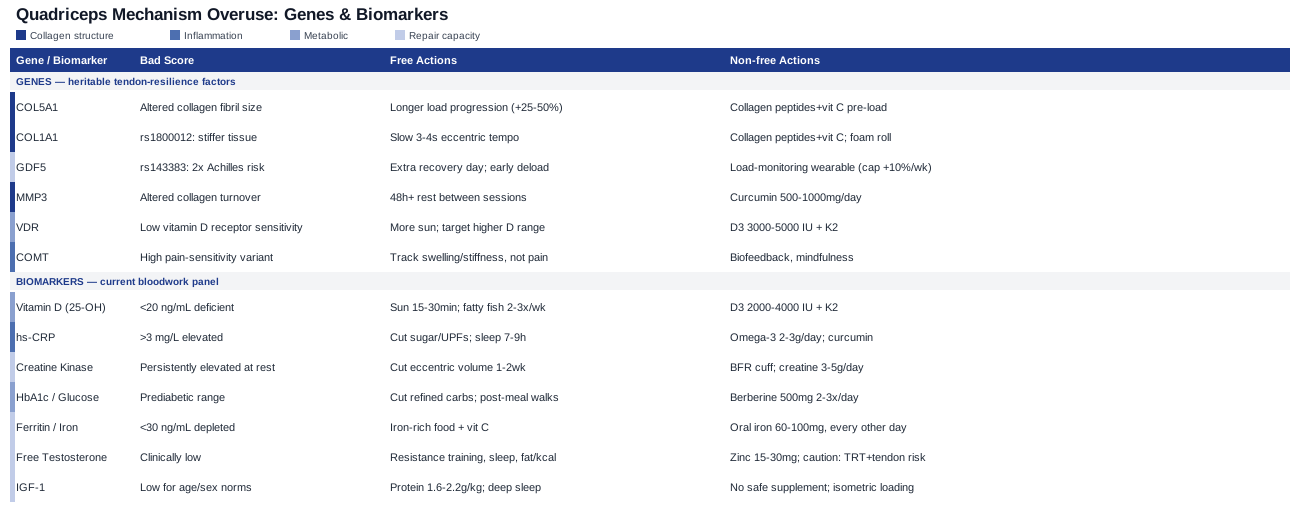
7 Biomarkers That Explain Why Your Quadriceps Mechanism Keeps Breaking Down
Bloodwork will not diagnose tendinopathy — that is a clinical and imaging diagnosis. What it can do is explain why the same rehab program that works for someone else is not working for you, by revealing whether your body currently has the raw materials, hormonal signal, and low enough background inflammation to actually remodel tendon tissue between training sessions. The seven markers below are chosen because each one has a plausible, evidence-backed link to either collagen synthesis, tissue inflammation, or muscle-tendon repair capacity, and each one is something you can realistically retest every three to six months to track change.
25-Hydroxyvitamin D
Vitamin D receptors are present in tendon, muscle, and bone tissue, and low vitamin D status has been repeatedly linked to impaired musculoskeletal repair, muscle weakness, and higher injury rates in athletic populations. If your quadriceps mechanism is struggling to adapt to load, a deficiency here is one of the easiest and most common contributors to rule out.
How To Measure It
A serum 25-hydroxyvitamin D blood test, ordered through a physician or a direct-to-consumer lab. Cost typically runs from about 15 to 50 US dollars when self-ordered, or is often bundled into an annual panel at no extra cost through insurance. The Endocrine Society defines deficiency as under 20 ng/mL and insufficiency as 21 to 29 ng/mL, with sufficiency generally placed at 30 ng/mL and above (Holick et al., Endocrine Society Clinical Practice Guideline).If The Score Is Bad, The Plan Without Supplements Or Equipment
Aim for 15 to 30 minutes of midday sun exposure on bare arms and legs, several times per week, adjusted for skin tone and latitude. Prioritize fatty fish (salmon, mackerel, sardines) two to three times weekly. Retest in 8 to 12 weeks, since sun and diet alone often produce only modest increases.If The Score Is Bad, The Plan With Supplements Or Equipment
A common protocol is 2,000 to 4,000 IU of vitamin D3 daily with a meal containing fat, paired with vitamin K2 (around 100 mcg) to support proper calcium utilization. Retest at 8 to 12 weeks and adjust the dose to land in the 40 to 60 ng/mL range rather than pushing higher. Side effects are rare at these doses but include hypercalcemia at very high, prolonged intakes (typically above 10,000 IU/day sustained for months) — this is why periodic retesting rather than indefinite fixed dosing matters.High-Sensitivity C-Reactive Protein (hs-CRP)
hs-CRP is a general marker of systemic inflammation, and elevated levels have specifically been associated with tendon pathology and tearing, including in the biceps and shoulder tendons, where marginal inflammatory changes were found histologically in symptomatic tissue (Kim et al., association of hs-CRP with tendon tearing). A chronically elevated hs-CRP suggests your body is running a higher background inflammatory load, which can blunt tendon remodeling and keep a nagging overuse injury simmering.How To Measure It
A standard hs-CRP blood test, widely available and inexpensive — usually 10 to 30 US dollars self-ordered, or included in a comprehensive metabolic panel. Peter Attia and Thomas Dayspring both favor tracking hs-CRP as a low-cost general inflammation signal, ideally below 1.0 mg/L, with 1 to 3 mg/L considered moderate risk and above 3 mg/L considered elevated.If The Score Is Bad, The Plan Without Supplements Or Equipment
Reduce ultra-processed food and added sugar intake, prioritize 7 to 9 hours of sleep, and address any untreated dental, gut, or skin infections, which are common silent contributors to elevated CRP. Reducing total training volume temporarily while the tendon is symptomatic also lowers local-to-systemic inflammatory spillover.If The Score Is Bad, The Plan With Supplements Or Equipment
Omega-3 fish oil (2 to 3 grams combined EPA/DHA daily) is the best-supported option for lowering hs-CRP over 8 to 12 weeks. Curcumin (500 to 1,000 mg daily with piperine) is a reasonable adjunct with a good safety profile. Cycle omega-3s continuously but retest hs-CRP quarterly; high-dose fish oil above 3 grams/day can mildly increase bleeding risk, so caution is warranted alongside anticoagulants or before surgery.Creatine Kinase (CK)
CK leaks into the bloodstream when muscle fibers are damaged, and it is commonly used as a rough proxy for training load and recovery status around the muscles feeding into the quadriceps mechanism. A recent literature review highlights that CK is highly variable between individuals and training types, so it is best used as your own trend line rather than compared to population norms (post-exercise creatine kinase variability, literature review).How To Measure It
A basic CK (creatine phosphokinase) blood test, roughly 10 to 25 US dollars self-ordered. Best drawn after at least 48 to 72 hours of rest from heavy quadriceps-loading exercise to get a meaningful baseline, then compared to a value drawn 24 to 48 hours after a hard session.If The Score Is Bad, The Plan Without Supplements Or Equipment
If CK is persistently elevated at rest, the most direct fix is a deliberate reduction in eccentric loading volume (downhill running, deep squats, jump landings) for one to two weeks, combined with extra sleep and active recovery such as walking or light cycling.If The Score Is Bad, The Plan With Supplements Or Equipment
Creatine monohydrate (3 to 5 grams daily, no loading phase needed) has modest evidence for supporting muscle recovery, though it will raise baseline CK slightly, which should be accounted for when interpreting results. Cycling is unnecessary — creatine is well tolerated long term with minimal side effects beyond mild water retention. A blood flow restriction cuff for light-load rehab sessions (typically 100 to 300 US dollars) can allow quadriceps strengthening at lower absolute loads, which produces less CK elevation while still stimulating adaptation.HbA1c And Fasting Glucose
Chronically elevated blood sugar accelerates the formation of advanced glycation end-products (AGEs), which stiffen collagen cross-links and impair tendon healing. A systematic review and meta-analysis found a meaningful association between diabetes mellitus and tendinopathy across multiple tendon sites (Ranger et al., tendinopathy and diabetes mellitus, systematic review and meta-analysis). You do not need to be diabetic for this mechanism to matter — even prediabetic glucose patterns can slowly degrade tendon quality.How To Measure It
HbA1c and fasting glucose, both standard and inexpensive (10 to 30 US dollars combined self-ordered). A continuous glucose monitor (roughly 50 to 100 US dollars for a two-week sensor) gives a more granular, real-time view of glucose variability for those who want more detail.If The Score Is Bad, The Plan Without Supplements Or Equipment
Reduce refined carbohydrate and added sugar intake, add a 10 to 15 minute walk after meals to blunt post-meal glucose spikes, and prioritize resistance training, which independently improves insulin sensitivity.If The Score Is Bad, The Plan With Supplements Or Equipment
Berberine (500 mg two to three times daily with meals) has glucose-lowering evidence comparable in some trials to metformin, though it should be discussed with a physician if you are on other glucose-lowering medication due to additive effects. Cycle in 8 to 12 week blocks with retesting; mild gastrointestinal discomfort is the most common side effect. A continuous glucose monitor used intermittently (one two-week block per quarter) is a useful equipment-based way to identify which specific foods are driving your glucose variability.Ferritin And Iron Panel
Iron deficiency is common in endurance and recreational athletes, particularly women, and low iron status is linked to reduced oxygen delivery, fatigue, and slower recovery between training sessions — all of which can indirectly keep an overuse injury from settling down because tissue never gets a genuinely low-load recovery window (iron deficiency in athletes, narrative review).How To Measure It
A full iron panel including ferritin, serum iron, and transferrin saturation, roughly 30 to 60 US dollars self-ordered. Ferritin below 30 ng/mL is generally considered depleted for athletes, with some sports physicians preferring a higher floor around 50 ng/mL before intense training blocks.If The Score Is Bad, The Plan Without Supplements Or Equipment
Increase dietary iron through red meat, poultry, and legumes paired with vitamin C-rich foods to improve absorption, and avoid drinking coffee or tea within an hour of iron-containing meals, since polyphenols inhibit absorption.If The Score Is Bad, The Plan With Supplements Or Equipment
Oral iron supplementation (typically 60 to 100 mg elemental iron, every other day rather than daily, which recent research suggests improves absorption) for 8 to 12 weeks, followed by retesting. Side effects include constipation and gastrointestinal upset; iron should never be supplemented without confirmed deficiency, since excess iron carries its own oxidative stress risk.Free Testosterone
Testosterone supports collagen turnover, satellite cell activation, and tendon remodeling, and low levels are associated with slower musculoskeletal repair. However, this marker requires nuance specific to the quadriceps mechanism: a large cohort study found that testosterone replacement therapy was associated with a significantly increased risk of quadriceps tendon injury, likely because rapid strength gains can outpace tendon adaptation (testosterone therapy associated with increased odds of quadriceps tendon injury). This is a case where correcting a "bad" number too aggressively can create a new problem.How To Measure It
Total and free testosterone, drawn in the morning when levels peak, roughly 40 to 80 US dollars self-ordered.If The Score Is Bad, The Plan Without Supplements Or Equipment
Prioritize resistance training, adequate sleep, and adequate total caloric and dietary fat intake, all of which support endogenous testosterone production more sustainably than any supplement.If The Score Is Bad, The Plan With Supplements Or Equipment
Vitamin D repletion (see above) and zinc (15 to 30 mg daily, cycled 8 to 12 weeks with breaks to avoid copper depletion) have modest supporting evidence in deficient individuals. If testosterone replacement therapy is being considered for a clinically low level, build in a deliberately conservative, slowly progressive strengthening plan for the quadriceps mechanism specifically, given the injury signal noted above — tendon tissue needs months, not weeks, to adapt to newly available anabolic capacity.IGF-1 (Insulin-Like Growth Factor 1)
IGF-1 plays a direct role in tendon cell proliferation and collagen production, and animal and cell-based research shows it accelerates tendon healing, though clinical translation in humans has been more limited so far (IGF-1 empowering tendon regenerative therapies). A low IGF-1 relative to age-adjusted norms can flag inadequate recovery, undereating, or poor sleep quality — all of which limit the raw repair signal available to a stressed tendon.How To Measure It
A serum IGF-1 test, roughly 50 to 90 US dollars self-ordered, best interpreted against age- and sex-adjusted reference ranges rather than a single universal cutoff.If The Score Is Bad, The Plan Without Supplements Or Equipment
Ensure adequate total protein intake (around 1.6 to 2.2 g/kg body weight daily) and total calories, since chronic underfueling is one of the most common reasons for low IGF-1 in active people. Deep, consistent sleep is the other major lever, since growth hormone pulses (which drive IGF-1) are concentrated in slow-wave sleep.If The Score Is Bad, The Plan With Supplements Or Equipment
There is no well-supported supplement that safely and reliably raises IGF-1 in people without a clinical deficiency, and self-directed growth hormone or IGF-1 use carries meaningful risks and is not recommended outside of physician supervision for a diagnosed deficiency. The more realistic lever is mechanical: a structured, progressive isometric and heavy-slow-resistance loading program for the quadriceps mechanism, performed 2 to 3 times weekly with built-in deload weeks every 4 to 6 weeks, which stimulates local tendon adaptation independent of circulating IGF-1 levels.Taken together, these seven markers describe a recovery ecosystem rather than a single number to fix. A tendon with adequate vitamin D, low background inflammation, stable blood sugar, sufficient iron, and a hormonal environment that supports repair without outpacing tissue adaptation is simply better equipped to handle repetitive quadriceps loading. Genetics, covered next, help explain why two people with identical bloodwork can still have different baseline tendon resilience.
What Your Genes May Already Be Telling You About Tendon Resilience
Genomics researchers such as Ali Torkamani, whose work at Scripps Research has focused on using large-scale genetic data to predict disease and injury risk, and health entrepreneurs like Gary Brecka, who popularized consumer genetic panels covering collagen and inflammation-related genes, have both helped bring this kind of research to a wider audience. It is worth being direct about the evidence quality here: most of the genes below come from candidate-gene association studies with modest sample sizes, and effect sizes are generally small increases or decreases in relative risk, not deterministic outcomes. A broader narrative review of tendon and ligament genetics summarizes this well, noting that while multiple genes show reproducible associations, none currently explain more than a fraction of individual injury risk (tendon and ligament genetics, narrative review). Genetic information here is best used to calibrate caution, not to predict fate.
COL5A1
COL5A1 encodes a component of type V collagen, which regulates the diameter and organization of the larger type I collagen fibrils that give tendon its tensile strength. Certain COL5A1 variants have been associated with altered risk of tendon and ligament injury across multiple studies, with a meta-analysis in Caucasian populations finding specific polymorphisms linked to changed injury susceptibility (COL5A1 gene polymorphisms and tendon-ligament injury risk, meta-analysis).If The Gene Is Bad, The Plan Without Supplements
Favor longer, more gradual progression phases when increasing quadriceps loading — extending typical strength progression timelines by 25 to 50 percent — and prioritize isometric holds before introducing plyometric or high-velocity eccentric work.If The Score Is Bad, The Plan With Supplements Or Equipment
Collagen peptides (15 to 20 grams) combined with 50 to 250 mg of vitamin C, taken 45 to 60 minutes before quadriceps-loading sessions, is the most directly evidence-supported protocol for boosting collagen synthesis around a loading window. Use it on training days only, not daily, since the benefit is tied to timed loading rather than passive supplementation; side effects are minimal, occasionally mild digestive discomfort at higher collagen doses.COL1A1
COL1A1 encodes the primary structural protein of type I collagen, the dominant collagen type in mature tendon. A specific polymorphism, rs1800012, has been associated in a meta-analysis with altered odds of sports-related tendon and ligament injury (COL1A1 rs1800012 and sports-related tendon and ligament injuries, meta-analysis).If The Gene Is Bad, The Plan Without Supplements
Since COL1A1 variants have also been linked to differences in tissue stiffness, incorporating slow, controlled tempo work (3 to 4 second eccentric phases) rather than fast, ballistic quadriceps training reduces peak strain rate on less compliant tissue.If The Score Is Bad, The Plan With Supplements Or Equipment
The same vitamin C and collagen peptide timing protocol described above applies here. Adding a foam roller or percussion device for 5 to 10 minutes of pre-session soft tissue work can modestly improve short-term tissue compliance before loading, though this is an adjunct, not a substitute for progressive strength work; no meaningful side effects at these doses.GDF5
GDF5 (growth differentiation factor 5) is involved in tendon and ligament development, and animal studies show GDF5 deficiency alters the mechanical properties of the Achilles tendon. In humans, a specific variant, rs143383, has been linked to roughly double the risk of Achilles tendon pathology in one genetic association study (TGF-beta family components and Achilles tendon pathology, genetic association study).If The Gene Is Bad, The Plan Without Supplements
Build in an extra recovery day between quadriceps-dominant sessions compared to a standard program, and treat any early tendon soreness as a signal to deload immediately rather than push through, since impaired baseline tendon repair signaling means small setbacks compound faster.If The Score Is Bad, The Plan With Supplements Or Equipment
There is no supplement that directly compensates for GDF5 variation in humans at this stage of research. The more actionable option is equipment-based: a heart-rate or load-monitoring wearable to objectively cap weekly training load increases at roughly 10 percent, since abrupt load spikes are the most modifiable risk factor when underlying tissue repair capacity may be reduced.MMP3
MMP3 (matrix metalloproteinase 3) breaks down and remodels collagen as part of normal tendon turnover. Variants in MMP3 have been associated with Achilles tendinopathy risk, and specifically with differences in patellar tendon properties measured directly in an asymptomatic population — a notably relevant finding for the quadriceps mechanism (MMP3 gene variants and patellar tendon properties in vivo).If The Gene Is Bad, The Plan Without Supplements
Since MMP3 variation affects the balance between collagen breakdown and rebuilding, avoid back-to-back high-volume quadriceps sessions without at least 48 hours of recovery, giving the remodeling process time to complete before the next mechanical stress is applied.If The Score Is Bad, The Plan With Supplements Or Equipment
Curcumin (500 to 1,000 mg daily with piperine, cycled 8 to 12 weeks on and 2 to 4 weeks off) has some evidence for modulating excessive matrix metalloproteinase activity in connective tissue, though direct human tendon trials are limited. Mild gastrointestinal upset is the main reported side effect; avoid combining with blood thinners without medical guidance.VDR (Vitamin D Receptor)
The VDR gene determines how effectively your cells respond to circulating vitamin D, independent of your blood level of the vitamin itself. A 2025 study in elite athletes found that a specific VDR variant was associated with both lower functional vitamin D status and higher injury predisposition (VDR gene polymorphisms, vitamin D levels, and injury predisposition in elite athletes).If The Gene Is Bad, The Plan Without Supplements
Regular sun exposure remains useful, but people with reduced VDR sensitivity may need to target the higher end of the normal vitamin D range rather than the low end to achieve the same tissue-level effect, so retesting blood levels becomes more important than usual.If The Score Is Bad, The Plan With Supplements Or Equipment
A somewhat higher maintenance vitamin D3 dose (often 3,000 to 5,000 IU daily, always paired with vitamin K2) may be reasonable if blood levels plateau below target despite standard dosing, but this should be guided by repeat blood testing every 8 to 12 weeks rather than dosing blindly, since the goal is a measured blood level, not a fixed dose; watch for hypercalcemia symptoms (nausea, fatigue, excess thirst) at sustained high intakes.COMT
COMT (catechol-O-methyltransferase) breaks down dopamine, noradrenaline, and adrenaline, and functional variants in this gene are consistently linked to differences in pain sensitivity, including in a systematic review and meta-analysis of chronic pain conditions (COMT gene polymorphism and chronic human pain, systematic review and meta-analysis). This gene does not affect tendon structure directly, but a "high pain sensitivity" COMT profile can make it harder to judge safe training loads by pain alone, since discomfort may not scale proportionally with actual tissue stress.If The Gene Is Bad, The Plan Without Supplements
Rely less on subjective pain scores to guide training decisions and more on objective markers — swelling, morning stiffness duration, and next-day function — since a heightened pain response can otherwise lead to either overly cautious under-training or, paradoxically, ignoring genuinely useful pain signals out of familiarity with chronic discomfort.If The Score Is Bad, The Plan With Supplements Or Equipment
Mind-body approaches with direct evidence for altering pain processing, such as biofeedback and mindfulness-based practices (covered in more detail later in this article), are more appropriate first-line tools than supplements for this particular gene. There is no supplement that reliably or safely modifies COMT activity; magnesium and omega-3s have general, non-specific evidence for supporting normal nervous system function, but neither should be framed as a targeted fix.Genetic tendencies set your starting line, but they say nothing about how tendons actually respond to real-world loading strategies — which is exactly the gap that hands-on tendon research tries to close.
The Podcast Episode That Reframes Everything You Thought About Tendon Rehab
One of the most detailed, evidence-dense conversations on tendon health in recent years is Dr. Keith Baar's appearance on The Tim Ferriss Show, episode 797, recorded in early 2025. Baar runs a tendon and ligament physiology lab at UC Davis and has spent two decades studying how connective tissue actually adapts to load, often directly contradicting standard rest-first rehab advice. Below are ten of the most useful takeaways for anyone dealing with a stubborn quadriceps mechanism problem.
Rest Is Often The Wrong First Move
Baar argues against the traditional RICE (rest, ice, compression, elevation) approach for many tendon injuries, since complete rest removes the mechanical signal tendons need to remodel. Some controlled loading, even in a painful tendon, tends to outperform total immobilization for long-term recovery.Collagen Synthesis Needs Load, Not Just Protein
Eating collagen or protein alone does little for a tendon that isn't being mechanically stressed. Collagen precursors are only incorporated efficiently into tendon tissue when consumed close to a loading session, not simply as a general daily supplement.Vitamin C Timing Matters More Than Total Intake
Baar's own published research found that consuming vitamin C-enriched gelatin roughly an hour before intermittent exercise measurably increased markers of new collagen synthesis compared to a placebo (vitamin C-enriched gelatin supplementation before intermittent activity augments collagen synthesis).The Practical Dose Is Smaller Than Most Assume
The protocol discussed is 5 to 15 grams of hydrolyzed collagen or gelatin with 50 to 250 mg of vitamin C, taken 30 to 60 minutes before a quadriceps-loading session — not a large daily mega-dose, and only used on training days.Isometrics Are An Underused Early Tool
For a painful tendon, sustained isometric holds (Baar discusses holds in the range of 30 to 45 seconds) can reduce pain acutely while still providing a useful mechanical stimulus, making them a safer entry point than dynamic or eccentric loading in an irritated quadriceps mechanism.Short Loading Bouts With Long Rest Windows May Work Better Than Expected
Baar describes lab findings where brief loading periods (around 10 minutes) followed by 6 to 8 hours of rest, repeated, produced a larger collagen synthesis response than continuous loading — a pattern that lines up with why multiple short daily rehab sessions can outperform one long one.Caffeine Timing Around Loading Deserves A Second Look
One of the more surprising points raised is that caffeine consumed close to a loading session may blunt some of the collagen synthesis response, suggesting it may be worth separating your morning coffee from a dedicated tendon rehab session by an hour or more.Tendon Adaptation Is Slower Than Muscle Adaptation
Because tendon has a much lower blood supply than muscle, meaningful structural change takes months rather than weeks. Expecting muscle-like progress timelines from a tendon rehab program is one of the most common reasons people abandon a plan just before it would have worked.Hypermobility Changes The Whole Strategy
For people with more lax, hypermobile connective tissue, Baar suggests a different emphasis — more isometric stability work and controlled range of motion rather than maximizing flexibility further, since additional mobility work in already-lax tissue can increase injury risk rather than reduce it.The Eccentric Loading Story Has A Surprising Origin
The now-standard eccentric loading protocol for tendinopathy (the Alfredson protocol) reportedly began somewhat accidentally, and Baar frames its success mechanistically through stress relaxation — slow, controlled loading allows tendon fibers to redistribute strain more evenly, which is the real reason it works rather than the eccentric phase itself being uniquely special.The recurring theme across these ten points is that tendon tissue responds to precise, timed mechanical and nutritional signals rather than blanket rest or blanket supplementation — a theme that also shows up, in a gentler form, in several complementary approaches with real supporting evidence.
Complementary Approaches Worth Considering
None of the following replace progressive loading, which remains the foundation of tendon rehabilitation. But each has meaningful human evidence specific enough to be worth considering alongside a structured strengthening plan for quadriceps mechanism overuse.
Massage Therapy
Massage is one of the most widely used adjuncts in sports recovery, working through increased local blood flow, reduced perceived muscle soreness, and possible modulation of pain signaling at the spinal cord level. For quadriceps mechanism overuse specifically, where surrounding muscle tightness and compensatory tension often accompany tendon pain, massage can address the muscular component even though it does not directly change tendon structure.A meta-analytical review of massage and athletic performance recovery found that while effects on restoring peak strength or performance were inconsistent, massage showed more reliable benefit for reducing delayed-onset muscle soreness and subjective fatigue after strenuous exercise (massage and performance recovery, meta-analytical review).
A realistic application is 15 to 20 minutes of massage focused on the quadriceps and surrounding hip musculature, once or twice weekly, ideally on lower-intensity training days. It should be treated as a comfort and recovery tool rather than a corrective one, and it is not a substitute for the progressive loading work described earlier.
Photobiomodulation (Low-Level Laser Therapy)
Photobiomodulation uses low-level red or near-infrared light, theorized to support mitochondrial energy production and modestly reduce local inflammation in tendon tissue. It is one of the few passive modalities with tendinopathy-specific randomized controlled trial evidence, which is why it stands out among passive treatment options.A systematic review and meta-analysis of randomized controlled trials on photobiomodulation for tendinopathy found measurable, if moderate, improvements in pain and function compared to placebo or sham treatment across several tendon sites (low-level red and near-infrared photobiomodulation on pain and function in tendinopathy, systematic review and meta-analysis).
In practice, this typically means treatment sessions two to three times weekly for 4 to 8 weeks, using a clinic-grade or reputable home device, applied directly over the quadriceps or patellar tendon. Evidence quality varies by device power and wavelength, so results are not uniform across all commercially available units, and it should be used as an adjunct to loading rather than a stand-alone fix.
EMG Biofeedback
Electromyographic (EMG) biofeedback provides real-time visual or auditory feedback on quadriceps muscle activation, which helps correct the activation imbalances (particularly underactive vastus medialis relative to vastus lateralis) that are commonly implicated in anterior knee and quadriceps mechanism overuse.A randomized controlled trial in young adult male athletes with patellofemoral pain found that EMG-biofeedback-guided isometric quadriceps strengthening at multiple knee angles produced significantly greater pain reduction and functional improvement over six weeks compared to a taping-only control group (electromyographic biofeedback training and quadriceps strength in patellofemoral pain syndrome, randomized controlled trial).
A practical approach is two to three EMG-biofeedback-guided sessions weekly, focused on isometric quadriceps holds at varied knee angles, for 6 to 8 weeks, ideally under the guidance of a physical therapist who has access to the equipment. This is one of the more directly evidence-matched modalities on this list for the quadriceps mechanism specifically.
Mindfulness Meditation And MBSR
Mindfulness-based stress reduction (MBSR) does not change tendon tissue directly, but chronic overuse pain has a well-documented psychological amplification component, and MBSR has shown genuine benefit for chronic musculoskeletal pain conditions by changing how pain signals are processed and responded to.The strongest evidence here comes from a randomized clinical trial in chronic low back pain, not quadriceps-specific pain, so this should be viewed as supportive rather than condition-specific evidence: MBSR produced meaningful, lasting improvements in pain and function compared to usual care over one year (mindfulness-based stress reduction versus cognitive behavioral therapy or usual care for chronic low back pain, randomized clinical trial).
A realistic starting point is a structured 8-week MBSR course, in person or via a reputable app-based program, with daily practice of 10 to 20 minutes. This is most useful for people whose overuse pain has become chronic and is accompanied by frustration, hypervigilance around movement, or fear of reinjury, rather than for a fresh, purely mechanical flare-up.
Conclusion
Quadriceps mechanism overuse syndrome rarely has one single cause, which is why chasing one fix — more rest, one supplement, one stretch routine — so often falls short. The more useful approach treats it as a combination of current recovery capacity (visible in bloodwork like vitamin D, inflammation, blood sugar, iron, and hormone status), inherited tendency (visible in collagen and repair-related genes), and mechanical strategy (how, and how gradually, load is reintroduced). None of these factors guarantee an outcome on their own, and none of them replace a proper clinical evaluation if pain is persistent, worsening, or affecting daily function.
The most productive next step is usually the simplest one: pick two or three of the biomarkers above that you have never actually checked, get them tested, and use the results to adjust one variable at a time rather than everything at once. Pair that with a loading plan that respects the slower timeline tendons need compared to muscle, and revisit the numbers again in two to three months. That combination of measurement and patience is what turns generic advice into a plan that is actually built for your body.