This article contains AI generated content.
Radiation-Induced Sarcoma Of The Knee: 7 Genes And 6 Biomarkers To Track
If you or someone in your family has been treated with radiation near the knee — for a childhood bone tumor, a soft tissue sarcoma, lymphoma, or another cancer — and you've since heard the phrase "radiation-induced sarcoma," the worry that follows is rarely vague. It's specific. It's about a scar that feels different than it used to, a new twinge that shows up years after treatment ended, or a follow-up scan that gets read a little more carefully than the last one.
Generic cancer-prevention advice doesn't hold up well against that kind of worry. "Eat well, exercise, don't smoke" is true and still worth doing, but it says nothing about why some people who received the exact same radiation dose to the exact same joint go on to develop a secondary sarcoma decades later while others never do. That gap is largely written in DNA repair genes, tumor suppressor pathways, and a handful of measurable biological signals — not in willpower or lifestyle alone.
This article goes past the generic advice and into the specific biology that actually explains individual risk after radiotherapy: the genes most consistently tied to radiation-induced sarcoma, what the human evidence actually shows for each one, and the practical, non-alarmist steps that make sense whether or not a mutation is present. It also covers the handful of blood and imaging markers that are genuinely useful to track during long-term follow-up, a recent podcast conversation worth your time, and a short review of complementary approaches with real supporting evidence.
None of this replaces your oncology or orthopedic surveillance team, and none of it promises a way to "reverse" a genetic risk that's already written into your cells. What it can do is help you ask better questions, understand your own risk factors more precisely, and make decisions — about testing, monitoring frequency, and daily habits — that are grounded in what the research actually says rather than in general reassurance.
Summary
Radiation-induced sarcoma of the knee doesn't appear at random. In most documented cases, it shows up against a backdrop of specific germline mutations and DNA-repair variants that make certain people's cells less able to recover from radiation exposure — and, decades later, more likely to accumulate the kind of damage that becomes a tumor. Below, we break down the seven genes with the strongest human evidence for this link, from the well-established RB1 and TP53 pathways in hereditary retinoblastoma and Li-Fraumeni syndrome, to the more preliminary DNA-repair polymorphisms researchers are still working to confirm. For each one, you'll find what the gene actually does, how strong the evidence is, and two realistic plans — one that needs no supplements or equipment, and one that adds targeted support — including frequency, cycling, and honest side-effect information.
Because genetics alone don't tell the whole story, the second half of this article turns to six measurable biomarkers that matter more in the years after radiation exposure than most people realize, from simple blood tests you can ask your GP for tomorrow to the imaging protocols specialists actually use for surveillance. A recent podcast conversation on cancer genetics and immune-based treatment adds ten specific, quotable takeaways that reframe how mutation risk and modern cancer therapy actually work. And a short review of complementary approaches — the ones with real clinical evidence, not wellness marketing — rounds out a practical plan for anyone managing this specific, long-term risk.
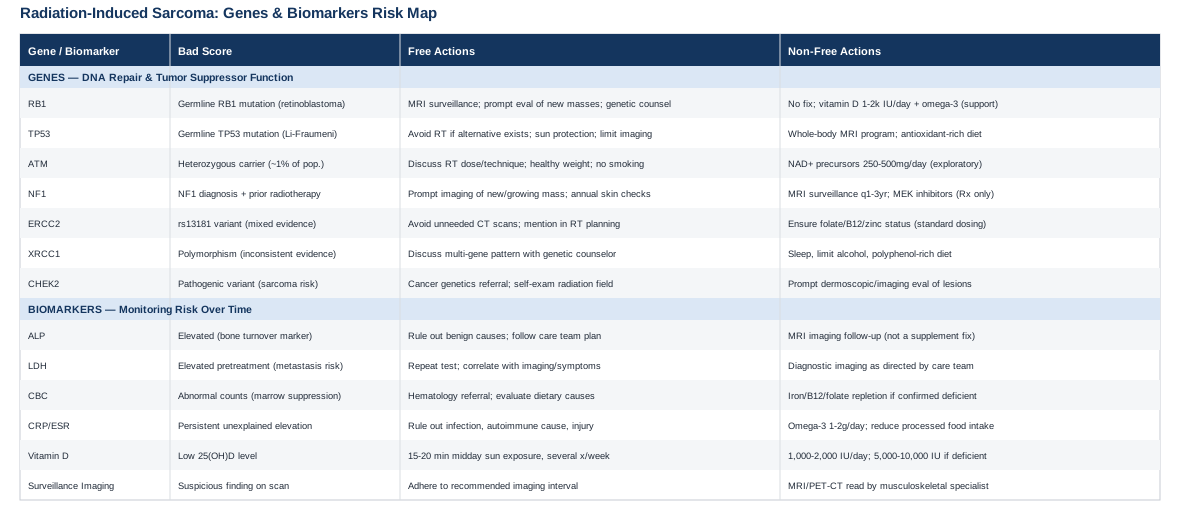
The Genetic And Epigenetic Side Of Radiation-Induced Sarcoma Risk
Radiation-induced sarcoma is, mechanically, a story about DNA damage that didn't get repaired correctly. Ionizing radiation breaks DNA strands as part of how it kills cancer cells, but the cells at the edge of the treatment field — including normal tissue around the knee — take damage too. Most of the time, DNA repair machinery fixes that damage well enough. The genes below are the ones with the clearest human evidence for what happens when that repair machinery is inherited in a weaker form, or when a tumor suppressor that should catch the leftover mistakes is itself already compromised.
For genetic testing and interpretation, researchers like Ali Torkamani, who has published extensively on polygenic risk and precision genomics, and Gary Brecka, known for popularizing accessible functional genomic panels, are reasonable starting points for understanding what a personal genetic report can and can't tell you. Neither replaces a clinical genetic counselor, which matters more here than in most areas of preventive health — several of the genes below are linked to hereditary cancer syndromes that carry implications for family members, not just the person being tested.
RB1 — The Retinoblastoma Gene
RB1 is a tumor suppressor gene, and its most direct link to radiation-induced sarcoma comes from survivors of hereditary retinoblastoma, a childhood eye cancer caused by a germline RB1 mutation. Because retinoblastoma was historically treated with radiotherapy, and because RB1 loss already removes one of the cell's core checks on uncontrolled division, survivors of the hereditary form face a substantially elevated lifetime risk of bone and soft tissue sarcomas, especially within the radiation field. Molecular studies of these secondary sarcomas have found that RB1 and TP53 are frequently co-inactivated in the same tumor, suggesting the two pathways fail together rather than independently (RB1 and TP53 pathways in radiation-induced sarcomas, Sarcomas in hereditary retinoblastoma).
The human evidence here is strong — this is one of the best-documented gene-radiation-sarcoma relationships in oncology, built on decades of long-term follow-up in retinoblastoma survivor cohorts.
If The Gene Is Bad, The Plan Without Supplements
A confirmed germline RB1 mutation can't be corrected through diet or lifestyle, so the realistic plan is built around surveillance and exposure minimization rather than "fixing" the gene. This means working with an oncology team to set an imaging schedule for any area that received prior radiation — typically MRI-based rather than repeated CT or X-ray, since minimizing additional ionizing radiation exposure matters specifically for this genotype. It also means treating any new, persistent lump, unexplained joint pain, or growing mass in a previously irradiated area as something to have checked promptly rather than watched for months. Genetic counseling for first-degree relatives is part of this plan too, since RB1 mutations have direct implications for family members. There's no cycling or frequency to specify beyond following the surveillance schedule your care team sets, and there are no side effects to this approach beyond the ordinary anxiety of active monitoring.
If The Score Is Bad, The Plan With Supplements Or Equipment
Nothing in the supplement or device category reverses RB1 loss, and it's worth being direct about that rather than implying otherwise. What some clinicians and functional-medicine-oriented practitioners add on top of surveillance is a general reduction in additional mutagenic load: vitamin D maintained in a normal range (most protocols use 1,000–2,000 IU daily, adjusted to a blood level around 30–50 ng/mL) because low vitamin D status has been associated with worse outcomes across several cancer types, and an omega-3 intake (roughly 1–2 g EPA/DHA daily) for its general anti-inflammatory profile. These are supportive, general-health measures, not RB1-specific interventions — take them as such. Side effects are minimal at these doses; very high-dose vitamin D can cause hypercalcemia, so blood levels should be checked periodically, roughly every 6 months, rather than dosed indefinitely without recheck.
TP53 — The Guardian Of The Genome
TP53 encodes p53, the protein most responsible for stopping damaged cells from dividing until repairs are made — or triggering their death if repair fails. Germline TP53 mutations cause Li-Fraumeni syndrome, and patients with Li-Fraumeni syndrome who receive radiotherapy for a first cancer face a well-documented elevated risk of radiation-induced secondary malignancies, including sarcomas and angiosarcomas, often at younger ages and shorter latency than in the general population (Radiotherapy-induced malignancies in breast cancer patients with TP53 pathogenic germline variants). Current clinical guidance for confirmed Li-Fraumeni patients increasingly favors avoiding radiotherapy when a non-radiation alternative exists, precisely because of this risk.
Evidence quality: strong for the Li-Fraumeni/radiotherapy link specifically; this is one of the few gene-radiation interactions with direct clinical practice implications already written into oncology guidelines.
If The Gene Is Bad, The Plan Without Supplements
The single most actionable step for a confirmed TP53 mutation carrier is a conversation with an oncologist about avoiding radiotherapy where a surgical or systemic alternative exists — this is already reflected in some clinical guidelines for Li-Fraumeni patients facing a new cancer diagnosis. Beyond that, annual or biannual whole-body MRI surveillance (a protocol used in several Li-Fraumeni surveillance programs) catches new primary tumors early, when treatment options are broader. Sun protection and avoiding elective diagnostic radiation (unnecessary CT scans, dental X-rays beyond what's clinically needed) reduce cumulative mutagenic exposure. This is a lifelong plan with no cycling — surveillance frequency should be set and reviewed with a cancer genetics clinic, not self-managed.
If The Score Is Bad, The Plan With Supplements Or Equipment
There's no supplement that restores p53 function, and claims to the contrary should be treated skeptically. Whole-body MRI access (the "equipment" side of this plan) is the highest-value addition for TP53 carriers specifically, since it allows tumor surveillance without adding radiation exposure — ask a genetics clinic about referral to a Li-Fraumeni surveillance program if one is accessible. On the supplement side, some practitioners suggest a standard antioxidant-supportive diet (colorful vegetables, green tea) over isolated high-dose antioxidant supplements, because high-dose antioxidants during any future radiotherapy or chemotherapy could theoretically blunt treatment efficacy — this is a reason to avoid megadosing antioxidant supplements in this specific population, not a reason to add them. If any supplement is used, keep doses at standard nutritional levels and disclose them to your oncology team before any future cancer treatment.
ATM — The Radiosensitivity Gene
ATM coordinates the cell's response to double-strand DNA breaks — exactly the kind of damage ionizing radiation causes. Homozygous ATM mutations cause ataxia-telangiectasia, a severe disorder with extreme radiosensitivity, but the more common and relevant scenario for most readers is heterozygous ATM carrier status, found in roughly 1% of the population. Heterozygous carriers show measurably increased cellular radiosensitivity and a moderately elevated cancer risk, with some evidence that carriers who receive radiotherapy develop second tumors over a shorter interval than non-carriers (Cancer risks and mortality in heterozygous ATM mutation carriers, ATM, radiation, and the risk of second primary breast cancer).
Evidence quality: moderate and consistent across multiple cohort studies for radiosensitivity itself; the specific link to knee-area sarcoma is inferred from the broader radiosensitivity and second-cancer literature rather than sarcoma-specific cohorts.
If The Gene Is Bad, The Plan Without Supplements
Heterozygous ATM status is a relevant fact to bring to any conversation about future radiotherapy dosing or technique — some radiation oncologists adjust planning margins or consider alternative approaches (such as proton therapy, which spares more surrounding tissue) when a patient is a known ATM heterozygote. Outside of active treatment decisions, the practical plan is the same general one that helps regardless of genotype: maintaining a healthy body weight, avoiding smoking, and limiting unnecessary diagnostic radiation, since ATM carriers appear to have less reserve capacity to handle additional DNA damage from any source. There's no specific monitoring frequency unique to ATM status alone; it's a factor to layer onto whatever surveillance plan is already in place for the underlying condition that led to radiotherapy in the first place.
If The Score Is Bad, The Plan With Supplements Or Equipment
Some genomic-panel providers flag ATM variants alongside recommendations for NAD+ precursors (nicotinamide riboside or nicotinamide mononucleotide, commonly dosed at 250–500 mg daily) on the theory that supporting cellular energy metabolism may help DNA repair enzymes function more efficiently — this is biologically plausible but not established in human trials specific to ATM carriers, and should be understood as exploratory rather than proven. If tried, a reasonable approach is a 5-days-on, 2-days-off cycle rather than continuous daily use, with a reassessment after 3 months; reported side effects are generally mild (flushing, mild nausea) but there is no long-term safety data at these doses specifically for cancer-risk modification. Infrared or red-light panels are sometimes marketed for "cellular repair support," but there is no ATM-specific human evidence for this use, and it shouldn't be treated as a substitute for any of the surveillance measures above.
NF1 — Neurofibromatosis Type 1
NF1 encodes neurofibromin, a tumor suppressor that normally restrains a growth-signaling pathway (RAS). People with NF1 already carry an elevated baseline risk of malignant peripheral nerve sheath tumors (MPNST), a sarcoma subtype, and when radiotherapy is added to that baseline — for example, for an optic pathway glioma or another NF1-associated tumor — the risk of a radiation-associated MPNST developing later in the treated field rises further. Outcomes for radiation-associated MPNST also tend to be worse than for sporadic cases, with lower survival at 3 and 5 years (Oncologic outcomes of sporadic, neurofibromatosis-associated, and radiation-induced malignant peripheral nerve sheath tumors).
Evidence quality: strong for the NF1-MPNST relationship generally, and consistent across several surgical oncology cohort studies for the added radiation component specifically.
If The Gene Is Bad, The Plan Without Supplements
For NF1 patients, the most consequential decision is often made before radiation is ever given: many NF1 specialists now weigh non-radiation treatment options more heavily for NF1-associated tumors specifically because of this compounded MPNST risk, and that conversation is worth having explicitly with a treating oncologist rather than assumed. After treatment, any new or rapidly enlarging mass in a previously irradiated area — especially one associated with new pain or neurological symptoms — warrants prompt imaging rather than a "watch and see" approach, since radiation-associated MPNST tends to be more aggressive than the sporadic form. Regular skin and neurofibroma checks with a dermatologist or NF1 specialist round out the non-supplement plan, on whatever schedule that specialist recommends (commonly annual).
If The Score Is Bad, The Plan With Supplements Or Equipment
There is no supplement protocol with human evidence for reducing MPNST risk in NF1. The most relevant "equipment" addition is access to MRI surveillance of known neurofibromas and any prior radiation field, since MPNST typically arises from a pre-existing plexiform neurofibroma — some NF1 clinics use whole-body MRI at intervals of 1–3 years depending on baseline tumor burden. Selumetinib and related MEK inhibitors are prescription medications (not supplements) used for inoperable plexiform neurofibromas in NF1 and should only be discussed through a treating specialist, not self-initiated; they carry known side effects including skin toxicity and cardiac monitoring requirements, which is precisely why this stays in clinical rather than supplement territory.
ERCC2 — Nucleotide Excision Repair Capacity
ERCC2 (also called XPD) is part of the nucleotide excision repair pathway, one of the systems cells use to fix certain kinds of DNA damage, including some radiation-induced lesions. Common polymorphisms in ERCC2 have been studied for their association with radiation-induced normal-tissue toxicity, with a meta-analysis finding a significant association between one ERCC2 variant (rs13181) and radiotoxicity risk — though that association did not hold up when researchers applied a more conservative statistical correction (trial sequential analysis) (ERCC2 polymorphisms and radiation-induced adverse effects on normal tissue: systematic review with meta-analysis and trial sequential analysis).
Evidence quality: early and mixed. This is a case where a plausible biological mechanism (reduced repair capacity) has some supporting association data, but the effect size is inconsistent enough that it should be treated as a modifier to watch, not a confirmed independent risk factor.
If The Gene Is Bad, The Plan Without Supplements
Because the evidence here is preliminary, the practical plan is conservative: don't let an ERCC2 variant on a consumer genetic report change medical decisions on its own, but do mention it if it comes up during radiation oncology planning, since some centers already factor DNA-repair polymorphism data into normal-tissue toxicity risk discussions on a research basis. General radiation-exposure minimization (avoiding unnecessary CT imaging, using MRI or ultrasound where diagnostically equivalent) is reasonable regardless of confirmed ERCC2 status, since it's a low-cost, low-risk habit either way.
If The Score Is Bad, The Plan With Supplements Or Equipment
Because nucleotide excision repair depends on a cascade of enzymes that require specific micronutrient cofactors, some genomic-panel interpreters (including some of the frameworks associated with Ali Torkamani's precision genomics work) suggest ensuring adequate folate, B12, and zinc status as a baseline support measure — this is a reasonable, low-risk nutritional floor rather than a targeted fix, and standard multivitamin-level dosing is sufficient; there's no evidence that megadosing these nutrients improves repair capacity further. No specific cycling is needed for baseline nutrient repletion; a once-yearly blood panel checking B12, folate, and zinc is a sensible check-in rather than a fixed protocol.
XRCC1 — Base Excision Repair
XRCC1 works in base excision repair, a different DNA repair pathway that handles smaller-scale damage, including some oxidative and radiation-induced lesions. Like ERCC2, XRCC1 polymorphisms have been studied extensively in relation to cancer risk and radiation response, but the picture across studies is inconsistent — some analyses find associations with radiation toxicity or repair capacity, others don't replicate them, and population differences (particularly between Asian and Caucasian cohorts) appear to affect results substantially.
Evidence quality: early-stage and inconsistent. XRCC1 belongs on a watch list for radiation-related DNA repair capacity, not on a list of confirmed sarcoma risk genes.
If The Gene Is Bad, The Plan Without Supplements
The same conservative approach applies here as with ERCC2: don't over-interpret a single polymorphism flagged as "unfavorable" on a consumer report. The more useful move is contextual — if you carry variants in multiple DNA-repair genes (ATM, ERCC2, and XRCC1 together, for instance), that combination is a stronger signal to discuss with a genetic counselor than any single gene in isolation, since repair capacity is the sum of several overlapping systems rather than one gene's job alone.
If The Score Is Bad, The Plan With Supplements Or Equipment
There's no XRCC1-specific supplement protocol with clinical trial support. General oxidative stress reduction — adequate sleep, limiting alcohol to moderate levels, and a diet rich in plant polyphenols — supports base excision repair function in a general sense, since oxidative damage is one of the main triggers this pathway addresses, but this is supportive lifestyle guidance rather than a targeted genetic fix. No dosing or cycling schedule applies since these are habits, not supplements; the only "side effect" to note is that framing a lifestyle habit as a genetic treatment can create false reassurance, so keep expectations calibrated to what's actually being addressed.
CHEK2 — A Broader Sarcoma Susceptibility Signal
CHEK2 works downstream of ATM in the same DNA-damage response pathway, helping halt cell division when damage is detected. Germline CHEK2 pathogenic variants are established risk factors for several cancers, and a recent study found a notably increased frequency of CHEK2 pathogenic variants specifically among people with dermatofibrosarcoma protuberans, a sarcoma subtype, compared to the general population (4.6% versus 1.0%) (Increased frequency of CHEK2 germline pathogenic variants among individuals with dermatofibrosarcoma protuberans). Broader sarcoma risk in CHEK2 heterozygotes has been suggested but is described in the literature itself as needing further confirmation.
Evidence quality: early but growing, and specific enough (a named sarcoma subtype with a clear frequency comparison) to be worth tracking rather than dismissing.
If The Gene Is Bad, The Plan Without Supplements
A confirmed CHEK2 pathogenic variant is a reasonable trigger for a referral to a cancer genetics clinic, both because of its broader cancer risk profile and because management recommendations for CHEK2 carriers are still evolving as more data accumulates — this is a gene where "ask a specialist for the current guidance" is more useful than any fixed home protocol, precisely because the guidance itself is being updated as research continues. Routine self-examination of any prior radiation field for new or changing masses, combined with whatever general cancer screening schedule a genetics clinic recommends for CHEK2 carriers, is the realistic baseline.
If The Score Is Bad, The Plan With Supplements Or Equipment
No supplement or device targets CHEK2 function specifically, and given how recent and limited the sarcoma-specific data is, this is not an area where self-directed intervention makes sense. The most useful "equipment" here is diagnostic: ensuring any suspicious lesion in a prior radiation field gets dermoscopic or imaging evaluation promptly rather than delayed, since earlier detection meaningfully changes outcomes for most sarcoma subtypes, including dermatofibrosarcoma protuberans.
Blood And Imaging Markers Worth Tracking After Radiation Exposure
Genes describe susceptibility; biomarkers describe what's actually happening in the body right now. For radiation-induced sarcoma specifically, the useful biomarker panel is smaller and more practical than the sprawling lists common in general longevity content — it leans on a handful of blood tests with real prognostic history in bone and soft tissue sarcoma, plus the surveillance imaging protocols that actually catch recurrence or a new tumor early. As with cardiometabolic risk tracking popularized by physicians like Peter Attia, the goal isn't to chase a perfect number — it's to catch a meaningful trend early enough to act on it.
Alkaline Phosphatase (ALP)
ALP is an enzyme associated with bone turnover, and elevated levels have long been used as a prognostic marker in bone sarcomas like osteosarcoma, where higher preoperative ALP has been associated with worse outcomes and higher recurrence rates (Prognostic significance of alkaline phosphatase measurements in patients with osteogenic sarcoma receiving chemotherapy). For someone with a knee-area sarcoma risk, a persistently elevated ALP outside of normal bone-growth or liver explanations is worth discussing with an oncology team rather than dismissing as incidental.
How to measure it: a standard basic or comprehensive metabolic panel includes ALP; it's inexpensive and widely available through any primary care blood draw, typically $10–30 out of pocket if not covered by insurance.
If the score is bad, the plan without supplements: rule out the common benign explanations first (recent fracture healing, growth in adolescents, liver or biliary causes) with your physician before assuming tumor-related origin, then follow whatever imaging follow-up your care team recommends based on the full clinical picture. This isn't a marker to self-manage — it's a flag to bring to a scheduled or earlier-than-scheduled appointment.
If the score is bad, the plan with supplements or equipment: there is no supplement that meaningfully lowers ALP when it's elevated due to bone pathology, and attempting to do so would mask a signal that needs clinical evaluation rather than suppression. The appropriate "equipment" response is imaging (MRI of the affected area), not a supplement stack.
Lactate Dehydrogenase (LDH)
LDH is a more general marker of cell turnover and tissue damage, but it has specific prognostic value in osteosarcoma, where elevated pretreatment LDH has been associated with a higher risk of metastasis and worse survival, particularly in patients receiving adjuvant chemotherapy (Prognostic significance of serum lactate dehydrogenase in patients with osteosarcoma of the extremities).
How to measure it: included in most standard metabolic panels; cost is comparable to ALP, roughly $10–25, and it's often run alongside ALP for the same blood draw.
If the score is bad, the plan without supplements: as with ALP, an elevated LDH needs clinical context — it rises with many benign conditions (recent intense exercise, hemolysis, infection) as well as malignancy, so the right first step is repeat testing and correlation with imaging and clinical symptoms, not immediate alarm.
If the score is bad, the plan with supplements or equipment: no supplement protocol reduces cancer-related LDH elevation, and general "detox" approaches marketed for this purpose have no evidence base here. The useful equipment response, again, is diagnostic imaging directed by your care team.
Complete Blood Count (CBC) With Differential
A CBC tracks red cells, white cells, and platelets, and it matters in this context for two practical reasons: prior radiotherapy and chemotherapy can suppress bone marrow reserve for years afterward, and unexplained anemia or abnormal white counts can occasionally be an early, nonspecific signal worth investigating alongside other findings.
How to measure it: one of the most standard, inexpensive blood tests available, typically $10–20, included in routine annual physicals.
If the score is bad, the plan without supplements: persistent abnormalities warrant hematology referral rather than home management; iron-deficiency anemia, for instance, has dietary and absorption-related causes worth investigating properly (iron-rich foods, checking for GI causes of blood loss) rather than assuming it's treatment-related without confirmation.
If the score is bad, the plan with supplements or equipment: iron, B12, or folate repletion is appropriate only when a deficiency is actually confirmed by follow-up labs (ferritin, B12, folate levels) — supplementing blindly risks masking other causes and, in the case of iron, can cause constipation and GI discomfort at higher doses. A reasonable repletion course for confirmed iron deficiency is 60–120 mg elemental iron daily for 8–12 weeks with a recheck, not indefinite dosing.
C-Reactive Protein (CRP) And ESR
These are general inflammatory markers rather than sarcoma-specific ones, but persistent, unexplained elevation in either can be a nonspecific signal worth factoring into a broader clinical picture, especially when paired with localized symptoms like swelling or pain in a previously irradiated joint.
How to measure it: both are inexpensive standard blood tests, typically $15–40 combined, available through any primary care order.
If the score is bad, the plan without supplements: because these markers are nonspecific, the right approach is ruling out common causes first — infection, autoimmune conditions, recent injury — with your physician, and revisiting your surveillance imaging schedule if elevation persists without another clear explanation.
If the score is bad, the plan with supplements or equipment: omega-3 fatty acids (1–2 g EPA/DHA daily) and reducing ultra-processed food intake have reasonable general evidence for lowering inflammatory markers modestly over 8–12 weeks; these are general anti-inflammatory habits, not sarcoma treatments, and shouldn't delay appropriate diagnostic follow-up if elevation is significant or persistent.
Vitamin D
Vitamin D status doesn't diagnose or predict sarcoma directly, but low levels have been associated with worse outcomes across multiple cancer types in observational research, and it's cheap and easy to correct, making it a reasonable baseline to maintain rather than ignore.
How to measure it: a 25-hydroxyvitamin D blood test, typically $30–50 out of pocket, or often bundled into an annual physical panel.
If the score is bad, the plan without supplements: 15–20 minutes of midday sun exposure on exposed skin several times weekly can raise levels in many climates, though this is inconsistent and season-dependent, which is why testing rather than assuming is the better approach.
If the score is bad, the plan with supplements or equipment: standard repletion is 1,000–2,000 IU daily for maintenance, or 5,000–10,000 IU daily for 8–12 weeks under medical guidance for significant deficiency, followed by a recheck. Side effects are rare at these doses but high-dose, prolonged supplementation without monitoring can cause hypercalcemia — recheck levels every 6 months rather than dosing indefinitely without follow-up.
Surveillance Imaging (MRI And PET-CT)
This is the most advanced and highest-value item on this list, and it functions as a biomarker in the sense that imaging findings — not blood values — are what actually drive management decisions in sarcoma follow-up. Guideline-based surveillance for treated soft tissue sarcoma typically calls for imaging every 3–4 months in years 1–3 for high-grade tumors, spacing out to every 6 months in years 4–5, and annually through year 10; low-grade tumors are followed less frequently. For a prior radiation field specifically, MRI is generally preferred over repeated CT to avoid adding further ionizing radiation exposure to tissue that's already at elevated risk.
How to measure it: MRI of an extremity typically costs $400–$2,500 depending on region, insurance, and contrast use; PET-CT is more expensive, often $1,000–$5,000, and reserved for specific staging or recurrence questions rather than routine surveillance.
If the score is bad, the plan without supplements: there's no home alternative to imaging when a scan shows something suspicious — the plan is prompt biopsy and specialist referral, following whatever pathway your sarcoma center uses.
If the score is bad, the plan with supplements or equipment: the meaningful "equipment" investment here is simply adherence to the recommended imaging interval itself, and, where accessible, having follow-up scans read by a radiologist experienced specifically in musculoskeletal or sarcoma imaging, since subtle post-radiation changes can be difficult to distinguish from recurrence on routine reads.
A Podcast Conversation Worth Your Time On Cancer Genetics And Immune-Based Treatment
For anyone navigating radiation-induced sarcoma risk, the Huberman Lab episode "Avoiding, Treating & Curing Cancer With The Immune System" with Dr. Alex Marson, a physician-scientist at UCSF and the Gladstone Institutes, is unusually relevant. It moves past the standard "avoid mutagens" framing and into how modern immunology and gene-editing tools are changing what's actually possible for cancers driven by inherited mutation risk — including sarcomas. Below are ten of the most useful, specific points from that conversation.
1. Cancer Is Fundamentally A Numbers Problem, Not A Willpower Problem
Marson frames cancer as a disease of accumulated mutation and lost cell-division regulation — every division carries a small chance of error, which is why risk rises with age and with anything that adds extra divisions or extra mutagenic exposure, including radiotherapy to a treatment field.
2. Genetic Testing For High-Impact Mutations Is Now Affordable And Actionable
The conversation highlights that testing for mutations like BRCA is now inexpensive and widely accessible, and the same logic extends to other high-impact genes discussed above — the barrier to finding out isn't cost the way it used to be, which makes "I didn't know" a less useful excuse for skipping genetic counseling when there's a family or treatment history that warrants it.
3. Smoking Still Outranks Nearly Every Other Controllable Mutagen
Marson is direct that smoking remains the single largest controllable cancer risk factor "not even close" — a useful reality check for anyone focused heavily on rare genetic risks while overlooking the largest lever still available to them.
4. UV And Sunburns Accelerate Mutation Accumulation Measurably
The episode discusses how UV exposure and sunburns speed up mutation rates in skin cells specifically — a reminder that sun protection is a general mutation-reduction habit worth maintaining regardless of which specific gene or cancer type is the primary concern.
5. Chemical And Occupational Exposures Are An Underrated Mutagen Category
Beyond the well-known risks, the conversation flags chemical exposures — industrial solvents, certain pesticides, and lab or occupational chemical handling — as a mutagen category people underweight relative to its actual contribution to cancer risk in some populations.
6. The Immune System Actively Hunts Down Cancer Cells Every Day
A central theme is that cancer isn't just a genetic failure but also an immune surveillance failure — the innate and adaptive immune systems are constantly detecting and eliminating abnormal cells, and most incipient cancers never become clinical disease because this surveillance works. This reframes "cancer risk" as partly about supporting immune function (sleep, metabolic health), not purely about mutation avoidance.
7. Checkpoint Inhibitors Work By Releasing The Immune System's Own Brakes
The episode explains checkpoint inhibitor drugs (targeting proteins like PD-1 and CTLA-4) in plain terms: cancer cells often hijack the immune system's built-in "off switches," and these drugs block that hijacking, letting T-cells attack the tumor again. This class of treatment has become directly relevant to some sarcoma subtypes in active clinical trials.
8. Engineered CAR T-Cells Have Produced Durable Remissions In Cases That Had No Other Options
Marson discusses the case of Emily Whitehead, treated for leukemia at age 8 with an early CAR T-cell therapy, who achieved complete remission after standard treatments had failed — a concrete illustration of how far engineered immune-cell therapy has come, and a reason cancer genetics research (including for sarcoma) is increasingly focused on immune engineering, not just chemotherapy refinement.
9. CRISPR Was Discovered In Bacterial Immune Systems, Not Invented In A Lab
A detail that reframes the technology for a lot of listeners: CRISPR is an adapted bacterial immune defense mechanism, not a synthetic human invention, which partly explains both its precision and why researchers are still learning its full range of off-target effects — relevant context for anyone hearing about gene-editing "cures" and wondering how mature the technology really is.
10. Marson Draws A Hard Line Against Heritable Germline Editing
Despite his enthusiasm for CRISPR's therapeutic potential, Marson explicitly opposes germline (embryo) editing on the grounds that it changes future generations without their consent — a position worth noting because it pushes back against a more permissive current in some biotech circles, and it's a useful marker of where legitimate scientific opinion currently sits on a question many people conflate with routine gene therapy.
Complementary Approaches With Real Supporting Evidence
None of the approaches below treat radiation-induced sarcoma or alter genetic risk, and none should be mistaken for a substitute for oncology care, surgery, or surveillance imaging. What they can reasonably support is recovery, function, and quality of life during and after treatment for a knee-area sarcoma — areas where there is genuine, if sometimes limited, clinical trial evidence from cancer survivorship research.
Mindfulness-Based Stress Reduction
Mindfulness-Based Stress Reduction (MBSR) is a structured 6–8 week program combining meditation, body awareness, and gentle movement, originally developed for chronic pain and adapted widely for cancer care. For someone managing the long surveillance timeline that radiation-induced sarcoma risk requires — years of periodic scans and the anxiety that comes with them — a program that specifically targets health-related distress and fear of recurrence is directly relevant, even though it doesn't touch the tumor biology itself.
A randomized trial of 322 breast cancer survivors comparing a 6-week MBSR program against usual care found meaningful improvements in psychological and physical symptoms and quality of life in the MBSR group (The effects of mindfulness-based stress reduction on psychosocial outcomes and quality of life in early-stage breast cancer patients: a randomized trial). The evidence base is concentrated in breast cancer survivorship rather than sarcoma specifically, so the extrapolation to knee-area sarcoma follow-up is reasonable but not condition-specific.
In practice, this means looking for an MBSR program (often available through cancer centers or hospital integrative oncology departments) timed around your surveillance schedule — starting a course a few weeks before a stretch of follow-up scans, rather than only during a crisis, tends to build the skill before it's needed most.
Yoga
Yoga programs adapted for cancer survivors, most notably the standardized YOCAS (Yoga for Cancer Survivors) protocol, combine gentle Hatha and restorative postures with breathing exercises and brief mindfulness practice. This is relevant after knee-area treatment specifically because it can be adapted to limited range of motion or post-surgical restrictions, unlike higher-impact exercise programs.
A randomized controlled trial of YOCAS in older cancer survivors found significant reductions in cancer-related fatigue and overall side-effect burden compared to standard care (Effects of yoga on cancer-related fatigue and global side-effect burden in older cancer survivors), and this finding has been echoed across a broader systematic review of six trials involving over 1,700 participants. As with MBSR, the trial evidence is drawn mainly from mixed cancer-survivor and breast cancer populations rather than sarcoma-specific cohorts.
Realistically, this means asking a physical therapist familiar with your knee's post-treatment limitations to help select or modify poses, rather than joining a general studio class unmodified — protecting joint mechanics matters more here than in typical yoga instruction.
Manual Lymphatic Drainage (Massage Therapy)
Manual lymphatic drainage is a specialized, gentle massage technique designed to encourage lymph flow around scarred or radiated tissue, relevant to knee-area sarcoma treatment because both surgery and radiotherapy near lymphatic pathways can cause chronic swelling in the treated limb.
The evidence here is genuinely mixed and worth stating plainly: while manual lymphatic drainage is widely used clinically, a 2020 meta-analysis of 17 randomized controlled trials in breast cancer-related lymphedema found it did not significantly reduce lymphedema compared with control treatment overall (Manual lymphatic drainage for lymphedema in patients after breast cancer surgery: a systematic review and meta-analysis of randomized controlled trials), even though some individual trials and most clinical guidelines still include it as part of combined decongestive therapy. No trials specifically address extremity sarcoma-related lymphedema, so this evidence is extrapolated, not condition-specific.
Given the mixed evidence, a reasonable approach is trying it as one component of a broader combined decongestive therapy program (which also includes compression bandaging and exercise) rather than as a standalone treatment, and tracking limb circumference over 4–6 weeks to see whether it's making a measurable difference for you specifically before committing to it long-term.
Low-Level Laser Therapy (Photobiomodulation)
Photobiomodulation uses low-level laser or LED light, typically in the red or near-infrared range, applied directly to affected tissue. It's relevant to knee-area radiation-induced sarcoma recovery for the same reason manual lymphatic drainage is: managing chronic lymphedema and tissue fibrosis that can follow both the tumor treatment and any prior radiotherapy.
A systematic review and meta-analysis of randomized controlled trials found photobiomodulation more effective than sham treatment for reducing limb volume in breast cancer-related lymphedema at short-term follow-up, though it showed no significant benefit for shoulder mobility or pain specifically (Effects of photobiomodulation therapy on breast cancer-related lymphoedema: a systematic review and meta-analysis of randomised controlled trials). Again, this evidence base is built on breast cancer-related lymphedema, not knee or extremity sarcoma populations, and treatment parameters (wavelength, dose, frequency) varied enough across trials that there's no single settled protocol to point to.
A realistic approach is a supervised course of sessions (commonly 2–3 times weekly for several weeks in the trials reviewed) through a lymphedema therapist or physical medicine clinic rather than an unsupervised consumer device, both to use evidence-informed settings and to track limb measurements consistently enough to know whether it's actually working.
Bringing It Together
Radiation-induced sarcoma of the knee sits at the intersection of a small number of well-characterized genetic pathways — RB1, TP53, and NF1 chief among them — and a longer tail of DNA-repair genes still being studied with mixed but improving evidence. None of that genetic information changes what already happened, and none of it justifies chasing a supplement stack that promises to compensate for a tumor suppressor gene. What it does justify is precision: knowing which surveillance schedule actually fits your specific risk profile, which biomarkers are worth a periodic check versus which are noise, and which complementary approaches have real trial support behind them versus which are simply popular.
The most useful next step is rarely a new purchase — it's a focused conversation. If there's a personal or family history that touches any of the genes above, a referral to a cancer genetics counselor is worth requesting explicitly rather than waiting for it to come up. If it's been a while since your last surveillance imaging or baseline blood panel, that's a reasonable thing to schedule this month rather than at the next routine visit. Better information, applied consistently, is still the most reliable tool available — not because it removes the risk, but because it lets you and your care team act on it earlier and with more precision than generic advice ever could.
Musculoskeletal: Bone Conditions Joint Conditions