This article contains AI generated content.
Rosai-Dorfman Disease: 4 Genes and 7 Biomarkers to Track
Introduction
If you're reading this, you're probably holding a pathology report with words like "emperipolesis," "S100-positive," or "non-Langerhans cell histiocytosis," and trying to figure out what any of it means for you or someone you love. Rosai-Dorfman disease is rare enough that most general practitioners have never managed a case, which means the information you find tends to fall into one of two extremes: dense pathology literature written for specialists, or vague reassurance that "most cases resolve on their own."
Neither extreme is particularly useful when you're the one waiting for a follow-up scan. Generic advice about histiocytic disorders often skips the detail that matters most: whether a mutation was found in the tissue sample, because that single fact increasingly determines whether a specialist recommends watchful waiting or a targeted medication. Lumping every case of Rosai-Dorfman disease together, as "watch and wait" advice tends to do, obscures a real and useful distinction between molecular subtypes.
This article goes a layer deeper. It walks through the genes that recent research has identified in Rosai-Dorfman tissue, what each one may mean for how the disease behaves and responds to treatment, and the blood and tissue biomarkers that clinicians actually use to track disease activity over time. It also includes a look at a book that reframes how targeted, mutation-driven treatment came to exist in the first place, and a review of which supportive, non-drug approaches have real evidence behind them for people navigating a chronic or relapsing illness.
None of this replaces a hematologist or a histiocytosis specialist, and nothing here promises a cure. But understanding which questions to ask about your own case — was tissue sequenced, what did it show, which labs are being tracked and why — is the kind of grounded, specific knowledge that leads to better conversations with your care team, and better decisions along the way.
Summary
Rosai-Dorfman disease used to be filed away as a reactive curiosity — swollen lymph nodes, an unusual biopsy, and not much else to say. That description is now outdated. Around a third of cases carry an identifiable mutation in a single signaling pathway, and knowing whether yours is one of them can change the entire treatment conversation, from "let's keep watching it" to "there's a pill that targets this specifically."
This article walks through the four genetic findings with the strongest human evidence — KRAS, MAP2K1, the rarer NRAS and ARAF alterations, and the germline gene SLC29A3 behind familial forms — and explains, mutation by mutation, what a positive result may mean, what a negative one doesn't rule out, and what a realistic plan looks like either way, with and without medication. From there, it covers the seven lab and tissue biomarkers worth tracking at diagnosis and during follow-up, what each one costs, and what a persistently abnormal result should prompt you to ask. A closing look at how targeted cancer therapy became possible in the first place, plus an honest review of which supportive therapies actually have evidence behind them, rounds out a picture that's considerably more actionable than "wait and see."
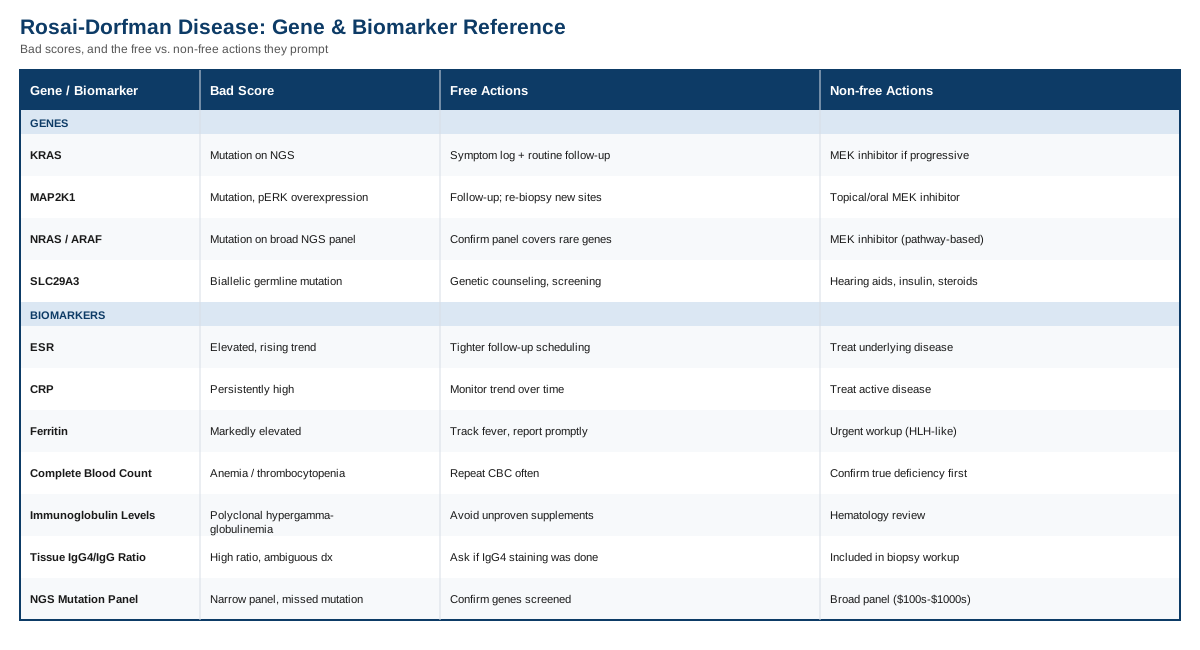
The Genetic Drivers Behind Rosai-Dorfman Disease
For most of its history, Rosai-Dorfman disease (also called sinus histiocytosis with massive lymphadenopathy, or Rosai-Dorfman-Destombes disease) was classified as a reactive, non-clonal proliferation of histiocytes — essentially an unusual immune reaction rather than a disease with its own genetic drivers. That framework has changed. Sequencing studies over the past decade have found that a meaningful subset of cases carry somatic mutations in the RAS-MAPK/ERK signaling pathway, the same growth and survival pathway implicated in many cancers, which is why the World Health Organization's most recent classification now places Rosai-Dorfman disease among the histiocytic/dendritic cell neoplasms rather than purely reactive conditions, as detailed in a 2022 review in Cancers (Rosai-Dorfman Disease between Proliferation and Neoplasia).
It's worth being precise about what "gene" means here, because it differs from the familiar SNP-based genetics you may have encountered elsewhere. Three of the four findings below are somatic mutations — changes found only in the diseased tissue itself, discovered through biopsy and sequencing, not something you inherited or carry in every cell of your body. The fourth, SLC29A3, is different: it's a germline mutation you're born with, relevant mainly to familial and syndromic forms of the disease. Knowing which category applies to your situation changes what kind of testing and follow-up makes sense.
KRAS
What a KRAS Mutation May Affect
KRAS sits near the top of the RAS-MAPK/ERK cascade. When it's mutated, it gets stuck in an "on" position, sending a continuous growth and survival signal downstream regardless of what the cell actually needs. In a study of 21 Rosai-Dorfman cases analyzed by next-generation sequencing, mutations were found in seven cases (33%), and KRAS was the single most frequent alteration, present in four of those seven and mutually exclusive with MAP2K1 mutations — meaning no case in that cohort carried both (Garces et al., Modern Pathology, 2017). Mutated cases were also more likely to involve the head and neck region and to present with multifocal disease rather than a single affected site.
If the Mutation Is Found: The Plan Without Drugs or Supplements
A KRAS mutation on its own, in someone with mild, localized, and non-progressive disease, does not automatically mean immediate drug treatment. Consensus guidance from the international histiocytosis community still favors observation as first-line management for stable, asymptomatic disease, with imaging and clinical review typically repeated every three to six months rather than immediate systemic therapy (Abla et al., Blood, 2018). During this observation period, the realistic non-drug plan is basic and unglamorous: keep a symptom log (node size, fatigue, fevers, night sweats), maintain the imaging and lab schedule your specialist sets, avoid unnecessary immune stressors like heavy alcohol use or poor sleep, and don't confuse "no current treatment" with "no follow-up needed." A mutation found in tissue doesn't reverse on its own through lifestyle changes, and no supplement has human evidence of altering KRAS activity in this disease — claims to the contrary belong in the "not proven" category.
If the Mutation Is Found: The Plan With Targeted Therapy and Testing Equipment
The "equipment" here is really the diagnostic infrastructure: a tissue biopsy processed through a next-generation sequencing (NGS) panel that specifically screens for KRAS, MAP2K1, NRAS, and ARAF, since knowing which one (if any) is present determines drug eligibility. For patients with progressive, multifocal, or organ-threatening disease and a confirmed KRAS or MEK-pathway alteration, cobimetinib — an oral MEK inhibitor — showed an 88% overall response rate compared with 38% in mutation-negative patients in a retrospective outcomes study, with 71% of responders achieving a complete response and no progression at one year among mutation-positive patients (Cobimetinib outcomes by KRAS/MEK status, 2022). This is prescription therapy managed by a hematologist-oncologist, not a supplement regimen, and it isn't side-effect-free: dose reductions were needed in over half of patients in that study. Typical monitoring includes baseline and periodic ophthalmologic exams (MEK inhibitors carry a risk of central serous retinopathy), liver function tests, an echocardiogram to track heart function, and skin checks for the acneiform rash that's a common and usually manageable side effect. Dosing in reported cases (such as low-dose trametinib at 0.5–1 mg daily) is typically continuous rather than cycled, with breaks taken only if side effects require them.
MAP2K1
What a MAP2K1 Mutation May Affect
MAP2K1 encodes MEK1, the direct downstream partner of KRAS and the exact protein that MEK inhibitor drugs are designed to block. In the same 21-case cohort, MAP2K1 mutations were present in three cases (14% of the total), and all three showed overexpression of phosphorylated ERK on immunohistochemistry — direct evidence that the mutation was actively driving pathway signaling in that tissue (Garces et al., 2017). Because MAP2K1 mutations sit precisely at the drug's target site, this subgroup tends to be the clearest match for MEK inhibitor therapy when treatment becomes necessary.
If the Mutation Is Found: The Plan Without Drugs or Supplements
As with KRAS, a MAP2K1 finding in mild disease doesn't obligate immediate treatment — the same observation-first approach applies, with regular clinical and imaging follow-up. Where disease is more symptomatic but not yet at the point of targeted drug therapy, standard non-targeted options such as corticosteroids, surgical excision of an isolated mass, or low-dose radiation remain reasonable first steps in many cases and are not supplement-based interventions. What you can control day to day is mostly logistical: keeping consistent follow-up, not delaying biopsy or re-biopsy if a new site appears, and discussing with your care team whether tissue has actually been sequenced — it's a fair and useful question to ask if it hasn't been.
If the Mutation Is Found: The Plan With Targeted Therapy and Testing Equipment
Case reports describe MAP2K1-mutated disease responding well to MEK inhibitors even after failing conventional chemotherapy. One report describes treatment-refractory cutaneous disease — resistant to steroids, imiquimod, radiation, and sirolimus cream — that finally resolved with a combination of oral methotrexate and topical trametinib cream, with lesions completely healed over 15 months of treatment (Treatment-refractory cutaneous RDD case report, 2023). The practical takeaway is that MAP2K1-positive disease that hasn't responded to standard measures is a reasonable candidate for a MEK-inhibitor discussion, including topical formulations for skin-limited disease, which may carry a milder side-effect profile than systemic dosing. The same monitoring principles apply: eye exams, liver panels, and skin surveillance on a schedule your prescriber sets, continued for as long as the medication is used.
NRAS and ARAF
What These Mutations May Affect
NRAS and ARAF are less common partners in the same pathway — sometimes described alongside rare BRAF alterations — and are mentioned specifically in the international consensus statement on Rosai-Dorfman-Destombes disease as recurrent genetic findings alongside KRAS and MAP2K1 (Abla et al., 2018). Because they converge on the same MAPK/ERK signaling logic, the practical implications mirror KRAS and MAP2K1, though the evidence base for each individually is thinner simply because they occur less often.
If a Mutation Is Found: The Plan Without Drugs or Supplements
The same observation-first principle applies for stable disease. Because these alterations are rarer, it's especially worth confirming that any NGS panel used actually screens beyond KRAS and MAP2K1 — a narrow panel could miss the mutation entirely and lead to an inaccurate "no mutation found" conclusion. Ask specifically what genes were included in the panel your sample was run against.
If a Mutation Is Found: The Plan With Targeted Therapy and Testing Equipment
Response to MEK inhibitors in NRAS- or ARAF-altered disease is less extensively documented than for KRAS or MAP2K1, but falls under the same broad category of MAPK-pathway-driven disease that the cobimetinib outcomes data grouped together when reporting improved response in "KRAS- or MEK-variant" disease overall (Cobimetinib outcomes study, 2022). In practice, this means a broad NGS panel (rather than single-gene testing) and a specialist experienced in histiocytic neoplasms are especially valuable here, since treatment decisions for these rarer alterations often draw on the pooled pathway logic rather than alteration-specific trial data.
SLC29A3
What This Gene May Affect
SLC29A3 is a fundamentally different kind of finding. It's a germline gene, inherited rather than acquired, encoding an equilibrative nucleoside transporter (hENT3) involved in intracellular nucleoside handling. Biallelic (two-copy) mutations in this gene cause a spectrum of related conditions — Faisalabad histiocytosis, H syndrome, pigmented hypertrichotic dermatosis with insulin-dependent diabetes (PHID), and familial Rosai-Dorfman disease — that researchers now consider variations of a single underlying disorder rather than separate diseases (Cliffe et al., 2009). This is the finding most relevant to childhood-onset, familial, or syndromic presentations — particularly when RDD-like histiocytic infiltration appears alongside hearing loss, short stature, joint contractures, diabetes, or patchy hyperpigmented, hypertrichotic skin.
If the Gene Is Found: The Plan Without Drugs or Supplements
Because this is a heritable condition, genetic counseling is the first practical step — for the affected individual and for siblings or children who may carry the same mutation, since the clinical presentation can vary even within the same family despite an identical mutation. Baseline and periodic screening makes sense across the systems this gene spectrum affects: audiology testing for hearing loss, fasting glucose or HbA1c for diabetes risk, and routine skin and joint assessment. None of this reverses the underlying transporter defect, but it catches complications early, when they're most manageable.
If the Gene Is Found: The Plan With Supplements or Equipment
There is no gene therapy or supplement that corrects the SLC29A3 transporter defect itself. Management is symptom-directed: hearing aids or, in more severe cases, cochlear implants for progressive hearing loss; standard diabetes management (which may include insulin) if glucose regulation is affected; and, for histiocytic infiltration causing organ or joint problems, case reports in the H syndrome/PHID literature describe symptom-directed use of corticosteroids and, less commonly, biologic agents, always under specialist supervision. No supplement stack replaces this monitoring-and-treat-complications approach, and framing it as reversible with lifestyle changes alone would be inaccurate.
Understanding which of these four genetic patterns, if any, applies to a given case is really about matching the right monitoring intensity and the right treatment option to the right person — which is exactly where tracking the right lab and tissue markers over time becomes useful.
Biomarkers Worth Tracking Alongside the Genetics
Genetic testing tells you about the underlying biology of the tissue at one point in time. Biomarkers, checked at diagnosis and then periodically, tell you how active the disease is right now and whether treatment is working. None of the seven below is unique to Rosai-Dorfman disease, but together they form the practical monitoring panel most specialists actually use.
Erythrocyte Sedimentation Rate (ESR)
ESR is a simple, decades-old inflammation marker, elevated in roughly 90% of Rosai-Dorfman patients according to summarized case-series data. It's measured with a standard blood draw, costs around $10–20 in most labs, and while it isn't specific to this disease, a rising ESR over serial visits is a reasonable prompt to re-image or reassess disease activity rather than a diagnosis on its own. If it's elevated, there's no supplement or device that reliably lowers it independent of treating the underlying disease; the honest non-drug step is simply tighter follow-up scheduling, and the medical step is treating disease activity itself (observation, surgery, or targeted/systemic therapy depending on the case), after which ESR is rechecked to see if it trends down.
C-Reactive Protein (CRP)
CRP is a faster-reacting acute-phase marker than ESR and is often checked alongside it. Case reports document CRP levels ranging from mildly elevated to strikingly high (one report noted a CRP of 296 alongside an ESR of 245 in a symptomatic patient with cervical lymphadenopathy). Cost is similar to ESR, typically $10–30. A persistently high CRP in someone already diagnosed with Rosai-Dorfman disease is worth discussing as a possible sign of active or progressive disease rather than something to chase with anti-inflammatory supplements; omega-3s or curcumin may have general anti-inflammatory properties, but there's no human evidence they alter the course of this specific disease, and treating the underlying histiocytic process is what actually moves this number.
Ferritin
Ferritin can rise dramatically in Rosai-Dorfman disease — one case report described a level of 5,780 ng/mL in a patient ultimately diagnosed via lymph node biopsy after presenting with fever of unknown origin (Case report, 2012). It's a standard blood test, roughly $20–40, and markedly elevated ferritin alongside fever and cytopenias is also a reason to rule out hemophagocytic lymphohistiocytosis-like features, which changes the urgency of the workup. If ferritin is high, iron supplementation is not the answer (this is inflammatory, not deficiency-driven, elevation) — the plan without drugs is symptom and fever tracking with prompt reporting to your team, and the plan with medical intervention is addressing the underlying disease activity, sometimes urgently if hemophagocytic features are suspected.
Complete Blood Count
A basic CBC — hemoglobin, platelets, white blood cell count — commonly shows normocytic anemia, occasional thrombocytopenia, and sometimes leukocytosis or eosinophilia in Rosai-Dorfman disease. It's inexpensive (often under $20, sometimes bundled into a routine panel) and easy to repeat frequently. If counts are abnormal, iron or B12 supplementation only helps if a true deficiency is separately confirmed by iron studies or B12 levels — otherwise supplementing blindly does nothing for anemia driven by chronic inflammation. The non-drug step is simply more frequent CBC checks during active disease; the medical step, again, is treating the underlying process, with counts used as one measure of response.
Quantitative Immunoglobulins and Serum Protein Electrophoresis
Polyclonal hypergammaglobulinemia — a broad increase across immunoglobulin types, as opposed to a single clonal spike — is reported in around 90% of Rosai-Dorfman patients and reflects the intense, if disorganized, immune activation the disease provokes. This test runs $50–150 depending on the lab and is important partly because it helps rule out lymphoma or a plasma cell disorder, which would show a monoclonal pattern instead. There's no supplement approach here; an abnormal pattern should prompt hematology review rather than self-directed immune support supplements, which don't distinguish between helpful and harmful immune activation.
Tissue IgG4/IgG Ratio
This is a biopsy-based, not blood-based, biomarker, but it's one of the more clinically important ones at diagnosis. A study of 23 cutaneous Rosai-Dorfman cases found IgG4 positivity in 18 of 23 samples, with an IgG4/IgG ratio ranging widely (1.7% to 85.7%, averaging 29.5%) — a pattern that helps distinguish Rosai-Dorfman disease from IgG4-related disease, which it can otherwise closely mimic on imaging and even some pathology features (IgG4/IgG expression study, 2023). This staining is typically included in the initial pathology workup rather than ordered separately, so cost is usually bundled into the biopsy fee. If your report doesn't mention IgG4 staining and there's diagnostic ambiguity, it's a reasonable question to raise with the pathologist or treating physician.
Tissue NGS Mutation Panel
This is the "advanced" tier that connects biomarkers back to genetics: a next-generation sequencing panel run on biopsy tissue to check for KRAS, MAP2K1, NRAS, and ARAF alterations. Cost varies widely by institution and panel breadth, from a few hundred dollars for a targeted panel to several thousand for broader genomic profiling. It's not routinely repeated like a blood test — it's typically done once at diagnosis, or again at relapse if a new biopsy is taken — but the result is arguably the single most decision-relevant data point in this entire list, since it's what determines whether MEK inhibitor therapy is a realistic option at all.
With both the genetic and biomarker pictures in view, it's worth stepping back to see how this molecular, mutation-driven way of thinking about disease came to exist — which is where a well-known account of cancer's history is unexpectedly useful.
What "The Emperor of All Maladies" Gets Right About Matching Treatment to Biology
Siddhartha Mukherjee's Pulitzer Prize-winning book The Emperor of All Maladies: A Biography of Cancer isn't about Rosai-Dorfman disease specifically — it's a sweeping history of cancer treatment. But its central argument is precisely the shift now playing out in histiocytic disorders like this one: from treating diseases by their appearance and location, to treating them by their molecular drivers. Below are ten of its most useful ideas, applied to what a mutation-aware approach to Rosai-Dorfman disease actually looks like in practice.
One Disease Name Can Hide Several Different Biologies
The book repeatedly shows how diseases lumped under one name — leukemia, breast cancer — turned out to be several molecularly distinct conditions once sequencing became possible. Rosai-Dorfman disease is following the same arc: "one disease" is increasingly understood as mutation-positive and mutation-negative subtypes that behave, and respond to treatment, differently.
The Imatinib Story Set the Template for Targeted Therapy
Chronic myeloid leukemia was transformed by imatinib, a drug designed to block the exact fusion protein (BCR-ABL) driving that cancer, turning what was often fatal into a manageable chronic condition for most patients (Chronic myeloid leukemia therapy in the era of tyrosine kinase inhibitors, PMC). MEK inhibitors in MAP2K1- or KRAS-mutated Rosai-Dorfman disease follow the identical logic: find the specific broken signal, then block it directly.
Doctors Resisted Molecular Thinking Longer Than the Data Warranted
Mukherjee documents real institutional resistance to targeted therapy even after early trial data looked promising, partly because it required abandoning familiar treatment categories. The lesson for a rare disease like this one: if a treating physician hasn't discussed tissue sequencing, it's reasonable to ask why, rather than assuming it isn't relevant.
Rare Diseases Need Registries, Not Just Case Reports
A recurring theme is how progress against rare or unusual cancers depended on pooling small numbers of cases across institutions. The 2018 international consensus statement on Rosai-Dorfman-Destombes disease exists for exactly this reason — coordinating a rare disease's collective experience into usable guidance (Abla et al., 2018).
A Negative Test Result Is Information, Not a Dead End
The book emphasizes that molecular medicine isn't only useful when it finds a target — a mutation-negative result narrows the field and redirects attention toward other explanations or other pathway members, which is part of why broader NGS panels matter more than single-gene tests.
Patience Is Part of the Method, Not a Failure of It
Targeted therapies took decades from first hypothesis to approved drug. Applied here: if you're in an observation period rather than active treatment, that's consistent with how evidence-based management of a chronic, often indolent disease is actually supposed to work — not a sign that nothing is being done.
Side Effects Are Part of the Cost-Benefit, Not an Afterthought
Mukherjee is unsentimental about the toxicity of even the most celebrated cancer drugs. MEK inhibitors are genuinely effective for the right molecular subtype, but the ocular, skin, and cardiac monitoring they require is a real part of the treatment, not a minor footnote.
The Right Comparison Group Changes the Story
Early cancer drug trials were sometimes judged against historical, poorly matched comparisons. The cobimetinib outcomes data avoids this by directly comparing mutation-positive and mutation-negative patients, which is what makes the 88% versus 38% response difference a meaningful, rather than misleading, number.
Classification Systems Are Living Documents
The book traces how cancer classification has been revised repeatedly as biology became better understood. Rosai-Dorfman disease's move into the neoplastic histiocytic disorders category in the WHO's current classification is the same kind of revision, not a final answer.
Hope, in This Framework, Is Earned Through Specificity
Mukherjee is careful never to promise cures; the book's optimism comes from incremental, evidence-based gains. The same restraint applies here: understanding your mutation status doesn't guarantee an outcome, but it does mean decisions are being made with the best available information rather than a generic protocol.
That same emphasis on realistic, evidence-matched expectations applies just as much to the supportive therapies people reach for while managing a chronic condition like this one — which is where the evidence gets more mixed, and more important to read carefully.
Complementary Approaches Worth Considering
No complementary or alternative therapy has been studied specifically in Rosai-Dorfman disease — it's simply too rare for dedicated trials to exist. What does exist is a body of evidence from oncology and chronic illness populations more broadly, addressing the fatigue, anxiety, and pain that often accompany a rare diagnosis and its monitoring or treatment. These approaches don't treat the underlying mutation or the disease itself; they address quality of life alongside it, and the evidence quality varies meaningfully between them.
Mindfulness-Based Stress Reduction
Mindfulness-Based Stress Reduction (MBSR) is a structured eight-week program combining meditation, gentle body awareness, and group instruction, originally developed for chronic pain and adapted widely for cancer and chronic illness populations. For someone managing the uncertainty of a rare, relapsing histiocytic disorder — repeat biopsies, unclear timelines, unfamiliar terminology — the psychological load is real, and MBSR is one of the better-studied tools for addressing it.
A systematic review and meta-analysis of MBSR in breast cancer patients found it produced a moderate improvement in cancer-related fatigue and supported benefits for depression, anxiety, and cognitive symptoms, whether used alone or alongside other treatment (MBSR and breast cancer symptoms, systematic review, 2018).
Realistically, this means seeking out an eight-week MBSR course (in person or via a reputable app-based program), attending consistently rather than sporadically, and treating it as a fatigue-and-anxiety management tool rather than a disease treatment. It's low-risk and low-cost, and there's no reason it can't run in parallel with active medical monitoring or MEK inhibitor therapy.
Music Therapy
Music therapy, delivered by a trained music therapist (distinct from simply listening to music on your own, which the evidence calls "music medicine" and finds less consistently effective), is used widely in oncology settings to manage anxiety around procedures, treatment, and hospital stays.
A Cochrane systematic review found music interventions produced beneficial effects on anxiety, pain, fatigue, and quality of life in cancer patients, along with modest improvements in heart rate and blood pressure, though the authors noted many included studies carried meaningful bias risk (Bradt et al., Cochrane Database of Systematic Reviews, 2016).
For someone facing biopsy procedures, infusion appointments, or imaging that provokes anxiety, asking whether a hospital's supportive care or child life/oncology support team offers music therapy is a reasonable, low-risk step — more so than assuming any music will do, since the therapist-led format shows the stronger evidence.
Progressive Muscle Relaxation
Progressive muscle relaxation involves systematically tensing and releasing muscle groups, and it's one of the more accessible relaxation techniques since it requires no equipment and can be learned from a therapist, a class, or a well-produced guided recording.
A systematic review and meta-analysis of 12 randomized controlled trials in cancer patients (1,147 participants total) found significant improvements in anxiety, pain, and quality of life, though no significant effect on fatigue specifically (Tan et al., Complementary Therapies in Clinical Practice, 2022).
A realistic approach is a short daily session (10–20 minutes), most useful in the days surrounding a stressful appointment or procedure, learned initially with instruction rather than guesswork, since technique affects how much benefit people report. There are no meaningful side effects, and it requires no cycling or tapering.
Massage Therapy
Massage therapy is commonly offered in oncology supportive-care settings, but it's worth being upfront that the evidence here is genuinely mixed rather than clearly positive.
An early systematic review found the evidence too limited in quality to draw firm conclusions, though it noted massage might reduce anxiety in the short term and could help with pain and nausea in some patients; a more recent meta-analysis reported a clearer benefit specifically for cancer pain, particularly around the perioperative period and in hematologic malignancies (Wilkinson et al., systematic review, 2008).
Given the mixed evidence, a reasonable approach is to treat massage as an optional comfort measure rather than a core part of any plan — worth trying if it's available through a supportive care program and you find it helpful, but not something to actively seek out or pay for expecting a guaranteed effect on symptoms, and always with your care team aware of it if you have any lymphadenopathy or skin lesions near the treated area.
Conclusion
Rosai-Dorfman disease has moved, in a fairly short span of research, from "reactive curiosity" to a condition with identifiable molecular subtypes and, for some patients, a genuinely targeted treatment option. The single most useful thing you can do with this information is find out whether tissue from your diagnosis was ever sequenced for KRAS, MAP2K1, NRAS, or ARAF, and if it hasn't been, ask why not. Alongside that, keeping a simple record of your ESR, CRP, ferritin, and CBC trends over time gives you and your care team an early signal if something is changing, well before it shows up as a new symptom.
None of this replaces the judgment of a hematologist or histiocytosis specialist, and no supplement or lifestyle change reverses a driver mutation once it's present. But walking into your next appointment with specific questions about mutation status, monitoring frequency, and what a rising or falling biomarker would actually change about your plan is a concrete, achievable step — and it's exactly the kind of informed conversation that leads to better decisions than "wait and see" alone.
Cancer & Oncology: Blood Cancer