This article contains AI generated content.
RS3PE Syndrome: 3 Genes and 7 Biomarkers to Track
Introduction
If you or someone close to you has been told this looks like RS3PE syndrome, you've probably already noticed how strange the condition sounds on paper and how confusing the advice around it can be. One day the hands and feet swell up almost overnight, the fingers stiffen, and a rheumatologist mentions a name that barely shows up in general health articles. Then the generic advice arrives: rest, anti-inflammatory diet, "manage stress," take your prednisone. None of it is wrong, exactly. It's just too broad to explain what's actually happening inside the joints and blood vessels, or to tell you what to watch for next.
Remitting seronegative symmetrical synovitis with pitting edema is a real but uncommon rheumatic condition, mostly seen in people over 60, and it behaves differently from rheumatoid arthritis or gout even though it can look similar at first glance. Because it's rare, most of what gets written about it online is either a dry medical definition or a reassurance that "steroids usually work." Both are true, but neither helps you understand why your blood tests look the way they do, why doctors keep ordering cancer screening alongside your joint exam, or what, if anything, you can influence yourself.
This article takes a more specific approach. Instead of general wellness talk, it focuses on the actual laboratory markers clinicians use to characterize RS3PE, what each one reveals about the disease process, and where the current genetic research stands (which, to be transparent from the outset, is thin and inconsistent). The goal isn't to replace your rheumatologist — RS3PE is a condition that is diagnosed and managed medically, usually very successfully with low-dose steroids — but to help you understand the numbers on your lab report well enough to ask better questions and make more informed decisions alongside your care team.
There is real, grounded reason for hope here. RS3PE has one of the best prognoses of any inflammatory rheumatic disease when it's correctly identified and appropriately monitored, including for the malignancy screening that sometimes needs to happen alongside it. Understanding the biomarkers that define it, the genetic clues researchers have chased (and mostly come up empty on), and a few well-evidenced supportive strategies can turn a confusing diagnosis into a manageable one.
Summary
RS3PE syndrome doesn't show up on a 23andMe report, and it doesn't have a dedicated genetic test — but it does have a distinct laboratory signature, and that signature matters more than most patients realize. Seven biomarkers, from the everyday (ESR, CRP) to the specialized (VEGF, MMP-3, bFGF), together tell a story about how active the inflammation is, whether it's behaving like typical RS3PE or drifting toward something else, and — critically — whether a hidden malignancy might be driving it. This article walks through each one: what it measures, roughly what it costs to check, and what can realistically be done, with or without supplements, when a result comes back abnormal.
Beyond the biomarkers, you'll find an honest look at the genetic research (HLA-A2 and HLA-B7 keep coming up, but not consistently enough to be clinically useful yet), ten ideas from Peter Attia's longevity work that apply surprisingly well to an inflammatory joint condition of later life, and a review of which complementary therapies — yoga, tai chi, mindfulness, manual lymphatic drainage — actually have human trial data behind them for conditions like this one, versus which are just plausible-sounding. By the end, you should have a much clearer map of what to track, what to ask your rheumatologist about, and where the real evidence stops and speculation begins.
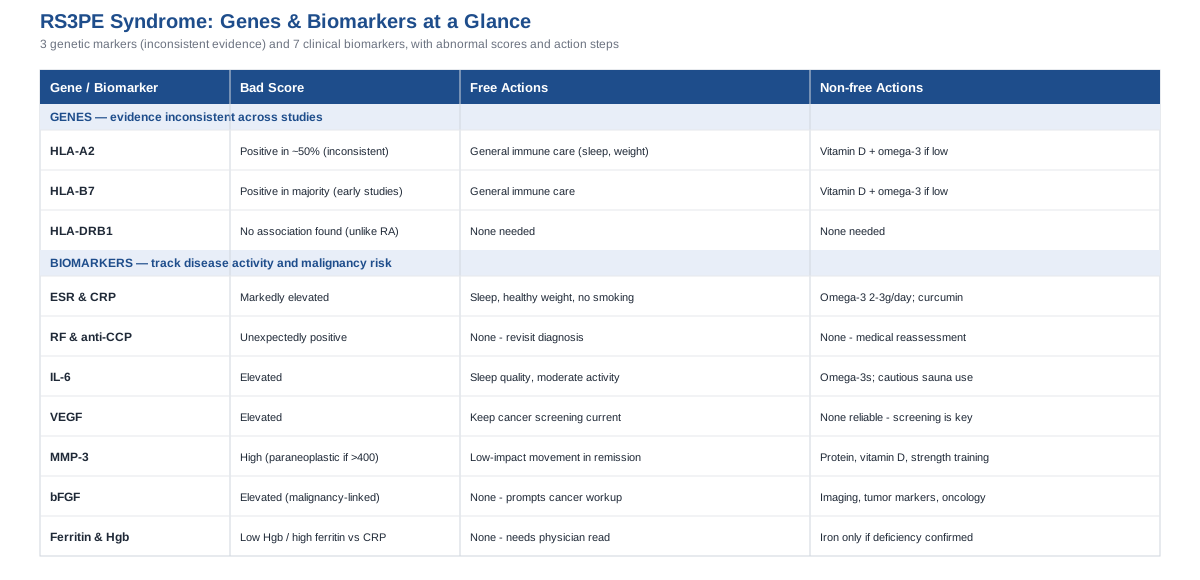
7 Biomarkers to Track in RS3PE Syndrome
RS3PE doesn't have a single confirmatory blood test — it's diagnosed clinically, by the pattern of sudden symmetrical swelling, pitting edema, negative rheumatoid factor, and a dramatic response to modest-dose steroids. But a cluster of biomarkers, drawn from case series and cohort studies (mostly from Japan and France, where the condition has been studied longest), helps characterize disease activity, rule out mimics, and — importantly — flag the subset of cases linked to an underlying malignancy. Here are the seven worth understanding.
1. ESR and CRP — the general inflammation gauge
Erythrocyte sedimentation rate and C-reactive protein are the two markers almost every RS3PE patient will have checked repeatedly. Both are markedly elevated in active RS3PE — often strikingly so relative to how the joints look on exam — and both are part of the diagnostic picture described in comparative studies of RS3PE versus seronegative rheumatoid arthritis, where marked elevations alongside seronegativity help distinguish the two. They're nonspecific: infection, other autoimmune disease, and malignancy can all push them up too, which is exactly why they're used together with the more specific markers below rather than alone. Source: Comparing the Clinical and Laboratory Features of RS3PE and Seronegative Rheumatoid Arthritis.
How to measure it
ESR and CRP are standard blood draws available at essentially any lab or hospital, typically costing somewhere between 10 and 40 US dollars out of pocket where not covered by insurance, with same-day or next-day results. High-sensitivity CRP (hs-CRP) is the same test used in cardiovascular risk assessment, so if you're already tracking it for heart health reasons, that value is directly relevant here too.If the score is high — the plan without supplements or equipment
On their own, ESR and CRP don't respond meaningfully to lifestyle changes fast enough to substitute for the steroid treatment that defines RS3PE management — that's the plan your rheumatologist will already have you on. What lifestyle factors reliably influence is the baseline, chronic inflammatory "floor" underneath the flare: adequate sleep (7 to 9 hours), maintaining a healthy body weight, limiting alcohol, not smoking, and regular low-impact movement within what your joints tolerate. None of these will bring an acute RS3PE flare's CRP down in days the way steroids will, but they support a lower long-term inflammatory baseline once the acute episode is controlled.If the score is high — the plan with supplements or equipment
Omega-3 fatty acids (EPA/DHA, roughly 2 to 3 grams combined per day) have the most consistent general evidence for modestly lowering CRP in inflammatory conditions, typically taken with food to reduce GI upset, and best cycled with your physician's awareness if you're also on blood thinners, since high doses can increase bleeding risk. Curcumin (500 to 1000 mg per day, ideally with piperine or a bioavailable formulation) has similar general anti-inflammatory data, usually cycled in 8- to 12-week blocks with a short break, and should be used cautiously with anticoagulants or in anyone with gallbladder disease. Neither of these is a substitute for steroid treatment during an active flare — they're adjuncts to discuss with your rheumatologist, not replacements.2. Rheumatoid factor and anti-CCP — the seronegativity checkpoint
The "seronegative" in RS3PE's name refers specifically to these two antibodies. By definition, rheumatoid factor (RF) and anti-cyclic citrullinated peptide (anti-CCP) antibodies should be negative or low; their absence is one of the core diagnostic criteria separating RS3PE from rheumatoid arthritis, which can otherwise present with similar hand swelling in older adults. A positive result doesn't necessarily rule out RS3PE outright, but it should prompt your doctor to reconsider whether you're actually looking at early seropositive RA instead. Source: Comparing the Clinical and Laboratory Features of RS3PE and Seronegative Rheumatoid Arthritis.
How to measure it
A standard venous blood draw, run at most hospital and commercial labs, generally in the 40 to 150 US dollar range depending on whether both RF and anti-CCP are ordered together. This is usually done once at diagnosis and occasionally repeated if the clinical picture changes or doesn't respond to treatment as expected.If the score is unexpectedly positive — the honest plan
There is no supplement, diet, or piece of equipment that changes an antibody result, and there shouldn't be — a positive RF or anti-CCP in this context is a signal for medical reassessment, not a lifestyle target. If either comes back positive, the useful next step is a conversation with your rheumatologist about whether the diagnosis needs revisiting, not a search for something to take. This is one of the clearer places where the right "plan" is entirely about follow-through with your care team rather than self-directed intervention.3. Interleukin-6 (IL-6) — the cytokine driving the flare
IL-6 is one of the more consistently elevated cytokines in RS3PE, and a Japanese cohort study of 13 patients found markedly elevated serum IL-6 alongside VEGF, MMP-3, and serum amyloid A, correlating with the systemic symptoms (fever, malaise, weight loss) that some RS3PE patients experience alongside the joint and skin findings. IL-6 is also the target of tocilizumab, a biologic used in polymyalgia rheumatica and giant cell arteritis — conditions RS3PE is thought to sit on a spectrum with — and there are individual case reports of tocilizumab being tried in refractory RS3PE. Source: RS3PE syndrome in Nagano, Japan: clinical, radiological, and cytokine studies of 13 patients.
How to measure it
IL-6 is a specialty lab test, not something ordered at a routine physical. Expect to need a rheumatologist or academic lab to order it, with costs typically in the 50 to 100 dollar range where available, though turnaround and availability vary a lot by region and it is not part of standard RS3PE workups outside research settings.If the level is high — the plan without supplements or equipment
Since IL-6 tracks disease activity closely, the primary lever is the same steroid treatment that resolves the underlying synovitis — as inflammation subsides, IL-6 typically falls with it. Outside of active flare management, sleep quality and regular moderate activity are the two non-drug factors with the most consistent general evidence for lowering circulating IL-6 over months, though neither acts fast enough to be a flare treatment.If the level is high — the plan with supplements or equipment
Omega-3s again show general evidence for modestly lowering IL-6 (same dosing as above, 2 to 3 grams EPA/DHA daily, cycled with physician oversight). Sauna use (roughly 15 to 20 minutes, 2 to 4 times weekly, building tolerance gradually) has general cardiovascular and inflammatory-marker evidence in other populations, but should be approached cautiously if you have significant peripheral edema, are on high-dose steroids, or have cardiovascular disease — heat exposure with steroid-related fluid retention is a combination to discuss with your doctor first, not something to try unsupervised.4. VEGF — the vascular and edema signal
Vascular endothelial growth factor is arguably the most mechanistically interesting biomarker in RS3PE, because it plausibly explains the "edema" part of the syndrome's name. VEGF drives vascular permeability, and elevated VEGF has been documented directly causing the pitting edema pattern seen in RS3PE, including in a well-described case where VEGF-associated disease explained the clinical picture. In paraneoplastic RS3PE, VEGF can be tumor-derived — one detailed case report describes a patient whose RS3PE was ultimately traced to VEGF secreted by an ovarian cancer. Sources: RS3PE syndrome presenting as vascular endothelial growth factor associated disorder and RS3PE with high-grade serous ovarian cancer: tumor-derived VEGF.
How to measure it
Serum VEGF is a specialty or research-lab test, generally not available through routine outpatient ordering, and where available tends to run in the 100 to 250 dollar range. It's most useful when a rheumatologist specifically suspects a vascular or paraneoplastic contribution and wants a marker beyond the basics.If VEGF is elevated — the honest plan
There's no reliable supplement or lifestyle intervention that lowers pathologically elevated VEGF in this context, and trying to self-treat a vascular growth factor abnormality is not a reasonable substitute for the actual next step, which is making sure age-appropriate cancer screening is current and up to date. RS3PE has a well-documented association with occult malignancy in a meaningful minority of cases, which is exactly why an elevated VEGF finding should prompt a screening conversation rather than a supplement search. Once any underlying driver is addressed medically, general anti-inflammatory lifestyle habits (weight management, not smoking, moderate alcohol) support healthy vascular function generally, but they are not a treatment for this specific finding.5. MMP-3 — the joint-tissue turnover marker
Matrix metalloproteinase-3 is produced by synovial fibroblasts and chondrocytes and reflects how much active tissue remodeling is happening in and around the joints. In RS3PE, serum MMP-3 tends to run high during active disease, and one multicenter study found it was significantly higher in paraneoplastic RS3PE (median around 437 ng/mL) than in idiopathic cases (median around 115 ng/mL) — making it one of the more useful markers for flagging which patients need a more aggressive malignancy workup. Some researchers also consider it more sensitive to ongoing synovitis than CRP. Source: High serum matrix metalloproteinase 3 is characteristic of patients with paraneoplastic RS3PE syndrome.
How to measure it
MMP-3 testing is well established in Japan as part of routine rheumatology workups but is less consistently available elsewhere, generally through specialty or reference labs, with costs typically in the 60 to 150 dollar range where offered. Ask your rheumatologist whether it's accessible through your local lab network.If MMP-3 is high — the plan without supplements or equipment
As with the other synovitis-driven markers, resolving the active joint inflammation through appropriate medical treatment is what brings MMP-3 down — there's no meaningful lifestyle-only path to lowering it while synovitis is active. Once in remission, maintaining joint-friendly movement (swimming, cycling, or other low-impact activity) supports healthy tissue turnover without adding mechanical stress.If MMP-3 is high — the plan with supplements or equipment
Given MMP-3's specific link to paraneoplastic disease, a markedly elevated result — especially alongside high bFGF (below) — is best treated as a prompt for imaging and cancer screening rather than a target for supplementation. Outside that context, some general joint-support approaches (adequate protein intake, vitamin D sufficiency, resistance training once cleared by your physician) support connective tissue health broadly, though they haven't been studied as MMP-3-lowering interventions specifically in RS3PE.6. bFGF — the malignancy-alert marker
Basic fibroblast growth factor is the newest addition to the RS3PE biomarker picture. A 2021 ambispective cohort analysis of 51 patients found bFGF meaningfully elevated in those with malignancy-associated RS3PE compared with idiopathic cases, positioning it as a candidate biomarker specifically for flagging paraneoplastic disease — which matters because RS3PE's excellent overall prognosis depends heavily on catching an underlying cancer early when one is present. Source: bFGF could be a biomarker of malignancy in RS3PE syndrome: an ambispective single-center cohort analysis of 51 patients.
How to measure it
bFGF is currently a research-use marker, generally not orderable through standard clinical labs outside of academic or study settings. If your rheumatologist is at a center involved in RS3PE research, it may be accessible; otherwise it remains mostly a marker to know about rather than one to expect on a routine panel yet.If bFGF is elevated — the honest plan
As with VEGF, there's no supplement, herb, or device that meaningfully lowers pathological bFGF, and the responsible response to an elevated result is a thorough, age-appropriate malignancy workup — imaging, tumor markers relevant to your sex and age, and close follow-up with your rheumatology and, if needed, oncology team. This is a marker whose entire value is in guiding that referral decision, not in giving you something to self-treat.7. Ferritin, hemoglobin, and the paraneoplastic screening panel
Rounding out the picture, anemia and elevated ferritin show up frequently in the more systemic presentations of RS3PE, particularly the Japanese cohorts where fever, weight loss, and malaise accompany the joint and skin findings. Neither is specific to RS3PE, but a falling hemoglobin or a ferritin that's disproportionately high relative to CRP is exactly the kind of pattern that has, in documented cases, preceded a diagnosis of hepatocellular carcinoma or prostate cancer discovered through the RS3PE workup — underscoring why a broader screening panel (imaging, sex- and age-appropriate tumor markers, and a careful history) is a standard part of managing a new RS3PE diagnosis, not an overreaction. Sources: RS3PE syndrome precedes the development of hepatocellular carcinoma and Paraneoplastic RS3PE improved following surgical resection of prostatic carcinoma.
How to measure it
A complete blood count and ferritin are basic, widely available tests, typically 20 to 50 US dollars combined, and almost always already included in a standard RS3PE diagnostic workup.If the pattern looks concerning — the plan without and with supplements
If anemia is due to genuine iron deficiency (confirmed by iron studies, not assumed), iron repletion — dietary first, or a supplement such as ferrous bisglycinate at a dose your physician sets, typically cycled with periodic blood rechecks every 8 to 12 weeks — is appropriate and generally well tolerated, aside from occasional constipation or GI upset. But if anemia is the "anemia of chronic disease" pattern that often accompanies active inflammation or an occult malignancy, iron supplementation won't fix it and can occasionally do more harm than good; the actual fix is treating the underlying driver, which is why this marker, more than most, should be interpreted by your physician rather than self-managed.Taken together, these seven markers move you from "I have a rare-sounding diagnosis" to "I understand what my bloodwork is actually tracking" — which is most of what you need to have a genuinely productive conversation with your rheumatologist at each follow-up visit.
What the Genetics Actually Show (And Why It's Not the Main Story Yet)
Given how often genetic testing gets marketed as the key to understanding chronic illness, it's worth being direct: for RS3PE, the genetic research is real but nowhere near as clinically useful yet as the biomarkers above. This is a rare disease with small cohorts, and the HLA studies that exist genuinely disagree with each other — which is precisely why this section is a shorter, supplementary piece of the picture rather than the main strategy.
HLA-A2
Some of the earliest descriptions of RS3PE, and later French cohort work, reported HLA-A2 positivity in roughly half of patients studied — notably higher than expected in the general population, which raised the idea that a particular immune-recognition profile might predispose certain people to this pattern of synovitis and edema. HLA-A2 is a class I HLA allele involved in presenting antigens to immune cells, so the theory is plausible mechanistically: a specific antigen-presentation profile could make an otherwise minor trigger (an infection, a malignancy's antigens) provoke this unusual inflammatory response. That said, other cohorts have failed to replicate a specific HLA-A2 signal, and it's not used diagnostically. Source: RS3PE syndrome: a clinical and immunogenetical study.
HLA-B7
HLA-B7 has a similar story, with an even stronger early signal: McCarthy's original descriptions of the syndrome found HLA-B7 in a majority of the first patients studied, and some subsequent series reported around half of patients carrying it. Like HLA-A2, HLA-B7 is a class I allele involved in antigen presentation, and its recurrence across some (but not all) case series has kept it in the conversation as a possible susceptibility marker rather than a proven one.
HLA-DRB1 (the negative finding worth knowing)
Perhaps the most useful genetic finding in RS3PE is a negative one: unlike rheumatoid arthritis, where specific HLA-DRB1 "shared epitope" alleles are strongly and consistently linked to disease risk and severity, studies looking for a DRB1 association in RS3PE have not found one. This matters clinically because it reinforces that RS3PE is genuinely a distinct entity from RA at the immunogenetic level, not just a milder or atypical variant of it — which supports the clinical practice of treating and monitoring it differently. Source: RS3PE syndrome: a clinical and immunogenetical study.
If your genetic profile flags these markers — the plan without supplements or equipment
Here's the practical reality: you cannot change your HLA type, and given how inconsistent the association data is, there's no established reason to seek out HLA testing for RS3PE risk prediction in the first place — it isn't part of standard workups and wouldn't change management even if you had it done. What you can influence is the downstream immune activity these genes are theorized to shape. Consistent sleep, a diet built around whole foods and adequate protein, not smoking, and maintaining a healthy weight all support a less reactive baseline immune system, regardless of which HLA alleles you happen to carry. None of this "fixes" a gene, because there's nothing broken to fix — it's about managing the terrain the genes operate in.
If you want to go further — the plan with supplements or equipment
Vitamin D deficiency is common in older adults and has broad (if general, not RS3PE-specific) associations with immune dysregulation; a reasonable, low-risk approach is testing serum 25-hydroxyvitamin D and, if low, supplementing with 1,000 to 2,000 IU daily, rechecking levels after 8 to 12 weeks rather than megadosing, since excess vitamin D can cause hypercalcemia over time. Omega-3s, at the same doses discussed under the inflammatory biomarkers above, are the other broadly reasonable option, again cycled and discussed with your physician rather than layered indefinitely without monitoring. Neither of these targets the HLA finding directly — nothing currently does — but both are legitimate ways to support the immune system that the genetics research suggests may be primed a little differently in some RS3PE patients.
The Longevity Framework That Reframes How You Track All of This
Peter Attia's Outlive: The Science and Art of Longevity isn't written about RS3PE, or even about autoimmune disease specifically — but its central argument, that most of medicine waits for disease to become obvious before acting on it, maps unusually well onto a condition like this one, where careful biomarker tracking and early intervention (including for the malignancy screening RS3PE sometimes requires) are exactly what separates a good outcome from a missed one. Here are ten ideas from the book worth taking seriously.
1. "Medicine 3.0" means acting on trends, not just diagnoses
Attia's core distinction is between reactive medicine, which waits for a disease label before treating, and a more proactive approach that treats drifting biomarkers as actionable information before they become a diagnosis. For someone managing RS3PE, this means not waiting for a flare to check in on ESR, CRP, or hemoglobin — tracking the trend between flares is where the useful information lives.2. The "Four Horsemen" still apply even with a rheumatic diagnosis
Attia frames heart disease, cancer, neurodegenerative disease, and metabolic dysfunction as the four conditions most likely to determine both lifespan and healthspan. RS3PE patients are, by definition, older adults — squarely in the age range where these four deserve just as much attention as the joint condition itself, and where the malignancy screening tied to RS3PE overlaps directly with horseman number two.3. VO2 max is one of the most powerful biomarkers you can measure
Attia repeatedly points to cardiorespiratory fitness as an extraordinarily strong predictor of longevity. A large Cleveland Clinic cohort of over 122,000 adults found cardiorespiratory fitness inversely associated with all-cause mortality with no observed upper limit of benefit, and the least fit patients had roughly five times the mortality risk of the most fit. Source: Association of Cardiorespiratory Fitness With Long-term Mortality Among Adults Undergoing Exercise Treadmill Testing.4. Zone 2 training builds the aerobic base that supports everything else
Rather than chasing high-intensity workouts, Attia emphasizes sustained, conversational-pace aerobic exercise (roughly three to four hours weekly) as the foundation for metabolic and mitochondrial health. For RS3PE patients whose joints may not tolerate high-impact training, this is genuinely good news: low-impact steady-state cardio (cycling, swimming, brisk walking) delivers most of this benefit without loading inflamed joints.5. Stability and strength training prevent the "marginal decade"
Attia's "marginal decade" concept describes the last ten years of life many people spend with declining function and independence — and he argues strength and stability training done decades earlier is what prevents it. For an inflammatory joint condition affecting the hands specifically, preserving grip and hand function through appropriately gentle strengthening (once cleared by your rheumatologist) is a very literal application of this idea.6. Grip strength is a simple, powerful mortality marker
Attia cites grip strength as an easily measured proxy for overall muscular health and longevity risk, backed by long-running cohort data showing grip strength is an independent predictor of all-cause and cause-specific mortality in middle-aged and older adults. Source: Grip strength predicts cause-specific mortality in middle-aged and elderly persons. This is worth flagging to a rheumatologist directly, since RS3PE's hand involvement can make grip strength both a symptom to track and a rehabilitation target once a flare resolves.7. Protein intake likely needs to rise, not fall, with age
Attia pushes back on the idea that older adults need less protein, arguing the opposite is closer to true given age-related muscle loss (sarcopenia), and suggests intakes well above the standard minimum recommendation, spread across the day. For someone managing an inflammatory condition on and off steroids, which themselves can affect muscle and bone, adequate protein intake is a low-risk, high-value habit to prioritize.8. Sleep is treated as a primary intervention, not an afterthought
Rather than filing sleep under "lifestyle tips," Attia treats it as one of the highest-leverage levers available, directly influencing inflammation, metabolic health, and cognitive resilience. Given how closely inflammatory markers like CRP and IL-6 track with sleep quality in the general literature, this is one of the more directly relevant pieces of the book for RS3PE's biomarker picture.9. Emotional health is one of the "four pillars," not a separate category
Attia is unusually direct, for a longevity-focused physician, about emotional and relational health being as load-bearing as exercise or nutrition. Living with a rare, sometimes visibly disfiguring condition (the hand and foot swelling can be distressing) makes this pillar more than an abstraction — it's a legitimate part of managing RS3PE well, not a soft add-on.10. Personalized ranges beat population reference ranges
Attia's broader argument is that a "normal" lab value on a population reference range isn't the same as optimal for a given individual, and that tracking your own trend over time is more informative than a single snapshot. This is arguably the single most transferable idea to RS3PE biomarker tracking: your own CRP or ESR trend across flares and remissions tells you more than comparing a single value to a generic "normal" range ever will.Complementary Approaches Worth Considering Alongside Treatment
None of the following replace the steroid treatment that defines effective RS3PE management, and it's worth being upfront that there are no complementary-therapy trials conducted specifically in RS3PE patients — the disease is simply too rare for that scale of dedicated research. What follows is evidence drawn from closely related inflammatory arthritis and edema populations, extrapolated carefully, with the limitations stated plainly.
Yoga
Yoga combines gentle joint mobilization, breath regulation, and a mind-body relaxation component, all of which plausibly matter for a condition marked by joint stiffness, swelling, and the psychological load of an unfamiliar diagnosis. While no RS3PE-specific trial exists, RS3PE sits close enough to inflammatory arthritis on the disease spectrum that trial data from rheumatoid arthritis is a reasonable, if imperfect, proxy.
An eight-week yoga-based lifestyle intervention randomized controlled trial in rheumatoid arthritis patients found significant reductions in IL-6, TNF-alpha, and disease activity scores (DAS28-ESR) alongside improved quality of life, compared with a control group continuing standard care alone. Source: Effect of an 8-Week Yoga-Based Lifestyle Intervention on Psycho-Neuro-Immune Axis, Disease Activity, and Perceived Quality of Life in Rheumatoid Arthritis Patients.
For RS3PE specifically, gentle, restorative-style yoga (avoiding weight-bearing poses on swollen hands and feet during active flares) is the realistic starting point, ideally guided by an instructor experienced with arthritis populations and only once your rheumatologist has confirmed your joints and skin can tolerate the positions involved.
Mindfulness meditation and MBSR
Mindfulness-based stress reduction targets the psychological and attentional experience of chronic pain and unpredictable flares rather than the inflammation itself, which makes it a reasonable complementary tool for a condition whose sudden onset and visible swelling can be genuinely distressing. A systematic review covering meditation, mindfulness, and yoga interventions across 23 studies in rheumatoid arthritis found mindfulness approaches most consistently reduced subjective symptoms like joint tenderness and morning stiffness, with particular benefit in patients who also had depression. Source: The Effect of Meditation, Mindfulness, and Yoga in Patients with Rheumatoid Arthritis.
An earlier randomized, waitlist-controlled pilot study of MBSR specifically in rheumatoid arthritis patients found improvements in psychological distress and depressive symptoms, though effects on physical disease activity markers were more modest. Source: Effect of Mindfulness-Based Stress Reduction in rheumatoid arthritis patients.
A standard eight-week MBSR course, or simply 10 to 20 minutes of daily guided practice using any reputable app or program, is a low-risk starting point for most RS3PE patients, with essentially no physical contraindications — making it one of the easier complementary approaches to add regardless of where you are in a flare or steroid taper.
Tai chi
Tai chi's slow, low-impact movements and weight-shifting patterns are frequently proposed for inflammatory arthritis because they build balance and joint range of motion without the impact of conventional exercise — relevant for RS3PE given both the joint involvement and the fall risk that can accompany steroid use in older adults.
The evidence here is genuinely mixed, and it's worth saying so plainly: a systematic review and meta-analysis of nine trials (351 rheumatoid arthritis patients) found tai chi was well tolerated, with fewer study withdrawals in the tai chi groups, but no significant improvement in physical function measures like walking speed, joint tenderness, grip strength, or pain scores compared with controls. Source: The effects of Tai Chi on physical function and safety in patients with rheumatoid arthritis: a systematic review and meta-analysis.
Given that mixed evidence, tai chi is reasonable to try for RS3PE mainly as a safe, enjoyable way to maintain balance and gentle mobility rather than as a targeted anti-inflammatory intervention — a beginner class, two to three times weekly, with modifications for swollen hands (avoiding tight fist positions during active edema) is a sensible way to approach it.
Massage therapy (manual lymphatic drainage)
Manual lymphatic drainage is a specific, gentle massage technique designed to encourage fluid movement through the lymphatic system, which makes it mechanistically relevant to RS3PE's defining feature: pitting edema of the hands and feet. It's a plausible adjunct specifically for the swelling component of the condition, separate from the joint inflammation itself.
A systematic review of randomized controlled trials examining manual lymphatic drainage in patients with lymphoedema and mixed oedema (not RS3PE specifically, but the closest evidence base for peripheral swelling reduction) found it improved quality of life measures, with more modest and inconsistent effects on limb volume reduction itself depending on the underlying cause of the edema. Source: Manual lymphatic drainage and quality of life in patients with lymphoedema and mixed oedema: a systematic review of randomised controlled trials.
Because RS3PE edema has an inflammatory, not purely mechanical, cause, manual lymphatic drainage should be viewed as a comfort-focused adjunct rather than a treatment for the underlying swelling — a trained therapist, once a day or every other day during a flare and tapering off as swelling resolves, with light pressure only, and always after confirming with your rheumatologist that there's no active skin infection or blood clot risk that would make massage inappropriate.
Conclusion
RS3PE syndrome is unusual enough that generic health advice rarely fits it well, but the actual evidence base — while limited by how rare the condition is — is more specific and more useful than it first appears. Seven biomarkers, from routine ESR and CRP to specialized markers like VEGF, MMP-3, and bFGF, give a genuinely informative picture of disease activity and, crucially, help flag the minority of cases tied to an underlying malignancy that needs its own attention. The genetic research, by contrast, remains too inconsistent to guide decisions today, which is exactly why it belongs in the supporting cast rather than the main plan. Longevity-focused thinking and a small set of complementary therapies — yoga, mindfulness, cautious tai chi, and lymphatic massage for the edema itself — round out a realistic, evidence-aware approach that respects both the seriousness of the condition and its genuinely good prognosis when managed well.
The single most useful next step is a practical one: bring this article's biomarker list to your next rheumatology appointment, ask which of the seven have already been checked, which haven't, and whether your current ESR, CRP, and hemoglobin trend line looks like it's moving in the right direction. Better information, tracked consistently, is what turns a rare and unfamiliar diagnosis into one you can actually manage.