This article contains AI generated content.
· UpdatedRYR1-Related Myopathy: 4 Genes And 7 Biomarkers To Track
If you or your child has been told "it's probably RYR1" — whether after a malignant hyperthermia scare in the operating room, a muscle biopsy showing central cores, or years of unexplained hypotonia — you've likely already noticed how thin the guidance gets once the diagnosis is confirmed. Genetic counselors explain inheritance patterns. Neurologists order a baseline set of tests. Anesthesiologists flag the chart. But the day-to-day question — what should actually be tracked, and what can realistically be done about it — tends to get answered in generalities like "stay active" and "avoid overheating."
That vagueness isn't anyone's fault. RYR1-related myopathy is not one disease but a spectrum — central core disease, multiminicore disease, centronuclear myopathy, King-Denborough syndrome, isolated malignant hyperthermia susceptibility — and the same gene can produce a child who never walks independently or an adult who only finds out after a close call under anesthesia. Generic advice has to stay broad because the underlying biology and severity vary so much from one variant, and one person, to the next.
What can be made more precise is the monitoring. A handful of measurable markers — some blood-based, some functional, some genetic — tell you far more about where a given person actually stands than "how do you feel today." Tracking them consistently turns a vague sense of "doing okay" or "getting worse" into something a clinical team can act on early, before a crisis forces the issue.
None of this amounts to a cure — RYR1-related myopathy is a structural, genetic condition, and no supplement or protocol rewrites the ryanodine receptor. But better information changes decisions: which exercises to build tolerance with, which to avoid, when to escalate respiratory support, and how to keep an anesthesia record current enough to matter in an emergency. This article walks through the biomarkers worth tracking first, then the genetics behind RYR1 and its close relatives, a set of physiology principles worth borrowing from outside the rare-disease world, and a short review of complementary approaches with genuine, if limited, evidence.
Summary
RYR1-related myopathy comes down to a single overworked calcium channel — but the way it fails, and how much it fails, differs from person to person, which is why tracking the right numbers matters more than following a generic care sheet. Below, you'll find the seven biomarkers with the most day-to-day relevance: creatine kinase, malignant hyperthermia susceptibility status, pulmonary function, muscle MRI fat fraction, exercise capacity, vitamin D, and an electrolyte/rhabdomyolysis panel — each with realistic cost ranges, what a poor result means, and concrete plans (with and without supplements or equipment) for responding to it. You'll also see how RYR1 fits alongside three related genes — CACNA1S, STAC3, and SELENON — that converge on the same calcium-handling machinery, plus a set of physiology lessons worth borrowing from strength-and-conditioning research, and a short, honest look at which complementary therapies have actual evidence behind them for neuromuscular disease. The goal isn't a miracle fix; it's a clearer map of what to measure, when to worry, and what to do next.
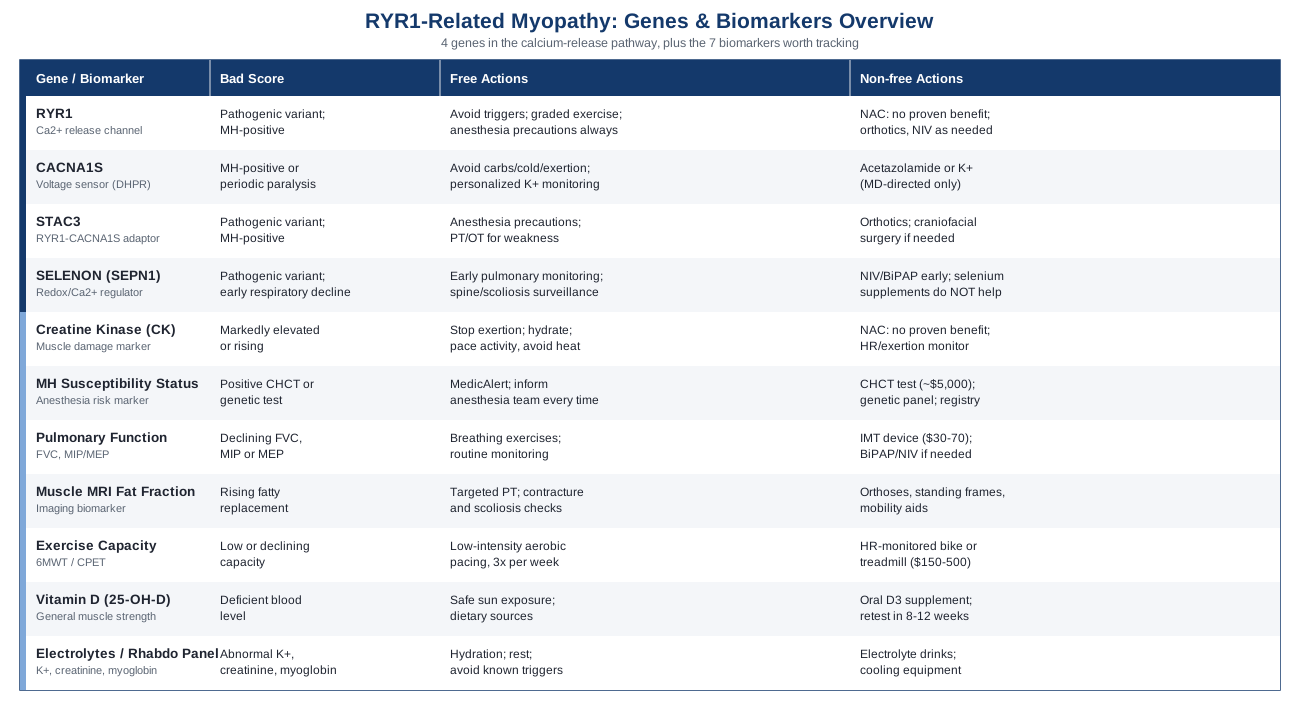
Seven Biomarkers Worth Tracking In RYR1-Related Myopathy
Because RYR1-related disorders are managed rather than reversed, the value of biomarkers here is less about "fixing a number" and more about catching drift early — a slow decline in vital capacity, a creeping fat-fraction on MRI, a vitamin D level low enough to add unnecessary weakness on top of the genetic burden. The seven below are the ones with the most practical payoff for the time and money involved.
1. Creatine Kinase (CK)
CK leaks out of damaged muscle fibers, and in RYR1-related myopathy it behaves inconsistently — some people run persistently elevated, others stay near normal even with clear weakness on exam, and levels can spike sharply during a rhabdomyolysis episode or after unaccustomed exertion. A 2024 review of RYR1-related myopathies confirms this variability, noting CK ranges from normal to markedly elevated depending on the subtype and the person's individual trigger threshold, which is why a single reading is far less useful than a personal baseline tracked over time (Update on RYR1-related myopathies).
How to measure it
A basic serum CK is a standard blood draw, available through any primary care or neuromuscular clinic. Cost typically runs $15–$40 out of pocket in the US, or is bundled into a covered visit. It's worth establishing a personal baseline when feeling well, then rechecking after any new symptom (dark urine, unusual soreness, fever with muscle pain) rather than on a rigid schedule alone.If the score is bad, the plan without supplements
A markedly elevated or rapidly rising CK calls for stopping exertion immediately, increasing fluid intake, and contacting the treating neurologist — this is a "stop and assess" signal, not a "push through it" one. Longer term, the fix isn't a training program but trigger management: individualized, gradually progressive aerobic activity guided by exercise capacity testing rather than generic workout plans, avoidance of prolonged heat exposure, and spacing out high-intensity days with full recovery in between. Frequency: reassess CK after any flare, and otherwise every 6–12 months as a baseline check. Side effects: none — this is monitoring and pacing, not an intervention with its own risks.If the score is bad, the plan with supplements or equipment
The most directly tested option — oral N-acetylcysteine (NAC) — looked promising in preclinical models, where it reduced oxidative stress and improved muscle function in RYR1 disease models (Oxidative stress and successful antioxidant treatment in models of RYR1-related myopathy). A rigorous 6-month randomized, placebo-controlled trial in 33 people with RYR1-related myopathy, however, found no meaningful reduction in oxidative stress markers and no significant change in walking distance (Randomized controlled trial of N-acetylcysteine therapy for RYR1-related myopathies). It was well tolerated at 2,700 mg/day in adults, but the honest takeaway is that it didn't work as hoped — worth knowing before spending money on it. A wearable exertion or heart-rate monitor ($30–$150) is a more evidence-grounded "equipment" investment, since it helps a person stay inside a safe intensity zone rather than discovering the limit after the fact.2. Malignant Hyperthermia Susceptibility Status
This is arguably the single most consequential marker in this entire list, because an undiagnosed MH-susceptible person facing an emergency surgery with a triggering anesthetic is a life-threatening scenario. RYR1 is the leading known cause of malignant hyperthermia susceptibility, alongside CACNA1S and STAC3 (STAC3 gene congenital myopathy and malignant hyperthermia).
How to measure it
The reference standard is the caffeine-halothane contracture test (CHCT), performed on a fresh muscle biopsy at one of a small number of specialized centers worldwide; it costs roughly $5,000 but is usually covered by insurance when clinically indicated, and it directly measures how muscle tissue contracts in response to these triggering agents (Prediction of malignant hyperthermia susceptibility in low-risk subjects). Targeted genetic testing for known pathogenic RYR1, CACNA1S, and STAC3 variants is less invasive and less expensive (often a few hundred dollars with insurance, more without), but it only confirms susceptibility in variant-positive individuals — a negative genetic result does not rule out MH risk if the causal variant isn't one of the ones tested for.If the score is bad, the plan without supplements
There is no lifestyle intervention that lowers MH susceptibility — it's a fixed structural property of the calcium release channel, not something that responds to training or diet. The "plan" here is procedural: carry a MedicAlert bracelet or card stating MH susceptibility, ensure every anesthesia provider is informed before any procedure, and confirm the facility stocks dantrolene, the specific antidote. Reviewing this status before any scheduled surgery, dental procedure requiring sedation, or emergency department visit is the actual "frequency" that matters here — not a lab schedule.If the score is bad, the plan with supplements or equipment
No supplement modifies MH risk, and none should be represented as doing so. The one legitimate "equipment" layer is documentation and access: a MedicAlert device, a saved anesthesia letter from the treating neuromuscular clinic, and registration with a malignant hyperthermia association hotline where available, so that in a true emergency, correct guidance is a phone call away rather than a search.3. Pulmonary Function (FVC, MIP/MEP)
Respiratory muscles are skeletal muscle too, and in several RYR1-related subtypes — as well as in the related SELENON-linked myopathies — respiratory decline can outpace limb weakness, sometimes becoming the dominant clinical problem (Treatments for RYR1-related disorders).
How to measure it
Forced vital capacity (FVC) via spirometry, plus maximal inspiratory and expiratory pressures (MIP/MEP), are standard tests in a pulmonary function lab, typically $100–$300 without insurance, and often included in routine neuromuscular follow-up visits. Overnight pulse oximetry or a sleep study (more, roughly $300–$1,500) is added when daytime numbers look borderline or sleep symptoms appear.If the score is bad, the plan without supplements
Inspiratory muscle training (IMT) — a structured breathing exercise protocol — has real trial evidence in neuromuscular disease broadly. A recent systematic review and meta-analysis of randomized controlled trials in neuromuscular disease found meaningful improvements in respiratory muscle strength with training (Respiratory muscle training in neuromuscular disease: a systematic review and meta-analysis). Typical protocols involve short daily sessions of resisted breathing against a threshold device.If the score is bad, the plan with supplements or equipment
No supplement has demonstrated benefit here; the equipment is the intervention. A handheld inspiratory muscle trainer costs $30–$70. A common protocol is 30 breaths at roughly 30–50% of maximum inspiratory pressure, twice daily, cycled in 8–12 week blocks with reassessment of MIP/MEP before continuing at a higher resistance. Side effects are mild — transient breathlessness or lightheadedness if overdone — and the device should be introduced under guidance from a pulmonary or neuromuscular specialist rather than self-escalated. When FVC drops below thresholds that affect sleep or daytime function, noninvasive ventilation (BiPAP) becomes the relevant "equipment," prescribed and titrated by a sleep or pulmonary team.4. Muscle MRI Fat Fraction
Quantitative muscle MRI can visualize which specific muscles are being replaced by fat and connective tissue, often in a pattern distinctive enough to help narrow the diagnosis and track progression over years — far more sensitive to subtle change than a strength exam alone (Novel Variants in Individuals with RYR1-Related Congenital Myopathies: Genetic, Laboratory, and Clinical Findings).
How to measure it
This requires a specialized MRI protocol (often Dixon-based fat-fraction imaging) at a center experienced with neuromuscular imaging; cost ranges from roughly $500 to $2,500 depending on region, insurance, and whether sedation is needed for young children. It's not typically repeated more than every 1–3 years outside of a clinical trial, given cost and the slow pace of structural change.If the score is bad, the plan without supplements
There's no way to "undo" fatty replacement once established, but the practical response is to preserve function in the muscle groups still intact: individualized physical therapy targeting the specific weak muscle groups shown on imaging, splinting or orthotics for at-risk joints, and monitoring for scoliosis or contractures that accelerate disuse in already-vulnerable muscles.If the score is bad, the plan with supplements or equipment
As above, the NAC antioxidant trial did not show benefit on functional or biochemical outcomes, so it shouldn't be relied on to slow imaging changes. Equipment-based support — ankle-foot orthoses, standing frames, or power mobility devices depending on distribution of weakness — is fitted individually by physiatry or orthotics specialists, generally reassessed yearly or with growth in children.5. Exercise Capacity (6-Minute Walk Test / CPET)
Functional testing captures something biomarkers and imaging can't: how the whole system performs under real demand. A recent study specifically measuring exercise capacity in RYR1-related myopathies found it useful for individualizing safe activity recommendations person by person (Exercise capacity in RYR1-related myopathies).
How to measure it
The 6-minute walk test (6MWT) is low-cost and low-tech — a measured hallway and a stopwatch, often free within a clinic visit. Formal cardiopulmonary exercise testing (CPET) with VO2 measurement is more informative but costlier, typically $200–$600, and available mainly at academic or specialized exercise physiology centers.If the score is bad, the plan without supplements
A 10-week home-based aerobic training program has shown measurable improvement in cardiorespiratory fitness in adults with congenital myopathies, even though functional gains were more modest (Treatments for RYR1-related disorders). The key is low-to-moderate intensity, steady progression, and stopping well short of exhaustion — since overexertion is a known trigger for rhabdomyolysis in this population, not just a discomfort issue. Three sessions a week of 20–30 minutes is a reasonable starting cadence, adjusted individually.If the score is bad, the plan with supplements or equipment
Creatine monohydrate is a common performance supplement in the general population, but there is no RYR1-specific evidence supporting it, and because RYR1 governs calcium release rather than phosphocreatine metabolism, extrapolating general sports-nutrition data here is speculative — it should only be tried, if at all, under medical supervision with CK monitoring before and after. A stationary bike or treadmill with heart-rate monitoring ($150–$500) is the more defensible equipment investment, since it allows exertion to be capped at a pre-set, individually determined safe intensity.6. Vitamin D (25-Hydroxyvitamin D)
This one isn't RYR1-specific, but it matters more here than in the general population: vitamin D deficiency causes its own proximal myopathy and measurable muscle weakness, and stacking that on top of an existing genetic myopathy makes it harder to tell how much weakness is "the disease" versus a fixable deficiency (Vitamin D: A Review on Its Effects on Muscle Strength).
How to measure it
A standard 25-OH-vitamin D blood test costs $30–$100 without insurance and is often included in a broader metabolic panel. Once or twice a year is generally sufficient outside of active supplementation.If the score is bad, the plan without supplements
Regular safe sun exposure and dietary sources (fatty fish, fortified dairy, egg yolks) can raise levels modestly, though this is often insufficient alone in people with limited mobility or reduced outdoor time — a relevant consideration for more severely affected individuals.If the score is bad, the plan with supplements or equipment
Oral vitamin D3, typically 1,000–2,000 IU daily for maintenance or higher physician-directed doses for correcting deficiency, is inexpensive and well studied, with muscle strength improvements documented in deficient populations after supplementation. Retesting after 8–12 weeks is standard practice to confirm the dose is adequate without overshooting. Side effects are rare at normal doses but include hypercalcemia at excessive, unsupervised intake — a reason to retest rather than guess at dosing indefinitely.7. Electrolytes And Rhabdomyolysis Risk Panel
Because exertional or heat-triggered rhabdomyolysis is a recognized complication in RYR1-related disease, monitoring the acute-phase markers — potassium, calcium, creatinine, and myoglobin when symptomatic — is a practical safety net rather than a routine screen (The neuromuscular and multisystem features of RYR1-related malignant hyperthermia and rhabdomyolysis: a study protocol).
How to measure it
A basic metabolic panel plus myoglobin, drawn at urgent care or an emergency department when symptoms (dark urine, severe muscle pain, swelling after exertion or illness) appear, generally costs $50–$200 without insurance. Baseline electrolytes can be checked annually as part of routine bloodwork.If the score is bad, the plan without supplements
Aggressive oral or IV hydration, immediate rest, and avoidance of further exertion until cleared are the first response. Recognizing personal triggers — heat, viral illness, fasting, unaccustomed activity — and building an individualized avoidance plan with the treating team does more to prevent recurrence than any reactive treatment.If the score is bad, the plan with supplements or equipment
Electrolyte replacement drinks (sodium- and potassium-containing, not just sugar-water sports drinks) can help during illness, heat exposure, or after a triggering event, used episodically rather than daily. A simple thermometer and a plan for cooling (fans, shade, timing outdoor activity to cooler hours) count as "equipment" worth having on hand given the heat-intolerance overlap in this condition. None of this replaces urgent medical evaluation when rhabdomyolysis is suspected.Tracking these seven consistently gives a far more actionable picture than any single test in isolation — and it sets up a natural next question: what exactly is going wrong at the gene level to produce this pattern, and are there other genes worth knowing about beyond RYR1 itself?
What RYR1 And Its Neighboring Genes Actually Do
RYR1 doesn't act alone. It sits at the center of a small, tightly coupled molecular circuit that translates a nerve signal into a muscle contraction, and several other genes in that same circuit — CACNA1S, STAC3, and SELENON — produce overlapping or related disease when they malfunction. Understanding the group, not just RYR1 in isolation, helps explain why some families see slightly different symptom patterns despite a similar diagnosis on paper.
RYR1
RYR1 encodes the ryanodine receptor, the main calcium release channel of the sarcoplasmic reticulum in skeletal muscle — the gate that, once opened, floods the muscle fiber with the calcium needed for contraction. Pathogenic variants disrupt this gate, either leaking calcium abnormally (a hallmark of malignant hyperthermia susceptibility) or failing to release it efficiently enough for normal contraction (contributing to the weakness seen in central core and multiminicore disease). RYR1-related myopathy is now recognized as the most common non-dystrophic congenital myopathy, affecting roughly 1 in 90,000 people in the US (Review of RyR1 pathway and associated pathomechanisms).
If the gene is bad, the plan without supplements
Since the channel itself can't be repaired outside of investigational gene therapy, management centers on avoiding known triggers (heat, certain anesthetics, viral illness combined with exertion), individualized graded exercise under professional guidance, and proactive respiratory and orthopedic monitoring on the schedule described in the biomarker section above. Anesthesia precautions, reviewed before every procedure, remain the single highest-stakes item.If the score is bad, the plan with supplements or equipment
The most direct human trial — oral NAC at 2,700 mg/day in adults for 6 months — did not improve oxidative stress markers or 6-minute walk distance, despite strong preclinical rationale, so it can't currently be recommended as an effective fix (Randomized controlled trial of N-acetylcysteine therapy for RYR1-related myopathies). Equipment support — orthotics, mobility aids, noninvasive ventilation — is fitted based on the specific pattern of weakness rather than applied generically.CACNA1S
CACNA1S encodes the dihydropyridine receptor, the voltage sensor sitting in the muscle cell membrane that physically communicates with RYR1 to trigger calcium release. Variants here can cause a related malignant hyperthermia susceptibility, and separately, hypokalemic periodic paralysis — episodes of severe weakness tied to potassium shifts. It's increasingly tested alongside RYR1 in muscle symptom panels, including in the context of unexplained statin-associated muscle symptoms (RYR1 and CACNA1S genetic variants identified with statin-associated muscle symptoms).
If the gene is bad, the plan without supplements
For the periodic paralysis presentation, avoiding known precipitants — high-carbohydrate meals, strenuous exercise followed by rest, cold exposure — is the mainstay, along with a personalized potassium-monitoring plan built with a neurologist. For the MH-susceptibility presentation, the same anesthesia precautions used for RYR1 apply.If the score is bad, the plan with supplements or equipment
Potassium management in periodic paralysis is a prescription-level intervention (carbonic anhydrase inhibitors such as acetazolamide, or potassium supplementation itself) that must be physician-directed, not self-managed, since incorrect dosing can worsen weakness or cause cardiac rhythm problems. There is no over-the-counter supplement appropriate here.STAC3
STAC3 encodes an adaptor protein that physically bridges CACNA1S and RYR1, stabilizing the coupling between them. Variants cause a distinct congenital myopathy — historically described in Native American myopathy — that combines MH susceptibility with congenital weakness, ptosis, and sometimes cleft palate (STAC3 gene congenital myopathy and malignant hyperthermia).
If the gene is bad, the plan without supplements
Management mirrors RYR1-related disease closely: strict anesthesia precautions given the MH overlap, individualized physical and occupational therapy for congenital weakness and any associated craniofacial features, and orthopedic follow-up for contractures.If the score is bad, the plan with supplements or equipment
No supplement has trial evidence here; this reflects the general state of research into a rare gene rather than a specific negative finding. Equipment needs (feeding support, orthotics, surgical correction of ptosis or cleft palate where indicated) are individualized through a multidisciplinary craniofacial and neuromuscular team.SELENON (SEPN1)
SELENON encodes selenoprotein N, which regulates calcium handling and redox balance in the endoplasmic/sarcoplasmic reticulum — a different protein from RYR1, but operating in the same calcium-signaling neighborhood. Its loss causes a distinct but related group of disorders (multiminicore disease, rigid spine muscular dystrophy) marked by disproportionately early and severe respiratory failure relative to limb strength (Selenoprotein N and SEPN1-Related Myopathies).
If the gene is bad, the plan without supplements
Given how early respiratory decline can outpace visible limb weakness, proactive pulmonary monitoring — starting well before symptoms are obvious — and early introduction of noninvasive ventilation when indicated are the most protective non-pharmacological steps. Scoliosis surveillance and early spinal bracing matter given the rigid spine phenotype common to this gene.If the score is bad, the plan with supplements or equipment
It's worth being explicit here: selenium supplementation does not address SELENON-related myopathy, because the defect is in the protein itself, not in dietary selenium availability — a common and understandable point of confusion given the name. Oxidative and nitrosative stress has been identified as a druggable mechanism in laboratory models, and antioxidant strategies are an active area of research, but no proven human therapy exists yet (Selenoprotein N and SEPN1-Related Myopathies). Noninvasive ventilation equipment, introduced early and titrated by a pulmonary specialist, remains the most impactful tool available today.Having covered both the numbers to track and the genes behind them, it's worth stepping outside the rare-disease literature briefly — general muscle physiology research, even when built on healthy populations, offers a few transferable principles worth understanding.
Ten Muscle Physiology Lessons Worth Borrowing, Carefully
The Huberman Lab guest series with exercise physiologist Dr. Andy Galpin (Optimal Protocols to Build Strength & Grow Muscles) is built for healthy athletes, not people managing a calcium-channel myopathy — that caveat matters and shouldn't be skipped. But several of the underlying physiology principles it covers translate usefully, once adapted downward in intensity and filtered through a neuromuscular specialist's judgment.
1. Calcium handling is the bottleneck, not just the muscle fiber itself
The series emphasizes that contraction quality depends on how efficiently calcium is released and resequestered — precisely the step RYR1 disrupts. Understanding this reframes fatigue in RYR1-related myopathy as partly a signaling problem, not purely a strength problem, which changes what kind of training makes sense.2. Recovery time matters more than workout intensity
Galpin stresses that under-recovery undermines adaptation in healthy lifters; in RYR1-related myopathy, under-recovery is a trigger risk, not just an efficiency loss, making generous rest between sessions doubly important.3. Training should be individualized to fiber-type and current capacity
The general principle of matching program design to an individual's current physiology, rather than a generic template, lines up directly with the exercise-capacity-testing approach used in RYR1 research clinics.4. Heat and hydration status directly affect contractile performance
This is discussed as a performance factor for athletes; for someone with RYR1-related myopathy it's a safety factor, since heat and dehydration are recognized rhabdomyolysis and MH triggers.5. Low-intensity aerobic work builds a base without excessive fiber damage
The series' case for base-building aerobic work at conversational intensity maps well onto the low-to-moderate intensity programs shown to improve cardiorespiratory fitness in congenital myopathies.6. Sleep quality affects muscle repair signaling
General sleep-and-recovery physiology applies to any muscle condition; poor sleep compounds fatigue that's already present from the underlying myopathy.7. Protein timing matters less than total adequate intake
A reassuring, low-effort takeaway — adequate daily protein, not precise timing around workouts, is what supports muscle maintenance, removing one source of unnecessary complexity for someone already managing a complex condition.8. Objective tracking beats subjective effort ratings alone
The series' emphasis on measuring performance rather than guessing supports exactly the biomarker- and function-tracking approach outlined earlier in this article.9. Small, consistent doses of training beat sporadic intense efforts
Frequent, modest sessions build tolerance more safely than occasional maximal efforts — directly relevant given that sporadic overexertion is a known trigger for muscle breakdown in RYR1-related disease.10. Progress should be judged over months, not single sessions
Patience with slow, monitored change — rather than reacting to any single bad day — mirrors how muscle MRI and exercise capacity testing are meant to be interpreted: as trends, not one-off snapshots.These principles are a lens for interpreting general exercise science responsibly, not a substitute for individualized guidance from a neuromuscular specialist familiar with RYR1-related disease specifically. With that grounding in place, it's worth looking at what complementary approaches actually have supporting evidence, rather than assuming any wellness trend applies equally here.
Complementary Approaches With Real, If Limited, Evidence
Most wellness modalities marketed broadly for "muscle health" have no evidence specific to RYR1-related myopathy or congenital myopathies at all, and should be treated skeptically for that reason alone. A smaller set has genuine trial-level support in neuromuscular disease populations closely related to RYR1-related myopathy, which makes them worth understanding even though the evidence isn't RYR1-specific.
Breathing-Based Therapies (Inspiratory Muscle Training)
Breathing-based training targets the diaphragm and accessory respiratory muscles directly through resisted inhalation exercises, which matters here because respiratory muscle weakness is one of the more serious and measurable complications of RYR1-related and related congenital myopathies, sometimes preceding obvious limb weakness.
A systematic review and meta-analysis of 16 randomized controlled trials across neuromuscular disease populations (ALS, Duchenne muscular dystrophy, myasthenia gravis, and others) found consistent improvements in inspiratory muscle strength with structured training protocols, and a separate randomized cross-over trial in children with neuromuscular disease showed good adherence and safety using a threshold device at 30% of maximum inspiratory pressure, twice daily for three months (The impact of respiratory muscle training on respiratory function in patients with neuromuscular disease).
Realistically, this means introducing a low-cost handheld threshold trainer under guidance from a pulmonary or neuromuscular specialist, starting at a conservative resistance, tracking MIP/MEP every few months, and treating any dizziness or excessive breathlessness as a signal to reduce intensity rather than push through it.
Yoga (Adapted And Gentle)
Gentle, modified yoga emphasizes controlled breathing, postural awareness, and low-load movement through range of motion — qualities that are plausible for someone managing a myopathy with exertional risk, provided the practice is adapted away from strength-challenging poses that could trigger overexertion.
The direct evidence comes from other congenital and progressive muscle diseases rather than RYR1-related myopathy specifically: a study of yoga as an add-on therapy in children with Duchenne muscular dystrophy showed favorable effects on heart rate variability, a marker of autonomic balance and stress load (Effect of Yoga as an Add-on Therapy in the Modulation of Heart Rate Variability in Children with Duchenne Muscular Dystrophy), and separate randomized trials in multiple sclerosis have shown benefits for fatigue and quality of life. None of this is RYR1-specific, and that gap should be stated plainly.
Applied cautiously, this means restorative or chair-based yoga, avoiding poses requiring sustained isometric holds or extreme heat (as in "hot yoga," which is inappropriate given heat-intolerance risk), practiced two to three times weekly, with any new muscle soreness or dark urine treated as a reason to stop and check CK rather than continue.
Progressive Muscle Relaxation
Progressive muscle relaxation (PMR) — systematically tensing and releasing muscle groups to reduce overall tension and improve body awareness — is used broadly in chronic disease management for pain and fatigue, both of which are common secondary burdens in RYR1-related myopathy even when they aren't the primary pathology.
The evidence base for PMR is strongest in general chronic pain, anxiety, and fatigue management rather than in congenital myopathy specifically, so its role here is supportive rather than disease-modifying; it should be understood as a fatigue- and stress-management tool, not a treatment aimed at the underlying calcium-channel defect.
In practice, this looks like a 10–15 minute guided session a few times a week, using a light-touch version that skips maximal muscle tensing (to avoid unnecessary exertion) in favor of gentle contraction-and-release, which is a reasonable, low-risk addition to a broader management plan rather than a replacement for any of it.
Bringing It Together
RYR1-related myopathy isn't a single fixed picture — it's a spectrum shaped by which specific variant is present, which of several closely related genes is involved, and how consistently the practical markers of muscle, respiratory, and metabolic health are actually tracked. The seven biomarkers outlined here — CK, malignant hyperthermia status, pulmonary function, muscle MRI, exercise capacity, vitamin D, and the electrolyte/rhabdomyolysis panel — give a concrete, revisitable picture of where things stand, replacing guesswork with numbers a clinical team can act on. Understanding RYR1 alongside CACNA1S, STAC3, and SELENON clarifies why some management plans look slightly different even under a similar-sounding diagnosis, and the complementary approaches with genuine evidence — inspiratory muscle training especially — offer low-risk, evidence-grounded additions rather than false promises.
None of this changes the underlying genetics, and it shouldn't be mistaken for a cure. What it does offer is a clearer, more defensible basis for decisions: which activity level is actually safe, when a respiratory or MRI trend needs escalation, and what anesthesia precautions need to be current before the next procedure. The next useful step is a practical one — request the biomarkers that haven't been checked recently, confirm the MH-susceptibility documentation is current and accessible in an emergency, and bring this list to the next appointment with a neuromuscular specialist to build a monitoring plan suited to the specific variant and history involved.