This article contains AI generated content.
Saphenous Neuralgia: 4 Genes And 7 Biomarkers To Track
If you've been told your knee and shin pain is "probably just nerve irritation" and left with little else, you already know how unsatisfying that explanation feels. Saphenous neuralgia — irritation or entrapment of the saphenous nerve, often after knee surgery, varicose vein stripping, or a direct blow to the inner knee — produces a very specific kind of pain: burning, tingling, or electric sensations along the inner knee, shin, and sometimes down to the ankle. It's real, it's measurable, and it deserves more than a shrug.
The trouble is that most advice for nerve pain is written for nerve pain in general, not for this nerve, in this location, with this mechanism. Generic tips about "managing chronic pain" rarely explain why some people recover from a saphenous nerve injury in months while others carry it for years, or why two people with an almost identical surgical history end up with completely different outcomes. Some of that variation comes down to modifiable, measurable biology — metabolic status, nutrient levels, inflammation, and yes, some inherited tendencies in how nerves signal pain.
This article takes a more specific approach. Instead of general nerve-pain platitudes, it looks at the blood markers most likely to influence how well an irritated saphenous nerve heals, and at the genetic variants that shape how intensely pain is perceived and processed in the first place. Neither replaces a proper diagnostic workup with a physician who can confirm the entrapment site and rule out other causes — but both can sharpen the conversation you have with that physician, and give you concrete levers to pull in the meantime.
None of this is a promise of a cure. Nerve entrapment syndromes respond to a combination of mechanical correction (sometimes an injection or release), time, and a body that is metabolically equipped to repair peripheral nerve tissue. Better information about your own biomarkers and genetic tendencies won't force a damaged nerve to heal faster on its own, but it can remove obstacles that are quietly slowing that healing down — and that is a genuinely useful place to start.
Summary
This article walks through the seven blood biomarkers most relevant to nerve irritation and repair — from fasting glucose to magnesium — explaining what each one reveals about your capacity to heal a compressed or inflamed saphenous nerve, how to test it, and what to do if the number comes back unfavorable, with and without supplements. It then turns to genetics: four well-studied genes involved in pain sensitivity and nerve metabolism, and what current human research does and doesn't support about "fixing" an unfavorable variant. A closer look at chronic pain neuroscience follows, distilling ten key ideas from pain-science research popularized on podcasts like Huberman Lab, along with a review of complementary approaches — from photobiomodulation to biofeedback — that have real clinical evidence behind them for nerve-related pain. By the end, you'll have a concrete list of what to ask your doctor to test, and what to actually do with the results.
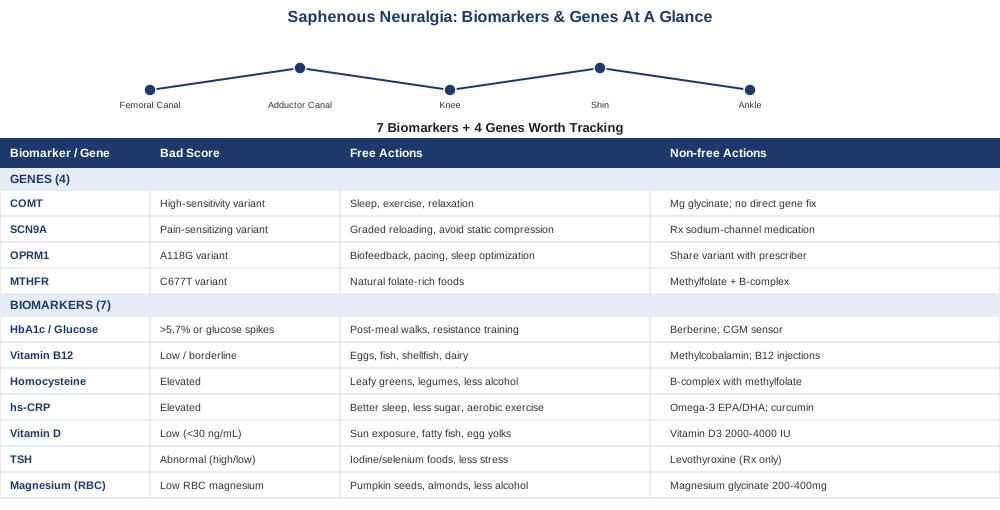
7 Biomarkers Worth Tracking When Saphenous Nerve Pain Won't Resolve
Why Blood Work Matters for a Nerve Entrapment Problem
Saphenous neuralgia is, at its core, a mechanical problem — the nerve is compressed, stretched, or scarred somewhere along its path from the femoral canal to the medial ankle, and a 2021 review of infrapatellar saphenous neuralgia after knee surgery confirmed how often this specific entrapment is missed or misattributed to other causes of anteromedial knee pain (Yang et al., 2021). But how well a nerve recovers from mechanical irritation depends heavily on the metabolic environment it's healing in. Peripheral nerves are metabolically expensive tissue; they need stable glucose delivery, adequate B-vitamin cofactors, low background inflammation, and healthy myelin-supporting nutrients to remyelinate and regenerate axons. The biomarkers below aren't diagnostic for saphenous neuralgia itself, but they flag whether your body is working with you or against you while the nerve tries to recover.
1. HbA1c and Fasting Glucose
Chronic even mild glucose elevation is one of the best-documented accelerants of nerve dysfunction, and small-fiber nerves — the type involved in neuralgia-type burning pain — are often affected before a person crosses the threshold into a formal diabetes diagnosis. A 2013 study found that small-fiber neuropathy testing could actually predict future risk of developing type 2 diabetes, meaning nerve dysfunction can show up before glucose control looks abnormal on a standard panel (Müller et al., 2013). If your saphenous nerve is trying to heal in a high-glucose environment, that repair is working against a real biochemical headwind.
How To Measure It
A fasting glucose and HbA1c panel is inexpensive, typically 15 to 40 dollars through a standard lab or direct-to-consumer testing service, and is usually included in routine annual bloodwork. Peter Attia has long argued that the standard "under 5.7 percent is normal" HbA1c cutoff is too loose for anyone dealing with a nerve-related condition, and favors continuous glucose monitoring (CGM) to catch the glucose spikes and variability that a single HbA1c number can hide. A two-week CGM sensor costs roughly 50 to 100 dollars and gives a much more granular picture than one blood draw.If The Score Is Bad: The Plan Without Supplements
Prioritize post-meal walks of 10 to 15 minutes, which measurably blunt glucose spikes; shift refined carbohydrates earlier in the day rather than at night; and add resistance training two to three times per week, since muscle is the largest glucose-disposal organ in the body. These changes typically move HbA1c within three months, and there is no meaningful downside or side effect to trial first.If The Score Is Bad: The Plan With Supplements Or Equipment
Berberine (500 mg, two to three times daily with meals) has glucose-lowering evidence comparable to metformin in some trials, but can cause gastrointestinal upset and should be cycled 8 weeks on, 2 weeks off, and discussed with a physician if you take other glucose-lowering medication. A CGM used for 2 to 4 weeks at a time, a few times a year, is a low-risk equipment option that turns abstract advice into specific, personal feedback about which foods and habits spike your glucose.2. Vitamin B12
B12 is essential for maintaining the myelin sheath around peripheral nerves, and low levels are one of the most common, correctable contributors to nerve pain and slow nerve healing. This matters specifically if you're on metformin, since long-term metformin use is strongly associated with B12 deficiency and worsened neuropathy symptoms, and B12 supplementation has shown measurable benefit in that population (Pratama et al., 2022).
How To Measure It
A serum B12 test costs about 20 to 50 dollars. Because serum B12 can look falsely normal, a methylmalonic acid (MMA) test (30 to 70 dollars) is a more sensitive way to detect a functional deficiency if your serum B12 is borderline.If The Score Is Bad: The Plan Without Supplements
Increase dietary intake through eggs, fish, shellfish, and dairy. This is realistic for mild insufficiency but is usually too slow to meaningfully help an already-irritated nerve if the deficiency is moderate to severe.If The Score Is Bad: The Plan With Supplements Or Equipment
Oral methylcobalamin, 1,000 mcg daily, is appropriate for mild deficiency; for more significant deficiency, or malabsorption issues, intramuscular B12 injections (typically weekly for 4 to 8 weeks, then monthly) correct levels faster. B12 has an excellent safety profile with essentially no toxicity ceiling, though very high doses have rarely been linked to mild acne in sensitive individuals.3. Homocysteine
Homocysteine is a byproduct of methionine metabolism that, when elevated, is associated with impaired nerve conduction. A 2021 systematic review and meta-analysis found a consistent relationship between B-vitamin status and neuropathy risk, with elevated homocysteine acting as a useful marker of that underlying metabolic strain (Stein et al., 2021).
How To Measure It
A plasma homocysteine test runs about 30 to 60 dollars and is best drawn fasting, since recent protein intake can transiently raise the number.If The Score Is Bad: The Plan Without Supplements
Increase leafy greens, legumes, and liver, all rich in natural folate, and reduce excess alcohol intake, which depletes B-vitamin stores and raises homocysteine independently.If The Score Is Bad: The Plan With Supplements Or Equipment
A B-complex containing methylfolate (400 to 800 mcg), B6 (25 mg), and B12 (1,000 mcg) daily is the standard approach, typically rechecked after 8 to 12 weeks. High-dose B6 above 100 mg daily for extended periods has been linked to sensory neuropathy — an ironic and important side effect to avoid in someone already managing nerve pain, so stay within moderate dosing and don't stack multiple B6-containing products.4. High-Sensitivity C-Reactive Protein (hs-CRP)
This is arguably the most directly relevant biomarker on this list. A 2024 study specifically found that systemic low-grade CRP elevation was associated with proximal symptom spread in carpal tunnel syndrome, a nerve entrapment condition mechanistically similar to saphenous neuralgia — suggesting that background inflammation may worsen how far and how intensely entrapment symptoms spread (Zvonickova et al., 2024).
How To Measure It
An hs-CRP blood test costs 15 to 40 dollars and is widely available; Peter Attia and cardiologists like Thomas Dayspring routinely include it in longevity-focused panels as a general marker of low-grade systemic inflammation, even though it isn't specific to any one condition.If The Score Is Bad: The Plan Without Supplements
Address the biggest inflammatory levers first: improve sleep consistency, reduce ultra-processed food and added sugar intake, and increase weekly aerobic activity to 150 minutes. These changes reliably lower hs-CRP over 8 to 12 weeks in people whose elevation is lifestyle-driven rather than disease-driven.If The Score Is Bad: The Plan With Supplements Or Equipment
Omega-3 fatty acids (EPA/DHA, 2 to 3 grams daily with food) have reasonably consistent evidence for lowering hs-CRP over 3 months; curcumin (500 to 1,000 mg with piperine, cycled 8 weeks on and 2 weeks off) is a reasonable adjunct but can thin the blood, so it should be paused before any planned nerve injection or surgical procedure and discussed with your physician if you take anticoagulants.5. Vitamin D (25-Hydroxyvitamin D)
Evidence here is genuinely mixed, and it's worth being upfront about that. A cross-sectional study in people with type 2 diabetes found no significant association between vitamin D levels and neuropathic pain (Alkhatatbeh & Abdul-Razzak, 2019), while earlier animal research suggested cholecalciferol could reduce neuropathic pain through opioid-signaling pathways. Given that mixed picture, vitamin D belongs on this list as a general marker of musculoskeletal and immune health worth optimizing rather than a proven direct lever for saphenous nerve pain specifically.
How To Measure It
A 25-OH vitamin D test costs 20 to 50 dollars and is one of the most commonly ordered nutrient panels in primary care.If The Score Is Bad: The Plan Without Supplements
Aim for 15 to 20 minutes of midday sun exposure on bare skin several times a week when season and latitude allow, and include fatty fish and egg yolks in your diet.If The Score Is Bad: The Plan With Supplements Or Equipment
Vitamin D3, 2,000 to 4,000 IU daily with a meal containing fat, is standard, rechecked after 8 to 12 weeks. Because vitamin D is fat-soluble and can accumulate, avoid megadosing above 10,000 IU daily without physician supervision and periodic monitoring, since excess can raise blood calcium.6. TSH and Thyroid Function
Hypothyroidism is a recognized, correctable risk factor for entrapment neuropathies in general — tissue swelling and fluid retention associated with low thyroid function can increase pressure on nerves passing through tight anatomical spaces, a mechanism discussed in reviews of entrapment neuropathy such as carpal tunnel syndrome (Harinesan, Silsby & Simon, 2024). The saphenous nerve travels through several such tight spaces, including the adductor (Hunter's) canal, making this an underappreciated but plausible contributor for some people with unexplained nerve entrapment.
How To Measure It
A TSH test costs 20 to 45 dollars; if TSH is abnormal, a full panel including free T4 and free T3 (roughly 60 to 120 dollars total) gives a more complete picture.If The Score Is Bad: The Plan Without Supplements
Ensure adequate iodine and selenium intake through diet (seafood, dairy, Brazil nuts in moderation), and address sleep and chronic stress, both of which influence thyroid hormone conversion.If The Score Is Bad: The Plan With Supplements Or Equipment
True hypothyroidism generally requires physician-prescribed levothyroxine rather than over-the-counter supplementation; self-directed iodine supplementation above 150 to 300 mcg daily can paradoxically worsen thyroid function in some people and should be avoided without testing and guidance.7. Magnesium (RBC Magnesium)
Magnesium plays a direct role in nerve excitability and neuromuscular signaling. Early mechanistic research has linked reduced magnesium levels, alongside elevated methylglyoxal, to diabetic nerve damage in experimental models, though this evidence is still preliminary and mostly non-human (Strom et al., 2021).
How To Measure It
Standard serum magnesium (15 to 30 dollars) is widely available but a poor reflection of total body stores; red blood cell (RBC) magnesium (40 to 70 dollars) is a more accurate, though less commonly ordered, alternative.If The Score Is Bad: The Plan Without Supplements
Increase intake of pumpkin seeds, almonds, spinach, and dark chocolate, and reduce alcohol, which increases magnesium excretion.If The Score Is Bad: The Plan With Supplements Or Equipment
Magnesium glycinate, 200 to 400 mg in the evening, is well-tolerated and less likely than magnesium oxide to cause the loose stools common with this mineral. Cycle at a consistent daily dose for 8 to 12 weeks and recheck RBC magnesium rather than taking it indefinitely without reassessment.What Your Genes May Add To The Picture
Blood biomarkers describe your current state; genetics describes a tendency. Researchers like Ali Torkamani, whose work focuses on how genomic data should responsibly inform individual health decisions, and Gary Brecka, who has popularized consumer-facing methylation and pain-related gene testing, both emphasize the same caution from different angles: a single gene variant is rarely destiny, and the honest answer for most of these genes is that they shift probabilities, not certainties. With that framing, four genes are worth knowing about if you're dealing with persistent saphenous nerve pain.
COMT: The Pain Volume Dial
The COMT gene (Val158Met variant) affects how quickly the body clears catecholamines involved in pain signaling. Foundational human research found that specific COMT haplotypes are associated with meaningfully different pain sensitivity and risk of developing a chronic pain condition, with the low-sensitivity haplotype offering some protective effect (Diatchenko et al., 2005). A "high pain sensitivity" COMT profile doesn't cause saphenous neuralgia, but it may partly explain why the same degree of nerve irritation feels more intense for some people than others.
If The Gene Is Bad: The Plan Without Supplements
Since COMT variants amplify the nervous system's response to a given pain signal rather than the injury itself, the most evidence-backed non-supplement approach is downregulating overall nervous system reactivity: consistent sleep timing, regular aerobic exercise, and structured relaxation practice (see the biofeedback and mindfulness sections below) all measurably reduce pain amplification over weeks, with no downside risk.If The Gene Is Bad: The Plan With Supplements Or Equipment
Magnesium glycinate (see dosing above) has mild NMDA-modulating properties that some clinicians use adjunctively in sensitized pain states. There is no supplement that specifically "corrects" a COMT variant, and claims to the contrary should be treated skeptically; this is an area where the honest answer is that lifestyle regulation currently outperforms supplementation.SCN9A: The Sodium Channel Gatekeeper
SCN9A encodes the Nav1.7 sodium channel, which is central to how peripheral nerves, including the saphenous nerve, generate and transmit pain signals. Human studies have found that specific SCN9A variants are associated with meaningfully different basal pain sensitivity across a range of pain conditions (Duan et al., 2015), and rare gain-of-function mutations in this gene are well established causes of extreme pain disorders.
If The Gene Is Bad: The Plan Without Supplements
Graded, gradual reloading of the affected leg (discussed further in the pain-science section below) helps prevent the kind of nerve hyperexcitability that a sensitized SCN9A profile can amplify. Avoiding prolonged, unbroken static positions that compress the inner knee is also a simple mechanical safeguard.If The Gene Is Bad: The Plan With Supplements Or Equipment
This is a case where established pharmacology, not supplementation, is the evidence-backed route: sodium-channel-modulating medications such as certain anticonvulsants are prescribed specifically for this mechanism, and that conversation belongs with a physician managing your nerve pain rather than a self-directed supplement plan.OPRM1: How You Respond To Your Own Opioids
The A118G variant of OPRM1, the mu-opioid receptor gene, has been shown in controlled human studies to affect pressure pain sensitivity and, separately, how individuals respond to opioid medications (Fillingim et al., 2005). This matters less for daily self-management and more for an honest conversation with a prescriber if opioid medication is ever considered for breakthrough nerve pain, since carriers of certain variants may need different dosing to achieve the same effect.
If The Gene Is Bad: The Plan Without Supplements
Since this variant mostly affects your endogenous opioid tone and response to opioid medication rather than baseline nerve damage, non-drug pain modulation strategies — biofeedback, paced activity, and sleep optimization — become proportionally more valuable, since they don't rely on the opioid pathway this gene affects.If The Gene Is Bad: The Plan With Supplements Or Equipment
There is no supplement that meaningfully changes OPRM1 function. The practical takeaway is informational: share this variant status with any prescriber before starting opioid-based pain management so dosing expectations are realistic from the start.MTHFR: The Methylation Bottleneck
The MTHFR C677T variant reduces the efficiency of folate metabolism, which feeds directly back into the homocysteine pathway discussed above. A 2019 study found that this specific polymorphism influenced how well patients with diabetic polyneuropathy responded to folic acid supplementation on nerve conduction measures (Mottaghi et al., 2019) — meaning this variant may partly determine whether standard folic acid supplementation actually helps your nerve, or whether you need the active methylated form instead.
If The Gene Is Bad: The Plan Without Supplements
Prioritize naturally folate-rich foods (leafy greens, legumes, liver) over fortified folic-acid foods, since some evidence suggests reduced-function MTHFR carriers convert synthetic folic acid less efficiently than natural folate.If The Gene Is Bad: The Plan With Supplements Or Equipment
If supplementing, choose methylfolate (L-5-MTHF) rather than standard folic acid, at 400 to 800 mcg daily, alongside the B-complex described in the homocysteine section. Recheck homocysteine after 8 to 12 weeks rather than continuing indefinitely without feedback; very high-dose folate supplementation can mask a B12 deficiency, so both should be tested together.The Pain Science Ideas Worth Understanding
Beyond bloodwork and genetics, one of the more useful shifts in how chronic nerve and musculoskeletal pain is understood has come through pain-science research discussed on platforms like the Huberman Lab podcast, drawing on work from pain researchers such as Stanford's Sean Mackey. These ideas don't replace the mechanical diagnosis of a saphenous nerve entrapment, but they explain why two people with the same entrapment can have very different recovery trajectories, and they challenge some outdated assumptions still common in general practice.
1. Pain Is Built by the Brain, Not Just Reported by It
Pain is a constructed output based on danger signals from the nerve combined with context, expectation, and prior experience — not a simple one-to-one readout of tissue damage. This is why identical nerve irritation can produce very different pain intensities in different people.2. Central Sensitization Can Outlast the Original Injury
When a nerve signal is repeated long enough, the spinal cord and brain can become sensitized, amplifying pain signals even after tissue healing has largely occurred. This is one reason chronic saphenous neuralgia sometimes persists after imaging shows the nerve has structurally recovered.3. Fear of Movement Often Worsens Outcomes
Avoiding all leg use out of fear of triggering pain frequently backfires, since deconditioning and guarding patterns tend to increase sensitivity over time rather than protect the nerve.4. Graded Exposure Beats Total Rest
Slowly, incrementally reintroducing movement and load — rather than either pushing through pain or avoiding it entirely — is one of the most consistently supported approaches in modern pain rehabilitation.5. Sleep Debt Directly Amplifies Pain Sensitivity
Poor sleep lowers pain thresholds measurably within a single night of deprivation, which means sleep consistency is a legitimate pain-management tool, not a peripheral lifestyle detail.6. Catastrophizing Language Changes the Physical Experience
How a person talks and thinks about their pain ("this is ruining my life," "it's never going to get better") has measurable effects on reported pain intensity, independent of the underlying tissue state.7. The Nervous System Responds to Perceived Safety
A nervous system that feels physically and psychologically safe tends to down-regulate pain signaling; ongoing stress keeps the threat-detection system primed, which can keep pain volume turned up.8. Breath Patterns Directly Modulate the Autonomic Nervous System
Slow, extended-exhale breathing shifts the body toward parasympathetic dominance, which has downstream effects on pain perception and muscle guarding around an irritated nerve.9. Expectation Shapes Real, Measurable Outcomes
Placebo and nocebo research shows that expectation of improvement or worsening changes actual physiological pain processing, not just self-report — which is a reason to be thoughtful about the narrative you build around your own recovery.10. Pacing Beats Both Extremes
Structured pacing — doing a consistent, moderate amount of activity regardless of a good or bad pain day — tends to produce better long-term outcomes than the common cycle of overdoing it on good days and shutting down completely on bad ones.Complementary Approaches That Can Support Nerve Recovery
These approaches are not substitutes for a correct mechanical diagnosis of your saphenous nerve entrapment, but several have genuine clinical evidence behind them for nerve-related and entrapment pain specifically, and they pair naturally with the biomarker and pain-science strategies above.
Mindfulness Meditation and MBSR
Mindfulness-Based Stress Reduction trains attention and body awareness in a way that directly targets the central sensitization and threat-amplification processes described above, making it a logical complement for nerve pain that has become partly centrally driven. A large randomized clinical trial published in JAMA found that MBSR produced meaningful, lasting improvement in chronic pain and functional limitation, comparable to structured cognitive behavioral therapy and superior to usual care (Cherkin et al., 2016). A realistic starting point is an 8-week structured MBSR course, in person or via a reputable app-based program, practiced 20 to 30 minutes daily; evidence specific to saphenous neuralgia doesn't exist, but the mechanism and general chronic pain evidence transfer reasonably well.Biofeedback
Biofeedback trains conscious control over physiological signals, such as muscle tension or skin conductance, that are otherwise involuntary, and has direct evidence in neuropathic pain populations. A randomized controlled trial found that biofeedback-guided electrostimulation therapy reduced both pain scores and cortisol levels in people with chronic neuropathic pain (Mansor et al., 2021). In practice, this typically means working with a physical therapist or pain specialist who offers EMG or electrostimulation-based biofeedback sessions, usually 2 to 3 times weekly for 4 to 6 weeks initially; it's generally low-risk, though it should be introduced cautiously and stopped if it appears to increase local irritation.Photobiomodulation (Low-Level Laser Therapy)
Photobiomodulation uses specific wavelengths of red or near-infrared light believed to support mitochondrial function and reduce local inflammation in irritated nerve tissue. A systematic review of low-level laser therapy for painful diabetic peripheral neuropathy found supportive evidence for pain reduction, though the authors noted protocols vary widely across studies (M A et al., 2019). This evidence is drawn from diabetic neuropathy rather than saphenous-specific entrapment, so it should be considered supportive rather than definitive; a realistic protocol involves 2 to 3 sessions weekly for 4 to 6 weeks, delivered by a clinician trained in the specific device and dosimetry used, since inappropriate power settings can reduce effectiveness or, rarely, cause skin irritation.Massage Therapy
Targeted massage around the medial knee and thigh may help by reducing local muscular guarding and improving circulation around the entrapment site, without directly treating the nerve compression itself. A randomized controlled trial of self-administered foot massage in people with diabetic peripheral neuropathy found improvements in neuropathic pain and skin temperature (Sayin-Kasar & Duru-Asiret, 2025), and while that trial focused on the foot rather than the saphenous distribution, the general mechanism of improved local circulation and reduced guarding is transferable. A reasonable approach is light, non-aggressive massage of the inner thigh and knee 2 to 3 times weekly, avoiding direct deep pressure over the point of maximum tenderness, since aggressive massage directly on an irritated nerve can worsen symptoms rather than help them.Conclusion
Saphenous neuralgia sits at the intersection of a mechanical problem and a metabolic and neurological environment that either helps or hinders recovery. The seven biomarkers covered here — glucose control, B12, homocysteine, inflammation, vitamin D, thyroid function, and magnesium — give you a concrete, testable checklist to bring to your next appointment, each with a clear next step whether or not you choose to supplement. The genetic variants add useful context about why your pain may feel more intense or respond differently than someone else's, without ever being an excuse to stop looking for correctable, modifiable factors. And the pain-science and complementary approaches round out a plan that treats the nervous system, not just the nerve, as part of the recovery equation.
None of this replaces a clinician confirming exactly where your saphenous nerve is being compressed and whether a targeted intervention, such as an image-guided injection or surgical release, is appropriate. But walking into that conversation with your HbA1c, B12, homocysteine, hs-CRP, vitamin D, TSH, and magnesium numbers in hand — and an honest sense of your pain-sensitivity tendencies — turns a vague complaint into a specific, actionable case. The next smart step is simple: order the panel, track your symptoms alongside it for a few weeks, and bring both to the professional managing your care.
Endocrine & Metabolic: Diabetes & Blood Sugar Thyroid Conditions