This article contains AI generated content.
· UpdatedSatoyoshi Syndrome: 3 Genes and 7 Biomarkers to Track
Introduction
If you or your child has been diagnosed with Satoyoshi syndrome, you already know how little the standard medical script has to offer. The condition is rare enough that most neurologists will see, at most, one case in an entire career, and the advice that follows a diagnosis is often limited to "we'll try corticosteroids and see what happens." That is not a criticism of any individual doctor. It is simply what happens when a disease has fewer than one hundred documented cases in the world literature.
Generic autoimmune-disease advice — reduce stress, eat an anti-inflammatory diet, take your medication as prescribed — is not wrong, but it is not built for this condition specifically. Satoyoshi syndrome combines painful muscle spasms, hair loss, chronic diarrhea, growth and skeletal changes, and hormonal disruption in a pattern that does not match any other autoimmune disease closely enough for its treatment playbook to transfer cleanly. Families are often left assembling their own understanding from scattered case reports, because no large trial will ever be run on a disease this uncommon.
This article takes a different approach. Instead of repeating broad wellness advice, it works through what the actual published case series and laboratory studies show — which biomarkers tend to move, which genetic leads have been investigated and found wanting, and which supportive therapies have real (if limited) human evidence behind them. Where the evidence is thin, that will be stated plainly. Where it is genuinely useful, it will be explained in enough detail to act on with a treating physician.
None of this replaces specialist care, and nothing here claims to reverse or cure the condition. But a clearer map of what is actually known — and what is still speculative — makes it easier to ask sharper questions at the next appointment, track the right numbers between visits, and separate promising supportive strategies from wishful thinking. That is a modest goal, and it is also a genuinely useful one.
Summary
Here is the short version before the full detail: no single gene has ever been confirmed to cause Satoyoshi syndrome, and every major genetic database still lists it as a disease of unknown molecular cause. That single fact reshapes the entire strategy — instead of chasing a genetic explanation that does not yet exist, the more productive path is tracking the laboratory markers that actually move during this disease and that meaningfully guide treatment decisions: creatine kinase during spasm flares, the autoantibody panel that comes back positive in roughly seven out of ten tested patients, inflammatory markers that are surprisingly often normal, malabsorption tests that explain the diarrhea, hormone levels tied to the amenorrhea, growth markers tied to the skeletal changes, and a few less obvious immune findings that keep showing up in case reports.
Further down, you'll also find what the handful of genetic case reports actually found (a single-case candidate gene, a single-case HLA link, and a consanguinity report that hints at — but does not prove — a recessive pattern), a set of ten practical ideas drawn from functional-medicine research on autoimmune neurological disease that is worth knowing even though it hasn't been tested in this specific condition, and a rundown of which complementary approaches have any real human evidence behind them for the symptoms this disease produces. The goal is to leave you with a working map: what to measure, what to ask about, and what to be skeptical of.
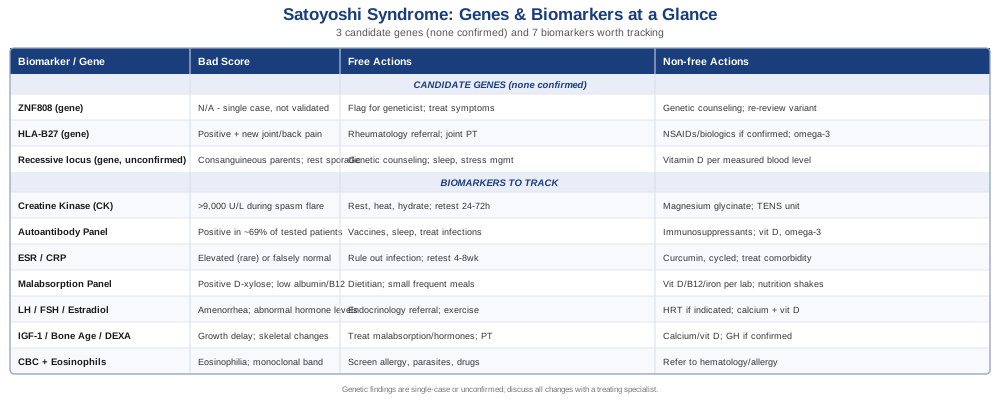
7 Biomarkers Worth Tracking in Satoyoshi Syndrome
Because Satoyoshi syndrome has no validated diagnostic biomarker and no confirmed genetic test, monitoring falls back on a set of laboratory and imaging markers that track disease activity, complications, and treatment response. None of these are specific to Satoyoshi syndrome the way, say, anti-CCP is specific to rheumatoid arthritis. But taken together, and tracked over time rather than as one-off snapshots, they give a much clearer picture than "how do you feel today."
The largest systematic review of the condition, covering 77 published cases collected between 1967 and 2021, found that autoimmune laboratory testing was done in about half of patients and came back positive in a majority of those tested Montanaro et al., Rheumatology, 2023. That pattern — inconsistent testing, but a real signal when testing happens — is exactly why deliberate, structured tracking matters more here than in better-studied diseases.
1. Creatine Kinase (CK)
Creatine kinase is released when muscle fibers are damaged or under repeated mechanical stress, and in Satoyoshi syndrome it can spike sharply during active spasm episodes. One well-documented case recorded a CK level of over 9,000 U/L during a severe spasm flare, dropping as the spasms were brought under control Bledsoe et al., Movement Disorders Clinical Practice, 2020. Tracking CK over time helps distinguish an ordinary bad day from a flare that is doing measurable muscle damage, and can flag rhabdomyolysis risk during prolonged spasm episodes.
How to measure it
CK is a standard blood draw available at any hospital or commercial lab (LabCorp, Quest, or hospital laboratory). Cost typically runs $15–40 out of pocket in the US without insurance, and it is usually bundled into a basic metabolic workup ordered by a neurologist during a flare.If the score is bad, the plan without supplements
During a CK spike, the priority is reducing spasm frequency and intensity, since CK is a downstream consequence rather than a target you treat directly. This means resting the affected muscle groups, applying heat to ease acute spasm, gentle passive stretching between episodes (not during one), and adequate hydration to protect kidney function, since very high CK carries a small risk of kidney strain. Repeat testing every 24–72 hours during an active flare is reasonable; once CK normalizes, monthly or symptom-triggered testing is enough.If the score is bad, the plan with supplements or equipment
Magnesium glycinate (200–400 mg daily) is commonly used for cramp-prone muscle conditions in general and is low-risk, though it has not been studied specifically in Satoyoshi syndrome; the main side effect is loose stools at higher doses, which is worth watching given this condition's existing diarrhea. A TENS unit ($30–80) or a percussive massage device can provide symptomatic relief between spasm episodes. Neither should be used as a substitute for the corticosteroid or immunosuppressive treatment a specialist prescribes for the underlying disease process — these are adjuncts, cycled as needed rather than used continuously, and stopped if they aggravate GI symptoms.2. Autoantibody Panel (ANA, Anti-AChR, Anti-GAD, Antithyroid, Anti-Gliadin)
This is the single most informative panel in the condition. Across the largest case review, roughly 69% of tested patients (27 of 39) had at least one positive autoantibody, most often antinuclear antibodies (ANA), followed by anti-acetylcholine receptor, anti-DNA, antithyroid antibodies, anti-GAD, and anti-gliadin antibodies Montanaro et al., Rheumatology, 2023. A documented case also found antibodies reactive against brain and gastrointestinal tissue Matsuura et al., Muscle & Nerve, 2007. This is the strongest evidence that Satoyoshi syndrome behaves like an autoimmune disease even without a confirmed trigger, and a positive panel often steers physicians toward immunosuppressive rather than purely symptomatic treatment.
How to measure it
A full autoimmune panel (ANA with reflex titer, anti-AChR, anti-GAD65, TPO/thyroglobulin antibodies, tissue transglutaminase/anti-gliadin) is drawn from a single blood sample but billed as separate tests, typically $150–500 out of pocket depending on how many antibodies are ordered, or usually covered by insurance when ordered by a specialist for a suspected autoimmune condition.If the score is bad, the plan without supplements
A positive panel by itself is not something to "fix" with lifestyle changes — it is a signal to bring to your rheumatologist or neurologist as evidence supporting immunosuppressive therapy (corticosteroids, IVIG, or steroid-sparing agents), which have documented response rates in this condition of roughly 90% among treated patients in the largest review Montanaro et al., Rheumatology, 2023. Realistic non-drug support includes minimizing additional immune triggers: staying current on age-appropriate vaccination on a schedule discussed with your physician, treating intercurrent infections promptly, and prioritizing consistent sleep, which independently affects immune regulation. Retesting every 3–6 months, or after any treatment change, tracks whether titers are trending down with therapy.If the score is bad, the plan with supplements or equipment
Vitamin D insufficiency is common in autoimmune disease generally and is inexpensive to correct once measured (see biomarker 5 below); dosing should be guided by an actual blood level rather than taken blindly, typically 1,000–2,000 IU daily for maintenance once a deficiency is corrected, rechecked every 3 months. Omega-3 fatty acids (1–2 g EPA/DHA daily) have general anti-inflammatory evidence in autoimmune conditions and are low-risk aside from mild GI upset or a fishy aftertaste; they should be treated as a minor supportive measure, not a replacement for immunosuppressive treatment, and cycled off if GI symptoms worsen given the diarrhea common in this condition.3. Inflammatory Markers: ESR and CRP
Here the biomarker story gets counterintuitive, which is exactly why it is worth knowing in advance. In documented cases, ESR and CRP have been reported as normal even during periods of significant disease activity, ANA positivity, and elevated CK Bledsoe et al., Movement Disorders Clinical Practice, 2020. That means a normal ESR/CRP should not be used to rule out an active flare in this condition, and families should not be reassured — or physicians misled — by a "normal" inflammatory panel alone.
How to measure it
ESR and CRP are inexpensive, widely available blood tests, generally $10–30 combined, often ordered as part of routine autoimmune workups.If the score is bad, the plan without supplements
If ESR/CRP is actually elevated (which happens in a minority of cases, sometimes alongside a concurrent infection or a separate autoimmune process), the standard approach is identifying and addressing that additional driver — ruling out infection first, since immunosuppressive treatment can mask fever, and discussing with a specialist whether a comorbid autoimmune condition (thyroid disease, celiac disease, and others have been reported alongside Satoyoshi syndrome) needs separate management. Track these markers roughly every 4–8 weeks while treatment is being adjusted.If the score is bad, the plan with supplements or equipment
Because elevated CRP/ESR is uncommon in this condition and usually points to something layered on top of the primary disease, broad "anti-inflammatory" supplementation is not the first move — targeted evaluation is. Curcumin (500–1,000 mg daily with piperine for absorption) has general low-grade evidence for lowering CRP in other inflammatory conditions and is low-risk short-term, but should be cycled (for example, 8 weeks on, 2–4 weeks off) and discussed with a physician if the patient is on immunosuppressants, since curcumin can interact with some medications metabolized by the liver.4. Malabsorption Markers (D-Xylose Test, Albumin, Vitamin D, B12, Iron Studies)
Chronic diarrhea is one of the defining features of this condition, present in the large majority of cases with gastrointestinal involvement, and it is often driven by genuine nutrient malabsorption rather than simple diarrhea. In a systematic review of GI manifestations, a D-xylose absorption test was positive (indicating malabsorption) in 10 of 12 tested patients, and biopsies showed a lymphoplasmacytic infiltrate in the gut lining consistent with an autoimmune-enteropathy-like process Solís-García del Pozo et al., Orphanet Journal of Rare Diseases, 2020. This matters because untreated malabsorption compounds the growth and skeletal problems also seen in this disease.
How to measure it
A D-xylose absorption test is a specialized but not exotic test, available through most gastroenterology departments, typically $50–150. Supporting labs — serum albumin, vitamin D, B12, folate, and iron panel — are standard blood draws, usually $100–250 combined, and often covered when ordered to investigate unexplained diarrhea or growth delay.If the score is bad, the plan without supplements
Working with a registered dietitian familiar with malabsorptive conditions to build a calorie- and protein-dense diet is the foundation, since restrictive elimination diets can worsen an already compromised nutritional state without professional guidance. Smaller, more frequent meals are often better tolerated than large ones. Because the biopsy pattern resembles autoimmune enteropathy rather than classic celiac disease, a gluten-free trial should only be pursued if anti-gliadin or tTG antibodies are actually positive, not as a blanket assumption. Recheck nutritional labs every 2–3 months while malabsorption is active.If the score is bad, the plan with supplements or equipment
Deficiencies should be corrected based on measured levels: vitamin D (typically 1,000–4,000 IU daily depending on baseline deficiency, rechecked in 8–12 weeks), B12 (oral 1,000 mcg daily or intramuscular injection if absorption is severely impaired), and iron (oral supplementation only if iron studies confirm deficiency, since unnecessary iron supplementation carries GI side effects and can worsen diarrhea). A medical-grade oral nutritional supplement drink can help bridge calorie gaps during active malabsorption. All of these should be dosed and monitored by the treating physician or dietitian rather than self-directed, precisely because malabsorption changes how much of an oral supplement is actually absorbed.5. Gonadotropins and Estradiol (LH, FSH, Estradiol)
Secondary amenorrhea is a recognized feature in females with this condition, generally attributed to hypogonadotropic hypogonadism alongside underdeveloped ovarian and uterine tissue. Interestingly, not every case fits this pattern precisely — one documented case labeled around premature ovarian failure actually showed LH, FSH, and estradiol within normal reference ranges case report, PMC, 2019, a reminder that the hormonal picture in this disease is not uniform and needs to be measured individually rather than assumed.
How to measure it
A basic reproductive hormone panel (LH, FSH, estradiol) is a standard blood test, roughly $75–200 depending on the lab, usually ordered by a pediatric endocrinologist or gynecologist when periods are absent or irregular.If the score is bad, the plan without supplements
Referral to a pediatric or reproductive endocrinologist is the appropriate first step, since the underlying mechanism (central hypogonadotropic pattern versus primary ovarian involvement) changes the management approach substantially. Weight-bearing exercise, adequate caloric intake, and stress reduction all support the hypothalamic-pituitary-gonadal axis generally, though none of these have been studied specifically in this condition. Hormone levels are typically rechecked every 6–12 months or when clinical symptoms change.If the score is bad, the plan with supplements or equipment
Hormone replacement therapy, when indicated, is a prescription decision made by an endocrinologist, not a supplement decision — this is one area where self-directed supplementation is inappropriate. Supportive measures like calcium (1,000–1,200 mg daily) and vitamin D are reasonable given the bone health implications of low estrogen states, and should be continued for as long as the hormonal deficiency persists, with bone density monitoring (see below) used to judge effectiveness rather than symptoms alone.6. Growth and Bone Markers (IGF-1, Bone Age X-Ray, DEXA Scan)
Skeletal abnormalities and growth retardation appear in roughly a third of documented cases, including epiphyseal and metaphyseal bone changes, genu valgus, and reduced final height Solís-García del Pozo et al., Orphanet Journal of Rare Diseases, 2019. These changes likely reflect the combined effect of chronic malabsorption, hormonal disruption, and possibly direct disease activity on growing bone, which makes growth and bone markers a useful longitudinal check, especially in children and adolescents where the disease most often begins.
How to measure it
IGF-1 is a standard blood test ($75–150). A bone age X-ray of the hand and wrist is inexpensive and widely available ($75–200). A DEXA bone density scan is more specialized, typically $100–300 without insurance, usually available at hospital radiology departments or dedicated bone density centers.If the score is bad, the plan without supplements
Addressing the malabsorption and hormonal drivers described above is the most direct lever on growth and bone health in this condition, rather than treating bone changes in isolation. Weight-bearing activity appropriate to the child's spasm tolerance supports bone density; physical therapy input is valuable here since exercise needs to be balanced against spasm triggers. Growth should be plotted on standard pediatric growth curves at every visit, and bone age or DEXA rechecked roughly annually, or more often if growth trajectory changes.If the score is bad, the plan with supplements or equipment
Calcium and vitamin D at doses appropriate for age and measured deficiency are the baseline, adjusted based on repeat labs every 3 months until stable. If growth hormone deficiency is specifically confirmed (not simply assumed from short stature), growth hormone therapy is a specialist-prescribed intervention with its own monitoring schedule and is not something to pursue without endocrinology involvement, given real costs and side-effect considerations including fluid retention and, rarely, glucose intolerance.7. Complete Blood Count With Eosinophils and Immunofixation
This is the least-established biomarker on this list, but it deserves attention precisely because it is unusual. A 2025 case report documented eosinophilia on a routine complete blood count, along with elevated beta-2-microglobulin and a monoclonal IgG band on immunofixation case report, Frontiers in Endocrinology, 2025. This is a single case, not an established pattern, but it illustrates that immune activation in this disease can show up in unexpected places, and a basic CBC with differential is cheap enough that there is little downside to including it in routine monitoring.
How to measure it
A CBC with differential is one of the most inexpensive tests in medicine, typically $10–25. Immunofixation and beta-2-microglobulin are more specialized ($75–200 combined) and would generally only be ordered if something unusual shows up on a basic panel, or as part of a broader immunology workup.If the score is bad, the plan without supplements
Isolated eosinophilia warrants a conversation with the treating physician about allergic conditions, parasitic causes (especially relevant if there has been travel history), and drug reactions before attributing it to the underlying disease itself. If a monoclonal protein is found, referral to hematology for further workup is appropriate rather than assuming it is disease-related. This is monitored opportunistically — repeated if abnormal, not on a fixed schedule if normal.If the score is bad, the plan with supplements or equipment
There is no supplement protocol directed at eosinophilia or monoclonal proteins in this condition, and attempting to self-treat either finding would be inappropriate given how broad the differential diagnosis is. The correct "equipment" here is simply a referral — to allergy/immunology or hematology as indicated by the specific abnormality — rather than any home intervention.Together, these seven markers do something a single diagnosis label cannot: they turn "the disease is active" or "the disease is quiet" into something measurable and trackable over months and years, which is genuinely useful when appointments with a specialist familiar with this condition may be infrequent. It's worth being honest that mainstream longevity-medicine frameworks — the kind associated with physicians like Peter Attia, Thomas Dayspring, or Allan Sniderman — are built around common cardiometabolic diseases and do not address a disease this rare directly. Their underlying discipline still applies, though: track trends rather than single values, use the least invasive test that answers the question, and don't treat a number in isolation from the clinical picture.
What the Genetics Research Actually Shows
The genetics side of this condition is, frankly, thin — and saying so clearly is more useful than pretending otherwise. Every major reference source, including the OMIM catalog entry for the condition (#600705) and the NORD and Orphanet rare disease databases, lists Satoyoshi syndrome as being of unknown molecular cause, with inheritance classified as "isolated cases" rather than a defined genetic pattern. Popularizers of precision genetics like Ali Torkamani, whose research group has published extensively on using genomic and exome data to guide individualized care, and Gary Brecka, known for popularizing biomarker and genetic panel testing, have not covered this specific condition — there simply isn't a large enough genetic dataset for a disease this rare to analyze the way their work typically does for common conditions. That said, three research threads are worth knowing about.
1. ZNF808 — A Single-Case Candidate Gene
In 2017, researchers performed whole-exome sequencing on an adult patient with Satoyoshi syndrome and identified a homozygous variant in ZNF808, a zinc-finger gene involved in transcriptional regulation and implicated in immune tolerance pathways, proposing it as a possible candidate gene Solera et al., Journal of the Neurological Sciences, 2017. The paper's own title poses this as a question, not a conclusion, and no other case has since reported the same variant. This is exploratory, single-patient evidence — genuinely interesting, but nowhere near confirmed causation.
If the gene is bad, the plan without supplements
Because ZNF808 is not a validated causative gene, there is no established "if this variant is present" protocol, and genetic testing for it is not part of standard clinical care for this condition. If a variant like this is incidentally found through broader exome sequencing (sometimes done to rule out other conditions during workup), the most useful non-drug response is simply flagging it for a geneticist's opinion and continuing to treat the clinical picture — the symptoms and biomarkers — rather than the genetic finding itself. Family genetic counseling can still be worthwhile given the theoretical (if unconfirmed) possibility of recessive inheritance.If the gene is bad, the plan with supplements or equipment
There is no supplement or device protocol tied to ZNF808 status, and no legitimate one should be marketed as such given how preliminary this finding is. The only "equipment" that makes sense here is continued genetic counseling infrastructure — periodic re-review of the variant's classification as gene databases update, since a variant of uncertain significance today can be reclassified as more evidence accumulates.2. HLA-B27 — A Single Reported Immune-Genetic Association
A case report described an adult with Satoyoshi syndrome who was also HLA-B27 positive with imaging evidence of axial spondyloarthritis, described by the authors as the first reported overlap between the two conditions. HLA-B27 is a well-established genetic marker of susceptibility to a family of inflammatory joint diseases, and its appearance here raises the possibility of a shared immune-genetic vulnerability in at least some patients, though this rests on one case and has not been replicated.
If the gene is bad, the plan without supplements
HLA-B27 positivity by itself, even outside this rare overlap, does not require treatment — the majority of HLA-B27-positive people never develop related disease. If a patient with Satoyoshi syndrome also has new back pain, morning stiffness, or joint symptoms, that combination is worth raising with a rheumatologist specifically because of this reported overlap, so that inflammatory joint disease is evaluated for rather than missed. Regular joint mobility exercises and posture-focused physical therapy are reasonable general measures if axial symptoms emerge, done under physical therapy guidance rather than self-directed to avoid provoking spasms.If the gene is bad, the plan with supplements or equipment
If a related inflammatory joint condition is confirmed, treatment (which may include NSAIDs or biologic therapy) is a rheumatology decision, not a supplement one. Omega-3 fatty acids have modest general evidence for joint-related inflammation and can be considered as a low-risk adjunct at 1–2 g daily, cycled with physician input, but should never substitute for confirmed disease-modifying treatment if axial spondyloarthritis is actually diagnosed.3. Immune Tolerance and Epigenetic Susceptibility
Beyond these two single-case findings, the broader pattern across the literature — high rates of autoantibody positivity, a gut biopsy pattern resembling autoimmune enteropathy, and strong treatment response to immunosuppression — points toward a breakdown in immune self-tolerance as the likely underlying mechanism, even without an identified genetic trigger. A single 2009 case report of Satoyoshi syndrome in a patient born to consanguineous parents raised the possibility of an autosomal recessive contribution in at least some cases, a notable departure since essentially every other published case has been sporadic. This remains a hypothesis, not an established inheritance pattern, and the rarity of the disease — worsened by the fact that amenorrhea often prevents affected women from having children — makes it genuinely difficult to study family inheritance patterns further.
If the gene is bad, the plan without supplements
Since no specific epigenetic marker has been validated for clinical use in this condition, the practical response is supporting general immune regulation rather than targeting a specific pathway: consistent sleep (7–9 hours for adults, more for children), stress management appropriate to age, and avoiding unnecessary immune stimulation during active disease phases. None of this is specific to Satoyoshi syndrome, but poor sleep and chronic stress are broadly linked to worse autoimmune disease control in general medical literature, so they are reasonable low-cost priorities regardless.If the gene is bad, the plan with supplements or equipment
Vitamin D sufficiency (dosed to a measured blood level, not blindly) has the most consistent general evidence among accessible interventions for supporting immune regulation, typically 1,000–2,000 IU daily for maintenance once corrected, rechecked every 3 months. Beyond that, there is no equipment or supplement stack that meaningfully targets "immune tolerance" as a mechanism in this specific disease — claims to the contrary should be treated skeptically, and any supplement regimen should be reviewed with the treating physician, particularly if the patient is already on corticosteroids or other immunosuppressants, since interactions and additive side effects (especially GI ones, given the existing diarrhea) are a real concern.The genetics research, in short, offers leads rather than answers. That is not a failure of the science — it is simply what an honest look at a disease with fewer than one hundred published cases looks like. The biomarker approach above remains the more actionable path today, but a geneticist's opinion is still worthwhile, both to rule out overlapping named syndromes and to keep the door open as sequencing technology and shared case databases improve.
A Book Worth Reading While You Wait for Better Research
There is no book or podcast built around Satoyoshi syndrome specifically — the population is simply too small. But for a disease that combines autoimmune activity, neuromuscular symptoms, and gut involvement, the closest genuinely evidence-informed parallel is Dr. Terry Wahls' work on functional and lifestyle approaches to autoimmune neurological disease, developed from her own experience with progressive multiple sclerosis and tested in subsequent clinical research on MS-related fatigue and function. It is important to be direct about the limits here: none of this research was done in Satoyoshi syndrome, and extrapolating from MS to a completely different rare disease is exactly that — an extrapolation, not proven treatment. Still, the underlying framework — using diet and lifestyle as adjuncts to, not replacements for, conventional immunology-guided treatment — is worth understanding. Here are ten of the most useful ideas from that body of work.
1. Diet Quality Is Treated as a Modifiable Input, Not an Afterthought
The core argument is that mitochondrial and immune function are sensitive to micronutrient intake, and that most modern diets under-deliver key vitamins, minerals, and phytonutrients even when calorie intake looks adequate. For a condition with documented malabsorption like Satoyoshi syndrome, this idea has extra relevance — nutrient density matters even more when absorption is already compromised.2. Vegetables Are Prioritized by Color Diversity, Not Just Volume
The framework emphasizes eating a wide range of vegetable colors specifically to cover different micronutrient and antioxidant classes, rather than simply "eating more vegetables." In a malabsorptive condition, this needs to be balanced against tolerance — some patients with active GI symptoms may need cooked, lower-fiber preparations rather than large raw salads until symptoms are controlled.3. Organ Meats and Nutrient-Dense Animal Foods Are Emphasized for Specific Deficiencies
Liver and other organ meats are highlighted for their density of B vitamins, iron, and other nutrients often low in autoimmune and malabsorptive states. This is a reasonable food-based way to address some of the deficiencies discussed in the malabsorption biomarker section above, though it should complement rather than replace measured, physician-guided supplementation.4. Elimination of Common Immune-Reactive Foods Is Tested, Not Assumed
Gluten, dairy, and eggs are removed on a trial basis in this framework to see whether symptoms improve, rather than eliminated permanently on principle. For Satoyoshi syndrome specifically, this should only be pursued in coordination with a physician and ideally after actual antibody testing (as discussed above), since blanket elimination diets in an already malabsorptive patient carry real nutritional risk if not managed carefully.5. Mitochondrial Support Is Framed as Central to Neurological Symptoms
The theory connects neurological symptom severity to mitochondrial energy production, which is why the diet emphasizes foods and cofactors (B vitamins, certain amino acids) tied to cellular energy metabolism. This is a plausible-sounding but not definitively proven mechanism, and it has not been tested in neuromuscular spasm disorders like Satoyoshi syndrome specifically.6. Movement Is Prescribed Even When Function Is Limited
Rather than rest being the default recommendation, the framework encourages whatever movement is safely possible, scaled to current ability, including electrical muscle stimulation for those with significant limitation. In Satoyoshi syndrome, any movement program needs to be built around spasm triggers with physical therapy input, since overexertion could plausibly provoke rather than help symptoms — this is an area requiring real caution, not blind adoption.7. Stress Reduction Is Treated as a Physiological Intervention, Not a Soft Add-On
Meditation, breathing practices, and structured relaxation are positioned as directly affecting neurological and immune function, not simply as coping tools. This aligns with the general (not condition-specific) evidence that chronic stress worsens autoimmune disease activity broadly.8. Sleep Is Addressed as a Non-Negotiable Foundation
Consistent, sufficient sleep is treated as a prerequisite for the rest of the plan to work, rather than a secondary lifestyle detail. This is one of the lowest-risk, most broadly applicable recommendations in the entire framework and applies regardless of diagnosis.9. Progress Is Tracked With Functional Measures, Not Just Feelings
The approach encourages tracking concrete functional outcomes — fatigue scores, mobility measures — over time rather than relying purely on subjective day-to-day feeling. This pairs naturally with the biomarker-tracking approach described earlier in this article: numbers plus function, tracked together, tell a more complete story than either alone.10. The Framework Positions Itself as an Adjunct, Not a Replacement, for Conventional Treatment
This is perhaps the most important point for a condition like Satoyoshi syndrome: even in its own home territory of multiple sclerosis, this approach is presented alongside conventional disease-modifying treatment, not instead of it. For a disease as poorly understood and potentially serious as Satoyoshi syndrome, that same framing — supportive lifestyle measures layered onto, never substituted for, specialist-directed immunosuppressive treatment — is the responsible way to engage with any of these ideas.Complementary Approaches With Real (Though Limited) Evidence
None of the approaches below have been studied in Satoyoshi syndrome directly — the condition is too rare for that. What follows are the modalities with genuine human clinical evidence for the overlapping problems this disease actually produces: muscle spasm and cramp, autoimmune activity, and gut inflammation. Where evidence is limited or drawn from a different but related condition, that is stated directly rather than implied away.
The Autoimmune Protocol (Sarah Ballantyne)
The Autoimmune Protocol, developed by Dr. Sarah Ballantyne, is a structured elimination-and-reintroduction diet designed specifically for autoimmune disease, removing grains, legumes, dairy, nightshades, eggs, nuts, seeds, and food additives for a defined period before systematically reintroducing them. Given that Satoyoshi syndrome is widely presumed to be autoimmune in nature, with documented gut inflammation and a majority of tested patients showing autoantibodies, this protocol is a natural one to be aware of, even without disease-specific trials.The best available human evidence for this general approach comes from a pilot study testing the Autoimmune Protocol diet in patients with inflammatory bowel disease, which found improvements in quality of life and some inflammatory markers over an 11-week intervention Konijeti et al., Inflammatory Bowel Diseases, 2017. This is a different autoimmune GI condition, not Satoyoshi syndrome, but the overlap in presumed mechanism (autoimmune-driven gut inflammation) makes it a reasonable point of reference.
Applied cautiously to Satoyoshi syndrome, this would mean attempting an elimination phase only under dietitian supervision given the existing malabsorption risk, watching closely for unintended weight loss or nutrient deficiency, and treating any symptom improvement as supportive information to bring back to the treating physician rather than a stand-alone treatment plan.
Progressive Muscle Relaxation
Progressive muscle relaxation is a structured technique of systematically tensing and releasing muscle groups to reduce overall muscular tension and improve awareness of early spasm or tension onset. Because the defining feature of Satoyoshi syndrome is painful, intermittent muscle spasm, a technique that trains better voluntary control over muscle tension states is plausibly relevant as a symptomatic adjunct.The clearest human evidence comes from a controlled trial in writer's cramp, a focal dystonia involving involuntary muscle spasm, where relaxation-based training served as an active treatment comparator with measurable symptomatic benefit Wieck et al., British Journal of Psychiatry, 1988. This is a different spasm disorder, not Satoyoshi syndrome, so the evidence should be read as suggestive rather than definitive.
Realistically, this would be introduced as a daily 10–15 minute practice during calm periods (not attempted during an active severe spasm), ideally taught initially by a physical therapist or psychologist familiar with movement disorders, and continued only if it demonstrably reduces spasm frequency or severity when tracked alongside the CK and symptom log discussed earlier.
Biofeedback
Biofeedback, particularly EMG (electromyographic) biofeedback, uses real-time muscle activity readouts to help a patient learn to consciously reduce excessive muscle contraction. This is directly relevant to a spasm-based condition like Satoyoshi syndrome because it targets the same neuromuscular control mechanisms implicated in the disease's hallmark symptom.Human evidence exists specifically in focal dystonia populations: EMG biofeedback has shown benefit for hand dystonia Deepak & Behari, Applied Psychophysiology and Biofeedback, 1999, and earlier work documented improvement using integrated EMG feedback in a large series of patients with spasmodic torticollis and other focal dystonias Korein & Brudny, Research Publications, 1976. Again, these are dystonia populations, not Satoyoshi syndrome specifically, so results should not be assumed to transfer directly.
In practice, this requires access to a clinician trained in EMG biofeedback (often a physical therapist or specialized psychologist), typically delivered over a series of weekly sessions, and works best as a complement to — not a substitute for — the medical management of the underlying spasm disorder.
Massage Therapy
Massage therapy applies manual pressure and manipulation to muscle tissue and is commonly used to relieve cramp and spasm-related discomfort, improve local circulation, and reduce muscle guarding after an episode.A recent randomized controlled trial found that massage reduced cramp frequency, cramp severity, and improved sleep quality in patients prone to muscle cramps Parlak & Akgün Şahin, Hemodialysis International, 2024. This trial was conducted in a different cramp-prone population (hemodialysis patients), not Satoyoshi syndrome, so the specific mechanism of cramping differs, but the general symptomatic benefit for cramp frequency and sleep is a reasonable point of extrapolation.
For a person with Satoyoshi syndrome, gentle massage between spasm episodes (not on acutely spasming muscle) delivered by a therapist informed about the condition, once or twice weekly, is a low-risk way to test for symptomatic benefit, with the caveat that some individuals with heightened muscle irritability may find manual pressure provokes rather than relieves spasm — this should be tested cautiously and stopped if it worsens symptoms.
Microbiome-Directed Therapies
Microbiome-directed therapies, including targeted probiotics and, in more advanced cases, fecal microbiota transplantation, aim to correct gut microbial imbalances that may contribute to autoimmune gut inflammation. Given that Satoyoshi syndrome frequently involves chronic diarrhea and a biopsy pattern resembling autoimmune enteropathy, gut-directed approaches are a logical area of interest, even though they remain investigational for this specific disease.A systematic review and meta-analysis of fecal microbiota transplantation across autoimmune and autoinflammatory diseases found generally favorable safety data with some efficacy signals, though the authors emphasized that evidence quality varies significantly by condition and is not established for gastrointestinal autoimmune conditions outside of inflammatory bowel disease Zeng et al., Frontiers in Immunology, 2022. No study has examined this specifically in autoimmune-enteropathy-like presentations such as the gut involvement seen in Satoyoshi syndrome.
Given the investigational nature of FMT specifically, a more realistic starting point is a simpler, lower-risk step: discussing a targeted probiotic trial with a gastroenterologist familiar with the patient's specific gut findings, monitored against the malabsorption markers discussed earlier, rather than pursuing fecal microbiota transplantation, which carries real procedural risk and should only be considered within a research or specialist clinical setting if ever appropriate for this condition.
Conclusion
Satoyoshi syndrome does not yet have a confirmed genetic cause, and it likely will not for some time, given how few cases exist to study. What it does have is a reasonably consistent laboratory picture — autoantibodies in a majority of tested patients, CK spikes during spasm flares, inflammatory markers that are often unhelpfully normal, malabsorption that can be measured and corrected, and hormonal and skeletal changes that respond to being tracked and addressed rather than assumed. That laboratory picture, more than any genetic test available today, is what makes disease activity visible between specialist visits and gives structure to conversations about treatment.
None of the complementary approaches or lifestyle frameworks discussed here replace the corticosteroids, immunosuppressants, or other specialist-directed treatments that have the strongest documented response rates in this condition. They are, at best, reasonable adjuncts worth discussing with the treating team, tried cautiously, and dropped if they don't help or if they aggravate symptoms.
The most useful next step is a practical one: if you don't already have baseline values for CK, a full autoantibody panel, ESR/CRP, and basic nutritional labs, ask your specialist about establishing them now, so that future changes have something concrete to be measured against. A simple symptom and spasm log kept alongside those numbers turns "it feels worse lately" into something a physician can actually act on. That combination — measured data plus a specialist who knows this specific disease — remains the most grounded path forward for a condition this rare.
Women's Health
Musculoskeletal: Bone Conditions Muscle Conditions
Neurological: Movement Disorders
Digestive: Intestinal Conditions
Women's Health: Hormonal Conditions