This article contains AI generated content.
Segond Fracture: 3 Genes And 7 Biomarkers To Track
If you're reading this after a Segond fracture, you've probably already noticed that most of what's written about it is either radiology jargon or a two-line mention buried inside an ACL tear article. That gap is real: a Segond fracture is a small avulsion of bone off the lateral tibia, but it's rarely an isolated injury. In 75 to 100 percent of cases, it travels with a torn anterior cruciate ligament and an injured anterolateral ligament complex, which means the real question isn't just "how does this bony chip heal" but "how do I rebuild a knee that failed structurally, and how do I lower the odds it happens again."
Generic advice — rest, ice, physical therapy, "give it six months" — isn't wrong, but it treats every knee the same. It doesn't account for the fact that your vitamin D status, your glucose control, your bone-remodeling rate, or your hormonal cycle (if you're a woman training through this) can all shift the healing timeline and the reinjury risk in measurable, trackable ways. Two people with an identical MRI can heal at very different rates, and the difference is often sitting in a blood panel nobody ordered.
This article takes the more detailed route. Instead of repeating "eat well and do your PT exercises," it walks through the specific biomarkers that reflect bone and ligament repair, what they can reveal about your particular recovery, and what realistically moves them — with and without supplements. It also looks at the genetic variants tied to collagen and ligament resilience, a longevity book that reframes injury prevention as a life-expectancy issue, and a short list of complementary techniques with actual trial evidence behind them for knee injury recovery.
None of this replaces your orthopedic surgeon or physical therapist, and none of it promises a shortcut. What it offers is something more durable: a clearer map of what's measurable, so the decisions you make about supplements, training load, and timelines are based on your numbers rather than a generic recovery script.
Summary
Before the deep dive: a Segond fracture is almost never "just" a bone chip — it's a marker of a knee that has failed at the ligament level, and the biomarkers that predict how well it heals are largely the same ones that predict whether the other knee holds up too. Below, you'll find seven blood-based biomarkers — from vitamin D and bone turnover markers to a hormone most people have never heard of that quadruples ACL injury risk at certain points in the menstrual cycle — each with realistic ranges, cost, and a two-track plan (with and without supplements) to move them. After that, a shorter look at the collagen genes (COL1A1, COL5A1, and the TGF-β pathway) that shape how forgiving your ligaments are, a breakdown of the injury-prevention argument from Peter Attia's Outlive that reframes stability training as a longevity issue, and four complementary techniques — from EMG biofeedback to motor imagery — that have actual randomized trial data behind them for ACL-type knee recovery. The goal isn't a miracle fix; it's a more precise one.

The Biomarkers That Actually Reflect How Your Knee Is Healing
A Segond fracture heals in two overlapping processes: the bone avulsion itself remodels like any fracture, while the ligament structures around it (ACL, anterolateral ligament, sometimes the meniscus) go through a slower, less linear soft-tissue repair. Most standard post-op bloodwork ignores both. The seven biomarkers below were chosen because each one maps onto a specific, modifiable part of that dual healing process — not because they're trendy panel additions.
Vitamin D (serum 25-hydroxyvitamin D)
Vitamin D supports bone mineralization and plays a role in the muscle strength you'll need to rebuild quadriceps and hamstring control during rehab. Low levels are common — surveys regularly find 30 to 50 percent of orthopedic patients deficient at the time of injury. The evidence on supplementation directly speeding fracture healing is honestly mixed: a 2014 systematic review found vitamin D alone did little to change union rates, and a more recent 2023 systematic review of 14 studies found the positive results tended to come from lower-quality trials. The honest takeaway: correcting a deficiency is worth doing for general bone and muscle health, but don't expect vitamin D alone to change your recovery timeline.
How to measure it: a standard serum 25-OH vitamin D blood draw, roughly 30 to 50 dollars out of pocket if not bundled into a metabolic panel your surgeon already ordered. Direct-to-consumer fingerstick kits run 40 to 60 dollars and are less precise but fine for tracking trends.
If the score is bad, the plan without supplements: 15 to 30 minutes of midday sun exposure several times a week (adjusted for skin tone and latitude), and dietary sources like fatty fish, egg yolks, and fortified dairy. Weight-bearing activity, once cleared by your surgeon or physical therapist, also supports the bone side of the equation independent of vitamin D status.
If the score is bad, the plan with supplements or equipment: vitamin D3, 1,000 to 2,000 IU daily for general maintenance, or up to 4,000 to 5,000 IU daily for 8 to 12 weeks if you're clinically deficient, then retest. No cycling is needed for D3 at these doses, but avoid megadosing above 10,000 IU/day without medical supervision — the main side effect at excess doses is hypercalcemia, with symptoms like nausea and increased kidney stone risk. A UV light box is a reasonable fallback only for people with very limited sun access; it isn't a routine recommendation.
High-sensitivity C-reactive protein (hs-CRP)
hs-CRP is a blunt but useful proxy for how much inflammatory burden your body is carrying. In the fracture-surgery literature, elevated CRP has been linked to worse outcomes after fracture surgery, and it's also the standard flag clinicians watch for early infection after fixation. For a Segond fracture specifically, a chronically elevated baseline CRP (unrelated to the injury itself) can indicate systemic inflammation that isn't helping your tissue repair.
How to measure it: a simple blood draw, 15 to 30 dollars standalone or bundled into a basic panel for 50 to 100 dollars. It's inexpensive enough to retest every 4 to 6 weeks through the acute recovery phase.
If the score is bad, the plan without supplements: an anti-inflammatory eating pattern built around fatty fish, vegetables, and reduced ultra-processed food and added sugar; 7 to 9 hours of sleep, which independently lowers CRP over weeks; and appropriately graded rehab loading, since sudden spikes in training volume can transiently raise inflammatory markers.
If the score is bad, the plan with supplements or equipment: omega-3 fish oil, 1 to 2 grams of combined EPA/DHA daily, ongoing rather than cycled, with the main caution being a mild blood-thinning effect (relevant if you're on anticoagulants) and occasional GI upset. Curcumin extract with piperine, 500 to 1,000 mg daily, is reasonable to cycle in 8- to 12-week blocks with a break, watching for GI irritation. In the acute post-injury or post-op window (first 48 to 72 hours), standard ice and compression equipment remains the simplest, best-supported way to blunt the local inflammatory spike.
HbA1c and fasting insulin
This pairing matters more than most people expect. A 2020 systematic review and meta-analysis found that patients with diabetes have a significantly increased risk of impaired fracture healing, and HbA1c above 7 to 8 percent has specifically been flagged as a predictor of delayed bone healing. The mechanism is fairly well understood: chronic high blood sugar generates advanced glycation end-products that disrupt the normal balance between bone-building osteoblasts and bone-resorbing osteoclasts. You don't need diagnosed diabetes for this to matter — borderline insulin resistance can still nudge healing in the wrong direction.
How to measure it: HbA1c runs 15 to 40 dollars, fasting insulin 20 to 40 dollars; combined metabolic panels typically run 50 to 150 dollars. A continuous glucose monitor (50 to 90 dollars per month) is a more advanced option if you want real-time feedback on how specific meals or rehab days affect your glucose.
If the score is bad, the plan without supplements: cut refined carbohydrates and added sugar, take a short walk after meals (a well-documented way to blunt post-meal glucose spikes), keep resistance training going within your rehab restrictions, and prioritize consistent sleep timing.
If the score is bad, the plan with supplements or equipment: berberine, 500 mg two to three times daily, cycled in 8- to 12-week blocks with a 2- to 4-week break — it's effective but can cause GI upset and interacts with several medications, so check with your physician first. Magnesium glycinate, 200 to 400 mg daily, is a lower-risk addition with mild GI effects only at high doses. A CGM, worn in 2- to 4-week blocks rather than continuously, is the most practical equipment-based option for anyone with borderline glucose control who wants pattern-level feedback.
P1NP (procollagen type I N-terminal propeptide)
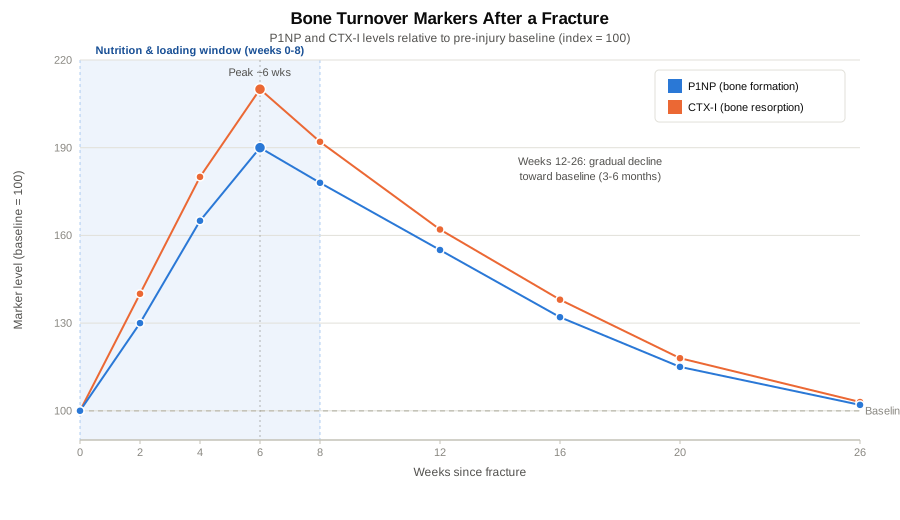
P1NP is a direct readout of new bone and collagen formation — it rises as osteoblasts lay down new type I collagen. Because a Segond fracture is an avulsion injury (bone pulling away from a ligament attachment), the healing process depends heavily on this same collagen-formation machinery to reattach the fragment and restore the enthesis. A 2022 study on tibia and femur fractures found P1NP and CTX levels typically peak around six weeks post-injury, and elevated six-week levels correlated with better radiological healing at 12 weeks — making the trend, not a single value, the useful signal.
How to measure it: a specialized blood test, usually ordered by an endocrinologist or a sports-medicine physician familiar with bone metabolism, costing 80 to 150 dollars; draw it fasting in the morning, since it has minimal circadian swing but standardization still helps comparisons over time.
If the score is bad, the plan without supplements: adequate protein intake (roughly 1.2 to 1.6 grams per kilogram of body weight daily) to supply the amino acids collagen synthesis requires, progressive weight-bearing and mechanical loading as your surgeon clears you (mechanical strain is one of the strongest natural stimulants of bone formation), and cutting smoking and excess alcohol, both of which measurably suppress bone formation markers.
If the score is bad, the plan with supplements or equipment: vitamin C, 500 to 1,000 mg daily, as a collagen synthesis cofactor — generally safe, though very high doses can cause GI upset or raise kidney stone risk in predisposed individuals. Collagen peptides, roughly 15 grams taken about an hour before loading or rehab sessions, pair well with the vitamin C timing based on how collagen-synthesis studies are typically designed. On the equipment side, low-intensity pulsed ultrasound bone stimulators (used about 20 minutes daily) have some support for delayed unions specifically, though evidence for routine healthy healing is weaker — discuss with your surgeon before adding one.
CTX-I (C-terminal telopeptide of type I collagen)
CTX-I is P1NP's counterpart on the resorption side — it reflects how much old bone is being broken down as part of remodeling. Some resorption is normal and necessary after a fracture, but a CTX that stays high relative to P1NP (uncoupled turnover) can signal that the resorption and formation processes aren't syncing up properly, which is more common with vitamin D deficiency, poor nutrition, or low energy availability during rehab.
How to measure it: a blood test similar in cost to P1NP, 80 to 150 dollars standalone, or 150 to 250 dollars as a combined "bone turnover panel." Circadian variation is more pronounced for CTX than P1NP, so a fasting morning draw is important for comparability.
If the score is bad, the plan without supplements: sufficient dietary calcium (roughly 1,000 to 1,200 mg daily from dairy, leafy greens, or fortified foods), resistance and impact exercise once cleared to help couple resorption with formation, and avoiding prolonged caloric restriction during healing — chronic under-eating (an issue that shows up disproportionately in female athletes, sometimes labeled RED-S) elevates resorption markers independent of the injury itself.
If the score is bad, the plan with supplements or equipment: calcium citrate or carbonate, 500 to 600 mg per dose taken with meals if dietary intake falls short (single doses above 500 mg absorb less efficiently, and megadosing has been associated with cardiovascular calcification concerns in some research, so more isn't automatically better). Vitamin K2 (as MK-7), 100 to 200 mcg daily, supports proper mineralization and is generally well tolerated, though it's contraindicated if you're on warfarin. No special equipment is needed beyond the standard resistance bands and light-loading tools your physical therapist already has you using.
Serum relaxin (for women, timed to cycle phase)
This is the least well-known biomarker on this list and arguably the most specific to Segond-type injuries in women. Relaxin is a hormone that peaks during the luteal phase of the menstrual cycle and is thought to increase ligament laxity by upregulating collagen-degrading enzymes in ACL tissue. A study on elite collegiate female athletes found that those with serum relaxin above roughly 6.0 pg/mL had more than four times the risk of ACL tears, and a 2023 systematic review on relaxin and ACL injuries backs the association, while noting some studies find no effect on laxity — the evidence is real but not unanimous. Given how tightly Segond fractures track with ACL and anterolateral ligament injury, this is directly relevant for women managing return-to-sport timing or trying to understand contralateral-knee risk.
How to measure it: a blood draw timed specifically to the luteal phase for meaningful interpretation, run through a specialty endocrine or sports-medicine research lab rather than a standard commercial lab, typically 100 to 200 dollars. It's not something most primary care offices order routinely.
If the score is bad, the plan without supplements: cycle-aware training — tracking your cycle phase and deliberately reducing plyometric, cutting, and pivoting volume during the luteal window, while prioritizing neuromuscular control drills (landing mechanics, hip and knee alignment cueing) during that same period.
If the score is bad, the plan with supplements or equipment: no supplement reliably lowers endogenous relaxin. Hormonal contraceptives have been shown to reduce serum relaxin-2 levels, but that's a medical decision to make with a physician or gynecologist weighing reinjury risk against the real side effects of hormonal contraception (mood changes, clotting risk considerations) — not something to self-initiate for injury prevention alone. Wearable cycle trackers (100 to 300 dollars) are a reasonable lower-friction way to estimate your phase and plan training load without direct relaxin testing.
IGF-1 (insulin-like growth factor 1)
IGF-1 supports collagen and connective tissue anabolism broadly, and it's sensitive to the same levers — sleep, total nutrition, training stimulus — that longevity-focused clinicians like Peter Attia track routinely. A study tracking serum collagen markers, IGF-1, and knee laxity across the menstrual cycle found these all move together, which makes IGF-1 a useful secondary data point alongside relaxin for understanding why your knee might feel looser or your rehab progress might stall in a given week.
How to measure it: a standard blood test, 50 to 100 dollars alone, or 150 to 300 dollars as part of a broader hormone panel offered by longevity-oriented clinics or direct-to-consumer labs.
If the score is bad, the plan without supplements: prioritize 7 to 9 hours of sleep (deep sleep drives the growth hormone pulses that raise IGF-1), avoid chronic caloric restriction, and keep a consistent resistance training stimulus, which is the most evidence-backed lever available.
If the score is bad, the plan with supplements or equipment: be cautious here. There's no supplement that safely and reliably raises IGF-1, and unregulated "growth factor" products or peptides like sermorelin and ipamorelin carry real risks — fluid retention, joint pain, and theoretical long-term concerns tied to manipulating growth-factor pathways — and should only be considered under endocrinology supervision, not as a self-directed recovery hack. The most defensible "equipment" here is simply structured, progressive resistance training three times a week, with no cycling needed beyond normal periodization.
Biomarkers tell you what's happening inside the tissue right now. Genetics tell you something different: the baseline resilience you were dealt before the injury ever happened, and where extra caution might be worth building into your return-to-sport plan.
What Your Collagen Genes May Reveal About Ligament Resilience
Genetic testing for injury risk is a newer, more speculative field than biomarker tracking, and the evidence base is smaller and more mixed. It's worth including here because a Segond fracture is fundamentally a ligament-anchoring failure, and a handful of collagen-related genes have shown real, if inconsistent, associations with exactly that kind of injury.
COL1A1 — the type I collagen gene
COL1A1 codes for the main structural collagen in bone, tendon, and ligament. A specific variant near the Sp1 binding site (rs1800012) has been studied extensively: a meta-analysis of sports-related tendon and ligament injuries found the rarer TT genotype was associated with a reduced injury risk, while the more common variant carried somewhat higher susceptibility. This is a real, replicated pattern, but it's a modest effect on a background of much larger factors like training load and biomechanics.
The plan without supplements or equipment: since you can't change the gene, the practical compensation is mechanical — progressive tendon and ligament loading (isometrics, controlled eccentrics) measurably increases collagen cross-linking and tissue stiffness over time, regardless of genotype. Deliberate work on deceleration and landing mechanics reduces the peak loads your ligaments actually experience, which matters more for a "less favorable" genotype.
The plan with supplements or equipment: vitamin C and collagen peptide timing before loading sessions (as described above) is a reasonable low-risk addition. If genetic testing suggests a higher-risk variant, the more defensible "equipment" is simply a longer, more conservative return-to-sport timeline — an extra 4 to 8 weeks — plus a wearable load-monitoring device (150 to 400 dollars) to cap high-intensity cutting and pivoting volume during early return to play. There's no cycling or side-effect profile to manage here since it's a monitoring strategy, not a substance.
COL5A1 — the type V collagen gene
COL5A1 regulates how type V collagen assembles alongside type I collagen in tendons and ligaments, affecting fiber diameter and tissue compliance. The evidence here is genuinely mixed: a study in skiers and a preliminary team-sport report found specific variant combinations associated with altered ACL injury risk, but a larger meta-analysis did not confirm a significant effect for the most commonly tested variant (rs12722). Treat this one as suggestive rather than settled.
The plan without supplements or equipment: the same loading-based compensation applies — eccentric hamstring and quadriceps work, plus single-leg balance and stability training (wobble board or similar), three times weekly, since tissue compliance differences respond to consistent mechanical conditioning regardless of the underlying genetics.
The plan with supplements or equipment: no supplement changes type V collagen expression directly. The best-supported equipment-based option is a structured neuromuscular warm-up program (the FIFA 11+ format is the most studied example), run 15 to 20 minutes, two to three times a week, which has been shown to reduce ACL injury rates broadly. There's no side-effect concern; the real cost is consistency and adherence.
TGF-β pathway genes
Transforming growth factor-beta pathway genes regulate collagen deposition and fibroblast activity during ligament remodeling. A study exploring COL5A1 intron variants alongside TGF-β family genes found associations with ACL rupture risk, though this area is still early and exploratory compared to the collagen gene research above.
The plan without supplements or equipment: the recovery basics — sleep, adequate protein, and graded loading — support healthy TGF-β-mediated remodeling without needing to target the pathway directly.
The plan with supplements or equipment: avoid unproven "TGF-beta boosting" peptides marketed online; there isn't adequate human safety data to justify the risk. The more defensible option is objective strength-symmetry testing on an isokinetic dynamometer (100 to 200 dollars per session at most sports medicine clinics), repeated at 3, 6, and 9 months post-injury, to make return-to-sport decisions based on measured symmetry rather than how the knee simply feels.
Epigenetics — how mechanical loading and exercise might chemically modify collagen gene expression over time — is an active research area in animal models, but human evidence specific to ligament injury is still too early to translate into concrete recommendations. Worth watching, not worth acting on yet.
Genes set the baseline. What you do with training load, recovery, and long-term movement quality is where a well-known longevity book makes a surprisingly direct case for treating knee injuries like Segond fractures as a life-expectancy issue, not just a sports medicine one.
The Injury-Prevention Argument From Peter Attia's Outlive
Peter Attia's Outlive isn't written about Segond fractures or knee ligaments specifically, but its central argument reframes exactly this kind of injury in a way most orthopedic advice never does: the biggest threat to your long-term physical capability usually isn't a disease, it's a preventable musculoskeletal injury that derails your training for months or years. Below are ten of the book's most directly applicable ideas for anyone recovering from a Segond fracture or ACL-type injury.
Injuries, not disease, are what actually curtail your "marginal decade"
Attia's core claim is that most people don't die suddenly from the "four horsemen" (heart disease, cancer, neurodegenerative disease, diabetes) without warning — they lose their last decade of functional independence first, and injury is one of the fastest ways to trigger that decline early. A Segond fracture and its accompanying ACL injury is exactly the kind of event that can quietly start that clock.
Define your "Centenarian Decathlon" and train backward from it
Attia recommends listing the specific physical tasks you want to still be able to do in your 70s, 80s, or 90s — carrying groceries, getting off the floor, playing with grandchildren — and then reverse-engineering your training today to guarantee that capacity. For a knee that's just failed structurally, this reframes rehab from "get back to sport" to "protect the joint that has to serve you for another 50 years."
Cardiorespiratory fitness has no observed ceiling of benefit
Attia leans heavily on the 2018 study of over 122,000 patients undergoing treadmill testing, which found that higher cardiorespiratory fitness was tied to lower all-cause mortality with no upper limit — elite fitness carried roughly an 80 percent lower mortality risk than the least fit group. The practical implication for injury recovery: maintaining aerobic capacity through cross-training (cycling, swimming, or rowing as tolerated) during the months you can't run or cut is not a consolation prize, it's protecting one of the strongest longevity levers available.
Stability is the unofficial fifth vital sign
Attia argues stability — balance, joint control, deceleration ability — deserves the same ongoing attention as blood pressure or cholesterol, because it's the thing that actually prevents the fall or the bad landing that ends up as a fracture. This is a direct challenge to how casually most gyms and even some rehab programs treat single-leg balance work.
Eccentric strength and deceleration capacity are chronically undertrained
The book repeatedly flags that most recreational training emphasizes concentric strength (lifting, pushing) while neglecting eccentric control (lowering, decelerating) — exactly the capacity that fails in the kind of pivoting or landing mechanism that causes a Segond fracture in the first place.
Zone 2 training builds the aerobic base that everything else depends on
Attia's emphasis on low-intensity, sustainable aerobic work (roughly 70 to 80 percent of training volume) as a foundation, with VO2 max intervals layered on top, gives injured athletes a structured way to stay fit during a period when high-impact training is off the table.
Grip strength and muscle mass are proxies for whole-body resilience
Attia cites the broader literature linking grip strength to overall mortality risk as a simple, low-cost marker of general physical robustness — useful context for why maintaining upper-body and core strength during a lower-limb injury isn't just about not losing gains, it's part of the same resilience picture.
Rucking and loaded carries build resilience that gym machines don't
The book champions loaded carries and rucking as a way to build the kind of full-body, joint-integrated strength that mirrors real-world demands — a useful bridge activity for knee-injury rehab once walking tolerance returns, before higher-impact activity is cleared.
Proactive medicine beats reactive medicine
Attia's broader thesis — track your biomarkers now, not after something breaks — is essentially the argument for this entire article's biomarker section. Waiting for a second Segond fracture or ACL tear to start paying attention to vitamin D, glucose control, or bone turnover markers is the reactive model Attia specifically argues against.
"Exercise of avoidance" is a bigger risk than most people realize
Attia warns against the tendency to quietly stop doing movements that feel risky after an injury — pivoting, jumping, single-leg work — because that avoidance itself erodes the neuromuscular capacity needed to protect the joint later. Structured, supervised reintroduction of those movements matters more than indefinite avoidance.
The goal is a longer runway, not a faster comeback
Perhaps the most useful mindset shift for someone healing from a Segond fracture: Attia's framework isn't about rushing back to play as fast as possible, it's about building a knee and a body that holds up for decades, which sometimes means a slower, more conservative return is the actually optimal choice.
That same patience-over-speed logic carries into recovery techniques themselves — some of which have real trial data behind them for knee ligament injuries, even though they rarely get mentioned alongside standard physical therapy.
Complementary Techniques With Real Trial Support for Knee Ligament Recovery
These aren't alternatives to surgery or physical therapy — they're adjuncts with actual human evidence specific to ACL-type knee injuries, which is the closest available proxy for Segond fracture recovery given how often the two occur together.
EMG biofeedback
Electromyographic (EMG) biofeedback uses surface electrodes to show you, in real time, how strongly your quadriceps (specifically the vastus medialis) are firing — useful because quadriceps activation failure is one of the most persistent problems after knee ligament injury or reconstruction, often lingering well after strength training resumes.
A randomized controlled trial added EMG biofeedback to standard rehabilitation in the first postoperative week after ACL reconstruction and found it meaningfully improved knee extension and vastus medialis activation compared to standard rehab alone.
Realistically, this means asking your physical therapist whether their clinic has EMG biofeedback equipment available in the early weeks after surgery — it's typically used a few times a week for 15 to 20 minutes per session, folded into existing PT visits rather than done independently at home.
Motor imagery (guided imagery)
Motor imagery — mentally rehearsing a movement in vivid detail without performing it — sounds unlikely to matter for a structural knee injury, but it targets a specific, well-documented problem: persistent quadriceps weakness after ACL injury is partly neural (a phenomenon called arthrogenic muscle inhibition), not purely muscular.
A study measuring EMG activity during motor imagery in ACL patients found imagery practice increased quadriceps muscle activation, and a broader systematic review found consistent evidence for improved range of motion and reduced kinesiophobia (fear of movement) when imagery was added to standard rehab.
In practice, this looks like 10 to 15 minutes of guided imagery, a few times a week, visualizing controlled knee movements and successful, pain-free loading — done alongside physical rehab, not instead of it, and it costs nothing beyond the time.
Photobiomodulation (low-level laser therapy)
Photobiomodulation uses specific wavelengths of low-level laser or LED light applied to tissue, with proposed effects on mitochondrial activity and local inflammation. Evidence is more established for pain and swelling than for structural healing speed.
A systematic review and meta-analysis on injured athletes found photobiomodulation significantly reduced pain and improved return-to-play outcomes at the tested wavelengths and doses, though direct trials in Segond fracture patients specifically don't exist — this evidence comes from broader athletic injury and knee surgery populations.
If your clinic offers it, typical protocols run two to three sessions weekly for several weeks in the early rehab phase; it's worth asking your physical therapist whether it's available and appropriate for your specific timeline, rather than seeking out a standalone device.
Massage therapy
Massage therapy's evidence base here comes primarily from knee replacement surgery rather than ACL or Segond fracture repair specifically, so it should be read as a reasonable extrapolation rather than direct proof.
A systematic review and meta-analysis of eleven randomized trials in total knee arthroplasty patients found massage produced measurable pain reduction at multiple points post-surgery and improved range of motion, with a good safety profile.
The practical version: once your surgeon or physical therapist clears soft-tissue work near the surgical site (often around six weeks post-op), light massage or lymphatic drainage technique can be a reasonable addition for swelling and pain, ideally delivered by a therapist coordinating with your PT rather than as an isolated intervention.
Bringing It All Together
A Segond fracture is rarely just a bone injury — it's usually a signal that the ligament structures around your knee failed under load, which means the recovery question is bigger than "did the fragment heal." The biomarkers in this article (vitamin D, hs-CRP, HbA1c and fasting insulin, P1NP, CTX-I, serum relaxin, and IGF-1) give you a way to check whether the underlying biology of healing is actually on track, rather than relying on how the knee feels or what a single follow-up X-ray shows. The genetic variants in COL1A1, COL5A1, and the TGF-β pathway won't change your treatment plan directly, but they can inform how conservative your return-to-sport timeline should be. And the injury-prevention thinking from Outlive, along with trial-backed adjuncts like EMG biofeedback and motor imagery, round out a plan that treats this injury as something worth managing with real precision, not just patience.
None of this replaces the judgment of your orthopedic surgeon or physical therapist — it's meant to make those conversations sharper. A reasonable next step: ask your care team which of these biomarkers were already checked, request the ones that weren't, and track two or three of them alongside your rehab milestones over the next few months. Better information, applied consistently, is still the most reliable path to a knee that holds up.
Women's Health Endocrine & Metabolic
Musculoskeletal: Bone Conditions Joint Conditions