This article contains AI generated content.
Semitendinosus Tendinitis: 5 Genes And 7 Biomarkers To Track
Pain along the inner hamstring, just below the sit bone or trailing down toward the pes anserine, has a way of resisting generic advice. You stretch, you rest, you foam-roll the area, and the ache either fades slightly and returns with the next run, or it never really moves at all. That pattern is common with semitendinosus tendinitis, and it's precisely why most standard guidance falls short: it treats the tendon as an isolated mechanical part rather than as tissue shaped by inflammation, metabolic health, hormone status, and inherited collagen biology.
Generic hamstring-tendon advice tends to stop at "strengthen it, stretch it, ice it." That's not wrong, but it's incomplete. Two people with identical loading histories and nearly identical MRI findings can have very different healing trajectories, because their underlying biology — how efficiently they clear inflammation, how well their collagen cross-links, how their thyroid and glucose metabolism support tissue repair — is not the same. Training load matters, but it is only one variable in a larger system.
This article takes a more layered approach. It looks at the blood-based biomarkers that plausibly influence tendon health and repair capacity, and at the genetic variants that researchers have associated with tendon and ligament injury risk. Neither is a diagnosis, and neither replaces a clinical evaluation of the tendon itself. But both give you something generic advice can't: a way to ask "why might my tissue be slow to adapt or recover," instead of just "what exercise should I do."
None of this promises a cure, and no single test will explain a stubborn tendon on its own. What better information does offer is a narrower, more useful set of questions to bring to a clinician, and a more precise idea of where your own physiology might be working against you. The sections below walk through the biomarkers worth tracking, the genetic variants with the most credible evidence, a research-backed nutrition strategy for tendon collagen, and a short set of complementary approaches with real supporting data.
Summary
Semitendinosus tendinitis is rarely just a loading problem. Underneath the mechanical story, seven blood markers — from hs-CRP to thyroid-stimulating hormone to uric acid — can reveal whether your body is running a background inflammatory or metabolic state that keeps slowing tendon repair, and each one comes with a concrete, testable way to improve it. Alongside that, five genes tied to collagen structure and remodeling (COL5A1, MMP3, GDF5, COL1A1, and TNC) help explain why some people seem to need more recovery time or more deliberate loading than others, even doing the exact same rehab program. This article walks through both, then adds a research-backed nutrition protocol tied to a well-known tendon physiologist's work, and a short review of complementary approaches — like photobiomodulation and targeted massage — that have real, if sometimes modest, evidence behind them for tendon pain. The goal isn't a single fix; it's a clearer map of where to look next.
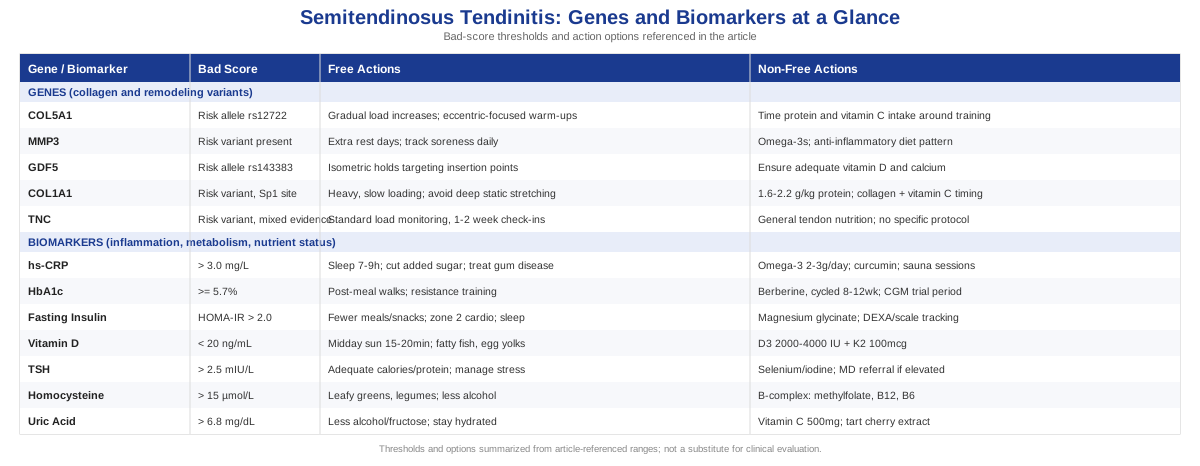
7 Biomarkers Worth Tracking for Semitendinosus Tendinitis
Tendon tissue heals slowly under the best of circumstances — it's relatively avascular, and collagen turnover is a matter of weeks to months, not days. What determines whether that slow process runs smoothly or stalls out isn't just how you load the tendon. It's the biochemical environment the tendon is trying to repair itself in. The seven biomarkers below cover the four systems most likely to interfere with that environment: systemic inflammation, glucose and insulin metabolism, thyroid function, and the nutrient/amino-acid status that supports collagen cross-linking. This is the strategy favored by clinicians in the Peter Attia and Thomas Dayspring mold, who generally argue that tracking a small number of mechanistically-relevant markers beats reacting to symptoms alone.
1. High-Sensitivity C-Reactive Protein (hs-CRP)
hs-CRP is a general marker of systemic, low-grade inflammation produced by the liver in response to interleukin-6 signaling. It isn't specific to tendons, but chronically elevated hs-CRP suggests your body is running a background inflammatory load that can blunt the normal repair signaling a tendon needs after training. In someone with a tendinitis that isn't settling down despite reasonable rest, a persistently high hs-CRP is a reasonable prompt to look beyond the tendon itself — toward sleep, visceral fat, gum disease, or an unresolved viral illness.
How to measure it
hs-CRP is a standard blood draw, widely available through primary care or direct-to-consumer lab services, typically costing between $15 and $40 out of pocket when not covered by insurance. Results under 1.0 mg/L are considered low risk, 1.0–3.0 mg/L average, and above 3.0 mg/L high — though a single reading above 10 mg/L usually reflects an acute infection rather than baseline inflammation and should be repeated.If the score is bad, the plan without supplements
Prioritize seven to nine hours of consistent sleep, since even partial sleep restriction reliably raises inflammatory cytokines. Reduce ultra-processed food and added sugar intake, which are two of the more reproducible dietary drivers of elevated CRP. Address visceral fat through a sustained caloric deficit if applicable, and treat periodontal disease if present, since gum inflammation is an underappreciated contributor to systemic hs-CRP.If the score is bad, the plan with supplements or equipment
Omega-3 fatty acids (roughly 2–3 g/day combined EPA/DHA) have the most consistent evidence for modestly lowering hs-CRP, typically over 8–12 weeks; cycling isn't necessary, but doses above 3 g/day can increase bleeding risk and should be discussed with a physician if you're on anticoagulants. Curcumin (500–1000 mg/day with piperine for absorption) has some supporting trial data for inflammatory markers, though effect sizes are inconsistent; mild GI upset is the main side effect. A sauna or hot-water immersion routine 2–3 times weekly has emerging evidence for lowering inflammatory markers over time and requires no supplementation, just consistent access to the equipment.2. HbA1c
HbA1c reflects average blood glucose over roughly three months. Tendon tissue is metabolically sensitive to sustained high glucose: elevated glucose promotes advanced glycation end-products (AGEs) that stiffen collagen and impair the normal remodeling process tendons rely on. This is one reason tendon disorders are disproportionately common in people with prediabetes and type 2 diabetes, independent of body weight or activity level.
How to measure it
A standard HbA1c blood test costs roughly $10–$30 and is included in most annual metabolic panels. A result under 5.7% is normal, 5.7–6.4% indicates prediabetes, and 6.5% or above is consistent with diabetes. Continuous glucose monitors, now available without prescription in some markets for around $50–$100 per sensor, offer a more advanced, real-time view of glucose variability that HbA1c alone can miss.If the score is bad, the plan without supplements
Walk for 10–15 minutes after meals, which measurably blunts post-prandial glucose spikes. Shift carbohydrate intake earlier in the day and pair carbohydrates with protein or fiber rather than eating them alone. Resistance training two to three times weekly improves insulin sensitivity independent of weight loss, and is directly compatible with a tendon rehab program if loading is scaled appropriately.If the score is bad, the plan with supplements or equipment
Berberine (500 mg two to three times daily with meals) has trial evidence comparable in some studies to metformin for glucose control, though it should be cycled (e.g., 8–12 weeks on, several weeks off) and can cause GI upset; it should not be combined with diabetes medication without medical supervision. A CGM used for 2–4 week diagnostic windows, rather than continuously, is a practical way to identify which specific foods spike your glucose without ongoing cost.3. Fasting Insulin and HOMA-IR
Fasting insulin, especially combined with fasting glucose to calculate HOMA-IR, often reveals insulin resistance years before HbA1c shifts out of the normal range. This matters for tendon health specifically: a well-known study on Achilles tendinopathy found that people with the condition had a dyslipidemia pattern characteristic of insulin resistance even when they weren't diabetic, suggesting metabolic dysfunction can be a silent contributor to tendon degeneration (research linking insulin resistance to tendinopathy).
How to measure it
Fasting insulin costs roughly $20–$50 and must be drawn after 8–12 hours without food. HOMA-IR is then calculated from fasting glucose and insulin values; a result under 1.0 is considered optimal, and above 2.0–2.5 generally signals meaningful insulin resistance. This is a marker Peter Attia has repeatedly emphasized as more actionable than HbA1c alone, since it changes earlier and responds faster to intervention.If the score is bad, the plan without supplements
Reduce meal frequency and snacking to allow insulin to return to baseline between meals. Prioritize zone 2 cardiovascular training (30–45 minutes, several times weekly) alongside resistance training, since both independently improve insulin sensitivity through different mechanisms. Improve sleep consistency, since even one night of poor sleep measurably raises next-day insulin resistance.If the score is bad, the plan with supplements or equipment
Magnesium glycinate (200–400 mg nightly) supports insulin signaling in people with suboptimal magnesium status and has a low side-effect profile beyond loose stools at higher doses. A basic body-composition scale or DEXA scan (roughly $40–$150) can help track visceral fat changes over time, since visceral fat is one of the strongest drivers of insulin resistance. No cycling is needed for magnesium; it can be taken indefinitely at standard doses.4. Vitamin D (25-Hydroxyvitamin D)
Vitamin D receptors are present in tendon and muscle tissue, and low vitamin D status has been associated with poorer tendon healing outcomes and higher overall musculoskeletal injury risk in athletic populations. While the tendon-specific trial evidence is still developing, vitamin D's broader role in collagen-supporting calcium regulation and muscle function makes it a reasonable marker to track, particularly for anyone training indoors or living at higher latitudes.
How to measure it
A 25-OH-D blood test costs roughly $30–$60 and is one of the more commonly ordered functional labs. Levels below 20 ng/mL are considered deficient, 20–30 ng/mL insufficient, and most functional-medicine practitioners (though not all official guidelines) target 40–60 ng/mL for musculoskeletal and immune benefit.If the score is bad, the plan without supplements
Aim for 15–20 minutes of midday sun exposure on bare skin several times weekly when season and latitude allow, adjusting for skin tone since more melanin requires longer exposure. Include vitamin D-rich foods such as fatty fish and egg yolks, though diet alone rarely restores a significant deficiency.If the score is bad, the plan with supplements or equipment
Vitamin D3 (2,000–4,000 IU/day) is the standard repletion dose for mild-to-moderate deficiency, ideally taken with a meal containing fat for absorption, and paired with vitamin K2 (100 mcg/day) to support proper calcium utilization. Retest after 8–12 weeks rather than continuously escalating the dose; sustained intake above 10,000 IU/day without monitoring can risk hypercalcemia. No cycling off is required once at a maintenance dose, but periodic retesting (every 6–12 months) is worthwhile.5. TSH (Thyroid-Stimulating Hormone)
Thyroid hormone regulates collagen synthesis and turnover throughout connective tissue, and hypothyroidism has documented associations with tendon and enthesis (tendon-insertion) problems, including case reports of spontaneous tendon rupture and higher rates of insertional tendinopathy in hypothyroid patients (case and cohort evidence on hypothyroidism and tendinopathy). A sluggish thyroid can also slow general tissue repair and energy availability needed for rehab adherence.
How to measure it
Basic TSH testing costs roughly $20–$40; a more complete picture (recommended if TSH is borderline or symptoms are present) adds free T4 and free T3, bringing the cost to $60–$120. TSH between 0.4 and 4.0 mIU/L is the standard reference range, though many practitioners consider levels above 2.5 mIU/L worth monitoring in someone with unresolved musculoskeletal symptoms.If the score is bad, the plan without supplements
Ensure adequate calorie and protein intake, since chronic under-eating can suppress thyroid output independent of thyroid disease. Manage stress load and sleep, since cortisol dysregulation can interfere with T4-to-T3 conversion. If TSH is significantly elevated, this is a marker that generally warrants a physician referral rather than self-management.If the score is bad, the plan with supplements or equipment
Selenium (100–200 mcg/day) and iodine-adequate intake support thyroid hormone production in people with mild insufficiency, though supplementation should be guided by an actual deficiency rather than taken indefinitely, since excess iodine can worsen some thyroid conditions. For clinically confirmed hypothyroidism, levothyroxine is a prescription decision that sits with a physician, not a supplement plan — this is one marker where "the plan" is primarily a referral, not a home protocol.6. Homocysteine
Homocysteine is a byproduct of methionine metabolism, cleared with adequate B6, B12, and folate status. Elevated homocysteine has documented mechanistic links to impaired collagen cross-linking — most clearly demonstrated in homocystinuria, a genetic condition of extreme homocysteine elevation that produces visibly disorganized, weaker connective tissue (research on homocysteine and collagen cross-linking). Most people with elevated homocysteine have a far milder version of this effect, but it's a plausible, correctable contributor to slow-healing connective tissue.
How to measure it
Homocysteine testing costs roughly $30–$70 and isn't part of most routine panels, so it typically needs to be requested specifically. A result under 10 µmol/L is generally considered optimal, with levels above 15 µmol/L warranting attention to B-vitamin status.If the score is bad, the plan without supplements
Increase dietary intake of leafy greens, legumes, and animal proteins, which supply folate, B12, and B6 together. Reduce alcohol intake, which depletes B-vitamin status and impairs methylation.If the score is bad, the plan with supplements or equipment
A B-complex supplement providing methylated folate (400–800 mcg), B12 (500–1000 mcg, methylcobalamin form for those with MTHFR variants), and B6 (25–50 mg) typically normalizes mild elevations within 8–12 weeks. B6 above 100 mg/day sustained can cause peripheral neuropathy, so higher doses should be time-limited and monitored; retesting homocysteine after 3 months is a reasonable checkpoint before continuing.7. Uric Acid
Uric acid is best known for its role in gout, but sustained hyperuricemia is increasingly recognized as a contributor to tendon pathology even without a clinical gout diagnosis — monosodium urate crystals can deposit within tendon tissue and trigger a low-grade inflammatory response that mirrors what happens with cholesterol deposition in metabolic tendinopathy (evidence on hyperuricemia and tendon pathology). This is a particularly relevant marker for anyone whose tendon pain doesn't track cleanly with training load.
How to measure it
Uric acid testing costs roughly $15–$30 and is often included in comprehensive metabolic panels. Levels above 6.8 mg/dL (the solubility threshold for urate crystal formation) are worth addressing even without gout symptoms.If the score is bad, the plan without supplements
Reduce intake of alcohol (especially beer) and fructose-sweetened beverages, both of which are strong dietary drivers of elevated uric acid. Moderate purine-dense food intake — organ meats, certain shellfish — without eliminating protein broadly, and maintain adequate hydration to support renal clearance.If the score is bad, the plan with supplements or equipment
Vitamin C (500 mg/day) has modest trial evidence for lowering uric acid through increased renal excretion, with minimal side effects at this dose. Tart cherry extract (480 mg/day) has some supporting evidence for both uric acid reduction and exercise-related inflammation, and can reasonably be cycled around high training blocks rather than taken year-round. Levels that remain persistently high despite these changes warrant a physician conversation about whether a uric-acid-lowering medication is appropriate.Taken together, these seven markers describe a tendon's biochemical weather, not just its mechanical load. A tendon working against high glucose, low vitamin D, or elevated inflammatory signaling is trying to repair itself in a worse environment than one supported by well-managed metabolic and nutrient status — which is exactly why two people with the same rehab program can have very different outcomes.
What Genetics May Add to the Picture
Biomarkers describe your current internal environment; genetics describes a slower-moving predisposition underneath it. Researchers such as Ali Torkamani, whose work on genomic risk prediction emphasizes that most common conditions are driven by many small-effect variants rather than one dominant gene, and Gary Brecka, who has popularized functional interpretation of genetic panels for tissue repair and recovery, both frame genetic testing the same way: not as a verdict, but as a way to know where to apply extra care. Tendon and ligament injury genetics follow that same pattern — no single gene determines outcome, but a handful of collagen- and remodeling-related variants have been studied specifically in tendinopathy and connective tissue injury cohorts, mostly from research groups in South Africa and Australia that have spent nearly two decades building this evidence base.
COL5A1
COL5A1 encodes a component of type V collagen, which regulates the diameter of collagen fibrils as they assemble — essentially controlling how densely and uniformly collagen packs together in tendons, ligaments, and skin. The rs12722 variant in COL5A1 is among the most-replicated genetic associations in tendon injury research, with certain genotypes linked to differing risk of Achilles tendinopathy across more than one population studied (studies on COL5A1 variants and Achilles tendinopathy; MedlinePlus Genetics overview of COL5A1). This is one of the better-supported findings in the field, though effect sizes are modest and it should not be read as deterministic.
If the gene is a risk variant, the plan without supplements
Favor gradual, well-periodized increases in training load rather than sudden volume spikes, since fibril-diameter differences may make tendons more sensitive to abrupt loading changes. Build in slightly longer tendon-specific warm-ups and prioritize eccentric and heavy-slow-resistance protocols, which have the best evidence for improving tendon stiffness and load tolerance regardless of genotype.If the gene is a risk variant, the plan with supplements or equipment
Time protein and vitamin-C-rich collagen intake around training sessions (detailed in the next section) to support fibril formation during the tendon's active remodeling window. A simple resistance band or isokinetic setup for controlled eccentric loading is more useful here than any supplement; this is fundamentally a loading-management gene, not a supplementation target. No cycling is needed for the training approach — consistency matters more than intensity spikes.MMP3
MMP3 encodes stromelysin-1, an enzyme that breaks down extracellular matrix components including collagen, as part of normal tissue remodeling. Certain MMP3 variants have been associated with Achilles tendinopathy risk, with some research suggesting a possible interaction effect alongside COL5A1 genotype — meaning the combination of "how fast you break down old collagen" and "how your new collagen assembles" may matter more than either gene alone (NCBI Gene entry for MMP3). Evidence here is real but earlier-stage than COL5A1, with smaller and fewer replication cohorts.
If the gene is a risk variant, the plan without supplements
Avoid excessive high-frequency eccentric loading without adequate rest days, since a more active remodeling enzyme profile may mean tissue is broken down faster than it's rebuilt if recovery windows are too short. Track soreness and stiffness day-to-day rather than following a fixed program blindly, adjusting volume when early irritation signs appear.If the gene is a risk variant, the plan with supplements or equipment
Omega-3s and a generally anti-inflammatory diet (as described under hs-CRP above) may help balance an active remodeling profile by moderating the inflammatory signals that drive MMP activity. There's no validated supplement that directly inhibits MMP3 safely for general use, so this remains primarily a load-management and monitoring approach rather than a supplement protocol.GDF5
GDF5 (growth differentiation factor 5) plays a role in cartilage, bone, and tendon-to-bone junction development. The rs143383 variant, located in the gene's regulatory region, has been associated with anterior cruciate ligament rupture risk and, separately, with Achilles tendon pathology risk in earlier studies (research on GDF5 and ligament/tendon injury risk). This variant is thought to reduce GDF5 gene expression, potentially affecting how well the tendon-bone junction handles repetitive stress — relevant to semitendinosus tendinitis given its bony attachment points at the ischial tuberosity and pes anserine.
If the gene is a risk variant, the plan without supplements
Pay particular attention to enthesis-focused (tendon-insertion) loading progressions rather than mid-substance tendon work alone, since this gene's effect is concentrated at the bone-tendon junction. Isometric holds at long and short muscle lengths, introduced early and progressed gradually, are a reasonable way to build tolerance at these junctions without provoking flare-ups.If the gene is a risk variant, the plan with supplements or equipment
Adequate vitamin D and calcium status (see the vitamin D biomarker above) support the bone side of the tendon-bone junction specifically. A basic resistance band or ankle-weight setup for graded isometric loading is more relevant here than any supplement stack, since no supplement has direct evidence for compensating GDF5-related risk.COL1A1
COL1A1 encodes a chain of type I collagen, the most abundant collagen in tendon tissue and the main determinant of tensile strength. A regulatory variant near an Sp1 transcription factor binding site affects how much type I collagen is produced relative to type III, which in turn influences tendon and ligament stiffness. This variant has stronger, longer-standing evidence in ligament rupture research (particularly ACL injury) than in tendinopathy specifically, so its relevance to semitendinosus tendinitis is reasonable but somewhat extrapolated from the broader collagen literature rather than a direct tendinitis-specific finding.
If the gene is a risk variant, the plan without supplements
Build tendon stiffness deliberately through progressive heavy loading rather than high-repetition, low-load work, since stiffness (not just strength) is the more relevant adaptation for tendon resilience. Avoid long static stretching held to end-range on a tendon that's already irritated, as excessive compliance work may not suit a lower-type-I-collagen profile.If the gene is a risk variant, the plan with supplements or equipment
Consistent dietary protein intake (1.6–2.2 g/kg bodyweight daily) supports the raw material supply for type I collagen synthesis. The vitamin-C-and-collagen-peptide timing protocol described in the next section is directly relevant here, since it specifically targets type I collagen synthesis around loading.TNC (Tenascin-C)
Tenascin-C is an extracellular matrix protein upregulated during tendon healing and mechanical stress; certain repeat-length variants in the TNC gene have been associated with Achilles tendinopathy in some study cohorts, though replication across populations has been mixed, making this one of the weaker and more preliminary associations among the five discussed here. It's included because it illustrates a real limitation of this field: several candidate genes show an association in one cohort that doesn't fully replicate in another, which is a reason to treat any single gene result cautiously rather than as a fixed verdict.
If the gene is a risk variant, the plan without supplements
Given the weaker evidence base, the most sensible response is standard, well-monitored load management rather than any TNC-specific adjustment — track tendon response to training changes over 1–2 week windows and adjust based on actual symptoms rather than genotype alone.If the gene is a risk variant, the plan with supplements or equipment
No supplement protocol has meaningful evidence tied specifically to TNC genotype; general tendon-supportive nutrition (protein, vitamin C, adequate calories) applies here as it would for anyone rehabbing tendon pain, without a genotype-specific addition.Genetics adds context, not certainty — and the honest takeaway from this research area is that COL5A1 has the most consistent human evidence, GDF5 and MMP3 sit in the middle, and COL1A1's tendinopathy-specific data is thinner than its ligament-injury data, while TNC remains the least settled of the five. None of that changes what to actually do day to day nearly as much as the biomarker and loading strategies already covered — but it does help explain why a program that works well for a training partner might need more patience, or more deliberate progression, in your own case.
The Collagen-Loading Protocol Behind a Popular Health Podcast
One of the more practically useful, evidence-grounded ideas about tendon health in recent years hasn't come from a supplement company — it's come from tendon physiologist Keith Baar's research, popularized through his appearance on the Huberman Lab podcast discussing tendon, ligament, and connective tissue health. Baar's lab work challenges a common assumption in sports medicine: that collagen supplementation is largely useless because dietary collagen gets broken down into generic amino acids before it can be used. His research suggests that timing, not just dosage, is what makes the difference — and that finding has direct relevance for anyone managing semitendinosus tendinitis. Below are the ten most useful takeaways from this body of work.
1. Collagen synthesis responds to a narrow post-ingestion window
Baar's key trial found that collagen synthesis markers rose significantly when vitamin-C-enriched gelatin was consumed roughly 45–60 minutes before exercise, compared to the same gelatin consumed at other times or without vitamin C (Shaw et al., 2017, American Journal of Clinical Nutrition). This timing detail is the single most actionable piece of the research — collagen intake disconnected from loading appears far less effective.2. Vitamin C is not optional in this protocol
Vitamin C is a required cofactor for the hydroxylation reactions that stabilize collagen's triple-helix structure. Gelatin or collagen peptides taken without adequate vitamin C showed a substantially blunted synthesis response in the same research, meaning the vitamin C isn't a minor addition — it's the mechanism that makes the collagen usable.3. Mechanical loading is what "activates" the amino acids
Collagen synthesis increased only when supplementation was followed by actual mechanical loading — jumping and hopping protocols in the original study — not with supplementation at rest. This reframes collagen peptides as a loading-adjacent tool, not a passive supplement to take any time of day.4. Dose matters more than product marketing suggests
The effective dose studied was roughly 15 grams of gelatin combined with about 50 mg of vitamin C, a far smaller and cheaper combination than many marketed "tendon health" products imply. This is a case where the research-backed protocol is simpler and less expensive than the commercial version of the same idea.5. Whole-food gelatin and isolated peptides likely work similarly
The mechanism relies on amino acid availability (particularly glycine and proline) plus vitamin C timing, not a specific commercial formulation — meaning gelatin from bone broth or plain unflavored gelatin powder is a reasonable substitute for branded collagen peptide products, at meaningfully lower cost.6. Tendons adapt more slowly than muscle, and training plans rarely account for this
A recurring theme in Baar's broader work is that muscle strength can improve within weeks, while tendon stiffness and collagen turnover take months — a mismatch that explains why athletes often feel "strong enough" before their tendons have actually caught up, a particularly relevant point for hamstring tendon injuries that recur after a seemingly successful strength phase.7. Isometric and slow eccentric loading are what tendons specifically respond to
High-repetition, low-load training builds muscular endurance but does relatively little for tendon stiffness; heavier, slower loading (isometrics and eccentrics in particular) is what drives the collagen cross-linking adaptations tendons need, reinforcing why generic hamstring "stretching routines" underperform compared to structured loading programs.8. Blood flow and temperature affect tendon adaptation
Tendons receive less blood flow than muscle, and this is one reason a proper, tendon-specific warm-up (not just a general cardio warm-up) meaningfully affects how well a training session contributes to collagen remodeling rather than simply working around an under-prepared tissue.9. Recovery windows should be measured in months, not days, for tendon-specific complaints
Because tendon collagen turnover is measured in weeks-to-months rather than the days-long turnover of muscle protein, rehab progress markers should be tracked over 8–12 week blocks rather than week-to-week, which helps set more realistic expectations and reduces the temptation to abandon a program too early.10. Consistency across a training cycle beats occasional intense effort
The collagen-timing protocol is described as something to apply consistently around training sessions over an extended period, not as an occasional pre-event ritual — the adaptation is cumulative, and sporadic use is unlikely to produce a meaningful effect on a tendon that's already irritated.Applied practically for semitendinosus tendinitis, this means: roughly 15 grams of gelatin or collagen peptides with 50 mg of vitamin C, consumed about an hour before a structured hamstring-tendon loading session (isometrics or slow eccentrics), repeated on training days over an 8–12 week block, alongside — not instead of — the biomarker and genetic considerations already discussed. No cycling off is required, since the protocol is inherently tied to training days rather than continuous daily use; the main practical caution is dose-dependent GI upset with vitamin C above 1–2 grams, which this protocol's 50 mg dose sits well under.
Complementary Approaches With Real Supporting Evidence
Alongside biomarkers, genetics, and structured loading, a handful of complementary approaches have meaningful — if sometimes modest — clinical evidence relevant to tendon pain and the broader recovery process. These aren't substitutes for a proper loading program, and the evidence base for some is stronger in general musculoskeletal pain than in semitendinosus tendinitis specifically, which is worth being upfront about.
Photobiomodulation (Low-Level Laser Therapy)
Low-level laser therapy uses specific wavelengths of light to modulate cellular activity in tendon and surrounding tissue, with proposed effects on local blood flow and inflammatory signaling. It's relevant here because, unlike many complementary options, it has been studied directly in tendinopathy populations rather than only in general pain contexts, giving it a more condition-specific evidence base than most alternatives on this list.
Multiple systematic reviews and meta-analyses have evaluated its effect specifically on tendinopathy, including reviews focused on Achilles tendinopathy and broader lower-extremity tendinopathy, generally finding modest short-term pain reduction with variable effects on function depending on dosing parameters (systematic reviews and meta-analyses on low-level laser therapy for tendinopathy). The evidence is real but not uniform — dosing protocols vary considerably between studies, which likely explains some of the mixed results.
For semitendinosus tendinitis, this would mean using a clinic-based or consumer-grade photobiomodulation device on the affected area several times weekly for 4–6 weeks as an adjunct to loading, not a replacement for it, and treating a lack of improvement after that window as a signal to focus resources on loading and the biomarker/nutrition factors above instead.
Massage Therapy
Massage therapy applied to the hamstring and surrounding musculature may support tendon recovery indirectly, primarily by reducing associated muscle tension and improving perceived recovery after loading sessions, rather than by directly altering tendon tissue itself.
A systematic review and meta-analysis found massage effective for alleviating delayed-onset muscle soreness and modestly improving perceived recovery after strenuous exercise (Guo et al., 2017, Frontiers in Physiology), which is relevant to hamstring-tendon rehab since ongoing muscle tightness in the semitendinosus and surrounding hamstring group can increase strain on the tendon itself during activity.
A practical approach is a focused 15–20 minute session on the hamstring group one to two times weekly, ideally on non-loading days, avoiding direct deep pressure right at the tendon insertion if it's acutely irritated, and treating this as a comfort-and-recovery adjunct rather than a primary treatment.
Mindfulness-Based Stress Reduction
Chronic tendon pain, like other persistent musculoskeletal pain, is influenced by central pain processing and not just local tissue status — meaning stress and pain-related anxiety can amplify the perceived intensity of tendon symptoms independent of actual tissue damage. Mindfulness-based approaches are relevant here because they target that amplification pathway directly.
A large randomized clinical trial published in JAMA found mindfulness-based stress reduction produced meaningful, lasting improvement in chronic back pain and function, performing comparably to cognitive behavioral therapy and better than usual care (Cherkin et al., 2016, JAMA). While this trial focused on low back pain rather than tendinopathy specifically, it's among the strongest general chronic-pain evidence available for this modality, and the underlying mechanism (reducing pain catastrophizing and central sensitization) is not condition-specific.
For someone with a semitendinosus tendinitis that has become a persistent, anxiety-provoking presence, an 8-week structured MBSR course (in person or via a well-validated app-based program) alongside — never instead of — the physical rehab plan is a reasonable, low-risk addition, particularly if pain has started to feel disproportionate to actual loading or activity.
Biofeedback
EMG biofeedback provides real-time visual or auditory feedback on muscle activation, which can help retrain hamstring firing patterns that may be contributing to abnormal tendon loading — relevant for semitendinosus tendinitis given how closely hamstring activation timing and tendon strain are linked during movement.
Several controlled studies have examined biofeedback for hamstring activation and movement retraining during common therapeutic exercises like bridging and stretching protocols (studies on biofeedback and hamstring muscle activation), generally showing improved muscle recruitment patterns, though this evidence is drawn from general hamstring rehabilitation contexts rather than semitendinosus tendinitis specifically, so it should be considered supportive rather than definitive.
A realistic application is using a portable EMG or pressure biofeedback unit during two to three rehab sessions weekly for 4–6 weeks while learning correct hamstring activation patterns, then discontinuing the device once the movement pattern feels consistent without it — biofeedback is best used as a teaching tool for a limited window, not a permanent piece of equipment.
Conclusion
Semitendinosus tendinitis that resists generic advice usually isn't failing to respond to loading and rest as concepts — it's responding to a version of those concepts that's too generic for the specific biology underneath it. Seven biomarkers spanning inflammation, glucose metabolism, thyroid function, and nutrient status give a concrete way to check whether your internal environment is helping or hindering tendon repair. Five collagen- and remodeling-related genes help explain why identical rehab programs sometimes produce different timelines for different people, with COL5A1 carrying the strongest evidence and TNC the weakest. A well-studied nutrition-timing protocol adds a low-cost, low-risk way to support collagen synthesis directly around training. And a short list of complementary approaches — photobiomodulation, massage, mindfulness, and biofeedback — offer real, modest support alongside the core rehab work, not instead of it.
None of this replaces a clinical evaluation of the tendon itself, and no single number or gene explains a stubborn injury on its own. The useful next step is a practical one: get the biomarkers drawn, bring the results and any genetic testing you already have to a sports medicine physician or physical therapist familiar with tendinopathy, and use that conversation to build a loading plan informed by your actual biology rather than a generic protocol. Better information doesn't guarantee a faster recovery, but it does mean fewer guesses along the way.