This article contains AI generated content.
Snapping Hip Syndrome, Genes and Biomarkers: 4 Genes and 6 Biomarkers to Track
Introduction
If you have snapping hip syndrome, you already know the sensation better than any textbook description: that click, pop, or thud deep in the front or side of the hip when you swing your leg forward, stand up from a chair, or rotate in bed. Sometimes it is silent and painless, a party trick you can reproduce on command. Sometimes it comes with a deep ache, a feeling that the joint is catching, and a quiet worry that something is wearing out. Both experiences are real, and both deserve a more precise explanation than "just stretch it."
Most advice online stops at the mechanics. You are told the iliotibial band is snapping over the greater trochanter (external snapping), or the iliopsoas tendon is flicking over the pelvic brim or hip capsule (internal snapping), and that you should foam roll and rest. That is not wrong, but it is incomplete. It treats the hip as a purely local plumbing problem and ignores the tissue biology underneath: how your tendons are built, how quickly they repair, how inflamed the surrounding environment is, and why some people snap harmlessly for decades while others develop stubborn tendinopathy.
This article takes the deeper route. It looks at the condition through two lenses that generic advice skips — the biomarkers you can actually measure in blood, and the genes that shape your connective tissue. Neither is a magic decoder ring. Snapping hip is mechanical at its core, and no lab test will "diagnose" it. But the internal environment your tendons live in is highly modifiable, and knowing your numbers turns vague self-care into targeted decisions.
The plan is simple and honest. First, the six biomarkers most worth tracking, why each matters, how to measure it, and what to do if it is off — with and without supplements. Then a shorter tour of four genes that influence tendon quality and joint shape, and how to compensate for the hand you were dealt. Then a summary of the connective-tissue science that is quietly rewriting rehab, and finally a careful look at complementary approaches with real human evidence. Better information leads to better decisions, and better decisions are how a snapping hip becomes a quiet one.
Summary
Snapping hip syndrome looks like a mechanical quirk, but whether it stays harmless or turns into painful tendinopathy depends heavily on the biology around the tendon. This article shows you how to read and improve that biology.
You will learn the six biomarkers that quietly decide how well your hip tendons tolerate load and repair themselves — including one inflammation marker that predicts whether pain spreads, one metabolic number that can triple tendon-injury risk before you are even diabetic, and a vitamin most snapping-hip sufferers never think to check. For each one, you get the cost range, how to measure it, and a specific plan to fix a bad result — first without supplements, then with them, always including dosing, cycling, and side effects.
Then come the four genes that shape your collagen, your joint sockets, and your tissue repair speed — why they matter, what they cannot change, and how to compensate for a "bad" version through training and nutrition rather than wishful thinking. After that, ten counter-doctrine takeaways from the connective-tissue research that challenges the old "rest and inject" model, and a candid review of hands-on and complementary therapies that actually have human evidence for hips like yours.
If you have ever wondered why your hip snaps and your friend's doesn't, or why stretching alone never fixed it, the answers below are more useful than anything a foam roller can offer.
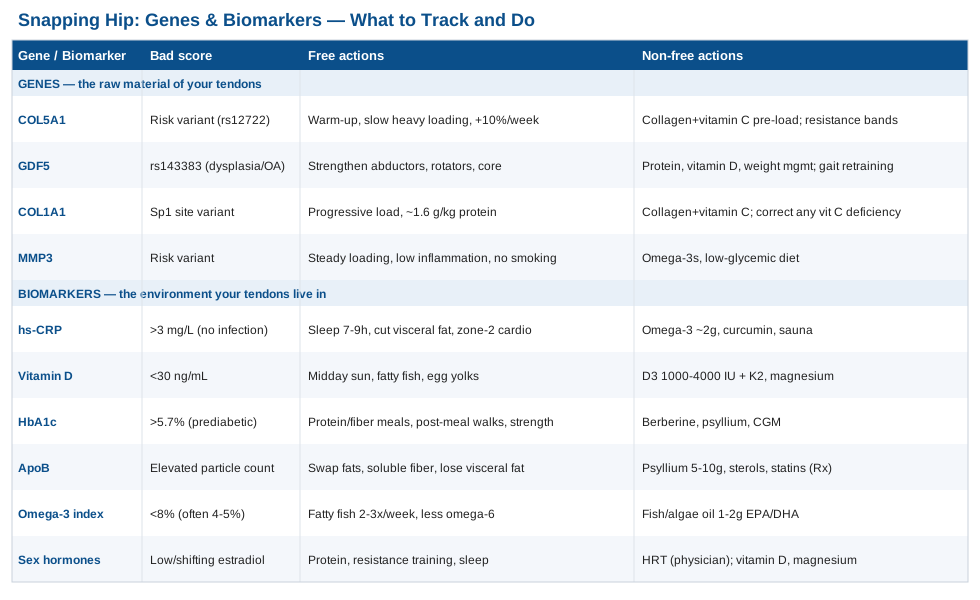
The 6 Biomarkers Worth Tracking for a Snapping Hip
A snapping hip is a signal that a tendon and a bony prominence are rubbing in a way they shouldn't. Whether that becomes chronic depends on the tendon's resilience, and tendon resilience is partly a whole-body affair. The following six blood markers are the ones with the clearest links to tendon health, the most practical measurement paths, and the most actionable fixes. Clinicians like Peter Attia, Thomas Dayspring, and Allan Sniderman have popularized several of these for cardiometabolic reasons; the same numbers turn out to matter for connective tissue too. Track them, and you convert guesswork into a plan.
1. High-Sensitivity C-Reactive Protein (hs-CRP)
Why it matters. hs-CRP is a stable, well-validated marker of systemic low-grade inflammation, produced by the liver and prized precisely because it barely fluctuates through the day and has a long half-life (see this review of CRP as the quintessential marker of systemic inflammation). For a snapping hip, chronic low-grade inflammation is the difference between a tendon that adapts to friction and one that degenerates. Notably, in carpal tunnel syndrome, low-grade CRP was associated with symptoms spreading beyond the original site — a reminder that background inflammation can turn a local nuisance into a wider pain problem.
How to measure it
Ask for the high-sensitivity version, not standard CRP. It is a common blood test, roughly 10 to 30 USD, often included in cardiovascular panels. Retest no more than every 3 months, and never during an active infection, injury flare, or in the days after intense exercise, all of which transiently spike it. A resting value under 1.0 mg/L is ideal; 1 to 3 mg/L is intermediate; above 3 mg/L (with no infection) warrants attention.
If the score is bad, the plan without supplements
The biggest levers are unglamorous and free. Prioritize 7 to 9 hours of sleep, since short sleep reliably raises inflammatory markers. Reduce visceral fat through a modest calorie deficit if you carry extra weight. Cut ultra-processed food, added sugar, and alcohol. Add regular zone-2 cardio (brisk walking, cycling) most days. Address gum disease and any smoldering infections. These changes can move hs-CRP within 6 to 12 weeks with no side effects beyond the effort involved.
If the score is bad, the plan with supplements or equipment
Omega-3 fish oil (roughly 2 g combined EPA/DHA daily with food) is the best-studied anti-inflammatory supplement; the main side effects are fishy reflux and, at higher doses, a mild blood-thinning effect, so mention it before surgery. Curcumin (500 to 1000 mg of a bioavailable form, taken with food, cycled 8 to 12 weeks on with breaks) can help but may cause loose stools and interacts with blood thinners. A sauna habit (15 to 20 minutes, 3 to 4 times weekly) is a low-risk "equipment" option with anti-inflammatory and recovery benefits. Do not chase a low CRP with chronic NSAIDs — they blunt the very tendon-adaptation you are trying to build.
2. Vitamin D (25-Hydroxyvitamin D)
Why it matters. Vitamin D influences muscle strength, matrix remodeling, and tendon repair. A scoping review of vitamin D in postoperative tendon healing found deficiency consistently linked to delayed healing and higher re-tear rates, and a large retrospective analysis tied vitamin D deficiency to distal biceps tendon injury. For a hip tendon under repetitive friction, adequate vitamin D is basic infrastructure for repair.
How to measure it
The 25-hydroxyvitamin D blood test costs about 25 to 60 USD and is widely available. Most experts target roughly 30 to 50 ng/mL (75 to 125 nmol/L). Test at the end of winter (the annual low point) and again after 3 months of any change in supplementation.
If the score is bad, the plan without supplements
Sensible midday sun exposure to arms and legs (10 to 30 minutes depending on skin tone and latitude, without burning) raises levels naturally. Include vitamin-D-containing foods such as fatty fish, egg yolks, and fortified products. These help but often cannot fully correct a significant deficiency in low-sunlight climates.
If the score is bad, the plan with supplements or equipment
Vitamin D3 is the practical fix: commonly 1000 to 4000 IU daily with a fat-containing meal, taken alongside vitamin K2 and adequate magnesium (a cofactor). Retest at 3 months and adjust — the goal is repletion, not maximization. Avoid chronic megadoses (above 4000 IU without monitoring), since excess can cause high calcium, kidney stones, and nausea. Frequency is daily and ongoing; there is no need to cycle, but there is a real need to verify with follow-up testing rather than guessing.
3. HbA1c and Fasting Glucose
Why it matters. This is the sleeper biomarker for tendon problems. Chronic high blood sugar drives glycation of collagen, making tendons stiffer and more brittle; lab work shows hyperglycemia pushes tendon cells toward fatty transdifferentiation (a tenocyte study), and elevated HbA1c is linked to Achilles tendon contracture in diabetic patients. Strikingly, even prediabetic HbA1c levels (above 5.7%) have been associated with roughly three-times-higher odds of lower-limb tendon injury. You do not have to be diabetic for sugar to degrade your tendons.
How to measure it
HbA1c reflects average glucose over about 3 months and costs roughly 15 to 40 USD; a fasting glucose test is even cheaper. Target HbA1c below 5.7%, ideally in the low-to-mid 5s. Retest every 3 to 6 months if you are optimizing. A continuous glucose monitor (an "equipment" option, 2 to 4 weeks of data for 60 to 150 USD) reveals which of your meals spike you.
If the score is bad, the plan without supplements
Build meals around protein, fiber, and vegetables; keep refined carbohydrates and sugary drinks occasional. Walk for 10 to 15 minutes after meals to blunt glucose spikes. Strength-train 2 to 3 times weekly to build glucose-hungry muscle. Prioritize sleep, since one poor night worsens next-day glucose handling. These habits alone can normalize a prediabetic HbA1c over a few months.
If the score is bad, the plan with supplements or equipment
Consider berberine (typically 500 mg two to three times daily with meals, cycled about 8 to 12 weeks with breaks) — effective for glucose control but capable of causing cramping, diarrhea, and drug interactions, so clear it with your clinician. Psyllium fiber before carb-heavy meals lowers the spike with minimal downside beyond bloating. A CGM used intermittently is the highest-value equipment purchase here. If HbA1c is truly in the diabetic range, this is a medical matter for a physician, not a supplement experiment.
4. ApoB (and a Full Lipid Panel)
Why it matters. Beyond its central role in cardiovascular risk — the reason Sniderman, Dayspring, and Attia champion it — the lipid picture connects to tendons. Population data show hypercholesterolemia associated with meaningfully higher odds of tendon injury, and lipid deposits within tendons are a recognized contributor to tendinopathy. ApoB counts the number of atherogenic particles and is a more precise readout than LDL-C alone. It is worth knowing for your heart regardless, and it may reflect a metabolic milieu that is unkind to connective tissue.
How to measure it
ApoB is a blood test of about 20 to 50 USD, increasingly available directly. A standard lipid panel (total, LDL, HDL, triglycerides) is cheaper still. Fasting is often unnecessary for ApoB. Retest 3 months after any dietary or medication change.
If the score is bad, the plan without supplements
Replace saturated and trans fats with monounsaturated and polyunsaturated sources (olive oil, nuts, fatty fish). Increase soluble fiber (oats, legumes, vegetables). Lose excess visceral fat and move daily. These steps lower ApoB and triglycerides without side effects and improve the same metabolic environment your tendons depend on.
If the score is bad, the plan with supplements or equipment
Soluble fiber supplements (psyllium, 5 to 10 g daily) modestly lower ApoB with only mild bloating. Plant sterols and, for high triglycerides, prescription-grade omega-3 can help. If ApoB is high because of genuine cardiovascular risk, statins or other prescription therapy — decided with a physician — are the evidence-based route; do not treat a cardiovascular number as a supplement puzzle.
5. Omega-3 Index
Why it matters. The omega-3 index measures the percentage of EPA and DHA in your red blood cell membranes, reflecting long-term intake rather than yesterday's dinner. These fats are the raw material for resolvins, the molecules that actively switch off inflammation. A low index suggests your body is slower to resolve the very tendon irritation that keeps a snapping hip painful, and a good index complements a low hs-CRP.
How to measure it
It is a specialized finger-prick or blood test, roughly 50 to 100 USD, sometimes sold as a home kit. A target of 8% or higher is commonly cited; many people sit around 4 to 5%. Retest 4 months after changing intake, since membrane turnover is slow.
If the score is bad, the plan without supplements
Eat fatty fish (salmon, sardines, mackerel, herring) two to three times per week. Reduce excess omega-6 from ultra-processed seed-oil-heavy foods, which competes with omega-3 metabolism. Food-first is genuinely effective here and comes with the bonus of high-quality protein.
If the score is bad, the plan with supplements or equipment
Fish oil or algae oil providing about 1 to 2 g combined EPA/DHA daily, taken with a meal, reliably raises the index over 3 to 4 months. Side effects are mild — fishy burps (reduced by freezing capsules or choosing triglyceride-form oils) and a slight anticoagulant effect at higher doses. No cycling is needed; consistency is the point. Choose a product tested for oxidation and purity.
6. Sex Hormone Panel (Estradiol and Related Markers)
Why it matters. Snapping hip syndrome is more common in women, and hormones plausibly play a role in why. Estrogen influences collagen turnover and tendon and ligament laxity, which is why connective-tissue complaints often shift across the menstrual cycle, in pregnancy, and around menopause. This biomarker is less about a single "good number" and more about understanding your hormonal context so you can time and interpret symptoms sensibly.
How to measure it
A basic panel (estradiol, and for a fuller picture progesterone, testosterone, and thyroid markers) runs roughly 50 to 150 USD. For cycling women, timing the draw to a specific cycle day matters and should be arranged with a clinician. Around perimenopause, symptoms plus history often matter more than any single value.
If the score is bad, the plan without supplements
Support hormonal health through the fundamentals: adequate protein and total calories (very low body fat suppresses estrogen), resistance training to protect bone and connective tissue, stress management, and sleep. Track whether your hip symptoms cluster at particular cycle phases so you can modulate training load accordingly rather than fighting your physiology.
If the score is bad, the plan with supplements or equipment
This is the one biomarker where self-directed supplementation is least appropriate. Perimenopausal or menopausal connective-tissue symptoms may be a reason to discuss hormone therapy with a qualified physician, an individualized decision with real risks and benefits. Vitamin D and adequate magnesium support the broader endocrine picture. Avoid unregulated "hormone-balancing" supplements with vague claims and undisclosed dosing.
4 Genes That Shape a Snapping Hip
Biomarkers describe your current environment; genes describe the raw material. You cannot edit your DNA, but knowing your tendencies tells you where to compensate. This section is shorter by design — for a mechanical condition, genes set the stage rather than write the script. Direct-to-consumer testing (through services associated with names like Ali Torkamani in genomics, or the biomarker-focused messaging of Gary Brecka) has made these variants easy to look up, but they should inform, not alarm. A useful review of the field is the genetics of sports injuries and athletic performance.
COL5A1 — The Collagen Blueprint
COL5A1 encodes part of type V collagen, which regulates how tightly your collagen fibrils assemble. Certain variants (notably rs12722) are repeatedly associated with tendinopathy risk and range of motion. A meta-analysis of 21 studies and a separate meta-analysis in Caucasians link COL5A1 polymorphisms to tendon-ligament injuries, and the genotype is also associated with flexibility measurements. In its most severe form, COL5A1 mutation underlies classic Ehlers-Danlos syndrome.
If the gene is unfavorable, the plan without supplements
Treat your tendons as needing more warm-up and more gradual loading than average. Emphasize slow, heavy, controlled strength work (which thickens and stiffens tendon in a good way) over aggressive end-range stretching, which can aggravate laxity-driven snapping. Progress load by no more than about 10% per week. If you are genuinely hypermobile, stability and control beat flexibility as goals.
If the gene is unfavorable, the plan with supplements or equipment
Collagen or gelatin (about 15 g) with vitamin C, taken 30 to 60 minutes before loading exercise, is the best-supported nutritional strategy (see the book/podcast section below). Frequency is on training days; there is no cycling requirement and side effects are minimal. Resistance bands and a structured loading program are the "equipment" that matter more than any pill.
GDF5 — Joint Shape and Repair
GDF5 helps build and maintain cartilage, bone, and synovial joints. The rs143383 variant is associated at genome-wide significance with osteoarthritis and, importantly for the hip, with developmental dysplasia of the hip — a shallow socket that changes hip mechanics. A meta-analysis confirms the GDF5–osteoarthritis link. Because hip shape influences how tendons track over bone, GDF5 sits upstream of some snapping.
If the gene is unfavorable, the plan without supplements
You cannot reshape your socket, but you can protect the joint. Build strong hip abductors, deep rotators, and core to improve how the femur sits and moves. Avoid repetitive deep-flexion positions that provoke your specific snap. If dysplasia is suspected, imaging and an orthopedic or physiotherapy assessment matter more than any at-home fix.
If the gene is unfavorable, the plan with supplements or equipment
There is no supplement that changes joint geometry. Support cartilage-friendly habits with adequate protein, vitamin D, and weight management to reduce joint load. Some people find collagen and omega-3 helpful for joint comfort, dosed as above, though evidence for osteoarthritis is modest. The real "equipment" is a graded strengthening program and, occasionally, gait retraining.
COL1A1 — The Bulk of Your Tendon
Type I collagen is the dominant structural protein in tendon, encoded partly by COL1A1. Certain regulatory variants (the Sp1 binding-site polymorphism) alter the ratio of collagen chains and have been studied in relation to soft-tissue injury and, in some analyses, a protective effect against cruciate ligament rupture. The signal is weaker and more mixed than for COL5A1, so treat it as a nudge, not a verdict.
If the gene is unfavorable, the plan without supplements
The same principles apply: progressive loading to stimulate collagen production, sufficient dietary protein (roughly 1.6 g per kilogram of body weight for active people), and avoiding the sudden training spikes that outpace tissue adaptation. Sleep and glucose control (see HbA1c above) protect the collagen you already have.
If the gene is unfavorable, the plan with supplements or equipment
Pre-loading collagen plus vitamin C again applies, and adequate protein overall is non-negotiable. Vitamin C itself is a required cofactor for collagen cross-linking; a deficiency is worth correcting, but megadosing beyond repletion offers no extra tendon benefit and can cause gastrointestinal upset and, rarely, kidney stones.
MMP3 — The Demolition Crew
Matrix metalloproteinase-3 helps remodel connective tissue by breaking down old matrix so new can form. Variants in MMP3 have been associated with tendinopathy risk, sometimes in interaction with COL5A1, because the balance between building and breaking down determines tendon quality. This is early and population-specific evidence, so hold it lightly.
If the gene is unfavorable, the plan without supplements
Since MMP activity is sensitive to load and inflammation, the lever is managing both: consistent, moderate loading rather than boom-and-bust training, and keeping systemic inflammation low (revisit hs-CRP). Smoking notably worsens matrix turnover, so not smoking is a direct genetic-compensation strategy.
If the gene is unfavorable, the plan with supplements or equipment
Omega-3s and a low-glycemic diet help keep the remodeling environment favorable. There is no targeted MMP3 supplement worth recommending, and be skeptical of products claiming to "modulate MMPs." The dependable tools remain graded loading, good sleep, and inflammation control.
The Connective-Tissue Science That Is Quietly Rewriting Rehab
If one body of work deserves a summary here, it is the modern science of tendon loading and nutrition — the research popularized through the Huberman Lab conversations and driven by physiologists like Keith Baar. It challenges the old doctrine of "rest it and inject cortisone" and replaces it with "load it intelligently and feed it well." Here are the ten most useful things to know.
1. Tendons Are Alive and Adaptable
Tendons are not inert rubber bands. They contain cells that sense mechanical load and respond by building or breaking down collagen. This is why appropriate loading, not rest, is usually the treatment.
2. Load Is the Signal, Not the Enemy
Controlled mechanical tension tells the tendon to strengthen. Complete rest lets it weaken. For a snapping hip driven by tendon irritation, progressive loading of the iliopsoas or hip abductors typically beats avoidance.
3. Gelatin Plus Vitamin C, Timed Before Exercise
In a randomized crossover study, consuming vitamin-C-enriched gelatin about an hour before intermittent activity doubled markers of collagen synthesis. The timing — before loading — is the counter-intuitive part.
4. Collagen Supplementation Has Real Trial Support
A 16-week randomized controlled trial found daily collagen peptides increased tendon and muscle stiffness and explosive strength, and collagen combined with vitamin C outperformed diclofenac in an Achilles tendinopathy trial.
5. Tendons Adapt Slowly — Patience Is Structural
Collagen turnover takes weeks to months, far slower than muscle. Expect tendon programs to run 8 to 12 weeks minimum before judging them. Impatience, not the exercise, is often what fails.
6. Cortisone Buys Time but Can Cost Tissue
Steroid injections reduce pain short-term but can weaken tendon over the long run. The modern view reserves them for specific situations, not as a first reflex for every snapping or painful hip.
7. Isometrics Can Calm an Angry Tendon
Holding a muscle under tension without movement (isometric contractions) can reduce tendon pain and let you keep loading when dynamic exercise hurts. It is a practical entry point for an irritated iliopsoas.
8. Blood Sugar Silently Ages Your Tendons
Glycation stiffens collagen. The research linking even prediabetic glucose to tendon injury reframes tendon health as partly a metabolic issue — which is why HbA1c earned a place among your biomarkers.
9. Sleep and Stress Set the Repair Rate
Tissue repair happens during recovery. Poor sleep and chronic stress raise inflammation and slow collagen synthesis, undercutting even a perfect exercise program.
10. Stretching Is Overrated for Snapping That Comes From Laxity
If your hip snaps because tissues are already loose or hypermobile, more stretching can worsen it. Strength, control, and stability are frequently the missing ingredients, not extra flexibility.
Hands-On and Complementary Approaches Worth Considering
Alongside loading and lab-guided habits, several complementary approaches can help the muscular and stress-related side of a snapping hip. Honesty first: high-quality trials specifically on snapping hip syndrome are scarce, so much of the evidence below is extrapolated from related tendinopathy, iliotibial-band, and musculoskeletal-pain research. Use these as adjuncts to a loading program, not replacements.
Massage and Soft-Tissue Therapy
Massage and targeted soft-tissue work address the tight iliopsoas, tensor fasciae latae, and gluteal tissues that contribute to both external and internal snapping. By reducing muscle tone and improving tissue glide, it can lessen the friction that produces the snap, and it is a reasonable complement to stretching and strengthening.
A common protocol pairs deep-tissue or trigger-point work over the greater trochanter and hip flexors with self-myofascial release using a foam roller, one to three sessions weekly during a symptomatic phase. Evidence specific to snapping hip is largely from case reports and clinical practice rather than large trials, so expect symptom relief and improved comfort rather than a structural cure.
Apply it realistically: use massage to make loading exercises more tolerable, not as a standalone fix. Avoid aggressive rolling directly over the bony prominence or an acutely inflamed bursa, which can worsen irritation. If pain is sharp, deep, or worsening, get assessed before continuing.
Yoga (Chosen Carefully)
Yoga builds hip mobility, control, and body awareness, all relevant when a snapping hip stems from muscle imbalance and guarding. Poses that strengthen the deep hip stabilizers and lengthen the hip flexors can, for the right person, reduce provocative snapping.
There is broad human evidence that yoga improves function and reduces pain in various musculoskeletal and low-back conditions; direct randomized trials in snapping hip specifically are lacking, so the rationale is mechanistic and extrapolated. The most useful techniques emphasize controlled, stabilizing work over aggressive deep flexion or repetitive leg swings that reproduce the snap.
Cautious application matters here more than usual: if you are hypermobile, favor strength- and stability-oriented styles and skip end-range poses that make the hip pop. A yoga teacher informed about your diagnosis, or a physiotherapist who integrates yoga elements, is safer than an intense general class.
Low-Level Laser Therapy / Photobiomodulation
Low-level laser therapy (photobiomodulation) uses specific light wavelengths to reduce pain and support tissue repair, and it has been studied across several tendinopathies. Where a snapping hip has crossed into iliopsoas or trochanteric tendinopathy, it may offer modest pain relief as an adjunct.
Systematic reviews of tendinopathy suggest benefit when correct dosing (wavelength, energy density) is used, though results are mixed and depend heavily on protocol; there is no dedicated snapping-hip trial. Sessions are typically delivered by a clinician two to three times weekly over several weeks.
Treat it as a possible add-on if pain limits your rehab, not a primary treatment. Because device parameters vary widely and quality control is inconsistent, seek an experienced practitioner and set realistic expectations. If several sessions produce no change, redirect your effort and money toward the loading program.
Progressive Muscle Relaxation and Breathing-Based Therapies
Chronic hip pain often brings muscle guarding and stress that amplify symptoms. Progressive muscle relaxation and slow breathing techniques lower sympathetic drive and general muscle tension, which can indirectly ease a tight, protective hip flexor and improve your tolerance of rehab.
These practices have solid human evidence for reducing pain-related distress and tension across chronic musculoskeletal conditions, though again not for snapping hip specifically. A practical protocol is 10 to 15 minutes daily of systematic tense-and-release cycles or paced breathing, especially before bed to support the recovery that tendon repair depends on.
The realistic value here is not fixing the mechanics but changing the environment around them: less guarding, better sleep, lower inflammation. There is essentially no downside, which makes it an easy complement to everything above.
Conclusion
A snapping hip is mechanical, but it is not only mechanical. Whether that click stays harmless or hardens into painful tendinopathy depends heavily on the biology you can measure and improve — the inflammation, glucose, vitamin D, lipids, omega-3 status, and hormones that decide how well your tendons tolerate friction and repair themselves. Layered on top are a handful of genes that set your collagen quality and joint shape, which you cannot change but can absolutely compensate for through intelligent loading and nutrition. And the most encouraging thread running through all of it is that tendons are adaptable tissue: given the right signal and the right raw materials, they get better.
The smartest next step is small and concrete. Track a symptom diary for two weeks to learn exactly which movements provoke your snap. Get a few of the affordable biomarkers checked — hs-CRP, vitamin D, and HbA1c are a strong, low-cost starting trio. Begin a gentle, progressive strengthening routine for the hip flexors and abductors rather than reaching for another stretch. And bring your findings to a qualified physiotherapist or physician who can confirm the mechanism and tailor the plan. Better information, applied patiently, is how a noisy hip becomes a quiet one.
Musculoskeletal: Joint Conditions Tendon & Ligament Conditions Sports Injuries
Autoimmune: Connective Tissue Conditions