This article contains AI generated content.
Spinal Arteriovenous Malformation - 6 Genes And 5 Biomarkers To Track
Introduction
If you found your way to this page, chances are you or someone close to you has heard the words spinal arteriovenous malformation from a neurosurgeon or neurologist, and you are now trying to understand what it actually means for the body — not just the imaging report. You may be living with back pain that no one could explain for years, sudden weakness in the legs, changes in bladder or bowel control, or the strange numbness that comes and goes. You are not looking for reassurance that skips over the hard parts. You are looking for something precise.
Most general advice about vascular malformations stops at the surface: "it's a tangle of abnormal blood vessels, sometimes we treat it, sometimes we watch it." That is true, but it is not enough. It doesn't tell you why some people develop these lesions, whether your genes played a role, whether relatives should be screened, or what you can actually measure and influence to protect the blood vessels and nervous tissue you still have.
This article takes a deeper route. A spinal arteriovenous malformation (spinal AVM) is a structural problem — a direct short-circuit between arteries and veins that bypasses the tiny capillaries where pressure is supposed to drop. No supplement or lifestyle change reverses that anatomy; only a neurosurgeon, an interventional neuroradiologist, or a radiosurgery team can address the lesion itself. But the biology around the lesion — the genes that shape blood-vessel walls, the markers that reflect vascular and neurological stress — is where you can gather real information and make smarter decisions.
So here is the grounded hope: better information leads to better decisions. In the pages below, we look first at the genes and epigenetic signals that researchers now link to spinal and other AVMs, with a practical plan for each. Then, as a bonus, we cover the biomarkers worth tracking to protect your vascular and neurological health. We finish with a paradigm-shifting look at vascular biology, and a careful review of complementary approaches that may help you live better alongside this condition.
Summary
Spinal AVMs are rarer and more anatomically diverse than their brain cousins, and their genetics are only now coming into focus. The big question many patients quietly carry is: did I inherit this, and could my children have it too? For a meaningful minority of people, the answer touches a handful of specific genes — and knowing which ones changes screening, family counseling, and even how aggressively a lesion should be watched.
In this article you'll learn the six genes most connected to arteriovenous malformations — including the hereditary hemorrhagic telangiectasia (HHT) genes ENG, ACVRL1, and SMAD4, the capillary-malformation genes RASA1 and EPHB4, and the surprising role of somatic KRAS mutations that appear in the lesion itself but not in the rest of the body. For each, you'll see what it may affect and a realistic plan — with and without supplements — focused on protecting your vessels rather than promising to rewrite your DNA.
You'll also get the five biomarkers worth tracking to guard vascular and spinal-cord health, how to measure each one and what it costs, and a discovery from the last few years that is quietly challenging how doctors think about where these malformations come from. We close with the complementary practices that have genuine human evidence for the pain, balance, and quality-of-life challenges that spinal AVMs create — and a clear warning about one popular therapy you should avoid.
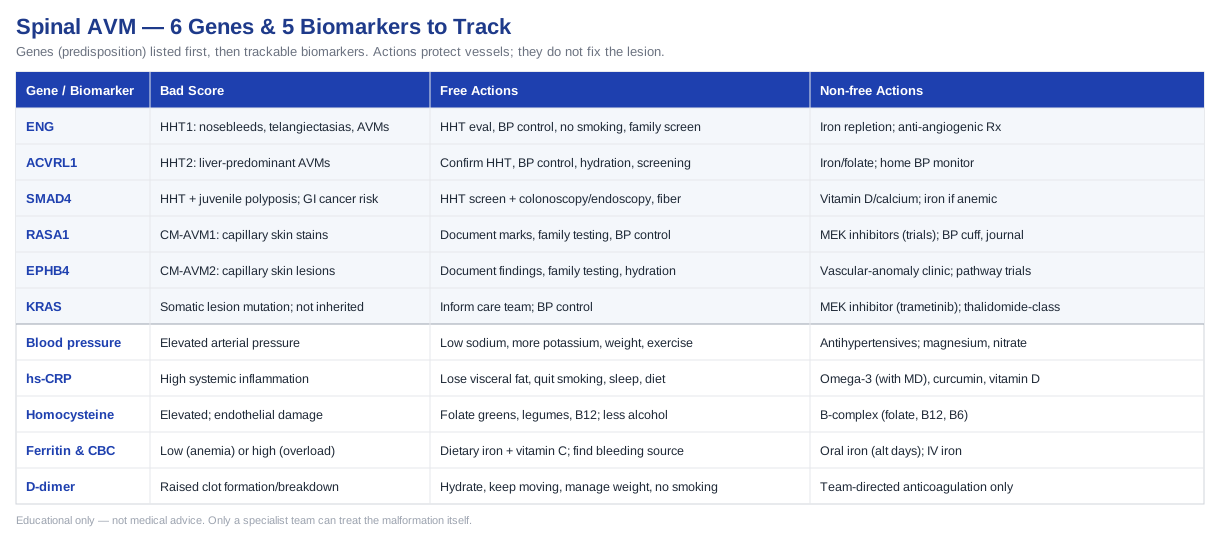
What Recent Genetics And Epigenetics Research Suggests
For decades, spinal AVMs were treated as random accidents of embryonic development — bad luck in how blood vessels wired themselves before birth. That picture is changing. We now know that a portion of arteriovenous malformations arise from identifiable errors in the genes that control how blood-vessel walls form and mature, and that some of those errors are inherited while others appear only in the lesion itself. Understanding which category you fall into is genuinely useful: it changes who in your family should be screened, and it explains why certain lesions behave the way they do.
A crucial point before we go further: having one of these genes does not mean you can "fix" the AVM by fixing the gene. The plans below are not gene therapy. They are strategies to protect the vascular endothelium, reduce bleeding-related risk factors, and support the nervous system — the things that are genuinely within your control. Where the evidence is strong in humans, I'll say so. Where it is early or borrowed from related conditions, I'll say that too. Researchers such as Ali Torkamani (Scripps) have championed using genomics to personalize prevention, and figures like Gary Brecka have popularized gene-informed lifestyle strategies; the sensible version of that idea is what follows.
ENG (Endoglin) — the HHT gene that weakens vessel walls
ENG mutations cause hereditary hemorrhagic telangiectasia type 1 (HHT1), an inherited condition in which blood vessels fail to build proper capillary beds, leaving fragile direct artery-to-vein connections throughout the body — including, in rare cases, the spinal cord. Endoglin is a co-receptor in the TGF-β/BMP9 signaling pathway that tells endothelial cells when to stop growing and stabilize. When it is deficient, vessels stay leaky and prone to malformation. The clinical fingerprints are frequent nosebleeds, skin and lip telangiectasias, and AVMs in the lungs, liver, brain, or spine.
If the gene is bad, the plan without supplements
The highest-value moves cost nothing. Get formally evaluated for HHT if you have a spinal AVM plus nosebleeds or a family history — diagnosis follows the GeneReviews and Curaçao criteria for HHT. Keep blood pressure tightly controlled with diet (lower sodium, more potassium-rich vegetables), maintain a healthy weight, and avoid smoking and heavy alcohol, both of which stress vessel walls. Because HHT can involve the lungs (pulmonary AVMs that let clots and bacteria bypass the lung filter), ask about screening — this is a safety issue, not optional. Family members should be offered testing and screening.
If the score is bad, the plan with supplements or equipment
Evidence here is modest and should be discussed with your HHT specialist. Iron repletion (guided by blood tests, not guesswork) matters for people with chronic nosebleed-related anemia. Some HHT centers use anti-angiogenic drugs such as bevacizumab or, more recently, low-dose pomalidomide for severe bleeding — these are prescription therapies, not supplements, and are not for the AVM itself but for bleeding control. Over-the-counter options are limited; high-dose fish oil and other blood-thinning supplements can worsen bleeding and should generally be avoided unless a doctor specifically approves them. Frequency and cycling of any iron supplement must be set by ferritin levels; side effects include constipation and, if overdone, iron overload.
ACVRL1 / ALK1 — the second HHT gene
ACVRL1 (encoding the ALK1 receptor) causes HHT type 2 and works in the same TGF-β/BMP9 pathway as endoglin. ALK1 is the receptor that BMP9 activates to keep endothelial cells quiet; lose it, and vessels over-proliferate into malformations. HHT2 tends to involve the liver more and the lungs less than HHT1, but spinal and cerebral AVMs still occur. The practical implications overlap heavily with ENG.
If the gene is bad, the plan without supplements
The same fundamentals apply: confirm the HHT diagnosis, control blood pressure, protect against dehydration (which thickens blood), and get organ screening. Because HHT2 more often affects the liver, monitor liver function and be cautious with alcohol and liver-stressing medications. Cardiovascular exercise is generally encouraged for endothelial health, but the intensity should be cleared with your team if you have an untreated spinal or brain AVM.
If the score is bad, the plan with supplements or equipment
As with ENG, supplements play a supporting role at best. Iron and folate correction for anemia is evidence-based when levels are low. A home blood-pressure monitor is inexpensive equipment that genuinely helps — checking twice weekly and logging results gives your doctor real data. Avoid supplements marketed as "blood thinners" (high-dose omega-3, vitamin E, ginkgo, garlic extract) without medical sign-off, because bleeding is the central danger in HHT.
SMAD4 — HHT combined with polyp syndrome
SMAD4 mutations cause a combined syndrome of HHT and juvenile polyposis (JP-HHT). SMAD4 is the downstream messenger of the same TGF-β/BMP pathway, so its loss produces HHT-type vascular problems plus a markedly increased risk of gastrointestinal polyps and cancer. If you carry this variant, the vascular plan is identical to the other HHT genes — but the cancer-surveillance piece becomes life-saving.
If the gene is bad, the plan without supplements
Follow HHT screening for AVMs, and add regular colonoscopy and upper-GI endoscopy on the schedule your gastroenterologist sets. A high-fiber, vegetable-forward diet supports colon health. There is no lifestyle substitute for scope surveillance here — put it on the calendar and keep it.
If the score is bad, the plan with supplements or equipment
No supplement addresses SMAD4 directly. Maintain vitamin D and calcium adequacy for general health, correct iron if anemic, and let endoscopy — not pills — do the heavy lifting for cancer prevention.
RASA1 — capillary malformation–AVM syndrome
RASA1 causes capillary malformation–arteriovenous malformation syndrome (CM-AVM1), and it is one of the more relevant genes for spinal and spinal-cord AVMs specifically. RASA1 normally acts as a brake on the RAS-MAPK growth pathway inside blood-vessel cells; when it fails, vessels grow abnormally. The telltale sign is small, round, pinkish-red capillary "stains" on the skin, sometimes many of them — and their presence in someone with a spinal AVM should prompt genetic evaluation. The GeneReviews entry on CM-AVM describes the pattern in detail.
If the gene is bad, the plan without supplements
Recognize and document the skin capillary malformations — photograph them and show your doctor, because a spinal AVM in a person with these marks may signal an inherited, potentially multifocal condition. First-degree relatives should be offered testing. Standard vascular protection applies: blood-pressure control, no smoking, hydration, and prompt reporting of any new neurological symptom (weakness, sensory change, bladder issues), since early treatment of spinal lesions preserves cord function.
If the score is bad, the plan with supplements or equipment
There is no supplement that corrects RASA1. On the horizon, MEK inhibitors (which target the same RAS-MAPK pathway) are being studied for complex vascular malformations — these are experimental prescription drugs available mainly through specialist centers or trials, not consumer supplements. For now, the equipment that matters is a reliable blood-pressure cuff and a symptom-tracking journal.
EPHB4 — the newer capillary-malformation gene
EPHB4 causes CM-AVM type 2, clinically similar to RASA1 disease and also feeding into RAS-MAPK signaling. It was identified more recently, so the human evidence base is smaller, but it belongs on any comprehensive genetic panel for someone with an AVM plus capillary skin lesions. The management principles mirror RASA1.
If the gene is bad, the plan without supplements
Same as RASA1: document skin findings, arrange family testing and counseling, protect the vasculature through lifestyle, and treat any new spinal-cord symptom as urgent. Because this gene is newer to the literature, care at an HHT/vascular-anomaly center gives you access to the most current thinking.
If the score is bad, the plan with supplements or equipment
No supplement targets EPHB4. Keep the general endothelial-protection plan and consider a consultation at a vascular-anomalies clinic, where emerging pathway-targeted trials are tracked.
KRAS (and BRAF/MAP2K1) — the somatic mutations inside the lesion
This is the most paradigm-shifting finding of the last several years. In many sporadic AVMs — those with no family history — researchers have found activating mutations in KRAS (and related genes BRAF and MAP2K1) that exist only in the endothelial cells of the malformation itself, not in the rest of the body. This reframes many AVMs as a localized, acquired "somatic" disease of the RAS-MAPK pathway, much like certain benign growths — meaning they are not inherited and not passed to children. The landmark work on brain AVMs was published in the New England Journal of Medicine (Nikolaev et al., 2018), and similar somatic findings are now reported in spinal and extracranial AVMs.
If the gene is bad, the plan without supplements
You cannot inherit or "fix" a somatic mutation through lifestyle, and there is nothing to pass to your children — which is genuinely reassuring news for many patients. The practical action is to make sure your treating team knows this biology exists, because it opens the door to drug trials. Meanwhile, protect the lesion from pressure stress through blood-pressure control and avoidance of activities your specialist flags as high-risk.
If the score is bad, the plan with supplements or equipment
The relevant "supplement" here is actually a class of targeted prescription drugs. Because KRAS sits in the RAS-MAPK pathway, MEK inhibitors (such as trametinib) and thalidomide-class drugs are under active investigation for AVMs that cannot be fully treated surgically. These are potent medications with real side effects (skin rash, fatigue, blood-count and liver changes, and — for thalidomide-type drugs — strict pregnancy precautions), and cycling is dictated by an oncologist or specialist, never self-directed. If your spinal AVM is complex or partly untreatable, ask your team whether a somatic-mutation-guided trial exists for you.
Biomarkers Worth Tracking To Protect Your Vessels
Genes tell you about predisposition. Biomarkers tell you about the current state of the terrain your AVM lives in. None of these numbers diagnose or measure the malformation itself — imaging (MRI and angiography) does that. But they reflect the vascular pressure, clotting tendency, inflammation, and nutritional status that influence bleeding risk and healing. The clinicians who popularized aggressive, data-driven prevention — Peter Attia, Thomas Dayspring, and Allan Sniderman — argue that you manage what you measure. Here are five markers that give you the most signal for the least cost.
1. Blood pressure (and 24-hour ambulatory monitoring)
Why it matters: elevated arterial pressure is the single most modifiable stressor on any fragile vessel, and hypertension is a recognized risk factor for AVM-related hemorrhage. Keeping pressure in a healthy range is arguably the most protective thing you can do.
How to measure it
A validated home upper-arm cuff costs roughly 30–60 EUR/USD and lets you log readings twice a week. For a fuller picture, a 24-hour ambulatory monitor ordered by your doctor (often 50–150 in out-of-pocket regions, or covered by insurance) reveals nighttime and stress-related spikes a single clinic reading misses.
If the score is bad, the plan without supplements
Reduce sodium toward roughly 2 grams a day, increase potassium-rich plants, lose excess weight, limit alcohol, do regular moderate aerobic exercise (cleared by your team), and prioritize sleep. These steps routinely lower systolic pressure by several to many points.
If the score is bad, the plan with supplements or equipment
Prescription antihypertensives are first-line if lifestyle isn't enough — this is a place where medication clearly beats supplements. Evidence-supported adjuncts include magnesium (about 200–400 mg daily; side effects mainly loose stools) and beetroot/dietary nitrate for a modest effect. Cycle and dose under medical guidance, and never stop a prescribed BP drug to try a supplement.
2. hs-CRP (high-sensitivity C-reactive protein)
Why it matters: hs-CRP is a general marker of systemic inflammation, which contributes to endothelial dysfunction. It won't tell you about the AVM directly, but a persistently high value flags a vascular environment worth improving.
How to measure it
A simple blood test, roughly 10–30 EUR/USD, often bundled into routine panels. Measure when you're not fighting an acute infection, which falsely elevates it.
If the score is bad, the plan without supplements
The biggest levers are losing visceral fat, quitting smoking, improving sleep, exercising regularly, and shifting toward a whole-food, lower-refined-carbohydrate diet. Treating hidden inflammation sources (gum disease, poor glucose control) also helps.
If the score is bad, the plan with supplements or equipment
Omega-3 fish oil can lower inflammation, but — importantly for anyone with bleeding-prone vessels — it also mildly thins the blood, so clear it with your doctor first and keep doses modest (around 1 g EPA/DHA). Curcumin and adequate vitamin D are reasonable adjuncts. Cycle based on repeat testing every few months; watch for GI upset.
3. Homocysteine
Why it matters: elevated homocysteine is associated with endothelial damage and higher vascular risk, and it is easy and cheap to correct when driven by B-vitamin insufficiency.
How to measure it
A fasting blood test, roughly 20–40 EUR/USD. Not always on standard panels, so you may need to request it.
If the score is bad, the plan without supplements
Eat more folate-rich leafy greens, legumes, and B12 sources; reduce excessive alcohol; and address kidney or thyroid issues that can raise levels. If you carry an MTHFR variant, dietary folate becomes even more relevant.
If the score is bad, the plan with supplements or equipment
A B-complex providing folate (or methylfolate), B12, and B6 reliably lowers homocysteine within weeks. This is one of the better-evidenced, low-risk supplement interventions; side effects are minimal. Recheck after 8–12 weeks and dose to target rather than taking megadoses indefinitely.
4. Ferritin and complete blood count
Why it matters: for anyone whose AVM (or associated HHT) causes bleeding, iron status is central. Low ferritin and anemia sap energy and healing; overcorrection causes iron overload. Tracking both directions matters.
How to measure it
Ferritin plus a CBC costs roughly 15–40 EUR/USD together and is widely available. Pair ferritin with CRP interpretation, since inflammation falsely raises ferritin.
If the score is bad, the plan without supplements
If iron is low, increase dietary iron (lean red meat, legumes, plus vitamin-C-rich foods to boost absorption) and identify the bleeding source. If iron is high, reduce supplemental and red-meat intake and investigate the cause with your doctor.
If the score is bad, the plan with supplements or equipment
For deficiency, oral iron every other day is now often better tolerated and absorbed than daily dosing; side effects are constipation and nausea. Severe or malabsorbed cases may need IV iron, which is a clinic procedure. Cycle strictly to ferritin targets — more is not better.
5. D-dimer and a basic coagulation panel
Why it matters: D-dimer reflects clot formation and breakdown. In vascular malformations with sluggish or abnormal flow, localized clotting can occur, and a coagulation panel helps your team weigh the delicate balance between clotting and bleeding risk — especially before procedures.
How to measure it
D-dimer plus PT/INR and aPTT costs roughly 30–70 EUR/USD combined, usually physician-ordered. Interpretation belongs with a specialist, since D-dimer rises for many reasons.
If the score is bad, the plan without supplements
Stay well hydrated, keep moving to avoid stasis, manage weight, and stop smoking — all reduce inappropriate clotting without touching bleeding risk.
If the score is bad, the plan with supplements or equipment
This is the one area to be most conservative: do not self-prescribe blood thinners or "natural anticoagulant" supplements when you have a bleeding-prone lesion. Any anticoagulation decision must be made by the neurovascular team, weighing clot versus hemorrhage risk. Compression and mobility, not pills, are the safe self-directed tools here.
The Nitric Oxide Story: How Endothelial Biology Is Rewriting Vascular Health
If one theme unites everything above, it is the endothelium — the single layer of cells lining every blood vessel, which decides whether vessels stay calm and healthy or grow, leak, and clot. A body of research popularized in books such as Nathan Bryan's work on nitric oxide and Louis Ignarro's NO More Heart Disease (Ignarro shared the 1998 Nobel Prize for discovering nitric oxide's role in the cardiovascular system) has reframed vascular health around this molecule. While none of this "cures" an AVM, understanding endothelial biology explains why the lifestyle levers above matter — and it challenges the older, purely mechanical view of blood vessels. Here are ten takeaways worth knowing.
1. The endothelium is an organ, not a pipe lining
Collectively, your endothelial cells weigh more than the liver and actively secrete signaling molecules. They are living tissue that responds to how you eat, move, and sleep — which is why lifestyle genuinely reaches your vessels.
2. Nitric oxide keeps vessels relaxed
Nitric oxide (NO) is the master signal for vasodilation. Healthy endothelium produces it constantly, lowering pressure and reducing the mechanical strain on vessel walls — the same strain that endangers fragile AVM connections.
3. NO production falls with age and inactivity
Endothelial NO output drops substantially across adulthood, accelerated by smoking, high blood sugar, and a sedentary life. Much of what we call "vascular aging" is really lost NO signaling.
4. Exercise is the most reliable NO booster
The shear stress of blood flowing faster during exercise directly stimulates NO production. This is a large part of why aerobic activity protects vessels — though intensity should be individualized when an untreated AVM is present.
5. Dietary nitrate feeds the pathway
Leafy greens and beets supply nitrate that the body converts to nitric oxide, offering a modest, food-based way to support vasodilation. The effect is real but gentle — supportive, not curative.
6. Your mouth bacteria are part of the system
The nitrate-to-nitrite conversion depends on oral bacteria, which is why aggressive antibacterial mouthwash can blunt the nitric oxide pathway — an unexpected link between oral care and blood pressure.
7. Inflammation and NO are enemies
Chronic inflammation (reflected in hs-CRP) degrades NO and stiffens vessels. Lowering inflammation and protecting NO are two sides of the same coin.
8. The RAS-MAPK pathway can override normal control
The somatic KRAS discovery shows that when growth signaling goes haywire in a patch of endothelium, no amount of NO fixes the anatomy — a humbling reminder that lifestyle supports vessels but cannot rebuild a malformation.
9. Blood pressure is the throttle you control
Because NO and pressure are linked, every habit that supports nitric oxide also lowers the wall stress on your lesion. This is the most actionable message in the whole book of vascular science.
10. Small daily inputs compound
No single meal or workout transforms your endothelium, but consistent movement, plants, sleep, and non-smoking compound into measurably healthier vessels over months and years — the realistic version of "reversing" vascular risk.
Complementary Approaches That May Genuinely Help
Living with a spinal AVM often means managing neuropathic pain, weakness, balance problems, and the anxiety of an uncertain condition. The therapies below don't touch the malformation, but several have real human evidence for these downstream challenges. One caution first: spinal manipulation and chiropractic adjustment should be avoided near a known spinal vascular lesion — forceful manipulation carries theoretical and reported risks to compromised spinal vessels, and it is deliberately excluded here.
Mindfulness meditation / MBSR
Mindfulness-Based Stress Reduction (MBSR) is a structured eight-week program teaching present-moment awareness and body scanning. It's relevant because chronic neuropathic and back pain, plus the psychological weight of a serious diagnosis, respond to attention-based training that changes how the nervous system processes pain and stress.
A frequently cited randomized trial (Cherkin et al., published in JAMA, 2016) found MBSR improved chronic low-back pain and function comparably to cognitive behavioral therapy and better than usual care, with benefits persisting at one year. Broader meta-analyses support mindfulness for chronic-pain quality of life, though effect sizes are moderate.
Practically, start with a reputable eight-week course or a well-reviewed app, aim for 10–20 minutes most days, and treat it as a skill that builds gradually. It is safe, requires no equipment, and pairs well with medical treatment — but it complements, never replaces, neurosurgical care.
Tai chi
Tai chi is a slow, weight-shifting movement practice that trains balance, leg strength, and body awareness. This matters for spinal AVM patients with myelopathy or leg weakness, where falls are a genuine hazard and improved balance protects independence.
Multiple randomized trials and Cochrane-level reviews show tai chi reduces fall risk and improves balance in older and neurologically impaired adults; the evidence for balance and fall prevention is among the strongest for any mind-body practice. It has not been studied in spinal AVM specifically, so the benefit is inferred from related populations with gait and balance impairment.
Begin with a qualified instructor who can adapt movements to your abilities, use a chair or wall for support if needed, and clear vigorous versions with your team. Gentle, seated, or supported tai chi is realistic even with significant weakness.
Yoga (gentle / adaptive)
Gentle, adaptive yoga combines slow movement, stretching, and breath work. For people recovering from or living with spinal AVM, it may ease stiffness, support mobility, and reduce stress — provided the practice is modified and supervised.
Randomized trials and reviews (including work summarized by the Cochrane collaboration) show yoga produces small-to-moderate improvements in chronic low-back pain and function versus non-exercise controls. As with tai chi, the data are not AVM-specific, so expectations should be measured.
Choose a therapeutic or restorative style with an instructor experienced in medical conditions, and avoid intense inversions, spinal loading, or breath-holding maneuvers that raise intra-spinal pressure without explicit medical clearance. Slow and supported is the rule.
Biofeedback
Biofeedback uses sensors to show you real-time signals — muscle tension, heart-rate variability, skin temperature — so you can learn to influence them. It's relevant for the muscle guarding, tension, and stress that amplify chronic spinal pain.
Systematic reviews support biofeedback (particularly EMG and heart-rate-variability biofeedback) for chronic pain and for lowering physiological stress markers, with moderate evidence quality. It has not been tested in spinal AVM directly, so it is best viewed as symptom support.
Work with a trained biofeedback therapist or a validated device, practice regularly over several weeks, and combine it with the relaxation and breathing skills below. It is low-risk and drug-free, which makes it an appealing adjunct for pain that medications only partly control.
Breathing-based therapies
Slow, controlled breathing practices (such as paced breathing at around six breaths per minute) activate the parasympathetic nervous system, gently lowering blood pressure and stress. Given how central blood-pressure control is to protecting fragile vessels, this is a fitting, low-cost tool.
Meta-analyses of slow-breathing and device-guided breathing interventions show small but consistent reductions in blood pressure and improvements in stress and anxiety. The blood-pressure effect is modest and adjunctive — not a replacement for prescribed treatment.
Practice 5–10 minutes once or twice daily, ideally when relaxed, and avoid forceful or strained breath-holding. This is safe for nearly everyone and dovetails with mindfulness and biofeedback into a simple daily nervous-system routine.
Conclusion
A spinal arteriovenous malformation is a structural condition that only a specialist team can definitively treat — but the biology surrounding it is far from a black box. A handful of genes (ENG, ACVRL1, SMAD4, RASA1, EPHB4, and the somatic KRAS family) explain why these lesions form, who should be screened, and, increasingly, which experimental drugs might one day help. A short list of biomarkers — blood pressure above all, plus inflammation, homocysteine, iron status, and clotting markers — gives you a concrete dashboard for protecting the vessels and nervous tissue you have. And a set of well-evidenced mind-body practices can meaningfully improve pain, balance, and daily life alongside proper medical care.
The honest takeaway is this: you cannot supplement your way out of a malformation, but you can make the terrain around it as healthy and low-risk as possible while your medical team addresses the lesion itself. That is real, and it is in your hands.
So take the next smart step. Write down your symptoms and any changes in strength, sensation, or bladder function. Ask whether genetic testing and family screening make sense for you. Get your blood pressure and a basic biomarker panel checked, and bring the numbers to your neurologist or neurosurgeon. Better information really does lead to better decisions — and better decisions are how you protect your future, one grounded choice at a time.
This article is for education and does not replace personalized medical advice. Spinal AVMs can be serious; any new or worsening neurological symptom warrants urgent medical attention.
Musculoskeletal: Spine Conditions
Neurological: Brain Conditions Nerve Conditions Spinal Cord Conditions
Cardiovascular: Blood Pressure Conditions Blood Vessel Conditions Vascular Conditions