This article contains AI generated content.
Spinal Cord Infarction - 5 Genes And 7 Biomarkers To Track
Introduction
If you or someone you love has lived through a spinal cord infarction, you already know it does not fit neatly into the stories most people tell about strokes. It is a vascular event, but it happens in a place that rarely gets the spotlight, and it can arrive with frightening speed: sudden weakness, a band of numbness, a loss of function that seems to come from nowhere. Afterward, the questions pile up faster than answers. Why did this happen to me? Could it happen again? And is there anything I can actually do about it?
Most general advice you will find is not wrong, exactly. It is just too broad to be useful. "Eat well, exercise, manage your blood pressure" is fine as a slogan, but it tells you nothing about your particular vascular biology, your inherited tendencies, or the specific levers that might reduce your risk of another event. When the underlying problem is a blocked or damaged blood supply to the spinal cord, vague reassurance is not a plan.
This article takes a more precise approach. Spinal cord infarction is, at its root, a problem of blood vessels, clotting, inflammation, and metabolism, and those things can be measured. Some of them are written into your genes; more of them show up in blood tests you can order and re-test over time. When you can see the numbers, you can act on them, and you can watch them change.
You will not find miracle cures here, because none exist. What you will find is a grounded case for optimism: better information leads to better decisions. We will start with the biomarkers worth tracking and how to move each one in the right direction, then look at the genes that shape your baseline, summarize a book that reframes prevention entirely, and finish with complementary approaches that have real human evidence behind them. Each layer is another chance to find the lever that matters for you.
Summary
Spinal cord infarction is far less common than a brain stroke, but it shares most of the same machinery: atherosclerosis, clotting, inflammation, and high blood pressure. That is good news in disguise, because it means the same well-studied blood markers that predict heart attacks and brain strokes can be tracked and improved here too. In a large systematic review, aortic disease, atherosclerosis, embolism, and hypotension were the leading causes, and hypertension was the single most common risk factor reported.
In the sections below, you will learn the 7 biomarkers most worth measuring, from apolipoprotein B (the "true" cholesterol number that Peter Attia and Allan Sniderman argue is better than standard LDL) to lipoprotein(a), high-sensitivity CRP, homocysteine, insulin resistance markers, blood pressure, and fibrinogen. For each one you get the reason it matters, how to measure it and what it roughly costs, and two concrete plans to fix a bad score, one without supplements and one with supplements or equipment, always with frequency, cycling, and side effects spelled out.
After that, we cover the 5 genes most relevant to spinal cord blood supply and clotting, a chapter-by-chapter summary of a longevity book that challenges the "wait until you have symptoms" mindset, and a short tour of complementary therapies, yoga, tai chi, mindfulness, and photobiomodulation, that have been tested in people with spinal cord conditions. Read on to find the specific number that might be quietly driving your risk, and the realistic steps to change it.
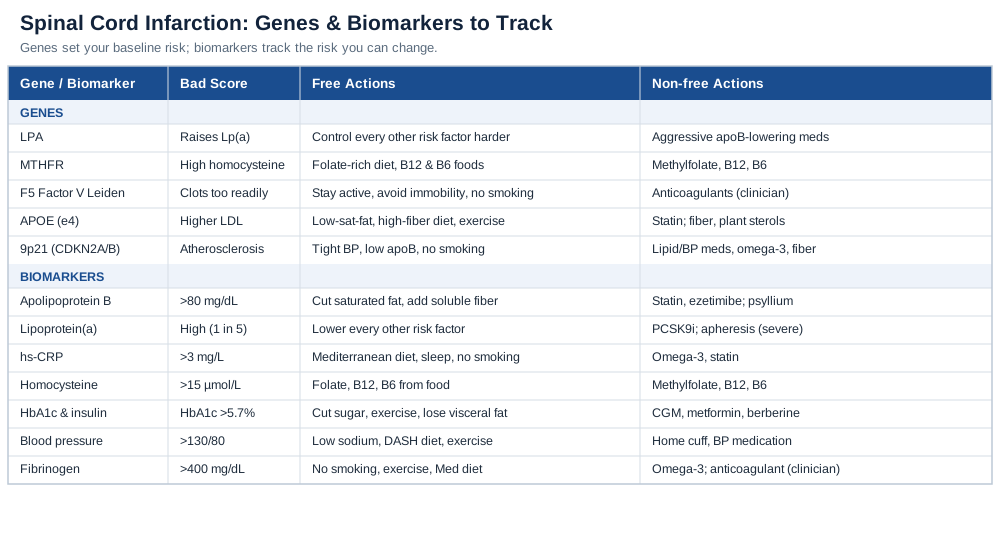
The 7 Biomarkers Worth Tracking For Spinal Cord Infarction
Spinal cord infarction is usually the end result of a vascular process that was building quietly for years. The blood supply to the cord depends on a small number of arteries, so anything that narrows, inflames, or clots those vessels raises the stakes. A 2024 systematic review and meta-analysis of 876 patients found the leading causes were aortic disease, atherosclerosis, embolism, surgery, and low blood pressure, with hypertension the most commonly reported risk factor. That tells us where to look. The markers below are the ones with the strongest link to the underlying disease process, and the ones you can actually change.
Think of these as a dashboard. No single number decides your fate, but together they show you where the pressure is building and whether your interventions are working.
1. Apolipoprotein B (ApoB): the number that counts your dangerous particles
Every atherogenic cholesterol particle, LDL, VLDL, and lipoprotein(a) included, carries exactly one apoB protein. So measuring apoB counts the actual number of artery-damaging particles in your blood, which is why lipidologists like Allan Sniderman and physicians like Peter Attia consider it a better risk marker than standard LDL cholesterol. A review of apoB versus LDL-C and non-HDL-C found apoB was the superior predictor across the studies examined. For a condition driven by atherosclerosis, this is arguably the most important lipid number you can track.
How to measure it
ApoB is a simple blood test, often no fasting required, and costs roughly 20 to 100 US dollars. Many people have never been offered it; you may need to request it directly. A reasonable general goal for someone at elevated vascular risk is well under 80 mg/dL, and some clinicians aim lower after a vascular event. Recheck about 3 months after any change, then every 6 to 12 months.If the score is bad, the plan without supplements
Reduce dietary saturated fat (fatty cuts of meat, butter, cream, palm oil) and replace it with monounsaturated and polyunsaturated fats such as olive oil, nuts, and fatty fish. Add soluble fiber from oats, beans, and legumes daily, which lowers particle number. Lose excess visceral fat and stay physically active most days. These are lifelong habits, not cycles, and the main "side effect" is that they also improve nearly every other marker on this list.If the score is bad, the plan with supplements or equipment
Discuss statin therapy with your doctor; after a vascular event it is often the highest-yield intervention. If statins are not tolerated, ezetimibe or bempedoic acid may be added or substituted. Over the counter, soluble fiber supplements (psyllium, about 5 to 10 g daily with plenty of water) and plant sterols (around 2 g daily with meals) modestly lower particle number. Statins are taken continuously, not cycled; possible side effects include muscle aches and, rarely, liver enzyme changes, so periodic monitoring is standard.2. Lipoprotein(a): the inherited risk hiding in plain sight
Lipoprotein(a), or Lp(a), is an LDL-like particle with an extra protein that makes it both atherogenic and prothrombotic, meaning it promotes both plaque and clotting. That double action is especially relevant to spinal cord infarction, where clots and emboli matter. Its level is roughly 90 percent genetically determined, and a review of Lp(a) as a cardiovascular risk factor notes it affects about one in five people. It has also been linked to recurrent ischemic stroke.
How to measure it
A one-time blood test settles it for most people, since levels are stable for life; expect roughly 30 to 100 US dollars. Results are reported in mg/dL or nmol/L. Every adult should know their number at least once, per current lipid guidelines.If the score is bad, the plan without supplements
You cannot meaningfully lower Lp(a) with diet or exercise, and that is an important truth to accept rather than fight. The productive move is to drive down every other risk factor harder, because your overall risk is what you can control. Aggressively manage blood pressure, apoB, blood sugar, and smoking, and make sure family members get tested too.If the score is bad, the plan with supplements or equipment
No proven supplement lowers Lp(a) safely; niacin lowers it modestly but has fallen out of favor because of side effects and lack of outcome benefit. Targeted Lp(a)-lowering drugs are in late-stage trials but not yet approved. For now, your clinician may intensify statin or add a PCSK9 inhibitor to lower total particle burden, and in severe cases lipoprotein apheresis (a filtering procedure) is used. These are medical decisions with monitoring, not self-directed cycles.3. High-sensitivity C-reactive protein (hs-CRP): the inflammation signal
Atherosclerosis is partly an inflammatory disease, and hs-CRP is the most accessible marker of that background inflammation. The landmark JUPITER trial showed that people with normal cholesterol but elevated hs-CRP still benefited substantially from statin therapy, which cemented hs-CRP as a meaningful risk marker. Lower inflammation generally means calmer, more stable plaque.
How to measure it
A blood test costing roughly 10 to 50 US dollars. Under 1 mg/L is considered low risk, 1 to 3 is moderate, and over 3 is high. Because acute illness spikes it, avoid testing when you have an infection, and confirm a high value with a repeat 2 weeks later.If the score is bad, the plan without supplements
Target the common drivers of chronic inflammation: excess body fat, poor sleep, smoking, and a diet heavy in refined carbohydrates and processed foods. A Mediterranean-style eating pattern, regular moderate exercise, 7 to 9 hours of sleep, and stopping smoking all lower hs-CRP over weeks to months. These are ongoing habits.If the score is bad, the plan with supplements or equipment
Omega-3 fatty acids (about 1 to 2 g of combined EPA and DHA daily) can modestly reduce inflammation; take with food, and note that high doses may slightly raise bleeding tendency, which matters if you are on blood thinners. Statins also lower hs-CRP as a bonus effect. There is no need to cycle omega-3s; consistency is what helps.4. Homocysteine: the amino acid that damages vessels and promotes clotting
Homocysteine is an amino acid that, when elevated, injures the blood vessel lining and encourages clotting, both directly relevant to spinal cord infarction. A systematic review and meta-analysis found higher homocysteine is associated with ischemic stroke. It is also one of the most easily correctable markers on this list, largely through B vitamins.
How to measure it
A fasting blood test costing about 30 to 100 US dollars. Many labs flag levels above roughly 15 micromol/L, but for vascular protection many clinicians prefer to see it under 10. Retest about 8 to 12 weeks after starting any intervention.If the score is bad, the plan without supplements
Eat more folate-rich foods (leafy greens, legumes, citrus), vitamin B12 sources (fish, eggs, dairy, or fortified foods), and B6 sources (poultry, fish, potatoes). Reduce heavy alcohol intake, which depletes these vitamins. For many people, food alone brings homocysteine down within a couple of months.If the score is bad, the plan with supplements or equipment
A combination of folate (ideally as methylfolate, around 400 to 800 mcg), vitamin B12 (methylcobalamin, 500 mcg or more, especially if you are over 50 or vegetarian), and vitamin B6 (around 10 to 25 mg) reliably lowers homocysteine. Take daily; there is no need to cycle. Keep B6 at modest doses, since very high long-term B6 (hundreds of mg) can cause nerve tingling. This is a rare case where a cheap supplement directly targets a vascular marker.5. HbA1c and fasting insulin: your metabolic and insulin-resistance markers
High blood sugar and insulin resistance accelerate atherosclerosis and worsen outcomes after ischemic events. A meta-analysis of impaired glucose metabolism after ischemic stroke found worse vascular outcomes, and insulin resistance itself is a known driver of vascular disease. HbA1c shows your average blood sugar over about 3 months; fasting insulin catches problems earlier, before sugar rises.
How to measure it
HbA1c costs roughly 10 to 40 US dollars and needs no fasting; fasting insulin costs about 20 to 60 US dollars. An HbA1c under 5.7 percent is normal, and evidence links levels above 6.5 percent to worse stroke severity. Recheck every 3 to 6 months while making changes.If the score is bad, the plan without supplements
Cut added sugars and refined carbohydrates, prioritize protein, fiber, and non-starchy vegetables, and add both aerobic exercise and resistance training, muscle is a major glucose sink. Even a daily walk after meals lowers post-meal spikes. Losing visceral fat is the single most powerful lever. These are permanent habit changes.If the score is bad, the plan with supplements or equipment
A continuous glucose monitor (equipment, roughly 40 to 100 US dollars per two weeks) can teach you which foods spike you, worn in learning bursts rather than continuously. Metformin, prescribed by a doctor, improves insulin sensitivity. Over the counter, berberine (about 500 mg two to three times daily with meals) can lower glucose modestly; it may cause digestive upset and is often cycled in 8 to 12 week blocks. Discuss any of these if you are already on glucose-lowering medication.6. Blood pressure: the most common risk factor, and one of the most fixable
Because hypertension was the most frequently reported risk factor in the spinal cord infarction review above, and because both high pressure (vessel damage) and sudden low pressure (poor cord perfusion) matter, blood pressure belongs on any serious tracking list. It is less a lab test than a number you can watch daily, which makes it uniquely actionable.
How to measure it
A validated home upper-arm cuff costs about 30 to 60 US dollars and is one of the best health investments you can make. Measure seated, rested, twice each morning and evening for a week to get your true average. A 24-hour ambulatory monitor (roughly 100 to 300 US dollars through a clinic) catches hidden nighttime pressure. Most guidelines target under 130/80 for high-risk individuals.If the score is bad, the plan without supplements
Reduce sodium (aim under 2,000 mg daily), increase potassium-rich vegetables and fruit, moderate alcohol, lose excess weight, and exercise regularly. The DASH eating pattern is the best-studied dietary approach. Manage stress and sleep, since both raise pressure. These are lifelong.If the score is bad, the plan with supplements or equipment
The home cuff itself is the key equipment; tracking creates accountability. If lifestyle is not enough, blood pressure medication is highly effective and should not be delayed after a vascular event, discuss the target and the drug class with your doctor, since avoiding both extremes (too high and dangerously low) matters for cord perfusion. Medications are taken continuously and adjusted, not cycled.7. Fibrinogen: the clotting-and-inflammation crossover marker
Fibrinogen is a clotting protein that also rises with inflammation, sitting right at the intersection of the two processes most relevant to spinal cord infarction: clot formation and vascular inflammation. Elevated fibrinogen is associated with higher risk of arterial disease and thrombosis, making it a useful secondary marker when clotting is a concern.
How to measure it
A blood test costing roughly 20 to 60 US dollars. Normal ranges are commonly around 200 to 400 mg/dL; higher values warrant attention. Like hs-CRP, it rises with acute illness, so test when you are well and confirm if elevated.If the score is bad, the plan without supplements
The same anti-inflammatory habits that lower hs-CRP help here: stop smoking (a major driver), exercise regularly, lose excess weight, and eat a Mediterranean-style diet. Staying well hydrated and active also supports healthy blood flow. Ongoing habits, not cycles.If the score is bad, the plan with supplements or equipment
Omega-3 fatty acids and regular aerobic exercise can modestly lower fibrinogen. More importantly, any decision about antiplatelet or anticoagulant medication belongs with your clinician, who will weigh your clotting risk against bleeding risk based on the cause of your infarction. Do not add fish oil or other blood-thinning supplements on top of prescribed anticoagulants without medical guidance.The 5 Genes That Shape Your Baseline Risk
Biomarkers tell you where you are today; genes help explain why your starting point is where it is. Researchers like Ali Torkamani have shown how genetic risk scores can flag people who need earlier, more aggressive prevention, while figures like Gary Brecka have popularized the idea of testing for common variants and compensating for them through lifestyle. The important nuance, and one worth repeating, is that a risk gene is not a verdict. It raises probability, and most of that probability can be offset by managing the very biomarkers we just covered.
Below are the genes most relevant to spinal cord blood supply and clotting. For each, note that the "fix" is rarely about the gene itself and almost always about compensating for its downstream effect.
LPA: the gene behind lipoprotein(a)
The LPA gene sets your lipoprotein(a) level, and variants that raise it increase both atherosclerosis and clotting tendency, exactly the combination that endangers spinal cord arteries. If this gene is unfavorable, the plan without supplements is to control every other modifiable factor harder, since Lp(a) itself barely responds to lifestyle. With supplements or equipment, there is no proven safe self-directed option yet, so this becomes a medical conversation about aggressive apoB lowering and, in the future, targeted therapies now in trials. Frequency and side effects follow whatever medication your clinician chooses; there is nothing to cycle.MTHFR: methylation and homocysteine
Common MTHFR variants (such as C677T) can reduce your ability to process folate and thereby raise homocysteine, which damages vessels and promotes clotting. This is one of the most compensable genes on the list. Without supplements, the plan is a folate-rich diet (leafy greens, legumes, citrus) plus adequate B12 and B6 from food. With supplements, methylfolate (400 to 800 mcg daily), methylcobalamin B12, and modest B6 taken continuously can normalize homocysteine in most carriers; keep B6 modest to avoid nerve tingling with long-term high doses. Retest homocysteine after 8 to 12 weeks to confirm it worked.F5 (Factor V Leiden) and prothrombin: inherited clotting risk
Factor V Leiden is the most common inherited thrombophilia in people of European descent, and along with the prothrombin (F2) variant it makes the blood clot more readily, which can contribute to embolic spinal cord infarction. Reviews have linked these variants to arterial and thrombotic events. Without supplements, the plan is rigorous avoidance of clot triggers: stay active, avoid long immobility (move and hydrate on long trips), stop smoking, and use caution with estrogen-containing hormones. With equipment or medication, this is firmly a clinician's domain, some carriers with a history of clots are placed on anticoagulants, which are taken continuously with periodic monitoring and carry bleeding risk. Never self-treat clotting genetics with supplements.APOE: cholesterol handling and vascular risk
The APOE gene influences how your body clears cholesterol; the e4 variant is associated with higher LDL and greater vascular risk. If you carry it, the plan without supplements leans hard on a lower-saturated-fat, fiber-rich diet and regular exercise, which some e4 carriers respond to especially well. With supplements or equipment, soluble fiber and plant sterols help modestly, and statin therapy (a medical decision) is often more impactful; monitor apoB to confirm the particle number is actually falling. Knowing your APOE status also has implications beyond vessels, so results deserve a thoughtful conversation.9p21 (CDKN2A/B): the classic atherosclerosis locus
Variants near the 9p21 region are among the most consistently replicated genetic markers of coronary and arterial disease, reflecting a tendency toward atherosclerosis independent of standard cholesterol. Because you cannot change the gene, the entire plan is compensation. Without supplements, that means treating your modifiable risk factors as if the dial is already turned up: tight blood pressure, low apoB, no smoking, good metabolic health. With supplements or equipment, the tools are the same evidence-based ones already described (fiber, omega-3s, and, where appropriate, prescribed lipid and pressure medications), used consistently rather than in cycles. A polygenic risk score, as Torkamani's work illustrates, can help decide how early and how hard to push.The Longevity Book That Reframes How You Think About Prevention
If you read one book that changes how you approach a vascular condition like spinal cord infarction, make it Outlive: The Science and Art of Longevity by Peter Attia. Its central argument, that we should attack chronic vascular disease decades before it becomes an emergency rather than waiting for symptoms, speaks directly to anyone who wants to avoid a second event. It draws on a large body of cardiovascular research and challenges the passive, react-only model many patients are given. Here are ten of its most impactful ideas.
1. Medicine should be preventive, not reactive
Attia contrasts "Medicine 2.0" (treat disease once it appears) with "Medicine 3.0" (prevent it years ahead). For vascular disease, waiting for the event is waiting too long, the biology has been building for decades.2. ApoB is the metric that matters
He argues that the number of atherogenic particles, measured by apoB, drives arterial disease, and that lowering it early and keeping it low is one of the highest-leverage things you can do.3. Atherosclerosis starts young
Arterial plaque begins forming in early adulthood, long before any symptom. This reframes prevention as a lifelong project, not a retirement-age chore.4. "Normal" is not the same as optimal
Lab reference ranges reflect the average population, which is not healthy. Attia pushes for optimal targets, especially for apoB and blood pressure, rather than merely "not flagged."5. Test lipoprotein(a) at least once
Because Lp(a) is inherited and common, he urges everyone to measure it once, so high-risk people can start prevention early instead of discovering the risk after an event.6. Exercise is the most powerful longevity drug
He frames cardiorespiratory fitness and strength as strongly protective, with benefits that touch nearly every marker discussed in this article, from insulin sensitivity to blood pressure.7. Metabolic health underpins vascular health
Insulin resistance quietly accelerates arterial disease. Catching it early with fasting insulin, not just glucose, lets you act before damage accumulates.8. Sleep is non-negotiable
Poor sleep raises blood pressure, inflammation, and glucose. Attia treats sleep as a core pillar of prevention rather than an optional extra.9. Emotional health is part of the plan
He argues, unusually for a longevity book, that mental and emotional wellbeing determine whether you can sustain any of these habits at all.10. Personalize the plan, then track it
The book's throughline is that generic advice fails; you measure your own markers, set individual targets, and adjust based on data, which is precisely the approach this article takes.Complementary Approaches With Real Human Evidence
Medical management addresses why the infarction happened and how to prevent another. But living well afterward, managing pain, mood, mobility, and the stress that itself worsens vascular risk, matters enormously. The approaches below have been tested in people with spinal cord conditions or closely related situations. None replaces medical care, and where the evidence is early or indirect, this section says so plainly.
Yoga (adapted for spinal cord conditions)
Yoga combines gentle movement, breathing, and attention, and adapted forms can support flexibility, balance, mood, and stress regulation in people recovering from spinal cord injury, where deconditioning and low mood are common. Lower stress also helps blood pressure, which is directly relevant to vascular risk.A randomized controlled trial of integrated yoga and naturopathy in 48 people with spinal cord injury reported improvements in functional independence, balance, and walking measures compared with routine care alone. It is a small trial, so treat it as encouraging rather than definitive.
Practically, look for an instructor experienced with neurological or adaptive yoga, start with seated or supported poses, and coordinate with your physiotherapist. Avoid extreme spinal movements and progress slowly. Used as a complement to rehabilitation, it is low-risk and may improve both function and mood.
Tai chi (seated or standing, adapted)
Tai chi is a slow, controlled movement practice that trains balance, posture, and calm focus, useful for anyone rebuilding motor control and confidence after a spinal cord event. Its meditative pacing also supports stress and blood pressure management.A pilot study of seated tai chi in community-dwelling people with spinal cord injuries found improvements in dynamic sitting balance and handgrip strength after 12 weeks. As a pilot, the numbers are small, so the finding is promising but not conclusive.
To apply it, seek an instructor who offers seated or adapted forms, begin with short sessions a few times weekly, and focus on smooth, controlled movement rather than range. It pairs naturally with physiotherapy and carries minimal risk when adapted to your abilities.
Mindfulness meditation / MBSR
Mindfulness-based approaches train nonjudgmental attention and can reduce the depression, anxiety, and chronic pain that frequently follow spinal cord injury. Because chronic stress raises blood pressure and inflammation, the benefits may extend modestly to vascular risk as well.A randomized controlled feasibility trial of internet-delivered mindfulness for people connected to spinal cord injury and chronic neuropathic pain supported its acceptability and benefit for mood, and broader reviews of mindfulness in spinal cord injury report reductions in depressive symptoms. The overall evidence base is still modest in size.
In practice, you can start with a reputable app or an 8-week MBSR course, aiming for short daily sessions. It is safe, requires no equipment, and works best as a steady habit rather than an occasional attempt, useful whether or not it moves any single biomarker.
Photobiomodulation / low-level laser therapy (early, mostly preclinical)
Photobiomodulation uses specific wavelengths of light to boost mitochondrial energy production and reduce inflammation in tissue, and it has attracted interest as a way to support spinal cord repair. It is included here honestly because the mechanism is plausible and the topic is frequently searched.Most of the encouraging data, such as work showing improved recovery after spinal cord injury, comes from laboratory and animal studies rather than robust human trials. That is a crucial limitation: what helps in the lab often does not translate to people.
Because human evidence for spinal cord infarction specifically is not yet established, treat photobiomodulation as experimental. If you are curious, discuss it with a specialist rather than pursuing consumer devices on your own, and do not let it displace treatments that are proven to work.
Conclusion
Spinal cord infarction can feel like a bolt from the blue, but the biology behind it, atherosclerosis, clotting, inflammation, high blood pressure, and metabolic dysfunction, is measurable and, to a meaningful degree, modifiable. The seven biomarkers in this article give you a dashboard for the risk you can change, the five genes explain the baseline you started with and how to compensate for it, and the surrounding strategies, from a prevention-first mindset to gentle, evidence-tested therapies, help you build a life that supports your vessels rather than straining them.
The single most important takeaway is this: you are not powerless, and you do not have to guess. When you can see your numbers, you can act on them and watch them improve, which turns a frightening diagnosis into a set of concrete, trackable decisions.
Start small and start soon. Pick one or two biomarkers to measure this month, ask your doctor about apoB and lipoprotein(a) if you have never checked them, buy a home blood pressure cuff, and bring this list to your next appointment. The next smart step does not have to be dramatic, it just has to be yours.
This article is for general education and is not medical advice. Spinal cord infarction is a serious condition; always discuss testing, supplements, medications, and any change to your treatment with a qualified healthcare professional who knows your full history.
Neurological: Spinal Cord Conditions
Cardiovascular: Blood Pressure Conditions Blood Vessel Conditions Vascular Conditions