This article contains AI generated content.
· UpdatedStatin-Induced Myopathy: 6 Genes and 7 Biomarkers to Track
Introduction
If you are taking a statin and experiencing unexplained muscle pain, weakness, or fatigue, you are not imagining it. Statin-induced myopathy affects an estimated 5 to 10 percent of patients on standard doses and up to 25 percent at higher doses, yet it remains one of the most underrecognized and poorly managed side effects in cardiovascular care. The discomfort is real. The mechanism is biological. And the appropriate response — switching statins, adjusting dose, or addressing nutrient deficiencies — should be based on your individual biology, not trial and error.
What makes this condition particularly frustrating is the dramatic variation in who is affected. Two people on identical statin regimens can have opposite experiences: one symptom-free for years, the other barely managing daily stairs. That gap is not random. It is largely driven by genetic variants affecting drug transport and metabolism, baseline levels of key nutrients, and compounding conditions like hypothyroidism — none of which appear in a standard lipid panel.
Generic advice like "try a lower dose" or "add CoQ10" can sometimes help, but it misses the underlying reason why you are susceptible in the first place. Without identifying your specific risk profile, you are managing symptoms rather than addressing causes.
This article takes a more targeted approach. It covers seven of the most clinically useful biomarkers for detecting and monitoring statin-induced myopathy, followed by six genetic variants that determine individual susceptibility before a single dose is taken. For each, you will find what normal looks like, what abnormal reveals, and concrete action plans — both with and without supplementation. Understanding even two or three of these factors can meaningfully change how you and your physician manage this condition.
Summary
This article maps the biology of statin-induced myopathy from two angles. The biomarker section covers seven markers — creatine kinase, CoQ10, vitamin D, TSH, myoglobin, LDH, and a urine organic acids panel — with thresholds, measurement costs, and practical plans for abnormal results. The genetics section explains six variants — SLCO1B1, CYP3A4/CYP3A5, ABCG2, COQ2, GATM, and RYR1 — that predict susceptibility and determine which statin type and dose is appropriate for a given individual. Beyond those two strategies, the article also summarizes the most relevant ideas from Outlive by Peter Attia, a book that challenges the one-size-fits-all statin prescribing model with compelling evidence. Three complementary modalities — photobiomodulation, massage therapy, and yoga — round out the article with evidence-backed approaches for managing muscle pain while the root causes are addressed. Whether you are trying to stay on a statin safely, understand why you had to stop, or decide whether to start one at all, the information here gives you a clearer and more actionable map.
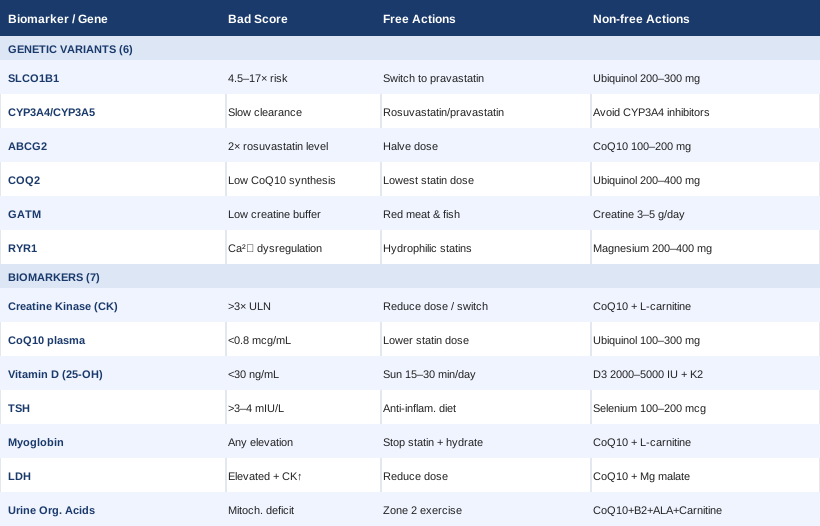
7 Biomarkers to Track for Statin-Induced Myopathy
Biomarker testing is the fastest and most accessible way to understand what is happening in your muscles while on a statin. The seven markers below cover three distinct categories: direct muscle damage indicators, metabolic drivers that increase vulnerability, and a functional window into mitochondrial health. Used together — or even in a prioritized sequence — they offer far more clarity than relying on creatine kinase alone.
1. Creatine Kinase (CK)
Why it matters: Creatine kinase is the primary enzyme used to assess skeletal muscle damage. When statin therapy stresses muscle tissue, CK leaks into the bloodstream in proportion to the degree of injury. It is the most established and most frequently ordered marker in the evaluation of statin-induced myopathy.
What it reveals: CK levels classify myopathy severity. Elevation up to three times the upper limit of normal (ULN) suggests subclinical muscle stress. Elevation above 10 times ULN meets the clinical threshold for myositis and warrants immediate statin review. Rhabdomyolysis, the most dangerous form, typically exceeds 40 times ULN and requires urgent medical intervention. It is worth noting that natural CK variation is wide: athletes, individuals of African descent, and those who recently exercised intensely can have elevated baseline CK that has nothing to do with statin damage. A pre-treatment baseline measurement removes this ambiguity.
How to measure it
CK is part of a standard comprehensive metabolic or muscle enzyme panel and costs $20 to $50 at most labs. It is widely covered by insurance. Obtain a baseline before starting statin therapy, repeat 6 to 12 weeks after dose changes, and retest whenever new symptoms appear. Avoid heavy exercise for 24 to 48 hours before sampling to prevent false elevations.
If the score is bad, the plan without supplements
For mild elevation (below 3x ULN) with minimal symptoms, reduce the statin dose or switch to a more hydrophilic statin — pravastatin and rosuvastatin penetrate muscle membranes less readily than lovastatin or simvastatin. Eliminate known amplifiers: grapefruit and pomelo inhibit CYP3A4 and raise plasma statin levels; certain antibiotics, antifungals, and calcium channel blockers do the same. Reduce exercise intensity temporarily during statin initiation or dose escalation.
If the score is bad, the plan with supplements or equipment
Ubiquinol (reduced CoQ10) at 100 to 200 mg per day with a fat-containing meal is the most biologically grounded adjunct for elevated CK on statins. L-carnitine at 1 to 2 grams per day supports mitochondrial fatty acid transport and has shown benefit in some controlled trials. Neither requires cycling. Side effects are minimal; high-dose L-carnitine occasionally causes a mild odor. Magnesium glycinate at 200 to 400 mg/day provides additional support for muscle cell membrane function.
2. CoQ10 Plasma Levels
Why it matters: Statins work by blocking HMG-CoA reductase, the enzyme that produces mevalonate. Mevalonate is also the upstream precursor to coenzyme Q10 — the molecule that drives electron transport in mitochondrial membranes. Blocking this pathway reduces CoQ10 synthesis in muscle cells, directly impairing ATP production. Plasma CoQ10 levels fall measurably in patients on statins, and the degree of depletion correlates with statin lipophilicity and dose. This is not a theoretical concern; it is a pharmacological consequence built into the mechanism of action.
What it reveals: Low plasma CoQ10 indicates that mitochondrial energy capacity in muscle is compromised. This particularly affects Type I oxidative muscle fibers, which are the most mitochondria-dense and most affected by statin-induced CoQ10 depletion. Patients with already-low CoQ10 at baseline — due to genetics, aging, or dietary pattern — are at the highest risk of symptomatic depletion.
How to measure it
Plasma CoQ10 is available through LabCorp, Quest Diagnostics, and specialty labs. It is not universally covered by insurance and costs $80 to $200. Optimal plasma levels in clinical practice are generally above 0.8 to 1.0 mcg/mL, though some functional medicine practitioners use the CoQ10-to-total cholesterol ratio for a more stable reference point. Testing before and 8 to 12 weeks after starting supplementation confirms response.
If the score is bad, the plan without supplements
Dietary sources with meaningful CoQ10 content include beef heart, sardines, mackerel, organ meats, and spinach. Food alone rarely restores clinically depleted levels in active statin users, but it provides useful background support. Lowering the statin dose is the most direct non-supplement intervention for CoQ10 depletion.
If the score is bad, the plan with supplements or equipment
Ubiquinol at 100 to 300 mg per day with fat is the preferred form. Ubiquinol is the pre-reduced version and does not require enzymatic conversion before use — an important consideration for older patients in whom this conversion is slower. Ubiquinone is less expensive but comparatively less effective per milligram in clinical use. No cycling is required. Photobiomodulation (red and near-infrared light, discussed later in this article) directly activates cytochrome c oxidase — the same mitochondrial enzyme that CoQ10 feeds — and may amplify supplementation effects.
3. Vitamin D (25-OH D)
Why it matters: Vitamin D deficiency is one of the most correctable and most frequently overlooked risk factors for statin-induced myopathy. The vitamin D receptor (VDR) is expressed in skeletal muscle, where it regulates calcium handling, insulin signaling, and mitochondrial function. Low vitamin D independently causes myalgia and proximal muscle weakness. When combined with statin therapy, the effects compound in a way that makes the statin appear more toxic than it may actually be at a therapeutic dose.
What it reveals: A 25-OH D level below 20 ng/mL classifies as deficiency; below 30 ng/mL as insufficiency. Multiple case series and observational studies document resolution of statin-induced myopathy after correction of vitamin D deficiency alone, without statin modification — underscoring how frequently this is the actual driver rather than the drug itself.
How to measure it
The 25-OH vitamin D test is standard, widely covered by insurance, and costs $30 to $80. Optimal levels for muscle function are generally 40 to 60 ng/mL; Peter Attia recommends targeting 50 to 70 ng/mL. Seasonal variation is significant, especially in northern latitudes. Testing in late winter captures the nadir; late summer captures the peak. If supplementing, retest every 3 to 4 months initially.
If the score is bad, the plan without supplements
Direct sun exposure to arms and legs for 15 to 30 minutes daily — depending on skin tone, latitude, and season — meaningfully raises vitamin D levels without any supplement. Fatty fish, egg yolks, and fortified foods provide additional dietary support. Reducing factors that impair vitamin D metabolism, such as chronic inflammation, obesity, and magnesium deficiency, improves conversion efficiency.
If the score is bad, the plan with supplements or equipment
Vitamin D3 at 2,000 to 5,000 IU per day with vitamin K2 (MK-7 form, 100 to 200 mcg) is the standard repletion protocol. K2 prevents calcium from depositing in arteries rather than bones — an important consideration for cardiovascular patients. Magnesium glycinate at 200 to 400 mg/day activates the enzyme that converts inactive vitamin D to its active form (calcitriol) and is frequently co-deficient in symptomatic patients. Side effects at these doses are rare; doses above 10,000 IU per day without monitoring carry risk of hypercalcemia.
4. TSH (Thyroid Stimulating Hormone)
Why it matters: Subclinical or overt hypothyroidism dramatically amplifies statin-induced myopathy risk, and it is regularly missed in standard workups. Thyroid hormone is essential for muscle repair, mitochondrial biogenesis, and myosin heavy chain synthesis. Low thyroid function impairs all three. A patient with undetected hypothyroidism on a statin is doubly vulnerable — a fact obscured when clinicians focus only on CK without ruling out concurrent thyroid dysfunction.
What it reveals: TSH above 3 to 4 mIU/L, particularly alongside symptoms of fatigue and cold intolerance, warrants further investigation. Free T3 and free T4 alongside TSH give a more complete picture of actual thyroid hormone availability in peripheral tissues. Anti-TPO antibodies help identify Hashimoto's thyroiditis as an autoimmune driver.
How to measure it
TSH alone costs $20 to $60 and is widely covered by insurance. A complete thyroid panel — TSH, free T3, free T4, and anti-TPO antibodies — costs $80 to $150. Testing should be done fasting, in the morning, for the most consistent results. Some practitioners recommend rechecking TSH any time statin-related muscle symptoms worsen without an obvious pharmacological explanation.
If the score is bad, the plan without supplements
A low-inflammatory, selenium-adequate diet reduces thyroid antibody burden in Hashimoto's patients. Minimizing exposure to environmental thyroid disruptors — brominated compounds, excess fluoride, perchlorate — supports iodine uptake. Chronic stress elevates cortisol, which suppresses T4-to-T3 conversion; stress management therefore has a direct thyroid benefit. For borderline TSH with symptoms, these lifestyle factors can shift the picture meaningfully before medication is necessary.
If the score is bad, the plan with supplements or equipment
For confirmed hypothyroidism, thyroid hormone replacement is the most direct intervention — this requires physician management. Nutritional adjuncts include selenium 100 to 200 mcg/day (two Brazil nuts provide approximately 150 mcg), zinc at 15 to 30 mg/day, and iodine in physiologic amounts. Once thyroid function normalizes, many patients find that their statin myopathy symptoms resolve substantially — confirming thyroid dysfunction, not the statin, was the primary driver.
5. Myoglobin
Why it matters: Myoglobin is the oxygen-binding protein stored inside muscle fibers. When muscle cells rupture, myoglobin is released into the bloodstream and cleared through the kidneys. Elevated serum or urine myoglobin is the principal warning sign for rhabdomyolysis — the most dangerous form of statin-induced myopathy and a rare but serious cause of acute kidney injury.
What it reveals: Unlike CK, which rises and falls over days, myoglobin elevation is more acute and resolves faster. It provides an early signal when muscle breakdown is rapid. Brown or tea-colored urine in a statin user is a clinical emergency and almost always reflects myoglobinuria. Any confirmed elevation in this context requires immediate attention.
How to measure it
Myoglobin can be measured in blood or urine. Blood tests cost $30 to $80. Many emergency chemistry panels include it alongside CK and LDH. Urine dipstick testing can detect heavy myoglobinuria indirectly — a heme-positive result without visible red blood cells should prompt formal lab confirmation. Routine screening is not necessary for mild symptoms; reserve this test for moderate-to-severe presentations.
If the score is bad, the plan without supplements
Elevated myoglobin during statin therapy is a medical urgency, not a lifestyle optimization problem. Discontinue the statin immediately and contact a physician. Aggressive oral hydration — 2 to 3 liters of water per day minimum — supports renal myoglobin clearance. Avoid NSAIDs, which can impair kidney perfusion and worsen outcomes. Hospitalization and IV fluids may be necessary in severe cases.
If the score is bad, the plan with supplements or equipment
After medical stabilization and statin discontinuation, rebuilding muscle integrity focuses on restoring CoQ10 (300 mg ubiquinol daily), L-carnitine (2 g/day), and correcting electrolyte imbalances. The acute phase is a medical management priority, not a supplement optimization window. Re-introduction of any statin, if considered, should follow complete symptom resolution and a careful pharmacogenomic review.
6. LDH (Lactate Dehydrogenase)
Why it matters: LDH is a cytosolic enzyme present in most body tissues that participates in anaerobic glycolysis. It is released when cells are damaged, making it a sensitive — if non-specific — marker of tissue injury. While LDH alone is insufficient to diagnose statin myopathy, elevated LDH alongside elevated CK and symptoms reinforces the diagnostic picture and provides additional context for the degree of cellular stress.
What it reveals: LDH results must be interpreted in context. Isolated LDH elevation may reflect liver, red blood cell, or pulmonary pathology rather than muscle damage. In the setting of statin use, myalgia, and concurrent CK elevation, LDH adds weight to the myopathy diagnosis and helps track recovery trends when retested serially.
How to measure it
LDH is included in most comprehensive metabolic panels. It costs $20 to $50 and is widely covered. The normal range is typically 140 to 280 U/L, though this varies by lab and method. Testing serially every 4 to 6 weeks during active monitoring — rather than relying on a single result — enables trend-based interpretation.
If the score is bad, the plan without supplements
Isolated LDH elevation without CK elevation should prompt investigation beyond statin myopathy. In the typical muscle-damage context, reducing statin dose and avoiding overexertion is the primary approach. Eliminating alcohol temporarily reduces background LDH elevation from hepatic and erythrocyte sources, clarifying the contribution of muscle origin.
If the score is bad, the plan with supplements or equipment
In the context of confirmed statin myopathy, LDH elevation follows the same supplementation logic as CK: CoQ10, vitamin D normalization, and L-carnitine. Magnesium malate at 200 to 400 mg/day — a form used in fibromyalgia research — has supportive value for diffuse muscle pain and may reduce soreness without significant side effects. No cycling is required.
7. Urine Organic Acids Panel
Why it matters: Of the seven biomarkers in this section, the urine organic acids panel is the least commonly ordered but potentially the most informative for understanding why a given patient experiences disproportionate myopathy. Statins impair mitochondrial oxidative phosphorylation — not just CoQ10 synthesis — and the resulting metabolic dysfunction produces a distinct signature in urinary organic acid metabolites. This is the test used by functional and metabolic medicine practitioners to identify specific mitochondrial bottlenecks at an individual level.
What it reveals: Elevated succinate, an elevated lactate-to-pyruvate ratio, and accumulation of 3-methylglutaric acid indicate impaired mitochondrial complex activity. Elevated branched-chain amino acid metabolites may reflect impaired energy substrate utilization in muscle. Together, these markers can confirm that mitochondrial dysfunction is driving symptoms in a way that a CK test alone cannot establish.
How to measure it
Urine organic acids panels are available through Genova Diagnostics, Mosaic Diagnostics, and some hospital-affiliated specialty labs. Cost ranges from $150 to $400. The test uses a first-morning urine sample and requires no dietary preparation beyond avoiding certain colored foods. Results take 1 to 2 weeks and require interpretation by a practitioner familiar with functional metabolic testing — results reported in isolation without clinical context are difficult to apply.
If the score is bad, the plan without supplements
Mitochondrial function responds powerfully to consistent zone 2 aerobic exercise: 30 to 60 minutes at 60 to 70 percent of maximum heart rate, 3 to 5 days per week. This directly stimulates mitochondrial biogenesis through PGC-1α activation — a mechanism that works in the opposite direction of statin-induced impairment. Adequate sleep (7 to 9 hours), reduced alcohol intake, and a whole-foods diet rich in B vitamins support electron transport chain efficiency without supplementation.
If the score is bad, the plan with supplements or equipment
A mitochondria-targeted supplementation protocol includes CoQ10 200 to 300 mg (ubiquinol), riboflavin (vitamin B2) 100 mg, alpha-lipoic acid 300 mg, and L-carnitine 1 to 2 g daily — all taken with meals. PQQ (pyrroloquinoline quinone) at 10 to 20 mg/day shows early promise for promoting mitochondrial biogenesis in animal and preliminary human studies. Alpha-lipoic acid is sometimes cycled (4 weeks on, 1 week off) by practitioners concerned about carnitine displacement at sustained high doses. In diabetic patients, alpha-lipoic acid can lower blood glucose — a clinically relevant interaction to monitor.
Building on the biomarker picture, the next layer of understanding comes from genetics — which explains not just what is happening now, but why certain individuals are constitutionally more susceptible before any statin is prescribed.
6 Genetic Variants That Shape Statin Myopathy Risk
While biomarkers tell you what is happening in your muscles right now, genetic variants explain the structural reasons why certain individuals are predisposed to myopathy at doses that others handle easily. Pharmacogenomics researchers — including Ali Torkamani at Scripps Research, whose work on actionable pharmacogenomic variants has influenced clinical implementation guidelines — have helped establish that several variants predict susceptibility before a single dose is taken. This knowledge shifts the model from reactive symptom management to proactive drug selection.
SLCO1B1 (rs4149056) — The Most Clinically Important Statin Gene
What it does: SLCO1B1 encodes OATP1B1, a hepatic uptake transporter that moves statins from the bloodstream into liver cells — the intended target. The rs4149056 variant (also written as 521T>C) reduces transporter efficiency, so statins remain in systemic circulation longer and at higher concentrations. The drug is still present; it is simply not being cleared into the liver as efficiently as intended, which means muscle tissue receives more exposure than pharmacological models assume.
Risk magnitude: The SEARCH (Study of the Effectiveness of Additional Reductions in Cholesterol and Homocysteine) Collaborative Group published a landmark genome-wide association study in the New England Journal of Medicine in 2008. Carrying one copy of the rs4149056 variant was associated with a 4.5-fold increased risk of statin-induced myopathy. Carrying two copies raised that risk to approximately 16.9-fold. This finding has since been replicated across multiple cohorts and informed CPIC (Clinical Pharmacogenomics Implementation Consortium) prescribing guidelines. Read the SEARCH study at PubMed
If the gene is bad, the plan without supplements
Switch from statins with high SLCO1B1 dependence — particularly simvastatin and lovastatin — to statins with alternative or reduced hepatic uptake pathways. Pravastatin and fluvastatin are the least affected by this variant. Rosuvastatin is partially affected. CPIC guidelines recommend that carriers of one variant allele on simvastatin remain below 20 mg; those with two copies should stay at 10 mg or consider a different statin entirely. Extended-release formulations and alternate-day dosing reduce peak plasma concentration, which is the relevant driver of muscle exposure.
If the gene is bad, the plan with supplements or equipment
Carriers of the SLCO1B1 variant experience greater-than-average CoQ10 depletion due to elevated statin plasma levels. Ubiquinol 200 to 300 mg/day is a particularly important baseline supplement for this group, rather than a reactive measure. Genetic testing for this variant is available through pharmacogenomic panels such as GeneSight, Genomind, or dedicated CPIC-focused services — typically requiring a saliva or blood sample and costing $100 to $300. Some insurers cover pharmacogenomic testing when clinical indication is documented.
CYP3A4 / CYP3A5 — When Statin Metabolism Is Slow by Genetics
What it does: CYP3A4 and CYP3A5 are cytochrome P450 enzymes in the liver responsible for metabolizing lovastatin, simvastatin, and atorvastatin. Genetic variants that reduce CYP3A4 activity cause slower drug clearance — effectively delivering a higher functional statin exposure than the prescribed dose implies. The CYP3A5*3 allele, which is highly prevalent in European populations, eliminates CYP3A5 expression entirely. Patients who are poor metabolizers via both CYP3A4 and CYP3A5 are at elevated risk.
What it affects: CYP3A4 is also inhibited by many commonly prescribed drugs — certain antifungals, macrolide antibiotics, calcium channel blockers — and foods including grapefruit and pomelo. A patient who tolerated a statin for years may develop myopathy acutely after a course of antibiotics or a dietary change, with CYP3A4 inhibition as the cause. Identifying genetic poor metabolizer status makes these interactions more predictable and dangerous to overlook.
If the gene is bad, the plan without supplements
Select statins that bypass CYP3A4 entirely: rosuvastatin and pravastatin are primarily handled through alternative pathways (sulfation and glucuronidation respectively) and are significantly safer choices for CYP3A4 poor metabolizers. Strict grapefruit and pomelo elimination is non-negotiable for patients on lipophilic statins. Medication reconciliation at every visit — checking any new drug or supplement for CYP3A4 interaction — is essential.
If the gene is bad, the plan with supplements or equipment
Several widely used supplements also inhibit CYP3A4, including berberine, goldenseal, and high-dose quercetin. CYP3A4 poor metabolizers on lovastatin, simvastatin, or atorvastatin should avoid these specifically. Conversely, ensuring adequate CoQ10 and vitamin D while managing the interaction risk through pharmacist-reviewed medication management is the most practical protective combination.
ABCG2 (rs2231142, Q141K) — Rosuvastatin's Underrecognized Variable
What it does: ABCG2 encodes the breast cancer resistance protein (BCRP), a membrane transporter that pumps rosuvastatin out of intestinal and liver cells during absorption and first-pass clearance. The Q141K variant (rs2231142) reduces ABCG2 transporter activity by approximately 50 percent, roughly doubling plasma rosuvastatin concentrations in affected individuals — at the same prescribed dose.
Who carries it: This variant is present in approximately 30 percent of East Asian populations and 10 to 15 percent of European populations. It is clinically relevant because rosuvastatin is often the default "safer" statin recommended for patients who struggled with simvastatin or lovastatin — without recognizing that it carries its own genetic vulnerability for a different, sizable subset of patients.
If the gene is bad, the plan without supplements
Reduce rosuvastatin dose: CPIC guidelines suggest that Q141K carriers on standard doses may achieve equivalent plasma exposure at half the usual dose, and that myopathy risk is meaningfully reduced with appropriate dose reduction. For patients carrying both SLCO1B1 and ABCG2 variants, pravastatin — which is affected by neither — is the most pharmacogenomically safe option.
If the gene is bad, the plan with supplements or equipment
Standard CoQ10 supplementation at 100 to 200 mg/day addresses the elevated statin exposure. Avoid supplements that inhibit BCRP: high-dose curcumin, certain flavonoids, and ellagic acid can reduce ABCG2 activity further and compound statin accumulation. Genetic panel testing for ABCG2 is typically included in the same pharmacogenomic reports that cover SLCO1B1.
COQ2 — When the Body Cannot Keep Up With CoQ10 Demand
What it does: The COQ2 gene encodes para-hydroxybenzoate polyprenyltransferase, an enzyme in the final steps of endogenous CoQ10 biosynthesis. Certain COQ2 variants reduce the efficiency of this synthesis pathway, leaving patients with lower baseline CoQ10 production before any statin is introduced. When statin therapy then further inhibits the mevalonate pathway — the upstream supplier for CoQ10 synthesis — depletion becomes faster and more pronounced than in the general population.
What it affects: COQ2 variant carriers may present with statin myopathy at doses that peers tolerate without issue. They may also report pre-existing fatigue or exercise intolerance that predates statin initiation — reflecting already-suboptimal mitochondrial energy production. Identifying this variant helps explain why some patients see dramatic improvement with CoQ10 supplementation while others see modest benefit.
If the gene is bad, the plan without supplements
Dietary CoQ10 sources — particularly beef heart, sardines, mackerel, and organ meats — provide more meaningful CoQ10 per gram than most plant foods and offer a genuine (if partial) foundation. Selecting the lowest effective statin dose is especially important for COQ2 variant carriers, since the depletion effect scales with both dose and lipophilicity.
If the gene is bad, the plan with supplements or equipment
For COQ2 variant carriers on statins, ubiquinol at 200 to 400 mg per day — rather than the standard 100 mg — is the appropriate starting point. Initiating CoQ10 supplementation before or simultaneously with statin therapy (rather than reactively after symptoms develop) is particularly logical for this group. Retesting plasma CoQ10 levels 8 to 12 weeks after starting supplementation confirms adequate response. Long-term use at these doses is considered safe.
GATM (rs9806699) — The Creatine Pathway and Muscle Energy Buffering
What it does: GATM encodes glycine amidinotransferase, the rate-limiting enzyme in creatine biosynthesis. A variant in GATM was identified in a genome-wide association study as significantly associated with statin-induced myopathy. The proposed mechanism connects impaired creatine synthesis to reduced muscle energy buffering: creatine phosphate is essential for the rapid regeneration of ATP during muscle contraction. Reduced GATM activity may leave muscle cells energetically vulnerable under the combined stress of statin-induced mitochondrial impairment and physical activity.
What it affects: GATM variant carriers may have reduced baseline muscle creatine stores, meaning their muscles have less of the rapid-release energy buffer that allows normal function under metabolic stress. This may manifest as disproportionate fatigue during moderate activity and slower recovery from exercise.
If the gene is bad, the plan without supplements
Dietary creatine — found primarily in red meat and fish at roughly 1 to 2 grams per typical serving — supports muscle creatine stores without supplementation. Reducing exercise intensity during statin initiation and dose escalation phases lowers the demand on a creatine system that may already be limited by genetics.
If the gene is bad, the plan with supplements or equipment
Somewhat counterintuitively, creatine monohydrate at 3 to 5 grams per day bypasses the GATM enzymatic bottleneck by providing creatine directly — no synthesis required. Preliminary clinical evidence suggests that creatine supplementation in statin users with muscle weakness (rather than isolated pain) shows meaningful functional benefit. Creatine monohydrate has one of the broadest safety profiles in nutritional supplementation research; mild water retention during loading is the most common side effect. Combining creatine with CoQ10 addresses two parallel energy deficits. No cycling required.
RYR1 — Calcium Regulation and Muscle Vulnerability
What it does: The ryanodine receptor 1 (RYR1) regulates calcium release from the sarcoplasmic reticulum during muscle contraction and relaxation. Known primarily for its role in malignant hyperthermia susceptibility, RYR1 variants have also been linked to statin myopathy risk in genetically susceptible populations. Dysregulated calcium signaling increases metabolic demand and oxidative stress in muscle cells, making them more vulnerable to additional pharmacological stressors — including statins.
What it affects: RYR1 variant carriers may experience more pronounced muscle stiffness, exercise-induced myalgia, and sensitivity to heat — symptoms that overlap substantially with statin myopathy and can confuse the clinical picture. Because RYR1 sequencing is not yet included in standard pharmacogenomic panels, it is frequently missed.
If the gene is bad, the plan without supplements
Hydrophilic statins (pravastatin, rosuvastatin) are strongly preferred over lipophilic statins for RYR1 variant carriers, as they penetrate skeletal muscle membranes less readily. Avoiding compounding stressors — intense eccentric exercise, extreme heat, high alcohol intake — reduces the burden on already-dysregulated calcium handling in muscle. RYR1 testing is available through comprehensive genetic sequencing panels and is a relevant consideration for patients with both statin myopathy and a family history of malignant hyperthermia susceptibility.
If the gene is bad, the plan with supplements or equipment
Magnesium glycinate at 200 to 400 mg/day supports calcium channel regulation in muscle and may partially mitigate the consequences of impaired RYR1-mediated calcium handling. CoQ10 at standard doses addresses the downstream mitochondrial vulnerability in stressed muscle cells. Neither supplement constitutes specific RYR1 therapy, but both reduce the metabolic cost of abnormal calcium cycling. Any decision regarding statin use in confirmed RYR1 variant carriers should involve a specialist familiar with both pharmacogenomics and neuromuscular medicine.
With a working picture of both the metabolic markers and the genetic drivers, it is worth stepping back to consider how some of the most influential thinking in preventive medicine synthesizes these elements into a broader clinical framework.
What Outlive by Peter Attia Gets Right About Statins and Muscle Health
Outlive: The Science and Art of Longevity (2023) by Peter Attia is one of the most rigorously argued lay-science books in preventive medicine. Attia is a physician trained in surgical oncology who now focuses exclusively on longevity and metabolic health, and his treatment of cardiovascular risk — including statins, muscle health, and pharmacogenomics — directly challenges the simplified protocols that still dominate clinical practice. The following ten points from his work and associated research are particularly relevant to anyone navigating statin myopathy.
1. LDL-C is the wrong primary target
Clinical guidelines have long focused on LDL cholesterol concentration, but what actually drives atherosclerosis is LDL particle number — measured as LDL-P or apolipoprotein B (apoB). Someone can have normal LDL-C but dangerously elevated apoB. This distinction matters for statin myopathy because it informs when statins are genuinely necessary versus when other interventions may achieve equivalent risk reduction at lower doses.
2. SLCO1B1 testing should precede statin prescribing
Attia explicitly advocates for pharmacogenomic testing — particularly SLCO1B1 — before initiating statin therapy in any patient with risk factors or who is likely to need long-term treatment. He frames prescribing a drug without knowing a patient's relevant genetic variants as imprecise medicine by design. The test costs less than $200 and can prevent years of misattributed symptoms and diagnostic confusion.
3. Statins are not the only tool for most people
For patients genuinely unable to tolerate statins, Attia details alternatives: PCSK9 inhibitors, bempedoic acid, ezetimibe, and in specific lipid phenotypes, omega-3 fatty acids. This context matters because many statin myopathy patients believe they must choose between cardiovascular protection and functional muscles — a false binary in most cases.
4. Muscle mass is a non-negotiable longevity asset
One of Attia's central arguments is that muscle mass and strength are among the strongest predictors of longevity and functional independence in aging. Statin-induced myopathy that prevents exercise, causes progressive muscle loss, or reduces willingness to exercise is therefore not a minor inconvenience — it directly undermines one of the most powerful biological levers available.
5. Zone 2 training is the primary mitochondrial intervention
Attia consistently advocates for zone 2 aerobic exercise — sustained activity at approximately 60 to 70 percent of maximum heart rate — as the most evidence-backed method for stimulating mitochondrial biogenesis and improving oxidative capacity. Given that statins impair mitochondrial function directly, zone 2 exercise provides a biological countermeasure that is both well-supported and free.
6. Statin myopathy is real, common, and manageable
Attia does not minimize or dismiss statin-induced muscle symptoms. He acknowledges wide prevalence of subclinical effects and emphasizes that most cases can be resolved through statin switching, dose reduction, or addressing nutrient deficiencies — without abandoning cardiovascular risk management. Stopping statins without a plan is the worst resolution; solving the actual cause is the goal.
7. CoQ10 makes clinical sense despite mixed RCT evidence
Attia acknowledges that randomized controlled trial evidence for CoQ10 in statin myopathy is mixed. Some trials show benefit; others do not. His position: given the established mechanistic rationale, minimal risk, and consistent anecdotal benefit in clinical practice, supplementation is a reasonable empirical trial for symptomatic patients — particularly while the biomarker and genetic picture is being developed.
8. The liver is the target; muscle is the bystander
Attia explains the pharmacology with useful clarity: statins are designed to act on hepatocytes. When they enter skeletal muscle — which happens more with lipophilic statins and in patients with impaired hepatic uptake — they cause mitochondrial stress in a tissue that was never meant to receive therapeutic exposure. Understanding this mechanism helps patients and physicians make rational adjustments rather than simply abandoning the drug class.
9. Most patients do not receive enough information to make informed decisions
A recurring theme in Outlive is that standard clinical encounters are too brief and too protocol-driven to account for individual variation. Patients who understand their genetic profile, relevant biomarkers, and pharmacological options make better-informed decisions — not just about statins, but about their overall cardiovascular risk strategy.
10. Personalized cardiovascular medicine is already accessible
The tools for personalization — pharmacogenomic panels, advanced lipid testing, mitochondrial function markers, fitness assessment — already exist and are available to patients who seek them. What is missing is not technology but clinical systems to deploy it routinely. Attia's broader argument is that patients who take initiative on their own behalf can access most of this precision now, without waiting for guidelines to catch up.
Complementary Approaches With Meaningful Evidence
The strategies above address the metabolic and genetic drivers of statin myopathy through testing, supplementation, and pharmacological adjustment. The three approaches below work through different mechanisms — directly supporting muscle recovery, reducing pain, and improving tolerance of the moderate physical activity that is itself a critical treatment.
Photobiomodulation and Low-Level Laser Therapy
Low-level laser therapy (LLLT) and red/near-infrared photobiomodulation (PBM) apply specific wavelengths of light — typically 630 to 850 nm — to muscle tissue. These wavelengths penetrate several centimeters below the skin and are absorbed by cytochrome c oxidase, the terminal enzyme of the mitochondrial electron transport chain. The absorbed photons increase ATP synthesis, reduce mitochondrial reactive oxygen species, and promote cellular recovery. The mechanism aligns directly with the core problem in statin myopathy: mitochondrial electron transport chain impairment.
A randomized controlled trial by Leal Junior and colleagues, published in Photomedicine and Laser Surgery (2010), demonstrated that pre-exercise LLLT significantly reduced CK levels and markers of skeletal muscle damage after high-intensity exercise. While no large randomized trial has targeted statin myopathy specifically, multiple systematic reviews confirm LLLT efficacy for skeletal muscle recovery and delayed-onset muscle soreness — a closely related pathophysiological context.
For practical use: red (660 nm) and near-infrared (850 nm) panels applied to major muscle groups — quadriceps, hamstrings, lower back — for 10 to 20 minutes per session, 3 to 5 days per week. Consumer-grade panels are widely available at $150 to $600. Apply at rest, not during exercise. Avoid directing light at the eyes. Consider this a supportive adjunct to, not a replacement for, addressing the underlying pharmacological or nutrient-based cause.
Massage Therapy
Massage therapy is relevant to statin myopathy through two pathways: mechanical reduction of sustained muscle tension and local improvement in circulation that supports metabolite clearance. The most common statin myopathy presentation — diffuse myalgia without significant CK elevation — overlaps substantially with the pain pattern that massage addresses most effectively. Evidence from delayed-onset muscle soreness and fibromyalgia research demonstrates consistent reduction in perceived pain, which is the primary complaint of most mild-to-moderate statin myopathy patients.
A systematic review and meta-analysis published in Frontiers in Physiology (2020) found that massage significantly reduced muscle soreness and perceived pain intensity across multiple exercise and chronic pain populations. While direct statin myopathy trials have not been published, the symptom overlap makes the translation reasonable.
For practical application: Swedish or deep tissue massage focused on symptomatic muscle groups, 45 to 60 minutes per session, once to twice weekly during periods of active symptoms. Percussion therapy devices (massage guns) are a practical home option at $80 to $250. Avoid deep pressure on acutely inflamed or extremely tender areas. Massage addresses pain effectively but does not correct the metabolic or pharmacological cause — pair it with the biomarker-driven strategies above for durable improvement.
Yoga
Yoga combines gentle muscle lengthening, breath regulation, and parasympathetic nervous system activation. For patients with statin myopathy, its practical value lies in maintaining mobility and physical conditioning without the intense eccentric loading of conventional strength exercise — the type of contraction most likely to spike CK and worsen symptoms. Consistent low-intensity movement also supports cortisol regulation, sleep quality, and insulin sensitivity, all of which indirectly influence muscle repair and vitamin D activation.
Multiple randomized controlled trials, including studies published in Annals of Internal Medicine on yoga for chronic low back pain and associated work on musculoskeletal pain in middle-aged adults, support yoga's efficacy for reducing pain, improving functional mobility, and maintaining physical activity adherence. While statin myopathy-specific yoga trials are absent, the symptom overlap and functional goals are well aligned.
For practical application: Hatha or Yin yoga, 3 to 5 sessions per week of 30 to 60 minutes. Classes labeled "gentle yoga" or "restorative yoga" minimize injury risk for those with significant muscle pain. Online programs make this accessible without cost. Begin slowly, track any increase in muscle pain after sessions, and use yoga as a bridge to more demanding exercise once biomarker and supplement management is in place.
Conclusion
Statin-induced myopathy is not a monolithic condition with a single cause and a single solution. It sits at the intersection of pharmacology, genetics, metabolic status, and individual biology — which is why a one-size-fits-all approach so often falls short. The patients who navigate it most successfully are those who understand why their muscles are responding the way they are, not just that they are.
The seven biomarkers here give you an evidence-based starting point for investigation. Creatine kinase tells you whether active damage is occurring. CoQ10 and vitamin D reveal depletable drivers that are frequently correctable. TSH identifies the thyroid-statin compounding effect that is regularly missed. Myoglobin flags the serious end of the spectrum. LDH adds context. And organic acids testing opens a metabolic window into mitochondrial function that no other standard test provides. The six genetic variants shift the frame from reactive management to proactive prescribing — giving you and your physician the information to choose the right statin type and dose before symptoms develop.
A practical next step: if you are currently symptomatic, prioritize CK, CoQ10, vitamin D, and TSH — four tests, widely available, collectively powerful. If you are considering starting a statin or explaining a previous intolerance, pharmacogenomic testing for SLCO1B1 and CYP3A4/CYP3A5 is a well-supported investment. Bring this information to a physician familiar with pharmacogenomics and functional lab interpretation. The tools for a precise and individualized approach are already available — using them is the next smart step.
Cardiovascular Endocrine & Metabolic
Musculoskeletal: Muscle Conditions
Endocrine & Metabolic: Thyroid Conditions