This article contains AI generated content.
· UpdatedSuperficial Thrombophlebitis: 5 Genes and 6 Biomarkers to Track
When the Vein Itself Becomes the Problem
You noticed it as a red, tender cord along your leg — warm to the touch, sore when you press it, and stubborn enough to last for days or even weeks. Superficial thrombophlebitis is one of those conditions that gets dismissed as minor but rarely feels minor when you are living with it. It involves inflammation of a superficial vein combined with clot formation, and for a meaningful portion of people, it keeps recurring or leads to deeper complications.
Standard medical advice covers the basics: compression, anti-inflammatories, elevation, maybe anticoagulants if the clot is close to a deep vein. What it often skips is the question that matters most long-term — why did this happen to you specifically, and what biological conditions are sustaining the risk? Two people can have the same job, the same lifestyle, and the same varicose veins, yet one develops recurrent thrombophlebitis and the other never does.
That gap is where genetics and biomarkers become genuinely useful. Some people carry inherited variants that make their blood more prone to clotting or harder to break down. Others have measurable inflammatory or coagulation markers that stay elevated without obvious cause. When you know which factors apply to you, you can stop taking generic advice and start addressing your actual risk profile.
This article covers both angles. The first section focuses on six biomarkers you can have measured today — most through a standard lab request — along with what each reveals and what to do when the numbers are off. The second section explores five gene variants with established links to venous thrombosis, including practical strategies for compensating when your genetics are working against you.
Summary
This article takes a layered, precision approach to superficial thrombophlebitis. Rather than generic lifestyle advice, it walks you through six laboratory biomarkers — D-dimer, hs-CRP, fibrinogen, homocysteine, antiphospholipid antibodies, and Protein C/S — explaining what each one reveals, how to get it tested affordably, and what to do if the result is outside the optimal range, with and without supplementation. It then maps five gene variants — Factor V Leiden, prothrombin G20210A, MTHFR, PAI-1/SERPINE1, and the PROC gene — to real compensatory strategies grounded in current evidence. After that, the article draws on Peter Attia's cardiovascular framework to reframe how you think about vascular aging and risk. Finally, three evidence-supported complementary modalities are reviewed for those who want additional tools beyond conventional care.
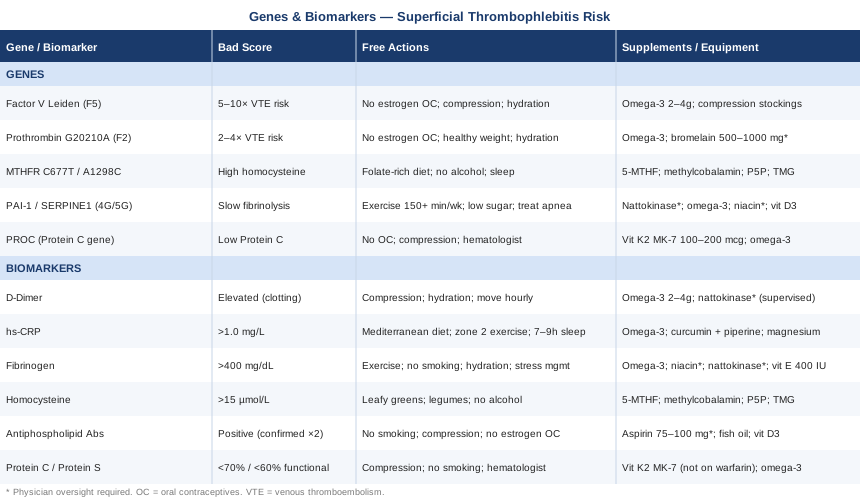
6 Biomarkers That Reveal Your True Clotting and Inflammation Risk
Biomarkers are the most actionable starting point for most people. Unlike genetic testing, which tells you about fixed inherited risk, biomarkers reflect your current biological state — and that means they respond to changes in diet, habits, and targeted interventions. The six markers below are selected for their direct relevance to venous thrombosis, inflammation, and endothelial health, and are recommended by vascular specialists and precision medicine physicians including Peter Attia and Thomas Dayspring.
1. D-Dimer: The Signal That Clotting Is Happening
D-dimer is a fibrin degradation product — a fragment released into the bloodstream when a blood clot is broken down. Elevated D-dimer tells you that your coagulation system is active, either because a clot is forming or resolving. In the context of superficial thrombophlebitis, it can help assess whether the clot burden is significant or whether deeper involvement is occurring.
Why it matters: Standard D-dimer testing is primarily used to rule out DVT and pulmonary embolism, but persistently elevated levels between episodes can indicate a proinflammatory or hypercoagulable state. One large European cohort study (OPTIMEV) found D-dimer was elevated in the majority of superficial thrombophlebitis cases and correlated with proximity to deep vessels. Its main limitation is poor specificity — it rises with infection, pregnancy, surgery, and aging — making it most useful when interpreted alongside other markers.
How to measure it: Standard blood draw, ordered through any general practitioner or directly through commercial labs. Cost ranges from $30 to $80 depending on region and provider. Age-adjusted cutoffs should be applied in adults over 50 (multiply age by 10 µg/L).
If the Score Is High: The Plan Without Supplements
Start with mechanical and behavioral strategies. Graduated compression stockings (medical-grade, 20–30 mmHg) reduce venous stasis and help the inflammatory response resolve. Move for at least 10 minutes every hour if you are desk-bound. Increase water intake significantly — dehydration is one of the most underestimated drivers of blood viscosity. Avoid prolonged sitting or standing in fixed positions. Sleep with legs slightly elevated. Reduce processed food and refined carbohydrate intake, which drives platelet activation and inflammatory cytokines.
If the Score Is High: The Plan With Supplements or Equipment
Omega-3 fatty acids at 2–4 g EPA+DHA daily have mild antiplatelet effects and consistently reduce fibrinogen levels in clinical trials. Nattokinase (2,000–4,000 FU/day), a fibrinolytic enzyme derived from fermented soy, may support clot dissolution — but this should only be considered under physician supervision, as it carries bleeding risk and interacts with anticoagulants. Cycling protocol: omega-3 can be taken continuously; nattokinase, if used, should cycle 3 months on, 1 month off, with regular reassessment. Do not combine nattokinase with prescribed anticoagulants without explicit medical oversight.
2. High-Sensitivity CRP: The Inflammation Baseline You Cannot Ignore
High-sensitivity C-reactive protein (hs-CRP) is produced by the liver in response to tissue damage and cytokine activity. Unlike the standard CRP test used in emergency settings, hs-CRP detects low-grade chronic inflammation — the kind that smolders below the surface for years and systematically damages blood vessels and veins.
Why it matters: Vein inflammation is not separate from systemic inflammation — it is often an expression of it. People with recurrent superficial thrombophlebitis who have persistently elevated hs-CRP are often in a chronic inflammatory state that makes the venous wall more susceptible to injury and clot formation. Peter Attia recommends keeping hs-CRP below 0.5 mg/L for optimal cardiovascular and vascular health, with anything above 1.0 mg/L warranting investigation.
How to measure it: Blood draw, typically fasted. Cost ranges from $20 to $50. Most general practitioners will order it on request, or it can be purchased through direct-to-consumer labs. For meaningful interpretation, avoid testing during acute infection or injury — wait at least two weeks after any inflammatory event.
If the Score Is High: The Plan Without Supplements
Dietary shifts are the single most powerful lever for hs-CRP. A genuine Mediterranean-style diet — high in olive oil, fatty fish, legumes, leafy greens, and low in ultra-processed food — reduces hs-CRP significantly within 8–12 weeks in most studies. Prioritize 7–9 hours of quality sleep, as sleep deprivation independently elevates CRP. Moderate aerobic exercise (zone 2, 150 minutes weekly) consistently lowers inflammatory markers across populations. Eliminating excess sugar and refined carbohydrates removes one of the most potent activators of inflammatory pathways.
If the Score Is High: The Plan With Supplements or Equipment
Omega-3 (EPA+DHA, 2–4 g/day) consistently reduces hs-CRP across dozens of clinical trials. Curcumin with piperine (500 mg, two to three times daily with food) has demonstrated CRP-lowering effects in multiple RCTs — use bioavailable forms such as BCM-95 or Theracurmin. Magnesium glycinate (300–400 mg at night) is often deficient and correlates with higher CRP. Cycling: omega-3 and magnesium can be taken continuously. Curcumin is often used for 2–3 months then reassessed. Side effects of curcumin: GI upset in some; may increase bleeding risk at very high doses.
3. Fibrinogen: The Clotting Protein That Doubles as an Inflammatory Marker
Fibrinogen is a plasma protein produced in the liver with two distinct roles: it is a substrate for clot formation (it gets converted to fibrin when clotting is triggered) and it is an acute-phase reactant that rises with inflammation. This dual nature makes it uniquely important in superficial thrombophlebitis, where both clotting activity and local inflammation are simultaneously elevated.
Why it matters: Chronically elevated fibrinogen increases blood viscosity, promotes platelet aggregation, and directly contributes to thrombus formation. It also predicts cardiovascular events independently of other lipid or inflammatory markers. Thomas Dayspring consistently highlights fibrinogen as an underappreciated risk marker in cardiovascular medicine. Optimal levels are generally cited as 200–350 mg/dL; levels above 400 mg/dL warrant investigation.
How to measure it: Standard blood test as part of a coagulation panel. Cost typically ranges from $30 to $60. Often included in expanded cardiovascular risk panels.
If the Score Is High: The Plan Without Supplements
Physical activity is the most consistent fibrinogen-lowering intervention in clinical literature — even moderate walking reduces fibrinogen levels over time. Weight reduction in overweight individuals lowers fibrinogen meaningfully. Smoking cessation is critical: smoking is one of the strongest independent elevators of fibrinogen. A low-saturated-fat, high-fiber diet helps, as does adequate hydration. Stress management matters here too — cortisol directly stimulates hepatic fibrinogen synthesis.
If the Score Is High: The Plan With Supplements or Equipment
Omega-3 fatty acids (2–4 g EPA+DHA/day) reduce fibrinogen modestly but consistently. Niacin (nicotinic acid) at therapeutic doses (500–1,500 mg/day) reduces fibrinogen significantly, though it requires medical supervision due to hepatic effects and flushing. Nattokinase may help with fibrin clearance, as described above. Vitamin E (400 IU mixed tocopherols) has shown fibrinogen-reducing effects in some trials. Side effects of niacin: significant flushing, liver strain at high doses, not suitable without monitoring. Do not combine with fibrate medications without physician oversight.
4. Homocysteine: The Silent Vascular Disruptor
Homocysteine is an amino acid produced during the metabolism of methionine. When levels are elevated — typically due to nutritional deficiencies or genetic enzyme variants — it directly damages the endothelium (the inner lining of blood vessels), promotes oxidative stress, and creates conditions favorable for both arterial and venous thrombosis.
Why it matters: Multiple large epidemiological studies have confirmed an association between elevated homocysteine and venous thromboembolism, including superficial and deep thrombophlebitis. The damage to venous endothelium increases the likelihood of clot adhesion and propagation. Optimal homocysteine is below 9 µmol/L; levels above 15 µmol/L are considered frankly elevated and warrant treatment.
How to measure it: Fasting blood draw. Cost ranges from $40 to $80 through standard labs. Often included in cardiovascular risk profiles and methylation panels. Results can be affected by recent high-protein meals, so fasting is important.
If the Score Is High: The Plan Without Supplements
Increase dietary folate from whole food sources — leafy greens (spinach, kale, arugula), legumes, asparagus, and avocado. Ensure adequate protein from varied sources and avoid excessive methionine-heavy diets (high red meat). Reduce alcohol intake significantly, as it impairs folate absorption. Aerobic exercise helps modestly. Most importantly, if you carry MTHFR variants (discussed in the genetics section), standard dietary folate may be insufficient.
If the Score Is High: The Plan With Supplements or Equipment
The most effective intervention for elevated homocysteine is B-vitamin supplementation — specifically in the methylated forms that bypass the MTHFR enzyme: L-methylfolate (5-MTHF) at 400–800 mcg/day, methylcobalamin B12 at 500–2,000 mcg/day, and pyridoxal-5-phosphate (P5P, active B6) at 25–50 mg/day. Riboflavin (B2) at 10 mg/day also supports the MTHFR enzyme directly. TMG (trimethylglycine) at 500–1,000 mg/day provides an alternative remethylation pathway. Monitoring: recheck homocysteine every 3–6 months. Side effects of high-dose B12: generally very low toxicity; very high-dose methylfolate can cause agitation or anxiety in some individuals with MTHFR variants (start low, titrate up).
5. Antiphospholipid Antibody Panel: The Autoimmune Clot Trigger
Antiphospholipid syndrome (APS) is an autoimmune condition in which the immune system produces antibodies that attack phospholipid-binding proteins, leading to a strongly prothrombotic state. It is a cause of recurrent venous and arterial thrombosis, and it can present initially as superficial thrombophlebitis — sometimes before more serious events occur.
Why it matters: The full antiphospholipid panel includes lupus anticoagulant, anticardiolipin antibodies (IgG and IgM), and anti-beta-2-glycoprotein I antibodies (IgG and IgM). A positive result must be confirmed on a second test at least 12 weeks later — a single positive can be a transient response to infection. When truly positive, it fundamentally changes the management approach and risk assessment for recurrent thrombophlebitis.
How to measure it: Blood panel ordered through a physician (hematologist or rheumatologist for full interpretation). Cost ranges from $100 to $300 depending on which antibodies are included. This is not routinely ordered for a first episode of superficial thrombophlebitis, but is warranted in young individuals, those with recurrent episodes, or those with no obvious provoking cause.
If the Score Is Positive: The Plan Without Supplements
Immediate physician referral is essential — this is not a condition to manage solo. From a lifestyle standpoint: stop smoking immediately (smoking dramatically amplifies thrombotic risk in APS), avoid estrogen-containing contraceptives or hormone replacement without expert guidance, maintain strict hydration, wear medical-grade compression stockings, and avoid prolonged immobility. During high-risk periods (long flights, surgery, illness), discuss prophylactic measures with your hematologist.
If the Score Is Positive: The Plan With Supplements or Equipment
Low-dose aspirin (75–100 mg/day) is frequently recommended for those with confirmed antiphospholipid antibodies and thrombotic history, though the decision depends on the full clinical picture. Hydroxychloroquine (Plaquenil) is used in APS associated with lupus. Fish oil (2–4 g EPA+DHA) provides additional antiplatelet and anti-inflammatory support. Vitamin D3 optimization (target 40–60 ng/mL serum level) is relevant given vitamin D's role in immune modulation. Note: supplementation does not replace anticoagulation when indicated — these are adjunctive strategies only, used under medical supervision.
6. Protein C and Protein S: Your Natural Anticoagulant Defense
Protein C and Protein S are natural anticoagulant proteins that work together to inhibit excessive clot formation. Protein C, when activated, degrades factors Va and VIIIa — two essential cofactors in the clotting cascade. Protein S acts as a cofactor for Protein C. Deficiency of either creates a state of relative hypercoagulability.
Why it matters: Inherited deficiencies of Protein C or Protein S significantly increase lifetime venous thrombosis risk. Acquired deficiencies can also occur during acute illness, vitamin K antagonist therapy, liver disease, or pregnancy. In individuals with unexplained or recurrent superficial thrombophlebitis, these levels should be part of the thrombophilia workup.
How to measure it: Functional assays (not just antigen levels) are the most clinically useful — ask specifically for functional Protein C and functional Protein S. Normal range: Protein C 70–130%, Protein S 60–130% (functional). Cost: $100–$200 for both. Testing should be done at least 3–6 months after an acute thrombotic event and not while on warfarin (which artifactually lowers both).
If the Score Is Low: The Plan Without Supplements
The primary goal is risk reduction: avoid situations that increase thrombotic risk — dehydration, immobility, smoking, excessive alcohol. Compression stockings during any at-risk period. Early ambulation after surgery or illness. Discuss anticoagulation strategies with a hematologist, particularly for high-risk situations like surgery, long-haul travel, or pregnancy. In confirmed deficiency, long-term anticoagulation may be warranted.
If the Score Is Low: The Plan With Supplements or Equipment
Vitamin K2 (MK-7 form, 100–200 mcg/day) supports carboxylation of coagulation proteins including Protein C. Important exception: if you are on warfarin, do not supplement vitamin K without direct physician oversight — it reverses the drug's effect. Omega-3 supports endothelial health. Magnesium and B vitamins support overall coagulation balance. These are adjunctive strategies only; verified Protein C or S deficiency generally requires hematological management.
What Your Genes May Be Telling You About Thrombosis Risk
Understanding your biomarkers gives you a snapshot of where you are today. Genetics tell you the map you were born with. For a subset of people with superficial thrombophlebitis — especially those who are young, have had multiple episodes, or have no strong environmental provoking cause — specific gene variants explain why the risk was elevated from the start.
Factor V Leiden (F5 Gene): The Most Common Inherited Clotting Variant
The Factor V Leiden mutation (R506Q) is a single nucleotide substitution in the F5 gene that makes Factor V resistant to degradation by Activated Protein C. Normally, APC terminates the clotting cascade after a clot has formed. With Leiden, this off-switch is impaired, and the clotting process runs longer than it should.
It is the most common inherited thrombophilia in people of European descent — approximately 5% carry one copy (heterozygous), and a small fraction carry two (homozygous). Heterozygous carriers have a 5–10 times increased venous thrombosis risk; homozygous carriers face 50–100 times increased risk. Superficial thrombophlebitis is frequently the first presentation.
If the Gene Variant Is Present: The Plan Without Supplements
Avoid combined estrogen-progestin contraceptives — in Factor V Leiden carriers, these increase VTE risk by a factor of 30 to 50 times compared to non-carriers on the pill. This is one of the most important practical changes. Do not smoke. Avoid prolonged immobility (break up sitting every 45–60 minutes). Use compression stockings during any high-risk period (travel, illness, post-surgery). Stay well hydrated. Discuss anticoagulation prophylaxis with a physician before surgeries or high-risk situations.
If the Gene Variant Is Present: The Plan With Supplements or Equipment
Medical-grade compression stockings (20–30 mmHg) are the most evidence-supported non-pharmacological tool. Omega-3 fatty acids (2–4 g EPA+DHA/day) modestly reduce platelet aggregation and are well-supported for long-term cardiovascular health. Nattokinase (2,000 FU/day) is sometimes discussed in integrative medicine for fibrinolytic support, but has no large RCT data and should not be used alongside anticoagulants. Monitor: any supplementation in a Factor V Leiden carrier should be discussed with a hematologist. Cycling: omega-3 is appropriate long-term; nattokinase if used — 3 months on, 1 month off, with bleeding symptom monitoring.
Prothrombin G20210A (F2 Gene): When Your Body Overproduces Clotting Protein
The prothrombin G20210A mutation is a substitution in the 3' untranslated region of the F2 (prothrombin) gene. It does not change the protein structure — instead, it increases how much prothrombin your liver produces. More prothrombin means more thrombin is generated when clotting is triggered, and the system overshoots.
It is the second most common inherited thrombophilia, found in about 2–3% of European populations. Heterozygous carriers have approximately 2–4 times higher venous thrombosis risk. Like Factor V Leiden, the combination of this variant with other risk factors (immobility, oral contraceptives, surgery) multiplies risk multiplicatively rather than additively.
If the Gene Variant Is Present: The Plan Without Supplements
The same foundational risk reduction as Factor V Leiden applies: avoid combined estrogen contraceptives, stop smoking, maintain hydration, and break up sedentary periods. Additionally, maintain a healthy weight — obesity independently elevates prothrombin and clot risk, and the combination with G20210A is particularly unfavorable. Discuss prophylactic anticoagulation around any surgical procedure or extended immobility.
If the Gene Variant Is Present: The Plan With Supplements or Equipment
Omega-3 fatty acids and medical compression are the cornerstones. Ginkgo biloba has some evidence for platelet function modulation, but it carries bleeding risk and should not be used with anticoagulants. Bromelain (pineapple enzyme) has mild fibrinolytic properties — 500–1,000 mg/day between meals — though clinical evidence specific to prothrombin variants is limited. Cycle: 2 months on, 1 month off if using bromelain. Side effect: GI sensitivity in some individuals. No supplement replaces specialist guidance in confirmed G20210A carriers with prior thrombotic events.
MTHFR (C677T and A1298C): The Methylation-Thrombosis Connection
The MTHFR gene encodes methylenetetrahydrofolate reductase, the enzyme that converts folate into its active form (5-methyltetrahydrofolate), which is essential for converting homocysteine to methionine. When MTHFR is underactive — due to C677T, A1298C, or compound heterozygosity — homocysteine accumulates and creates endothelial damage and a prothrombotic environment.
C677T homozygosity reduces enzyme activity by up to 70%. A1298C alone is more moderate. Compound heterozygosity (one of each) causes significant impairment. Importantly, the effect is magnified by low dietary folate, B12, or B6 — meaning this gene is highly responsive to nutritional intervention.
If the Gene Variant Is Present: The Plan Without Supplements
Avoid synthetic folic acid supplementation — people with MTHFR often cannot efficiently convert it and unmetabolized folic acid may actually impair function. Eat folate-dense whole foods: dark leafy greens, lentils, asparagus, avocado, broccoli. Avoid alcohol, which impairs folate absorption. Get homocysteine tested regularly (every 6 months initially, then annually once stable). Manage stress actively — cortisol worsens methylation capacity. Prioritize sleep, as methylation is a key repair process during deep sleep.
If the Gene Variant Is Present: The Plan With Supplements or Equipment
This is one of the cases where supplementation is strongly justified by the evidence. Use methylated B vitamins only: L-methylfolate (5-MTHF) at 400–1,000 mcg/day, methylcobalamin at 500–2,000 mcg/day, pyridoxal-5-phosphate (P5P) at 25–50 mg/day, and riboflavin (B2) at 10–25 mg/day. TMG (500–1,000 mg/day) supports an alternative methylation pathway. These can be taken daily long-term. Key side effect to monitor: some individuals with MTHFR C677T homozygosity experience over-methylation symptoms (anxiety, insomnia, irritability) when starting methylfolate — begin at low doses (200 mcg) and titrate over weeks. Recheck homocysteine every 3 months until stable.
PAI-1 / SERPINE1 (4G/5G): When Your Body Can't Clear Clots Efficiently
Plasminogen activator inhibitor-1 (PAI-1), encoded by the SERPINE1 gene, is the primary inhibitor of tissue plasminogen activator (tPA) — the enzyme that dissolves fibrin clots. The 4G/5G polymorphism in the promoter region of this gene affects how much PAI-1 is produced: the 4G/4G genotype leads to higher PAI-1 levels, which means slower and less efficient fibrinolysis.
In practical terms: clots form normally but don't break down as efficiently. This is directly relevant to superficial thrombophlebitis, where prolonged fibrin deposition in the affected vein sustains inflammation and prevents resolution.
If the Gene Variant Is Present: The Plan Without Supplements
Exercise is the most powerful natural PAI-1 reducer — even a single bout of aerobic exercise transiently suppresses PAI-1, and regular training keeps it chronically lower. Target 150–200 minutes of moderate aerobic activity weekly, plus 2 sessions of resistance training. Reduce visceral fat, which is a major driver of PAI-1 secretion. Minimize refined sugars and refined carbohydrates (insulin spikes elevate PAI-1 acutely). Address metabolic syndrome components if present. Improve sleep quality — sleep apnea significantly elevates PAI-1.
If the Gene Variant Is Present: The Plan With Supplements or Equipment
Nattokinase (2,000–4,000 FU/day) promotes fibrinolysis and may partially compensate for high PAI-1, though evidence is largely in vitro and small trials. Omega-3 fatty acids reduce PAI-1 expression in clinical studies. Niacin (nicotinic acid form) at therapeutic doses reduces both fibrinogen and PAI-1, but requires medical monitoring (liver function, glucose). Vitamin D3 (target 40–60 ng/mL serum) also modulates PAI-1 expression. Cycling: omega-3 and vitamin D can be taken long-term. Nattokinase: 3 months on, 1 month off; avoid with anticoagulants. Side effects: niacin flushing, hepatotoxicity at very high doses.
PROC Gene: When Your Natural Anticoagulant System Is Genetically Undermined
The PROC gene encodes Protein C, one of the body's most important natural anticoagulants. Hereditary Protein C deficiency is caused by mutations in this gene and is found in roughly 0.2–0.4% of the general population — but in 3–5% of people with unexplained venous thrombosis. It is an autosomal dominant condition, meaning a single defective copy is sufficient to raise risk.
Protein C deficiency causes two problems simultaneously: reduced anticoagulation capacity and impaired inflammatory regulation. Affected individuals often have their first thrombotic event in early adulthood.
If the Gene Variant Is Present: The Plan Without Supplements
Specialist involvement — hematology — is essential from the outset. Lifestyle adaptations mirror those of Factor V Leiden: no combined estrogen contraceptives, no smoking, aggressive avoidance of immobility and dehydration, and prophylactic anticoagulation during surgical or high-risk periods. Some individuals with recurrent thrombosis require lifelong anticoagulation. Genetic counseling is appropriate for family members.
If the Gene Variant Is Present: The Plan With Supplements or Equipment
Vitamin K2 (MK-7, 100–200 mcg/day) supports carboxylation-dependent coagulation proteins, including Protein C itself — the enzyme functions better when proper post-translational modification is maintained. However, this is contraindicated if on warfarin. Omega-3 and general anti-inflammatory support apply. This condition, when confirmed by genetic testing and functional assay, is primarily managed medically — supplements are adjunctive only and must be approved by the treating hematologist.
The Attia Framework: Thinking About Vascular Health Differently
Peter Attia's Outlive: The Science and Art of Longevity (2023), along with his long-running podcast The Drive, offers a framework that is unusually relevant to recurrent thrombophlebitis — not because he focuses on this condition specifically, but because he addresses the upstream biological conditions that make venous events more likely.
1. Cardiovascular Risk Begins Decades Before Events
Attia argues that arterial and venous disease share upstream metabolic roots — inflammation, insulin resistance, elevated atherogenic lipoproteins — that are detectable and modifiable decades before any clinical event. Waiting for a symptomatic episode to investigate risk is too late.
2. Zone 2 Cardio as the Metabolic Foundation
Attia prioritizes zone 2 aerobic training (sustainable, conversational pace, 150–200 minutes weekly) as the cornerstone of metabolic health. At the cellular level, zone 2 exercise improves mitochondrial efficiency, reduces insulin resistance, lowers PAI-1, and decreases CRP — all relevant to vascular health and clot risk.
3. Lp(a) Is the Most Underappreciated Vascular Risk Factor
Attia consistently advocates for Lp(a) testing in all adults — it is almost entirely genetically determined, found in elevated levels in 20% of the population, and profoundly increases thrombotic and cardiovascular risk. It is not part of a standard lipid panel. If you have recurrent thrombophlebitis and have never had Lp(a) measured, this should be addressed.
4. ApoB Matters More Than LDL Cholesterol
ApoB (apolipoprotein B) measures the total number of atherogenic lipoprotein particles — a more precise cardiovascular risk indicator than LDL-C. Elevated ApoB damages endothelium and creates the inflammatory substrate that makes venous walls more vulnerable.
5. Insulin Resistance Drives Inflammation Silently
Attia's framework gives prominent attention to insulin resistance as a core driver of systemic inflammation. Elevated fasting insulin, high triglycerides, and postprandial glucose spikes all increase platelet activation, elevate fibrinogen and PAI-1, and impair endothelial function. Testing fasting insulin alongside a standard lipid panel reveals metabolic conditions that standard care often misses.
6. Sleep Is Not Optional for Vascular Repair
Poor sleep elevates cortisol, raises CRP, impairs endothelial repair, and increases platelet aggregation. Attia devotes significant attention to sleep as a non-negotiable biological process — targeting consistent 7–9 hours, low light exposure before bed, and temperature optimization. For anyone with recurrent thrombophlebitis, this is not a "lifestyle suggestion" — it is vascular therapy.
7. Muscle Mass as Metabolic Insurance
Resistance training preserves and builds muscle, which functions as a glucose buffer, reduces insulin spikes, lowers inflammatory cytokines, and — critically — improves venous pump function in the legs. Strong calf and thigh muscles actively propel blood back toward the heart, reducing venous stasis that predisposes to superficial thrombophlebitis.
8. VO2 Max Predicts Vascular Aging More Than Almost Any Other Metric
Attia cites VO2 max as one of the strongest independent predictors of all-cause mortality and cardiovascular health. A higher VO2 max reflects a cardiovascular system that is well-adapted, metabolically efficient, and less prone to inflammatory deterioration. Even modest improvements in VO2 max reduce vascular event risk meaningfully.
9. Time-Restricted Eating and Metabolic Flexibility
Attia is measured about intermittent fasting — he does not recommend it universally — but he supports the metabolic flexibility principle: teaching the body to alternate between glucose and fat oxidation. This reduces postprandial insulin spikes, lowers triglycerides, and decreases chronic inflammatory load.
10. The "Centenarian Decathlon" Mindset Reframes Prevention
Attia's concept of training for the activities you want to be doing at 90 reframes how you think about movement, strength, and cardiovascular health. Rather than treating exercise as general advice, it becomes a specific investment in physical infrastructure — and better physical infrastructure means better venous health over decades.
Complementary Approaches With Real Supporting Evidence
The following modalities are selected from those with meaningful human clinical evidence and practical relevance to the vascular inflammation, circulation, and pain management aspects of superficial thrombophlebitis. They are complementary, not replacements for medical care.
Yoga and Gentle Movement for Venous Return
Yoga, particularly styles that include leg inversions and active muscular engagement, supports venous circulation through the activation of the skeletal muscle pump and the effects of position change on venous pressure. Gentle inversions like legs-up-the-wall (viparita karani) reduce the hydrostatic pressure that contributes to venous pooling and stasis. For individuals with varicose veins or chronic venous insufficiency — which is present in the majority of superficial thrombophlebitis cases — yoga-based movement reduces heaviness, swelling, and discomfort.
A randomized controlled trial published in the Journal of Vascular Nursing found that a structured yoga protocol in women with chronic venous insufficiency significantly reduced self-reported leg symptoms and improved ankle range of motion over 8 weeks. Yoga reduces cortisol, lowers hs-CRP, and may contribute to fibrinogen reduction over time — making it relevant to both the inflammatory and coagulation biomarkers discussed above.
Application: Begin only during remission — not during an active inflamed episode, when pressure on an affected limb may worsen discomfort. Start with 15–20 minutes daily of gentle postures: legs-up-the-wall (5 minutes), reclined leg circles, and slow sun salutations. Avoid forceful inversions (headstands, shoulder stands) until confidence is established. Compression stockings may be worn during upright sequences to enhance venous support.
Mindfulness-Based Stress Reduction and Inflammation Control
Stress activates the HPA axis, releases cortisol and inflammatory cytokines, promotes platelet aggregation, and elevates PAI-1 and fibrinogen — all factors that worsen the vascular environment in people with superficial thrombophlebitis. Mindfulness-Based Stress Reduction (MBSR), an 8-week standardized program developed by Jon Kabat-Zinn, has been studied extensively for its effects on inflammatory biomarkers, pain perception, and autonomic regulation.
Multiple randomized trials and meta-analyses have documented MBSR's ability to reduce hs-CRP, lower cortisol, and improve markers of autonomic balance. A 2021 meta-analysis in Psychoneuroendocrinology found that mindfulness-based interventions produced consistent reductions in IL-6 and CRP across diverse clinical populations. For individuals whose superficial thrombophlebitis is embedded in a pattern of chronic stress, poor sleep, and sympathetic overdrive, MBSR addresses the root biological conditions — not just the symptoms.
Application: Complete the structured 8-week MBSR curriculum (available in-person, online, or via validated apps like Insight Timer or MBSR.com). The standard protocol involves 45 minutes of daily practice including body scan, sitting meditation, and mindful movement. No specialized equipment is needed. Pain-related mindfulness, specifically noting where in the body discomfort is felt without resistance, also supports the relationship with chronic vascular pain in a way that passive coping does not.
Low-Level Laser Therapy for Local Inflammation and Pain
Low-level laser therapy (LLLT), also called photobiomodulation, uses specific wavelengths of red and near-infrared light (typically 630–1,000 nm) to stimulate cellular energy production, reduce oxidative stress, and modulate the local inflammatory response. At the tissue level, it promotes mitochondrial activity, reduces pro-inflammatory cytokines, and supports tissue repair — effects that are directly relevant to a vein that is inflamed and undergoing clot resolution.
Human clinical evidence for LLLT in venous conditions is preliminary but growing. A controlled trial in patients with chronic venous insufficiency found that LLLT applied over affected veins significantly reduced pain scores and local inflammatory markers compared to sham treatment. A 2014 review in Photomedicine and Laser Surgery confirmed consistent anti-inflammatory and analgesic effects across multiple tissue types, supporting its plausibility for superficial venous conditions.
Application: Devices suitable for home use exist in the 630–850 nm range. Clinical-grade treatments are available through physiotherapy and sports medicine clinics, typically in 10–15 minute sessions. For active superficial thrombophlebitis, apply over and around the affected area (avoiding direct pressure) 2–3 times per week. Do not use over open wounds or suspected malignancy. Side effects are minimal at recommended doses; avoid direct eye exposure. Expect 4–8 weeks before assessing meaningful pain or inflammation reduction.
Taking Smarter Steps From Here
Superficial thrombophlebitis is not random. Behind each episode, there are measurable biological states — inflammatory markers, coagulation patterns, natural anticoagulant levels — and often genetic factors that have been present since birth. Both are actionable: biomarkers respond to interventions, and even genetic predispositions can be compensated for with targeted strategies.
The most useful next step is to start with a focused lab panel: D-dimer, hs-CRP, fibrinogen, homocysteine, Protein C, Protein S, and — if you have had multiple episodes without obvious provoking factors — an antiphospholipid antibody panel. For anyone under 50 with unexplained or recurrent thrombophlebitis, adding a genetic thrombophilia screen (Factor V Leiden, prothrombin G20210A, MTHFR) provides lasting insight that shapes decisions for decades.
From there, match your interventions to your findings rather than following generic advice. Use compression consistently, address metabolic health as Attia's framework suggests, and consider the complementary modalities that fit your lifestyle and risk profile. None of this replaces a vascular specialist or hematologist when the situation warrants it — but informed conversations with your physicians lead to better outcomes than uninformed ones. The information here is a starting point for asking the right questions, not a substitute for individualized medical care.
Endocrine & Metabolic Autoimmune
Cardiovascular: Blood Vessel Conditions Vascular Conditions
Autoimmune: Inflammatory Conditions