This article contains AI generated content.
Suprapatellar Fat Pad Impingement Syndrome: 5 Genes And 6 Biomarkers To Track
If your knee aches in that specific spot above the kneecap, beneath the quadriceps tendon, and every generic answer you've been given is "rest it" or "lose some weight," you already know how unsatisfying that advice feels. Suprapatellar fat pad impingement — sometimes called quadriceps fat pad edema or quadriceps fat pad syndrome — is a real, MRI-visible condition in which the small wedge of fat sitting above the patella becomes swollen, inflamed, and pinched between the quadriceps tendon and the femur. It is less commonly discussed than its cousin, Hoffa's fat pad syndrome below the kneecap, but it produces a similar problem: a normally cushioning, shock-absorbing tissue turns into a pain generator.
Generic advice struggles here because fat pads are not passive padding. They are active endocrine tissue that secretes inflammatory signaling molecules, and how much they swell, how they respond to load, and how well they resolve after a flare-up is shaped by a person's underlying metabolic and inflammatory profile — not just their squat form or how many days they rested. Two people with an almost identical MRI can have very different pain trajectories because their systemic inflammation, insulin sensitivity, or adipokine balance differ.
This article goes a layer deeper than "ice it and see a physio." It looks at the bloodwork that can reveal why a fat pad is staying inflamed instead of calming down, and it looks at the genetic and epigenetic threads — still early, but increasingly discussed by researchers like Ali Torkamani and popularized by figures like Gary Brecka — that may explain why some people run hotter on inflammation and adipose tissue signaling than others.
None of this replaces an orthopedic exam, imaging, or physical therapy. But better information about your own biology tends to produce better decisions — about what to test, what to track, and what is actually worth trying before considering an injection or arthroscopic procedure. The sections below walk through the most useful biomarkers to check first, the genetic variants worth knowing about, a set of ideas from longevity research that reframe joint inflammation as a whole-body issue, and a handful of complementary approaches with actual clinical evidence behind them.
Summary
This article is built around one central idea: the suprapatellar fat pad doesn't swell in isolation. It responds to what's happening in the rest of your body — how much systemic inflammation you're carrying, how insulin-sensitive your tissues are, and how your fat cells are signaling to the rest of your immune system. Below, you'll find six biomarkers worth checking before you assume this is "just" a mechanical knee problem, including which ones are cheap and widely available versus which require a specialty lab. You'll also find five genes tied to adipose tissue and inflammation biology that may explain why some people are more prone to fat pad swelling and slower recovery than others, each with a realistic plan for working around it. Further down, ten ideas from longevity medicine reframe joint inflammation as a whole-body signal rather than an isolated mechanical fault, and a final section covers which complementary therapies — from Tai Chi to photobiomodulation — actually have human trial evidence behind them for knee-related fat pad and anterior knee pain. Read on for the specifics, including cost ranges, testing methods, and honest notes on where the evidence is strong versus still developing.
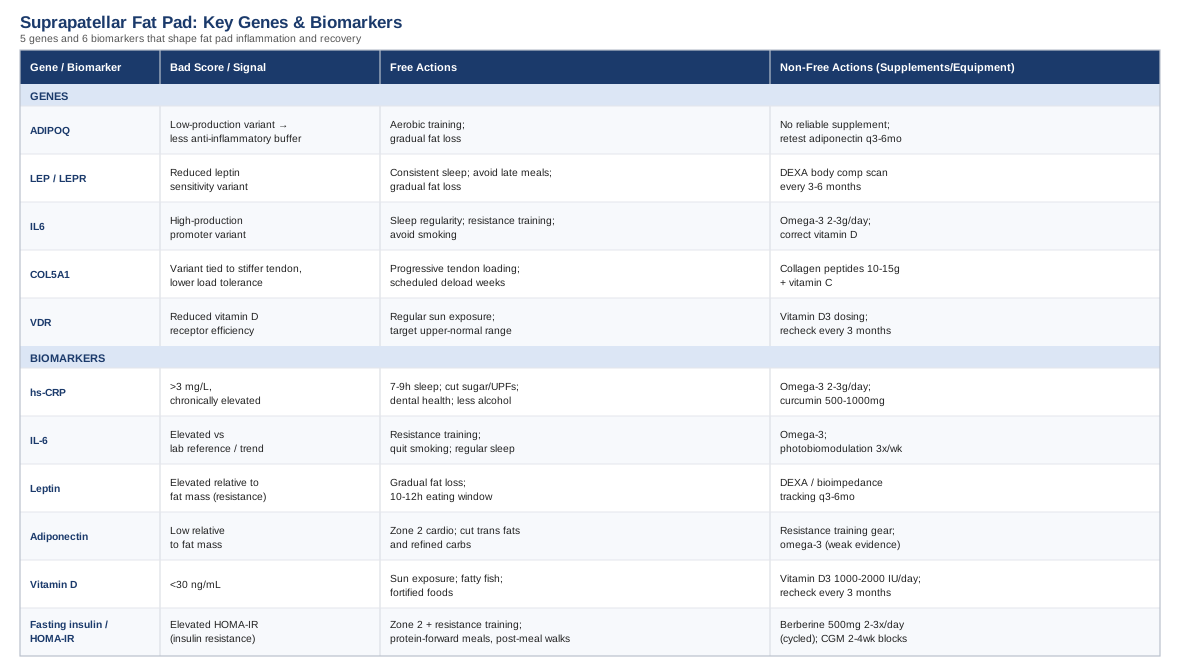
6 Biomarkers To Track For Suprapatellar Fat Pad Impingement
The suprapatellar fat pad is a triangular, extrasynovial structure that sits behind the quadriceps tendon and in front of the femur, just above the kneecap. Imaging research has shown that when this fat pad develops a "mass effect" — swelling enough to bulge into the suprapatellar joint recess — it shows up with high signal on fluid-sensitive MRI sequences, consistent with edema and low-grade inflammation, and this has been correlated with anterior knee pain in radiology literature. This is not simply a mechanical bruise; adipose tissue in and around joints behaves like an endocrine organ, releasing cytokines and adipokines that can either dampen or amplify local inflammation. That is exactly why the biomarkers below matter: they give you a window into whether the environment around that fat pad is primed to stay inflamed or to settle down.
The six markers below are ordered roughly from most affordable and widely available to more specialized. None of them diagnoses fat pad impingement on their own — that still requires clinical exam and imaging — but together they build a picture of whether your case is being driven mostly by local mechanics or by a broader inflammatory and metabolic pattern that is worth correcting in parallel.
High-sensitivity C-reactive protein (hs-CRP)
Hs-CRP is the most accessible marker of systemic low-grade inflammation, produced by the liver in response to circulating interleukin-6. Peter Attia lists it as a useful, if imperfect, marker to know, noting that a single elevated reading is less informative than a pattern over time since hs-CRP fluctuates with recent illness, poor sleep, or minor injury. In the context of a fat pad that is actively inflamed, a chronically elevated hs-CRP suggests your body's overall inflammatory "thermostat" is set high, which can slow local resolution.
How to measure it
A standard venous blood draw processed with a high-sensitivity assay, available through a physician order or direct-to-consumer lab services. Cost typically runs from 15 to 40 US dollars when not bundled into insurance-covered panels. No fasting is required. Because of natural variability, two readings a few weeks apart give a more reliable picture than one.If the score is bad, the plan without supplements or equipment
Prioritize seven to nine hours of consistent sleep, since even one night of restricted sleep can raise inflammatory markers measurably. Reduce ultra-processed food and added sugar, which drive postprandial inflammatory spikes. Address dental and gum health, since periodontal disease is an underappreciated but well-documented contributor to elevated CRP. Moderate alcohol intake and, if applicable, work toward reducing visceral fat through consistent zone 2 cardiovascular exercise, since visceral adipose tissue is a major source of circulating inflammatory signals.If the score is bad, the plan with supplements or equipment
Omega-3 fatty acids (EPA and DHA combined, roughly 2 to 3 grams daily with food) have reasonably consistent evidence for modestly lowering CRP over 8 to 12 week cycles; reassess bloodwork before continuing beyond that window. Curcumin with piperine (500 to 1,000 mg daily) is a reasonable adjunct with a weaker evidence base. Side effects to know: high-dose omega-3 can cause loose stools or a fishy aftertaste, and it carries a mild bleeding risk if combined with anticoagulants or before surgery; curcumin can cause gastrointestinal upset and should be used cautiously by anyone with gallstones. A local ice/compression sleeve used after activity is a low-risk equipment option to manage the joint-level inflammation directly while the systemic picture improves.Interleukin-6 (IL-6)
IL-6 is one of the cytokines most directly implicated in adipose tissue inflammation, and periarticular fat pads are known to secrete it locally, contributing to synovitis-like changes and pain sensitization in the surrounding joint. It sits further upstream than hs-CRP, which is actually produced in response to IL-6 signaling, so checking IL-6 directly can be informative when CRP looks normal but symptoms suggest ongoing inflammation.How to measure it
IL-6 is a send-out specialty test at most labs, generally costing 50 to 120 US dollars, and is more often included in longevity-focused panels (such as those offered by direct-to-consumer lab services) than in routine primary care bloodwork. Assay standardization is weaker than hs-CRP, so trend over absolute number matters more here.If the score is bad, the plan without supplements or equipment
Resistance training performed consistently over months has been shown to lower baseline inflammatory cytokine levels, even though a single hard session causes a temporary spike. Smoking cessation and weight management both meaningfully lower IL-6. Prioritizing sleep regularity again matters here, since IL-6 follows a circadian rhythm that gets disrupted by irregular sleep timing.If the score is bad, the plan with supplements or equipment
The same omega-3 protocol used for hs-CRP (2 to 3 grams daily, 8 to 12 week cycle, then reassess) has evidence for lowering IL-6 as well. If vitamin D is also low (see below), correcting that deficiency is reasonable since vitamin D receptor activation modulates cytokine production. A home-use low-level laser or photobiomodulation device applied locally to the anterior knee (discussed further in the complementary approaches section) is a reasonable equipment-based option with direct condition-relevant evidence, typically used 3 times weekly for 4 to 6 weeks.Leptin
Leptin is produced by fat tissue in proportion to fat mass, and research on knee osteoarthritis has found that adipokines including leptin are associated with disease progression on MRI and with higher rates of eventual joint replacement in symptomatic patients. Because the suprapatellar fat pad is itself adipose tissue, its local leptin signaling — and the state of leptin resistance systemically — is directly relevant to how inflamed and reactive it stays.How to measure it
A fasting blood draw, typically 40 to 90 US dollars through a specialty or longevity-oriented lab; it is not part of routine primary care panels. Results are best interpreted alongside body composition, since leptin naturally scales with fat mass.If the score is bad, the plan without supplements or equipment
Gradual fat loss (rather than aggressive crash dieting, which can paradoxically disrupt leptin signaling) is the most evidence-backed lever. Consistent sleep and meal timing help regulate the leptin-ghrelin rhythm; late-night eating and irregular sleep both blunt leptin's normal signaling pattern. Time-restricted eating windows (for example, a 10 to 12 hour eating window) are a reasonable, low-risk structural change.If the score is bad, the plan with supplements or equipment
There is no supplement with strong evidence for directly correcting leptin resistance, and it is worth being honest about that rather than overselling one. The most useful "equipment" here is objective body composition tracking — a DEXA scan (roughly 50 to 150 US dollars) or a validated bioimpedance device — used every 3 to 6 months to confirm fat loss is actually happening rather than relying on the scale alone, which does not distinguish fat from lean mass changes.Adiponectin
Adiponectin runs in the opposite direction from leptin: levels tend to fall as fat mass rises, and it is generally considered protective against joint inflammation, though reviews of the adipokine literature describe its exact role in osteoarthritis as still somewhat controversial and sex-dependent. Checking it alongside leptin gives a more complete picture of your adipose tissue's inflammatory balance than either marker alone.How to measure it
A fasting blood draw, 50 to 100 US dollars through a specialty lab, often ordered together with leptin.If the score is bad, the plan without supplements or equipment
Aerobic exercise, especially sustained zone 2 training, reliably raises adiponectin over months. Reducing trans fats and refined carbohydrates and achieving modest fat loss also help. As with leptin, patience matters — these changes take months, not weeks, to register in bloodwork.If the score is bad, the plan with supplements or equipment
Evidence for supplements directly raising adiponectin is weak; omega-3s show a modest signal in some trials but are not a reliable fix on their own. Resistance training equipment (even simple resistance bands or dumbbells) paired with the aerobic work above is a more defensible investment than a supplement stack aimed specifically at this marker.Vitamin D (25-hydroxyvitamin D)
Vitamin D deficiency is common in people with knee osteoarthritis, and observational studies have linked lower levels with greater pain, disability, and even anxiety. It is worth being direct about the nuance here: randomized controlled trials, including a well-cited two-year trial that raised vitamin D levels above 36 ng/mL, did not find that supplementation reduced knee pain or slowed cartilage volume loss compared to placebo. So checking and correcting vitamin D is worthwhile for general bone, immune, and inflammatory health, but it should not be sold to you as a direct fix for fat pad pain specifically.How to measure it
One of the cheapest and most widely available blood tests, typically 20 to 50 US dollars, no fasting required, often included in routine wellness panels.If the score is bad, the plan without supplements or equipment
Regular, sensible sun exposure and dietary sources such as fatty fish and fortified foods. This alone rarely fully corrects a significant deficiency, which is why supplementation is the more realistic path for anyone testing clearly low.If the score is bad, the plan with supplements or equipment
Vitamin D3, typically 1,000 to 2,000 IU daily for a documented deficiency, with a recheck at 3 months to confirm the level has moved into the 30 to 50 ng/mL range rather than guessing at dose indefinitely. Avoid sustained doses above 4,000 IU/day without monitoring, since prolonged megadosing carries a real risk of hypercalcemia. There is no meaningful cycling requirement here beyond periodic retesting to avoid overshooting.Fasting insulin and HOMA-IR
Because the suprapatellar fat pad is a fat depot, its volume and inflammatory activity are influenced by the same insulin resistance and metabolic patterns that drive fat accumulation elsewhere in the body. MRI studies note that fat pad mass effect and edema are more prominent findings in some knees than others, and metabolic health is a plausible contributor to why fat pads swell and stay swollen in certain individuals. Fasting insulin, and the HOMA-IR score calculated from it alongside fasting glucose, is one of the earliest signals of insulin resistance — often abnormal years before fasting glucose alone rises.How to measure it
A fasting blood draw for insulin and glucose, 30 to 70 US dollars combined, with HOMA-IR calculated from the two values. For a more advanced, real-time view, a continuous glucose monitor (60 to 100 US dollars per month) — an approach Peter Attia has discussed at length — shows glycemic variability across meals and days rather than a single snapshot.If the score is bad, the plan without supplements or equipment
Zone 2 cardiovascular training and resistance training are the two most powerful levers for improving insulin sensitivity. Structuring meals to be protein-forward and lower in refined carbohydrates, and walking for 10 to 15 minutes after larger meals, both measurably blunt glucose and insulin spikes.If the score is bad, the plan with supplements or equipment
Berberine (500 mg, two to three times daily with meals) has meaningful evidence for improving insulin sensitivity, comparable in some trials to first-line metabolic medications, but it should be cycled — commonly 8 to 12 weeks on, followed by a break — and checked against other medications, since it interacts with several drug classes and can cause gastrointestinal upset. A continuous glucose monitor used in 2 to 4 week blocks is a useful, low-risk equipment option to identify which specific foods or meal patterns are driving the biggest spikes for you personally.Taken together, these six markers separate two very different situations: a fat pad that is inflamed mostly because of local mechanics and load, versus one that is inflamed because it sits inside a body running hot on systemic inflammation or insulin resistance. Knowing which situation you're in changes how much weight to put on physical therapy and load management versus broader metabolic and inflammatory work happening in parallel.
What Genetics And Epigenetics Research Suggests
It is worth being direct about the state of the evidence here before going further: there is no published genetic study specifically on suprapatellar fat pad impingement syndrome. It is too narrowly defined and too recently characterized in the imaging literature for genome-wide association studies to exist. What does exist is a broader body of research on the genes that shape adipose tissue behavior, systemic inflammation, and connective tissue quality — all of which plausibly influence how a fat pad responds to load and how well it resolves after a flare. Researchers like Ali Torkamani, who studies polygenic risk and gene-environment interaction, and communicators like Gary Brecka, who popularizes the idea that genetic variants set a baseline that lifestyle and targeted interventions can shift, both frame this the same way: genes load the gun, but daily inputs largely decide whether it fires. The five genes below should be read in that spirit — plausible, biologically grounded contributors, not confirmed causes of this specific condition.
ADIPOQ (adiponectin gene)
Variants in ADIPOQ influence how much adiponectin your fat tissue produces at baseline, independent of body fat percentage. Since adiponectin is generally anti-inflammatory within joints, a variant associated with lower baseline production may mean your fat pad tissue runs with less natural inflammatory brake than someone else's, even at a similar weight. Evidence for specific ADIPOQ variants and osteoarthritis-related outcomes exists mainly in association studies rather than large confirmed human trials, so this should be treated as an early, plausible signal rather than settled science.If the gene is bad, the plan without supplements or equipment
The same aerobic training and modest fat loss strategies that raise adiponectin generally (described above) are the most directly applicable lever, since lifestyle inputs can meaningfully move adiponectin levels regardless of genetic baseline.If the score is bad, the plan with supplements or equipment
No supplement reliably corrects an ADIPOQ-driven low baseline; the honest answer is that consistent aerobic and resistance training, tracked with periodic adiponectin bloodwork every 3 to 6 months, is the realistic compensation strategy rather than any pill or device.LEP and LEPR (leptin and leptin receptor genes)
Variants in the genes coding for leptin and its receptor affect both how much leptin is produced and how sensitively the body responds to it. A less sensitive receptor variant could mean higher circulating leptin is needed to achieve the same signaling effect, contributing to a state of relative leptin resistance that has been associated with worse joint outcomes in adipokine research.If the gene is bad, the plan without supplements or equipment
Consistent sleep timing and avoiding late-night eating are especially important if you carry a less favorable leptin-pathway variant, since these behavioral inputs directly affect leptin sensitivity. Gradual, sustained fat loss (rather than repeated cycles of rapid loss and regain, which appear to worsen leptin dynamics over time) is the most defensible long-term strategy.If the score is bad, the plan with supplements or equipment
As with the biomarker itself, there is no strong supplement evidence here. Objective body composition tracking (DEXA every 3 to 6 months) remains the most useful tool to confirm progress independent of genetic baseline.IL6 gene variants
Certain promoter-region variants in the IL6 gene are associated with higher baseline production of this inflammatory cytokine. Since IL-6 is directly implicated in periarticular fat pad inflammation, someone carrying a higher-production variant may need to be more deliberate about the inflammation-lowering habits described in the biomarker section, since their genetic baseline works against them by default.If the gene is bad, the plan without supplements or equipment
Prioritizing sleep consistency, resistance training, and smoking avoidance carries more weight for someone with this variant, since these are the levers with the clearest evidence for lowering IL-6 regardless of genetic starting point.If the score is bad, the plan with supplements or equipment
The omega-3 protocol described earlier (2 to 3 grams daily, 8 to 12 week cycles with reassessment) is a reasonable, low-risk option, alongside correcting any coexisting vitamin D deficiency. Anyone on immune-modulating medication should check with their physician before adding omega-3s at the higher end of this range.COL5A1 (collagen type V alpha 1 gene)
COL5A1 variants are among the most studied in connective tissue and tendon research, with certain variants associated with differences in tendon and ligament stiffness and injury risk in athletic populations. Since the suprapatellar fat pad sits directly against the quadriceps tendon, a less favorable COL5A1 profile could plausibly mean the tendon-fat pad interface tolerates repetitive loading less well, though this link has not been studied directly in fat pad impingement specifically.If the gene is bad, the plan without supplements or equipment
Progressive, well-paced loading of the quadriceps tendon (rather than sudden spikes in training volume) and deliberate deload weeks built into any training program are the most relevant compensations, since connective tissue with a less favorable genetic profile generally benefits more, not less, from gradual load progression.If the score is bad, the plan with supplements or equipment
Collagen peptide supplementation (typically 10 to 15 grams daily, taken about 30 to 60 minutes before loading activity) has some supporting evidence for connective tissue adaptation, cycled in blocks around training phases rather than taken indefinitely without reassessment. Side effects are minimal, though it is worth checking that vitamin C intake is adequate, since it is a required cofactor for collagen synthesis.VDR (vitamin D receptor gene)
VDR variants affect how effectively vitamin D, once in the bloodstream, actually signals inside cells, including immune cells involved in modulating inflammation. Someone with a less efficient VDR variant might have a "normal" blood vitamin D level that is nonetheless doing less anti-inflammatory work at the cellular level.If the gene is bad, the plan without supplements or equipment
Regular sun exposure remains useful, but the more relevant behavioral lever is not relying on a single blood test as reassurance — someone with this variant may benefit from being more conservative about targeting the higher end of the normal vitamin D range rather than the low end.If the score is bad, the plan with supplements or equipment
The same vitamin D3 dosing described in the biomarker section applies, with a slightly stronger case for targeting the upper-normal range (40 to 50 ng/mL) and rechecking every 3 months, given that a less efficient receptor may need more substrate to achieve the same cellular effect. Avoid megadosing regardless of genetic profile, since toxicity risk is dose-dependent, not genotype-dependent.Ten Ideas From Longevity Medicine Worth Applying To Joint Inflammation
Peter Attia's book Outlive is not written about knee fat pads, but its central argument — that chronic, low-grade inflammation and declining metabolic and muscular function are upstream drivers of most of what eventually goes wrong in the body — maps directly onto a condition like this one. Below are ten of its most transferable ideas, reframed for someone dealing with a persistently inflamed suprapatellar fat pad.
1. Medicine 3.0: act before the problem is undeniable
Attia's framing of "Medicine 3.0" argues for using data to intervene early rather than waiting for a problem to become severe enough for a standard diagnosis and standard treatment. Applied here, that means checking the biomarkers above now, rather than waiting until the fat pad is bad enough to require an injection or arthroscopic resection.2. VO2 max is one of the strongest predictors of long-term outcomes
Cardiorespiratory fitness is repeatedly described as one of the most powerful levers over long-term health outcomes across large population studies. For someone managing a knee issue, building aerobic capacity through low-impact modalities (cycling, swimming, incline walking) supports the metabolic and inflammatory profile discussed above without loading the knee the way running would.3. Zone 2 training targets the metabolic machinery, not just the heart
Sustained, conversational-pace aerobic work is framed as uniquely effective for improving mitochondrial function and insulin sensitivity. This is directly relevant to the fasting insulin and HOMA-IR discussion above, since zone 2 work is one of the most reliable non-pharmacological levers for improving that marker.4. Muscle is "retirement savings" for joints, not just aesthetics
Attia describes muscle mass and strength as a resource you draw down over decades, and low muscular reserve around a joint changes how much load passes through surrounding structures like tendons and fat pads. Strengthening the quadriceps and hip musculature changes how much shock the suprapatellar region absorbs during daily movement.5. The "Centenarian Decathlon" reframes goals around function, not just pain relief
Rather than aiming only to eliminate pain, this concept asks what physical tasks you want to still do decades from now, and works backward to the strength, mobility, and stability needed to do them. For a knee condition, this reframes rehab goals around specific movements (getting up from the floor, descending stairs without hesitation) rather than a vague target of "feeling normal."6. Stability training prevents the injuries that create conditions like this one
Attia repeatedly emphasizes stability as the most overlooked pillar of exercise, arguing that a large share of injuries come from instability under load rather than lack of strength alone. Poor patellofemoral tracking and hip instability are frequently implicated in anterior knee fat pad irritation, making single-leg balance and hip control work directly relevant.7. Chronic inflammation ("inflammaging") is a root driver, not a side effect
The book treats low-grade systemic inflammation as a cause of tissue dysfunction throughout the body, not merely a symptom to suppress. This supports treating the biomarker panel above as a real diagnostic layer rather than an optional add-on to physical therapy.8. Exercise is described as the single most potent longevity intervention available
More potent, in Attia's assessment, than any drug currently available. For a fat pad that is inflamed partly due to systemic factors, appropriately dosed exercise (calibrated to avoid aggravating the local injury) works on the systemic drivers even while local tissue heals.9. Sleep is treated as a primary lever for inflammation and recovery, not a lifestyle footnote
Poor sleep is linked throughout the book to worse markers across nearly every system discussed, inflammation included. Anyone with a stubborn fat pad flare-up who is also sleeping five or six broken hours a night is working against their own recovery.10. Track objective markers rather than relying on how you feel day to day
A recurring theme is that subjective feeling is a lagging and unreliable indicator, while bloodwork and objective performance markers catch problems and progress earlier. This is the same logic behind checking the six biomarkers above rather than waiting to see if the knee "just feels better."Complementary Approaches With Real Evidence Behind Them
None of the following replace an orthopedic evaluation or physical therapy for a mechanically impinged fat pad, and evidence for most of them comes from research on knee osteoarthritis and anterior knee pain broadly rather than suprapatellar fat pad impingement specifically, since no modality has been trialed on this exact diagnosis. Still, several have real human trial data for closely related knee conditions and are worth understanding.
Tai Chi
Tai Chi combines slow, controlled weight shifting, deep knee flexion under control, and balance work, all of which train exactly the kind of joint control and quadriceps endurance that anterior knee conditions benefit from without high-impact loading. Because it is low-load and self-paced, it is one of the few movement practices patients with an actively irritated fat pad can typically start early rather than waiting for full symptom resolution.A randomized trial published in the Annals of Internal Medicine directly compared Tai Chi to standard physical therapy in patients with knee osteoarthritis and found Tai Chi produced comparable improvements in pain and function over 12 weeks, with sustained benefits at one year (Wang et al., Annals of Internal Medicine, 2016).
A realistic starting protocol is a beginner Tai Chi for arthritis class, two to three sessions per week for at least 12 weeks before judging effect, since benefits in the trial above accrued gradually rather than immediately. It is worth pausing or modifying deep-flexion movements during an acute flare and resuming as symptoms allow.
Low-level laser therapy / photobiomodulation
Low-level laser therapy delivers specific wavelengths of light to tissue with the aim of reducing local inflammation and modulating pain signaling, and it has been studied specifically in superficial, anteriorly-located knee structures similar in depth to the suprapatellar fat pad. Because it is non-invasive and has a favorable safety profile, it is a reasonable trial before more invasive options.A systematic review and meta-analysis of randomized, placebo-controlled trials in knee osteoarthritis found that treatment at 785 to 860 nanometer and 904 nanometer wavelengths, at specific dosing, significantly reduced pain and disability compared to placebo (Stausholm et al., BMJ Open, 2019).
A realistic approach is a clinic-based device used two to three times weekly for four to six weeks, since the trials showing benefit used defined treatment courses rather than single sessions; home-use devices exist but vary widely in delivered dose, so checking that a device matches trial-validated wavelength and energy parameters matters more than brand name.
Massage therapy
Manual therapy applied around the anterior knee and quadriceps may reduce local muscle guarding and improve circulation to the area, both plausible mechanisms for easing tension around an irritated fat pad, even though massage does not directly address the mechanical impingement itself.A randomized controlled trial found that structured massage therapy produced meaningful improvements in pain and function in knee osteoarthritis patients compared to usual care (Perlman et al., Archives of Internal Medicine, 2006), and a subsequent dose-finding trial confirmed benefits persisted for at least eight weeks after treatment ended (Perlman et al., PLOS ONE, 2012).
A reasonable protocol based on these trials is weekly to twice-weekly sessions for eight weeks, focused on the quadriceps and surrounding musculature rather than direct deep pressure over an acutely inflamed fat pad, which can aggravate symptoms rather than relieve them.
Biofeedback
Electromyographic (EMG) biofeedback gives real-time visual or audio feedback on quadriceps muscle activation, helping retrain the balance between the inner and outer thigh muscles that control patellar tracking. Poor tracking is frequently implicated in anterior knee pain conditions, making this a mechanistically sound option for fat pad-related symptoms even though direct trials on this exact diagnosis do not exist.A randomized controlled trial in patients with patellofemoral pain syndrome found that EMG biofeedback-guided quadriceps strengthening produced significantly greater improvements in pain and functional performance than exercise alone (Efficacy of Patellar Taping and EMG Biofeedback, 2022).
In practice, this typically requires a physical therapy clinic with EMG biofeedback equipment, used during quadriceps strengthening sessions two to three times weekly for six weeks, then transitioned to unassisted exercise once activation patterns normalize.
Mindfulness meditation / MBSR
Chronic, localized joint pain reliably amplifies central pain sensitization over time, and mindfulness-based stress reduction has been shown to change how the brain processes and responds to persistent pain signals, independent of any direct effect on the joint tissue itself. This is a reasonable adjunct for anyone whose fat pad symptoms have become a persistent, anxiety-provoking presence rather than an occasional flare.The strongest trial evidence for MBSR and musculoskeletal pain comes from chronic low back pain rather than knee-specific research: a large randomized clinical trial found MBSR produced improvements in pain and function comparable to cognitive behavioral therapy, and superior to usual care, at 26 weeks (Cherkin et al., JAMA, 2016).
A standard eight-week MBSR course, meeting weekly with daily home practice of 20 to 30 minutes, is the format used in most of the supporting trials; it is best framed as pain-coping support running alongside physical rehabilitation, not a replacement for addressing the mechanical and inflammatory drivers directly.
Conclusion
Suprapatellar fat pad impingement is a real, imageable knee condition, but treating it well seems to require looking past the knee itself. The fat pad is metabolically active tissue, and markers like hs-CRP, IL-6, leptin, adiponectin, vitamin D, and fasting insulin give a genuine window into whether the surrounding environment is helping it calm down or keeping it inflamed. The genetic variants discussed here — in ADIPOQ, LEP/LEPR, IL6, COL5A1, and VDR — are not proven causes of this specific condition, but they offer a plausible, biologically grounded explanation for why two people with similar imaging can have very different recovery paths, and each comes with a realistic, non-miraculous plan for working around it. Longevity-focused research reinforces the same message from a different angle: exercise capacity, muscle mass, sleep, and systemic inflammation are not separate from joint health, they are foundational to it.
The next useful step is a practical one: get the biomarker panel checked, track your symptoms alongside it for a few weeks, and bring both to a physical therapist or orthopedic clinician who can combine that information with an actual exam and imaging. Better information rarely provides a shortcut, but it consistently produces better questions to ask and better decisions to make.
Musculoskeletal: Tendon & Ligament Conditions
Autoimmune: Inflammatory Conditions