This article contains AI generated content.
Synovial Chondrosarcoma: 5 Genes and 7 Biomarkers to Track
Introduction
If you or someone you love has been told the words "synovial chondrosarcoma," you have probably already noticed something frustrating: most of what comes up online is either written for pathologists or is so generic it could apply to any cancer. You are looking for something in between — information precise enough to be useful in an actual conversation with an oncologist or orthopedic oncology surgeon, but written in plain language.
Generic cancer advice ("eat well, reduce stress, get enough sleep") is not wrong, but it is not built for a tumor this specific. Synovial chondrosarcoma is a rare, cartilage-forming malignancy that most often develops from a pre-existing benign condition called synovial chondromatosis, usually inside a large joint such as the hip or knee. It behaves differently from ordinary bone chondrosarcoma, and it is a completely different disease from synovial sarcoma, despite the similar-sounding name. Because it is rare, the useful information sits scattered across pathology journals and case series rather than mainstream health sites.
This article pulls that specific evidence together. It focuses on the molecular and imaging biomarkers that actually shape decisions in this disease — the ones a bone and soft-tissue tumor board would look at — and explains what each one means, how it is measured, and what realistically can and cannot be done in response. It also covers the underlying genetic findings, a broader framework worth knowing about from current cancer biology writing, and supportive therapies with real evidence in oncology populations.
None of this replaces care from a sarcoma-experienced multidisciplinary team, and nothing here promises to reverse or cure the disease. What better information can do is help you ask sharper questions, understand your pathology report instead of just receiving it, and make more deliberate decisions about surveillance, supportive care, and second opinions. That is a modest but real form of hope, and it is the one this article is built around.
Summary
Synovial chondrosarcoma is diagnosed and monitored using a small set of tissue, imaging, and blood markers rather than a single test — and knowing what each one is actually telling your care team changes how you read a pathology report. Below, the main section walks through seven of these markers in detail: the IDH1/IDH2 mutation status that often defines the tumor at a molecular level, the FN1-ACVR2A fusion tied specifically to synovial chondromatosis-derived disease, the CDKN2A/p16 and TP53 findings that flag higher-risk or dedifferentiated behavior, the Ki-67 proliferation index and FDG-PET SUVmax that describe how aggressively the tumor is growing, and a simple blood marker, CRP, that has shown real prognostic value in the most aggressive subtype. For each one, you will find why it matters, how it is measured, typical cost ranges, and what a realistic "plan" looks like when a result is concerning — both without and with supportive supplements or equipment.
Beyond the biomarkers, the article also breaks down the underlying gene findings in more genetic detail, summarizes ten ideas from a widely discussed book on the evolutionary and metabolic biology of cancer that challenges some conventional framing, and reviews five complementary approaches — from mindfulness-based stress reduction to guided imagery — that have real clinical trial evidence in cancer patients for pain, anxiety, and fatigue. Together, this gives you a fuller, more specific map of what is known, what is still uncertain, and where your next useful question should go.
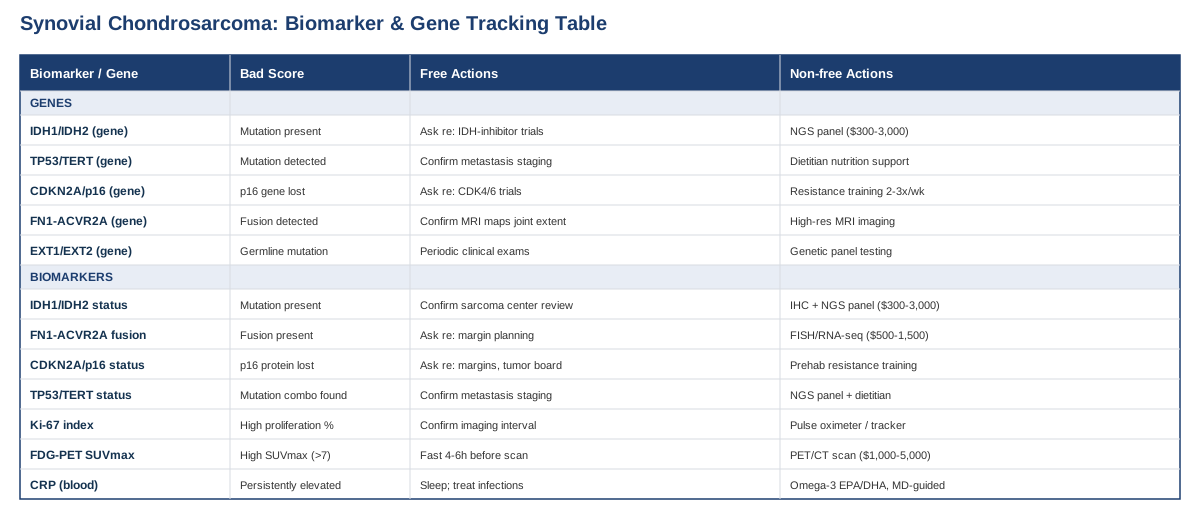
7 Biomarkers to Track in Synovial Chondrosarcoma
Before going marker by marker, it is worth setting expectations correctly. Unlike a cholesterol panel or a blood glucose reading, most of these biomarkers cannot be "improved" through diet or supplements — they describe the biology of tumor tissue, and that biology is addressed through surgery, radiation, and in some cases targeted therapy, not through lifestyle change. What you can influence is how well your body tolerates treatment, how quickly you recover, and how consistently you get monitored. So for each marker below, the "plan" sections describe the clinical pathway (what a concerning result should trigger you to do or ask for) and the supportive measures that genuinely help around the edges — not claims that any supplement changes the tumor's genetics.
1. IDH1/IDH2 Mutation Status
IDH1 and IDH2 mutations were the first common genetic abnormalities identified in cartilage-forming tumors, found in a large share of conventional central chondrosarcomas and their benign precursor, enchondroma, but essentially absent from unrelated tumor types, according to the original characterization by Amary and colleagues. These mutations change how tumor cells handle cellular metabolism and appear to occur early in tumor development, which is why pathologists use them partly to confirm that a tumor is genuinely cartilage-derived.
How to measure it
IDH1/IDH2 status is determined from tumor tissue obtained at biopsy or resection, using immunohistochemistry as a first pass and targeted DNA sequencing (part of a broader next-generation sequencing, or NGS, tumor panel) for confirmation. As part of a bundled sarcoma molecular panel, this typically costs between $300 and $3,000 depending on the institution and whether insurance negotiates the price; it is usually billed once, not repeated, unless a new biopsy is taken at recurrence.If the mutation is present: the plan without supplements or equipment
A confirmed IDH1/IDH2 mutation does not by itself change urgency, but it should prompt a conversation about whether your case has been reviewed at a center with a dedicated bone and soft-tissue sarcoma program, since IDH-mutant tumors are an active area of clinical trial research (including IDH-inhibitor studies). Ask specifically whether your tumor board has considered trial eligibility.If the mutation is present: the plan with supplements or equipment
There is no supplement that safely or reliably targets IDH1/IDH2-mutant tumor cells outside of a clinical trial setting, and self-directed use of "IDH inhibitor" compounds sold online is not appropriate. The only equipment-based addition worth discussing with your oncology team is enrollment tracking for trial matching services, which some academic sarcoma centers offer free of charge.2. FN1-ACVR2A Gene Fusion
This is the marker most specific to this exact condition. A rearrangement joining the FN1 gene to ACVR2A has been identified in roughly half or more of synovial chondromatosis cases and in a majority of the secondary chondrosarcomas that arise from it, based on molecular profiling by Totoki and colleagues. Importantly, this fusion does not reliably distinguish benign synovial chondromatosis from its malignant transformation — both can carry it — so it is used mainly to confirm the tumor's cell-of-origin rather than to grade it.
How to measure it
Detection requires FISH (fluorescence in situ hybridization) or RNA sequencing on tumor tissue, tests generally only available at reference pathology labs or academic cancer centers. Expect a cost range of roughly $500 to $1,500, and note that a negative FISH result does not fully rule out the fusion, since RNA sequencing has picked up cases FISH missed.If the fusion is present: the plan without supplements or equipment
Confirmation of an FN1-ACVR2A fusion mainly reinforces the diagnosis and supports the surgical plan already in motion; it does not currently change treatment selection on its own. Ask your surgical team whether the fusion result affects margin planning, since local recurrence risk in synovial (secondary) chondrosarcoma is driven heavily by completeness of resection.If the fusion is present: the plan with supplements or equipment
No supplement or device modifies this fusion. The only "equipment" that matters here is imaging equipment used for surgical planning — high-resolution MRI to map the full extent of disease within the joint before surgery, which is standard of care rather than optional.3. CDKN2A/p16 (RB Pathway) Status
Loss of the CDKN2A gene, and the p16 protein it encodes, tracks closely with tumor grade. One tissue analysis found p16/CDKN2A loss in about a quarter of grade 2 chondrosarcomas and roughly half of grade 3 tumors, essentially absent in benign cartilage lesions, as reported by Schrage and colleagues. Separately, alterations in the broader RB pathway have been found in the large majority of high-grade chondrosarcomas, a finding described by Rozeman and colleagues, which is part of why CDK4/6 inhibitors have drawn research interest in this disease.
How to measure it
CDKN2A/p16 status is assessed through immunohistochemistry (staining tumor slides for the p16 protein) and, in more detailed panels, through DNA copy-number analysis. This is typically an add-on to the standard pathology workup, costing on the order of $50 to $300 as part of a larger panel rather than as a standalone test.If p16 is lost: the plan without supplements or equipment
Loss of p16 is one of the clearest tissue signals of higher-grade, more aggressive disease, and it should prompt a direct question to your surgical oncologist about whether wider surgical margins, more frequent post-operative imaging, or referral for a CDK4/6 inhibitor trial is appropriate. This finding is a cue to confirm your case has been discussed at a true multidisciplinary sarcoma tumor board, not just reviewed by a single surgeon.If p16 is lost: the plan with supplements or equipment
There is no supplement shown to restore p16 function in tumor tissue. What is reasonable, and evidence-supported for surgical recovery broadly, is a structured prehabilitation program — resistance bands or light weights used two to three times weekly in the weeks before a planned resection — to preserve muscle mass and mobility around the affected joint, which supports faster functional recovery after surgery regardless of tumor grade.4. TP53 Mutation and TERT Promoter Status
TP53 mutations, often alongside TERT promoter mutations, are enriched specifically in dedifferentiated chondrosarcoma — a rare but far more aggressive transformation where a low-grade cartilage tumor develops a high-grade, non-cartilaginous component. A methylation and sequencing study found this combination distinguishes dedifferentiated tumors from conventional chondrosarcoma and functions as an independent predictor of worse survival regardless of grade, according to Chen and colleagues.
How to measure it
TP53 and TERT status are assessed through targeted sequencing of tumor tissue, usually included in a comprehensive sarcoma NGS panel costing $300 to $3,000. Because dedifferentiation can occur focally within an otherwise low-grade tumor, adequate tissue sampling (sometimes requiring multiple biopsy sites) matters more here than for other markers.If TP53/TERT mutations are found: the plan without supplements or equipment
This combination is one of the strongest signals to escalate care intensity: confirm evaluation at a high-volume sarcoma center, ask explicitly about staging scans for metastatic spread (dedifferentiated chondrosarcoma has a meaningfully higher metastatic rate than conventional low-grade disease), and ask whether systemic chemotherapy, which is sometimes used for the dedifferentiated component specifically, is being considered.If TP53/TERT mutations are found: the plan with supplements or equipment
No supplement addresses TP53 or TERT mutations in tumor cells, and claims to the contrary online should be treated skeptically. Supportive care here focuses on nutrition support (adequate protein intake, generally 1.2 to 1.6 grams per kilogram of body weight daily, to offset the metabolic demands of more intensive treatment) coordinated with an oncology dietitian rather than self-directed supplementation.5. Ki-67 Proliferation Index
Ki-67 is a protein marker of actively dividing cells, and its expression level (the "Ki-67 index," reported as a percentage of stained tumor cells) correlates with histologic grade — lower in benign and low-grade lesions, higher in aggressive, high-grade tumors, based on findings summarized by Rozeman and colleagues in their review of chondrosarcoma prognostic markers. It is one of the more practical, widely available biomarkers, since most pathology labs can perform this stain without sending tissue to a specialized reference center.
How to measure it
Ki-67 is measured by immunohistochemical staining of the same tissue block used for initial diagnosis, adding roughly $50 to $150 to a standard pathology bill. It is generally reported once per surgical specimen and repeated only if a new biopsy is taken.If Ki-67 is high: the plan without supplements or equipment
A high Ki-67 index supports closer imaging surveillance intervals after treatment — commonly every three to four months in the first two years for higher-grade disease, spacing out later if stable — and is worth confirming explicitly with your treating team rather than assuming a default schedule applies.If Ki-67 is high: the plan with supplements or equipment
No supplement lowers a tumor's Ki-67 index. The one legitimate equipment-based addition is a home pulse oximeter and simple activity tracker during active chemotherapy or radiation, if that is part of your plan, to help you and your care team monitor tolerance between visits — a low-cost, low-risk practice with no meaningful side effects.6. FDG-PET SUVmax
Unlike the tissue markers above, this one is measured without a biopsy. FDG-PET imaging measures how much glucose tumor tissue absorbs, reported as SUVmax, and this value correlates strongly with histologic grade in cartilage tumors — one analysis reported average SUVmax values around 3.4 for grade I, 5.4 for grade II, and 7.1 for grade III chondrosarcomas, with a meta-analysis confirming FDG-PET's usefulness for grading and staging by Yoon and colleagues.
How to measure it
FDG-PET/CT is performed at a hospital or dedicated imaging center and typically costs $1,000 to $5,000 depending on region and insurance coverage. It is usually done once at initial staging and then repeated at defined surveillance intervals, or sooner if symptoms change, rather than on a fixed frequent schedule, since it involves a small dose of radiation that should not be repeated unnecessarily.If SUVmax is high: the plan without supplements or equipment
A high SUVmax should prompt a direct question about whether it changes the surgical approach (wider margins, staged resection) or adds systemic staging (chest CT for metastasis, since chondrosarcoma most commonly spreads to the lungs). Fasting for 4 to 6 hours before the scan and avoiding strenuous exercise for 24 hours beforehand improves the accuracy of the reading — a free, no-equipment step worth confirming with the imaging department.If SUVmax is high: the plan with supplements or equipment
There is no supplement that lowers tumor glucose uptake in a way that would be clinically meaningful or safe to rely on. Blood glucose should simply be well-controlled and stable (not artificially manipulated) before the scan, since hyperglycemia can distort SUV readings; this is a timing and preparation issue, not a treatment one.7. C-Reactive Protein (CRP)
CRP is an inexpensive, widely available marker of systemic inflammation, and it has shown independent prognostic value specifically in dedifferentiated chondrosarcoma. In a retrospective series of 33 patients, higher pretreatment CRP was strongly associated with worse overall survival, an association that held up even after adjusting for tumor stage, according to Sassoon and colleagues. It is not diagnostic on its own, but it is a useful, low-cost adjunct marker to track alongside imaging.
How to measure it
CRP is a standard blood test, costing roughly $10 to $50 out of pocket where not covered by insurance, and can be drawn at nearly any lab. Because it reflects general inflammation, it should be interpreted alongside your clinical picture — a recent infection, dental work, or unrelated inflammatory condition can raise it independent of tumor activity.If CRP is elevated: the plan without supplements or equipment
Persistently elevated CRP without an obvious infectious or inflammatory explanation is worth flagging directly to your oncology team as a possible signal to reassess disease status rather than dismissing it as incidental, particularly if you have dedifferentiated or high-grade disease. Simple, no-cost measures — adequate sleep, smoking cessation if applicable, and treating any known dental or joint infections — can lower CRP through legitimate, well-established inflammatory pathways unrelated to the tumor itself.If CRP is elevated: the plan with supplements or equipment
Omega-3 fatty acids (roughly 1 to 2 grams daily of combined EPA/DHA) have modest, general evidence for lowering CRP in inflammatory contexts, and are reasonable to discuss with your oncologist, cycled in 8- to 12-week blocks with periodic re-testing rather than used indefinitely without follow-up; mild GI upset and a theoretical bleeding-risk interaction with certain chemotherapy agents are the main side effects to flag before surgery or active treatment. These measures support general inflammatory health — they are not a treatment for the tumor, and CRP should never be used as a substitute for imaging-based surveillance.Taken together, these seven markers describe three different things: what the tumor is made of (IDH1/IDH2, FN1-ACVR2A), how aggressively it is behaving (CDKN2A/p16, TP53/TERT, Ki-67, SUVmax), and how your body is responding systemically (CRP). Understanding which category a given result falls into makes it much easier to ask your care team the right follow-up question. That same molecular biology also explains why certain gene findings recur across chondrosarcoma research more broadly — which is where the underlying genetics are worth a closer, if shorter, look.
The Underlying Genetics, Gene by Gene
The biomarkers above are read out from a smaller set of underlying genes, and understanding those genes in more depth — including what triggers testing for them and what, if anything, can offset the risk they carry — rounds out the picture. This is also where popular genomics commentators like Ali Torkamani, a genomic medicine researcher known for work on polygenic risk prediction, and Gary Brecka, known for promoting proactive biomarker and genetic panels, are a useful starting point conceptually, even though neither focuses specifically on rare sarcomas. Their broader argument — that genetic and biomarker information becomes useful only when paired with a concrete action plan — applies directly here.
IDH1 and IDH2
These genes, when mutated, alter how tumor cells process energy and are found in a large share of conventional cartilage tumors, per Amary and colleagues. The mutation is somatic (occurring only in tumor tissue, not inherited), so there is no personal or family screening implication.
If the gene is mutated: the plan without supplements
Ask whether your tumor board has reviewed eligibility for IDH-targeted clinical trials, an active research area for this mutation class.If the gene is mutated: the plan with supplements or equipment
None indicated; supplement-based "IDH inhibitors" marketed outside clinical trials are not appropriate substitutes for medical treatment.TP53 and TERT Promoter
TP53 is one of the most extensively studied tumor suppressor genes across all of oncology, and its loss, especially alongside TERT promoter mutations, is tied to the more aggressive dedifferentiated form of this disease, per Chen and colleagues.
If the gene is mutated: the plan without supplements
Confirm staging scans for metastatic spread have been done or scheduled, since this finding raises that risk meaningfully.If the gene is mutated: the plan with supplements or equipment
None directly addresses TP53 loss; general nutritional support during treatment (adequate protein and calorie intake) is the only reasonable adjunct, guided by an oncology dietitian.CDKN2A (p16)
Loss of this gene disables a key brake on cell division and tracks with higher tumor grade, per Schrage and colleagues, and RB-pathway alterations more broadly are common in high-grade disease, per Rozeman and colleagues.
If the gene is lost: the plan without supplements
Ask specifically whether CDK4/6 inhibitor trials are relevant to your case, since this pathway is a rational target when p16 is lost.If the gene is lost: the plan with supplements or equipment
Light resistance training with bands or dumbbells two to three times weekly before surgery supports muscle preservation and recovery; it does not affect p16 status itself.FN1-ACVR2A Fusion
This rearrangement is specific to synovial chondromatosis and its malignant transformation, present in roughly half or more of benign cases and a majority of secondary chondrosarcomas, per Totoki and colleagues. It confirms diagnosis but does not currently guide treatment selection on its own.
If the fusion is present: the plan without supplements
Confirm your imaging (typically MRI) fully maps disease extent within the joint before any planned surgery, since local recurrence is closely tied to completeness of resection in this specific entity, per the systematic review of secondary synovial chondrosarcoma by de Andrea and colleagues.If the fusion is present: the plan with supplements or equipment
None indicated beyond ensuring high-quality imaging equipment is used for pre-surgical planning.EXT1 and EXT2
These genes are relevant mainly to a related but distinct pathway — secondary chondrosarcoma arising from osteochondromas in hereditary multiple exostoses, rather than from synovial chondromatosis. Malignant transformation risk in EXT-related disease is estimated at roughly 2 to 10 percent lifetime, with EXT1 carriers facing somewhat higher risk than EXT2 carriers, according to the screening model analysis by Czajka and DiCaprio. If you or a family member has a known EXT1/EXT2 mutation, this is worth mentioning to your care team even in the context of synovial chondrosarcoma, since it changes the family screening conversation.
If the gene is mutated (germline): the plan without supplements
Structured periodic clinical examination of osteochondromas for growth, pain, or change is the primary evidence-based screening approach; this is a monitoring plan, not a preventive one.If the gene is mutated (germline): the plan with supplements or equipment
None changes malignant transformation risk; this is a case where consumer genetic panels (the kind Torkamani's research and Brecka's programs popularized) can flag a known EXT mutation, but the follow-up is clinical surveillance, not a supplement protocol.With the genetics covered, it helps to zoom out to how cancer biology is being reframed more broadly in current writing — including ideas that push back on a purely gene-by-gene view of the disease.
A Book Worth Knowing: The Cancer Code
Jason Fung's The Cancer Code is not a sarcoma-specific text, but it is widely read precisely because it challenges the assumption that cancer is best understood purely as a sequence of gene mutations, arguing instead for an evolutionary and metabolic framing that complements — not replaces — the molecular findings above. It draws heavily on established cancer biology literature, and it is worth engaging with critically rather than as a replacement for oncology guidance. Here are ten of its more discussed ideas, framed against the actual evidence.
1. Cancer is best understood as an evolutionary process
Fung frames tumor progression as Darwinian selection among cell populations, where treatment itself can select for resistant clones — a framing consistent with how dedifferentiation and grade progression are described in chondrosarcoma literature.2. Genetic mutation alone is an incomplete explanation
The book argues mutation accumulation cannot fully explain why some low-mutation-burden tumors behave aggressively while some heavily mutated ones do not — a fair point, and consistent with why chondrosarcoma grading relies on multiple markers (Ki-67, imaging, CRP) rather than mutation count alone.3. The "hallmarks of cancer" framework is central
Fung repeatedly returns to the organizing framework established by Hanahan and Weinberg, which groups cancer behavior into a handful of acquired capabilities — sustained proliferation, evading growth suppressors, and others directly visible in the CDKN2A and TP53 findings discussed above.4. Tumor-promoting inflammation is an underrated driver
This lines up directly with the CRP findings in dedifferentiated chondrosarcoma, where systemic inflammation measurably tracks with prognosis rather than being a passive bystander.5. Metabolic dysregulation (the Warburg effect) is a recurring theme
The tendency of tumor cells to favor glucose fermentation even when oxygen is available is the same biological property that makes FDG-PET imaging useful for grading chondrosarcoma in the first place.6. Fasting and metabolic interventions are an active, still-early research area
Fung highlights fasting-mimicking diets as chemotherapy adjuncts; a randomized trial in breast cancer patients found improved pathological response rates when a fasting-mimicking diet was added to neoadjuvant chemotherapy, per Bahceci and colleagues — promising, but not yet studied in sarcoma and not something to pursue without oncology supervision, especially around surgery.7. Insulin and IGF-1 signaling matter more than commonly discussed
The book's argument that chronically elevated insulin may support tumor growth environments is plausible mechanistically but remains far more established in epithelial cancers than in sarcomas, where direct evidence is sparse.8. Early detection changes outcomes more than late-stage treatment innovation
This point translates directly to chondrosarcoma: because dedifferentiation and grade progression are prognostically decisive, consistent imaging surveillance likely matters as much as any single new therapy.9. Standard oncology and metabolic framing are not mutually exclusive
Fung is explicit that none of this replaces surgery, radiation, or chemotherapy where indicated — a caveat worth taking seriously given how surgical completeness specifically drives outcomes in synovial chondrosarcoma.10. Patient engagement with one's own data improves decision-making
The book's underlying thesis — that patients who understand their own markers make better collaborative decisions with their care team — is really the same premise this entire article is built on.Read this way, Fung's framing is a useful lens for understanding why biomarkers beyond single-gene mutations (like CRP and SUVmax) carry real weight in this disease, rather than a set of alternative treatments. From here, it is worth turning to therapies with more direct, condition-relevant clinical trial evidence.
Complementary Approaches Worth Considering
None of the following treat the tumor itself, and none should replace surgical, radiation, or systemic treatment recommended by your oncology team. What they have in common is real clinical trial evidence, mostly from broader cancer populations rather than synovial chondrosarcoma specifically (a reflection of how rare this tumor is), for reducing pain, anxiety, and treatment-related fatigue — all relevant during diagnosis, surgery, and recovery.
Mindfulness-Based Stress Reduction
Mindfulness-based stress reduction (MBSR) is a structured, 8-week program combining meditation, gentle body awareness, and group instruction, originally developed for chronic illness and widely adapted for oncology settings. For a diagnosis carrying real uncertainty, like a rare sarcoma, it is relevant less as a treatment and more as a way to manage the anxiety and fear-of-recurrence that reliably accompany the surveillance schedule described throughout this article.A meta-analysis of 11 randomized controlled trials involving 1,644 breast cancer patients found that MBSR significantly reduced perceived stress, depression, anxiety, and fear of recurrence, according to Zhang and colleagues. The protocol typically involves weekly 2 to 2.5 hour group sessions plus 20 to 45 minutes of daily home practice over eight weeks.
Realistically, look for an oncology-specific MBSR program (many cancer centers now offer one, often free or low-cost) rather than a generic app-based version, and start it around the time of diagnosis or before major surgery rather than waiting for distress to become severe. It has no meaningful side effects, though it is not a substitute for professional mental health care if anxiety or depression become significant.
Yoga
Yoga combines gentle movement, breath regulation, and guided attention, and its relevance here is mainly for managing fatigue and mobility around the affected joint, particularly after surgery near a weight-bearing joint like the hip or knee.A large, nationwide multicenter phase III randomized trial of a standardized four-week yoga program (YOCAS) in 410 cancer survivors found it improved cancer-related fatigue compared with standard survivorship care, per Lin and colleagues.
Given that synovial chondrosarcoma often involves a large joint, a restorative or chair-based yoga class supervised by an instructor experienced with post-surgical or oncology populations is the safer starting point rather than a general vinyasa class; ask your surgeon when joint-loading movement is appropriate to resume before starting.
Massage Therapy
Massage therapy is relevant here mainly for managing post-surgical pain and anxiety, both common after resection near a joint.A systematic review and meta-analysis of oncology massage studies found consistent improvement in pain, quality of life, and anxiety, and an earlier Cochrane-aligned systematic review specifically noted a short-term anxiety reduction and beneficial effect on physical symptoms like pain, per Ernst.
Choose a massage therapist specifically trained in oncology massage, since technique and pressure need to be modified around a surgical site or any area still healing; avoid deep tissue work directly over the surgical field until your surgeon confirms it is fully healed.
Music Therapy
Music therapy, delivered either by a trained therapist or through structured listening protocols, is one of the better-studied complementary approaches in oncology generally.A Cochrane review encompassing 81 studies and over 5,500 participants found a large anxiety-reducing effect and moderate improvements in depression, pain, and fatigue, with no adverse effects reported, per Bradt and colleagues.
This is one of the lowest-barrier options: a simple, personally chosen playlist used during infusions, imaging appointments, or post-surgical recovery captures much of the benefit, though a formal music therapist can tailor sessions if anxiety is more significant.
Guided Imagery
Guided imagery uses structured mental visualization, often audio-guided, to reduce anxiety around procedures — directly relevant given the repeated imaging and surgical steps involved in this disease's workup and monitoring.A randomized controlled trial of guided imagery and progressive muscle relaxation in breast and prostate cancer patients undergoing chemotherapy found significant reductions in anxiety and depression scores compared with controls, per Charalambous and colleagues.
A free or low-cost recorded guided imagery session, used in the 20 to 30 minutes before a PET scan, biopsy, or surgery, is a reasonable and low-risk addition; it has no known side effects beyond, occasionally, mild disappointment if the format simply does not suit someone's preferences.
Conclusion
Synovial chondrosarcoma is tracked through a specific, learnable set of signals: what the tumor's molecular fingerprint is (IDH1/IDH2, FN1-ACVR2A), how aggressively it is behaving (CDKN2A/p16, TP53/TERT, Ki-67, FDG-PET SUVmax), and how your body is responding systemically (CRP). None of these are things you fix with a supplement, and it would be dishonest to suggest otherwise — but understanding what each one means turns a pathology or imaging report from an intimidating document into a set of concrete questions you can bring to your care team, alongside supportive measures with genuine evidence behind them.
The most useful next step is rarely dramatic. It is asking your treating team, plainly, which of these seven markers have already been checked, which have not, and what specific surveillance schedule they recommend given your tumor's grade and molecular profile — and, if you have not already, confirming your case has been reviewed by a multidisciplinary team with real experience in bone and soft-tissue sarcomas.
Musculoskeletal: Bone Conditions Joint Conditions