This article contains AI generated content.
Syringomyelia - 4 Genes And 6 Biomarkers To Track
Introduction
If you are reading this, there is a good chance you already know what it feels like to be told your MRI shows a syrinx — a fluid-filled cavity inside the spinal cord — and then to be sent home with a plan that amounts to watch and wait. Maybe your symptoms come and go: a band of numbness across the shoulders, a burning that no one else can see, hands that drop things, a headache that spikes when you cough or laugh. You are not imagining it, and you are not being dramatic.
The trouble with most syringomyelia advice is that it stops at the cavity itself. It talks about the syrinx and the surgery and little else, as if the rest of your body were just a bystander. But the environment your spinal cord heals in — your inflammation, your metabolic health, your nerve-supporting nutrients, even the slow drip of axonal damage that a blood test can now detect — all of that is measurable, and much of it is changeable.
Generic advice is broad because it has to be. It is written for the average of everyone. You are not the average of everyone. The point of this article is to get more specific than that: to look at the actual numbers you can track, the genetic patterns that show up in families like yours, and the low-risk habits with real human evidence behind them.
None of this is a cure, and I am not going to pretend otherwise. Syringomyelia is a structural problem, and structural problems sometimes need structural solutions. But better information genuinely leads to better decisions. Below, we will walk through the biomarkers worth tracking, the genes that may be quietly involved, a pain-science reframe that is changing expert conversations, and a short set of complementary approaches that have earned their place. Each one is a lever. You do not have to pull all of them — you just have to know they exist.
Summary
Here is what you will take away. Syringomyelia has no single blood test that diagnoses it — MRI still does that — but there are six biomarkers that quietly tell you how much nerve damage is happening, how much inflammation is fueling it, and whether your body has the raw materials to protect the cord. Two of them (neurofilament light chain and GFAP) are cutting-edge markers of active nerve injury that most patients have never heard of. The other four are cheap, widely available, and surprisingly neglected.
We will also look at four genetic patterns — connective-tissue collagen genes, bony segmentation genes, folate-methylation genes, and the candidate genes emerging from Chiari malformation research — and what you can realistically do about each one, with and without supplements.
After that, there is a pain-science summary drawn from one of the most-referenced expert conversations on chronic pain, and a short tour of complementary approaches (yoga, mindfulness, breathing, and others) that actually hold up in human trials. If you have ever suspected there was more you could be doing between MRIs, this is the map.
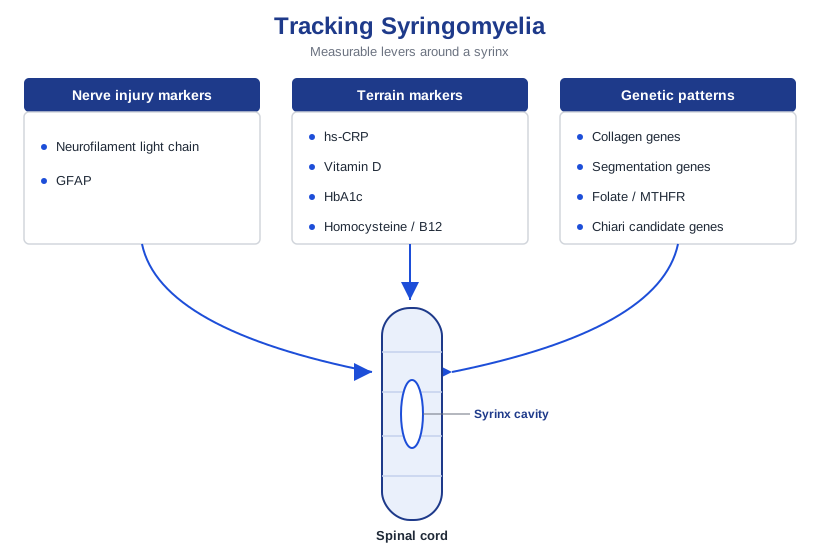
The Biomarkers Worth Tracking When You Live With Syringomyelia
Let me be clear about what these numbers are and are not. No blood test confirms a syrinx — that is the MRI's job, and no biomarker replaces neurosurgical follow-up. What biomarkers do is give you a running dashboard between scans: how actively your nerves are being damaged, how much inflammation is in the system, and whether the biological terrain around your spinal cord is healthy enough to protect it. Clinicians who think carefully about longevity and metabolic health — people like Peter Attia, Thomas Dayspring, and Allan Sniderman — built their reputations on exactly this idea: measure early, measure often, and act on trends rather than waiting for a crisis. That logic transfers well here.
Here are the six I would prioritize, from the most syringomyelia-specific to the most foundational.
1. Neurofilament light chain (NfL) — the nerve-damage speedometer
Neurofilament light chain is a protein that lives inside the long fibers (axons) of your nerve cells. When those fibers are damaged, NfL leaks out into the cerebrospinal fluid and, in smaller amounts, into the blood. It has become one of the most useful general markers of active neuroaxonal injury across a wide range of neurological conditions, and it correlates with MRI activity in central nervous system disorders (see this review of NfL as a biomarker and its correlation with MRI in CNS disorders). In spinal cord injury specifically, NfL levels track with injury severity and predicted recovery, as shown in this study of CSF and serum NfL and GFAP in spinal cord injury. Even the veterinary literature on syringomyelia in dogs has begun measuring serum NfL as a marker of cord disease, in this study of serum neurofilament light chain in canine spinal cord diseases.
How to measure it
Serum NfL is measured with an ultra-sensitive method called Simoa. It is increasingly available through specialty and research-linked labs, typically in the range of $150–$400 out of pocket. The far more sensitive CSF version requires a lumbar puncture and is ordered in a clinical setting, not casually. For most people, a serial serum NfL — the same test repeated over time — is the practical choice, because the trend matters more than any single reading.
If the score is bad, the plan without supplements
A rising NfL is a signal to look for a cause of ongoing nerve damage, not a number you push down directly. The first move is medical: make sure your neurosurgical team knows, because a climbing trend may warrant a repeat MRI to check whether the syrinx is enlarging. On the lifestyle side, the levers that lower background neuroaxonal stress are unglamorous but real — consistent sleep of seven to nine hours, avoiding alcohol excess and tobacco (both are neurotoxic over time), and protecting the neck from positions and activities that provoke your symptoms. Frequency: retest every 6–12 months, or sooner if symptoms change.
If the score is bad, the plan with supplements or equipment
There is no supplement proven to lower NfL in syringomyelia, and anyone claiming otherwise is guessing. What is reasonable is to correct the deficiencies that independently harm nerves (vitamin D and B12, covered below) and to support general metabolic health. If neck instability is driving symptoms, a properly fitted cervical collar for provocative activities or a supportive pillow is equipment worth discussing with your team. Side effects and cautions: over-reliance on a collar can weaken neck musculature, so it is for targeted use, not all-day wear.
2. Glial fibrillary acidic protein (GFAP) — the companion signal
GFAP is released not from neurons but from astrocytes, the support cells that react when the central nervous system is injured. Measured alongside NfL, it adds a second dimension to the picture. Notably, CSF GFAP is elevated in people with chronic spinal cord injury who are experiencing neurological deterioration, per this study finding CSF GFAP and pNF-H elevated in chronic spinal cord injury with neurological decline. In other words, it may flag when a stable situation is starting to slip — exactly the transition syringomyelia patients most want early warning of.
How to measure it
Like NfL, GFAP is best measured by Simoa, often as part of the same neurology biomarker panel, adding roughly $100–$300 to the bill. It is still largely a specialty and research test, so expect to seek it out rather than find it on a standard order form.
If the score is bad, the plan without supplements
Treat a rising GFAP the same way as a rising NfL: as a prompt to escalate medical review rather than to self-treat. The behavioral foundation is identical — sleep, avoiding neuro-toxins, controlling blood pressure, and steering clear of symptom-provoking strain. Retest on the same 6–12 month rhythm as NfL so the two can be read together.
If the score is bad, the plan with supplements or equipment
Again, no supplement is validated to move GFAP in this condition. The honest plan is to reduce the general inflammatory load (see hs-CRP next) and ensure the nutritional basics are covered. The most valuable "equipment" here is the follow-up MRI itself — GFAP is best used as a nudge toward imaging, not as a substitute for it.
3. High-sensitivity C-reactive protein (hs-CRP) — the inflammation dial
hs-CRP is a cheap, widely available marker of systemic inflammation. It will not tell you anything specific about the syrinx, but chronic inflammation is a poor environment for any injured tissue to live in, and lowering it is one of the most reliably beneficial things you can do for overall neurological and cardiovascular health. This is a favorite of the metabolic-medicine crowd precisely because it is inexpensive and responsive to lifestyle.
How to measure it
Any standard lab runs hs-CRP for about $10–$40. Test when you are not fighting an acute infection or injury, since those temporarily spike the number. A reading under 1.0 mg/L is generally considered low-risk; over 3.0 mg/L suggests meaningful inflammation.
If the score is bad, the plan without supplements
The strongest non-supplement levers are consistent: a whole-food, largely plant-forward diet with less ultra-processed food and refined sugar; regular movement scaled to what your body tolerates; adequate sleep; and, if relevant, gradual weight normalization. These do more for hs-CRP than any pill. Recheck every 3–6 months while you are actively working on it.
If the score is bad, the plan with supplements or equipment
Omega-3 fatty acids (roughly 1–2 g combined EPA/DHA daily) are the most evidence-supported anti-inflammatory supplement, and curcumin is a reasonable second. Cycling and side effects: high-dose omega-3s can thin the blood slightly, which matters if you are on anticoagulants or facing surgery — pause them around any planned procedure and clear them with your team. There is no need to cycle omega-3s otherwise; consistency is the point.
4. Vitamin D (25-hydroxyvitamin D) — the nerve-protection baseline
Low vitamin D shows up repeatedly in people with chronic and neuropathic pain, and it has been documented specifically in chronic spinal cord injury populations, as in this cross-sectional study of vitamin D deficiency and neuropathic pain in chronic spinal cord injury. The evidence that correcting it reduces neuropathic pain is promising but mixed — a broader review of nutritional supplements for neuropathic pain treats it as plausible rather than proven. Given how common deficiency is and how low the risk of correcting it is, it is an easy one to get right.
How to measure it
A 25-hydroxyvitamin D test runs about $30–$70 and is available everywhere. Most experts target a level in the 30–50 ng/mL range; below 20 ng/mL is frank deficiency.
If the score is bad, the plan without supplements
Sensible sun exposure and vitamin-D-rich foods (fatty fish, egg yolks, fortified products) help, though for many people — especially in northern latitudes or with limited mobility — diet and sun alone will not lift a low level. Recheck about 8–12 weeks after any change.
If the score is bad, the plan with supplements or equipment
Vitamin D3 is the standard supplement, commonly 1,000–4,000 IU daily for maintenance, with higher medically supervised doses used to correct deep deficiency. Pair it with vitamin K2 and adequate magnesium for proper handling. Side effects: vitamin D is fat-soluble and can build up, so do not megadose blindly — retest and let the number guide you rather than the label.
5. HbA1c and fasting glucose — the metabolic nerve threat
Even mildly elevated blood sugar is quietly toxic to peripheral and central nerves over time. If you already live with a spinal cord that is under mechanical stress, you do not want to add metabolic nerve damage on top of it. HbA1c gives you a three-month average of blood sugar and is one of the best-value tests in medicine.
How to measure it
HbA1c costs about $10–$40 and needs no fasting; a fasting glucose or, better, a fasting insulin adds context for early insulin resistance. An HbA1c under 5.7% is considered normal.
If the score is bad, the plan without supplements
This is where lifestyle genuinely shines. Reducing refined carbohydrates and sugar-sweetened drinks, walking after meals, resistance training, and improving sleep all lower HbA1c, often substantially. Retest every 3 months, since that matches the lifespan of the red blood cells the test relies on.
If the score is bad, the plan with supplements or equipment
Berberine and myo-inositol have modest supporting evidence for improving glucose handling, and a continuous glucose monitor (worn as equipment for a few weeks) can be a powerful teaching tool for seeing which foods spike you. Cautions: berberine can interact with numerous medications and cause digestive upset; if your numbers are in the diabetic range, this belongs in a doctor's hands, not a supplement shelf.
6. Homocysteine, B12, and folate — the myelin trio
Vitamin B12 and folate are essential for maintaining the myelin insulation around nerves, and severe B12 deficiency causes a spinal cord syndrome that can look like other myelopathies. Homocysteine rises when B12, folate, or B6 are inadequate (or when methylation genes are inefficient, which we will revisit in the genetics section). Keeping this trio healthy removes an avoidable source of neurological trouble.
How to measure it
Homocysteine costs roughly $30–$100; B12 and folate are cheap add-ons at $20–$50 each. A homocysteine under about 10 µmol/L is a reasonable target.
If the score is bad, the plan without supplements
Foods rich in B12 (meat, fish, eggs, dairy) and folate (leafy greens, legumes) are the foundation. Anyone eating a strict plant-based diet, over 60, or taking long-term acid-suppressing or metformin medication is at higher risk of low B12 and should watch this closely. Recheck about 8–12 weeks after adjusting.
If the score is bad, the plan with supplements or equipment
Methylated B-vitamins — methylcobalamin (B12) and methylfolate — are the practical choice, especially if you have a methylation gene variant. A B-complex covering B6, B12, and folate will usually bring elevated homocysteine down. Side effects: B vitamins are water-soluble and generally safe, but very high B6 over long periods can cause nerve tingling of its own, so stay near sensible doses and do not treat "more" as "better."
Numbers give you a dashboard; your genes give you the manufacturer's notes. The next section looks at what family patterns and DNA may be adding to the picture.
What Your Genes May Be Telling You About Syringomyelia
Syringomyelia is usually a consequence of something else — most often a Chiari I malformation that blocks the normal flow of cerebrospinal fluid at the base of the skull. And there is real evidence that these malformations cluster in families. A genetic hypothesis for Chiari I malformation with or without syringomyelia documented familial aggregation, and a comprehensive review of Chiari malformation and syringomyelia genetics lays out how much — and how little — is settled. The honest headline is this: a genetic contribution is well supported, but no single definitive causal gene has been confirmed. So treat the four patterns below as informed leads, not verdicts. Genetic testing here (from clinical panels or consumer services like those Ali Torkamani has worked to advance) is best read with a knowledgeable clinician.
1. Connective-tissue collagen genes (the Ehlers-Danlos link)
Chiari and syringomyelia co-occur more often than chance with connective-tissue disorders such as Ehlers-Danlos syndrome, which involve collagen genes. Lax connective tissue at the craniocervical junction may let the skull-neck joint move more than it should, contributing to fluid-flow problems.
If the gene is bad, the plan without supplements
You cannot edit collagen genes, but you can support the joints they build. Targeted physiotherapy to strengthen deep neck and postural muscles, careful avoidance of end-range neck movements, ergonomic setups, and (when appropriate) bracing during provocative activities are the mainstays. This is a management strategy, run continuously, not a course you finish.
If the gene is bad, the plan with supplements or equipment
Adequate protein, vitamin C (a genuine cofactor for collagen synthesis), and possibly collagen peptides are low-risk additions. Equipment — supportive pillows, a monitored exercise program, and physiotherapist-guided bracing — often matters more than any supplement here. Caution: aggressive stretching or high-impact activity can worsen instability, so "more mobility" is not the goal.
2. Bony segmentation genes (the Klippel-Feil connection)
Whole-genome linkage work has implicated genes known from Klippel-Feil syndrome — which affects how the vertebrae of the neck segment and fuse — as candidate contributors, described in this stratified whole-genome linkage analysis of Chiari type I malformation. These are developmental genes that shape the bony container the cord and fluid must pass through.
If the gene is bad, the plan without supplements
This is structural anatomy, not something habits change. The practical response is thorough imaging of the craniocervical junction and posture and movement strategies that respect your particular anatomy. Awareness itself is valuable: knowing the bony geometry is unusual helps you and your surgeon interpret symptoms correctly.
If the gene is bad, the plan with supplements or equipment
No supplement addresses bony segmentation. Equipment and specialist input carry the load — appropriate imaging, physiotherapy, and, in selected cases, surgical evaluation. Be wary of anyone selling supplements to "fix" a bone-development gene; that is not how this works.
3. Folate-methylation genes (MTHFR and homocysteine)
Variants in MTHFR and related genes reduce how efficiently the body converts folate into its active form and can raise homocysteine — the same marker we tracked in the biomarker section. This is a favorite topic of practitioners like Gary Brecka, and while its role in syringomyelia specifically is unproven, the general principle that inefficient methylation and elevated homocysteine are unfriendly to nerves is sound, and it connects two sections of this article neatly.
If the gene is bad, the plan without supplements
Load your diet with natural folate — leafy greens, legumes, and other whole foods — and keep B12 and B6 intake adequate through food. Reducing alcohol (which depletes folate) and not smoking both help. Track homocysteine to see whether your food-based approach is enough.
If the gene is bad, the plan with supplements or equipment
If homocysteine stays elevated, methylfolate plus methylcobalamin and B6 is the targeted response, precisely because it bypasses the sluggish enzyme step. Frequency and side effects: retest homocysteine every 8–12 weeks; some people feel over-stimulated on high-dose methylfolate, so start low. This is one of the few genetic leads with a clean, low-risk, measurable intervention.
4. Chiari candidate genes from genome-wide research
Modern sequencing is beginning to name specific candidates. A genome-wide study identifying Chiari malformation type I candidate genes and chromosomal variations and further work on elucidating the genetic basis of Chiari I malformation point toward genes involved in bone and neural development. This is genuinely early-stage science — these are associations under investigation, not clinically actionable targets yet, and it is important to say so plainly.
If the gene is bad, the plan without supplements
Because these findings are not yet clinically validated, the "plan" is mostly informational: know your family history, seek genetic counseling if syringomyelia or Chiari runs in your family, and let that awareness sharpen your monitoring. There is no lifestyle protocol tied to these specific candidates yet.
If the gene is bad, the plan with supplements or equipment
No supplement or device targets these research-stage genes, and marketing that claims otherwise is ahead of the science. The most useful "equipment" is a good genetic counselor and, if indicated, a research registry your family could contribute to — which is how these genes will eventually become actionable for the next generation.
Genes and labs tell you about the machinery. The next section is about the experience — because how the nervous system processes pain is itself something you can influence.
The Pain-Science Conversation That Could Reframe How You Cope
Among the most useful recent expert discussions of chronic pain is the Huberman Lab episode featuring pain physician and Stanford researcher Dr. Sean Mackey, "Tools to Reduce & Manage Pain." It is valuable here because it separates two things syringomyelia patients often have tangled together: the physical injury (the syrinx, which is real and structural) and the way the nervous system amplifies and sustains the pain signal (which is modifiable). Nothing below implies the syrinx is imaginary. It means the pain experience has more moving parts than the MRI shows. Here are ten of the most impactful takeaways.
1. Pain is an interpretation, not a direct readout
Pain is produced by the brain interpreting signals, which is why identical injuries produce very different pain in different people. This is not a trick; it is neuroscience, and it means the brain's interpretation is a legitimate target.
2. Acute and chronic pain are different animals
Acute pain protects you; chronic pain often becomes a malfunctioning alarm that keeps ringing after its usefulness has passed. Treating long-standing syringomyelia pain like a fresh injury can backfire.
3. The nervous system can become sensitized
Central sensitization means the volume knob gets turned up, so ordinary signals feel painful. Recognizing this explains why pain can outlast or outsize what the scan suggests.
4. Emotion and pain share circuitry
Anxiety, low mood, and stress physically amplify pain through overlapping brain pathways. Addressing them is not "all in your head" — it is direct nervous-system work.
5. Expectation shapes intensity
Belief and expectation measurably change perceived pain (the basis of the placebo effect). Cultivating realistic, hopeful expectations is itself a mild analgesic.
6. Breathing changes the pain state
Slow exhale-emphasized breathing shifts the autonomic nervous system toward calm, which lowers pain reactivity in the moment. It is free and always available.
7. Movement is medicine, within limits
Gentle, graded movement generally reduces chronic pain and prevents deconditioning, though syringomyelia adds the caveat that provocative neck loading should be avoided. The principle is motion, not strain.
8. Sleep and pain are a two-way street
Poor sleep worsens next-day pain, and pain wrecks sleep. Breaking the loop by protecting sleep is one of the highest-yield moves available.
9. Not all pain relief comes from a pill
Psychological therapies, mindfulness, and self-regulation skills have real, measurable effects and avoid the risks of long-term medication. They complement, rather than replace, medical care.
10. You are an active participant, not a passive patient
Perhaps the most freeing message: understanding your own pain system gives you leverage over it. For a condition where the structural fix may be limited or delayed, that agency matters enormously.
These ideas set up the final practical section — the hands-on modalities that put nervous-system regulation into practice.
Complementary Approaches With Real Human Evidence
The core treatment of syringomyelia is medical and, when needed, surgical. The approaches below do not treat the syrinx. What they can realistically do is help with the neuropathic pain, stiffness, stress, and sleep disruption that so often ride along with it — and each one selected here has meaningful human trial evidence for chronic or neuropathic pain, even if none has been tested in syringomyelia specifically. That gap is worth stating honestly.
Mindfulness meditation / MBSR
Mindfulness-based stress reduction (MBSR) is a structured eight-week program teaching present-moment awareness and non-reactivity to sensation — a direct answer to the central-sensitization problem described above. It is relevant to syringomyelia because so much of the daily burden is persistent, hard-to-treat pain and the anxiety that magnifies it.
The evidence is among the strongest of any complementary approach. A randomized controlled trial of mindfulness meditation for chronic pain found improvements in pain and quality of life, and a randomized controlled trial of MBSR in survivors with chronic neuropathic pain showed benefits specifically for neuropathic pain — the exact pain type syringomyelia produces.
To apply it realistically, start with a standard eight-week MBSR course (many are free or low-cost online) and a daily practice of ten to twenty minutes. There is no physical risk. The main pitfall is expecting the pain to vanish; the realistic goal is changing your relationship to it so it consumes less of your day.
Yoga
Yoga combines gentle movement, breath control, and attention training, which maps well onto the movement-plus-nervous-system-regulation combination that helps chronic pain. For syringomyelia, its value lies in maintaining mobility and calming the pain response without heavy loading.
A systematic review and meta-analysis of yoga for neuropathic pain found it a plausible complementary therapy while honestly noting the shortage of large, robust trials, and a broader meta-analysis of yoga for chronic low back pain shows clearer reductions in pain and disability.
The critical caution for syringomyelia is anatomical: avoid postures that hyperextend, hyperflex, or compress the neck, along with inversions and headstands, all of which can raise pressure at the craniocervical junction. Work with a therapeutically trained instructor, tell them about your diagnosis, and treat any position that provokes symptoms as off-limits.
Breathing-based therapies
Slow, controlled breathing — particularly patterns that lengthen the exhale — shifts the autonomic nervous system toward a parasympathetic, calmer state, which reduces pain reactivity and stress. It is the single most accessible tool in this article: no equipment, no cost, usable during a symptom flare.
While large syringomyelia-specific trials do not exist, breathing techniques are a well-established component of the mindfulness and relaxation programs that do have randomized evidence for chronic pain, and they overlap directly with the mechanisms Dr. Mackey describes. Think of breathing as the entry point to the same nervous-system regulation MBSR trains.
To apply it, try a simple pattern such as a four-second inhale and a six-to-eight-second exhale for five minutes, once or twice daily and during flares. The one caution particular to syringomyelia: avoid forceful breath-holds and strained "power breathing," since Valsalva-type pressure spikes can transiently worsen symptoms. Gentle and slow is the entire point.
Relaxation training and guided imagery
Progressive muscle relaxation and guided imagery are structured techniques for lowering muscular tension and redirecting attention away from pain. They matter for syringomyelia because chronic pain drives protective muscle guarding, which creates its own layer of stiffness and ache on top of the neurological symptoms.
These techniques are standard, evidence-supported components of the same chronic-pain psychology toolkit as mindfulness, frequently delivered together in the trials referenced above; as standalone modalities their independent evidence is more modest, which is worth acknowledging plainly.
In practice, a ten-minute guided relaxation before sleep can improve both muscle tension and the sleep disruption that amplifies next-day pain. There is essentially no risk — the main thing is consistency, since these skills strengthen with repetition rather than working instantly.
Conclusion
Syringomyelia is a structural condition, and no biomarker, gene report, or breathing exercise changes that basic fact. But between MRIs, you are far from powerless. You can watch nerve-injury markers like neurofilament light chain and GFAP for early warning, keep the biological terrain healthy by managing inflammation, vitamin D, blood sugar, and the B-vitamin trio, understand the genetic patterns that shape your particular anatomy, and use nervous-system tools with genuine human evidence to take back part of your day from pain.
The thread running through all of it is the same: measure, understand, and act on what is actually changeable, while staying closely connected to the neurosurgical and neurological team who manage the structural side. Knowing more does not replace them — it makes you a sharper partner to them.
So pick one next step, not ten. Maybe it is asking your doctor about a neurofilament light chain test, or finally checking your vitamin D and homocysteine, or starting a short daily breathing practice tonight, or booking a genetic counseling conversation if this runs in your family. Track your symptoms so you can spot trends. Then bring what you learn to a qualified professional and decide together. The smartest move is almost always the next small, informed one — and now you know several worth making.