This article contains AI generated content.
Tarsal Coalition - 4 Genes And 5 Biomarkers To Track
Introduction
If you are reading this, there is a good chance you have felt it: a stiff, deep ache in the middle or back of the foot that shows up after sport, long walks, or a day on your feet — and an ankle that seems to "give way" more often than it should. Maybe an X-ray or MRI finally gave the feeling a name: tarsal coalition, an abnormal bridge of bone, cartilage, or fibrous tissue joining two of the small bones in the back of the foot. Naming it helps. But it can also raise a frustrating new question: why me, and what can I actually do about it?
Most advice you will find stops at the surface. Wear supportive shoes, try an orthotic, rest, ice, maybe consider surgery. None of that is wrong, and some of it is genuinely important. But it treats the foot as a mechanical problem alone and skips the more interesting story underneath — the developmental biology that decided, before you were born, that two bones would not fully separate. Generic advice is broad because it has to be. It is written for the average foot, not for the specific pathway that shaped yours.
This article goes deeper, and it tries to stay honest while doing it. A tarsal coalition is a structural, largely congenital condition. No supplement, gene hack, or breathing exercise will melt a bony bridge back into two separate bones — anyone promising that is selling something. What understanding the biology can do is help you protect the joints you still have, calm the downstream inflammation and pain, make smarter decisions about surgery and rehab, and — if coalitions run in your family — understand what you might pass on.
So here is the plan. First, we look at what recent genetics research actually says: the four genes most tied to tarsal coalition, what each one influences, and a grounded plan to support the biology around each. Then, as a bonus, we cover five practical blood markers worth tracking to protect bone and joint health over the long run. We finish with a podcast that reframes how you think about chronic foot pain, and a short, evidence-checked look at complementary approaches. Better information leads to better decisions — that is the whole promise here, and it is one worth keeping.
Summary
Tarsal coalition is not just a foot that "wasn't built right" — it is a readable signal from a specific biological pathway. Nearly all of the genes tied to coalitions sit inside one signaling system that tells developing bones where to stop and joints where to form. When that signal is turned down or misread, bones that should have separated stay joined. That single insight changes how you think about everything downstream, from arthritis risk to which supplements are worth your money and which are noise.
In this article you will learn the four genes most strongly linked to tarsal coalition and its syndromic cousins — including one gene that also happens to be one of the best-studied osteoarthritis risk genes in the world, which is not a coincidence. For each, you will get a plain-language explanation of what it does and a realistic plan, with and without supplements, to support the tissue it governs. You will also learn the five biomarkers that quietly determine how well your cartilage and bone hold up around a stiff, overloaded joint — how to measure each one, roughly what it costs, and how to move it in the right direction.
After the genes and markers, we go further: a summary of a science-heavy podcast that challenges the standard "just manage the pain" script, and a careful look at which complementary therapies have real human evidence behind them for foot pain and balance — and which do not. If you have ever suspected there was more to your foot than the shoe aisle suggests, the next sections are for you.
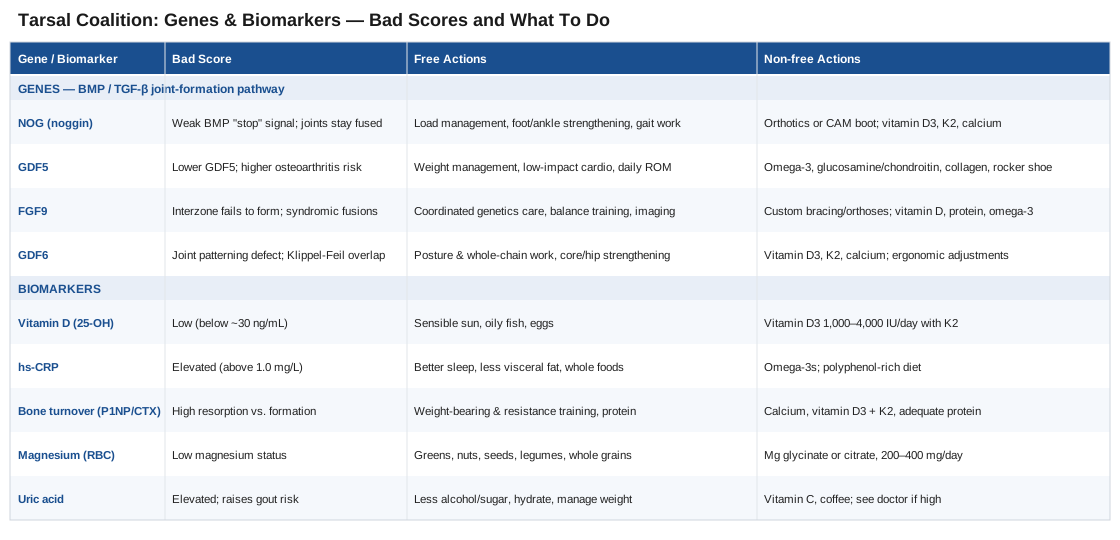
What Recent Genetics Research Suggests About Tarsal Coalition
For a long time, tarsal coalition was described as a quirk of fetal development — a failure of the primitive tissue in the foot to separate into distinct bones. That is still true, but genetics has given us the "why." Family studies have shown for decades that isolated tarsal coalition often runs in families in an autosomal dominant pattern, meaning a single copy of a variant from one parent can be enough to produce it, though not everyone who carries it shows the same severity. And when coalition appears alongside fused finger and toe joints (symphalangism) or other joint fusions, it is frequently part of a named genetic syndrome.
The unifying theme is striking: almost every gene tied to tarsal and carpal coalitions belongs to the same molecular conversation — the BMP / TGF-β signaling pathway that governs how joints carve themselves out of solid cartilage during development. Understanding this pathway is the key that makes the rest of this section useful. If you want a clinical overview of the condition itself, the StatPearls reference on talocalcaneal coalition is a solid, free starting point, and prevalence patterns across populations are summarized in this study on racial differences in tarsal coalition.
An important, honest caveat before the gene list
You cannot rewrite the genes you were born with, and you cannot un-fuse a mature bony coalition with diet or supplements. So when this section talks about a "plan to fix a bad gene," read it precisely: the goal is to support the tissue and biological terrain that the gene governs — bone density, cartilage resilience, inflammation, and muscle support around the affected joint — so that you keep the healthy motion you have, slow secondary arthritis, and reduce pain. That is a realistic, worthwhile target. Reversing the coalition itself remains the domain of surgery and orthopedics. With that framing set, here are the four genes that matter most.
Gene 1 — NOG (noggin): the master "stop" signal for joints
What it does: NOG encodes a protein called noggin, which acts as a brake on BMP (bone morphogenetic protein) signaling. During development, joints form where noggin locally shuts BMP down so cartilage can hollow out into a moving joint instead of solidifying into bone. When NOG is underactive, the "stop" signal is weak and bones that should separate stay joined. Variants in NOG cause proximal symphalangism and multiple synostoses syndrome, and tarsal coalition is a recognized feature. Human evidence here is strong: families with NOG mutations and documented tarsal coalitions have been reported, for example in this analysis of a novel NOG mutation with symphalangism and tarsal coalitions.
What it may affect beyond the foot: because noggin is also involved in the tiny bones of the middle ear, some people with NOG variants have conductive hearing loss. If you have a syndromic coalition, a hearing check is a reasonable, low-cost step.
If the gene is bad, the plan without supplements
The NOG-related picture is about stiff, fused joints and the extra load that places on neighboring joints. The non-supplement plan is mechanical and behavioral: work with a podiatrist or physiotherapist on load management (spreading impact across the day rather than in single hard bouts), targeted strengthening of the posterior tibialis, peroneals, and intrinsic foot muscles to stabilize a rigid hindfoot, and gait retraining to reduce the ankle sprains that plague stiff feet. Frequency: strengthening 3–4 sessions per week, 10–15 minutes; balance/gait drills most days. Cycling: progress load every 2–3 weeks, and deload for a week if a joint flares. Side effects: over-aggressive loading can inflame a coalition — sharp, lingering pain is the signal to back off. Add an audiology screen if hearing feels off.
If the gene is bad, the plan with supplements or equipment
Equipment is the higher-value lever here. A custom or semi-rigid orthotic and supportive footwear reduce painful motion across the coalition; a short course in a CAM walking boot can settle an acute flare. On the nutrient side, the aim is simply healthy bone and cartilage turnover, not gene modification: vitamin D3 (typically 1,000–2,000 IU/day, dosed to a blood level rather than guessed), vitamin K2 to direct calcium into bone, and adequate dietary calcium. Frequency: daily with food. Cycling: recheck vitamin D every 3–6 months and adjust. Side effects: excess vitamin D can raise calcium and stress the kidneys; K2 can interact with warfarin. Clear supplements with your doctor, especially if you take blood thinners.
Gene 2 — GDF5: the joint-formation gene that also drives osteoarthritis
What it does: GDF5 (growth differentiation factor 5) is a BMP-family signal essential for building joints, cartilage, and the length of long bones. It is a second, well-documented cause of multiple synostoses syndrome and symphalangism with joint fusions, confirmed in reports such as this identification of GDF5 as a second locus for multiple synostoses syndrome and this GDF5 mutation causing autosomal dominant symphalangism.
Why GDF5 deserves special attention: the same gene carries one of the most replicated common risk variants for osteoarthritis in the world. A functional variant in the GDF5 promoter (rs143383) that lowers GDF5 expression is linked to hip and knee osteoarthritis across Asian and European populations — see the landmark paper on this functional GDF5 polymorphism and osteoarthritis susceptibility. This matters enormously for coalition, because the biggest long-term threat from a stiff, overloaded hindfoot is early joint degeneration. If your cartilage is genetically primed to express less GDF5, protecting it becomes a priority, not an afterthought.
If the gene is bad, the plan without supplements
Cartilage responds to smart, cyclical loading and dreads two extremes: doing nothing and doing too much. The non-supplement plan centers on weight management (every kilogram off the foot is real relief for cartilage), low-impact conditioning such as cycling, swimming, or an elliptical to feed cartilage without pounding it, and daily gentle range-of-motion work in the joints that still move. Frequency: 150 minutes/week of low-impact aerobic work, split into most days. Cycling: alternate harder and easier days so cartilage recovers; avoid back-to-back high-impact sessions. Side effects: essentially none beyond ordinary training soreness, provided you respect flare-ups.
If the gene is bad, the plan with supplements or equipment
For cartilage support, the evidence is modest but the risk is low: omega-3 fatty acids (roughly 1–2 g combined EPA/DHA daily) to temper joint inflammation, and a trial of glucosamine sulfate and chondroitin (commonly 1,500 mg / 1,200 mg daily) — helpful for some, inert for others, so judge it on your own response over 8–12 weeks. Collagen peptides (10–15 g/day) plus vitamin C may support connective tissue. On equipment: a stiff-soled or rocker-bottom shoe reduces motion-driven cartilage stress. Frequency: daily. Cycling: give any joint supplement a fair 3-month trial, then stop if nothing changes rather than paying indefinitely. Side effects: glucosamine can affect blood-sugar control in some diabetics and may interact with warfarin; high-dose fish oil can thin blood.
Gene 3 — FGF9: the interzone architect
What it does: FGF9 helps form the "interzone," the thin band of cells that becomes the space between two bones. When FGF9 signaling is disrupted, that separation fails and joints fuse — the mechanism behind multiple synostoses syndrome type 3, with carpal and tarsal coalitions among its features. The developmental biology is laid out in this study showing an Fgf9 point mutation impedes joint interzone formation. Human cases are rarer than NOG or GDF5, so treat FGF9 as an established but less common cause.
What it may affect beyond the foot: FGF9 variants have been linked to craniosynostosis (early fusion of skull sutures) in some families, which is why a syndromic diagnosis is worth a proper clinical genetics evaluation rather than self-interpretation.
If the gene is bad, the plan without supplements
Because FGF9-related disease tends to be syndromic, the most valuable "plan" is coordinated care: a clinical geneticist to map which joints are affected, plus physiotherapy focused on preserving and stabilizing the joints that still move. Practically, this means proprioception and balance training to counter the fall and sprain risk that comes with multiple stiff joints, and periodic imaging to track any progression. Frequency: balance work most days; specialist review at least yearly. Cycling: intensify rehab after any new symptom, ease off once stable. Side effects: none from the approach itself.
If the gene is bad, the plan with supplements or equipment
Equipment leads again: bracing or orthoses tailored to the specific pattern of fused joints, and appropriate assistive devices during flares. Nutritionally, keep to the shared foundation — vitamin D to a measured target, adequate protein for muscle that must do more stabilizing work, and omega-3s for background inflammation. Frequency: daily nutrients; equipment reviewed as symptoms change. Cycling: reassess bracing every few months as strength improves. Side effects: over-reliance on rigid bracing can weaken supporting muscle, so pair it with strengthening rather than using it as a substitute.
Gene 4 — GDF6: joint patterning and the Klippel-Feil overlap
What it does: GDF6, another BMP-family gene, helps set the boundaries between skeletal elements. Variants are associated with multiple synostoses syndrome type 4 and with Klippel-Feil-type vertebral fusions, and carpal-tarsal fusions can appear in this spectrum. Because dedicated tarsal-coalition studies for GDF6 are limited, treat it as a plausible but less-established contributor than NOG or GDF5 — a good example of where the science is still early, and honesty matters more than certainty.
What it may affect beyond the foot: GDF6 is also active in eye and spine development, so a coalition alongside neck stiffness or vertebral fusion warrants spinal imaging and an ophthalmology check.
If the gene is bad, the plan without supplements
The emphasis shifts toward posture and whole-chain mechanics: if the spine and neck are involved, a rigid foot changes how force travels up the leg, so physiotherapy should address hip, knee, and spinal alignment, not just the foot. Core and hip strengthening, plus posture-aware movement, protect the joints above the coalition. Frequency: 3–4 strength sessions weekly plus daily mobility. Cycling: progress gradually with periodic deloads. Side effects: none, though anyone with confirmed cervical fusion should avoid high-risk neck loading and get clearance first.
If the gene is bad, the plan with supplements or equipment
Standard bone-support nutrients apply — vitamin D, K2, calcium, protein — with the same monitoring caveats as above. Equipment may extend beyond the foot to include seating, workstation, and footwear adjustments that reduce whole-chain strain. Frequency: daily nutrients; ergonomic review as needed. Cycling: recheck vitamin D twice yearly. Side effects: as noted for vitamin D and K2 interactions.
What about epigenetics?
Epigenetics — how genes are switched on and off without changing the DNA sequence — is a genuinely exciting frontier here, but the honest headline is that direct evidence in tarsal coalition is thin. The most relevant finding is indirect and comes back to GDF5: its expression is modulated by DNA methylation, meaning the amount of protective GDF5 your cartilage makes is partly an epigenetic, environmentally-influenced decision, as shown in this work on how GDF5 expression is modulated epigenetically by DNA methylation. The practical implication is modest but real: the lifestyle levers that support healthy methylation and low inflammation — adequate folate and B-vitamins, not smoking, maintaining a healthy weight, and regular movement — are the same levers that protect your joints. You are not editing the coalition; you are nudging the biological environment in which your remaining cartilage has to survive. That is a reasonable, low-risk bet, and it is worth stating plainly that anything more specific would be overselling the current data.
Blood Markers Worth Watching If You Live With A Tarsal Coalition
Genes set the starting conditions, but day-to-day joint and bone health is something you can actually measure and steer. A tarsal coalition puts unusual, concentrated stress on the foot's remaining joints, so the smartest long-term play is to keep the surrounding bone strong and inflammation low. The five markers below are the ones clinicians who think about longevity — in the spirit of Peter Attia and lipidologists like Thomas Dayspring — would recognize as high-value and mostly inexpensive. None of them diagnoses a coalition; all of them tell you how well you are protecting the foot you have.
1. 25-Hydroxyvitamin D
Why it matters: vitamin D governs calcium absorption and bone mineralization. Low levels quietly weaken bone and worsen musculoskeletal pain — a bad combination when one joint is already overloaded.
How to measure it
A simple blood test, widely available for roughly 15–40 USD, or free to low-cost through many national health systems. Aim for a level in the sufficient range your lab defines (commonly around 30–50 ng/mL).If the score is bad, the plan without supplements
Sensible sun exposure (10–20 minutes on arms and legs several times weekly, adjusted for skin tone and latitude) and vitamin-D-rich foods such as oily fish and eggs. Frequency: regular, modest exposure beats rare long sessions. Side effects: avoid burning; sunburn raises skin-cancer risk.If the score is bad, the plan with supplements or equipment
Vitamin D3 1,000–4,000 IU/day dosed to your blood level, ideally paired with K2. Frequency: daily with fat-containing food. Cycling: retest at 3 months and settle on a maintenance dose. Side effects: excess causes high calcium; do not megadose blindly.2. High-Sensitivity C-Reactive Protein (hs-CRP)
Why it matters: hs-CRP is a general marker of inflammation. Persistently elevated levels can reflect ongoing joint irritation and accelerate cartilage wear around a stressed coalition.
How to measure it
An inexpensive blood test, about 10–30 USD. Lower is better; under 1.0 mg/L is generally considered low-risk. Retest when you are not fighting an acute infection, which temporarily spikes it.If the score is bad, the plan without supplements
Address the usual drivers: improve sleep, reduce visceral fat, cut ultra-processed foods and excess alcohol, and keep moving. Frequency: daily habits, retest in 3 months. Side effects: none.If the score is bad, the plan with supplements or equipment
Omega-3s (1–2 g EPA/DHA daily) and a diet rich in polyphenols can modestly lower inflammation. Cycling: reassess at 8–12 weeks. Side effects: high-dose fish oil mildly thins blood — relevant if you take anticoagulants or face surgery.3. Bone Turnover Markers (P1NP and CTX)
Why it matters: these paired markers show how fast you are building bone (P1NP) versus breaking it down (CTX). They give an early, dynamic read on bone health long before a density scan would change — useful if a coalition limits weight-bearing activity, which itself weakens bone.
How to measure it
Blood tests, roughly 30–70 USD each, best drawn fasting in the morning because CTX varies through the day.If the score is bad, the plan without supplements
Weight-bearing and resistance exercise within your foot's tolerance is the strongest natural lever, plus adequate protein and calcium from food. Frequency: resistance training 2–3 times weekly. Side effects: respect foot pain and substitute low-impact loading when needed.If the score is bad, the plan with supplements or equipment
Calcium (preferably dietary, supplementing only the shortfall), vitamin D3 and K2, and adequate protein. Cycling: retest markers at 3–6 months. Side effects: high supplemental calcium can cause constipation and may not suit those with certain cardiovascular or kidney conditions.4. Serum Magnesium (ideally RBC magnesium)
Why it matters: magnesium is a cofactor for bone formation and vitamin D activation, and it supports muscle function — including the muscles working overtime to stabilize a stiff foot.
How to measure it
Standard serum magnesium is cheap (about 10–25 USD) but insensitive; red-blood-cell (RBC) magnesium is a better read at 30–60 USD.If the score is bad, the plan without supplements
Eat more leafy greens, nuts, seeds, legumes, and whole grains. Frequency: daily dietary sources. Side effects: none.If the score is bad, the plan with supplements or equipment
Magnesium glycinate or citrate, commonly 200–400 mg/day. Frequency: evening dosing suits many. Cycling: adjust to bowel tolerance. Side effects: citrate can loosen stools; those with kidney disease should not supplement without medical guidance.5. Serum Uric Acid
Why it matters: a mechanically stressed, already-painful foot joint is a poor place to also develop crystal-driven inflammation. Elevated uric acid raises gout risk, and gout famously targets the foot, muddying an already complex pain picture.
How to measure it
A routine, inexpensive blood test (around 10–25 USD), often bundled into standard panels.If the score is bad, the plan without supplements
Reduce alcohol (especially beer), sugary drinks, and excess purine-heavy foods; stay well hydrated and manage weight. Frequency: ongoing dietary habits. Side effects: none.If the score is bad, the plan with supplements or equipment
Vitamin C and coffee are associated with modestly lower uric acid, but genuinely high levels or prior gout attacks need medical treatment, not supplements. Cycling: retest after dietary change in 6–8 weeks. Side effects: do not self-treat established gout — see a doctor for proper management.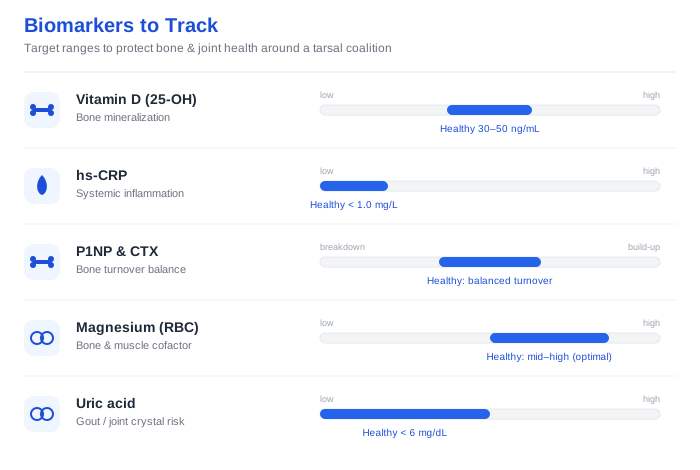
The Podcast That Reframes Foot Pain: Huberman Lab With Dr. Sean Mackey
If you take away one mindset shift from this article, let it come from the Huberman Lab episode featuring Stanford pain scientist Dr. Sean Mackey. Chronic foot pain from a coalition is not only a structural problem — it is also a nervous-system experience that can be turned up or down. This episode leans on a large body of pain research and gently challenges the old "find the damage, fix the damage" doctrine. Here are the ten most useful ideas, one per point.
1. Pain is produced by the brain, not just the tissue
Pain is an output of the nervous system, not a direct meter of tissue damage. Two people with identical coalitions can feel wildly different amounts of pain — which means there is room to influence it.2. Hurt does not always equal harm
A flare of foot pain does not necessarily mean you are damaging the joint further. Learning this distinction reduces fear-driven guarding that can make movement worse.3. Acute and chronic pain are different beasts
Acute pain protects you; chronic pain can become its own condition as the nervous system "learns" the signal. That is why a foot can keep hurting even when imaging looks stable.4. The mind-body split is outdated
Emotional state, stress, and attention physically change pain processing. Treating the psychological side is not "in your head" dismissal — it is targeting a real control knob.5. Sleep is a frontline pain treatment
Poor sleep lowers pain thresholds the next day. Protecting sleep is one of the highest-leverage, cheapest interventions for chronic foot pain.6. Movement is medicine, avoidance is a trap
Graded, tolerable movement calms an oversensitized system, while long-term avoidance deconditions muscles and amplifies pain. The skill is dosing, not resting indefinitely.7. Breathing and self-regulation shift pain in real time
Slow breathing and related techniques down-regulate the stress response and measurably reduce pain intensity — tools you carry everywhere for free.8. Opioids are a poor long-term answer
The episode is candid about opioids losing effectiveness and carrying real risk in chronic musculoskeletal pain, pushing instead toward multimodal strategies.9. Expectation and framing change outcomes
What you believe about your pain and your prognosis measurably influences how much you suffer — a reason to seek accurate, non-catastrophizing information (like understanding your coalition properly).10. Multimodal beats any single fix
The strongest results come from stacking small levers — sleep, movement, mindset, targeted therapy, and, where appropriate, procedures — rather than betting everything on one intervention. For a coalition, that means combining orthopedic care with the biological and behavioral tools in this article.Complementary Approaches Worth (And Not Worth) Your Time
Complementary therapies cannot dissolve a bony bridge, and honesty requires saying that condition-specific trials in tarsal coalition are essentially nonexistent. What follows is a careful selection of modalities with meaningful human evidence in closely related problems — foot and musculoskeletal pain, balance, and chronic pain — where the mechanism plausibly transfers. Each is presented with realistic expectations and its limits stated plainly.
Tai chi for balance and sprain prevention
Tai chi is a slow, weight-shifting movement practice that trains balance, proprioception, and lower-limb control. This is directly relevant to tarsal coalition, where a stiff hindfoot raises the risk of recurrent ankle sprains and instability — the very things good balance training targets.
The strongest evidence is for balance and fall reduction. A recent systematic review and meta-analysis found that tai chi improves balance performance in healthy older adults, with benefits growing alongside training frequency and duration. While these trials were not run in coalition patients specifically, the balance deficits they address overlap with the instability many coalition patients report.
Practically, aim for one or two classes a week plus short home practice, choosing low, controlled stances that do not force painful motion through the fused joint. If a particular posture provokes sharp foot pain, modify or skip it. Think of tai chi as insurance against sprains and falls rather than a treatment for the coalition itself.
Mindfulness-based stress reduction for chronic pain
MBSR is a structured, secular meditation program that changes how the brain processes pain and stress — the exact mechanism Dr. Mackey described above. For a coalition that has become a chronic, daily ache, this addresses the nervous-system side of pain that orthotics cannot reach.
The human evidence in chronic pain is fair and growing. A systematic review and meta-analysis found that MBSR modestly improves pain and function in chronic low back pain, with effects comparable to cognitive behavioral therapy. Effect sizes are moderate, not miraculous, and the data quality is fair rather than definitive — worth knowing before you start.
Realistically, a standard 8-week MBSR course (in person or via a reputable app) plus 10–20 minutes of daily practice is the tested "dose." It pairs especially well with a graded movement plan, and its side-effect profile is essentially zero, which makes it an easy, low-risk addition for anyone whose foot pain has outlasted the original injury.
Low-level laser therapy / photobiomodulation for joint pain
Photobiomodulation uses specific wavelengths of light to reduce local inflammation and pain in musculoskeletal tissue. For the secondary joint irritation and early arthritis that a coalition can drive, it is a plausible adjunct for symptom relief.
The evidence is promising but genuinely mixed. Meta-analytic work suggests photobiomodulation can reduce pain and improve function in knee osteoarthritis when combined with exercise, and a broader umbrella review of photobiomodulation across health outcomes finds benefit in several pain conditions — while repeatedly flagging low certainty of evidence and cautioning against using it as a standalone cure. There are no tarsal-coalition-specific trials, so this is extrapolation.
If you try it, use it through a physiotherapy or podiatry clinic that can apply appropriate parameters, treat it as a short-term add-on to an exercise program rather than a replacement, and set a clear checkpoint (say, 6–8 sessions) to judge whether it is actually helping you before committing further time or money.
Massage therapy for surrounding muscle tension
A rigid coalition forces the surrounding muscles — calf, peroneals, intrinsic foot muscles — to work harder and tighten up, which adds its own layer of pain. Massage and soft-tissue work target that secondary tension rather than the bony bridge.
The condition-specific evidence here is limited, and it is fair to say massage for tarsal coalition specifically has not been formally trialed; the support comes from broader findings that massage offers short-term relief for musculoskeletal and chronic pain. That places it as a reasonable comfort measure, not a disease-modifying treatment.
Used sensibly — periodic sessions during flares, or self-massage of the calf and sole with a ball — it can ease muscular tightness and improve how the foot feels during rehab. Keep expectations modest, avoid aggressive pressure directly over an inflamed joint, and treat it as one small, pleasant lever among several.
Conclusion
A tarsal coalition is a structural fact written into your foot before birth, and it is worth being clear-eyed about that: no gene protocol, supplement stack, or complementary therapy will separate two fused bones. That job belongs to orthotics, targeted rehabilitation, and — when needed — surgery. But structural does not mean static. Understanding the BMP/TGF-β pathway and the four genes that shape it, especially the cartilage-and-arthritis link running through GDF5, turns a vague diagnosis into a clear map of what to protect. The five biomarkers give you a cheap, repeatable way to steer bone and joint health over the years, and the pain-science and complementary sections offer real, low-risk tools for the daily experience of living with a stiff foot.
The through-line is simple: you cannot change the coalition, but you have real influence over everything around it — the strength of your bone, the resilience of your remaining cartilage, the inflammation in your system, and the way your nervous system interprets pain. That is a meaningful amount of control, and it is grounded in evidence rather than hope alone.
So take the next smart step, not a dramatic one. Track your symptoms and note what loads and shoes actually help. Ask your doctor about a basic panel — vitamin D, hs-CRP, and the others here — and get a proper clinical genetics or orthopedic opinion if coalitions run in your family or affect more than one joint. Small, informed decisions, repeated over time, are how you keep this foot working well for the long haul.
Musculoskeletal: Bone Conditions Joint Conditions