This article contains AI generated content.
Tarsal Tunnel Syndrome - 4 Genes And 6 Biomarkers To Track
Introduction
If you have tarsal tunnel syndrome, you already know the odd vocabulary of it: the burning along the sole, the electric zing that shoots into the arch or toes when you stand too long, the numbness that shows up at night for no reason you can name. You have probably been told to rest, stretch your calf, wear better shoes, and maybe try a splint or an injection. Sometimes that helps. Often it only quiets things for a while, and the symptoms drift back.
Generic advice is not wrong, but it is aimed at the average foot, and your foot is attached to your particular body chemistry. The posterior tibial nerve gets compressed as it passes behind the inner ankle, but why a nerve becomes swollen, sticky, or slow to recover is often a whole-body question. Blood sugar, thyroid hormones, inflammation, and the vitamins your nerves use to rebuild their insulation all change how a compressed nerve behaves. Two people with the same MRI can have very different tunnels because their internal terrain is different.
That is the gap this article tries to close. Instead of treating tarsal tunnel syndrome only as a plumbing problem at the ankle, we will look at the measurable signals that shape how your nerves cope with pressure, and at the genetic quirks that can make some nerves unusually fragile. None of this replaces a good clinician, and none of it is a miracle. But better information genuinely does lead to better decisions.
We will move through three practical layers. First, the biomarkers worth tracking, with the specific plans that can move each one in the right direction. Then a shorter tour of the genes that can predispose a nerve to compression, and what to do when you carry a risky variant. Finally, a summary of a pain-science approach that challenges the "just rest it" reflex, and a handful of hands-on therapies with real human evidence. Each layer is another realistic shot at loosening the grip this condition has on your day.
Summary
Tarsal tunnel syndrome is often the ankle's version of a bigger, quieter problem. This article shows how to read that problem in your bloodwork and, in some cases, your DNA — and what to actually do about it.
On the biomarker side, you will learn why HbA1c, high-sensitivity CRP, thyroid hormones (TSH and free T4), vitamin B12, homocysteine, and vitamin D sit near the center of nerve health, how much each test costs, and a concrete two-track plan (with and without supplements) for every one that comes back off-target — including dosing, cycling, and side effects worth watching.
Then there is the part most people never check: genetics. One gene in particular, PMP22, can make your nerves shockingly easy to injure under pressure — the exact situation a tunnel creates. We will also cover MTHFR, SOD2, and ACE, what each may do to a stressed nerve, and how to compensate.
After that, a science-forward take on pain that reframes what "flare-ups" actually mean, plus five hands-on therapies (from low-level laser to yoga and tai chi) rated honestly by how strong the human evidence really is. Read on to find which of your numbers might be quietly feeding your symptoms — and which lever to pull first.
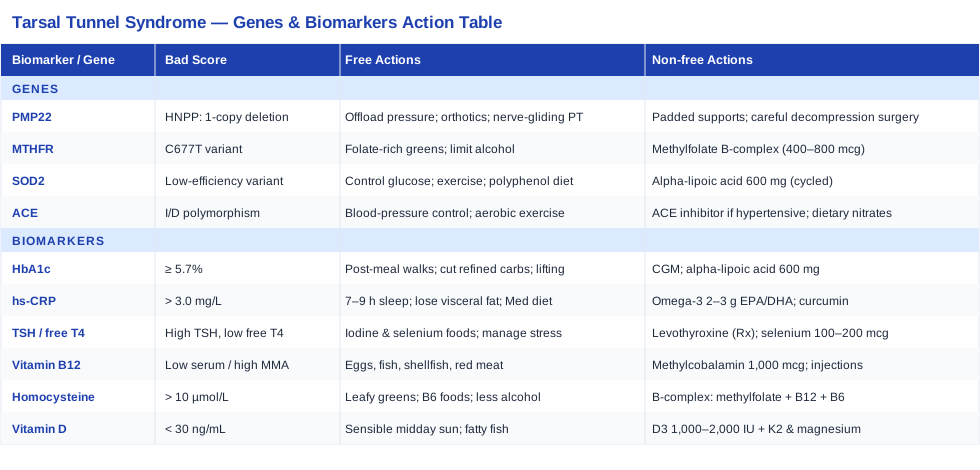
The 6 Biomarkers Worth Tracking For A Compressed Nerve
The tarsal tunnel is a fixed, narrow space. Anything that makes the tissues inside it swell, or makes the nerve slower to heal, tightens that space. That is why clinicians who think carefully about neuropathy — the mindset popularized by people like Peter Attia, Thomas Dayspring, and Allan Sniderman for cardiometabolic risk — look past the ankle to the bloodwork. Below are the six markers with the best combination of relevance, affordability, and things you can actually change. For each, you get why it matters, how to measure it, and two plans: one without supplements, one with.
1. HbA1c And Fasting Glucose
High blood sugar is the single most established driver of peripheral nerve damage in the world. Even in the "pre-diabetic" range, glucose that runs high glycates proteins, feeds oxidative stress, and starves the tiny vessels (the vasa nervorum) that supply the nerve. A nerve already pinched in the tarsal tunnel copes far worse when its blood supply and repair machinery are impaired. HbA1c reflects your average glucose over roughly three months, which makes it the most honest single number for nerve risk.
How to measure it
A standard blood draw. HbA1c usually runs $10–$40 out of pocket; a fasting glucose is often bundled in a basic metabolic panel for a similar price. A fasting insulin (roughly $20–$50) adds early insight, because insulin rises years before glucose does. Aim to keep HbA1c comfortably under 5.7%, and ideally in the low-to-mid 5s.
If the score is bad, the plan without supplements
Diet and movement move HbA1c more reliably than any pill. Cut refined carbohydrate and sugar-sweetened drinks first; they cause the sharpest glucose spikes. Build meals around protein, non-starchy vegetables, and whole-food fats, and eat carbohydrate after protein and fiber rather than first. The highest-yield habit is a 10–15 minute walk after each meal, which blunts the post-meal glucose rise almost immediately. Add two resistance-training sessions weekly, because muscle is your largest glucose sink. Frequency: daily walks, lifting twice weekly, reassess HbA1c in about 3 months. Side effects: essentially none, beyond needing sensible footwear given your foot.
If the score is bad, the plan with supplements or equipment
A continuous glucose monitor (CGM), often $50–$100 per month, is the most useful "equipment" purchase here — it shows you which of your own meals spike you, which no article can predict. On supplements, alpha-lipoic acid has the most direct nerve evidence: a meta-analysis found it improves diabetic neuropathy symptoms, likely by lowering oxidative stress, at this review of oral alpha-lipoic acid. Typical oral dose is 600 mg/day, taken on an empty stomach; consider cycling 8–12 weeks on, then reassessing, rather than taking it indefinitely. Side effects are usually mild (nausea, occasional heartburn), but it can lower blood sugar, so watch for that if you take glucose-lowering medication. Discuss any of this with your clinician before starting.
2. High-Sensitivity CRP (hs-CRP)
High-sensitivity CRP is a general marker of systemic inflammation. It does not tell you where the fire is, but a chronically elevated hs-CRP means your body is running "hot," and inflamed connective tissue swells — exactly the wrong thing inside a fixed tunnel. Inflammation also sensitizes nerves, lowering the threshold at which a compressed nerve fires pain. Tracking hs-CRP gives you a running score of how much your lifestyle is either calming or stoking that background inflammation.
How to measure it
A simple blood test, typically $15–$50. Draw it when you are well — a cold, injury, or recent hard workout can temporarily spike it, so avoid testing right after those. A value under 1.0 mg/L is considered low risk; over 3.0 mg/L suggests meaningful inflammation worth addressing.
If the score is bad, the plan without supplements
Sleep is the most underrated anti-inflammatory: aim for 7–9 hours, consistently. Prioritize losing visceral fat if you carry it, since abdominal fat is a CRP factory. Replace processed foods and industrial seed-oil–heavy fried foods with a broadly Mediterranean pattern (olive oil, fish, vegetables, legumes). Treat any hidden sources of inflammation — gum disease, untreated sleep apnea, smoking. Frequency: these are daily habits; recheck hs-CRP in 8–12 weeks. Side effects: none.
If the score is bad, the plan with supplements or equipment
Omega-3 fish oil (roughly 2–3 g combined EPA/DHA daily, taken with food) is the best-supported supplement for lowering inflammatory tone; choose a reputable, third-party-tested brand. Cycling is not required, but recheck at 12 weeks. Side effects: fishy aftertaste, mild GI upset, and a modest blood-thinning effect — flag it if you take anticoagulants or face surgery. Curcumin (with piperine or in a high-absorption form) is a reasonable add-on but has weaker evidence; take with food, and note it can also thin the blood slightly. As "equipment," a consistent sleep and step-count routine tracked on any basic wearable does more for CRP than most bottles.
3. Thyroid Panel: TSH And Free T4
This is the biomarker most specific to tarsal tunnel syndrome. In hypothyroidism, the body deposits mucin-like substances (glycosaminoglycans) in soft tissues, causing a subtle, non-pitting swelling called myxedema. Inside the tarsal tunnel, that swelling squeezes the nerve directly. A classic clinical study documented tarsal tunnel syndrome occurring alongside carpal tunnel syndrome in hypothyroid patients — see tarsal tunnel syndrome in hypothyroidism. More recent genetic (Mendelian randomization) work also supports a causal link between thyroid dysfunction and tunnel-type nerve compression. If your thyroid is underactive, treating it can relieve the tunnel without touching the ankle at all.
How to measure it
Ask for TSH plus free T4; adding free T3 and thyroid antibodies (TPO) gives a fuller picture. A basic panel runs $20–$60. A high TSH with a low or low-normal free T4 points to hypothyroidism. Because subclinical cases matter here, do not settle for "your TSH is technically normal" if you have unexplained swelling and neuropathy — discuss the full pattern.
If the score is bad, the plan without supplements
True hypothyroidism is a medical diagnosis, not a lifestyle fix, so the first move is a clinician, not a supplement. That said, you can support thyroid function: ensure adequate dietary iodine and selenium (from fish, eggs, and a couple of Brazil nuts), manage stress and sleep (both affect thyroid hormone conversion), and avoid crash dieting, which suppresses thyroid output. Frequency: retest 6–8 weeks after any change. Side effects: none for these general measures.
If the score is bad, the plan with supplements or equipment
If you are diagnosed hypothyroid, levothyroxine (prescription thyroid hormone) is the treatment, dosed and titrated by your doctor with follow-up TSH testing — this is exactly the case where the "supplement" is a regulated medication and self-experimentation is a bad idea. Over-replacement causes palpitations, anxiety, and bone loss, so it must be monitored. If antibodies show autoimmune (Hashimoto's) thyroiditis, adequate selenium (about 100–200 mcg/day, not more; excess is toxic) may modestly lower antibody levels. Cycle selenium only under guidance and do not exceed the upper limit.
4. Vitamin B12 (With MMA)
Vitamin B12 is essential for the myelin sheath that insulates nerves and for nerve repair. Deficiency produces a neuropathy in its own right, and it also leaves any compressed nerve less able to bounce back. This matters especially if you take metformin (which depletes B12), follow a plant-based diet, are over 50, or have absorption issues. A systematic review confirms the neurological toll of low B12 in the review of the neurological sequelae of B12 deficiency.
How to measure it
Serum B12 costs $20–$50. Because serum levels can look "normal" while tissue stores are low, add methylmalonic acid (MMA), roughly $50–$100 — elevated MMA is a more sensitive early flag for functional deficiency. Aim for serum B12 in the upper half of the range, not merely above the deficiency cutoff.
If the score is bad, the plan without supplements
Food-first works if absorption is intact: prioritize eggs, fish (salmon, sardines, trout), shellfish (clams are exceptionally rich), and lean red meat. If you are vegetarian or vegan, understand that reliable dietary B12 is essentially impossible without fortified foods or a supplement, so food-only is not a real option there. Frequency: recheck in 8–12 weeks. Side effects: none.
If the score is bad, the plan with supplements or equipment
Oral B12 works for most people and is as effective as injections for correcting deficiency, per a meta-analysis of B12 supplementation in diabetic neuropathy. A common regimen is 1,000 mcg/day of methylcobalamin orally for 8–12 weeks, then a lower maintenance dose or a few times weekly once levels normalize (cycling down rather than stopping). If you have proven absorption failure (pernicious anemia, post-bariatric), your doctor may use intramuscular injections. Side effects of B12 are minimal because excess is excreted, though very high doses can rarely cause acne-like breakouts. Recheck B12 and MMA after the loading period.
5. Homocysteine
Homocysteine is an amino acid that your body normally clears using B12, folate, and B6. When those are low — or when a gene like MTHFR slows the pathway — homocysteine climbs. Elevated homocysteine is toxic to the vascular lining and is independently associated with peripheral neuropathy, meaning it can worsen the nerve's blood supply and resilience. It is also a useful "downstream" check on whether your B-vitamin status is truly functional, not just adequate on paper. See the overview in this discussion of homocysteine.
How to measure it
A fasting blood test, typically $30–$100. A level under about 10 µmol/L is a reasonable target; many neurology-minded clinicians prefer the single digits. It is worth testing alongside B12 and folate so you can interpret the three together.
If the score is bad, the plan without supplements
Load up on natural folate: leafy greens, legumes, asparagus, and avocado. Ensure enough B6 (poultry, fish, potatoes, bananas) and B12 (see above). Reduce alcohol, which depletes these vitamins, and quit smoking, which raises homocysteine. Frequency: daily dietary focus; recheck in 8–12 weeks. Side effects: none.
If the score is bad, the plan with supplements or equipment
A combined B-complex providing folate (ideally as methylfolate, especially if you carry an MTHFR variant), B12 (methylcobalamin), and B6 reliably lowers homocysteine. A typical approach: methylfolate 400–800 mcg, B12 500–1,000 mcg, and B6 kept modest — do not exceed roughly 10 mg/day of B6 long term, as chronic high-dose B6 can itself cause neuropathy (an important caution in a nerve condition). Take daily for 12 weeks, then recheck and drop to maintenance. Side effects are otherwise minimal. This is the biomarker where the gene and the number meet, which is why the MTHFR section below matters.
6. Vitamin D (25-Hydroxyvitamin D)
Vitamin D acts on nerve tissue and modulates inflammation, and deficiency is repeatedly linked to painful peripheral neuropathy. Low vitamin D associates with higher inflammatory cytokines in painful diabetic neuropathy, and a recent meta-analysis of randomized trials found supplementation can improve symptoms — see the meta-analysis of vitamin D for painful diabetic neuropathy. Given how common deficiency is, this is a cheap, high-yield marker to check.
How to measure it
A 25-hydroxyvitamin D blood test runs $30–$70. Aim for a level around 30–50 ng/mL (75–125 nmol/L). Below 20 ng/mL is frank deficiency; the 20–30 range is often "insufficient."
If the score is bad, the plan without supplements
Sensible sun exposure is the natural route — short, regular midday exposure to arms and legs (without burning) drives skin synthesis. Diet contributes modestly: fatty fish, egg yolks, and fortified foods. In many climates and for anyone who works indoors, sunlight alone will not be enough in winter, so be realistic. Frequency: ongoing; recheck at the end of a season. Side effects: sunburn if overdone, so keep it brief.
If the score is bad, the plan with supplements or equipment
Vitamin D3 is inexpensive and effective. A common maintenance dose is 1,000–2,000 IU/day; frank deficiency may warrant a higher clinician-guided loading dose. Take it with a fatty meal for absorption, and pair with vitamin K2 and adequate magnesium, which help direct calcium correctly. Retest after about 3 months and adjust — vitamin D is fat-soluble and accumulates, so more is not better. Side effects are rare at sensible doses but excess can raise calcium; do not megadose without monitoring.
The 4 Genes That Can Make A Nerve Easy To Pinch
Biomarkers tell you about your current terrain; genes tell you about your baseline tendencies. You cannot rewrite your DNA, but knowing your variants lets you compensate intelligently — and in one case here, it explains why an otherwise minor tunnel produces major symptoms. Consumer testing (the kind analyzed by figures like Ali Torkamani in genomics, or discussed by Gary Brecka in the methylation space) can surface several of these, though clinical confirmation matters for the important ones.
PMP22 — The Gene That Makes Nerves Fragile Under Pressure
This is the standout. A deletion of one copy of PMP22 causes hereditary neuropathy with liability to pressure palsies (HNPP), an autosomal dominant condition in which nerves are abnormally vulnerable to compression. People with HNPP develop palsies and entrapments — carpal tunnel, peroneal palsy, and yes, tunnels around the ankle — from pressure that would not bother anyone else. If your tarsal tunnel symptoms are recurrent, appear on both sides, or came on after trivial pressure, HNPP is worth ruling out. The authoritative clinical reference is GeneReviews on hereditary neuropathy with liability to pressure palsies.
If the gene is bad, the plan without supplements
You manage HNPP mechanically: aggressively remove pressure and repetitive strain from vulnerable nerves. That means avoiding prolonged ankle crossing, kneeling, or tight footwear; using cushioning and orthotics to offload the inner ankle; and building ergonomic habits for all limbs, not just the foot. Physical therapy focused on nerve-gliding and posture, and prompt attention to any new numbness, prevents small injuries from compounding. There is no cycling here — it is a permanent adjustment of how you load your nerves. No side effects, just discipline.
If the gene is bad, the plan with supplements or equipment
No supplement fixes PMP22, and you should be skeptical of anything sold as doing so. The useful "equipment" is protective: well-fitted orthotics, padded ankle supports, elbow and knee pads if your work or hobbies compress those nerves, and a properly set-up workstation. Keep the surrounding biomarkers optimal (B12, vitamin D, glucose) so that when a nerve is compressed, it has every resource to recover. In symptomatic entrapment, decompression surgery can help, but a genetics-aware surgeon should weigh it carefully, since HNPP nerves are delicate. Confirm the diagnosis with genetic testing before making big decisions.
MTHFR — The Methylation Bottleneck
The MTHFR C677T variant reduces the efficiency of the enzyme that helps clear homocysteine, so carriers tend toward higher homocysteine and can respond differently to plain folic acid. Meta-analytic work links the C677T polymorphism to diabetic peripheral neuropathy risk, and a randomized trial found that the variant influences how nerves respond to folate supplementation — see this trial of folic acid and MTHFR C677T in polyneuropathy. In other words, this gene tells you how to dose your B vitamins.
If the gene is bad, the plan without supplements
Emphasize naturally folate-rich foods (leafy greens, legumes, asparagus) that supply folate in usable forms, and keep B12 and B6 intake solid from food. Limit alcohol, which taxes the same pathway. Track your homocysteine (biomarker #5) as your real-world readout of whether the strategy is working. Frequency: ongoing dietary pattern; recheck homocysteine every few months. Side effects: none.
If the gene is bad, the plan with supplements or equipment
Choose methylfolate (the pre-converted form) over ordinary folic acid, since carriers convert folic acid less efficiently. A daily B-complex with methylfolate (400–800 mcg), methylcobalamin, and modest B6 typically normalizes homocysteine within 8–12 weeks; then cycle down to maintenance. Keep B6 under ~10 mg/day long term to avoid B6-induced neuropathy. Some people feel over-stimulated on high-dose methyl donors, so start low. Let your homocysteine number, not the label, guide the dose.
SOD2 — Handling Oxidative Stress
SOD2 encodes a mitochondrial antioxidant enzyme (manganese superoxide dismutase) that neutralizes free radicals inside nerve cells. Certain SOD2 variants are among the genetic factors studied in the development of diabetic and other peripheral neuropathies, as summarized in this overview of genetic variants influencing diabetic neuropathy. If you carry a less efficient variant, your nerves may tolerate metabolic stress less well — but be clear that this evidence is still early and associative, not something to act on dramatically.
If the gene is bad, the plan without supplements
Reduce the oxidative load your mitochondria have to handle: keep blood glucose controlled (see HbA1c), exercise regularly (which up-regulates your own antioxidant defenses far more powerfully than pills), sleep well, and eat a colorful, polyphenol-rich diet — berries, herbs, greens, olive oil. Frequency: daily habits. Side effects: none.
If the gene is bad, the plan with supplements or equipment
Alpha-lipoic acid (600 mg/day, cycled 8–12 weeks) is the most reasonable targeted antioxidant given its neuropathy evidence; watch for mild GI upset and possible blood-sugar lowering. Do not overdo isolated high-dose antioxidants (like large-dose vitamin E or C), because blunting all oxidative signaling can paradoxically reduce the training adaptations that protect nerves. Modest and food-first beats megadosing here.
ACE — Blood Flow To The Nerve
The ACE gene affects the renin-angiotensin system, which governs blood-vessel tone and, indirectly, microcirculation to nerves. Its insertion/deletion polymorphism has been studied alongside MTHFR for effects on peripheral neuropathy progression. The link is modest and the evidence mixed, so treat this as a minor, supportive marker rather than a driver — but good vascular habits help both your nerves and everything else.
If the gene is bad, the plan without supplements
Protect your microvasculature the same way you protect your heart: keep blood pressure in range, stay active, don't smoke, and follow a Mediterranean-style diet. Regular aerobic exercise improves nerve blood flow directly. Frequency: daily/weekly habits. Side effects: none.
If the gene is bad, the plan with supplements or equipment
There is no nerve-specific supplement to recommend for ACE variants. If you have high blood pressure, standard treatment (sometimes with an ACE inhibitor, a decision for your doctor) protects the small vessels feeding your nerves. Dietary nitrate sources (beets, leafy greens) modestly support blood flow and are harmless. Focus your effort on the higher-yield biomarkers above.
A Pain-Science Reframe That Challenges "Just Rest It"
Andrew Huberman's episode on understanding and controlling pain pulls together decades of research on how the nervous system actually generates the sensation we call pain — and much of it contradicts the passive, rest-only advice many people with tarsal tunnel syndrome receive. Because a compressed nerve produces both a real signal and a learned, amplifiable pain response, understanding the mechanism gives you levers most footcare advice ignores. Here are the ten most useful ideas, one per point.
1. Pain Is An Interpretation, Not A Meter Reading
Pain is produced by the brain based on danger signals, not a direct readout of tissue damage. Two people with the same nerve compression can feel wildly different pain because their nervous systems weight the signal differently. This is empowering: some of your symptom intensity is modifiable by changing the inputs and the interpretation.
2. Nerves Have Their Own Timeline
Nerve tissue heals slowly compared with skin or muscle. Expecting a compressed nerve to feel better in days sets you up for panic and over-treatment. Thinking in months, and tracking slow trends rather than daily noise, keeps you making calm decisions.
3. Chronic Pain Can Become A Habit The Brain Learns
When pain persists, the nervous system can become sensitized, firing pain with less and less provocation. This "central sensitization" is why some tarsal tunnel pain outlasts the original mechanical problem — and why calming the whole nervous system matters, not just the ankle.
4. Movement Is Usually Medicine, Not Threat
Gentle, graded movement and nerve gliding improve blood flow and reduce sensitization, whereas total immobilization can worsen stiffness and fear. The goal is finding the load your nerve tolerates and slowly expanding it, not freezing in place.
5. Inflammation Turns Up The Volume
Systemic inflammation lowers the firing threshold of nerves. This is the direct bridge to your hs-CRP, glucose, and diet work — reducing background inflammation literally turns down pain gain.
6. Sleep Is A Pain Treatment
Poor sleep amplifies next-day pain sensitivity measurably. Protecting sleep is one of the few interventions that helps both nerve repair and pain perception at the same time, for free.
7. Your Attention Changes The Signal
Where you direct attention modulates pain circuits. Practices that redirect focus — breathing work, meditation, absorbing activity — are not "just distraction"; they engage real top-down pain-control pathways.
8. Expectation And Belief Shape Outcomes
The brain's predictions about pain influence what you feel; this is the placebo (and nocebo) effect at work. A realistic, hopeful frame is not naïve — it measurably improves outcomes.
9. Address The Whole System, Not Just The Site
Because pain is a whole-nervous-system phenomenon, whole-body inputs — nutrition, stress, blood sugar, movement — all feed the tarsal tunnel. This is exactly why biomarkers belong in a foot-pain conversation.
10. Small Consistent Inputs Beat Heroic Fixes
Nervous systems change through repetition. Daily walks, consistent sleep, steady biomarker work, and regular gentle mobility outperform sporadic aggressive interventions. The unglamorous plan is the one that works.
Hands-On And Mind-Body Approaches Worth Considering
Alongside biomarkers and genetics, several non-drug therapies have genuine human evidence for nerve-compression and neuropathy symptoms. Most high-quality trials are in carpal tunnel syndrome or diabetic neuropathy rather than tarsal tunnel specifically, so treat these as reasonable, low-risk options to trial rather than proven cures for this exact condition.
Low-Level Laser Therapy (Photobiomodulation)
Low-level laser therapy applies low-intensity light to tissue to reduce inflammation and support nerve healing, which is mechanistically relevant to a swollen, compressed nerve. It is painless and non-invasive, and it targets exactly the local inflammation that tightens a tunnel.
A meta-analysis of randomized trials in the closely related carpal tunnel syndrome found low-level laser improved pain and function over the short term — see the meta-analysis of low-level laser for carpal tunnel syndrome, with a more cautious Cochrane-style review noting the evidence is promising but heterogeneous.
Realistically, ask a physical therapist or podiatrist whether they offer photobiomodulation and can aim it at the inner ankle. Expect a course of several sessions over weeks, and judge it by your own symptom trend. Evidence for the tarsal tunnel specifically is limited by extrapolation from the wrist, so set modest expectations and stop if there is no benefit.
Yoga
Yoga combines stretching, strengthening, and nervous-system down-regulation, all relevant to a pinched nerve and a sensitized pain system. Postures that mobilize the ankle and calf may reduce local tension around the tunnel, while the breathing and relaxation components address central sensitization.
A well-known randomized trial in JAMA found a yoga-based program improved grip strength and reduced pain in carpal tunnel syndrome better than splinting — see the Garfinkel yoga-based intervention trial. The upper-limb specifics don't transfer directly, but the principle of guided mobility plus relaxation does.
Apply it by working with an instructor who can adapt poses to your foot, emphasizing gentle calf and ankle mobility and avoiding positions that compress the inner ankle. Two sessions weekly is a sensible start. Stop any pose that reproduces sharp nerve pain, and progress slowly.
Tai Chi
Tai chi is slow, weight-shifting movement that trains balance and lower-limb control — valuable when foot numbness threatens stability. It also modestly improves glucose control, which ties back to your HbA1c work.
A systematic review with meta-analysis found tai chi improved postural control in people with peripheral neuropathy, and other trials reported better neuropathic symptoms and nerve function — see the meta-analysis of tai chi on postural control in peripheral neuropathy. The reviewers note more high-quality trials are still needed.
To apply it, join a beginner class or follow a structured program 2–3 times weekly, focusing on stable stances rather than deep, ankle-straining postures. It is very low risk; the main caution is doing it near support if your balance is already impaired by numbness.
Massage And Manual Therapy
Targeted soft-tissue and neurodynamic (nerve-gliding) techniques aim to reduce adhesions and improve the nerve's ability to slide through the tunnel. For an entrapment condition, restoring that glide is directly on-mechanism.
Randomized trials in carpal tunnel syndrome support manual therapy and nerve-gliding techniques for symptom relief — for example, this comparison of manual therapy techniques and a trial of ischemic compression therapy. Again, the direct tarsal evidence is thinner.
Seek a physical therapist experienced in the lower limb who can perform tibial-nerve gliding and calf/plantar soft-tissue work, and teach you a home routine. Keep pressure gentle over the nerve itself; the aim is mobilization, not aggressive digging, which can irritate a sensitized nerve.
Mindfulness Meditation / MBSR
Mindfulness-based stress reduction trains a different relationship with pain, engaging the top-down control pathways discussed earlier. It does not shrink the tunnel, but it can lower the suffering and the sensitization that make chronic nerve pain so draining.
A systematic review and meta-analysis found mindfulness meditation produces small improvements in chronic pain and clearer benefits for depression and quality of life — see the meta-analysis of mindfulness for chronic pain. The pain effect is modest and the evidence quality mixed, which is worth stating plainly.
Practically, try a structured 8-week MBSR course or a reputable app, aiming for 10–20 minutes most days. It pairs naturally with the sleep and stress work that also lowers your inflammatory markers. There is no downside beyond the time investment.
Conclusion
Tarsal tunnel syndrome feels local, but it rarely lives alone. The same blood sugar, thyroid, inflammation, and B-vitamin status that show up in a simple lab panel help decide whether your posterior tibial nerve stays irritated or gets a real chance to heal — and for a minority of people, a gene like PMP22 explains why the nerve was fragile in the first place. Knowing your numbers turns a vague "bad foot" into a short list of specific, fixable levers.
None of this is a promise of a cure, and the honest evidence is often borrowed from carpal tunnel and diabetic neuropathy research. But the direction is clear: control glucose and inflammation, correct the vitamin gaps, sort out the thyroid, keep the nerve moving and unpressured, and calm the nervous system that amplifies the pain. Each one is a realistic, low-risk step, and together they add up.
The smart next move is small. Pick one thing this week — order a basic panel with HbA1c, hs-CRP, TSH, B12, homocysteine, and vitamin D; start the after-meal walks; or book a physical therapist who knows nerve gliding. Track your symptoms honestly over the coming months, review the results with a qualified clinician, and let your own data, not guesswork, guide what you do next.
Neurological Endocrine & Metabolic
Neurological: Nerve Conditions
Endocrine & Metabolic: Diabetes & Blood Sugar Thyroid Conditions