This article contains AI generated content.
Tibial Collateral Ligament Enthesopathy: 6 Genes and 7 Biomarkers to Track
Introduction
If you have been dealing with pain along the inner side of your knee, right where the tibial collateral ligament attaches to bone, you have probably already tried the standard playbook. Rest, ice, a brace, maybe some physical therapy, perhaps an anti-inflammatory. Some of it helped a little. None of it fully explained why the pain keeps returning, or why it flared up in the first place when nothing seemed to change in your training or your daily routine.
That gap between generic advice and your actual experience is not a coincidence. Enthesopathy, the irritation and degeneration of the spot where a ligament fuses into bone, is not a single uniform problem. It is the visible endpoint of several different processes: how your connective tissue is built at a structural level, how efficiently it repairs itself, how much background inflammation your body is carrying, and what raw materials are actually available for it to rebuild with. Two people with an identical MRI finding can have completely different underlying reasons for it, and completely different paths to feeling better.
This article takes a more granular approach. Instead of repeating "strengthen the surrounding muscles and modify your activity," it looks at the genetic variants that shape collagen quality and tissue repair capacity, and at the specific bloodwork that reflects whether your body currently has what it needs to heal a stressed enthesis. Neither of these replaces a proper orthopedic or physical therapy evaluation, but both can sharpen the questions you bring to that evaluation and the decisions you make between appointments.
None of this is about finding a single fix or a miracle supplement. It is about narrowing down which of several plausible mechanisms is actually relevant to your case, so that the changes you make are targeted rather than scattershot. Better information, applied patiently, tends to produce better decisions. The sections ahead walk through the genetics that most consistently show up in human ligament and tendon research, the bloodwork worth tracking over time, a set of findings from a widely discussed podcast conversation that pushes back on some standard injury advice, and a short review of complementary approaches with real supporting evidence.
Summary
Some knees seem built to shrug off years of running, pivoting, and hard training, while others develop stubborn inner-knee pain from far less. Part of that difference is written into genes that shape collagen structure, tissue remodeling, and blood vessel supply at the enthesis, the exact spot where the tibial collateral ligament meets bone. This article walks through six of the best-studied variants, from COL5A1 and COL1A1 to MMP3, TNC, GDF5, and VEGFA, explaining what each one may mean for you and, more importantly, what you can actually do about it, with and without supplements.
Genes only tell part of the story, though, since they describe risk and tendency, not your current physiological state. That is where a focused set of bloodwork comes in: seven biomarkers, from vitamin D and inflammatory markers to iron status and growth factors, that reflect whether your body currently has the raw materials and the internal environment to repair a stressed ligament attachment. You will also find a summary of a candid podcast conversation with a tendon physiologist that challenges the standard rest-and-ice approach to connective tissue injuries, plus a review of complementary therapies with genuine supporting evidence for knee-related pain. By the end, you should have a much clearer sense of which levers are worth pulling first.
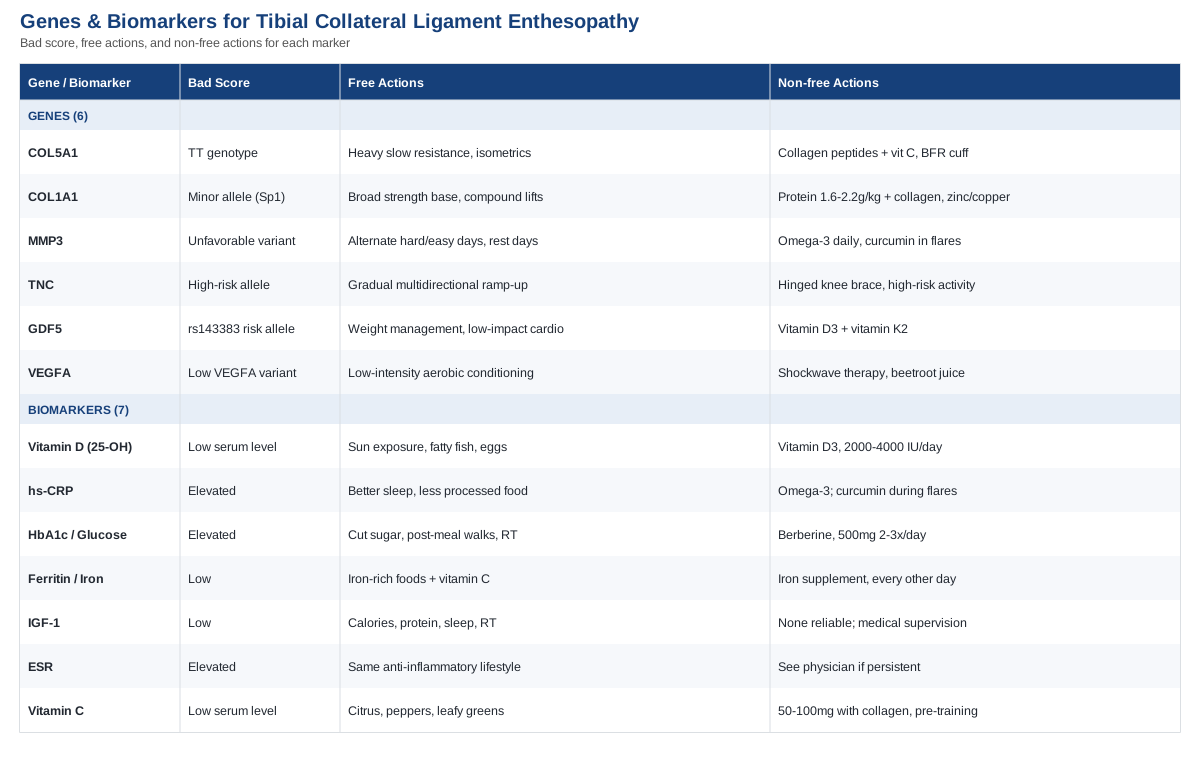
6 Genes Linked to Tibial Collateral Ligament Enthesopathy, and How to Work With Each One
Connective tissue research has moved fast over the last two decades, largely thanks to sports genetics cohorts in South Africa, Australia, and Europe that compared injured athletes against uninjured controls. Researchers such as Ali Torkamani, whose work at Scripps Research has focused on translating genomic data into practical risk assessments, and Gary Brecka, known for popularizing accessible interpretation of methylation and nutrient-metabolism genes, have helped push this kind of information out of academic journals and into a format regular people can act on. The caveat that matters most, though, is that almost none of these variants have been studied specifically in the tibial collateral ligament. The evidence comes from Achilles tendons, ACL ruptures, and general tendon-ligament injury cohorts. The biology of collagen and enthesis remodeling is shared across these tissues, which is why the findings are still relevant, but you should treat this as informed extrapolation rather than a condition-specific verdict.
A note before you dive in: if you have not run a genetic panel before, a raw data file from a consumer testing service, interpreted through a specialized tool that reports on sports and connective tissue variants, is enough to check every gene below. You do not need a clinical genetic test for any of this.
COL5A1: the master regulator of collagen fiber assembly
Type V collagen is a minor component of tendon and ligament tissue by volume, but it plays an outsized role in controlling how thick the surrounding type I collagen fibrils are allowed to grow. Less type V collagen activity generally means thicker, less densely packed fibrils, which several studies associate with more compliant, more injury-prone tissue.
The most studied marker here is rs12722 in the COL5A1 gene. A meta-analysis pooling data from Caucasian cohorts found the TT genotype was associated with a meaningfully higher risk of tendon and ligament injury compared to the CC genotype, which appeared somewhat protective, likely because it produces more type V collagen and finer, better-organized fibrils (COL5A1 gene polymorphisms and tendon-ligament injury risk meta-analysis).
If the gene is unfavorable, the plan without supplements
Since the issue here is fiber organization rather than raw material shortage, the most evidence-backed lever is mechanical: progressive, slow, heavy loading of the ligament and surrounding musculature. Isometric holds at long muscle lengths, followed by slow eccentric and then heavy slow resistance training, prompt tenocytes and enthesis fibroblasts to lay down better-organized collagen over time. A realistic cadence is three sessions per week, with each session built around one or two exercises taken to a challenging but controlled tempo, sustained for at least twelve weeks before reassessing, since collagen remodeling is measured in months, not weeks. There are no side effects beyond the normal risk of overloading an already irritated enthesis, which is why starting conservatively and progressing slowly matters more than usual for this genotype.
If the gene is unfavorable, the plan with supplements or equipment
Fifteen to thirty grams of hydrolyzed collagen peptides paired with roughly fifty milligrams of vitamin C, taken about an hour before the loading session, is the combination tested in tendon research and the one with the most plausible mechanism for a fiber-organization issue, since the amino acid pulse coincides with mechanical loading. A blood flow restriction cuff during lighter rehab sessions can also let you generate a training stimulus at lower absolute loads, which is useful early on when the enthesis is still irritable. Cycle the collagen and vitamin C protocol around training days only, five to six days a week, and reassess after three months. Side effects are minimal; some people notice mild digestive upset from a large collagen dose taken on an empty stomach, easily solved by taking it with a small amount of food.
COL1A1: the structural backbone gene
Type I collagen makes up the bulk of ligament and tendon tissue. The Sp1 binding site polymorphism, rs1800012, sits in a regulatory region that controls how much of the two collagen chains get produced relative to each other. The minor allele has been linked in multiple cohorts to an altered collagen chain ratio and a higher risk of tendon and ligament injury, based on a meta-analysis of sports-related soft tissue injuries (COL1A1 Sp1 polymorphism and tendon-ligament injury meta-analysis).
If the gene is unfavorable, the plan without supplements
Because this variant affects overall structural protein output rather than fiber shape specifically, general tissue-loading tolerance matters more than any single exercise. Building a broad base of strength across the quadriceps, hamstrings, and hip stabilizers reduces the mechanical demand placed directly on the ligament during daily movement and sport. Two to three resistance sessions per week focused on compound lower-body movements, done consistently across a full year rather than in short bursts, is the realistic target. There is no supplement-free way to directly increase type I collagen output, so this genotype is one where consistent load management does most of the practical work.
If the gene is unfavorable, the plan with supplements or equipment
Adequate dietary protein, generally 1.6 to 2.2 grams per kilogram of body weight daily, gives the body the raw amino acids this gene's downstream machinery needs; a collagen-specific peptide dose on top of that, taken three to five times weekly around training, is a reasonable add-on rather than a replacement for total protein intake. Some people also track serum zinc and copper, both cofactors in collagen cross-linking, since deficiency in either can compound a structural gene disadvantage. Standard multivitamin-level dosing is enough; there is no benefit to megadosing either mineral, and doing so can cause gastrointestinal side effects or, with excess zinc over long periods, copper deficiency.
MMP3: the remodeling and clearance enzyme
Matrix metalloproteinase 3 breaks down damaged collagen and other extracellular matrix proteins as part of normal tissue turnover. Certain MMP3 variants shift this balance toward either too much breakdown, which can prevent an enthesis from ever fully consolidating after microtrauma, or too little, which allows disorganized tissue to accumulate. A meta-analysis of tendon-ligament injury studies found specific MMP3 polymorphisms associated with altered injury risk, and separate research found this gene interacts with COL5A1, meaning the combination of both genotypes may matter more than either alone (MMP3 gene polymorphisms and tendon-ligament injury meta-analysis).
If the gene is unfavorable, the plan without supplements
Since this gene governs the clearance and remodeling phase, the most useful non-supplement lever is managing the total volume and frequency of loading so the tissue gets real recovery windows between bouts of stress. Alternating harder and easier training days, and building in at least one full rest day for the joint between loading sessions, gives the remodeling enzymes time to work through the cycle rather than layering new microtrauma on unresolved damage. This matters more for this gene than almost any other on this list, because an unfavorable variant essentially means the cleanup process is already working at a disadvantage.
If the gene is unfavorable, the plan with supplements or equipment
Omega-3 fatty acids, in the range of two to three grams of combined EPA and DHA daily, have reasonable evidence for modulating the inflammatory signaling that interacts with metalloproteinase activity, and are a sensible daily addition rather than something to cycle on and off. Curcumin with a bioavailability enhancer, taken during flare-ups rather than continuously, is a second option some people use to blunt excess inflammatory drive; a common approach is two to four weeks on during a symptomatic period, then stopping once symptoms settle, since long-term continuous use has less supporting data and can cause mild gastrointestinal irritation or, at high doses, interact with blood-thinning medication.
TNC: the tenascin-C elasticity gene
Tenascin-C is a structural glycoprotein that gives tendons and ligaments part of their elastic recoil. The original discovery study on this gene found that a repeat-length polymorphism was associated with roughly a six-fold difference in Achilles tendon injury risk between the highest and lowest risk genotypes, one of the largest effect sizes reported in this entire field of research (Tenascin-C gene polymorphism and Achilles tendon injuries).
If the gene is unfavorable, the plan without supplements
Because tenascin-C affects elastic behavior under load, controlling the rate of loading matters as much as the total amount. Ballistic, sudden-direction-change movements are the highest-risk category for this genotype, so a gradual on-ramp before returning to cutting, pivoting, or lateral sports, built around three to four weeks of controlled multidirectional drills before full-intensity play resumes, is a sensible non-supplement adjustment. Ankle and hip mobility work also reduces the sudden strain transmitted to the knee's medial structures during quick direction changes, indirectly protecting a less elastic enthesis.
If the gene is unfavorable, the plan with supplements or equipment
There is no supplement shown to directly increase tenascin-C expression in humans, so the most relevant equipment-based option is a hinged knee brace during high-risk activity, which mechanically limits the valgus and rotational stress the medial ligament complex would otherwise have to absorb elastically. Use it during the specific higher-risk activity rather than continuously, since permanent bracing can lead to some deconditioning of the stabilizing musculature over months of exclusive reliance on it.
GDF5: the joint and enthesis development gene
Growth differentiation factor 5 is involved in forming synovial joints, ligaments, tendons, and cartilage during development, and continues to influence joint tissue quality into adulthood. The rs143383 variant in the gene's regulatory region reduces GDF5 expression and has been linked in case-control research to osteoarthritis risk and other musculoskeletal phenotypes, with evidence that its effect can interact with body weight and other environmental factors (GDF5 gene polymorphism, environmental interaction, and knee osteoarthritis risk).
If the gene is unfavorable, the plan without supplements
Because this gene's downside is most pronounced when combined with excess joint loading, body composition management is the single highest-leverage non-supplement intervention. Keeping body weight in a favorable range measurably reduces the compressive and shear forces crossing the medial knee compartment with every step, which matters disproportionately for someone whose baseline joint tissue quality is already genetically reduced. Low-impact conditioning, cycling or swimming two to three times weekly, maintains fitness without adding the repetitive impact load that a running-based routine would.
If the gene is unfavorable, the plan with supplements or equipment
Given GDF5's role in cartilage and joint tissue maintenance, some people track and support vitamin D and vitamin K2 status, since both are involved in joint tissue mineralization and are common co-deficiencies. A typical approach is 2,000 to 4,000 IU of vitamin D3 daily with 100 micrograms of K2, adjusted based on a follow-up blood test after two to three months rather than dosed indefinitely without checking levels. There is no direct supplement replacement for GDF5 signaling itself; anyone considering higher-intensity interventions such as regenerative injections should discuss that specifically with an orthopedic specialist rather than self-directing it.
VEGFA: the vascular supply gene
Entheses are relatively low in blood vessel density compared to muscle, which is part of why they heal slowly. Vascular endothelial growth factor A drives new blood vessel formation, and variants in the VEGFA gene that reduce its expression have been associated with higher tendon and ligament injury risk across a systematic review and meta-analysis, likely by limiting the nutrient and repair-cell delivery available to a stressed enthesis (VEGFA gene polymorphisms and tendon-ligament injury risk meta-analysis).
If the gene is unfavorable, the plan without supplements
Low-intensity aerobic conditioning, particularly the kind that raises local blood flow to the lower leg without adding direct mechanical stress to the ligament, such as stationary cycling at a conversational pace, is a practical way to support vascularization around a poorly perfused enthesis. Three sessions per week of twenty to thirty minutes is a reasonable target, done independently from the strength-focused rehab sessions rather than replacing them.
If the gene is unfavorable, the plan with supplements or equipment
Some clinicians use extracorporeal shockwave therapy for chronic enthesopathies partly because it appears to stimulate local neovascularization; a typical protocol is one session per week for three to six weeks, delivered by a physical therapist or sports medicine physician rather than a consumer device, since improperly dosed shockwave can worsen pain in an acutely inflamed enthesis. On the supplement side, nitrate-rich foods such as beetroot juice have modest evidence for improving local blood flow through nitric oxide pathways; a common approach is a concentrated shot before rehab sessions, four to five days a week, which is low-risk though it can cause mild gastrointestinal upset or harmless red-tinted urine in some people.
7 Biomarkers Worth Tracking If You Have Tibial Collateral Ligament Enthesopathy
Genes describe tendency. Bloodwork describes your current state, which is more actionable in the short term because it changes month to month based on what you actually do. The panel below draws on the kind of biomarker prioritization championed by physicians such as Peter Attia and lipidologists like Thomas Dayspring and Allan Sniderman, who generally favor a small set of high-value, well-validated markers over broad untargeted panels.
25-hydroxyvitamin D
Vitamin D status correlates with muscle and connective tissue recovery capacity, and low levels have specifically been associated with greater muscle mass loss after ligament reconstruction surgery, suggesting a plausible role in how well the tissue around an injured ligament recovers more broadly (Vitamin D status and muscle loss after anterior cruciate ligament reconstruction).
How to measure it
A standard serum 25-hydroxyvitamin D blood test, available through most primary care providers or direct-to-consumer lab services, costs roughly twenty to fifty dollars when ordered without insurance markup.If the score is low, the plan without supplements
Fifteen to thirty minutes of midday sun exposure on bare skin several times a week, along with regular intake of fatty fish, egg yolks, and fortified dairy, can meaningfully move levels over eight to twelve weeks, though the effect is slower and more seasonally dependent than supplementation.If the score is low, the plan with supplements or equipment
2,000 to 4,000 IU of vitamin D3 daily is a common maintenance range, ideally taken with a meal containing some fat for absorption, with a follow-up blood draw after eight to twelve weeks to confirm the dose is adequate rather than excessive. Sustained very high doses without monitoring can cause hypercalcemia over time, which is why periodic retesting rather than indefinite fixed dosing is the safer approach.High-sensitivity C-reactive protein
Hs-CRP reflects systemic low-grade inflammation, and research on knee osteoarthritis has found that circulating hs-CRP levels track with local joint inflammation, suggesting it can serve as a reasonable proxy for how much background inflammatory load your joint tissue is dealing with beyond the injury site itself (Elevated hs-CRP and local inflammatory findings in osteoarthritis).
How to measure it
A high-sensitivity CRP blood test is inexpensive and widely available, typically fifteen to thirty dollars, and is often bundled into standard metabolic panels.If the score is elevated, the plan without supplements
Improving sleep consistency, reducing ultra-processed food intake, and addressing excess visceral fat through regular moderate exercise are the interventions with the broadest evidence for lowering hs-CRP, typically over a three to six month window rather than immediately.If the score is elevated, the plan with supplements or equipment
Omega-3 fatty acids at two to three grams daily and, during acute flares, a short course of curcumin with enhanced absorption for two to four weeks are reasonable additions; both should be treated as adjuncts to lifestyle change rather than the primary lever, and curcumin should be used cautiously alongside any blood-thinning medication given its mild anticoagulant effect.HbA1c and fasting glucose
Chronically elevated blood sugar accelerates the formation of advanced glycation end products, which physically stiffen collagen fibers and impair the normal sliding of collagen fibrils past one another, a mechanism directly demonstrated in tendon tissue and directly relevant to how well an enthesis can remodel under load (Advanced glycation end-products diminish tendon collagen fiber sliding).
How to measure it
HbA1c and fasting glucose are included in nearly every standard metabolic panel, usually ten to twenty-five dollars combined, and require no special preparation beyond an overnight fast for the glucose component.If the score is elevated, the plan without supplements
Reducing refined carbohydrate and added sugar intake, walking for ten to fifteen minutes after meals, and building consistent resistance training into the week are the best-supported ways to bring both markers down over a two to three month period.If the score is elevated, the plan with supplements or equipment
Berberine, at 500 milligrams two to three times daily with meals, has evidence comparable to some pharmaceutical options for improving glucose metrics, and is typically cycled for eight to twelve weeks with a break rather than used indefinitely; it can cause gastrointestinal upset and should be discussed with a physician if you are on other glucose-lowering medication due to the risk of additive effects.Ferritin and iron studies
Iron is a required cofactor for the prolyl and lysyl hydroxylase enzymes that stabilize the collagen triple helix during synthesis, a biochemical role established in classic collagen research, meaning that low iron status can directly limit how well new collagen matures at a healing enthesis (Prolyl 4-hydroxylase and its role in collagen synthesis).
How to measure it
A full iron panel including ferritin, serum iron, and transferrin saturation runs roughly thirty to sixty dollars and is best drawn in the morning, since iron levels fluctuate throughout the day.If the score is low, the plan without supplements
Increasing intake of red meat, poultry, and iron-rich plant sources paired with vitamin C at the same meal to improve absorption is the first step, along with identifying and addressing any underlying cause of iron loss such as heavy menstrual bleeding.If the score is low, the plan with supplements or equipment
An iron supplement in the 18 to 65 milligram range, taken every other day rather than daily, has been shown to improve absorption compared to daily dosing while reducing gastrointestinal side effects; retest ferritin after eight to twelve weeks rather than supplementing indefinitely, since excess iron accumulation carries its own long-term health risks and is not something to self-manage without periodic bloodwork.Insulin-like growth factor 1
IGF-1 is produced locally within tendon and ligament tissue and acts as a central signaling molecule across the phases of tissue repair, stimulating collagen synthesis and cell proliferation at the injury site, based on a recent review of its role in tendon regenerative biology (Insulin-like growth factor 1 empowering tendon regenerative therapies).
How to measure it
Serum IGF-1 is a more specialized test, typically sixty to one hundred dollars, and is more commonly ordered through a functional medicine or sports medicine practice than a standard primary care visit.If the score is low, the plan without supplements
Adequate total calorie intake, sufficient protein, quality sleep, and resistance training are the primary drivers of healthy IGF-1 levels, since chronic underfeeding or overtraining are the most common reasons this marker runs low in otherwise healthy adults.If the score is low, the plan with supplements or equipment
There is limited human evidence that any supplement reliably and safely raises IGF-1 in a way that translates to better ligament healing, so this is a marker best addressed through the fundamentals above rather than a targeted product; anyone considering growth-hormone-related therapies for this purpose should do so only under direct medical supervision given the significant risk profile involved.Erythrocyte sedimentation rate
ESR is an older, less specific inflammatory marker than hs-CRP, but it changes on a slightly different timescale and can catch a smoldering inflammatory process that a single CRP reading misses, which is why it is still often paired with CRP in a basic inflammatory workup for joint complaints.
How to measure it
ESR is a simple, inexpensive blood test, generally ten to twenty dollars, commonly ordered alongside CRP.If the score is elevated, the plan without supplements
The same anti-inflammatory lifestyle levers that improve hs-CRP, consistent sleep, regular movement, and a diet lower in processed foods, tend to bring ESR down in parallel over a similar multi-month timeframe.If the score is elevated, the plan with supplements or equipment
If ESR stays elevated despite lifestyle changes and a normal CRP, this is a signal to loop in a physician rather than self-treat further, since a persistently discordant ESR can occasionally point to something beyond simple mechanical joint inflammation.Vitamin C status
Vitamin C is the cofactor that completes the hydroxylation and cross-linking steps in collagen synthesis, and a placebo-controlled trial protocol combining hydrolyzed collagen with vitamin C timed before exercise was specifically designed around this exact mechanism for patellar tendinopathy, underscoring how directly this nutrient ties into ligament and tendon repair capacity (Hydrolyzed collagen and vitamin C protocol for patellar tendinopathy).
How to measure it
Serum ascorbic acid testing is less commonly ordered by default, usually forty to eighty dollars through a specialty or functional lab, and is most useful if your diet is low in fruits and vegetables or you smoke, both of which deplete vitamin C.If the score is low, the plan without supplements
Citrus fruit, bell peppers, and leafy greens can restore adequate levels within a few weeks for most people, since vitamin C status responds quickly to dietary intake compared to fat-soluble nutrients.If the score is low, the plan with supplements or equipment
A fifty to one hundred milligram dose taken alongside a collagen peptide serving before rehab or training sessions matches the protocol used in tendon research, five to six days a week around training; doses beyond one to two grams daily offer no added collagen-synthesis benefit and mainly raise the likelihood of gastrointestinal side effects.The Podcast Conversation That Reframes How to Think About This Injury
A conversation worth knowing about if you are dealing with a stubborn ligament or tendon issue is Tim Ferriss's interview with Dr. Keith Baar, a tendon and connective tissue physiologist at UC Davis. It is useful precisely because it challenges some of the default advice most people receive after a soft tissue injury, grounded in Baar's own laboratory research on how tendons and ligaments actually adapt. Below are ten of the most practically relevant points from that conversation.
Rest is not neutral for connective tissue
Unlike muscle, tendon and ligament tissue does not simply wait patiently during rest; prolonged unloading actively degrades its mechanical properties, meaning that the instinct to fully immobilize a sore enthesis for weeks can leave the tissue weaker than a more measured loading approach would.The anti-RICE argument
Baar argues that the classic rest, ice, compression, elevation protocol, while reasonable for acute swelling control in the first day or two, is often extended far longer than it should be, and that appropriately dosed load is a more powerful anti-inflammatory and healing signal than prolonged rest.Isometrics as a starting point, not an endpoint
Long-duration isometric holds are useful for calming an irritable enthesis and maintaining some loading stimulus early on, but Baar is clear these should be a bridge toward heavier, more dynamic loading rather than a permanent rehab strategy.Load, not just exercise selection, drives adaptation
The specific exercise matters less than whether the tissue experiences sufficient mechanical tension; this is why heavy slow resistance training and eccentric-focused protocols both show benefit, since they share the underlying loading stimulus.Collagen turnover has a narrow daily window
Baar's research suggests there is a limited daily window, roughly the hour around exercise, during which nutrient timing meaningfully influences new collagen synthesis, which is the direct basis for taking collagen and vitamin C shortly before rehab sessions rather than at an arbitrary time of day.Vitamin C without exercise does little for tendon
He emphasizes that vitamin C and collagen supplementation only appear to matter for tendon adaptation when paired with mechanical loading; taking either in isolation, without a loading stimulus nearby, appears to have little effect on the tissue itself.Tendon and ligament tissue adapts slower than muscle
Because connective tissue is less metabolically active than muscle, meaningful structural change takes considerably longer, often several months of consistent loading, which is why short rehab timelines frequently fail to produce lasting results.Growth hormone and IGF-1 pathways matter more than people assume
Baar discusses how growth hormone and IGF-1 signaling influence tendon collagen synthesis, which lines up with why sleep quality and avoiding chronic underfeeding are unglamorous but genuinely important parts of any ligament recovery plan.Inflammation is a tool, not just a problem
Rather than treating all inflammation as something to suppress immediately, Baar frames a controlled, appropriately timed inflammatory response as part of how the body signals tissue remodeling, which is part of why he is cautious about heavy anti-inflammatory use immediately after loading sessions.Individualized loading tolerance matters more than generic programs
A recurring theme is that generic rehab timelines and one-size-fits-all programs frequently under- or over-load a given person's tissue; tracking your own symptom response to a specific loading dose is a more reliable guide than following a fixed protocol regardless of how you are actually responding.Complementary Approaches Worth Considering
Beyond genetics, bloodwork, and structured loading, a handful of complementary approaches have real, if sometimes modest, human evidence for knee-related pain and connective tissue conditions. These are worth layering on top of the core plan above, not using in place of it.
Low-level laser therapy and photobiomodulation
Photobiomodulation uses red and near-infrared light to stimulate cellular activity in irritated tissue, and it is one of the more directly relevant complementary options here because most of its supporting research comes from tendinopathy populations rather than unrelated conditions. The proposed mechanism involves improved mitochondrial function in the cells responsible for laying down new collagen at a stressed enthesis.
A systematic review and meta-analysis of randomized controlled trials found that photobiomodulation combined with exercise produced greater reductions in pain and better functional improvement than exercise with sham treatment, particularly in lower-extremity tendinopathies, although the review also noted the overall evidence remains mixed across individual trials (Photobiomodulation for pain and function in tendinopathy: systematic review and meta-analysis).
In practice, this means treating photobiomodulation as an adjunct delivered by a physical therapist alongside a structured loading program rather than a standalone treatment, typically two to three sessions weekly for four to six weeks, and not expecting it to substitute for the mechanical loading work described earlier.
Deep transverse friction massage
This is a specific manual therapy technique, distinct from general relaxation massage, applied directly across the fibers of an affected tendon or ligament to break up disorganized scar tissue and stimulate local circulation. It is relevant here because, unlike general massage, it has specifically been studied for tendinitis rather than only for general musculoskeletal pain relief.
A review examining deep transverse friction massage for treating tendinitis found some supportive evidence for its use in tendon pain management, though the overall body of research remains relatively small and the technique is more established in clinical practice than in large trials (Deep transverse friction massage for treating tendinitis).
For a tibial collateral ligament enthesopathy, this is best delivered by a physical therapist familiar with the technique, typically once or twice weekly for several weeks, with the caveat that it can be moderately uncomfortable during application and should be avoided during an acutely inflamed flare rather than a more chronic, settled presentation.
Electromyographic biofeedback
Biofeedback uses real-time visual or auditory feedback from surface electrodes to help you consciously improve activation of specific stabilizing muscles, most often the quadriceps, around an affected knee. This matters for a medial ligament enthesopathy because poor quadriceps activation patterns can shift additional strain onto the ligament during everyday movement.
A randomized controlled trial found that adding electromyographic biofeedback therapy to standard rehabilitation improved knee extension range and quadriceps activation following ligament reconstruction surgery compared to standard rehabilitation alone, and a subsequent systematic review supported its use as a rehabilitation adjunct, while also noting it did not clearly improve overall pain scores on its own (Electromyographic biofeedback therapy following ligament reconstruction: randomized controlled trial).
Practically, this means a handful of sessions with a physical therapist who has biofeedback equipment, focused on quadriceps and hip stabilizer activation during basic movements like mini squats and single-leg standing, used as a short-term tool to correct movement patterns rather than an ongoing standalone treatment.
Mindfulness-based stress reduction
Chronic joint pain has a well-documented psychological amplification component, where stress and pain-related anxiety can heighten the perceived intensity of musculoskeletal symptoms independent of the underlying tissue damage. Mindfulness training targets this amplification pathway rather than the tissue itself, which is why it is best framed as a complement to physical treatment rather than a substitute for it.
A pilot randomized controlled trial of an eight-week mindfulness-based stress reduction program in people with symptomatic knee or hip osteoarthritis found a significant reduction in pain on a visual analog scale compared to usual care at six months, although standard osteoarthritis-specific pain scores did not differ significantly between groups, suggesting a real but modest effect (Mindfulness-based stress reduction in knee or hip osteoarthritis: pilot randomized controlled trial).
A realistic way to apply this is a standard eight-week MBSR course, either in-person or through a reputable app-based program, with weekly practice sessions of twenty to thirty minutes, used alongside your physical rehab rather than as a way to avoid addressing the mechanical side of the problem.
Tai chi
Tai chi combines slow, controlled weight shifting, balance work, and mild eccentric loading through the lower limbs, which makes it relevant for knee-related conditions broadly, including ligament and enthesis issues that benefit from improved proprioception and controlled loading tolerance.
A well-known randomized trial comparing tai chi to standard physical therapy in people with knee osteoarthritis found that tai chi produced benefits similar to a standard course of physical therapy over a full year of follow-up, supporting it as a legitimate alternative or adjunct rather than a purely gentle, low-value activity (Comparative effectiveness of tai chi versus physical therapy for knee osteoarthritis: randomized trial).
For a tibial collateral ligament enthesopathy specifically, a beginner tai chi class two to three times weekly, run by an instructor comfortable modifying stances for people with a symptomatic knee, is a reasonable way to build controlled proprioceptive loading tolerance once the acute flare has settled, rather than during a highly irritable early phase.
Conclusion
Tibial collateral ligament enthesopathy rarely has one single cause, which is exactly why generic rest-and-brace advice so often falls short. Genetic variants in collagen structure, remodeling, and vascular supply genes shape your baseline tissue quality and injury tendency, while a focused set of bloodwork, from vitamin D and inflammatory markers to iron status and growth factors, reflects whether your body currently has what it needs to actually repair the tissue under stress. Layered on top of a properly progressed loading program, and supported where relevant by evidence-backed complementary approaches like photobiomodulation, targeted manual therapy, biofeedback, mindfulness training, or tai chi, this gives you a genuinely more complete picture than any single piece of generic advice could.
None of this replaces a hands-on evaluation from an orthopedic specialist or physical therapist, particularly if your pain is worsening, mechanical symptoms like locking or instability appear, or you are not improving after a reasonable trial of conservative care. What it does give you is a sharper set of questions to bring to that conversation, and a way to track, over the coming months, whether the changes you are making are actually moving your specific numbers and symptoms in the right direction. Start with one meaningful step this week, whether that is booking the bloodwork panel above, reviewing your training load with a physical therapist, or simply tracking your symptom pattern for two weeks before your next appointment, and let the data guide the next decision from there.