This article contains AI generated content.
Tibial Nerve Neuritis: 5 Genes and 7 Biomarkers to Track
If you've been told your tibial nerve pain is "just" tarsal tunnel syndrome, or that it will settle down with rest, and it hasn't, you already know how unsatisfying that explanation feels. Nerve pain in the ankle and foot rarely has one clean cause. It sits at the intersection of mechanical compression, metabolic stress on the nerve fiber itself, and how efficiently your body repairs myelin and axons once irritation starts. Generic advice — stretch more, wear better shoes, take an anti-inflammatory — treats the symptom without asking why this particular nerve, in this particular body, is struggling to calm down and heal.
The truth is that two people with an identical tarsal tunnel finding on imaging can have very different recovery trajectories, and the difference often traces back to things a standard visit never measures: blood sugar trends, B12 and folate status, inflammatory load, thyroid function, and inherited variation in how well nerve tissue regenerates. None of these show up on a physical exam. They show up on a blood panel, a nerve conduction study, or a DNA test — data most people never think to ask for until they've already spent months in generic-advice limbo.
This article takes the deeper approach. It walks through the biomarkers that actually reflect what's happening inside and around the tibial nerve, what a genetic profile can and can't add to that picture, and what a body of neuroscience research on nerve pain and neuroplasticity suggests about recovery timelines and expectations. None of this promises a cure — nerve healing is slow and partial by nature — but better information, measured rather than guessed at, is what turns a vague treatment plan into a specific one.
Summary
Before diving in: this article is built around seven measurable biomarkers — glucose control, B12, homocysteine, inflammation, vitamin D, thyroid function, and the nerve's own electrical signal — because these are the levers with the strongest human evidence behind them for nerve irritation and repair. It then looks at five genes that shape methylation, oxidative defense, and nerve regeneration capacity, useful context but weaker evidence than the bloodwork. A neuroplasticity-focused book reframes what "permanent nerve damage" actually means, and a short review of massage, light therapy, yoga, and mindfulness rounds out what else has real trial data behind it for nerve entrapment and neuropathic pain. Read on for the specific numbers to ask your doctor for, and what to do once you have them.
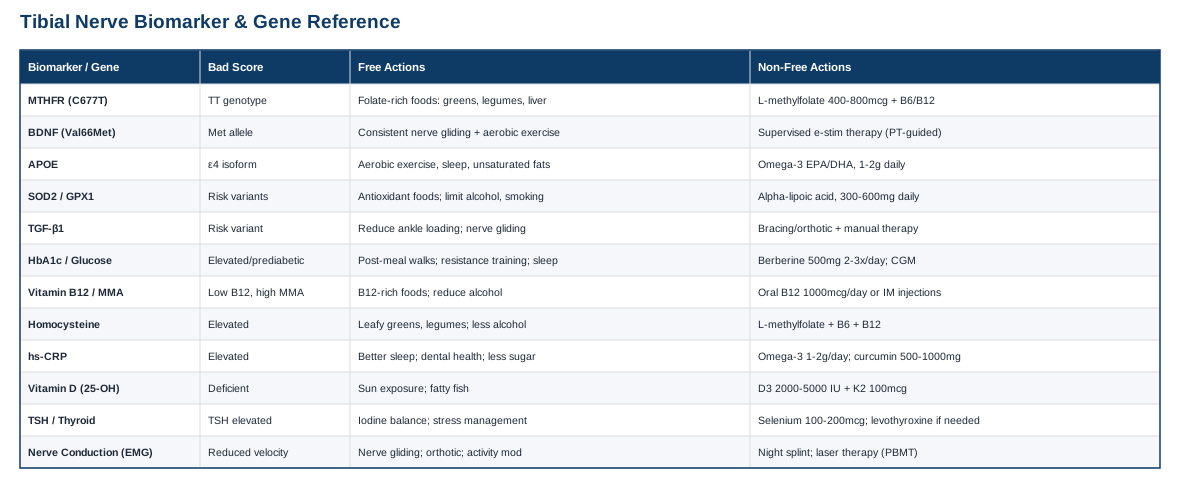
Seven Biomarkers Worth Tracking for Tibial Nerve Health
Tibial neuritis — whether from tarsal tunnel compression, metabolic stress, or a mix of both — responds to more than mechanical fixes. The nerve fiber itself needs stable glucose, adequate B vitamins, low background inflammation, sufficient vitamin D, normal thyroid signaling, and enough time to remyelinate. The seven markers below cover that territory, roughly in order of how strong the evidence is and how likely they are to be the hidden driver behind a nerve that won't calm down.
HbA1c and Fasting Glucose
Chronically elevated blood sugar damages peripheral nerves years before a formal diabetes diagnosis. Research tracking HbA1c and the risk of developing peripheral neuropathy found a clear, graded relationship between glucose control and nerve damage risk — and elevated glucose variability, not just the average, independently worsens nerve conduction over time. For someone with tibial nerve irritation, even prediabetic glucose patterns can slow healing and lower the threshold for the nerve to become symptomatic under mechanical stress.
How to measure it
A standard HbA1c blood draw costs roughly 15 to 40 dollars out of pocket, or is often bundled into an annual physical. A fasting insulin and fasting glucose panel adds another 20 to 40 dollars and catches early insulin resistance that HbA1c alone can miss. Continuous glucose monitors, worn for one to two weeks, run 50 to 100 dollars and reveal post-meal spikes that a single HbA1c number hides entirely.If the score is bad, the plan without supplements
Walk for 10 to 15 minutes after meals — this alone measurably blunts post-meal glucose spikes. Shift carbohydrate intake toward the end of meals rather than the start, prioritize protein and fiber first. Add two to three resistance training sessions per week, since muscle is the primary glucose sink in the body. Reduce alcohol, which impairs glucose clearance overnight, and prioritize seven or more hours of sleep, since even one night of poor sleep measurably worsens insulin sensitivity the next day.If the score is bad, the plan with supplements or equipment
Berberine, 500 mg two to three times daily with meals, has glucose-lowering effects comparable in some trials to metformin; cycle it 8 to 12 weeks on, then reassess HbA1c before continuing, since long-term safety data is thinner than for prescription options. Common side effects are gastrointestinal upset, which usually settles within the first week. A continuous glucose monitor used intermittently, every few months, is a useful equipment-based way to catch drift before it shows up on an HbA1c. Anyone with fasting glucose or HbA1c in the diabetic range should discuss prescription options like metformin with a physician rather than relying on supplements alone.Vitamin B12 and Methylmalonic Acid
B12 is required to maintain the myelin sheath around peripheral nerves, and deficiency can cause a demyelinating neuropathy on its own, independent of any mechanical compression. A study of vitamin B12 deficiency and peripheral neuropathy in type 2 diabetics on metformin found this to be common and under-recognized, since metformin itself impairs B12 absorption over years of use. Electrodiagnostic testing in B12-deficient neuropathy typically shows reduced sensory nerve conduction velocities, the same category of finding often seen in tibial nerve studies.How to measure it
Serum B12 costs roughly 20 to 50 dollars. Serum B12 alone is a blunt instrument, though — a normal-looking level can still coexist with functional deficiency. Methylmalonic acid (MMA), a more sensitive functional marker, adds 60 to 120 dollars and rises before serum B12 drops in early or borderline deficiency.If the score is bad, the plan without supplements
Increase B12-rich foods: eggs, dairy, fish, and organ meats. If you take metformin, a proton-pump inhibitor, or an H2 blocker long-term, ask your physician about periodic B12 monitoring, since all three reduce absorption. Reducing alcohol intake also helps, since alcohol impairs B12 absorption independently.If the score is bad, the plan with supplements or equipment
Oral methylcobalamin or cyanocobalamin, 1,000 mcg daily, corrects most dietary or mild deficiencies within 8 to 12 weeks; sublingual forms bypass some absorption issues. If malabsorption is confirmed (pernicious anemia, intrinsic factor antibodies, prior bariatric surgery), B12 injections — typically 1,000 mcg intramuscular weekly for four weeks, then monthly — are more reliable. Side effects are minimal; rare injection-site irritation is the main complaint. Recheck B12 and MMA at three months rather than assuming correction.Homocysteine
Homocysteine is a byproduct of methionine metabolism that becomes neurotoxic at elevated levels, and it's tightly linked to B12 and folate status. Research on folic acid supplementation and nerve conduction in diabetic polyneuropathy found that correcting elevated homocysteine measurably improved nerve conduction parameters, particularly in people carrying the MTHFR C677T variant discussed further in the genetics section below.How to measure it
A homocysteine blood test costs roughly 30 to 70 dollars and is not part of routine bloodwork by default — it typically needs to be specifically requested.If the score is bad, the plan without supplements
Increase leafy greens and legumes for natural folate, moderate excessive animal protein intake (a major methionine source), and reduce alcohol, which depletes folate. Address any underlying B12 deficiency first, since homocysteine often normalizes once B12 is corrected.If the score is bad, the plan with supplements or equipment
L-methylfolate, 400 to 800 mcg daily, combined with B6 (25 to 50 mg) and B12, is the combination used in the nerve conduction trial above. Avoid high-dose B6 above 100 mg daily for extended periods — ironically, chronic B6 megadosing is itself a documented cause of peripheral neuropathy. Recheck homocysteine at three months; there's no benefit to continuing supplementation indefinitely once levels normalize.High-Sensitivity C-Reactive Protein (hs-CRP)
Nerve entrapment isn't purely mechanical — local and systemic inflammation lowers the threshold at which a compressed nerve becomes symptomatic and slows its recovery. C-reactive protein's role in chronic inflammatory and neurodegenerative conditions is well documented, and elevated hs-CRP has specifically been associated with the presence of neuropathy and impaired nerve-related wound healing.How to measure it
An hs-CRP blood test costs roughly 15 to 30 dollars and is widely available, often included in cardiovascular risk panels favored by physicians like Peter Attia and Allan Sniderman as a general marker of systemic inflammatory load.If the score is bad, the plan without supplements
Prioritize sleep quality and consistency, since poor sleep independently raises CRP. Address dental and gum health, a frequently overlooked chronic inflammation source. Reduce ultra-processed food and added sugar intake, and add regular moderate exercise, which lowers CRP over months even without weight loss.If the score is bad, the plan with supplements or equipment
Omega-3 fatty acids (EPA/DHA), 1 to 2 grams daily with food, modestly reduce CRP over 8 to 12 weeks. Curcumin with piperine, 500 to 1,000 mg once or twice daily, cycled for 8 to 12 weeks with a break before resuming, has anti-inflammatory data but can increase bleeding risk — caution is warranted for anyone on blood thinners. Recheck hs-CRP after 12 weeks rather than assuming improvement.Vitamin D (25-OH D)
Vitamin D deficiency is an independent risk factor for peripheral neuropathy, and severity correlates with painful neuropathy specifically. A study on severe vitamin D deficiency and inflammatory cytokines in painful diabetic peripheral neuropathy found severe deficiency far more common in patients with painful neuropathy than in those without pain, tying vitamin D status directly to nerve-related inflammatory signaling.How to measure it
A 25-OH vitamin D test costs roughly 40 to 80 dollars and is one of the more commonly under-ordered basic labs.If the score is bad, the plan without supplements
Ten to thirty minutes of midday sun exposure on exposed skin, several times a week, depending on skin tone and latitude. Increase fatty fish intake (salmon, mackerel, sardines).If the score is bad, the plan with supplements or equipment
Vitamin D3, 2,000 to 5,000 IU daily, paired with vitamin K2 (100 mcg) to support appropriate calcium handling. Recheck levels at three months; avoid megadosing above 10,000 IU daily for extended periods without monitoring, since hypercalcemia is a real risk at sustained high doses. Once corrected, a lower maintenance dose and seasonal rechecking (levels typically dip in winter) is usually sufficient.Thyroid Panel (TSH, Free T4)
Hypothyroidism, including subclinical cases, is associated with peripheral neuropathy and impaired nerve function. Case data on peripheral neuropathy in hypothyroidism describes both large and small nerve fiber involvement, with some cases improving after thyroid hormone correction. TSH itself has also been shown to directly stress Schwann cells, the glial cells responsible for maintaining peripheral nerve myelin.How to measure it
TSH alone costs roughly 20 to 40 dollars; a fuller panel with free T4, free T3, and thyroid antibodies runs 80 to 150 dollars and is worth the extra cost if TSH is borderline, since antibody-positive subclinical cases behave differently than isolated TSH elevation.If the score is bad, the plan without supplements
Ensure adequate but not excessive iodine intake (iodized salt, seafood), prioritize sleep and stress management, since chronic stress suppresses thyroid conversion, and avoid extreme caloric restriction, which downregulates thyroid hormone production as an adaptive response.If the score is bad, the plan with supplements or equipment
Selenium, 100 to 200 mcg daily, supports thyroid hormone conversion, but should not exceed 400 mcg daily long-term due to toxicity risk, and is best cycled with periodic breaks rather than taken indefinitely. Confirmed hypothyroidism, however, is not a supplement scenario — it requires physician-directed levothyroxine, and self-treating with over-the-counter thyroid support products when TSH is clearly elevated delays proper treatment.Nerve Conduction Study / EMG
Unlike the blood markers above, this is a direct functional read of the tibial nerve itself — measuring conduction velocity and amplitude to distinguish demyelinating from axonal injury, and to localize compression at the tarsal tunnel specifically. It remains the closest thing to a ground-truth biomarker for nerve neuritis, and clinical evidence reviews on diabetic peripheral neuropathy management consistently use nerve conduction findings as the reference standard against which other interventions are judged.How to measure it
A nerve conduction study and EMG, performed by a neurologist or physiatrist, typically costs 200 to 700 dollars depending on region and insurance coverage, and takes 30 to 60 minutes.If the score is bad, the plan without supplements
Nerve gliding (flossing) exercises for the tibial nerve, activity modification to reduce repetitive ankle dorsiflexion under load, supportive footwear or an orthotic to offload the tarsal tunnel, and temporary rest from the specific aggravating activity.If the score is bad, the plan with supplements or equipment
A night splint holding the ankle in neutral position reduces nocturnal nerve tension for many people. A course of professional photobiomodulation (low-level laser) therapy, discussed further below, has trial-level support for compressive neuropathies. Re-testing nerve conduction at 3 to 6 months, rather than repeatedly, gives a realistic window to detect meaningful change without over-testing.Bloodwork and electrodiagnostics tell you what's happening now. Genetics adds a different, longer-range layer — not a diagnosis, but a set of tendencies that explain why two people with the same lab results might still respond differently to the same treatment plan.
What Genetics Adds to the Picture
Genetic testing for nerve health is popularized in different ways by different voices — genomics researcher Ali Torkamani has written extensively on how most common genetic variants shift risk modestly rather than deterministically, while Gary Brecka has brought mainstream attention to methylation genes like MTHFR as a starting point for personalized supplementation. Both are useful entry points, but the caveat matters: most of the genes below shift probabilities, not outcomes, and none of them override what your actual bloodwork shows.
MTHFR (C677T variant)
This variant reduces the enzyme's efficiency at converting folate into its active, usable form, which impairs homocysteine clearance. A randomized, placebo-controlled trial found that the MTHFR C677T genotype influenced how well folic acid supplementation improved nerve conduction in diabetic polyneuropathy, meaning carriers may need the active form of folate rather than standard folic acid to see the same benefit.If the gene is bad, the plan without supplements
Emphasize naturally folate-rich foods — leafy greens, legumes, liver — since dietary folate is already in a form closer to what MTHFR-impaired carriers can use, unlike synthetic folic acid, which requires the very conversion step this variant weakens.If the score is bad, the plan with supplements or equipment
L-methylfolate (the pre-converted active form), 400 to 800 mcg daily, alongside B12 and B6, bypasses the enzymatic bottleneck. Recheck homocysteine at three months. There's no need to cycle folate long-term once homocysteine normalizes, but megadosing folate without also correcting B12 can mask a B12 deficiency, so test both together.BDNF (Val66Met variant)
Brain-derived neurotrophic factor supports axon regrowth after nerve injury, and the Val66Met variant impairs how much BDNF is released in response to nerve activity. Research on BDNF's role in peripheral nerve regeneration and the impact of the Val66Met variant found this variant blunts the benefit of activity-dependent therapies like electrical stimulation, meaning carriers may need a longer or more consistent rehabilitation stimulus to get the same regenerative signal.If the gene is bad, the plan without supplements
Consistent, structured activity — nerve gliding exercises and graded loading of the ankle and foot performed on a regular schedule — since BDNF release depends heavily on repeated activity, not intensity. Aerobic exercise, three to five sessions weekly, independently raises circulating BDNF.If the score is bad, the plan with supplements or equipment
There's no supplement that reliably substitutes for activity-driven BDNF release. Where available, therapeutic electrical stimulation supervised by a physical therapist or hand/foot rehabilitation specialist has trial support for supporting nerve regeneration, though Val66Met carriers may show a smaller response and should judge progress by function and follow-up nerve conduction rather than by how quickly symptoms change.APOE Genotype
Apolipoprotein E is upregulated after peripheral nerve injury and plays a direct role in axon regeneration and remyelination. ApoE isoform-specific regulation of regeneration in the peripheral nervous system shows the ε4 isoform is associated with less efficient nerve repair compared to other isoforms, echoing its better-known role in slower recovery after brain injury.If the gene is bad, the plan without supplements
Prioritize the fundamentals that support lipid and vascular health broadly — regular aerobic exercise, adequate sleep, and a diet built around unsaturated fats rather than processed fats — since ApoE's regenerative role is tied closely to lipid transport to the site of nerve repair.If the score is bad, the plan with supplements or equipment
Omega-3 fatty acids (EPA/DHA, 1 to 2 grams daily) support the lipid remodeling nerve repair depends on. There is no validated supplement that directly compensates for ApoE ε4 status in peripheral nerve recovery specifically — this remains an active research area rather than a solved one, so treat this gene as a reason to be patient and consistent with rehabilitation rather than a reason to add products.SOD2 and GPX1 (Oxidative Defense Genes)
These genes encode antioxidant enzymes that clear reactive oxygen species generated during nerve stress and repair. Variants in both have been linked to worse outcomes: a SOD2 polymorphism associated with abnormal quantitative sensory testing in type 2 diabetic patients, and a GPX1 Pro198Leu variant contributing to diabetic peripheral neuropathy, suggesting carriers accumulate more oxidative damage around stressed nerve tissue.If the gene is bad, the plan without supplements
Emphasize dietary antioxidants from whole food sources — berries, colorful vegetables, green tea — rather than relying on any single compound, since these genes affect a broad enzymatic system, not one pathway. Limit excess alcohol and smoking, both of which add oxidative burden.If the score is bad, the plan with supplements or equipment
Alpha-lipoic acid, 300 to 600 mg daily, has the most human trial data among antioxidant supplements for nerve-related oxidative stress, typically taken for 8 to 12 weeks before reassessing symptoms; mild gastrointestinal upset is the main side effect. This is not a fast-acting intervention — treat it as a months-long trial, not a daily quick fix.TGF-β1 Variants (Carpal/Tarsal Tunnel-Specific)
Transforming growth factor beta-1 plays a direct role in the fibrous tissue changes seen in entrapment neuropathies. A study found serum TGF-β1 and its genetic variants associated with increased inflammatory signaling and susceptibility to idiopathic carpal tunnel syndrome — the same entrapment mechanism implicated in tarsal tunnel-driven tibial neuritis, since both involve a nerve compressed within a fibro-osseous tunnel.If the gene is bad, the plan without supplements
Reduce repetitive mechanical loading of the tunnel in question (ankle dorsiflexion/eversion for the tibial nerve), since TGF-β1-driven fibrosis is aggravated by repeated mechanical irritation. Nerve gliding and early, gentle mobilization help prevent excessive scar tissue formation around the nerve as it heals.If the score is bad, the plan with supplements or equipment
No supplement directly targets TGF-β1 activity safely for this purpose. Where entrapment is confirmed, a period of bracing or orthotic offloading, combined with a structured course of manual therapy, is the better-supported option — and if compression persists despite conservative care, this is the genetic and mechanical profile most likely to eventually need a surgical opinion.Genetics explains predisposition, but the way nerve pain is actually experienced and treated has shifted substantially in recent neuroscience research — often in ways that challenge how nerve injury is explained to patients.
The Neuroplasticity Lens on Nerve Pain
Norman Doidge's The Brain's Way of Healing draws on decades of clinical case histories and neuroscience research to argue that chronic pain — including nerve-related pain — is shaped as much by the brain's processing of the signal as by the state of the tissue itself. For someone with tibial nerve neuritis that has lingered well past the expected healing window, this reframing matters: it doesn't mean the nerve irritation isn't real, but it does mean the story doesn't end at "the nerve is damaged, so the pain is permanent."
1. Pain is a brain output, not just a nerve input
The signal from an irritated tibial nerve is real, but how much pain reaches conscious awareness, and how long it persists after tissue has started healing, depends heavily on central processing — a concept known as central sensitization.2. The nervous system stays plastic well beyond early life
Doidge's case histories, drawn from decades of neurorehabilitation research, argue against the older assumption that adult nerve pathways are fixed once damaged.3. Pain neuroscience education measurably reduces pain and disability
A systematic review of pain neuroscience education in patients with chronic musculoskeletal pain and central sensitization found consistent reductions in self-reported pain and disability — evidence that understanding the pain mechanism is itself a therapeutic input, not just reassurance.4. Graded motor imagery can retrain distorted nerve maps
A landmark randomized controlled trial of graded motor imagery for complex regional pain syndrome found meaningful pain reduction through a staged program of laterality recognition, imagined movement, and mirror therapy — without any direct manipulation of the painful limb itself.5. Mirror and imagery techniques extend to phantom and nerve-related pain
A more recent randomized trial of a home-based graded motor imagery protocol for phantom limb pain showed durable improvements at 12-week follow-up, reinforcing that cortical retraining has effects that outlast the active intervention.6. Light-based therapies appear repeatedly in nerve recovery case material
Doidge documents photobiomodulation (low-level laser) as a recurring tool in his clinical case studies of nerve and brain injury recovery — a claim that aligns with the broader photobiomodulation literature discussed in the next section, though the book's individual case reports are not themselves controlled trials.7. "Use it or lose it" applies to sensory maps, not just muscles
Cortical representation of an underused limb or nerve territory can shrink, a phenomenon Doidge ties to broader neuroplasticity research — reinforcing why complete rest, beyond the acute phase, may not serve long-term nerve recovery.8. Fear and catastrophizing reinforce the pain loop being treated
This isn't a claim that pain is "in your head" — it's the more precise point that anticipatory fear of movement measurably amplifies central pain processing, which is why pain neuroscience education pairs so consistently with better outcomes in the research above.9. Recovery timelines are measured in months, not days
The case histories in the book consistently describe gradual, incremental improvement over many months of consistent practice — a useful corrective against both premature "nothing worked" conclusions and premature "permanent damage" prognoses.10. Bottom-up and top-down approaches work better combined
The strongest case outcomes in the book pair a physical input — movement, light, nerve mobilization — with a cognitive one — imagery, education, attention retraining — echoing why multi-modal rehabilitation tends to outperform any single intervention alone.These neuroplasticity principles connect directly to a handful of hands-on and mind-body therapies that have their own dedicated trial evidence for nerve entrapment and neuropathic pain specifically.
Complementary Approaches Worth Considering
The therapies below are not substitutes for addressing the biomarkers above or for a mechanical diagnosis of tarsal tunnel involvement — they're supportive layers with genuine, condition-relevant trial evidence rather than general wellness claims.
Photobiomodulation / Low-Level Laser Therapy
This involves applying low-intensity light at specific wavelengths to stimulate mitochondrial activity, reduce local inflammation, and support nerve regeneration — mechanisms directly relevant to a compressed or irritated tibial nerve trying to remyelinate.A systematic review of photobiomodulation therapy in peripheral nerve regeneration found consistent improvement in myelinated fiber count and electrophysiological function across studies, and a designed randomized trial protocol for low-level laser therapy in carpal tunnel syndrome — the upper-limb analog of tarsal tunnel syndrome — specifically targets a comparable entrapment neuropathy.
In practice, this means a course of 8 to 12 sessions, typically two to three times weekly, delivered by a physical therapist or physiatrist over the tarsal tunnel region, paired with the nerve-gliding exercises described earlier. It is not a stand-alone fix for structural compression, and evidence quality varies by device and protocol, so treat it as an adjunct rather than a primary treatment.
Massage Therapy and Manual Nerve Mobilization
Targeted soft-tissue work around an entrapped nerve can reduce local fascial tension and improve blood flow to the compressed segment, which matters because a chronically compressed tibial nerve is also often a chronically under-perfused one.A randomized controlled trial of manual therapy including neurodynamic techniques for carpal tunnel syndrome found sensory nerve conduction velocity increased by 34 percent in the manual therapy group — a substantial, measurable functional improvement in an entrapment neuropathy closely analogous to tarsal tunnel involvement of the tibial nerve.
Realistically, this looks like one to two sessions weekly with a therapist trained in neurodynamic or nerve mobilization technique, for 6 to 8 weeks, rather than generic relaxation massage. Self-massage with a soft ball along the inner ankle, avoiding direct pressure on the nerve itself, can supplement professional sessions between visits.
Mindfulness-Based Stress Reduction
MBSR trains attentional and interpretive control over a pain signal, which matters most when nerve pain has outlasted the original tissue injury and central sensitization, discussed above, is playing a larger role than the local compression itself.A randomized trial of mindfulness-based stress reduction in painful diabetic peripheral neuropathy found improved function, quality of life, and reduced pain intensity and catastrophizing compared to usual care — directly relevant given the metabolic and glucose-related overlap with tibial nerve neuritis.
The standard protocol is an 8-week structured course, roughly 2.5 hours weekly plus daily home practice of 20 to 45 minutes; it requires consistency more than intensity, and benefits typically build gradually across the full course rather than appearing in the first few sessions.
Yoga
Yoga combines gentle mechanical movement of the lower limb, circulation-supporting positions, and the same attentional training found in mindfulness work, making it relevant both to glucose control and to gentle mobilization of an irritated nerve.A study on yoga asanas and nerve conduction in type 2 diabetes found measurable improvement in nerve conduction velocity after 40 days of practice, and a broader trial on naturopathy and yoga-based interventions modifying peripheral neuropathy risk factors reported similar nerve conduction improvements alongside better metabolic markers.
A realistic starting point is a gentle or restorative yoga practice, three to four sessions weekly for at least six weeks, avoiding poses that place sustained direct pressure on the inner ankle. Evidence here is strongest for glucose-related nerve involvement specifically, so this is most relevant if your HbA1c or fasting glucose numbers above are also elevated.
Taken together, these therapies work best as a supporting layer around the biomarker corrections and mechanical care already covering the bulk of the recovery plan, not as a replacement for either.
The Bottom Line
Tibial nerve neuritis rarely has a single cause, which is exactly why single-lever advice so often falls short. The seven biomarkers covered here — glucose control, B12, homocysteine, inflammation, vitamin D, thyroid function, and the nerve's own electrical signal — give you a concrete, testable map of what might be slowing recovery, most of them available through an ordinary blood draw. The genetic layer adds useful context about why two people with similar labs might still heal at different rates, though it should inform patience and strategy rather than replace the bloodwork. And the neuroplasticity and complementary evidence together make one point worth sitting with: a nerve that hasn't recovered on the "usual" timeline hasn't necessarily reached its ceiling.
None of this replaces a clinical evaluation, and a confirmed structural entrapment still deserves a hands-on exam and, if needed, imaging or surgical consultation. But the next useful step is a concrete one: ask your physician for the specific panel above rather than a generic "bloodwork," track your symptoms alongside those numbers over a few months, and revisit the plan based on what actually moves rather than what sounds reasonable in theory.
Endocrine & Metabolic: Diabetes & Blood Sugar Thyroid Conditions