This article contains AI generated content.
Tibial Plateau Stress Reaction: 5 Genes and 7 Biomarkers to Track
A tibial plateau stress reaction rarely shows up out of nowhere. By the time an MRI reveals bone marrow edema near the plateau, the tissue has usually been losing a slow-motion argument between load and repair for weeks, sometimes months. That mismatch is what makes this injury so frustrating to manage with generic advice like "rest more" or "increase your calcium." Those suggestions aren't wrong, exactly — they're just too vague to tell you which lever actually applies to your body.
The truth is that two athletes with identical training loads and an identical MRI grade can have completely different underlying stories. One might be running on low vitamin D and a genetic collagen variant that make bone slower to remodel under repeated strain. Another might have a hormonal or energy-availability problem that's quietly suppressing bone formation regardless of how much calcium they eat. Treating both with the same rest-and-return protocol misses what's actually driving the injury, and it's part of why stress reactions recur in the same people again and again.
This is where measurable data earns its keep. Instead of guessing, you can look at a specific set of blood markers, and where relevant, at inherited traits, that are consistently linked to bone stress injury risk in the sports medicine and military-training literature — fields that have studied this exact injury pattern in thousands of recruits and endurance athletes. That data doesn't replace a clinician's judgment, but it gives both of you something concrete to work from.
None of this promises a guaranteed fix, and anyone who tells you otherwise is overselling. But better information tends to lead to better decisions, and better decisions compound. Below, we walk through the biomarkers worth tracking first, then the genetic variants that shape how your bone responds to load, a set of hard-won lessons from research that challenges some of the more outdated assumptions in sports medicine, and a short list of complementary approaches with real supporting evidence.
Summary
If you've had a tibial plateau stress reaction, or you're trying to keep training loads from turning into one, the honest answer is that it's rarely one thing. Below we cover seven blood markers — vitamin D, ferritin, estradiol or testosterone, IGF-1, parathyroid hormone, bone mineral density, and osteocalcin — that map fairly directly onto how well your bone can keep up with repeated mechanical strain, along with realistic price ranges, what a low or high result actually implies, and specific ways to move the number whether or not you want to use supplements. Then we go a layer deeper into five genes — COL1A1, VDR, LRP5, ESR1, and IL6 — that help explain why two people under the same training load can end up with very different bone outcomes, and what to do about it if your genetic profile stacks the odds against you. We also pull out the ten most useful, myth-busting lessons from Stacy Sims' research on female athlete physiology, and finish with complementary approaches — gait-retraining biofeedback and photobiomodulation among them — that have actual human evidence behind them for this type of injury. None of it is a miracle protocol. It's a way to stop guessing.
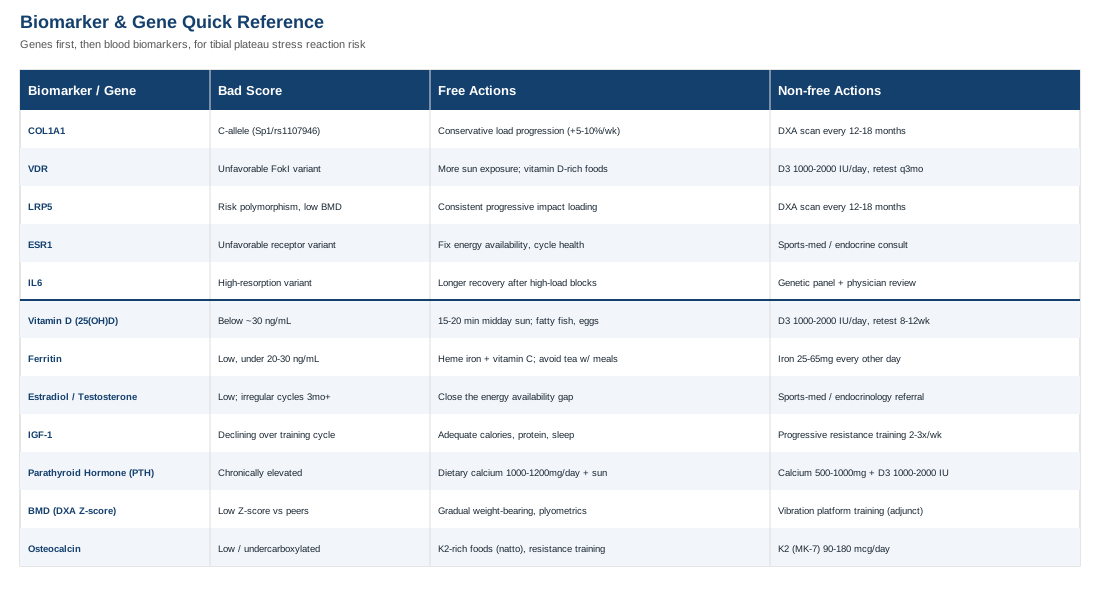
The 7 Biomarkers Worth Tracking for a Tibial Plateau Stress Reaction
Bone is living tissue that remodels constantly, and a stress reaction is what happens when the resorption side of that cycle temporarily outpaces formation at one specific, overloaded spot — in this case, the medial or lateral tibial plateau, a zone that takes a heavy share of impact load in runners, jumpers, and field-sport athletes. The seven markers below were chosen because each one has a documented, mechanistic link to that resorption-formation balance, not because they're trendy. Clinicians like Peter Attia have popularized the broader idea that objective, repeated measurement beats assumption in almost every area of health — that principle applies just as well to bone stress injury as it does to cardiometabolic risk, even though the specific markers here come from sports-medicine and endocrinology research rather than lipidology.
Serum 25-hydroxyvitamin D (25(OH)D)
This is the single best-studied biomarker for stress fracture and stress reaction risk. Vitamin D governs calcium absorption in the gut and calcium mobilization from bone, so when levels are low, the body has a harder time mineralizing new bone matrix fast enough to keep up with repair demands. In a cohort of Royal Marine recruits, low serum 25(OH)D was directly associated with higher stress fracture incidence, and the effect was even stronger in recruits carrying certain vitamin D receptor variants, which we'll return to below.
Low serum 25-hydroxyvitamin D is associated with increased risk of stress fracture during Royal Marine recruit training, and a broader review found the same pattern across multiple military cohorts: low serum 25-hydroxyvitamin D status in the pathogenesis of stress fractures in military personnel.
How to measure it
A standard 25(OH)D blood draw costs roughly $40 to $80 out of pocket in the US, or is often bundled into a physician-ordered panel and covered by insurance. Aim to test in late winter or early spring if you live somewhere with seasonal sun variation, since that's when levels are typically lowest and most likely to flag a real deficiency rather than a temporary dip.
If the score is bad, the plan without supplements
Fifteen to twenty minutes of midday sun exposure on bare arms and legs, several times a week, meaningfully raises 25(OH)D in most people, though this is unreliable in winter at higher latitudes. Increasing dietary intake of fatty fish, egg yolks, and fortified dairy helps at the margins but rarely closes a real deficiency on its own. Retesting at 8 to 12 weeks is reasonable to see whether these changes moved the number at all.
If the score is bad, the plan with supplements or equipment
A randomized controlled trial in female Navy recruits found that daily supplementation with 2,000 mg calcium and 800 IU vitamin D reduced stress fracture incidence by roughly 25% over eight weeks of training, as shown in Calcium and vitamin D supplementation decreases incidence of stress fractures in female Navy recruits. A typical protocol mirrors this: 1,000 to 2,000 IU of vitamin D3 daily with a meal containing fat for absorption, reassessed every 3 months until levels stabilize in a healthy range, then maintained at a lower dose. Vitamin D toxicity is rare at these doses but can occur with prolonged high-dose supplementation (above 4,000 IU/day sustained for months), causing hypercalcemia symptoms like nausea, kidney strain, and fatigue — a reason to retest rather than self-escalate the dose indefinitely. A supervised trial specifically in collegiate athletes at high stress-injury risk is described in Supplemental Vitamin D3 for the Prevention of Bone Stress Injuries in Collegiate Athletes.
Ferritin (Iron Status)
Ferritin reflects the body's iron stores, and low iron impairs oxygen delivery to bone-forming osteoblasts as well as collagen synthesis more broadly. It's a particularly important marker for female endurance athletes, who lose iron through menstruation on top of training-related losses.
A prediction model built on young female military recruits found that low ferritin, combined with being tall, lean, and reporting training "burnout," successfully predicted a large majority of stress fracture cases, as detailed in a prediction model for stress fracture in young female recruits during basic training.
How to measure it
A ferritin test alone runs about $20 to $40; a full iron panel with transferrin saturation runs $50 to $100. Because ferritin is an acute-phase reactant, it can read falsely high during illness or inflammation, so it's worth pairing with a recent-health check before interpreting a borderline result.
If the score is bad, the plan without supplements
Increasing intake of heme iron sources (red meat, poultry, fish) alongside vitamin C-rich foods to boost non-heme iron absorption from plant sources is the first, lowest-risk step. Avoiding coffee or tea within an hour of iron-containing meals prevents tannins from blunting absorption. This approach is slow — expect months, not weeks, to meaningfully shift ferritin through diet alone.
If the score is bad, the plan with supplements or equipment
Oral iron supplementation (ferrous sulfate or a gentler bisglycinate form) at 25 to 65 mg elemental iron, typically every other day rather than daily — alternate-day dosing has been shown to improve absorption efficiency compared with daily dosing in iron-deficient but non-anemic women. Side effects include constipation and gastrointestinal upset, which is why bisglycinate or alternate-day protocols are often better tolerated. Retest ferritin at 8 to 12 weeks, and stop or reduce the dose once levels normalize, since iron overload is a real risk with unsupervised long-term high-dose use.
Estradiol / Testosterone (Sex Hormone and Menstrual Status)
Estrogen supports bone formation directly and suppresses excessive bone resorption; when it drops — through menstrual dysfunction, low energy availability, or age-related decline — bone remodeling tips toward net loss. Testosterone plays an analogous, though less studied, role in male athletes. This is one of the most consistently reproduced findings in the bone stress injury literature: menstrual irregularity is strongly associated with musculoskeletal injury and reduced bone density, as shown in factors associated with menstrual irregularities and decreased bone mineral density in female athletes, and confirmed more broadly by the RED-S consensus work: Relative Energy Deficiency in Sport (RED-S): scientific, clinical, and practical implications for the female athlete.
How to measure it
Serum estradiol or testosterone runs roughly $40 to $90. For menstruating athletes, timing matters — a mid-follicular draw gives the most interpretable baseline. For anyone with irregular or absent cycles for three or more months, that itself is a clinically meaningful result regardless of the number on the lab report.
If the score is bad, the plan without supplements
The most evidence-backed intervention here isn't a supplement at all — it's closing an energy availability gap by eating enough relative to training volume. Restoring adequate caloric and carbohydrate intake around training sessions has been shown to help resume menstrual function in athletes with exercise-associated menstrual dysfunction, though bone density recovery lags behind and can take a year or more even after menses returns.
If the score is bad, the plan with supplements or equipment
Supplementation doesn't fix a hormonal deficit caused by underfueling — hormonal contraceptives are sometimes used clinically to manage symptoms, but they don't reliably restore bone density and shouldn't be treated as a substitute for addressing energy availability. This is a case where the right next step is a conversation with a sports medicine physician or endocrinologist rather than a self-directed supplement plan, since misjudging the underlying cause here can prolong the actual problem.
IGF-1 (Insulin-Like Growth Factor 1)
IGF-1 stimulates osteoblast activity and collagen synthesis, and its levels are sensitive to both nutrition and training stress. Bioavailable IGF-1 has been observed to decline over a training cycle specifically in recruits who go on to develop stress fractures, while it rises in those who remain injury-free, a pattern discussed in the role of IGF-1 for fracture risk.
How to measure it
IGF-1 testing costs approximately $60 to $120 and is less commonly ordered by default than vitamin D or ferritin — you may need to specifically request it from a sports medicine or endocrine-focused provider.
If the score is bad, the plan without supplements
Since IGF-1 is heavily influenced by total energy and protein intake, the first move is ensuring adequate calories and roughly 1.6 to 2.0 g of protein per kilogram of bodyweight daily, along with sufficient sleep, since growth hormone (and downstream IGF-1) pulses are concentrated in deep sleep.
If the score is bad, the plan with supplements or equipment
There's no well-supported standalone supplement that safely raises IGF-1 in isolation, and attempts to do so with unregulated growth-hormone-adjacent products carry real health risk and should be avoided. The legitimate lever is resistance training itself — progressive loading 2 to 3 times weekly — which has a more reliable, evidence-based effect on IGF-1 and bone-building capacity than any product on the market.
Parathyroid Hormone (PTH)
PTH regulates calcium balance; chronically elevated PTH (secondary hyperparathyroidism) usually signals inadequate calcium or vitamin D intake and drives ongoing bone resorption to keep blood calcium stable — effectively borrowing from the skeleton. A randomized trial in military trainees found that calcium and vitamin D supplementation kept PTH suppressed and improved bone density during training, versus a rise in PTH in the placebo group, as reported in calcium and vitamin D supplementation maintains parathyroid hormone and improves bone density during initial military training.
How to measure it
An intact PTH test costs about $60 to $100 and is best interpreted alongside calcium and vitamin D results drawn at the same time, since the three markers only make sense together.
If the score is bad, the plan without supplements
Increasing dietary calcium to roughly 1,000 to 1,200 mg per day through dairy, fortified plant milks, and leafy greens, spread across meals for better absorption, is the first step, alongside the same sun-exposure strategy described above for vitamin D.
If the score is bad, the plan with supplements or equipment
Combined calcium (500 to 1,000 mg) and vitamin D3 (1,000 to 2,000 IU) supplementation, taken with food, is the exact protocol shown to suppress PTH and improve bone density in the trial above. Excess calcium supplementation (above roughly 2,000 to 2,500 mg/day total intake) has been linked to kidney stone risk in some studies, so this is a "correct the deficit, then stop over-supplementing" marker rather than a "more is better" one.
Bone Mineral Density (DXA Z-score)
A DXA scan is technically imaging rather than a blood biomarker, but it functions as the most direct available readout of cumulative bone health and belongs on this list. Athletes with RED-S consistently show reduced bone mineral density and elevated bone stress injury rates, as documented in RED-S: scientific, clinical, and practical implications.
How to measure it
A DXA scan costs roughly $75 to $250 self-pay in the US, and is often covered by insurance when ordered for a documented bone stress injury. A Z-score (comparing you to age- and sex-matched peers) is the relevant number for younger athletes, not the T-score used for postmenopausal osteoporosis screening.
If the score is bad, the plan without supplements
Weight-bearing and impact-loading exercise — plyometrics, jumping, and resistance training — stimulates bone formation more directly than any nutritional intervention. This needs to be introduced gradually if you're recovering from a stress reaction, since the same loading that builds bone over months can aggravate an active injury in the short term.
If the score is bad, the plan with supplements or equipment
Correcting vitamin D, calcium, and energy availability (as above) is the nutritional side of improving BMD; a vibration training platform has some supporting evidence for bone density gains in at-risk populations, though the effect size is modest and it should be viewed as an add-on, not a substitute for loading and nutrition.
Osteocalcin (and Undercarboxylated Osteocalcin)
Osteocalcin is produced by osteoblasts and serves as a marker of bone formation activity. A study in young female athletes found that decreased osteocalcin and undercarboxylated osteocalcin, alongside elevated creatine kinase and LDH, were associated with existing bone stress injuries — suggesting formation was lagging behind the damage already occurring, as shown in elevated creatine kinase and decreased osteocalcin associated with bone stress injuries in young female athletes. It's worth noting that broader bone turnover markers like P1NP and CTX have not reliably predicted stress fractures before they occur in military cohorts, per bone turnover markers do not predict stress fracture in elite combat recruits — so osteocalcin is more useful as a supporting signal alongside the injury than as a stand-alone predictive screen.
How to measure it
Osteocalcin testing runs approximately $70 to $150 and is less routinely available than the other markers here — a sports medicine clinic or academic-affiliated lab is often the most reliable source.
If the score is bad, the plan without supplements
Vitamin K2 from fermented foods (natto, some aged cheeses) supports the carboxylation of osteocalcin into its active form, alongside the same resistance and impact training described above, which directly stimulates osteoblast activity.
If the score is bad, the plan with supplements or equipment
Vitamin K2 (MK-7 form), 90 to 180 mcg daily, is a reasonable adjunct for supporting osteocalcin carboxylation, ideally taken with a fat-containing meal since it's fat-soluble. It's generally well tolerated, though anyone on warfarin or other vitamin K-antagonist anticoagulants should not supplement K2 without their prescribing physician's explicit sign-off, since it directly interferes with that medication's mechanism.
With the biomarker picture in place, it's worth asking why two athletes with identical lab values still sometimes end up with different outcomes — which is where genetics start to matter.
What the Genetics Actually Show
Genetic research on stress fractures is younger and less definitive than the biomarker literature above, so treat this section as directionally useful rather than diagnostic. Researchers like Ali Torkamani, who has written extensively on the gap between polygenic risk and actionable individual guidance, and Gary Brecka, known for popularizing accessible genetic testing, have both pushed the idea that a handful of well-studied variants can meaningfully inform lifestyle decisions even before the science is fully mature. In bone stress injury specifically, a landmark study genotyped eight bone-metabolism genes in military conscripts with femoral neck stress fractures versus controls, offering the clearest human dataset available: genetic predisposition for femoral neck stress fractures in military conscripts. A broader synthesis of this field is available in the genetics of sports injuries and athletic performance.
COL1A1
COL1A1 encodes the main protein chain of type I collagen, the structural scaffold of bone. Certain variants (notably the Sp1 polymorphism and rs1107946) are associated with altered collagen fiber properties and, in some female athlete cohorts, a roughly 2.4-times higher odds of fatigue fracture in C-allele carriers, per female athletes genetically susceptible to fatigue fracture are resistant to muscle injury: potential role of COL1A1 variant. Interestingly, the same variant appeared protective against muscle injury in that cohort — a reminder that "bad" gene variants are usually trade-offs, not simple defects.
VDR (Vitamin D Receptor)
VDR determines how effectively cells respond to circulating vitamin D, regardless of blood levels. The FokI polymorphism has been linked to stress fracture risk, and the effect is interactive — low vitamin D status matters more in certain VDR genotypes than others, as shown in polymorphisms of the vitamin D receptor gene and stress fractures. In practice, this means someone with an unfavorable VDR variant may need to be more aggressive about maintaining vitamin D toward the higher end of the normal range rather than just the minimum sufficiency threshold.
LRP5
LRP5 is a co-receptor in the Wnt signaling pathway, which governs osteoblast proliferation and how bone responds anabolically to mechanical loading. Certain LRP5 polymorphisms are associated with lower bone mineral density and higher fracture risk, per common polymorphism in the LRP5 gene may increase the risk of bone fracture and osteoporosis. Because LRP5 specifically affects how bone senses and responds to load, an unfavorable variant may mean you need more consistent, progressive loading over time to get the same bone-building return that comes more easily to someone without the variant.
ESR1 (Estrogen Receptor 1)
ESR1 encodes the primary estrogen receptor, and its variants influence how effectively estrogen protects bone from excess resorption — one of the eight genes examined in the femoral neck stress fracture cohort referenced above. This gene is especially relevant for female athletes already navigating menstrual-cycle-related bone risk, since an unfavorable ESR1 variant can compound the effect of any existing estrogen deficit from low energy availability.
IL6 (Interleukin 6)
IL6 is a pro-inflammatory cytokine involved in osteoclast activation; certain variants are linked to higher baseline bone resorption activity, and it was also included among the genes studied in the military conscript stress fracture cohort. Higher IL6-driven resorption tone means recovery windows after high-load training blocks may need to be longer for someone carrying an unfavorable variant, since the resorption side of the remodeling cycle runs comparatively "hotter."
If Your Genetic Profile Looks Unfavorable, the Plan Without Supplements
None of these variants are destiny, and the practical response across all five is similar: more conservative training progression (increasing weekly load by 5 to 10% rather than the more aggressive jumps that lower-risk genotypes may tolerate), longer recovery blocks after high-impact training phases, and closer attention to the biomarkers above rather than assuming "normal" ranges apply equally to everyone. Consistent, progressive impact loading — rather than sporadic high-intensity spikes — is the single most reliable non-supplement lever for genotypes affecting bone's mechanical responsiveness, like LRP5.
If Your Genetic Profile Looks Unfavorable, the Plan With Supplements or Equipment
For an unfavorable VDR variant, biasing vitamin D supplementation toward the higher end of the normal therapeutic range (1,000 to 2,000 IU daily, retested every 3 months) rather than the bare minimum makes sense given the gene-environment interaction described above. For COL1A1 or LRP5 variants, there's no supplement that meaningfully compensates for the structural difference — a bone-density-focused DXA scan every 12 to 18 months is a more useful monitoring tool than any pill. Genetic testing itself, whether through a clinical panel or a consumer service, costs roughly $100 to $250 and is a one-time expense rather than a recurring one; the useful output isn't the raw data but discussing the results with a sports medicine physician who can translate it into a training plan.
That combination of biomarkers and genetics covers the biological side of the picture — but some of the most useful recent thinking on bone stress injury comes from research that challenges long-standing assumptions about who's at risk and why.
What Stacy Sims' ROAR Gets Right That Standard Sports Medicine Still Misses
ROAR, by exercise physiologist Stacy Sims, built its reputation on a simple but under-applied argument: female athletes are not just smaller male athletes, and training or fueling advice that ignores hormonal physiology systematically under-serves them — a gap that shows up directly in bone stress injury patterns. The book synthesizes a large body of research most athletes and even some clinicians never see translated into practice. Below are the ten most useful, evidence-grounded takeaways relevant to tibial plateau stress reactions specifically.
1. "Eat More" Is Often the Real Fix, Not "Train Less"
Chronic underfueling relative to training volume — low energy availability — is one of the most common, and most fixable, root causes of recurrent bone stress injury, yet it's frequently missed because the athlete isn't visibly underweight.2. Menstrual Cycle Tracking Is a Legitimate Training Tool, Not an Afterthought
Irregular or absent cycles are a red flag for bone health, not a minor inconvenience to push through, as reinforced by the menstrual dysfunction and bone density research cited earlier in this article.3. The Female Athlete Triad Undersold the Problem
RED-S broadened the older "triad" framework because energy deficiency affects far more systems — including bone — than the original three-symptom model captured, and it applies to male athletes too.4. Bone Doesn't Recover on the Same Timeline as Soft Tissue
Even after menstrual function and energy availability are corrected, bone density often takes a year or longer to catch up — a timeline mismatch that leads many athletes to return to full load too early.5. Hormonal Contraceptives Are Not a Bone-Health Fix
Sims is explicit that going on the pill to "regulate" a missing cycle can mask the underlying energy deficiency without actually protecting bone, which is exactly why the biomarker section above treats energy availability, not hormonal suppression, as the primary lever.6. High-Impact Loading Is Protective, Not Just Risky
The instinct to avoid all impact after a bone stress injury is understandable but overcorrected — properly progressed jumping and plyometric work is one of the strongest known stimuli for bone formation once healing allows it.7. Iron Needs in Female Athletes Are Routinely Underestimated
Standard reference ranges for ferritin were built on general population data, not athletes with elevated turnover and menstrual losses — which is why the ferritin plan above pushes toward the higher end of "normal," not just above the deficiency cutoff.8. Training Periodization Should Follow Physiology, Not Just the Calendar
Adjusting load and recovery expectations around hormonal fluctuations, rather than a fixed weekly template, better matches how bone and connective tissue actually respond to stress across a training cycle.9. "Push Through It" Culture Is a Direct Contributor to Recurrent Injury
Sims repeatedly ties the normalization of training through early warning signs — nagging shin or knee pain, missed cycles — to the pipeline that turns a mild stress reaction into a full stress fracture.10. Individual Data Beats Population Averages
The book's underlying argument, echoed by the biomarker-and-genetics approach in this article, is that population-level guidelines are a starting point, not a destination — your actual lab values, cycle status, and training response matter more than what's "typical."With physiology and mindset addressed, a few complementary, non-drug approaches have specific human evidence worth knowing about for this injury.
Complementary Approaches That Support Recovery
These approaches are meant to sit alongside medical evaluation and appropriate load management, not replace them — evidence in this area ranges from solid to still-emerging, and that's noted honestly below.
Biofeedback (Gait Retraining)
Biofeedback-based gait retraining uses real-time sensors — typically an accelerometer on the tibia or a force-sensitive treadmill — to show a runner their own impact loading as they run, allowing them to consciously adjust stride mechanics that are driving excessive tibial shock. This is directly relevant to tibial plateau stress reactions because elevated tibial acceleration and vertical loading rates at initial contact are consistently associated with tibial stress injury risk.
The best-documented protocol comes from a controlled study where runners received real-time visual feedback of tibial acceleration during treadmill sessions and were coached to keep their peak acceleration below a target line; the reduced loading pattern persisted at a one-month follow-up, as shown in gait retraining to reduce lower extremity loading in runners. A later study found auditory ("beep") feedback worked comparably well to visual feedback, and even music-based feedback has shown proof-of-concept results for reducing tibial shock, per music-based biofeedback to reduce tibial shock in over-ground running.
Realistically, this means working with a running-gait specialist or physical therapist who has accelerometer or treadmill-based feedback equipment, typically over 6 to 8 sessions, ideally once the acute stress reaction has settled enough to tolerate running-pattern retraining without provoking pain. It is not a substitute for load management during active injury, but it's one of the more evidence-backed tools for reducing recurrence risk once you're cleared to return to running.
Photobiomodulation (Low-Level Laser Therapy)
Photobiomodulation applies low-intensity light, typically in the red or near-infrared spectrum, to stimulate cellular activity in healing tissue, including increased osteoblast activity and angiogenesis at a fracture or stress injury site. It's relevant here because bone stress reactions are, fundamentally, a localized healing problem, and this modality specifically targets that repair process rather than symptoms alone.
Human evidence, while still limited in scope, is genuinely encouraging: a clinical study found low-level laser therapy relieved pain and improved the healing process of closed bone fractures in the human wrist and hand, described in therapeutic outcomes of low-level laser therapy for closed bone fracture in the human wrist and hand. Direct trials specifically on tibial plateau stress reactions are not yet available, so this evidence should be read as suggestive of a plausible mechanism rather than as condition-specific proof.
In practice, this means using a clinic-grade device under a physical therapist's or sports medicine physician's guidance, typically 2 to 3 sessions per week for several weeks, rather than an unsupervised consumer device with unclear dosing. Side effects are minimal at appropriate wavelengths and doses, though it should be viewed as an adjunct to rest and progressive loading, not a way to train through an unhealed injury.
Massage Therapy
Massage therapy doesn't act on bone tissue directly, but it may be relevant to tibial plateau stress reactions indirectly, by addressing the tight calf and posterior tibial musculature that often accompanies altered gait mechanics and abnormal tibial loading patterns. Reducing that muscular tension can support the gait changes being trained through biofeedback work described above.
Evidence here is general rather than condition-specific — massage has reasonably solid support for reducing muscle soreness and improving perceived recovery after intense training, though it hasn't been directly tested as a stress-fracture-prevention intervention, so this should be considered a supportive rather than primary strategy.
Realistically, this looks like a 30 to 45 minute session focused on the calf, tibialis posterior, and surrounding lower leg musculature every 1 to 2 weeks during a return-to-running phase, done by a licensed therapist familiar with runners, and paused if it ever increases pain directly over the stress reaction site itself.
Progressive Muscle Relaxation / Relaxation Training
Relaxation-based practices, including progressive muscle relaxation, don't affect bone remodeling directly, but they may support the sleep quality and stress-hormone regulation that influence recovery capacity — sleep is when growth hormone and IGF-1 pulses are concentrated, both directly relevant to the IGF-1 marker discussed earlier. Chronic sleep disruption and elevated cortisol are plausible, though not definitively proven, contributors to the kind of underrecovery that keeps a stress reaction from resolving.
The evidence connecting relaxation training specifically to bone stress injury outcomes is limited and largely indirect, drawn from broader sleep and stress-recovery research rather than trials in this exact population — worth stating plainly rather than overselling the link.
A practical version is a 10 to 15 minute progressive muscle relaxation practice before bed, 4 to 5 nights per week during a heavy training or rehabilitation block, which carries essentially no downside and may modestly improve sleep quality and next-day recovery capacity.
Conclusion
A tibial plateau stress reaction is a mechanical problem with a biological cause, and the biological cause is rarely identical from one athlete to the next. The seven biomarkers in this article — vitamin D, ferritin, sex hormone status, IGF-1, PTH, bone mineral density, and osteocalcin — give you a concrete, testable picture of where your bone remodeling capacity actually stands, rather than a guess based on generic advice. The genetic variants layered on top explain some of why that picture differs between people under identical training loads, though they inform strategy rather than determine outcome. And the complementary tools covered here, particularly gait-retraining biofeedback, have real evidence behind them as additions to sound medical care, not replacements for it.
None of this is a substitute for imaging, a clinical exam, or a qualified sports medicine physician's judgment about your specific injury. What it is, is a starting point for a more precise conversation with that physician — one where you show up with actual numbers instead of assumptions. If you're currently managing a stress reaction or trying to prevent a recurrence, the most useful next step is a simple one: get the core panel drawn, track your symptoms and training load alongside it, and bring both to whoever is guiding your return to activity.
Musculoskeletal: Bone Conditions Sports Injuries