This article contains AI generated content.
Tibial Tuberosity Stress Reaction: 4 Genes and 7 Biomarkers to Track
If you're reading this, you've probably already heard the standard explanation more than once: rest, ice, activity modification, wait for growth to finish, come back when it stops hurting. That advice isn't wrong. It's also not the whole picture, and it rarely answers the question that actually keeps people up at night — why did this happen to me (or my kid, or this particular athlete) and not to the teammate doing the exact same training load.
A tibial tuberosity stress reaction is, at its core, a mismatch between the mechanical demand placed on the bone-tendon junction at the front of the shin and that tissue's current capacity to absorb it. That capacity isn't fixed. It's shaped by growth timing, hormone status, nutrient stores, inflammation, collagen quality, and — underneath all of that — genetic variation that makes some people's bone and connective tissue more sensitive to load, vitamin D status, or estrogen fluctuation than others. Generic advice can't account for any of that, because it's written for the average case, not for your specific physiology.
This article takes a more granular approach. Instead of stopping at "modify activity and wait," it looks at the measurable biology behind bone stress injuries — the blood-based biomarkers that reflect bone turnover, mineral status, and hormonal load, and the genetic variants that make some people more prone to this kind of injury in the first place. Neither of these replaces a clinical diagnosis or a physical therapist's assessment of your mechanics. But together, they give you a more complete map of what's actually happening inside the tissue.
None of this promises a fix on a fixed timeline — bone remodeling is slow, and growth-related conditions resolve on their own schedule regardless of what you track. But better information tends to produce better decisions: which labs are worth requesting, which supplement claims are worth ignoring, and which training adjustments are worth making before the next flare-up rather than after. The sections below walk through the biomarkers worth checking first, the genetic variants worth knowing about, a set of lessons pulled from one of the most talked-about books on longevity and physical resilience, and a short review of complementary approaches with real supporting evidence.
Summary
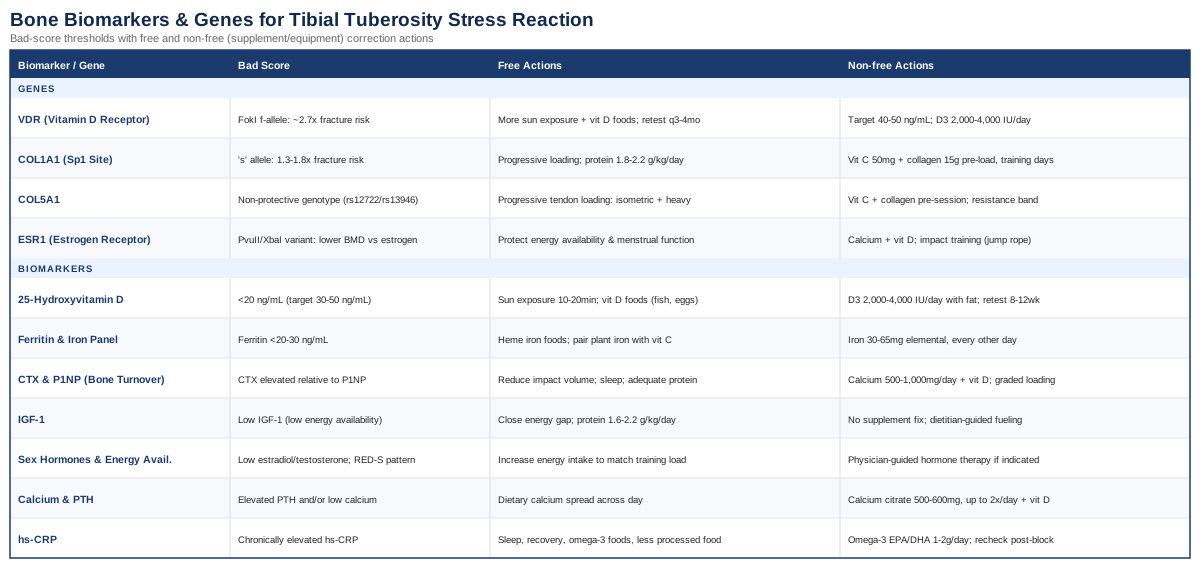
Tibial tuberosity stress reactions don't happen at random — they cluster around a handful of measurable factors: low vitamin D, low iron stores, sluggish bone formation relative to resorption, low energy availability, and inherited variants in collagen and hormone-receptor genes that quietly change how much load a given bone-tendon junction can tolerate before it starts to complain. Below, you'll find the seven blood biomarkers most worth checking when this kind of injury shows up (with real cost ranges and both supplement-free and supplement-based correction plans), the four genes with the strongest human evidence for bone and tendon injury risk, ten practical lessons on bone resilience pulled from Peter Attia's Outlive, and a short review of the complementary approaches — like gait-retraining biofeedback — that actually have data behind them for this type of injury. Keep reading to see exactly where your numbers might be falling short, and what a genetics-informed training and recovery plan looks like in practice.
The Biomarkers Behind Bone Stress Injuries
Tibial tuberosity stress reactions sit on the same physiological spectrum as other bone stress injuries seen in runners, jumpers, and growing athletes — the bone tissue at the tendon insertion is being asked to remodel faster than it comfortably can. That remodeling process is driven by measurable biology: vitamin D and calcium status, iron stores, the balance between bone formation and resorption, growth-factor signaling, inflammation, and the hormonal environment created by training load relative to fuel intake. Checking these numbers doesn't replace imaging or a sports medicine evaluation, but it turns a vague "why does this keep happening" into a specific, testable hypothesis.
The seven biomarkers below are the ones with the most direct human evidence connecting them to bone stress injury risk. For each, you'll find why it matters, how it's typically measured and what it costs, and — when the number comes back suboptimal — two separate correction paths: one using only training, diet, and behavior changes, and one that adds supplements or equipment.
Serum 25-Hydroxyvitamin D
Vitamin D status is probably the single most-studied biomarker in bone stress injury research, and for good reason. In a prospective study of over 1,000 Royal Marine recruits, those with baseline 25(OH)D below 50 nmol/L had roughly 1.6 times the risk of developing a stress fracture during training compared to recruits with higher levels, and the recruits who went on to fracture were also the ones whose vitamin D failed to rise over the following weeks of training (Davey et al., Royal Marine recruit study). A broader review of the military literature reached the same conclusion and noted that the relationship is strongest in people who also carry certain vitamin D receptor variants — more on that in the genetics section below (evidence review on vitamin D status and stress fracture pathogenesis).
How to measure it
A basic 25(OH)D blood test costs roughly 40 to 80 USD out of pocket in the US, and is often bundled into a standard metabolic or "athlete" panel at little extra cost. It's frequently covered by insurance when ordered by a physician for a diagnosed bone stress injury. Target range for bone health purposes is generally considered 30 to 50 ng/mL (75-125 nmol/L); below 20 ng/mL is the threshold most stress-fracture studies use to flag risk.If the score is bad, the plan without supplements
Increase regular sun exposure to bare skin (arms, legs) for 10 to 20 minutes several times a week around midday, adjusted for skin tone and latitude, and add vitamin D-rich foods such as fatty fish, egg yolks, and fortified dairy several times a week. Retest after 8 to 12 weeks, since sunlight-driven changes are slow and highly season-dependent.If the score is bad, the plan with supplements or equipment
A standard correction dose is 2,000 to 4,000 IU of vitamin D3 daily with a meal containing fat, or an equivalent weekly dose of 20,000 to 50,000 IU under medical supervision for deeper deficiency. Retest at 8 to 12 weeks and adjust downward once in range — this is not a supplement to cycle on and off arbitrarily, since bone remodeling responds to sustained status, not spikes. Side effects at these doses are rare, but chronically high intakes above 10,000 IU/day for months can raise blood calcium, so periodic retesting matters more than the dose itself.Ferritin and Iron Panel
Iron is a cofactor for the enzymes that hydroxylate collagen, meaning low iron status can directly slow the connective tissue repair that's needed at a stressed bone-tendon junction, on top of its better-known effects on oxygen delivery and fatigue. A systematic review of iron status in athletes found that supplementation produced the clearest benefit specifically in those with the lowest baseline iron stores, and that ideal ferritin targets for active populations remain a subject of active debate rather than a fixed number (Iron status and physical performance in athletes).How to measure it
A ferritin test alone runs about 20 to 40 USD; a full iron panel (ferritin, serum iron, TIBC, transferrin saturation) runs 40 to 80 USD. Many sports medicine clinics now order this reflexively for any bone stress injury alongside vitamin D. A ferritin under 20 to 30 ng/mL is generally considered low for an athlete, even if it falls within a lab's broad "normal" range.If the score is bad, the plan without supplements
Add heme iron sources (red meat, poultry, fish) several times a week, pair plant iron sources with vitamin C-rich foods to improve absorption, and avoid taking iron-rich meals alongside coffee, tea, or calcium supplements, which blunt absorption. Retest in 8 to 12 weeks.If the score is bad, the plan with supplements or equipment
Iron supplementation (typically 30 to 65 mg elemental iron, every other day rather than daily, which recent research suggests improves absorption and reduces gut irritation) can raise ferritin over 8 to 12 weeks. Side effects include constipation, nausea, and dark stools; supplementation should be guided by an actual lab result, not assumed, since unnecessary iron supplementation in someone with adequate stores carries its own long-term risks. Retest at 3 months and stop once ferritin is comfortably above 30 to 40 ng/mL.Bone Turnover Markers: CTX and P1NP
CTX (a marker of bone resorption) and P1NP (a marker of bone formation) give a real-time snapshot of whether bone is being broken down faster than it's being rebuilt — which is essentially the mechanism behind a stress reaction. These markers are used clinically in osteoporosis management and increasingly in sports medicine to catch problematic remodeling before it progresses to a visible stress fracture on imaging.How to measure it
These are specialty labs, typically 60 to 120 USD each, and less consistently covered by insurance outside of osteoporosis workups. Because both markers have a daily rhythm, morning fasting samples give the most reliable comparison point.If the score is bad, the plan without supplements
If resorption (CTX) is elevated relative to formation (P1NP), reduce total impact volume temporarily, prioritize sleep (bone formation is heavily influenced by growth hormone pulses during deep sleep), and ensure adequate total calorie and protein intake, since under-fueling shifts remodeling toward net resorption.If the score is bad, the plan with supplements or equipment
Calcium (500 to 1,000 mg/day from food or supplement, split across meals for better absorption) alongside vitamin D supports the formation side; a graded return to weight-bearing and resistance training, monitored with a coach or PT, provides the mechanical stimulus formation markers actually respond to. Recheck CTX and P1NP after 3 months, since bone turnover markers change slowly and short-interval retesting mostly adds noise.IGF-1
Insulin-like growth factor 1 is a key driver of osteoblast activity, and it drops when training volume rises without matching caloric intake — a pattern well documented in endurance athletes with chronic low energy availability. Low IGF-1 in this context is less a standalone problem than a signal that the body has shifted into an energy-conservation mode where bone building is deprioritized.How to measure it
An IGF-1 blood test typically costs 80 to 120 USD and is a standard offering at most commercial labs; fasting isn't strictly required but morning draws reduce variability.If the score is bad, the plan without supplements
The most effective intervention here is almost always caloric: closing the gap between energy intake and training expenditure, prioritizing protein (1.6 to 2.2 g/kg/day), and reducing training volume temporarily if intake can't realistically be raised further. Sleep extension (aiming for 8+ hours) also supports the growth hormone pulses that drive IGF-1.If the score is bad, the plan with supplements or equipment
There's no supplement that reliably raises IGF-1 in a healthy person without addressing the underlying energy deficit — this is a case where the "equipment" is really just consistent food logging or a sports dietitian consult to quantify true energy availability. Retest after 8 to 12 weeks of adequate fueling; expect gradual normalization, not a fast rebound.Sex Hormones and Energy Availability (Estradiol, Testosterone, LH)
This is the biomarker cluster at the heart of Relative Energy Deficiency in Sport (RED-S), a well-documented syndrome in which chronic low energy availability suppresses reproductive hormones and, downstream, bone remodeling. The consensus literature on RED-S notes that low estradiol in female athletes and low testosterone in male athletes both correlate with impaired bone health and higher stress injury rates, and that the underlying driver — energy availability — needs to exceed roughly 45 kcal per kg of fat-free mass per day to avoid this cascade (RED-S: scientific, clinical, and practical implications).How to measure it
A basic panel (estradiol or testosterone, LH, sometimes FSH) runs roughly 100 to 200 USD, more if ordered as a comprehensive hormone panel. Timing matters for menstruating athletes — testing should be done at a consistent, known point in the cycle, ideally with input from a sports medicine physician.If the score is bad, the plan without supplements
Increase energy intake to match training demand, particularly around training sessions, and reduce training volume or intensity temporarily if intake can't be raised enough. Restoration of menstrual cycles or normalized testosterone typically takes months, not weeks, so this requires patience and, ideally, a treatment team rather than solo troubleshooting.If the score is bad, the plan with supplements or equipment
There is no supplement shortcut around low energy availability — hormonal contraceptives or exogenous hormone therapy are sometimes used clinically to manage symptoms but do not address the underlying bone-remodeling problem and should only be considered with a physician. The most useful "equipment" here is simply a food scale or tracking app used short-term to establish an accurate picture of intake versus output.Calcium and Parathyroid Hormone (PTH)
Calcium and PTH work as a feedback pair: when dietary calcium or vitamin D is insufficient, PTH rises to pull calcium from bone, which is exactly the kind of chronic low-grade resorption that can tip a loaded bone-tendon junction into a stress reaction.How to measure it
Serum calcium is inexpensive, often 20 to 40 USD or included in a basic metabolic panel; PTH is a bit more, 50 to 100 USD, and is most informative when interpreted alongside vitamin D and calcium together rather than in isolation.If the score is bad, the plan without supplements
Prioritize dietary calcium (dairy, fortified plant milks, leafy greens, canned fish with bones) spread across the day rather than in one large dose, since absorption is capped per sitting.If the score is bad, the plan with supplements or equipment
Calcium citrate or carbonate, 500 to 600 mg per dose, taken with food, up to twice daily if dietary intake is genuinely insufficient — more than that rarely helps and has been associated with kidney stone risk in some studies, so food-first is the better default. This pairs directly with vitamin D correction above; treating one without the other is a common and avoidable mistake.High-Sensitivity C-Reactive Protein (hs-CRP)
hs-CRP is a general inflammation marker, not specific to bone, but chronically elevated levels in athletes often reflect a body under more systemic stress than the training log alone would suggest — poor recovery, overtraining, or an underlying issue that's also slowing tissue repair at the stressed tuberosity.How to measure it
An inexpensive test, typically 20 to 40 USD, often included in comprehensive metabolic or athlete panels.If the score is bad, the plan without supplements
Address the basics that reliably lower systemic inflammation: adequate sleep, a training load that allows recovery between sessions, and a diet with sufficient omega-3-rich foods (fatty fish, walnuts, flaxseed) and reduced ultra-processed food intake.If the score is bad, the plan with supplements or equipment
Omega-3 supplementation (roughly 1 to 2 g combined EPA/DHA daily) has modest, consistent evidence for lowering hs-CRP over 8 to 12 weeks; higher doses offer little added benefit and can mildly increase bleeding risk, so this isn't one to stack indefinitely without a reason. Recheck hs-CRP after a training block, not mid-block, since acute training sessions transiently raise it regardless of your baseline status.Taken together, these seven markers describe the metabolic environment your bone is remodeling in — fuel, minerals, hormones, and inflammation. But not everyone with the same numbers develops the same injury, which is where genetic variation comes in.
What Your Genes May Be Contributing
Genetic testing for musculoskeletal injury risk is still a young field compared to the biomarker work above, and much of the research — the kind of work popularized by researchers like Ali Torkamani and clinicians like Gary Brecka — is based on population-level associations rather than individual predictive certainty. That said, a handful of gene variants have reasonably consistent human evidence linking them to bone and tendon injury risk, and knowing your status (through a consumer genetic test or research-grade panel) can help explain why a given biomarker profile affects you more or less than it might affect someone else.
VDR (Vitamin D Receptor)
Variants in the vitamin D receptor gene, particularly the FokI and BsmI polymorphisms, change how effectively your cells respond to circulating vitamin D, independent of the blood level itself. Research in stress fracture-prone military recruits found the f-allele of FokI was associated with roughly 2.7 times higher stress fracture risk, and that carriers of this allele were far more sensitive to their actual vitamin D status than non-carriers (VDR gene polymorphisms and stress fracture; gene-environment interaction in military recruits).If the gene is bad, the plan without supplements
Since this variant amplifies the consequences of low vitamin D rather than causing a problem on its own, the non-supplement plan is simply more consistent sun exposure and dietary vitamin D intake than someone without the variant might need, plus more frequent monitoring of serum 25(OH)D (every 3 to 4 months rather than annually).If the score is bad, the plan with supplements or equipment
Carriers of the risk allele generally benefit from maintaining 25(OH)D toward the higher end of the normal range (40 to 50 ng/mL) rather than the low end, using the same 2,000 to 4,000 IU daily dosing described above, with retesting every 3 months rather than annually until stable. There's no separate supplement that "fixes" the receptor variant itself — the strategy is simply tighter control of the input it's sensitive to.COL1A1 (Type I Collagen, Sp1 Site)
COL1A1 codes for type I collagen, the dominant structural protein in bone. A well-studied polymorphism at the Sp1 binding site increases collagen transcript instability and has been associated with reduced bone mineral density and meaningfully higher fracture odds — a meta-analysis of 26 studies and nearly 8,000 participants found roughly 1.3 to 1.8 times higher fracture risk in carriers of the "s" allele (COL1A1 Sp1 polymorphism meta-analysis).If the gene is bad, the plan without supplements
Prioritize progressive, well-periodized weight-bearing and resistance training, since mechanical loading is the primary driver of collagen remodeling and bone strength regardless of genotype — this matters more, not less, for someone with a collagen variant. Adequate dietary protein (aim for the higher end of typical athletic recommendations, around 1.8 to 2.2 g/kg/day) supports the raw material for collagen synthesis.If the score is bad, the plan with supplements or equipment
A specific, evidence-backed protocol pairs 15 grams of vitamin C-enriched gelatin or hydrolyzed collagen with roughly 50 mg of vitamin C, taken about 60 minutes before loading exercise; a controlled trial found this combination roughly doubled a blood marker of collagen synthesis compared to exercise alone (vitamin C-enriched gelatin and collagen synthesis). This is generally used on training days only, not daily, since the effect is tied to the loading stimulus that follows it; side effects are minimal, occasionally mild digestive discomfort at higher gelatin doses.COL5A1
COL5A1 regulates the diameter and organization of type I collagen fibrils in tendons and ligaments. Interestingly, the evidence here runs the opposite direction from what many assume: a meta-analysis of Caucasian populations found that certain COL5A1 variants (notably rs12722 and rs13946) were associated with a lower risk of tendon and ligament injury, not a higher one, with some genotype comparisons showing risk reductions of 30 to nearly 80 percent (COL5A1 polymorphisms and tendon-ligament injury risk).If the gene is bad, the plan without supplements
If your genotype falls on the higher-risk side of this spectrum, the practical response is the same collagen-loading logic as above, applied specifically to tendon tissue: structured, progressive tendon loading (isometric and slow heavy resistance work) rather than avoidance, since under-loaded tendon is not protective and tends to make things worse.If the score is bad, the plan with supplements or equipment
The same vitamin C plus collagen protocol described under COL1A1 applies here, timed before tendon-loading sessions rather than daily; a foam roller or basic resistance band for isometric loading work is inexpensive equipment that supports a graded tendon-loading program without requiring a gym.ESR1 (Estrogen Receptor Alpha)
ESR1 polymorphisms, particularly PvuII and XbaI, have been linked to bone mineral density independent of estrogen levels themselves — meaning two people with identical estradiol can still have meaningfully different bone density depending on how their receptors respond to it. A study in postmenopausal women found the PvuII variant carried a higher relative risk for low bone mineral density than XbaI (ESR1 PvuII and XbaI polymorphisms and bone mineral density), and earlier work found ESR1 variation predicts fracture risk independent of bone density itself (5' ESR1 polymorphisms, bone mineral density, and fracture risk). This is most relevant for female athletes and for understanding why menstrual irregularity affects some individuals' bone health more severely than others.If the gene is bad, the plan without supplements
Since this variant affects estrogen sensitivity, protecting regular menstrual function through adequate energy availability (see the sex hormone biomarker section above) becomes proportionally more important, alongside consistent weight-bearing exercise, which provides an estrogen-independent stimulus for bone formation.If the score is bad, the plan with supplements or equipment
There's no supplement that directly compensates for estrogen receptor sensitivity. The practical lever is calcium and vitamin D optimization (as above) combined with impact-based training (jump rope, plyometric drills, or a weighted vest for lower-impact loading), since mechanical strain activates bone formation pathways that don't depend on estrogen signaling.Genetic variants like these don't determine an outcome on their own — they shift probabilities and sensitivities that biomarkers and training decisions can still work around. That's a useful frame for the next section, which pulls together some of the more actionable, higher-level thinking on bone resilience from outside the sports medicine literature.
Ten Lessons on Bone Resilience Worth Borrowing From Outlive
Peter Attia's book Outlive: The Science and Art of Longevity isn't written about youth sports injuries or tibial tuberosity stress reactions specifically, but its section on musculoskeletal health and its broader "Centenarian Decathlon" framework offer a genuinely useful lens for thinking about bone stress injuries at any age — treating bone strength as a trainable, trackable asset rather than something you only think about after it breaks. Below are ten of the most transferable ideas.
1. Bone density is a marginal-decade problem
Attia frames peak bone mass, built mostly before your late twenties, as capital you spend down slowly for the rest of your life. For adolescent athletes specifically, this reframes a stress reaction less as bad luck and more as a signal to protect, not just rest, the bone-building window that's currently open.2. Objective measurement beats assumption
A recurring theme is Attia's insistence on scanning and measuring rather than guessing — DEXA scans for bone density, in his adult patients, function the same way the biomarker panel above does for a younger athlete: replacing a vague sense of "fragility" with an actual number to track over time.3. Resistance training is underrated for bone, not just muscle
Attia is emphatic that resistance training, not just cardiovascular exercise, is essential for skeletal health, since bone responds to mechanical strain in a way that low-impact cardio simply doesn't replicate.4. Bone responds to strain, not just time
The book leans on the same mechanotransduction logic that underlies Wolff's Law — bone remodels in response to the mechanical load it experiences, meaning a graded return to loading (not indefinite rest) is what ultimately builds resilience at a stressed tuberosity.5. Rate of force development matters, not just strength
Attia distinguishes raw strength from the ability to produce force quickly, arguing that power and rate of force development protect joints and bone under real-world, reactive loading — relevant for the jumping and cutting movements that often provoke tibial tuberosity symptoms.6. Protein intake is a frequently under-addressed lever
Consistent with the biomarker sections above, Attia argues most people, including athletes, chronically under-eat protein relative to what tissue repair and bone remodeling actually require.7. Foundational nutrients are necessary but not sufficient
Vitamin D and calcium get attention in the book as a baseline requirement, not a performance enhancer — useful framing for anyone tempted to treat supplementation as a substitute for addressing training load or energy availability.8. Chronic energy deficit quietly undermines everything else
Attia's broader metabolic health framework dovetails with the RED-S research above: a body running a persistent calorie deficit deprioritizes "non-essential" processes like bone formation, no matter how good your supplement stack looks on paper.9. Stability and movement quality reduce injury risk over time
Attia's emphasis on balance, stability, and movement quality — originally framed around fall prevention in older adults — applies just as directly to younger athletes whose altered movement patterns under fatigue increase abnormal loading at the tibial tuberosity.10. Track, adjust, and don't wait for a crisis to start measuring
The book's central habit — regular measurement paired with willingness to adjust the plan — is arguably its most transferable lesson: the biomarker and genetic information in this article is only useful if it's revisited periodically, not checked once and forgotten.These ideas work well alongside conventional rehab, not instead of it. The next section looks at a handful of complementary approaches that have actual human evidence specific to bone stress injuries and running-related loading, rather than general wellness claims.
Complementary Approaches With Real Supporting Evidence
Most complementary and alternative approaches marketed for bone or tendon injuries have thin or no condition-specific evidence. A few, however, have genuine human data behind them for exactly this kind of loading-related bone stress injury, and are worth knowing about as add-ons to standard rehabilitation rather than replacements for it.
Biofeedback for Gait Retraining
Gait retraining using real-time biofeedback is one of the better-studied interventions for reducing the mechanical loading patterns that drive tibial stress injuries in runners, and it's directly relevant because tibial tuberosity stress reactions share the same overload mechanism as tibial stress fractures more broadly. The approach uses either an accelerometer on the shin or simple visual/verbal cues from a clinician to help a runner gradually increase step rate and reduce vertical loading and tibial shock.A controlled study by Crowell and Davis found that after a gait retraining program using real-time tibial accelerometer feedback, runners reduced peak tibial acceleration by roughly 50 percent, with reductions in vertical loading rate and impact peak that persisted at a one-month follow-up (gait retraining to reduce lower extremity loading in runners).
In practice, this looks like eight to ten sessions with a physical therapist or running coach trained in gait analysis, either using a simple wearable accelerometer or just video and verbal feedback, focused on small increases in cadence (5 to 10 percent) rather than dramatic form overhauls. It's most useful once acute pain has settled and the focus shifts to preventing recurrence, and it pairs naturally with the progressive loading work described in the genetics section above.
Low-Level Laser Therapy (Photobiomodulation)
Photobiomodulation uses low-power laser or LED light, typically in the red to near-infrared range, with the proposed mechanism of stimulating mitochondrial activity in bone and soft tissue cells to support repair and modestly reduce pain and inflammation. Evidence specific to tibial tuberosity injuries doesn't exist, but human fracture-healing studies provide a reasonable proxy.A randomized, placebo-controlled study of 50 patients with closed wrist and hand fractures found that 830 nm laser therapy produced significant improvements in pain, function, grip strength, and radiographic healing measures compared to placebo (low-level laser therapy for closed bone fracture in the human wrist and hand). It's worth being direct that broader systematic reviews of laser therapy for fracture healing show mixed results, with benefit in some studies and none in others, so this should be considered a modest adjunct rather than a reliable fix.
Realistically, this means a supervised course of treatment through a physical therapy or sports medicine clinic (home devices exist but have far less rigorous dosing data), typically two to three sessions a week for several weeks, used alongside — never instead of — a structured loading and rehabilitation program.
Massage Therapy
Massage therapy is commonly used as a recovery adjunct around bone stress injuries, primarily to manage compensatory muscle tightness (particularly in the quadriceps and surrounding musculature that directly loads the tibial tuberosity through the patellar tendon) rather than to treat the bone stress reaction itself. Condition-specific trial evidence for tibial tuberosity injuries specifically is limited, and claims that massage directly accelerates bone healing aren't well supported, so it's best framed as supportive rather than corrective care.The most defensible use is regular massage of the quadriceps and surrounding soft tissue to manage the tightness that often accompanies growth-related and overuse knee conditions, generally once or twice a week during a symptomatic period, tapering as symptoms resolve.
Applied cautiously, this means treating massage as a comfort and recovery tool that supports adherence to the loading program above, not a substitute for addressing the biomarkers, mechanics, or training load driving the injury in the first place.
Mindfulness Meditation and MBSR
Mindfulness-based stress reduction doesn't act directly on bone tissue, but it's relevant here through the stress-cortisol-energy availability pathway discussed in the RED-S biomarker section: chronic psychological stress and poor sleep can compound the same hormonal disruption that undermines bone remodeling. The evidence connecting mindfulness practice specifically to bone stress injury outcomes is indirect and still developing, so this should be understood as a supporting habit rather than a primary treatment.A practical version is a short daily practice (10 to 15 minutes) using any structured MBSR-style app or program, focused on sleep quality and stress management during a return-to-training period, rather than a formal eight-week MBSR course unless broader stress or anxiety is also a concern.
Used this way, it functions as one more lever supporting the energy availability and recovery picture covered earlier, rather than a standalone intervention for the bone injury itself.
Conclusion
A tibial tuberosity stress reaction is rarely just bad luck — it usually reflects a specific combination of mechanical load, nutrient and hormonal status, and underlying genetic sensitivity that generic "rest and wait" advice was never designed to address. The seven biomarkers above give you a concrete starting point for lab work worth requesting, the four gene variants explain why identical training loads affect different people differently, and the complementary approaches with real evidence — particularly gait-retraining biofeedback — offer practical, low-risk additions to standard care.
None of this replaces a proper diagnosis or the judgment of a sports medicine physician or physical therapist who can actually examine the joint and review imaging. The realistic next step is a smaller one: pull your last set of relevant labs (or request the ones you're missing), track your training load and recovery for a couple of weeks with those numbers in mind, and bring both to your next conversation with a qualified clinician. That's a more useful starting point than guessing, and it's the kind of decision better information actually makes possible.
Musculoskeletal: Bone Conditions Tendon & Ligament Conditions